MEDICAL RECORD SYSTEM
WHAT IS OPENMRS? 
OpenMRS is a software platform and a 
reference application which enables design of a 
customized medical records system with no 
programming knowledge (although medical and 
systems analysis knowledge is required). It is a 
common platform upon which medical 
informatics efforts in developing countries can 
be built. The system is based on a conceptual 
database structure which is not dependent on 
the actual types of medical information required 
to be collected or on particular data collection 
forms and so can be customized for different 
uses.
OUR AIM: 
The mission of OpenMRS is to improve 
health care delivery in resource-constrained 
environments by coordinating a global 
community that creates a robust, scalable, 
user-driven, open source medical record 
system platform.
WE ARE: 
User-Centered 
Design decisions are driven by real, not perceived needs. 
Our software works in the most challenging health care delivery 
environments. 
We create a platform that is adaptable to the unique needs of our 
users around the world. 
Open 
We are open, honest, and transparent in both our processes and 
our software. 
Our software serves as a platform that empowers both users and 
implementers to innovate. 
We publicly document and share our knowledge, skills, 
experiences, and failures.
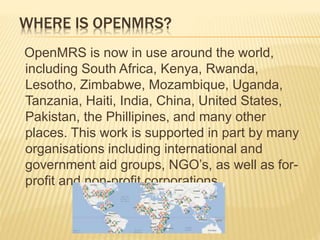
WHERE IS OPENMRS? 
OpenMRS is now in use around the world, 
including South Africa, Kenya, Rwanda, 
Lesotho, Zimbabwe, Mozambique, Uganda, 
Tanzania, Haiti, India, China, United States, 
Pakistan, the Phillipines, and many other 
places. This work is supported in part by many 
organisations including international and 
government aid groups, NGO’s, as well as for-profit 
and non-profit corporations.
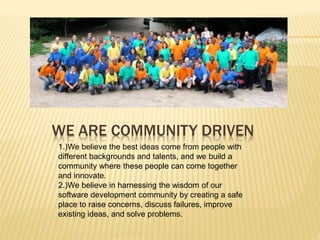
WE ARE COMMUNITY DRIVEN 
1.)We believe the best ideas come from people with 
different backgrounds and talents, and we build a 
community where these people can come together 
and innovate. 
2.)We believe in harnessing the wisdom of our 
software development community by creating a safe 
place to raise concerns, discuss failures, improve 
existing ideas, and solve problems.
FEATURES 
Central concept dictionary: Definitions of all data (both questions and answers) are 
defined in a centralized dictionary, allowing for robust, coded data 
Security: User authentication 
Privilege-based access: User roles and permission system 
Patient repository: Creation and maintenance of patient data, including 
demographics, clinical observations, encounter data, orders, etc. 
Multiple identifiers per patient: A single patient may have multiple medical record 
numbers 
Data entry: With the FormEntry module, clients with InfoPath (included in Microsoft 
Office 2003 and later) can design and enter data using flexible, electronic forms. With 
the HTML FormEntry module, forms can be created with customized HTML and run 
directly within the web application. 
Data export: Data can be exported into a spreadsheet format for use in other tools 
(Excel, Access, etc.) 
Standards support: HL7 engine for data import 
Modular architecture: An OpenMRS Module can extend and add any type of 
functionality to the existing API and webapp. 
Patient workflows: An embedded patient workflow service allows patient to be put 
into programs (studies, treatment programs, etc.) and tracked through various states. 
Cohort management: The cohort builder allows you to create groups of patients for 
data exports, reporting, etc. 
Relationships: Relationships between any two people (patients, relatives, 
caretakers, etc.) 
Patient merging: Merging duplicate patients
Download OpenMRS today. 
http://www.openmrs.org/

Medical record system

  • 1.
  • 2.
    WHAT IS OPENMRS? OpenMRS is a software platform and a reference application which enables design of a customized medical records system with no programming knowledge (although medical and systems analysis knowledge is required). It is a common platform upon which medical informatics efforts in developing countries can be built. The system is based on a conceptual database structure which is not dependent on the actual types of medical information required to be collected or on particular data collection forms and so can be customized for different uses.
  • 3.
    OUR AIM: Themission of OpenMRS is to improve health care delivery in resource-constrained environments by coordinating a global community that creates a robust, scalable, user-driven, open source medical record system platform.
  • 4.
    WE ARE: User-Centered Design decisions are driven by real, not perceived needs. Our software works in the most challenging health care delivery environments. We create a platform that is adaptable to the unique needs of our users around the world. Open We are open, honest, and transparent in both our processes and our software. Our software serves as a platform that empowers both users and implementers to innovate. We publicly document and share our knowledge, skills, experiences, and failures.
  • 5.
    WHERE IS OPENMRS? OpenMRS is now in use around the world, including South Africa, Kenya, Rwanda, Lesotho, Zimbabwe, Mozambique, Uganda, Tanzania, Haiti, India, China, United States, Pakistan, the Phillipines, and many other places. This work is supported in part by many organisations including international and government aid groups, NGO’s, as well as for-profit and non-profit corporations.
  • 6.
    WE ARE COMMUNITYDRIVEN 1.)We believe the best ideas come from people with different backgrounds and talents, and we build a community where these people can come together and innovate. 2.)We believe in harnessing the wisdom of our software development community by creating a safe place to raise concerns, discuss failures, improve existing ideas, and solve problems.
  • 7.
    FEATURES Central conceptdictionary: Definitions of all data (both questions and answers) are defined in a centralized dictionary, allowing for robust, coded data Security: User authentication Privilege-based access: User roles and permission system Patient repository: Creation and maintenance of patient data, including demographics, clinical observations, encounter data, orders, etc. Multiple identifiers per patient: A single patient may have multiple medical record numbers Data entry: With the FormEntry module, clients with InfoPath (included in Microsoft Office 2003 and later) can design and enter data using flexible, electronic forms. With the HTML FormEntry module, forms can be created with customized HTML and run directly within the web application. Data export: Data can be exported into a spreadsheet format for use in other tools (Excel, Access, etc.) Standards support: HL7 engine for data import Modular architecture: An OpenMRS Module can extend and add any type of functionality to the existing API and webapp. Patient workflows: An embedded patient workflow service allows patient to be put into programs (studies, treatment programs, etc.) and tracked through various states. Cohort management: The cohort builder allows you to create groups of patients for data exports, reporting, etc. Relationships: Relationships between any two people (patients, relatives, caretakers, etc.) Patient merging: Merging duplicate patients
  • 8.
    Download OpenMRS today. http://www.openmrs.org/