Media Theories
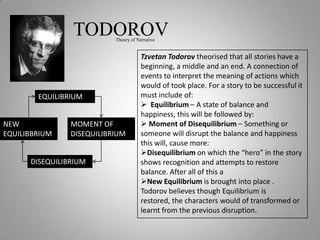
TODOROV    Theory of Narrative


                                       Tzvetan Todorov theorised that all stories have a
                                       beginning, a middle and an end. A connection of
                                       events to interpret the meaning of actions which
                                       would of took place. For a story to be successful it
        EQUILIBRIUM                    must include of:
                                        Equilibrium – A state of balance and
                                       happiness, this will be followed by:
NEW             MOMENT OF               Moment of Disequilibrium – Something or
EQUILIBBRIUM    DISEQUILIBRIUM         someone will disrupt the balance and happiness
                                       this will, cause more:
                                       Disequilibrium on which the “hero” in the story
      DISEQUILIBRIUM                   shows recognition and attempts to restore
                                       balance. After all of this a
                                       New Equilibrium is brought into place .
                                       Todorov believes though Equilibrium is
                                       restored, the characters would of transformed or
                                       learnt from the previous disruption.
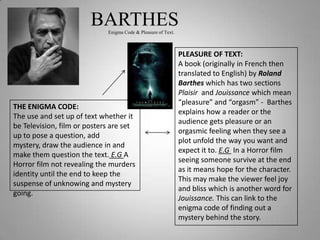
BARTHES
                             Enigma Code & Pleasure of Text.


                                                               PLEASURE OF TEXT:
                                                               A book (originally in French then
                                                               translated to English) by Roland
                                                               Barthes which has two sections
                                                               Plaisir and Jouissance which mean
                                                               “pleasure” and “orgasm” - Barthes
THE ENIGMA CODE:
                                                               explains how a reader or the
The use and set up of text whether it
                                                               audience gets pleasure or an
be Television, film or posters are set
                                                               orgasmic feeling when they see a
up to pose a question, add
                                                               plot unfold the way you want and
mystery, draw the audience in and
                                                               expect it to. E.G In a Horror film
make them question the text. E.G A
                                                               seeing someone survive at the end
Horror film not revealing the murders
                                                               as it means hope for the character.
identity until the end to keep the
                                                               This may make the viewer feel joy
suspense of unknowing and mystery
                                                               and bliss which is another word for
going.
                                                               Jouissance. This can link to the
                                                               enigma code of finding out a
                                                               mystery behind the story.
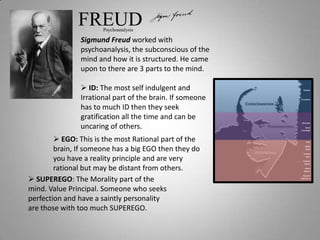
FREUD  Psychoanalysis

               Sigmund Freud worked with
               psychoanalysis, the subconscious of the
               mind and how it is structured. He came
               upon to there are 3 parts to the mind.

                ID: The most self indulgent and
               Irrational part of the brain. If someone
               has to much ID then they seek
               gratification all the time and can be
               uncaring of others.
         EGO: This is the most Rational part of the
        brain, If someone has a big EGO then they do
        you have a reality principle and are very
        rational but may be distant from others.
 SUPEREGO: The Morality part of the
mind. Value Principal. Someone who seeks
perfection and have a saintly personality
are those with too much SUPEREGO.
PROPPS       CHARACTER TYPES


                                           Vladimir Propp theorised that there is only 8
                                           broad character types; he found this out by
                                           studying media texts, he studied over 100 and
                                           came to this conclusion:

                                                           THE 7 CHARACTER TYPES:
                                                           1. The Villain (struggles against Hero)
                                                           2. The Donor (prepares the hero/gives him
                                                              “magical object” for his journey.
                                                           3. The Helper (helps hero on quest)
                                                           4. The Wannabe Hero (Pretends to be hero)
                     1 2                                   5. The Princess (The Person which the hero
                     3 4                                      and other sought after, hero marries)
                                                           6. Princess Father (usually dies at beginning
                                                              or end of narrative)
                                                           7. The Dispatcher (picks the hero up and
                                                              sends him off)
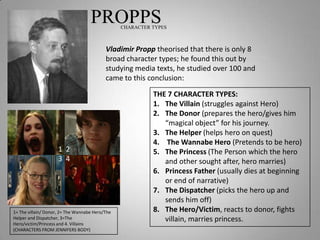
1= The villain/ Donor, 2= The Wannabe Hero/The             8. The Hero/Victim, reacts to donor, fights
Helper and Dispatcher, 3=The                                  villain, marries princess.
Hero/victim/Princess and 4. Villains
(CHARACTERS FROM JENNIFERS BODY)
STRAUSS      BINARY OPPOSITES


                   Claude Levi Strauss theorised that there is
                   a constant creation of conflict in a narrative
                   whether it be visual or conceptual.
                   Narrative can only end if there is a conflict
                   resolution at the end.


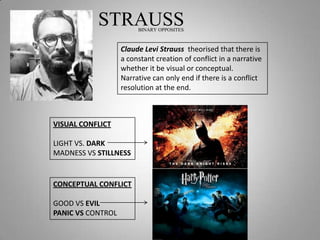
VISUAL CONFLICT

LIGHT VS. DARK
MADNESS VS STILLNESS


CONCEPTUAL CONFLICT

GOOD VS EVIL
PANIC VS CONTROL
CLOVER       FINAL GIRL


                      Carol Clover explained In her book
                      “Men, Women and Chainsaws” that the
                      audience identifies and is structurally forced to
                      identify with the surviving female lead. The
                      viewers are masochistic voyeurs. Clover helped
                      bring awareness for gender divisions in film by
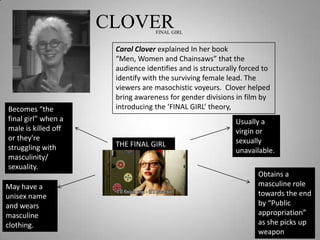
Becomes “the          introducing the ‘FINAL GIRL’ theory,
final girl” when a                                          Usually a
male is killed off                                          virgin or
or they're                                                  sexually
struggling with       THE FINAL GIRL
                                                            unavailable.
masculinity/
sexuality.
                                                                   Obtains a
May have a                                                         masculine role
unisex name                                                        towards the end
and wears                                                          by “Public
masculine                                                          appropriation”
clothing.                                                          as she picks up
                                                                   weapon

Media theories

  • 1.
  • 2.
    TODOROV Theory of Narrative Tzvetan Todorov theorised that all stories have a beginning, a middle and an end. A connection of events to interpret the meaning of actions which would of took place. For a story to be successful it EQUILIBRIUM must include of:  Equilibrium – A state of balance and happiness, this will be followed by: NEW MOMENT OF  Moment of Disequilibrium – Something or EQUILIBBRIUM DISEQUILIBRIUM someone will disrupt the balance and happiness this will, cause more: Disequilibrium on which the “hero” in the story DISEQUILIBRIUM shows recognition and attempts to restore balance. After all of this a New Equilibrium is brought into place . Todorov believes though Equilibrium is restored, the characters would of transformed or learnt from the previous disruption.
  • 3.
    BARTHES Enigma Code & Pleasure of Text. PLEASURE OF TEXT: A book (originally in French then translated to English) by Roland Barthes which has two sections Plaisir and Jouissance which mean “pleasure” and “orgasm” - Barthes THE ENIGMA CODE: explains how a reader or the The use and set up of text whether it audience gets pleasure or an be Television, film or posters are set orgasmic feeling when they see a up to pose a question, add plot unfold the way you want and mystery, draw the audience in and expect it to. E.G In a Horror film make them question the text. E.G A seeing someone survive at the end Horror film not revealing the murders as it means hope for the character. identity until the end to keep the This may make the viewer feel joy suspense of unknowing and mystery and bliss which is another word for going. Jouissance. This can link to the enigma code of finding out a mystery behind the story.
  • 4.
    FREUD Psychoanalysis Sigmund Freud worked with psychoanalysis, the subconscious of the mind and how it is structured. He came upon to there are 3 parts to the mind.  ID: The most self indulgent and Irrational part of the brain. If someone has to much ID then they seek gratification all the time and can be uncaring of others.  EGO: This is the most Rational part of the brain, If someone has a big EGO then they do you have a reality principle and are very rational but may be distant from others.  SUPEREGO: The Morality part of the mind. Value Principal. Someone who seeks perfection and have a saintly personality are those with too much SUPEREGO.
  • 5.
    PROPPS CHARACTER TYPES Vladimir Propp theorised that there is only 8 broad character types; he found this out by studying media texts, he studied over 100 and came to this conclusion: THE 7 CHARACTER TYPES: 1. The Villain (struggles against Hero) 2. The Donor (prepares the hero/gives him “magical object” for his journey. 3. The Helper (helps hero on quest) 4. The Wannabe Hero (Pretends to be hero) 1 2 5. The Princess (The Person which the hero 3 4 and other sought after, hero marries) 6. Princess Father (usually dies at beginning or end of narrative) 7. The Dispatcher (picks the hero up and sends him off) 1= The villain/ Donor, 2= The Wannabe Hero/The 8. The Hero/Victim, reacts to donor, fights Helper and Dispatcher, 3=The villain, marries princess. Hero/victim/Princess and 4. Villains (CHARACTERS FROM JENNIFERS BODY)
  • 6.
    STRAUSS BINARY OPPOSITES Claude Levi Strauss theorised that there is a constant creation of conflict in a narrative whether it be visual or conceptual. Narrative can only end if there is a conflict resolution at the end. VISUAL CONFLICT LIGHT VS. DARK MADNESS VS STILLNESS CONCEPTUAL CONFLICT GOOD VS EVIL PANIC VS CONTROL
  • 7.
    CLOVER FINAL GIRL Carol Clover explained In her book “Men, Women and Chainsaws” that the audience identifies and is structurally forced to identify with the surviving female lead. The viewers are masochistic voyeurs. Clover helped bring awareness for gender divisions in film by Becomes “the introducing the ‘FINAL GIRL’ theory, final girl” when a Usually a male is killed off virgin or or they're sexually struggling with THE FINAL GIRL unavailable. masculinity/ sexuality. Obtains a May have a masculine role unisex name towards the end and wears by “Public masculine appropriation” clothing. as she picks up weapon