NATIONAL HEALTH
PROGRAMMES
RELATED TO MATERNAL
AND CHILD HEALTH
CARE
Presented By -
Sumana Garai
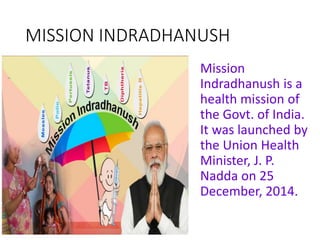
MISSION INDRADHANUSH
Mission
Indradhanush is a
health mission of
the Govt. of India.
It was launched by
the Union Health
Minister, J. P.
Nadda on 25
December, 2014.
Long term goal of Mission
Indradhanush:
• To strengthen the health system through
collaboration of central and state
governments and development partners.
• To identify and level the gaps in existing
routine immunization program.
• To develop human resource and
sustainable effort in expansion of micro-
plans for routine immunization.
General Objectives:
To ensure high
coverage of children
and pregnant women
with all available
vaccines throughout
the country, with
emphasis on the
identified 201 high
focus districts.
Journey of Mission Indradhanush:
• Phase I - April to July , 2015 , 201 districts covered.
• Phase II- October 2015 - January 2016, 352 districts covered
, 73 districts from phase I
• Phase III- April - July, 2016, 216 districts covered, 4
intensified immunization rounds.
• Phase IV- Feb- May, 2017 in North- East states, 68 districts
covered
• April- July, 2017 in 19 other states, 186 districts
• Phase V- carried out in 190 lowest performing
districts.
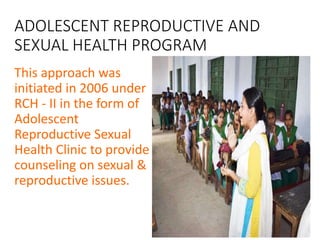
ADOLESCENT REPRODUCTIVE AND
SEXUAL HEALTH PROGRAM
This approach was
initiated in 2006 under
RCH - II in the form of
Adolescent
Reproductive Sexual
Health Clinic to provide
counseling on sexual &
reproductive issues.
Objectives of ARSH Program:
•Reducing teenage pregnancies
•Meeting unmet contraceptive needs
•Reducing no. of teenage maternal
deaths
•Reducing incidence of STI.
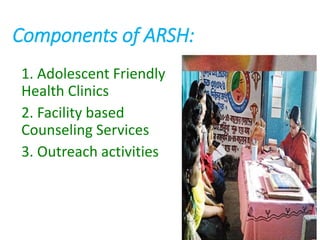
Components of ARSH:
1. Adolescent Friendly
Health Clinics
2. Facility based
Counseling Services
3. Outreach activities
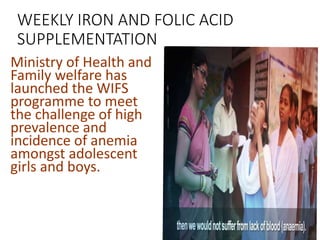
WEEKLY IRON AND FOLIC ACID
SUPPLEMENTATION
Ministry of Health and
Family welfare has
launched the WIFS
programme to meet
the challenge of high
prevalence and
incidence of anemia
amongst adolescent
girls and boys.
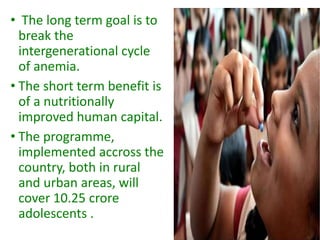
• The long term goal is to
break the
intergenerational cycle
of anemia.
• The short term benefit is
of a nutritionally
improved human capital.
• The programme,
implemented accross the
country, both in rural
and urban areas, will
cover 10.25 crore
adolescents .
Key Intervention:
• Admistration of supervised weekly iron-folic acid
supplements of100 mg elemental iron and 500
microgram folic acid using a fixed day approach
• Screening of target groups for moderate/ severe
anemia and referring these cases to an appropriate
health facility.
• Biannual de- warming (albendazole 400 mg ) , six
months apart to control helminths infestation.
• Information and counseling for improving dietary
intake and for taking action for prevention of
intestinal worm infestation.
MENSTRUAL HYGIENE SCHEME:
The Ministry of
Health & Family
Welfare has
launched scheme
for promotion of
menstrual
hygiene among
adolescent girls in
the age group of
10-19 years.
Key Activities:
• Community based health education and outreach
in the target population to promote menstrual
health
• Ensuring regular availability of sanitary napkins to
the adolescents
• Sourcing and procurement of sanitary napkins to
the adolescent girls
• Training of ASHA and nodal teachers in menstrual
health
• Safe disposal of sanitary napkins.
NUTRITIONAL REHABILITATION CENTRES
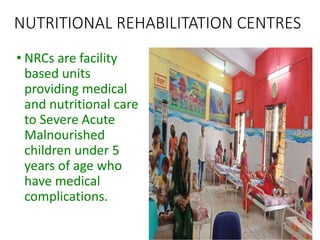
• NRCs are facility
based units
providing medical
and nutritional care
to Severe Acute
Malnourished
children under 5
years of age who
have medical
complications.
Services provided at NRCs :
a. 24 hours care and monitoring of the child
b. Treatment of medical complication
c. Therapeutic feeding
d. Sensory stimulation and emotional care
e. Counseling on appropriate feed, care and hygiene.
f. Demonstration and practice by doing on the preparation of
energy dense food using locally available, culturally
acceptable and affordable food items.
g. Social assessment of family to identify and address
contributory factors.
h. Follow up of the children discharged from the facility.
Management of medical commplication in
a child with SAM at health facility:
•Triage- triage is a process of rapidly screening
sick children. The first step is to check every
child for emergency signs according to ABCD
steps.
•
•Assessment at admission
• Take a history concerning
• -Recent intake of food and fluids
• -Usual diet (before the current illness)
• -Breastfeeding
• -Duration and frequency of diarrhea
and vomiting)
• -Type of diarrhea (watery/bloody)
• -Chronic cough
• -Loss of appetite
• -family circumstances (to understand
child’s social background)
• -Contact with tuberculosis
• -Recent contact with measles
• -Known or suspected HIV infection
• -Immunization
• On examination, look for
• -Anthropometry measurement
• -Oedema
• -Pulse, heart rate, respiration rate
• -Signs of dehydration
• -Shock (cold hand, slow capillary refill,
weak and rapid pulse)
• -Palmar pallor
• -Eye signs of vitamin A deficiency:
• -Dry conjunctiva
• - Bitot’s spot
• - Corneal ulceration
• -Keratomalacia
• -Localizing signs of infection
• -Mouth ulcers
• -Skin changes of kwashiorkor
• -Hypo or hyperpigmentation
• -Desquamation
• - Ulceration
• -Exudative lesions often with
secondary infection (including candida)
Phases of hospital based
management:
1.Stabilization phase -
• .This phase lasts for 1-2 days.
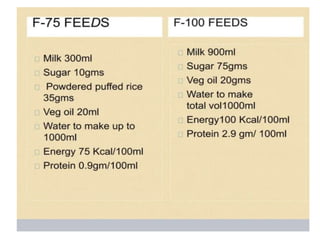
•The feeding formula used during this phase
is started diet which promotes recovery of
normal metabolic function and nutrition-
electrolyte balance.
• Monitor for signs of overfeeding or over
hydration.
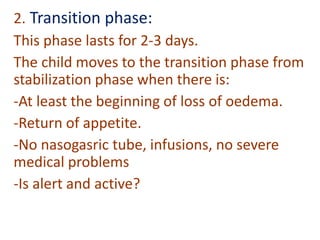
2. Transition phase:
This phase lasts for 2-3 days.
The child moves to the transition phase from
stabilization phase when there is:
-At least the beginning of loss of oedema.
-Return of appetite.
-No nasogasric tube, infusions, no severe
medical problems
-Is alert and active?
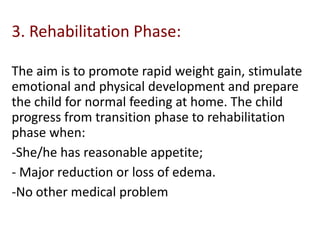
3. Rehabilitation Phase:
The aim is to promote rapid weight gain, stimulate
emotional and physical development and prepare
the child for normal feeding at home. The child
progress from transition phase to rehabilitation
phase when:
-She/he has reasonable appetite;
- Major reduction or loss of edema.
-No other medical problem
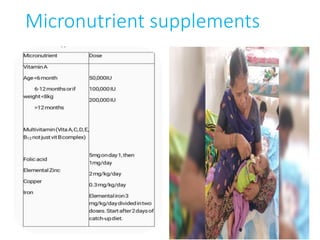
Micronutrient supplements
Follow up:
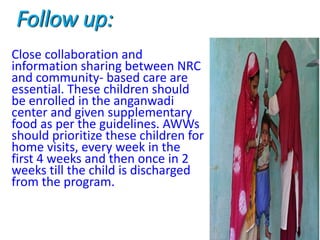
Close collaboration and
information sharing between NRC
and community- based care are
essential. These children should
be enrolled in the anganwadi
center and given supplementary
food as per the guidelines. AWWs
should prioritize these children for
home visits, every week in the
first 4 weeks and then once in 2
weeks till the child is discharged
from the program.
1.ARSH was initiated under
a. RCH-I b. RCH-II c. NRHM d.
NSSK
2.Till January, 2022 how many
phases of Mission
Indradhanush have been
completed?
a. 10 b. 15 c. 17 d. 20
3. Components of ARSH
Program.
4. Phases of hospital based
management in NRCs.
MCH Programmes

  • 1.
    NATIONAL HEALTH PROGRAMMES RELATED TOMATERNAL AND CHILD HEALTH CARE Presented By - Sumana Garai
  • 2.
    MISSION INDRADHANUSH Mission Indradhanush isa health mission of the Govt. of India. It was launched by the Union Health Minister, J. P. Nadda on 25 December, 2014.
  • 3.
    Long term goalof Mission Indradhanush: • To strengthen the health system through collaboration of central and state governments and development partners. • To identify and level the gaps in existing routine immunization program. • To develop human resource and sustainable effort in expansion of micro- plans for routine immunization.
  • 4.
    General Objectives: To ensurehigh coverage of children and pregnant women with all available vaccines throughout the country, with emphasis on the identified 201 high focus districts.
  • 5.
    Journey of MissionIndradhanush: • Phase I - April to July , 2015 , 201 districts covered. • Phase II- October 2015 - January 2016, 352 districts covered , 73 districts from phase I • Phase III- April - July, 2016, 216 districts covered, 4 intensified immunization rounds. • Phase IV- Feb- May, 2017 in North- East states, 68 districts covered • April- July, 2017 in 19 other states, 186 districts • Phase V- carried out in 190 lowest performing districts.
  • 6.
    ADOLESCENT REPRODUCTIVE AND SEXUALHEALTH PROGRAM This approach was initiated in 2006 under RCH - II in the form of Adolescent Reproductive Sexual Health Clinic to provide counseling on sexual & reproductive issues.
  • 7.
    Objectives of ARSHProgram: •Reducing teenage pregnancies •Meeting unmet contraceptive needs •Reducing no. of teenage maternal deaths •Reducing incidence of STI.
  • 8.
    Components of ARSH: 1.Adolescent Friendly Health Clinics 2. Facility based Counseling Services 3. Outreach activities
  • 9.
    WEEKLY IRON ANDFOLIC ACID SUPPLEMENTATION Ministry of Health and Family welfare has launched the WIFS programme to meet the challenge of high prevalence and incidence of anemia amongst adolescent girls and boys.
  • 10.
    • The longterm goal is to break the intergenerational cycle of anemia. • The short term benefit is of a nutritionally improved human capital. • The programme, implemented accross the country, both in rural and urban areas, will cover 10.25 crore adolescents .
  • 11.
    Key Intervention: • Admistrationof supervised weekly iron-folic acid supplements of100 mg elemental iron and 500 microgram folic acid using a fixed day approach • Screening of target groups for moderate/ severe anemia and referring these cases to an appropriate health facility. • Biannual de- warming (albendazole 400 mg ) , six months apart to control helminths infestation. • Information and counseling for improving dietary intake and for taking action for prevention of intestinal worm infestation.
  • 12.
    MENSTRUAL HYGIENE SCHEME: TheMinistry of Health & Family Welfare has launched scheme for promotion of menstrual hygiene among adolescent girls in the age group of 10-19 years.
  • 13.
    Key Activities: • Communitybased health education and outreach in the target population to promote menstrual health • Ensuring regular availability of sanitary napkins to the adolescents • Sourcing and procurement of sanitary napkins to the adolescent girls • Training of ASHA and nodal teachers in menstrual health • Safe disposal of sanitary napkins.
  • 14.
    NUTRITIONAL REHABILITATION CENTRES •NRCs are facility based units providing medical and nutritional care to Severe Acute Malnourished children under 5 years of age who have medical complications.
  • 15.
    Services provided atNRCs : a. 24 hours care and monitoring of the child b. Treatment of medical complication c. Therapeutic feeding d. Sensory stimulation and emotional care e. Counseling on appropriate feed, care and hygiene. f. Demonstration and practice by doing on the preparation of energy dense food using locally available, culturally acceptable and affordable food items. g. Social assessment of family to identify and address contributory factors. h. Follow up of the children discharged from the facility.
  • 16.
    Management of medicalcommplication in a child with SAM at health facility: •Triage- triage is a process of rapidly screening sick children. The first step is to check every child for emergency signs according to ABCD steps. • •Assessment at admission
  • 17.
    • Take ahistory concerning • -Recent intake of food and fluids • -Usual diet (before the current illness) • -Breastfeeding • -Duration and frequency of diarrhea and vomiting) • -Type of diarrhea (watery/bloody) • -Chronic cough • -Loss of appetite • -family circumstances (to understand child’s social background) • -Contact with tuberculosis • -Recent contact with measles • -Known or suspected HIV infection • -Immunization • On examination, look for • -Anthropometry measurement • -Oedema • -Pulse, heart rate, respiration rate • -Signs of dehydration • -Shock (cold hand, slow capillary refill, weak and rapid pulse) • -Palmar pallor • -Eye signs of vitamin A deficiency: • -Dry conjunctiva • - Bitot’s spot • - Corneal ulceration • -Keratomalacia • -Localizing signs of infection • -Mouth ulcers • -Skin changes of kwashiorkor • -Hypo or hyperpigmentation • -Desquamation • - Ulceration • -Exudative lesions often with secondary infection (including candida)
  • 18.
    Phases of hospitalbased management: 1.Stabilization phase - • .This phase lasts for 1-2 days. •The feeding formula used during this phase is started diet which promotes recovery of normal metabolic function and nutrition- electrolyte balance. • Monitor for signs of overfeeding or over hydration.
  • 19.
    2. Transition phase: Thisphase lasts for 2-3 days. The child moves to the transition phase from stabilization phase when there is: -At least the beginning of loss of oedema. -Return of appetite. -No nasogasric tube, infusions, no severe medical problems -Is alert and active?
  • 21.
    3. Rehabilitation Phase: Theaim is to promote rapid weight gain, stimulate emotional and physical development and prepare the child for normal feeding at home. The child progress from transition phase to rehabilitation phase when: -She/he has reasonable appetite; - Major reduction or loss of edema. -No other medical problem
  • 22.
  • 23.
    Follow up: Close collaborationand information sharing between NRC and community- based care are essential. These children should be enrolled in the anganwadi center and given supplementary food as per the guidelines. AWWs should prioritize these children for home visits, every week in the first 4 weeks and then once in 2 weeks till the child is discharged from the program.
  • 25.
    1.ARSH was initiatedunder a. RCH-I b. RCH-II c. NRHM d. NSSK 2.Till January, 2022 how many phases of Mission Indradhanush have been completed? a. 10 b. 15 c. 17 d. 20 3. Components of ARSH Program. 4. Phases of hospital based management in NRCs.