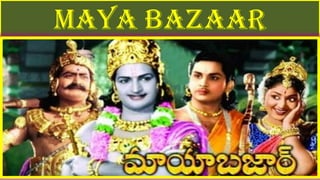

Maya Bazaar
Prepared
by
M. PADMA LALITHA SHARADA
for
Class: 10 Lesson: 10
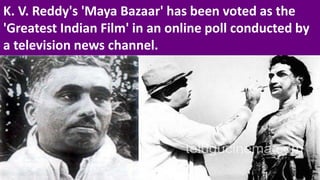
K. V. Reddy's 'Maya Bazaar' has been voted as the
'Greatest Indian Film' in an online poll conducted by
a television news channel.
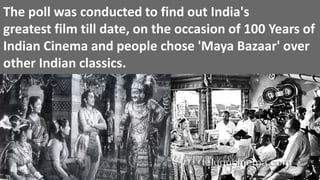
The poll was conducted to find out India's
greatest film till date, on the occasion of 100 Years of
Indian Cinema and people chose 'Maya Bazaar' over
other Indian classics.
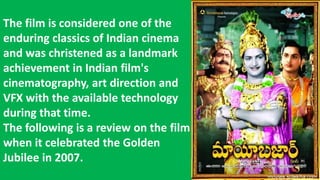
The film is considered one of the
enduring classics of Indian cinema
and was christened as a landmark
achievement in Indian film's
cinematography, art direction and
VFX with the available technology
during that time.
The following is a review on the film
when it celebrated the Golden
Jubilee in 2007.
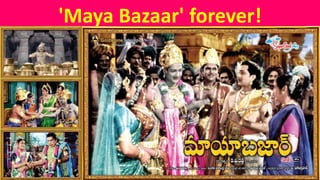
'Maya Bazaar' forever!
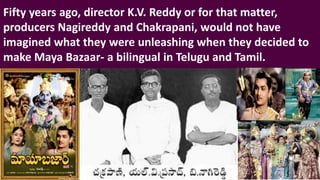
Fifty years ago, director K.V. Reddy or for that matter,
producers Nagireddy and Chakrapani, would not have
imagined what they were unleashing when they decided to
make Maya Bazaar- a bilingual in Telugu and Tamil.
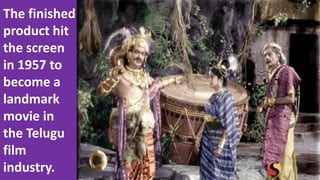
The finished
product hit
the screen
in 1957 to
become a
landmark
movie in
the Telugu
film
industry.
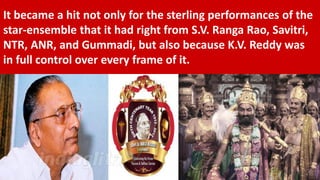
It became a hit not only for the sterling performances of the
star-ensemble that it had right from S.V. Ranga Rao, Savitri,
NTR, ANR, and Gummadi, but also because K.V. Reddy was
in full control over every frame of it.
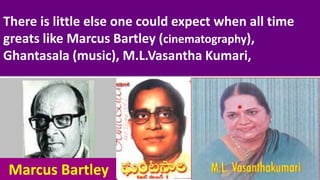
There is little else one could expect when all time
greats like Marcus Bartley (cinematography),
Ghantasala (music), M.L.Vasantha Kumari,
Marcus Bartley
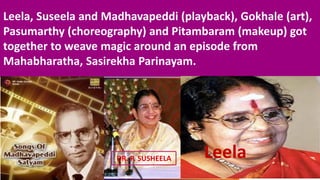
Leela, Suseela and Madhavapeddi (playback), Gokhale (art),
Pasumarthy (choreography) and Pitambaram (makeup) got
together to weave magic around an episode from
Mahabharatha, Sasirekha Parinayam.
LeelaDR. P. SUSHEELA
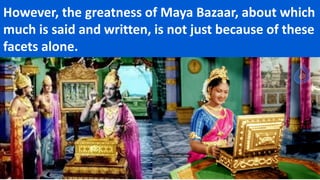
However, the greatness of Maya Bazaar, about which
much is said and written, is not just because of these
facets alone.
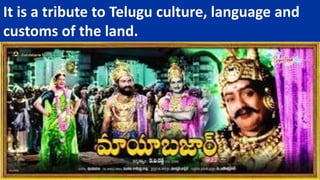
It is a tribute to Telugu culture, language and
customs of the land.
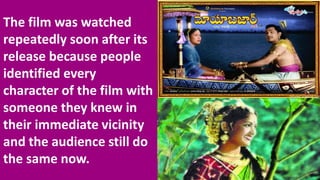
The film was watched
repeatedly soon after its
release because people
identified every
character of the film with
someone they knew in
their immediate vicinity
and the audience still do
the same now.
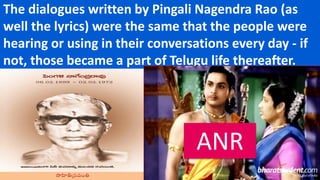
The dialogues written by Pingali Nagendra Rao (as
well the lyrics) were the same that the people were
hearing or using in their conversations every day - if
not, those became a part of Telugu life thereafter.
ANR
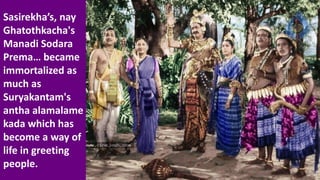
Sasirekha’s, nay
Ghatothkacha's
Manadi Sodara
Prema… became
immortalized as
much as
Suryakantam's
antha alamalame
kada which has
become a way of
life in greeting
people.
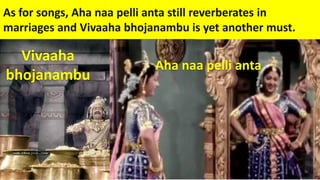
As for songs, Aha naa pelli anta still reverberates in
marriages and Vivaaha bhojanambu is yet another must.
Aha naa pelli anta
Vivaaha
bhojanambu
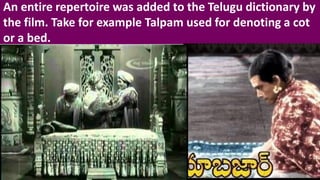
An entire repertoire was added to the Telugu dictionary by
the film. Take for example Talpam used for denoting a cot
or a bed.
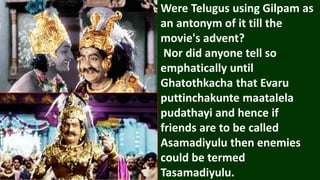
Were Telugus using Gilpam as
an antonym of it till the
movie's advent?
Nor did anyone tell so
emphatically until
Ghatothkacha that Evaru
puttinchakunte maatalela
pudathayi and hence if
friends are to be called
Asamadiyulu then enemies
could be termed
Tasamadiyulu.
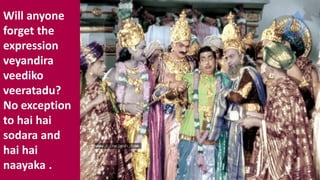
Will anyone
forget the
expression
veyandira
veediko
veeratadu?
No exception
to hai hai
sodara and
hai hai
naayaka .
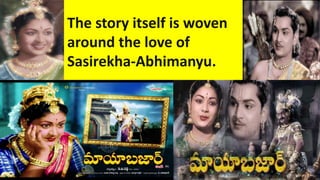
The story itself is woven
around the love of
Sasirekha-Abhimanyu.
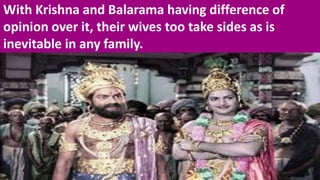
With Krishna and Balarama having difference of
opinion over it, their wives too take sides as is
inevitable in any family.
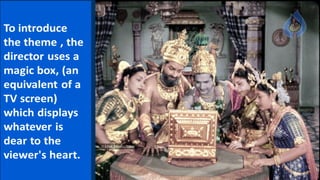
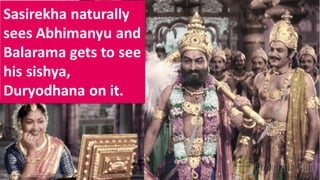
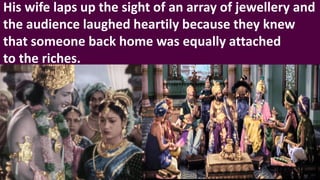
His wife laps up the sight of an array of jewellery and
the audience laughed heartily because they knew
that someone back home was equally attached
to the riches.
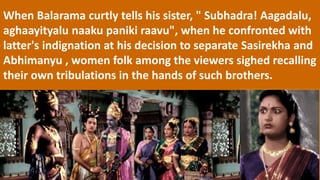
When Balarama curtly tells his sister, " Subhadra! Aagadalu,
aghaayityalu naaku paniki raavu", when he confronted with
latter's indignation at his decision to separate Sasirekha and
Abhimanyu , women folk among the viewers sighed recalling
their own tribulations in the hands of such brothers.
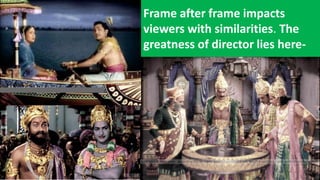
Frame after frame impacts
viewers with similarities. The
greatness of director lies here-
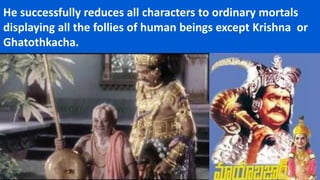
He successfully reduces all characters to ordinary mortals
displaying all the follies of human beings except Krishna or
Ghatothkacha.
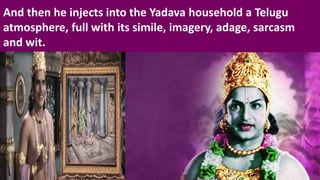
And then he injects into the Yadava household a Telugu
atmosphere, full with its simile, imagery, adage, sarcasm
and wit.
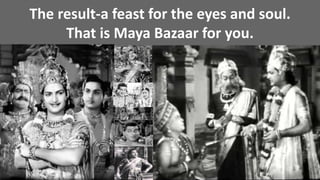
The result-a feast for the eyes and soul.
That is Maya Bazaar for you.
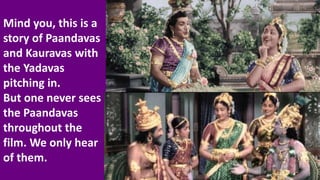
Mind you, this is a
story of Paandavas
and Kauravas with
the Yadavas
pitching in.
But one never sees
the Paandavas
throughout the
film. We only hear
of them.
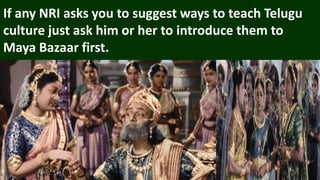
If any NRI asks you to suggest ways to teach Telugu
culture just ask him or her to introduce them to
Maya Bazaar first.
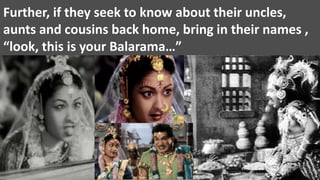
Further, if they seek to know about their uncles,
aunts and cousins back home, bring in their names ,
“look, this is your Balarama…”
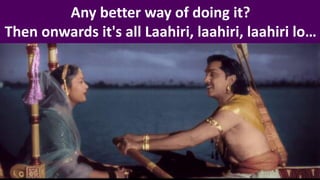
Any better way of doing it?
Then onwards it's all Laahiri, laahiri, laahiri lo…
SHARADA

Maya bazaar (New) - Technically edited version

  • 1.
  • 2.
    Prepared by M. PADMA LALITHASHARADA for Class: 10 Lesson: 10
  • 3.
    K. V. Reddy's'Maya Bazaar' has been voted as the 'Greatest Indian Film' in an online poll conducted by a television news channel.
  • 4.
    The poll wasconducted to find out India's greatest film till date, on the occasion of 100 Years of Indian Cinema and people chose 'Maya Bazaar' over other Indian classics.
  • 5.
    The film isconsidered one of the enduring classics of Indian cinema and was christened as a landmark achievement in Indian film's cinematography, art direction and VFX with the available technology during that time. The following is a review on the film when it celebrated the Golden Jubilee in 2007.
  • 6.
  • 7.
    Fifty years ago,director K.V. Reddy or for that matter, producers Nagireddy and Chakrapani, would not have imagined what they were unleashing when they decided to make Maya Bazaar- a bilingual in Telugu and Tamil.
  • 8.
    The finished product hit thescreen in 1957 to become a landmark movie in the Telugu film industry.
  • 9.
    It became ahit not only for the sterling performances of the star-ensemble that it had right from S.V. Ranga Rao, Savitri, NTR, ANR, and Gummadi, but also because K.V. Reddy was in full control over every frame of it.
  • 10.
    There is littleelse one could expect when all time greats like Marcus Bartley (cinematography), Ghantasala (music), M.L.Vasantha Kumari, Marcus Bartley
  • 11.
    Leela, Suseela andMadhavapeddi (playback), Gokhale (art), Pasumarthy (choreography) and Pitambaram (makeup) got together to weave magic around an episode from Mahabharatha, Sasirekha Parinayam. LeelaDR. P. SUSHEELA
  • 12.
    However, the greatnessof Maya Bazaar, about which much is said and written, is not just because of these facets alone.
  • 13.
    It is atribute to Telugu culture, language and customs of the land.
  • 14.
    The film waswatched repeatedly soon after its release because people identified every character of the film with someone they knew in their immediate vicinity and the audience still do the same now.
  • 15.
    The dialogues writtenby Pingali Nagendra Rao (as well the lyrics) were the same that the people were hearing or using in their conversations every day - if not, those became a part of Telugu life thereafter. ANR
  • 16.
    Sasirekha’s, nay Ghatothkacha's Manadi Sodara Prema…became immortalized as much as Suryakantam's antha alamalame kada which has become a way of life in greeting people.
  • 17.
    As for songs,Aha naa pelli anta still reverberates in marriages and Vivaaha bhojanambu is yet another must. Aha naa pelli anta Vivaaha bhojanambu
  • 18.
    An entire repertoirewas added to the Telugu dictionary by the film. Take for example Talpam used for denoting a cot or a bed.
  • 19.
    Were Telugus usingGilpam as an antonym of it till the movie's advent? Nor did anyone tell so emphatically until Ghatothkacha that Evaru puttinchakunte maatalela pudathayi and hence if friends are to be called Asamadiyulu then enemies could be termed Tasamadiyulu.
  • 20.
    Will anyone forget the expression veyandira veediko veeratadu? Noexception to hai hai sodara and hai hai naayaka .
  • 21.
    The story itselfis woven around the love of Sasirekha-Abhimanyu.
  • 22.
    With Krishna andBalarama having difference of opinion over it, their wives too take sides as is inevitable in any family.
  • 25.
    His wife lapsup the sight of an array of jewellery and the audience laughed heartily because they knew that someone back home was equally attached to the riches.
  • 26.
    When Balarama curtlytells his sister, " Subhadra! Aagadalu, aghaayityalu naaku paniki raavu", when he confronted with latter's indignation at his decision to separate Sasirekha and Abhimanyu , women folk among the viewers sighed recalling their own tribulations in the hands of such brothers.
  • 27.
    Frame after frameimpacts viewers with similarities. The greatness of director lies here-
  • 28.
    He successfully reducesall characters to ordinary mortals displaying all the follies of human beings except Krishna or Ghatothkacha.
  • 29.
    And then heinjects into the Yadava household a Telugu atmosphere, full with its simile, imagery, adage, sarcasm and wit.
  • 30.
    The result-a feastfor the eyes and soul. That is Maya Bazaar for you.
  • 31.
    Mind you, thisis a story of Paandavas and Kauravas with the Yadavas pitching in. But one never sees the Paandavas throughout the film. We only hear of them.
  • 32.
    If any NRIasks you to suggest ways to teach Telugu culture just ask him or her to introduce them to Maya Bazaar first.
  • 33.
    Further, if theyseek to know about their uncles, aunts and cousins back home, bring in their names , “look, this is your Balarama…”
  • 34.
    Any better wayof doing it? Then onwards it's all Laahiri, laahiri, laahiri lo…
  • 35.