Matrix
Exponential
Definition from Taylor series
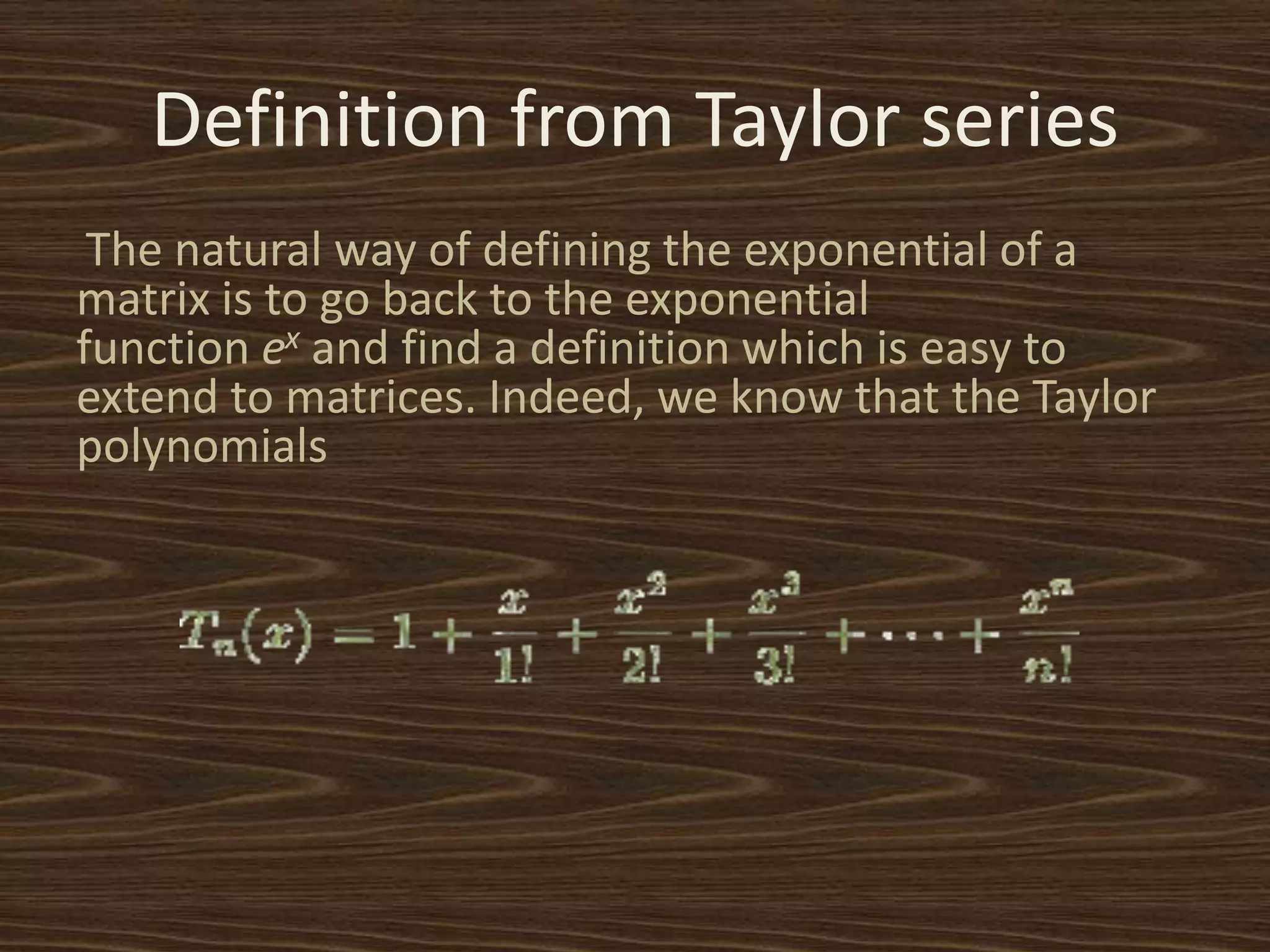
The natural way of defining the exponential of a
matrix is to go back to the exponential
function ex and find a definition which is easy to
extend to matrices. Indeed, we know that the Taylor
polynomials
converges pointwise to ex and uniformly
whenever x is bounded. These algebraic
polynomials may help us in defining the
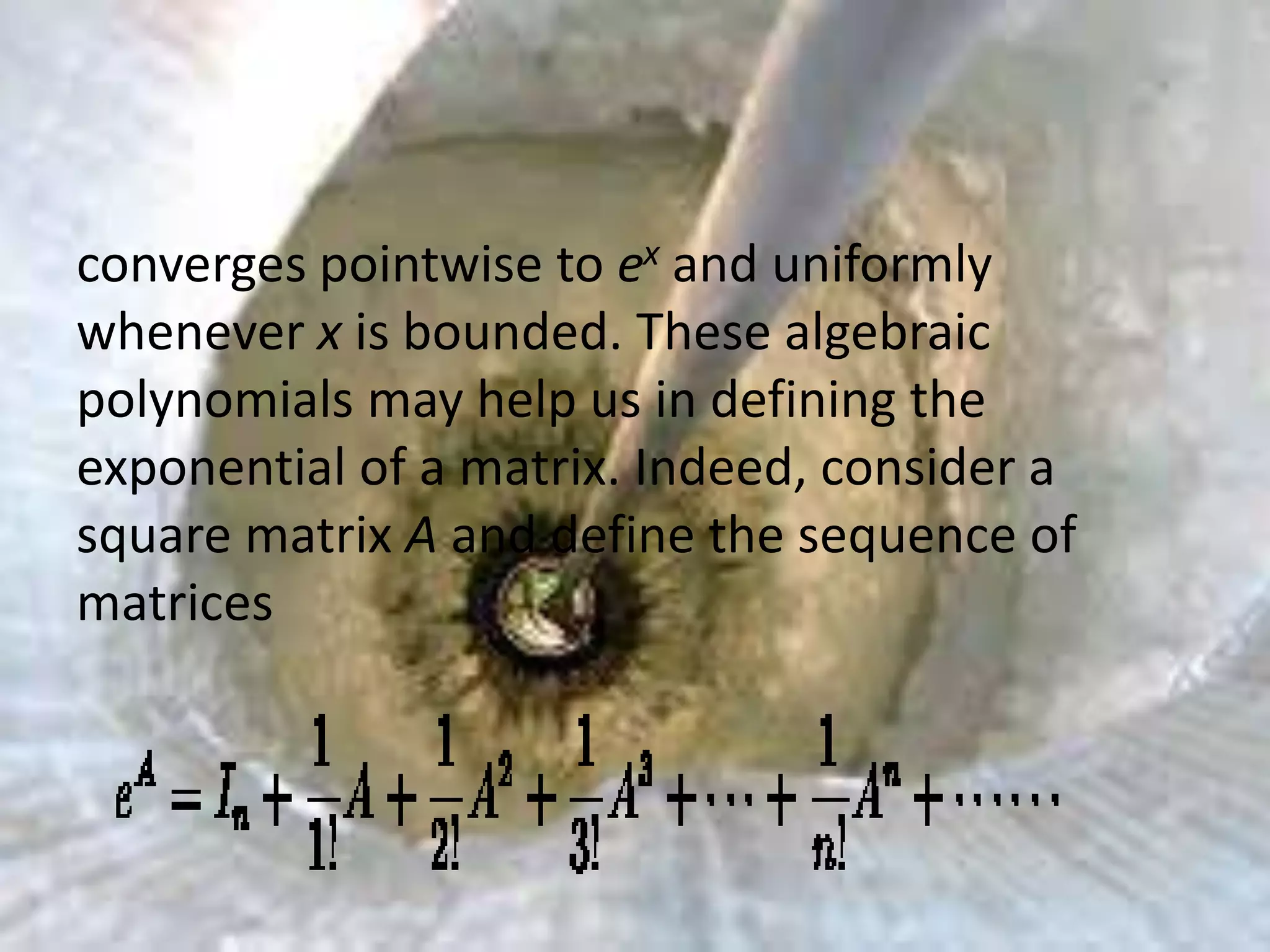
exponential of a matrix. Indeed, consider a
square matrix A and define the sequence of
matrices
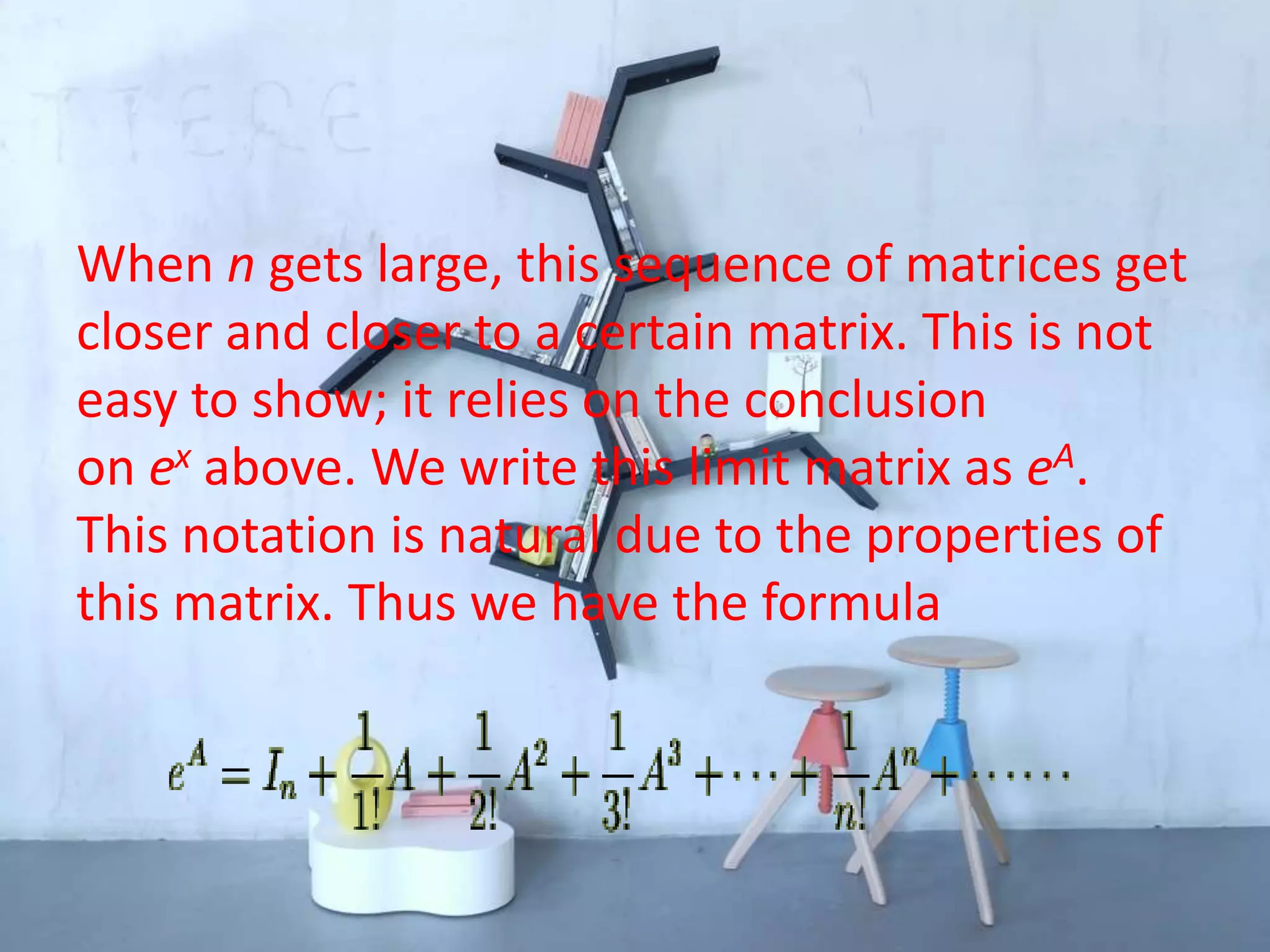
When n gets large, this sequence of matrices get
closer and closer to a certain matrix. This is not
easy to show; it relies on the conclusion
on ex above. We write this limit matrix as eA.
This notation is natural due to the properties of
this matrix. Thus we have the formula
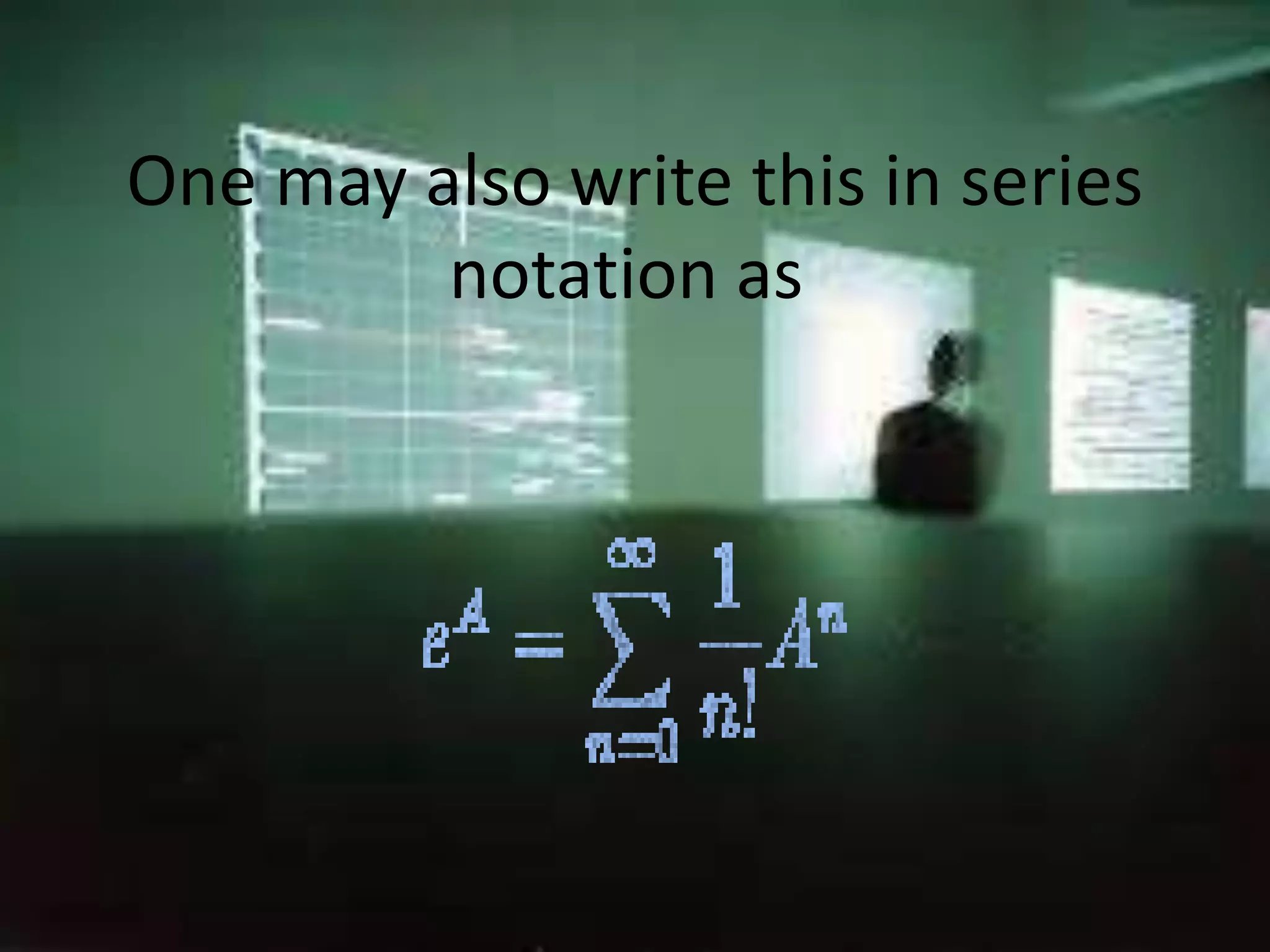
One may also write this in series
notation as
Examples
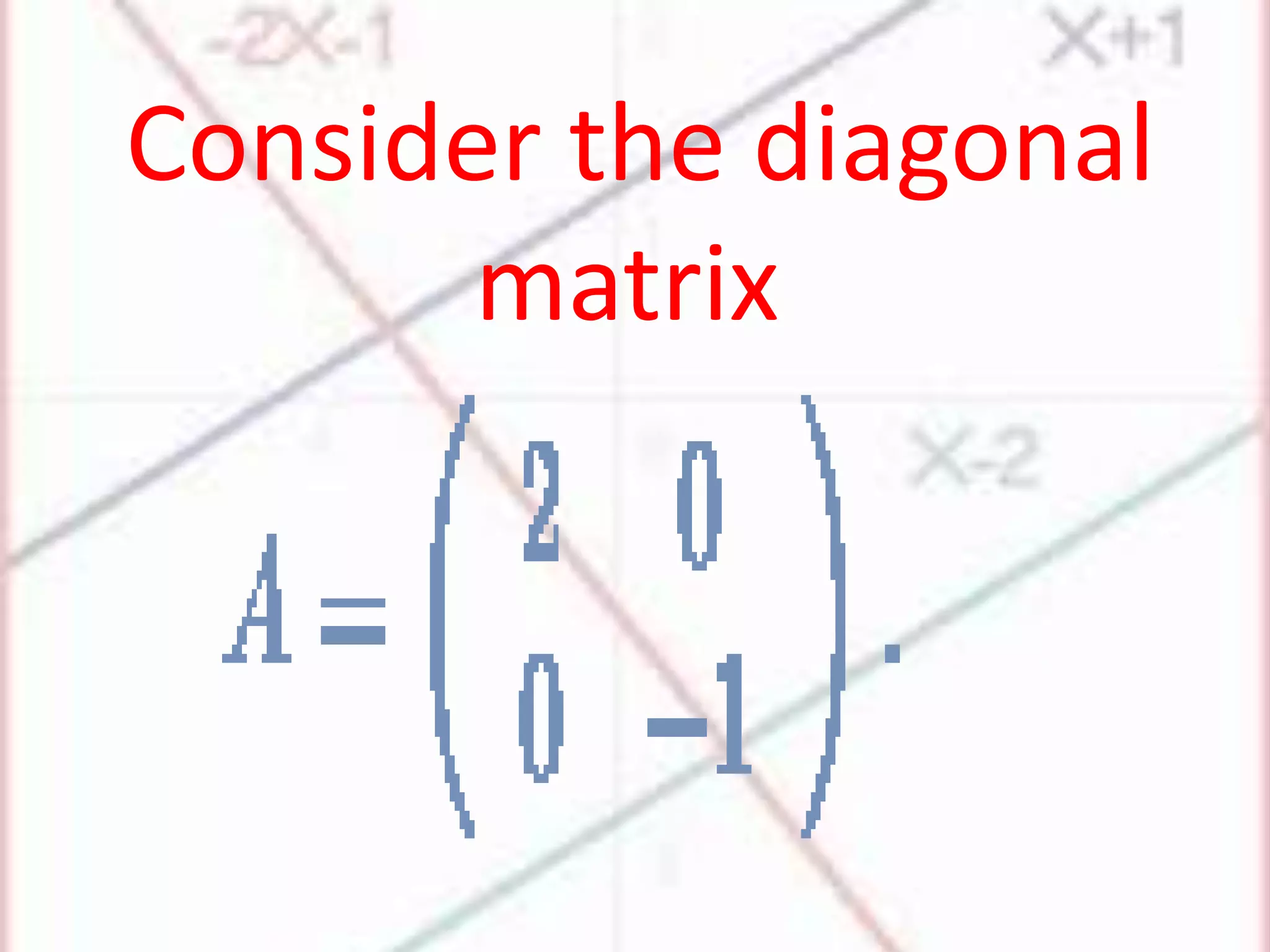
Consider the diagonal
matrix
• It is easy to check that
• for . Hence we have
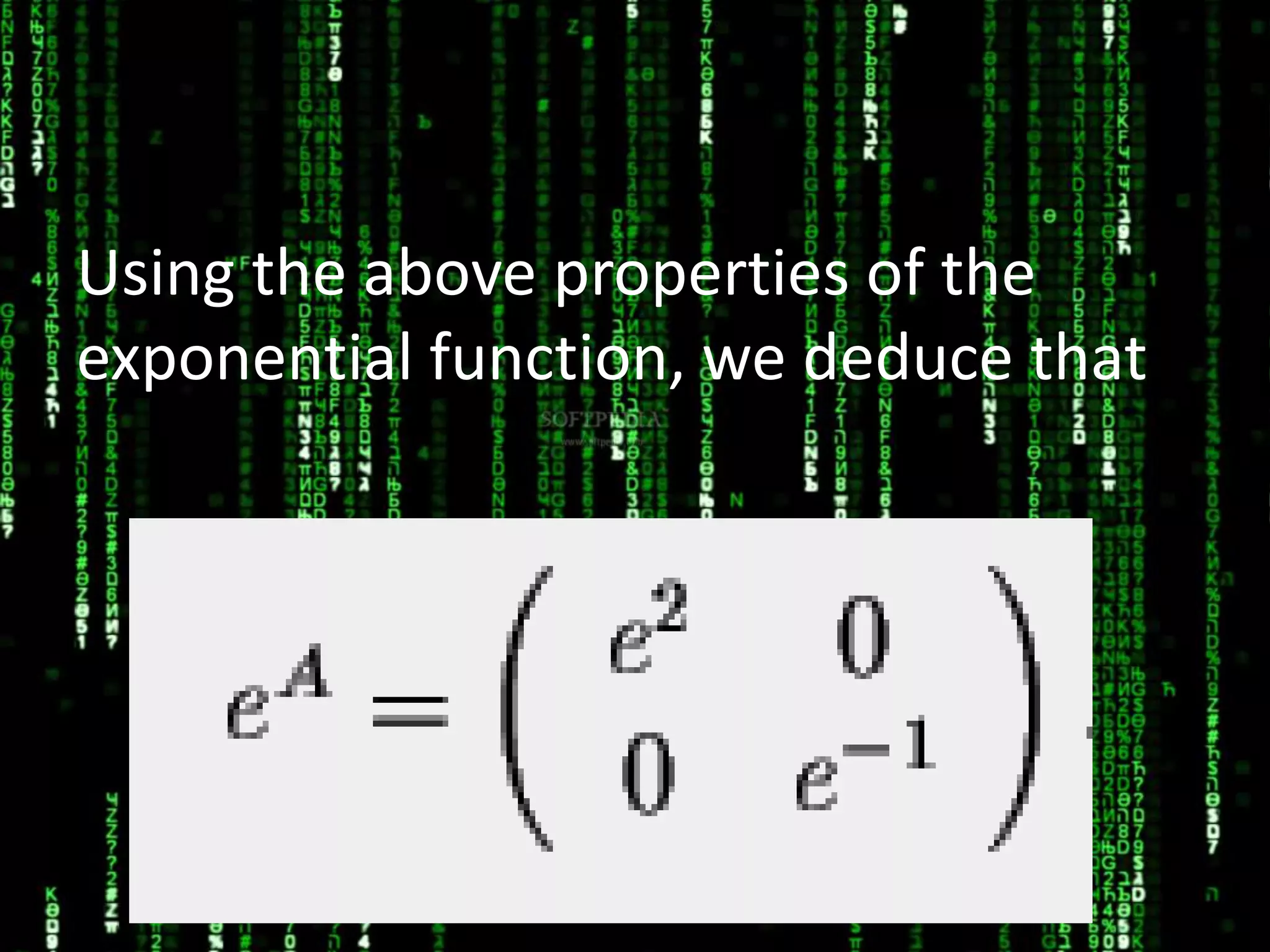
Using the above properties of the
exponential function, we deduce that
Diagonal Matrix
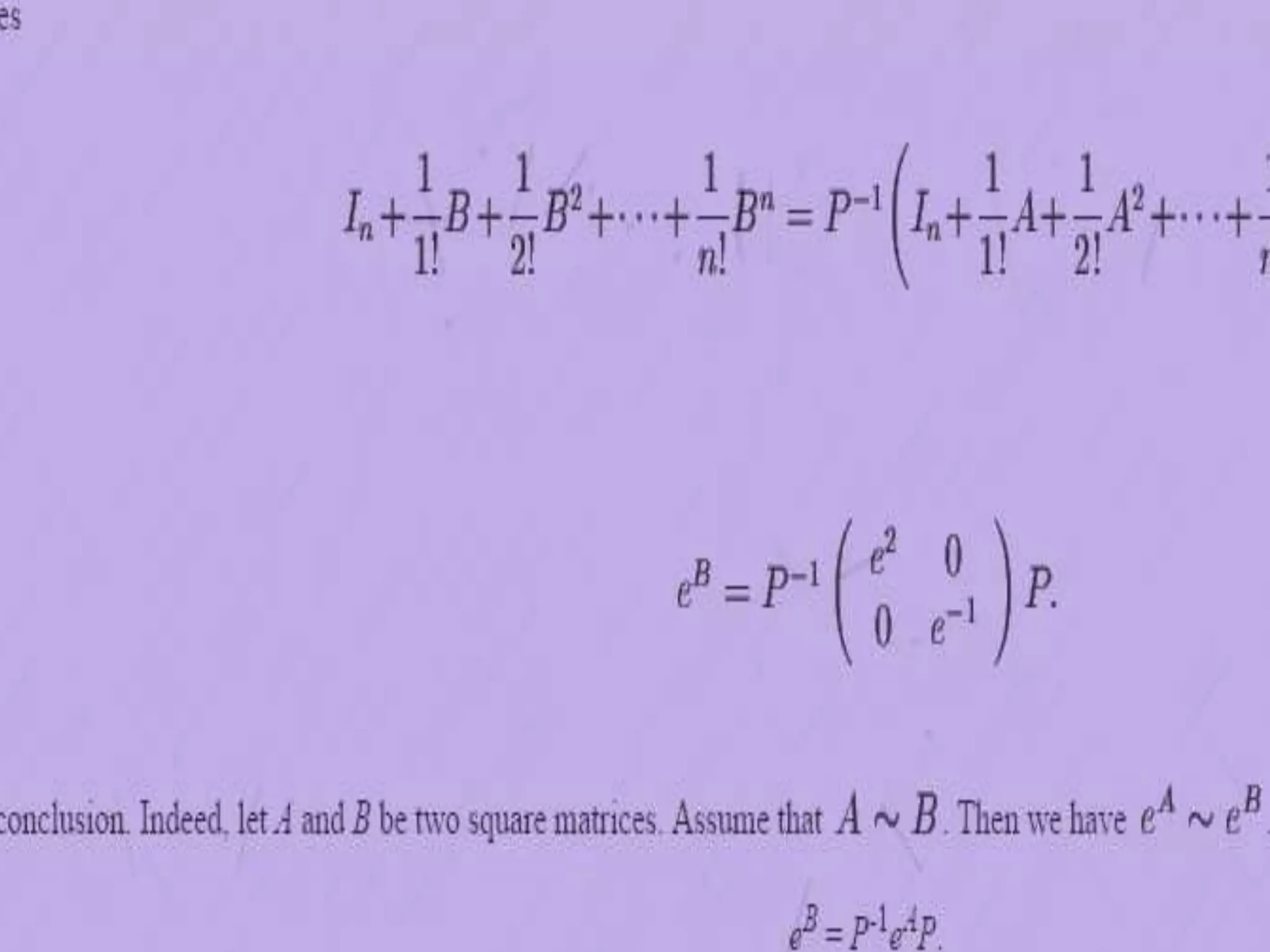
for a diagonal matrix A, eA can always be obtained
by replacing the entries of A (on the diagonal) by
their exponentials. Now let B be a matrix similar
to A. As explained before, then there exists an
invertible matrix P such that
B = P-1AP.
Moreover, we have
Bn = P-1AnP
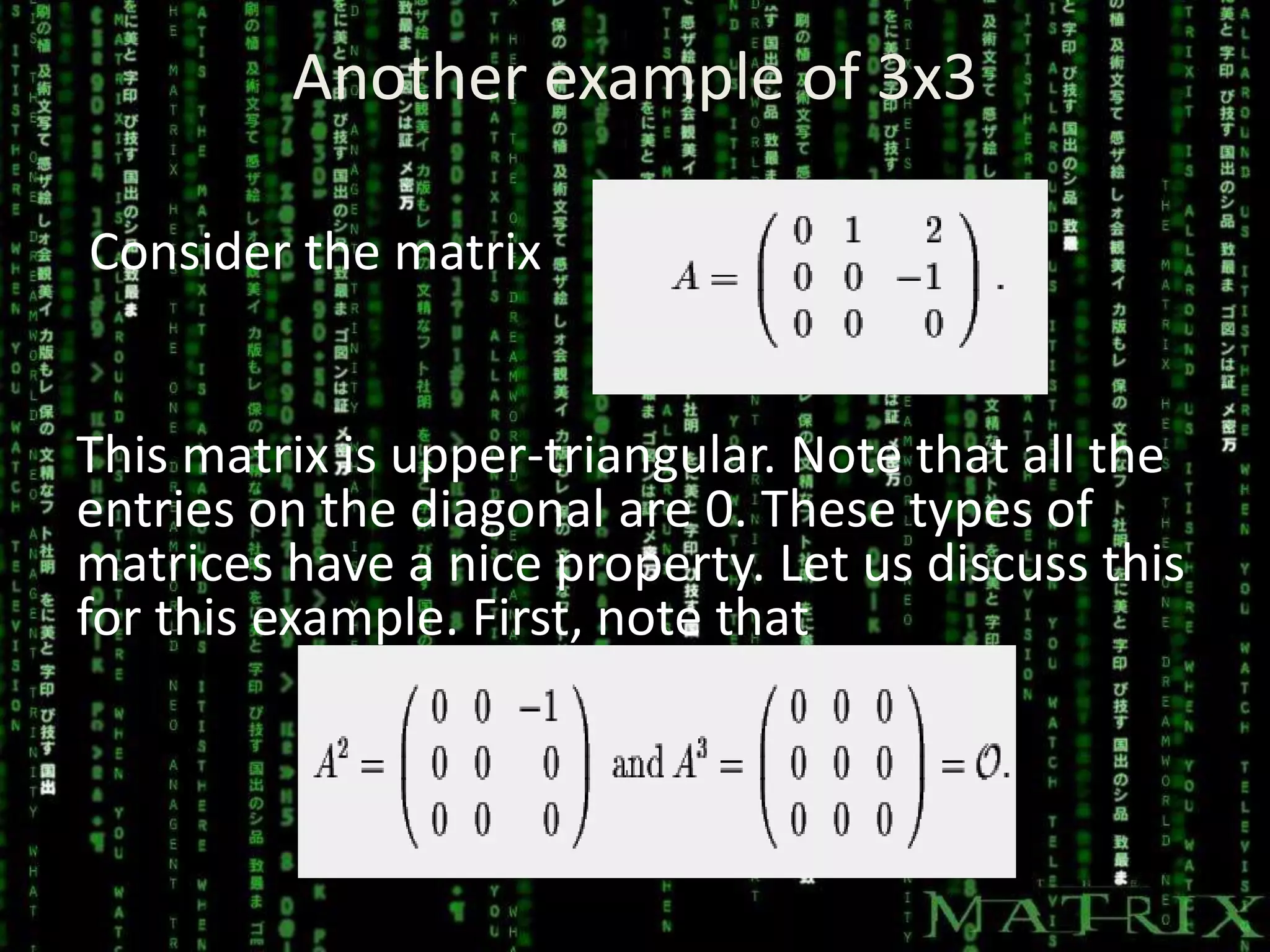
Another example of 3x3
Consider the matrix
This matrix is upper-triangular. Note that all the
entries on the diagonal are 0. These types of
matrices have a nice property. Let us discuss this
for this example. First, note that
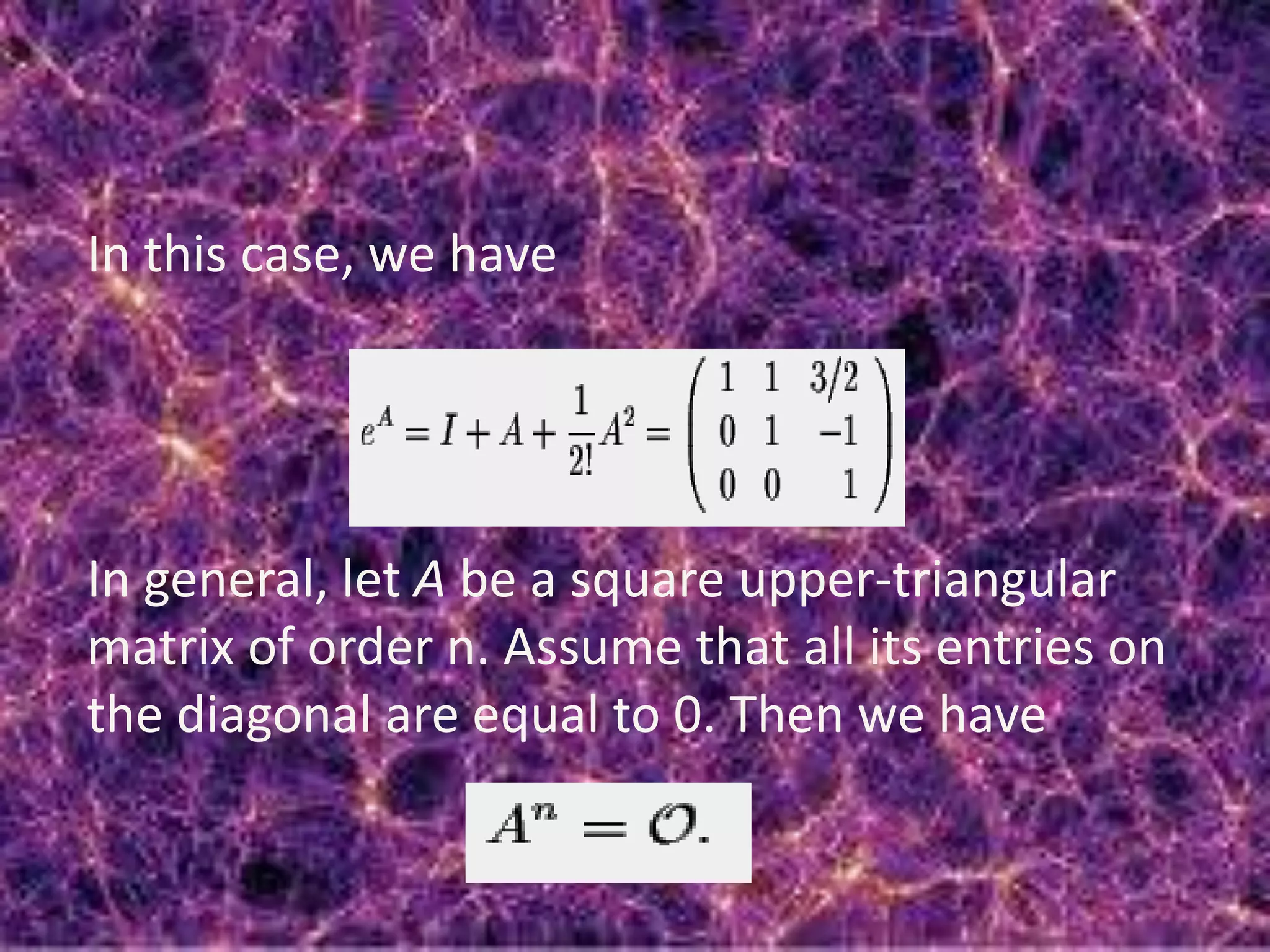
In this case, we have
In general, let A be a square upper-triangular
matrix of order n. Assume that all its entries on
the diagonal are equal to 0. Then we have
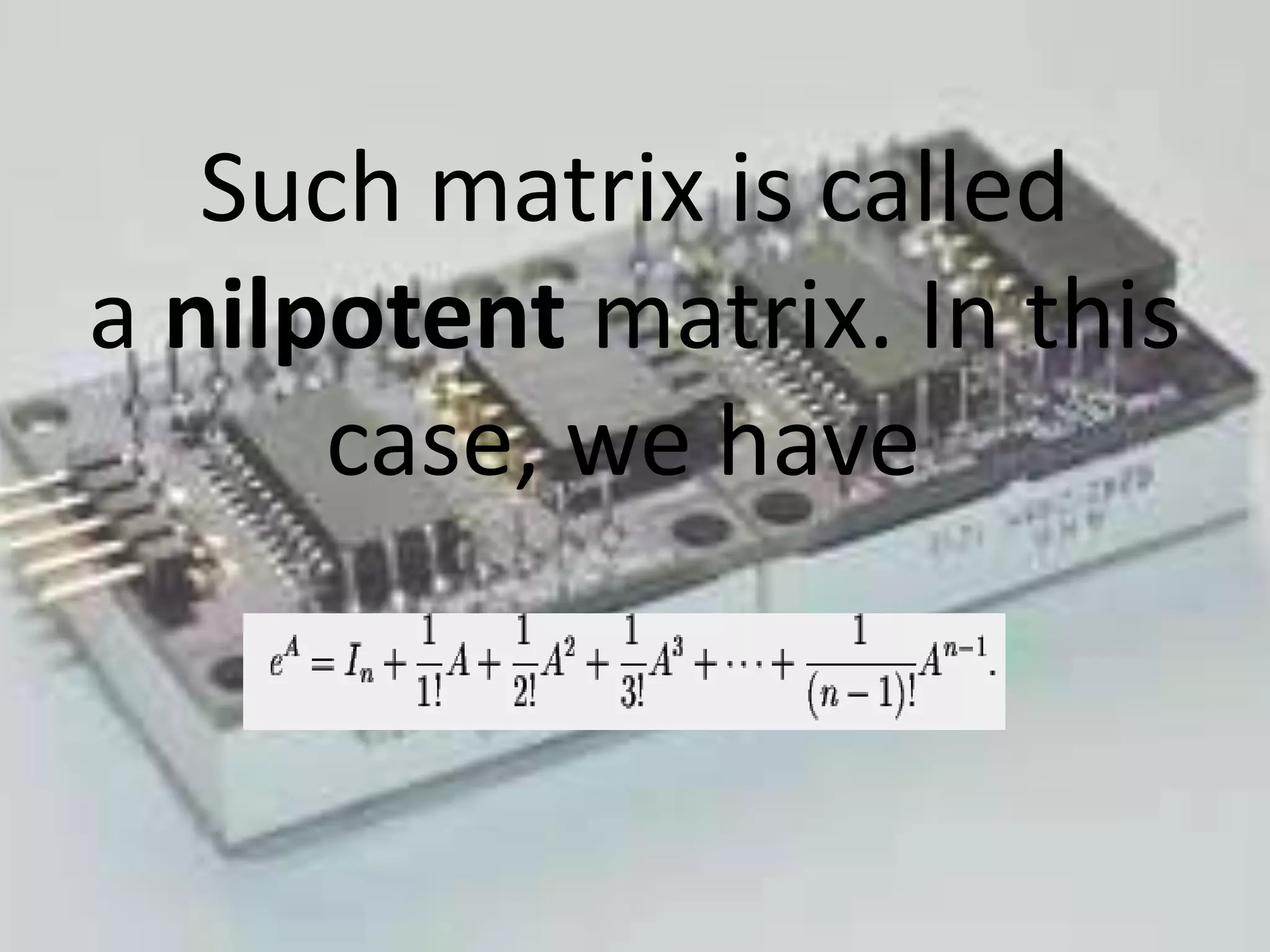
Such matrix is called
a nilpotent matrix. In this
case, we have
Matrix Exponential

Matrix Exponential

  • 1.
  • 2.
    Definition from Taylorseries The natural way of defining the exponential of a matrix is to go back to the exponential function ex and find a definition which is easy to extend to matrices. Indeed, we know that the Taylor polynomials
  • 3.
    converges pointwise toex and uniformly whenever x is bounded. These algebraic polynomials may help us in defining the exponential of a matrix. Indeed, consider a square matrix A and define the sequence of matrices
  • 4.
    When n getslarge, this sequence of matrices get closer and closer to a certain matrix. This is not easy to show; it relies on the conclusion on ex above. We write this limit matrix as eA. This notation is natural due to the properties of this matrix. Thus we have the formula
  • 5.
    One may alsowrite this in series notation as
  • 6.
  • 7.
  • 8.
    • It iseasy to check that • for . Hence we have
  • 9.
    Using the aboveproperties of the exponential function, we deduce that
  • 10.
    Diagonal Matrix for adiagonal matrix A, eA can always be obtained by replacing the entries of A (on the diagonal) by their exponentials. Now let B be a matrix similar to A. As explained before, then there exists an invertible matrix P such that B = P-1AP. Moreover, we have Bn = P-1AnP
  • 12.
    Another example of3x3 Consider the matrix This matrix is upper-triangular. Note that all the entries on the diagonal are 0. These types of matrices have a nice property. Let us discuss this for this example. First, note that
  • 13.
    In this case,we have In general, let A be a square upper-triangular matrix of order n. Assume that all its entries on the diagonal are equal to 0. Then we have
  • 14.
    Such matrix iscalled a nilpotent matrix. In this case, we have