Mathematics in
architecture
J.J.A.C. EMANS, Y.F.W. LAMBERS,
A.E.S. VAN DE POLL, G.K.W. ZUIJDGEEST
Table of contents
Introduction
Escher
Impossible constructions
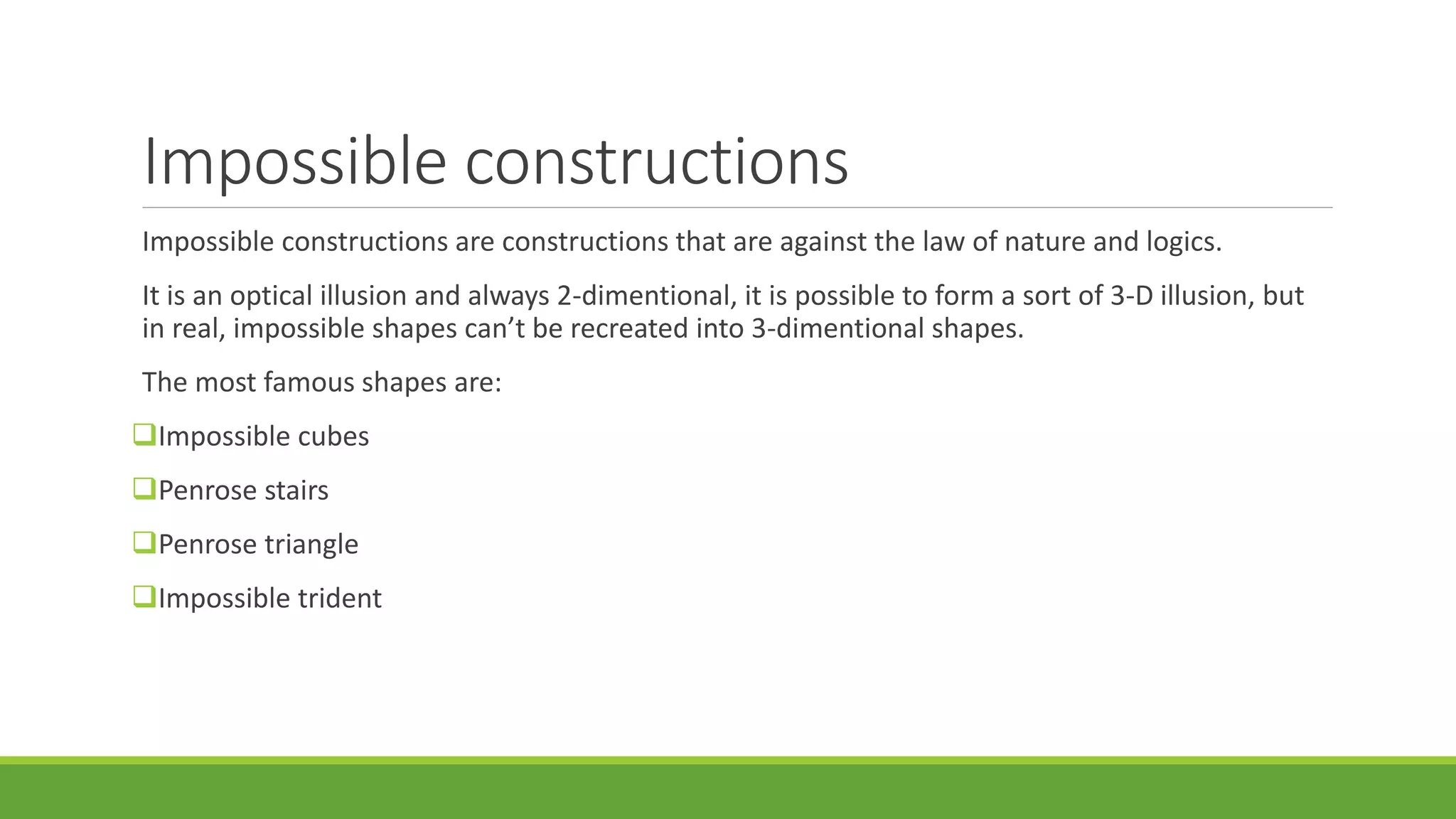
• Impossible cubes
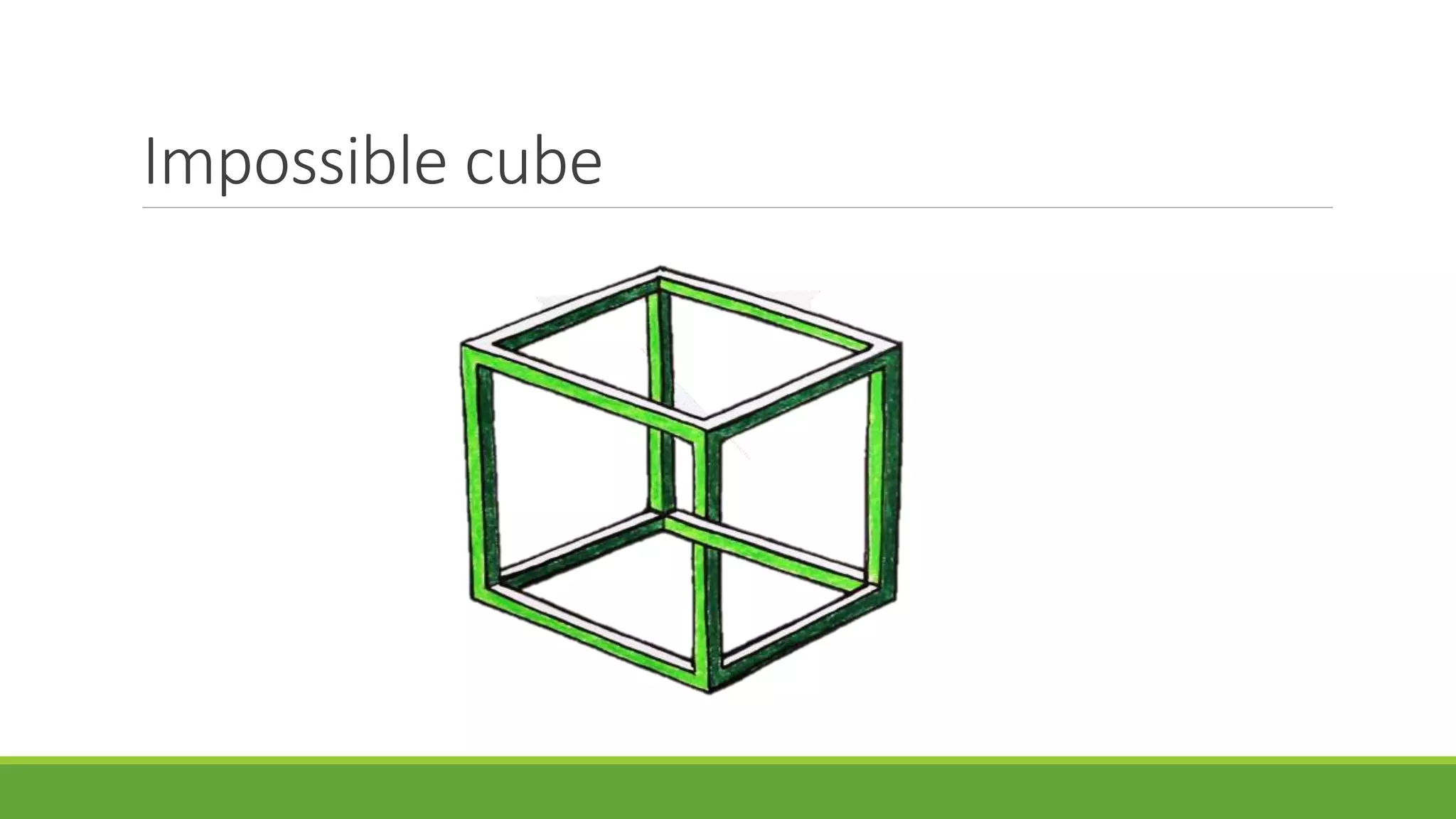
• Penrose stairs
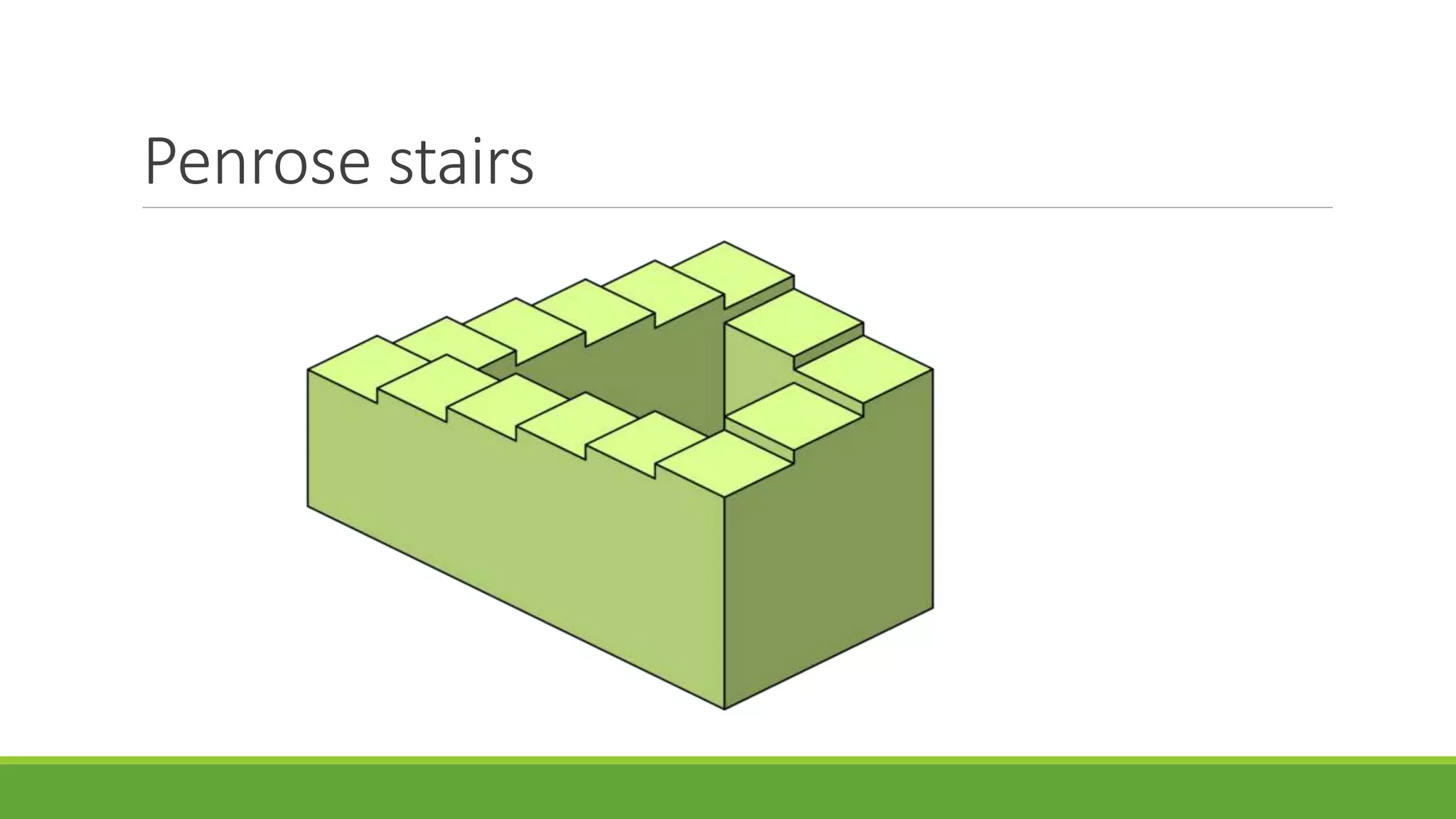
• Penrose triangle
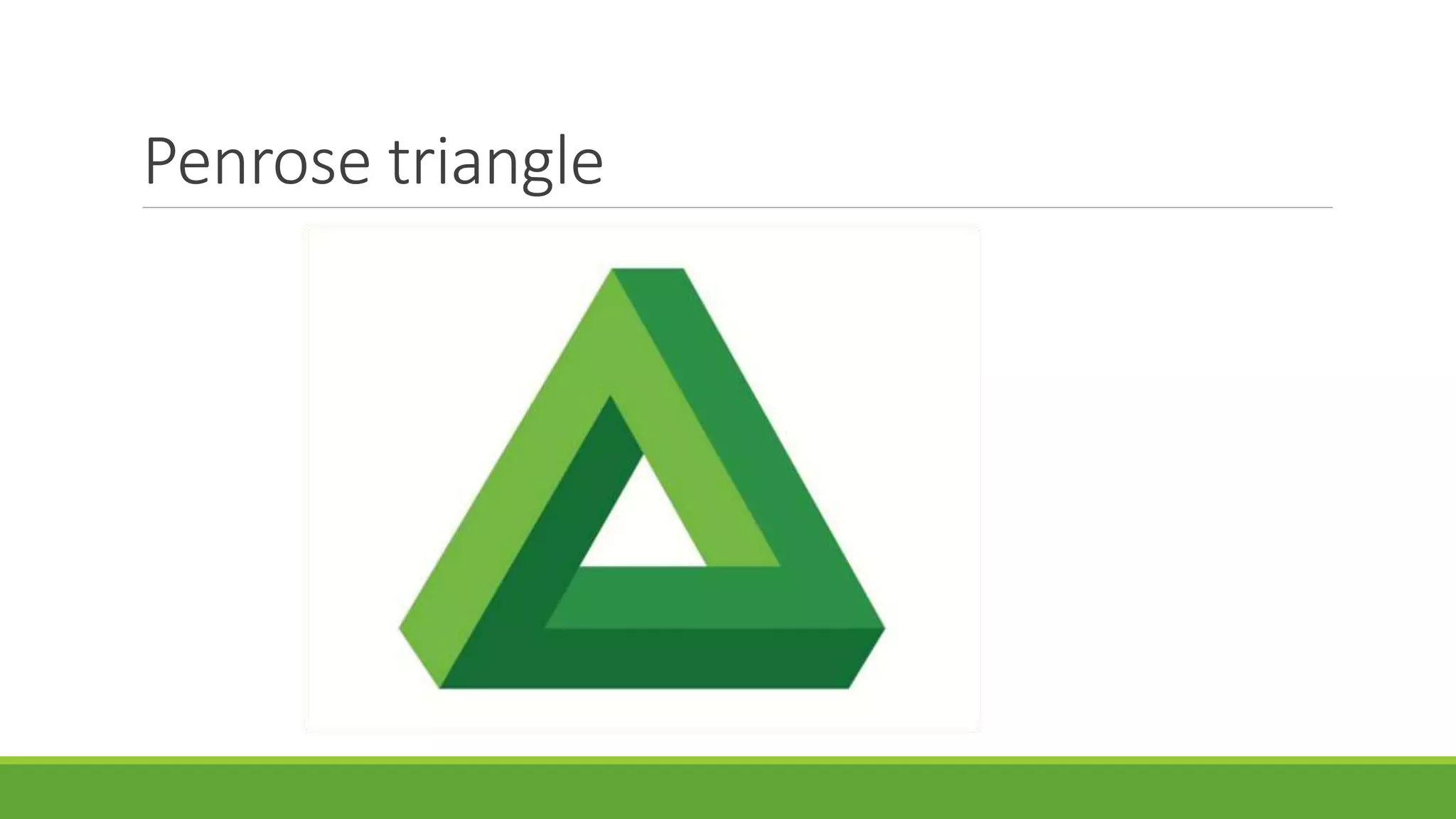
• Impossible trident
Experiment
Discussion
Introduction
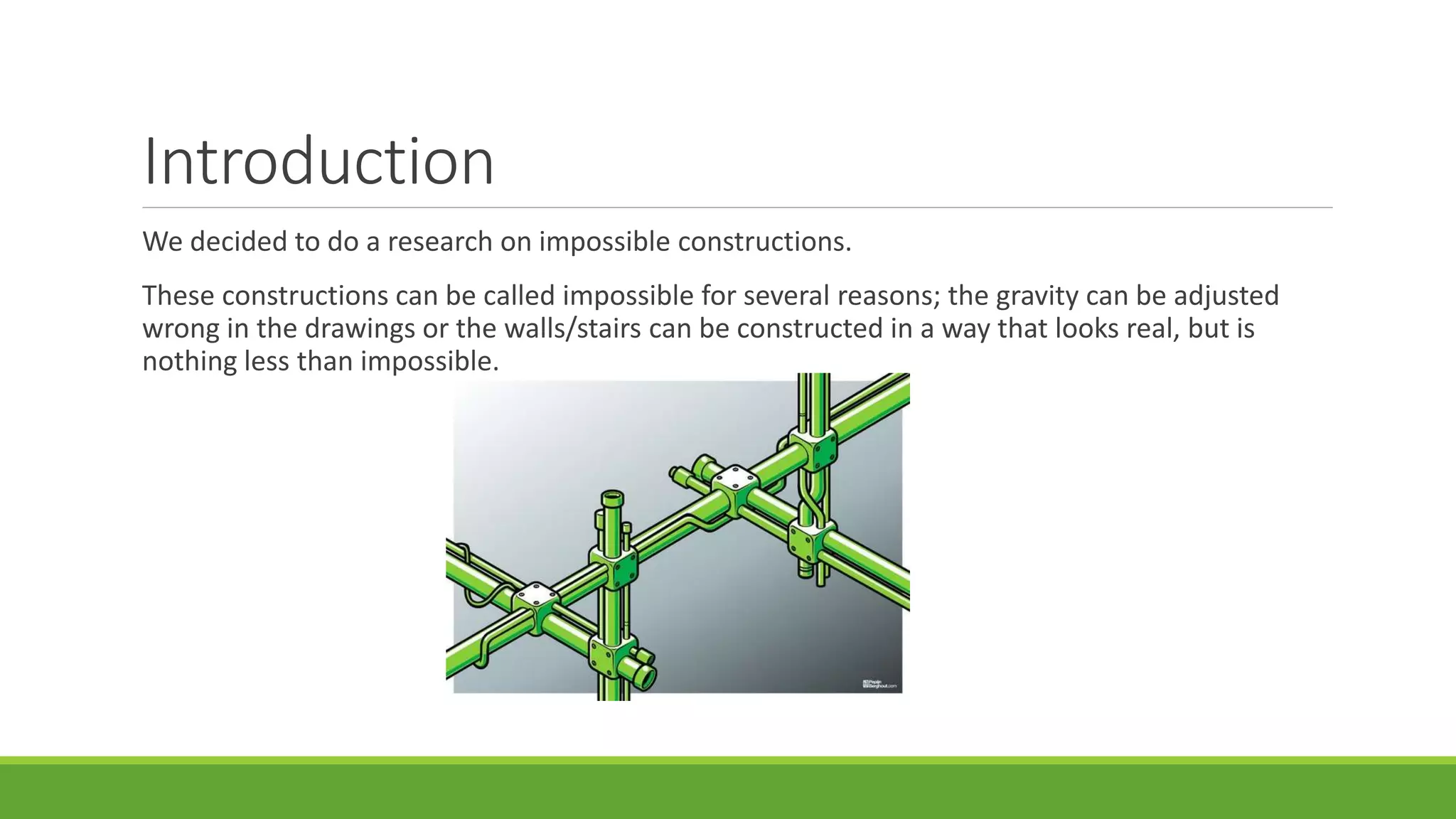
We decided to do a research on impossible constructions.
These constructions can be called impossible for several reasons; the gravity can be adjusted
wrong in the drawings or the walls/stairs can be constructed in a way that looks real, but is
nothing less than impossible.
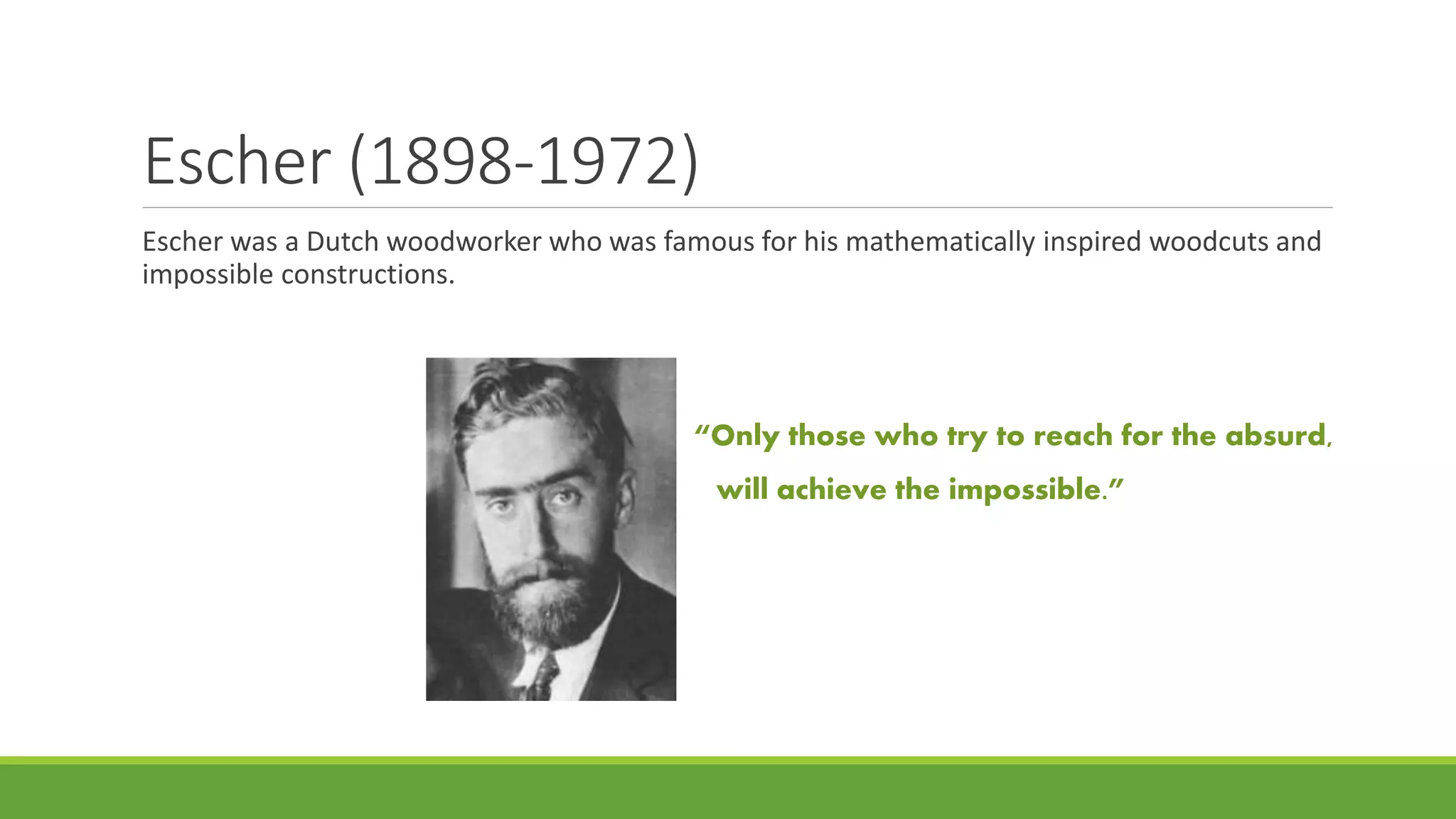
Escher (1898-1972)
Escher was a Dutch woodworker who was famous for his mathematically inspired woodcuts and
impossible constructions.
“Only those who try to reach for the absurd,
will achieve the impossible.”
Impossible constructions
Impossible constructions are constructions that are against the law of nature and logics.
It is an optical illusion and always 2-dimentional, it is possible to form a sort of 3-D illusion, but
in real, impossible shapes can’t be recreated into 3-dimentional shapes.
The most famous shapes are:
Impossible cubes
Penrose stairs
Penrose triangle
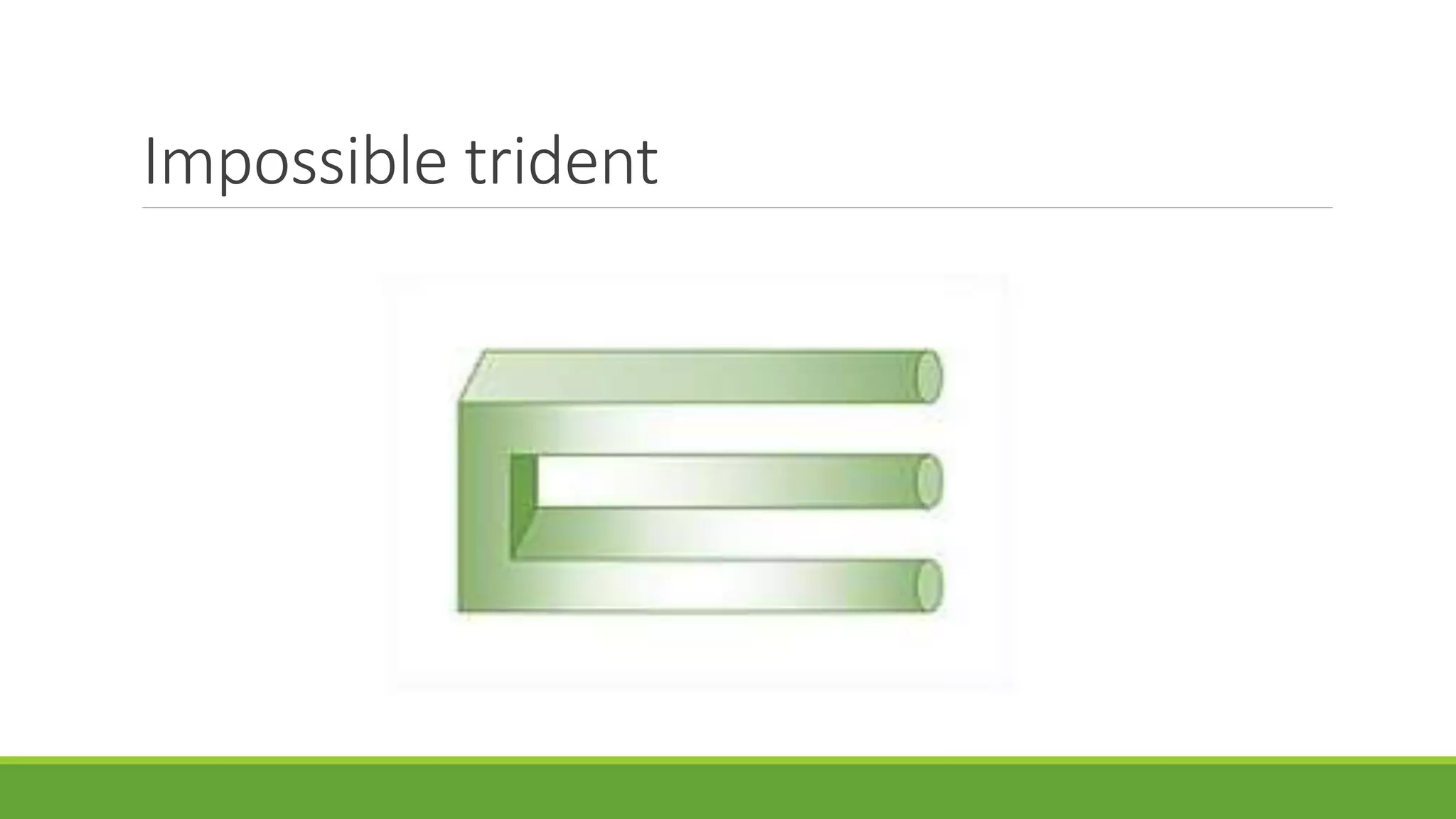
Impossible trident
Impossible cube
Penrose stairs
Penrose triangle
Impossible trident
Experiment
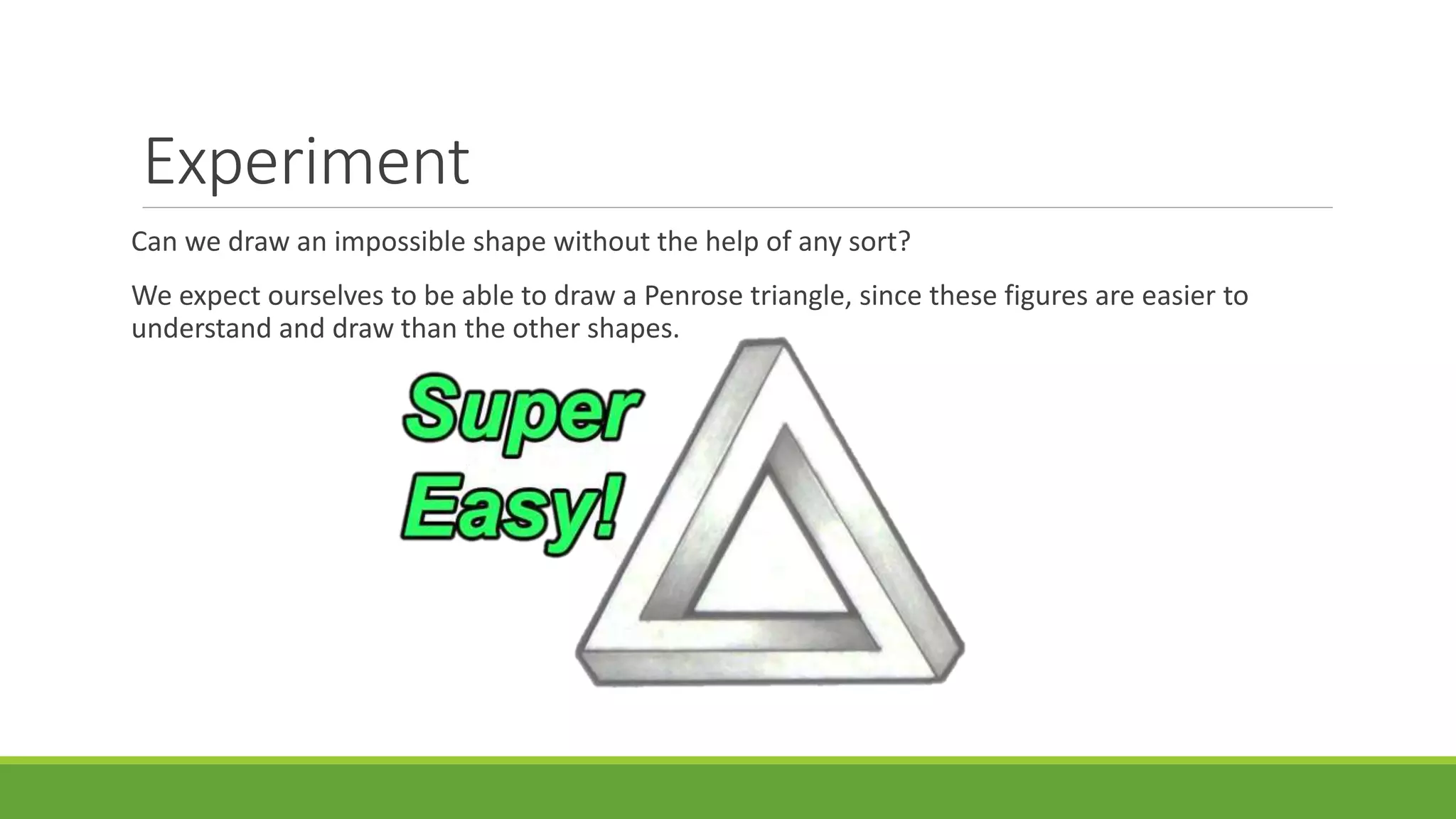
Can we draw an impossible shape without the help of any sort?
We expect ourselves to be able to draw a Penrose triangle, since these figures are easier to
understand and draw than the other shapes.
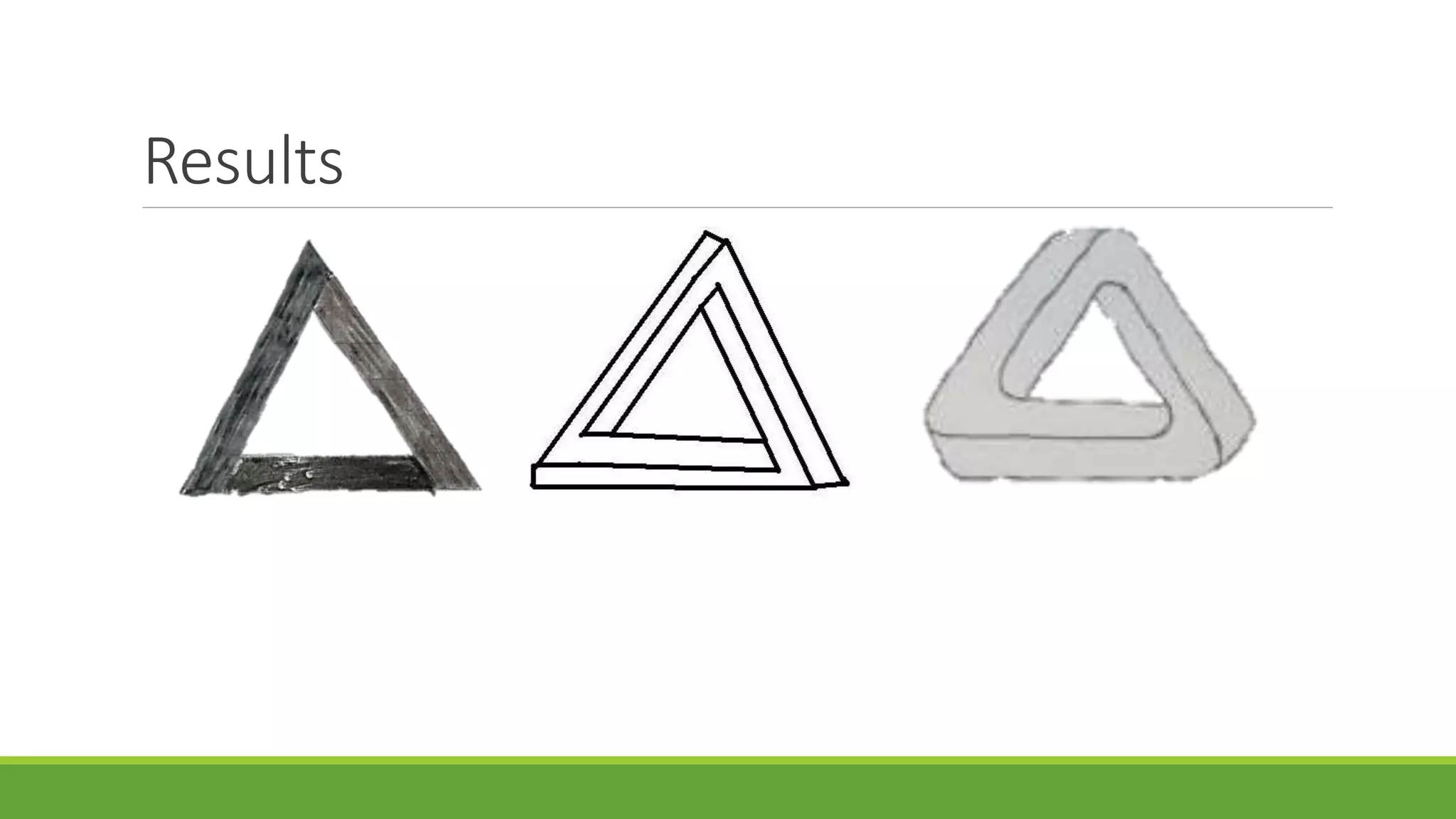
Results
Conclussion
As you can see, we aren’t really good in drawing triangles, but we tried and except for 1, all the
triangles are succeeded, which means that people can draw penrose triangles without
something to copy it from.
Discussion
We think that the cooperation between the four of us went pretty good; we didn’t have a lot of
disagreements and we had a lot of fun doing this project. We chose a little bit of a hard subject,
but we figured it out anyway.
Making the deadline was a little harder; in the middle of the Christmas holiday trying to
communicate with each other isn’t or idea of a successful team.

Mathematics in architecture

  • 1.
    Mathematics in architecture J.J.A.C. EMANS,Y.F.W. LAMBERS, A.E.S. VAN DE POLL, G.K.W. ZUIJDGEEST
  • 2.
    Table of contents Introduction Escher Impossibleconstructions • Impossible cubes • Penrose stairs • Penrose triangle • Impossible trident Experiment Discussion
  • 3.
    Introduction We decided todo a research on impossible constructions. These constructions can be called impossible for several reasons; the gravity can be adjusted wrong in the drawings or the walls/stairs can be constructed in a way that looks real, but is nothing less than impossible.
  • 4.
    Escher (1898-1972) Escher wasa Dutch woodworker who was famous for his mathematically inspired woodcuts and impossible constructions. “Only those who try to reach for the absurd, will achieve the impossible.”
  • 5.
    Impossible constructions Impossible constructionsare constructions that are against the law of nature and logics. It is an optical illusion and always 2-dimentional, it is possible to form a sort of 3-D illusion, but in real, impossible shapes can’t be recreated into 3-dimentional shapes. The most famous shapes are: Impossible cubes Penrose stairs Penrose triangle Impossible trident
  • 6.
  • 7.
  • 8.
  • 9.
  • 10.
    Experiment Can we drawan impossible shape without the help of any sort? We expect ourselves to be able to draw a Penrose triangle, since these figures are easier to understand and draw than the other shapes.
  • 11.
  • 12.
    Conclussion As you cansee, we aren’t really good in drawing triangles, but we tried and except for 1, all the triangles are succeeded, which means that people can draw penrose triangles without something to copy it from.
  • 13.
    Discussion We think thatthe cooperation between the four of us went pretty good; we didn’t have a lot of disagreements and we had a lot of fun doing this project. We chose a little bit of a hard subject, but we figured it out anyway. Making the deadline was a little harder; in the middle of the Christmas holiday trying to communicate with each other isn’t or idea of a successful team.