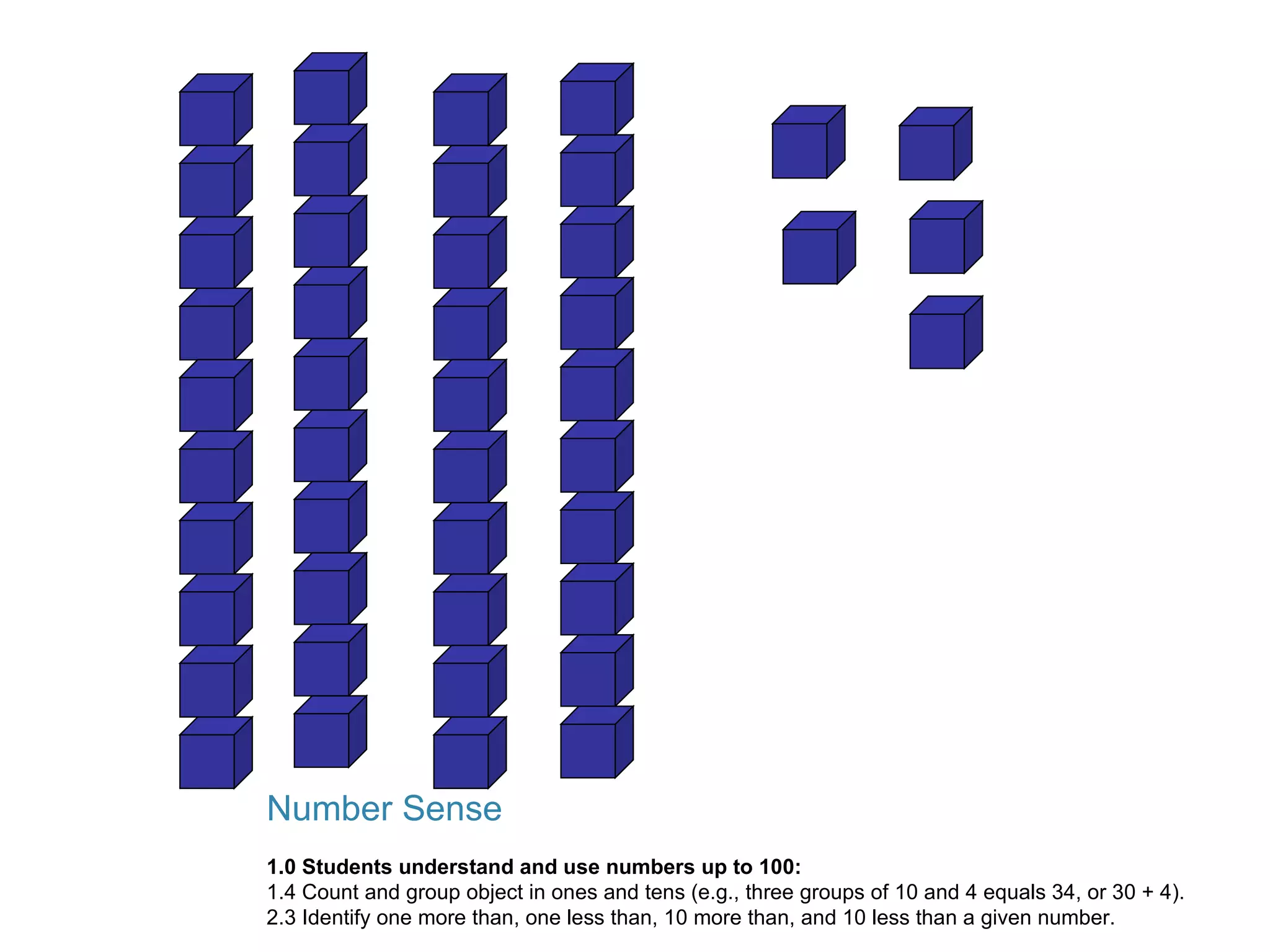
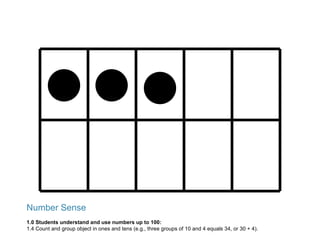
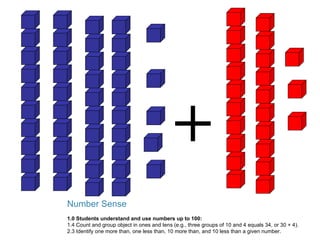
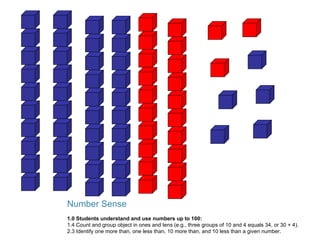
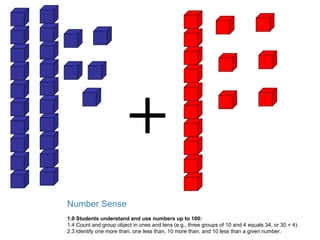
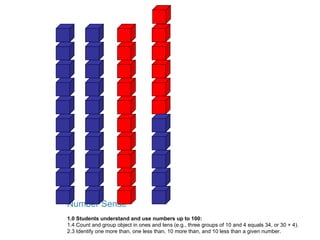
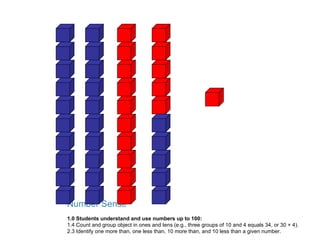
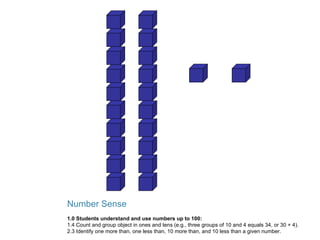
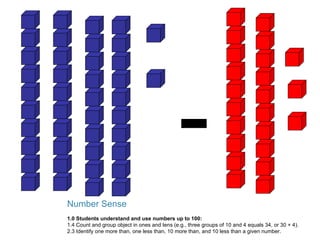
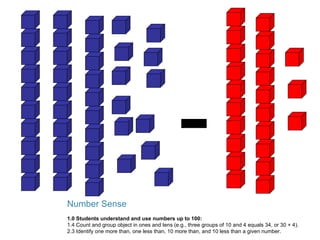
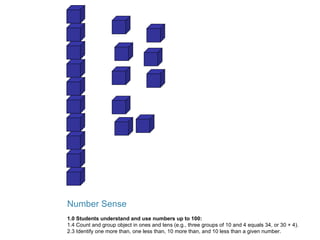
Number Sense 1.0 Students understand and use numbers up to 100: 1.4 Count and group object in ones and tens (e.g., three groups of 10 and 4 equals 34, or 30 + 4). 2.3 Identify one more than, one less than, 10 more than, and 10 less than a given number.
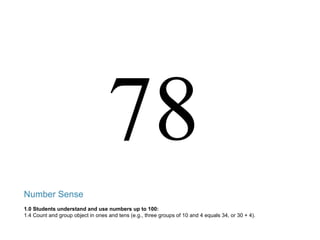
78 Number Sense 1.0 Students understand and use numbers up to 100: 1.4 Count and group object in ones and tens (e.g., three groups of 10 and 4 equals 34, or 30 + 4).
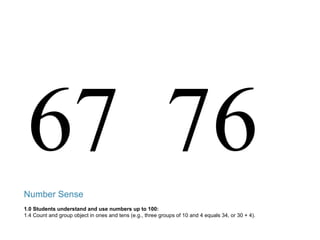
67 Number Sense 1.0 Students understand and use numbers up to 100: 1.4 Count and group object in ones and tens (e.g., three groups of 10 and 4 equals 34, or 30 + 4). 76
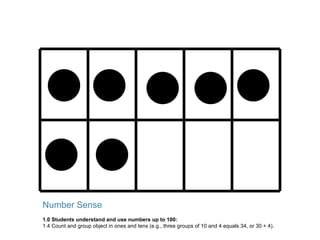
Number Sense 1.0 Students understand and use numbers up to 100: 1.4 Count and group object in ones and tens (e.g., three groups of 10 and 4 equals 34, or 30 + 4).
 
Number Sense 1.0 Students understand and use numbers up to 100: 1.4 Count and group object in ones and tens (e.g., three groups of 10 and 4 equals 34, or 30 + 4).
 
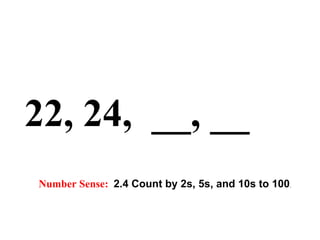
22, 24,  __, __ Number Sense:   2.4 Count by 2s, 5s, and 10s to 100 .
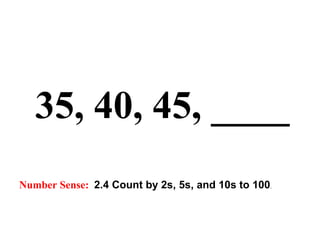
35, 40, 45, ____ Number Sense:   2.4 Count by 2s, 5s, and 10s to 100 .
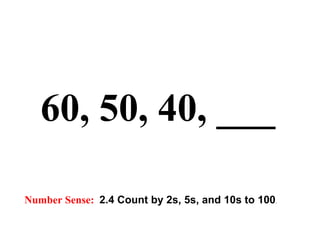
60, 50, 40, ___   Number Sense:   2.4 Count by 2s, 5s, and 10s to 100 .
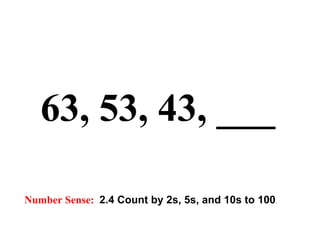
63, 53, 43, ___   Number Sense:   2.4 Count by 2s, 5s, and 10s to 100 .
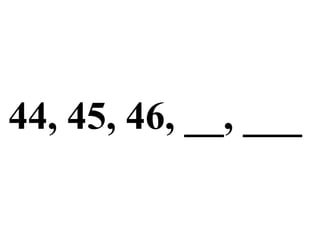
44, 45, 46, __, ___
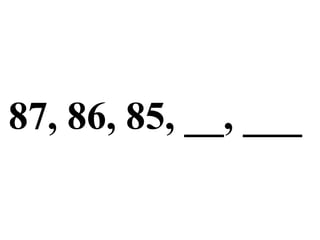
87, 86, 85, __, ___
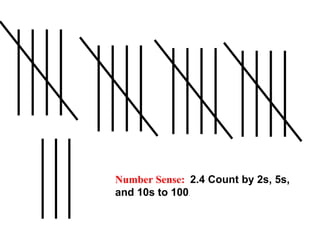
Number Sense:   2.4 Count by 2s, 5s, and 10s to 100 .
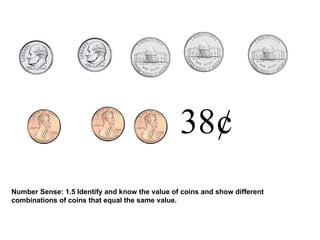
38¢ Number Sense: 1.5 Identify and know the value of coins and show different combinations of coins that equal the same value.
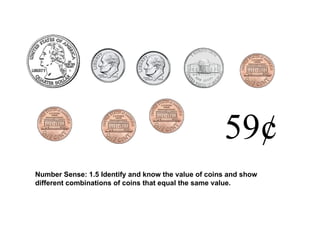
59¢ Number Sense: 1.5 Identify and know the value of coins and show different combinations of coins that equal the same value.
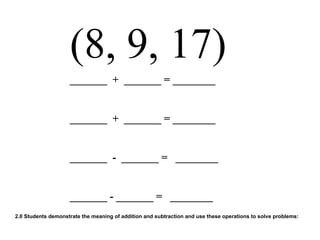
(8, 9, 17) _______  +  _______ = ________ _______  +  _______ = ________ _______  -  _______ =  ________ _______ - _______ =  ________ 2.0 Students demonstrate the meaning of addition and subtraction and use these operations to solve problems:
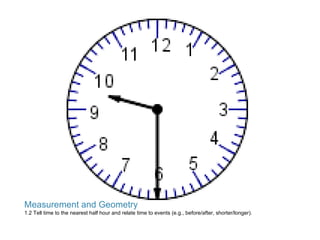
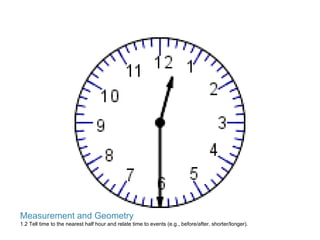
Measurement and Geometry 1.2 Tell time to the nearest half hour and relate time to events (e.g., before/after, shorter/longer).
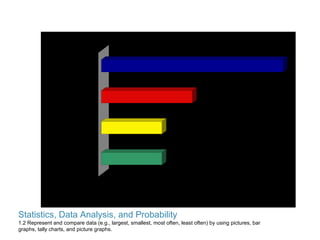
Statistics, Data Analysis, and Probability 1.2 Represent and compare data (e.g., largest, smallest, most often, least often) by using pictures, bar graphs, tally charts, and picture graphs.
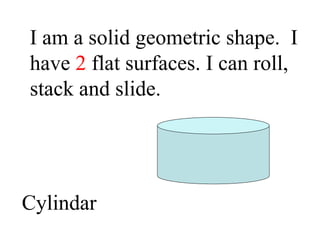
I am a solid geometric shape.  I have  2  flat surfaces. I can roll, stack and slide. Cylindar
Number Sense 1.0 Students understand and use numbers up to 100: 1.4 Count and group object in ones and tens (e.g., three groups of 10 and 4 equals 34, or 30 + 4). 2.3 Identify one more than, one less than, 10 more than, and 10 less than a given number. +
Number Sense 1.0 Students understand and use numbers up to 100: 1.4 Count and group object in ones and tens (e.g., three groups of 10 and 4 equals 34, or 30 + 4). 2.3 Identify one more than, one less than, 10 more than, and 10 less than a given number.
Number Sense 1.0 Students understand and use numbers up to 100: 1.4 Count and group object in ones and tens (e.g., three groups of 10 and 4 equals 34, or 30 + 4). 2.3 Identify one more than, one less than, 10 more than, and 10 less than a given number. +
Number Sense 1.0 Students understand and use numbers up to 100: 1.4 Count and group object in ones and tens (e.g., three groups of 10 and 4 equals 34, or 30 + 4). 2.3 Identify one more than, one less than, 10 more than, and 10 less than a given number.
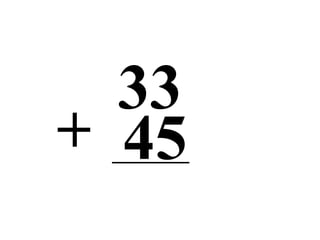
33 45 +
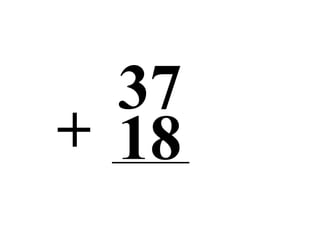
37 18 +
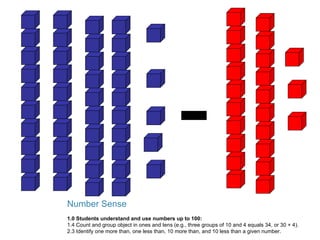
Number Sense 1.0 Students understand and use numbers up to 100: 1.4 Count and group object in ones and tens (e.g., three groups of 10 and 4 equals 34, or 30 + 4). 2.3 Identify one more than, one less than, 10 more than, and 10 less than a given number. -
Number Sense 1.0 Students understand and use numbers up to 100: 1.4 Count and group object in ones and tens (e.g., three groups of 10 and 4 equals 34, or 30 + 4). 2.3 Identify one more than, one less than, 10 more than, and 10 less than a given number.
Number Sense 1.0 Students understand and use numbers up to 100: 1.4 Count and group object in ones and tens (e.g., three groups of 10 and 4 equals 34, or 30 + 4). 2.3 Identify one more than, one less than, 10 more than, and 10 less than a given number. -
Number Sense 1.0 Students understand and use numbers up to 100: 1.4 Count and group object in ones and tens (e.g., three groups of 10 and 4 equals 34, or 30 + 4). 2.3 Identify one more than, one less than, 10 more than, and 10 less than a given number.
 
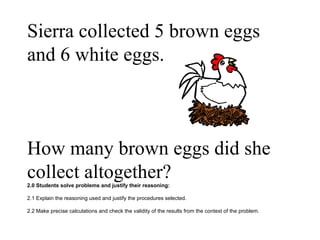
Sierra collected 5 brown eggs and 6 white eggs.  How many brown eggs did she collect altogether? 2.0 Students solve problems and justify their reasoning: 2.1 Explain the reasoning used and justify the procedures selected. 2.2 Make precise calculations and check the validity of the results from the context of the problem.
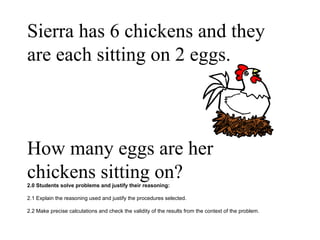
Sierra has 6 chickens and they are each sitting on 2 eggs.  How many eggs are her chickens sitting on? 2.0 Students solve problems and justify their reasoning: 2.1 Explain the reasoning used and justify the procedures selected. 2.2 Make precise calculations and check the validity of the results from the context of the problem.
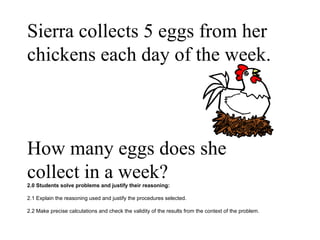
Sierra collects 5 eggs from her chickens each day of the week.  How many eggs does she collect in a week? 2.0 Students solve problems and justify their reasoning: 2.1 Explain the reasoning used and justify the procedures selected. 2.2 Make precise calculations and check the validity of the results from the context of the problem.

Math

  • 1.
    Number Sense 1.0Students understand and use numbers up to 100: 1.4 Count and group object in ones and tens (e.g., three groups of 10 and 4 equals 34, or 30 + 4). 2.3 Identify one more than, one less than, 10 more than, and 10 less than a given number.
  • 2.
    78 Number Sense1.0 Students understand and use numbers up to 100: 1.4 Count and group object in ones and tens (e.g., three groups of 10 and 4 equals 34, or 30 + 4).
  • 3.
    67 Number Sense1.0 Students understand and use numbers up to 100: 1.4 Count and group object in ones and tens (e.g., three groups of 10 and 4 equals 34, or 30 + 4). 76
  • 4.
    Number Sense 1.0Students understand and use numbers up to 100: 1.4 Count and group object in ones and tens (e.g., three groups of 10 and 4 equals 34, or 30 + 4).
  • 5.
  • 6.
    Number Sense 1.0Students understand and use numbers up to 100: 1.4 Count and group object in ones and tens (e.g., three groups of 10 and 4 equals 34, or 30 + 4).
  • 7.
  • 8.
    22, 24, __, __ Number Sense: 2.4 Count by 2s, 5s, and 10s to 100 .
  • 9.
    35, 40, 45,____ Number Sense: 2.4 Count by 2s, 5s, and 10s to 100 .
  • 10.
    60, 50, 40,___ Number Sense: 2.4 Count by 2s, 5s, and 10s to 100 .
  • 11.
    63, 53, 43,___ Number Sense: 2.4 Count by 2s, 5s, and 10s to 100 .
  • 12.
    44, 45, 46,__, ___
  • 13.
    87, 86, 85,__, ___
  • 14.
    Number Sense: 2.4 Count by 2s, 5s, and 10s to 100 .
  • 15.
    38¢ Number Sense:1.5 Identify and know the value of coins and show different combinations of coins that equal the same value.
  • 16.
    59¢ Number Sense:1.5 Identify and know the value of coins and show different combinations of coins that equal the same value.
  • 17.
    (8, 9, 17)_______ + _______ = ________ _______ + _______ = ________ _______ - _______ = ________ _______ - _______ = ________ 2.0 Students demonstrate the meaning of addition and subtraction and use these operations to solve problems:
  • 18.
    Measurement and Geometry1.2 Tell time to the nearest half hour and relate time to events (e.g., before/after, shorter/longer).
  • 19.
    Measurement and Geometry1.2 Tell time to the nearest half hour and relate time to events (e.g., before/after, shorter/longer).
  • 20.
    Statistics, Data Analysis,and Probability 1.2 Represent and compare data (e.g., largest, smallest, most often, least often) by using pictures, bar graphs, tally charts, and picture graphs.
  • 21.
    I am asolid geometric shape. I have 2 flat surfaces. I can roll, stack and slide. Cylindar
  • 22.
    Number Sense 1.0Students understand and use numbers up to 100: 1.4 Count and group object in ones and tens (e.g., three groups of 10 and 4 equals 34, or 30 + 4). 2.3 Identify one more than, one less than, 10 more than, and 10 less than a given number. +
  • 23.
    Number Sense 1.0Students understand and use numbers up to 100: 1.4 Count and group object in ones and tens (e.g., three groups of 10 and 4 equals 34, or 30 + 4). 2.3 Identify one more than, one less than, 10 more than, and 10 less than a given number.
  • 24.
    Number Sense 1.0Students understand and use numbers up to 100: 1.4 Count and group object in ones and tens (e.g., three groups of 10 and 4 equals 34, or 30 + 4). 2.3 Identify one more than, one less than, 10 more than, and 10 less than a given number. +
  • 25.
    Number Sense 1.0Students understand and use numbers up to 100: 1.4 Count and group object in ones and tens (e.g., three groups of 10 and 4 equals 34, or 30 + 4). 2.3 Identify one more than, one less than, 10 more than, and 10 less than a given number.
  • 26.
    Number Sense 1.0Students understand and use numbers up to 100: 1.4 Count and group object in ones and tens (e.g., three groups of 10 and 4 equals 34, or 30 + 4). 2.3 Identify one more than, one less than, 10 more than, and 10 less than a given number.
  • 27.
  • 28.
  • 29.
    Number Sense 1.0Students understand and use numbers up to 100: 1.4 Count and group object in ones and tens (e.g., three groups of 10 and 4 equals 34, or 30 + 4). 2.3 Identify one more than, one less than, 10 more than, and 10 less than a given number. -
  • 30.
    Number Sense 1.0Students understand and use numbers up to 100: 1.4 Count and group object in ones and tens (e.g., three groups of 10 and 4 equals 34, or 30 + 4). 2.3 Identify one more than, one less than, 10 more than, and 10 less than a given number.
  • 31.
    Number Sense 1.0Students understand and use numbers up to 100: 1.4 Count and group object in ones and tens (e.g., three groups of 10 and 4 equals 34, or 30 + 4). 2.3 Identify one more than, one less than, 10 more than, and 10 less than a given number. -
  • 32.
    Number Sense 1.0Students understand and use numbers up to 100: 1.4 Count and group object in ones and tens (e.g., three groups of 10 and 4 equals 34, or 30 + 4). 2.3 Identify one more than, one less than, 10 more than, and 10 less than a given number. -
  • 33.
    Number Sense 1.0Students understand and use numbers up to 100: 1.4 Count and group object in ones and tens (e.g., three groups of 10 and 4 equals 34, or 30 + 4). 2.3 Identify one more than, one less than, 10 more than, and 10 less than a given number.
  • 34.
  • 35.
    Sierra collected 5brown eggs and 6 white eggs. How many brown eggs did she collect altogether? 2.0 Students solve problems and justify their reasoning: 2.1 Explain the reasoning used and justify the procedures selected. 2.2 Make precise calculations and check the validity of the results from the context of the problem.
  • 36.
    Sierra has 6chickens and they are each sitting on 2 eggs. How many eggs are her chickens sitting on? 2.0 Students solve problems and justify their reasoning: 2.1 Explain the reasoning used and justify the procedures selected. 2.2 Make precise calculations and check the validity of the results from the context of the problem.
  • 37.
    Sierra collects 5eggs from her chickens each day of the week. How many eggs does she collect in a week? 2.0 Students solve problems and justify their reasoning: 2.1 Explain the reasoning used and justify the procedures selected. 2.2 Make precise calculations and check the validity of the results from the context of the problem.