1
MATERIALS MANAGEMENT
Materials Management: is the planning and
control of the flow of materials that are part of
the inbound logistic system
Or: is a total concept involving an
organizational structure unifying into a single
responsibility for the systematic flow and
control of materials from identification of need
through usage and accounting of the same
2
MATERIALS MANAGEMENT
Objectives
• Support operational requirements
• Manage the material process efficiently &
effectively
• Select, develop and maintain sources of supply
• Develop strong relationship with other groups
• Support organizational goals
• Develop integrated strategies that support
organizational goals
3
RESPONSIBILITIES OF MM
• Cost reduction
• Optimum service level
• Quality assurance
• Low level of capital tied up
• Coordinate inter-departmental effort
4
SCOPE OF MATERIALS MANAGEMENT
• Materials Requirement Planning and Control
• Procurement
• Inventory control
• Receiving and inspection
• Transportation
• Material handling
• Disposal of materials
• Value analysis
5
SCOPE OF MATERIALS MANAGEMENT
For this course we shall only concentrate on the
first three areas:
• Procurement
• Inventory control, and
• Materials Requirement Planning and Control
6
PROCUREMENT
• First part in materials management we are that
we are going to discuss is procurement,
although we are not going to go into much
depth related to procurement, our major focus
will be on inventory control
• But procurement is one of the most important
scope of materials management that has to be
taken care of by the organization
7
PROCUREMENT
Importance
• Contributes to the competitive advantage
of a firm
• Significant portion of logistic costs is saved
8
IMPORTANCE OF ITEMS AND
SERVICES PURCHASED
• Products and services purchased by a company
are not all the same
• Some are more important than others and
require greater procurement attention
• The quadrant technique enables the supply
chain manager to assess the relative importance
of each item based on the degree of perceived
value and risk
9
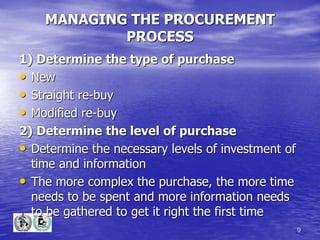
MANAGING THE PROCUREMENT
PROCESS
1) Determine the type of purchase
• New
• Straight re-buy
• Modified re-buy
2) Determine the level of purchase
• Determine the necessary levels of investment of
time and information
• The more complex the purchase, the more time
needs to be spent and more information needs
to be gathered to get it right the first time
10
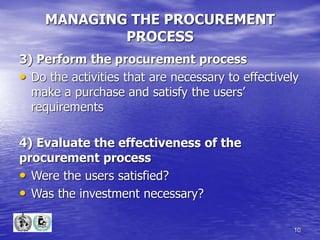
MANAGING THE PROCUREMENT
PROCESS
3) Perform the procurement process
• Do the activities that are necessary to effectively
make a purchase and satisfy the users’
requirements
4) Evaluate the effectiveness of the
procurement process
• Were the users satisfied?
• Was the investment necessary?
11
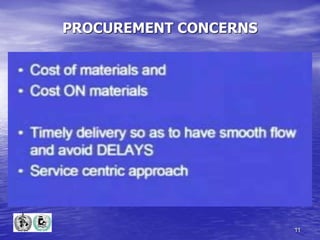
PROCUREMENT CONCERNS
12
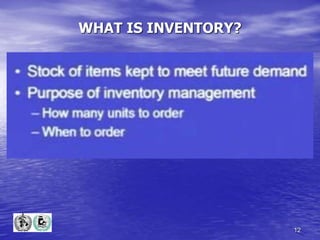
WHAT IS INVENTORY?
13
COMPONENTS OF INVENTORY
14
COMPONENTS OF INVENTORY
Raw Materials: inventory basically is raw materials
that is procured or being procured from an industry
or from different vendors. It includes;
• Purchased parts and supplies
• Work-in-progress (Partially completed products),
WIP
• Materials being transported
• Tools and equipment
15
INVENTORY AND SUPPLY CHAIN
MANAGEMENT
Why the need to keep an inventory
• Bullwhip effect
Demand information is distorted as it moves away from
the end-use customer
Higher safety stock inventories are stored to compensate
• Seasonal or cyclical demand
• Inventory provides independence from vendors
• To take advantage of price discounts
• Inventory provides independence between stages
and avoids work stop-pages
16
WHY INVENTORY?
• To safe guard against the uncertainties in price
fluctuations, supply conditions, demand conditions,
lead times, transport contingencies, etc
• To reduce machine idle times by providing enough
in-process inventories at appropriate locations
• To take advantages of quantity discounts, economy
of scale in transportation etc.
17
WHY INVENTORY?
18
WHY INVENTORY?
19
INVENTORY CONTROL
20
INVENTORY COSTS
21
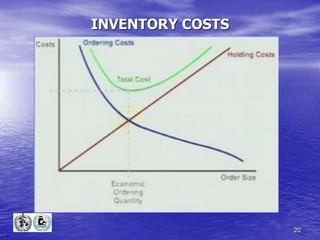
INVENTORY COSTS
• Carrying Cost
Cost of holding an item in an inventory
• Ordering Cost
Cost of replenishing an inventory
• Shortage Cost
Temporary or permanent loss of sales when
demand can not be met
22
INVENTORY COSTS
23
INVENTORY COSTS
Carrying costs: the cost of maintaining
inventories in the plant. It includes the cost of
insurance, security, warehouse rent, taxes,
interest on capital engaged, spoilage,
breakages, etc.
Stock-out costs: the cost of loss of demand
due to shortage in supplies. This includes cost
of loss of profit, loss of customer, loss of
goodwill, penalty etc.
24
INVENTORY CONTROL SYSTEMS
• Continuous system (fixed-order-quantity)
Constant amount ordered when inventory
declines to predetermined level
• Periodic system (fixed-time-period)
Order placed for variable amount after fixed
passage of time

Materials Management Introduction to Inventory.ppt

  • 1.
    1 MATERIALS MANAGEMENT Materials Management:is the planning and control of the flow of materials that are part of the inbound logistic system Or: is a total concept involving an organizational structure unifying into a single responsibility for the systematic flow and control of materials from identification of need through usage and accounting of the same
  • 2.
    2 MATERIALS MANAGEMENT Objectives • Supportoperational requirements • Manage the material process efficiently & effectively • Select, develop and maintain sources of supply • Develop strong relationship with other groups • Support organizational goals • Develop integrated strategies that support organizational goals
  • 3.
    3 RESPONSIBILITIES OF MM •Cost reduction • Optimum service level • Quality assurance • Low level of capital tied up • Coordinate inter-departmental effort
  • 4.
    4 SCOPE OF MATERIALSMANAGEMENT • Materials Requirement Planning and Control • Procurement • Inventory control • Receiving and inspection • Transportation • Material handling • Disposal of materials • Value analysis
  • 5.
    5 SCOPE OF MATERIALSMANAGEMENT For this course we shall only concentrate on the first three areas: • Procurement • Inventory control, and • Materials Requirement Planning and Control
  • 6.
    6 PROCUREMENT • First partin materials management we are that we are going to discuss is procurement, although we are not going to go into much depth related to procurement, our major focus will be on inventory control • But procurement is one of the most important scope of materials management that has to be taken care of by the organization
  • 7.
    7 PROCUREMENT Importance • Contributes tothe competitive advantage of a firm • Significant portion of logistic costs is saved
  • 8.
    8 IMPORTANCE OF ITEMSAND SERVICES PURCHASED • Products and services purchased by a company are not all the same • Some are more important than others and require greater procurement attention • The quadrant technique enables the supply chain manager to assess the relative importance of each item based on the degree of perceived value and risk
  • 9.
    9 MANAGING THE PROCUREMENT PROCESS 1)Determine the type of purchase • New • Straight re-buy • Modified re-buy 2) Determine the level of purchase • Determine the necessary levels of investment of time and information • The more complex the purchase, the more time needs to be spent and more information needs to be gathered to get it right the first time
  • 10.
    10 MANAGING THE PROCUREMENT PROCESS 3)Perform the procurement process • Do the activities that are necessary to effectively make a purchase and satisfy the users’ requirements 4) Evaluate the effectiveness of the procurement process • Were the users satisfied? • Was the investment necessary?
  • 11.
  • 12.
  • 13.
  • 14.
    14 COMPONENTS OF INVENTORY RawMaterials: inventory basically is raw materials that is procured or being procured from an industry or from different vendors. It includes; • Purchased parts and supplies • Work-in-progress (Partially completed products), WIP • Materials being transported • Tools and equipment
  • 15.
    15 INVENTORY AND SUPPLYCHAIN MANAGEMENT Why the need to keep an inventory • Bullwhip effect Demand information is distorted as it moves away from the end-use customer Higher safety stock inventories are stored to compensate • Seasonal or cyclical demand • Inventory provides independence from vendors • To take advantage of price discounts • Inventory provides independence between stages and avoids work stop-pages
  • 16.
    16 WHY INVENTORY? • Tosafe guard against the uncertainties in price fluctuations, supply conditions, demand conditions, lead times, transport contingencies, etc • To reduce machine idle times by providing enough in-process inventories at appropriate locations • To take advantages of quantity discounts, economy of scale in transportation etc.
  • 17.
  • 18.
  • 19.
  • 20.
  • 21.
    21 INVENTORY COSTS • CarryingCost Cost of holding an item in an inventory • Ordering Cost Cost of replenishing an inventory • Shortage Cost Temporary or permanent loss of sales when demand can not be met
  • 22.
  • 23.
    23 INVENTORY COSTS Carrying costs:the cost of maintaining inventories in the plant. It includes the cost of insurance, security, warehouse rent, taxes, interest on capital engaged, spoilage, breakages, etc. Stock-out costs: the cost of loss of demand due to shortage in supplies. This includes cost of loss of profit, loss of customer, loss of goodwill, penalty etc.
  • 24.
    24 INVENTORY CONTROL SYSTEMS •Continuous system (fixed-order-quantity) Constant amount ordered when inventory declines to predetermined level • Periodic system (fixed-time-period) Order placed for variable amount after fixed passage of time