Mastering Meetings and Elevating Events
Introduction
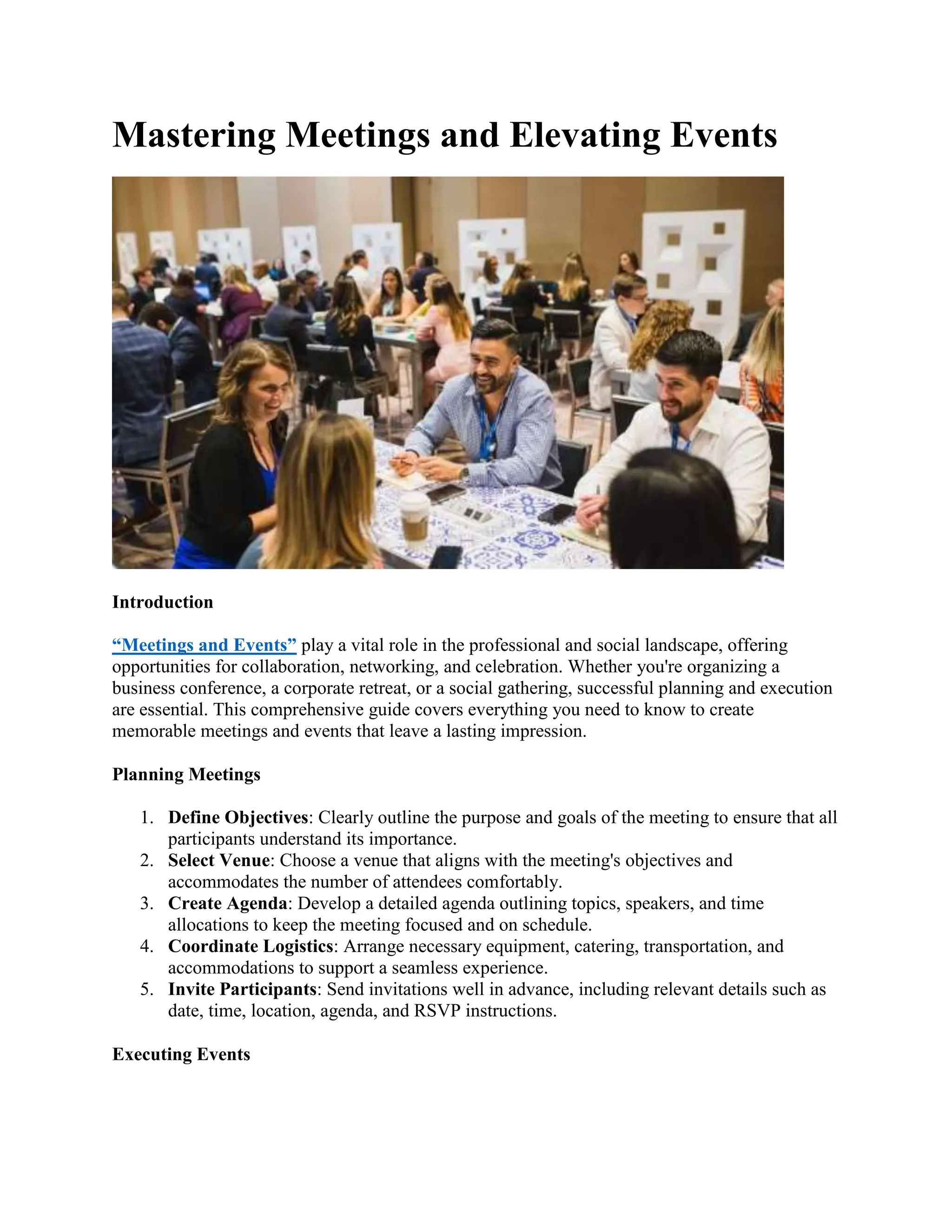
“Meetings and Events” play a vital role in the professional and social landscape, offering
opportunities for collaboration, networking, and celebration. Whether you're organizing a
business conference, a corporate retreat, or a social gathering, successful planning and execution
are essential. This comprehensive guide covers everything you need to know to create
memorable meetings and events that leave a lasting impression.
Planning Meetings
1. Define Objectives: Clearly outline the purpose and goals of the meeting to ensure that all
participants understand its importance.
2. Select Venue: Choose a venue that aligns with the meeting's objectives and
accommodates the number of attendees comfortably.
3. Create Agenda: Develop a detailed agenda outlining topics, speakers, and time
allocations to keep the meeting focused and on schedule.
4. Coordinate Logistics: Arrange necessary equipment, catering, transportation, and
accommodations to support a seamless experience.
5. Invite Participants: Send invitations well in advance, including relevant details such as
date, time, location, agenda, and RSVP instructions.
Executing Events
1. Theme and Concept: Establish a cohesive theme or concept that sets the tone for the
event and guides the planning process.
2. Venue Selection: Choose a venue that complements the event theme and provides
adequate space, amenities, and ambiance.
3. Vendor Coordination: Collaborate with vendors such as caterers, decorators,
entertainers, and audiovisual technicians to bring the event to life.
4. Promotion and Marketing: Utilize various channels to promote the event and generate
excitement among attendees, sponsors, and the community.
5. On-site Management: Oversee all aspects of the event execution, including setup,
registration, program flow, and troubleshooting any issues that arise.
6. Post-Event Evaluation: Gather feedback from participants, sponsors, and stakeholders
to evaluate the event's success and identify areas for improvement.
Key Considerations
1. Budget: Establish a realistic budget and allocate funds strategically to maximize the
impact of the meeting or event.
2. Audience: Tailor the meeting or event experience to the preferences, interests, and
demographics of the target audience.
3. Technology: Leverage technology tools and platforms to enhance engagement,
communication, and productivity before, during, and after the meeting or event.
4. Sustainability: Incorporate sustainable practices into the planning and execution process
to minimize environmental impact and promote social responsibility.
5. Contingency Planning: Anticipate potential challenges or disruptions and develop
contingency plans to mitigate risks and ensure smooth execution.
Conclusion
Meetings and events serve as catalysts for collaboration, innovation, and connection in both
professional and social contexts. By following the principles outlined in this guide and paying
attention to key considerations, you can plan and execute meetings and events that inspire,
engage, and leave a lasting impression on attendees. Whether you're organizing a small team
meeting or a large-scale conference, mastering the art of meetings and events will set you on the
path to success.

Mastering Meetings and Elevating Events.

  • 1.
    Mastering Meetings andElevating Events Introduction “Meetings and Events” play a vital role in the professional and social landscape, offering opportunities for collaboration, networking, and celebration. Whether you're organizing a business conference, a corporate retreat, or a social gathering, successful planning and execution are essential. This comprehensive guide covers everything you need to know to create memorable meetings and events that leave a lasting impression. Planning Meetings 1. Define Objectives: Clearly outline the purpose and goals of the meeting to ensure that all participants understand its importance. 2. Select Venue: Choose a venue that aligns with the meeting's objectives and accommodates the number of attendees comfortably. 3. Create Agenda: Develop a detailed agenda outlining topics, speakers, and time allocations to keep the meeting focused and on schedule. 4. Coordinate Logistics: Arrange necessary equipment, catering, transportation, and accommodations to support a seamless experience. 5. Invite Participants: Send invitations well in advance, including relevant details such as date, time, location, agenda, and RSVP instructions. Executing Events
  • 2.
    1. Theme andConcept: Establish a cohesive theme or concept that sets the tone for the event and guides the planning process. 2. Venue Selection: Choose a venue that complements the event theme and provides adequate space, amenities, and ambiance. 3. Vendor Coordination: Collaborate with vendors such as caterers, decorators, entertainers, and audiovisual technicians to bring the event to life. 4. Promotion and Marketing: Utilize various channels to promote the event and generate excitement among attendees, sponsors, and the community. 5. On-site Management: Oversee all aspects of the event execution, including setup, registration, program flow, and troubleshooting any issues that arise. 6. Post-Event Evaluation: Gather feedback from participants, sponsors, and stakeholders to evaluate the event's success and identify areas for improvement. Key Considerations 1. Budget: Establish a realistic budget and allocate funds strategically to maximize the impact of the meeting or event. 2. Audience: Tailor the meeting or event experience to the preferences, interests, and demographics of the target audience. 3. Technology: Leverage technology tools and platforms to enhance engagement, communication, and productivity before, during, and after the meeting or event. 4. Sustainability: Incorporate sustainable practices into the planning and execution process to minimize environmental impact and promote social responsibility. 5. Contingency Planning: Anticipate potential challenges or disruptions and develop contingency plans to mitigate risks and ensure smooth execution. Conclusion Meetings and events serve as catalysts for collaboration, innovation, and connection in both professional and social contexts. By following the principles outlined in this guide and paying attention to key considerations, you can plan and execute meetings and events that inspire, engage, and leave a lasting impression on attendees. Whether you're organizing a small team meeting or a large-scale conference, mastering the art of meetings and events will set you on the path to success.