MasteringGraphicDesign:A
ComprehensiveGuide
INTRODUCTION
Welcome to the Mastering Graphic Design presentation. In this comprehensive guide, we will explore the principles, techniques, and
tools essential for creating impactful designs. Get ready to embark on a journey to unleash your creativity and design prowess.
UNDERSTANDINGGRAPHICDESIGN
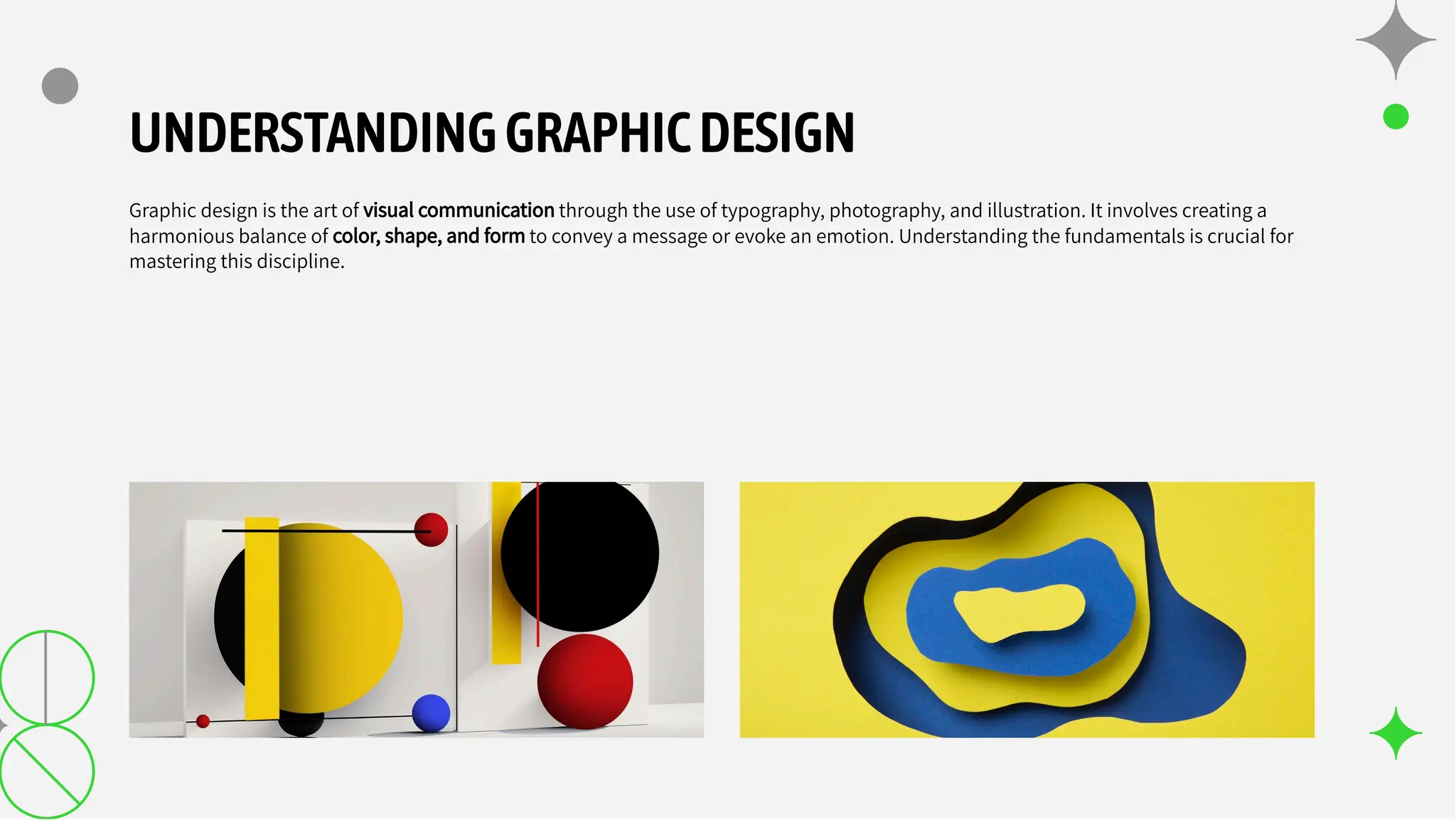
Graphic design is the art of visual communication through the use of typography, photography, and illustration. It involves creating a
harmonious balance of color, shape, and form to convey a message or evoke an emotion. Understanding the fundamentals is crucial for
mastering this discipline.
TypographyandLayout
Typography plays a pivotal role in graphic design, as it
involves the art of arranging type to make written language
legible, readable, and appealing. Additionally, mastering
layout principles such as grid systems and hierarchy is
essential for creating visually engaging designs.
Color has the power to evoke emotions, convey messages, and
create visual interest. Understanding color theory and the
psychological impact of different colors is crucial for effective
graphic design. By mastering the use of hue, saturation, and
contrast, designers can create compelling visuals.
ColorTheoryandPsychology
VisualIdentityandBranding
Building a strong visual identity is essential for businesses
and organizations. Through consistent use of logos, colors,
and imagery, graphic designers can create a cohesive
brand identity that resonates with the target audience.
Mastering the art of branding is a key skill for graphic
designers.
DigitalToolsandSoftware
In today's digital age, graphic designers utilize a
variety of software and tools to bring their creative
visions to life. Mastering industry-standard
software such as Adobe Creative Suite and
understanding digital design principles is essential
for creating professional-grade designs.
DESIGNINGFORPRINTANDWEB
Graphic designers must adapt their skills to cater to both print and digital mediums. Understanding the unique requirements of each
medium, such as color modes, resolution, and file formats, is crucial for delivering high-quality designs that meet industry
standards.
CONCLUSION
Congratulations on completing the comprehensive guide to
mastering graphic design. By understanding the principles,
techniques, and tools covered in this presentation, you are
well-equipped to embark on a journey to create impactful
and visually stunning designs. Remember, practice and
continuous learning are key to mastering this dynamic
discipline.
Thanks!
ANY QUESTIONS?
vadodariyahimanshu7355@gmail.com
https://spark-solution.odoo.com/

mastering-graphic-design-a-comprehensive-guide-202406241556525Aeg.pdf

  • 1.
  • 2.
    INTRODUCTION Welcome to theMastering Graphic Design presentation. In this comprehensive guide, we will explore the principles, techniques, and tools essential for creating impactful designs. Get ready to embark on a journey to unleash your creativity and design prowess.
  • 3.
    UNDERSTANDINGGRAPHICDESIGN Graphic design isthe art of visual communication through the use of typography, photography, and illustration. It involves creating a harmonious balance of color, shape, and form to convey a message or evoke an emotion. Understanding the fundamentals is crucial for mastering this discipline.
  • 4.
    TypographyandLayout Typography plays apivotal role in graphic design, as it involves the art of arranging type to make written language legible, readable, and appealing. Additionally, mastering layout principles such as grid systems and hierarchy is essential for creating visually engaging designs.
  • 5.
    Color has thepower to evoke emotions, convey messages, and create visual interest. Understanding color theory and the psychological impact of different colors is crucial for effective graphic design. By mastering the use of hue, saturation, and contrast, designers can create compelling visuals. ColorTheoryandPsychology
  • 6.
    VisualIdentityandBranding Building a strongvisual identity is essential for businesses and organizations. Through consistent use of logos, colors, and imagery, graphic designers can create a cohesive brand identity that resonates with the target audience. Mastering the art of branding is a key skill for graphic designers.
  • 7.
    DigitalToolsandSoftware In today's digitalage, graphic designers utilize a variety of software and tools to bring their creative visions to life. Mastering industry-standard software such as Adobe Creative Suite and understanding digital design principles is essential for creating professional-grade designs.
  • 8.
    DESIGNINGFORPRINTANDWEB Graphic designers mustadapt their skills to cater to both print and digital mediums. Understanding the unique requirements of each medium, such as color modes, resolution, and file formats, is crucial for delivering high-quality designs that meet industry standards.
  • 9.
    CONCLUSION Congratulations on completingthe comprehensive guide to mastering graphic design. By understanding the principles, techniques, and tools covered in this presentation, you are well-equipped to embark on a journey to create impactful and visually stunning designs. Remember, practice and continuous learning are key to mastering this dynamic discipline.
  • 10.