Understanding Graphic Design: A Comprehensive Guide
Graphic design is a visual communication art form that combines creativity, technology, and
problem-solving to convey ideas and messages. It is a versatile and ever-evolving field,
influencing various industries such as advertising, branding, web design, and multimedia. In this
guide, we will explore the key aspects of graphic design, its elements, tools, applications, and its
importance in the modern world.
1. What is Graphic Design?
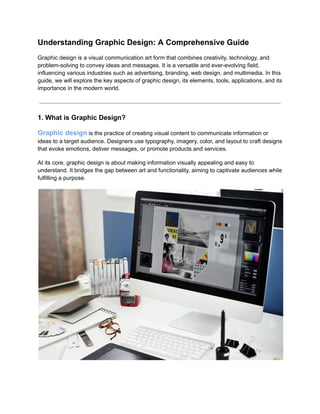
Graphic design is the practice of creating visual content to communicate information or
ideas to a target audience. Designers use typography, imagery, color, and layout to craft designs
that evoke emotions, deliver messages, or promote products and services.
At its core, graphic design is about making information visually appealing and easy to
understand. It bridges the gap between art and functionality, aiming to captivate audiences while
fulfilling a purpose.
2. Elements of Graphic Design
Graphic design revolves around several key elements that form the foundation of any creative
project:
1. Line: Lines can guide the viewer's eye, create movement, and separate or connect
elements within a design.
2. Shape: Shapes, whether geometric or organic, help build structure and convey meaning.
3. Color: Colors evoke emotions, set the tone, and influence perception.
4. Typography: The art of arranging type to make written language legible, readable, and
visually engaging.
5. Texture: Adds depth and a tactile feel, even in digital formats.
6. Space: The strategic use of negative space enhances clarity and balance in designs.
7. Balance and Composition: Achieving visual harmony through symmetry, asymmetry, or
radial balance.
3. Tools of Graphic Design
Modern graphic designers have access to a wide array of tools, ranging from traditional
methods like sketching to advanced digital software. Some popular tools include:
1. Adobe Creative Suite: Programs like Photoshop, Illustrator, and InDesign are industry
standards for photo editing, vector graphics, and layout design.
2. Canva: A beginner-friendly platform for creating quick and professional-looking designs.
3. Sketch: A favorite among UI/UX designers for web and app design.
4. Procreate: A powerful tool for digital illustration.
5. Affinity Suite: An affordable alternative to Adobe with similar functionalities.
6. Figma: A collaborative design tool widely used for interface design.
4. Types of Graphic Design
Graphic design encompasses various disciplines, each tailored to specific needs:
1. Visual Identity Design: Focuses on creating logos, brand guidelines, and visual
elements that represent a company or product.
2. Marketing and Advertising Design: Designs promotional materials like posters, social
media ads, and banners.
3. Web and UI/UX Design: Designs user-friendly and visually appealing websites and
applications.
4. Motion Graphics: Combines animation and design to create engaging content like
explainer videos and animated logos.
5. Packaging Design: Develops packaging for products, combining aesthetics with
functionality.
6. Environmental Design: Designs physical spaces, including signage, exhibitions, and
wayfinding systems.
5. The Role of Graphic Design in Business
Graphic design is pivotal in shaping a brand’s identity and market presence. Here’s why:
1. First Impressions: A well-designed logo or website can capture attention and make a
lasting impact.
2. Brand Recognition: Consistent visual identity builds trust and familiarity among
customers.
3. Effective Communication: Graphic design simplifies complex ideas, making them
accessible to diverse audiences.
4. Competitive Advantage: Unique and professional designs differentiate a brand from
competitors.
6. The Design Process
The design process typically involves the following steps:
1. Understanding the Brief: Gaining clarity on the project’s objectives, target audience,
and key messages.
2. Research and Inspiration: Analyzing competitors, trends, and creative references.
3. Concept Development: Sketching ideas and creating initial drafts.
4. Design Execution: Using tools to bring concepts to life.
5. Feedback and Revisions: Refining designs based on client and audience feedback.
6. Final Delivery: Providing the completed design in required formats.
7. Trends in Graphic Design
The world of graphic design is ever-changing, influenced by technology, culture, and innovation.
Current trends include:
1. 3D Design: Incorporating realistic 3D elements into flat designs.
2. Minimalism: Emphasizing simplicity and functionality.
3. Sustainability: Using eco-friendly materials and designs that promote environmental
awareness.
4. Bold Typography: Using oversized, experimental fonts to make statements.
5. Augmented Reality (AR): Interactive designs that merge the digital and physical worlds.
8. Challenges in Graphic Design
Graphic designers often face challenges, such as:
1. Balancing Creativity with Functionality: Ensuring designs are both visually appealing
and practical.
2. Keeping Up with Trends: Staying relevant in a fast-paced industry.
3. Client Communication: Translating client needs into effective designs.
4. Technical Issues: Mastering new tools and overcoming software limitations.
9. Becoming a Graphic Designer
Aspiring graphic designers can start their journey by:
1. Education: Pursuing a degree or certification in graphic design, art, or a related field.
2. Building a Portfolio: Showcasing diverse projects to demonstrate skills and creativity.
3. Networking: Connecting with professionals through events, social media, and design
communities.
4. Continuous Learning: Staying updated with new tools, techniques, and trends.
10. Conclusion
Graphic design is an essential and dynamic field that combines artistry with strategic thinking.
Whether you're crafting a brand's identity, designing a user-friendly website, or creating an
advertising campaign, graphic design plays a critical role in shaping perceptions and delivering
impactful messages. As technology continues to evolve, so will the opportunities and challenges
in this exciting profession.
Whether you're a budding designer or a business looking to leverage the power of design,
embracing creativity and innovation is key to success.
4o

Understanding Graphic Design_ A Comprehensive Guide.pdf

  • 1.
    Understanding Graphic Design:A Comprehensive Guide Graphic design is a visual communication art form that combines creativity, technology, and problem-solving to convey ideas and messages. It is a versatile and ever-evolving field, influencing various industries such as advertising, branding, web design, and multimedia. In this guide, we will explore the key aspects of graphic design, its elements, tools, applications, and its importance in the modern world. 1. What is Graphic Design? Graphic design is the practice of creating visual content to communicate information or ideas to a target audience. Designers use typography, imagery, color, and layout to craft designs that evoke emotions, deliver messages, or promote products and services. At its core, graphic design is about making information visually appealing and easy to understand. It bridges the gap between art and functionality, aiming to captivate audiences while fulfilling a purpose.
  • 2.
    2. Elements ofGraphic Design Graphic design revolves around several key elements that form the foundation of any creative project: 1. Line: Lines can guide the viewer's eye, create movement, and separate or connect elements within a design. 2. Shape: Shapes, whether geometric or organic, help build structure and convey meaning. 3. Color: Colors evoke emotions, set the tone, and influence perception. 4. Typography: The art of arranging type to make written language legible, readable, and visually engaging. 5. Texture: Adds depth and a tactile feel, even in digital formats. 6. Space: The strategic use of negative space enhances clarity and balance in designs. 7. Balance and Composition: Achieving visual harmony through symmetry, asymmetry, or radial balance. 3. Tools of Graphic Design Modern graphic designers have access to a wide array of tools, ranging from traditional methods like sketching to advanced digital software. Some popular tools include: 1. Adobe Creative Suite: Programs like Photoshop, Illustrator, and InDesign are industry standards for photo editing, vector graphics, and layout design. 2. Canva: A beginner-friendly platform for creating quick and professional-looking designs. 3. Sketch: A favorite among UI/UX designers for web and app design. 4. Procreate: A powerful tool for digital illustration. 5. Affinity Suite: An affordable alternative to Adobe with similar functionalities. 6. Figma: A collaborative design tool widely used for interface design. 4. Types of Graphic Design Graphic design encompasses various disciplines, each tailored to specific needs: 1. Visual Identity Design: Focuses on creating logos, brand guidelines, and visual elements that represent a company or product. 2. Marketing and Advertising Design: Designs promotional materials like posters, social media ads, and banners. 3. Web and UI/UX Design: Designs user-friendly and visually appealing websites and applications.
  • 3.
    4. Motion Graphics:Combines animation and design to create engaging content like explainer videos and animated logos. 5. Packaging Design: Develops packaging for products, combining aesthetics with functionality. 6. Environmental Design: Designs physical spaces, including signage, exhibitions, and wayfinding systems. 5. The Role of Graphic Design in Business Graphic design is pivotal in shaping a brand’s identity and market presence. Here’s why: 1. First Impressions: A well-designed logo or website can capture attention and make a lasting impact. 2. Brand Recognition: Consistent visual identity builds trust and familiarity among customers. 3. Effective Communication: Graphic design simplifies complex ideas, making them accessible to diverse audiences. 4. Competitive Advantage: Unique and professional designs differentiate a brand from competitors. 6. The Design Process The design process typically involves the following steps: 1. Understanding the Brief: Gaining clarity on the project’s objectives, target audience, and key messages. 2. Research and Inspiration: Analyzing competitors, trends, and creative references. 3. Concept Development: Sketching ideas and creating initial drafts. 4. Design Execution: Using tools to bring concepts to life. 5. Feedback and Revisions: Refining designs based on client and audience feedback. 6. Final Delivery: Providing the completed design in required formats. 7. Trends in Graphic Design The world of graphic design is ever-changing, influenced by technology, culture, and innovation. Current trends include: 1. 3D Design: Incorporating realistic 3D elements into flat designs. 2. Minimalism: Emphasizing simplicity and functionality.
  • 4.
    3. Sustainability: Usingeco-friendly materials and designs that promote environmental awareness. 4. Bold Typography: Using oversized, experimental fonts to make statements. 5. Augmented Reality (AR): Interactive designs that merge the digital and physical worlds. 8. Challenges in Graphic Design Graphic designers often face challenges, such as: 1. Balancing Creativity with Functionality: Ensuring designs are both visually appealing and practical. 2. Keeping Up with Trends: Staying relevant in a fast-paced industry. 3. Client Communication: Translating client needs into effective designs. 4. Technical Issues: Mastering new tools and overcoming software limitations. 9. Becoming a Graphic Designer Aspiring graphic designers can start their journey by: 1. Education: Pursuing a degree or certification in graphic design, art, or a related field. 2. Building a Portfolio: Showcasing diverse projects to demonstrate skills and creativity. 3. Networking: Connecting with professionals through events, social media, and design communities. 4. Continuous Learning: Staying updated with new tools, techniques, and trends. 10. Conclusion Graphic design is an essential and dynamic field that combines artistry with strategic thinking. Whether you're crafting a brand's identity, designing a user-friendly website, or creating an advertising campaign, graphic design plays a critical role in shaping perceptions and delivering impactful messages. As technology continues to evolve, so will the opportunities and challenges in this exciting profession. Whether you're a budding designer or a business looking to leverage the power of design, embracing creativity and innovation is key to success. 4o