1
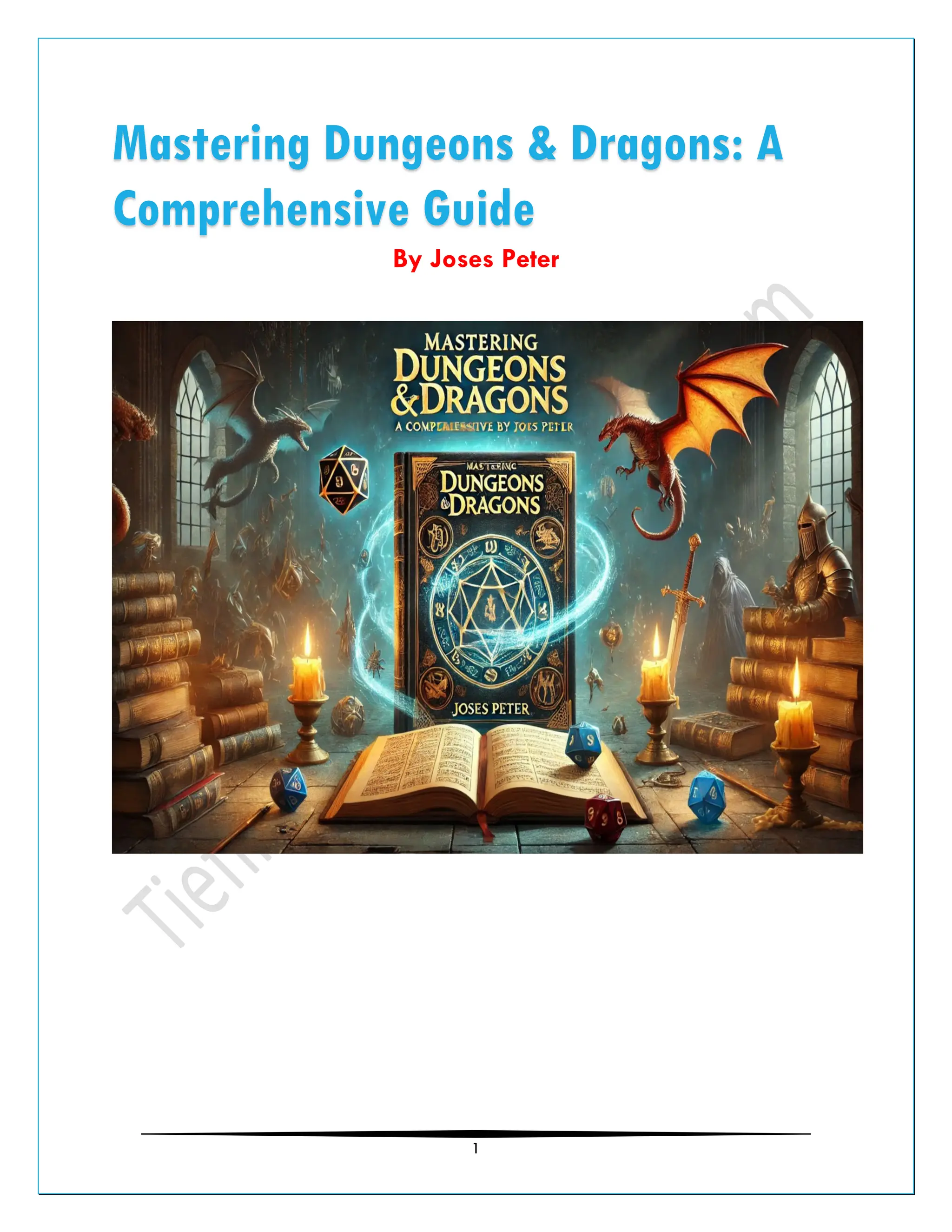
Mastering Dungeons & Dragons: A
Comprehensive Guide
By Joses Peter
2
Tableof Contents
Chapter 1: Introduction to Dungeons & Dragons
Chapter 2: The Fundamentals of Dungeons & Dragons
Chapter 3: Character Creation
Chapter 4: The Mechanics of Dungeons & Dragons
Chapter 5: The Role of the Dungeon Master
Chapter 6: Advanced Mechanics and Strategy
Chapter 7: DnD Campaigns and Adventures
Chapter 8: The Social Side of Dungeons & Dragons
Chapter 9: DnD Resources
Chapter 10: Tips for Playing Specific DnD Classes
Chapter 11: Example Campaign Outline
Chapter 12: Conclusion
3
Mastering Dungeons & Dragons: A Comprehensive
Guide
Chapter 1: Introduction to Dungeons & Dragons
What is Dungeons & Dragons?
Dungeons & Dragons (DnD) is a tabletop role-playing game (RPG) that brings
together creativity, strategy, and storytelling. It allows players to immerse
themselves in a fantasy world where they can assume the roles of various
characters—from noble heroes to dark antiheroes—and embark on epic
adventures. Unlike board games where the outcome is determined by luck or the
roll of dice, DnD is driven by imagination, collaboration, and decision-making.
At its core, DnD is a cooperative storytelling experience where players interact with
the game world through their characters, while the Dungeon Master (DM) guides the
story and sets the stage for the players' adventures.
History of Dungeons & Dragons
DnD was created by Gary Gygax and Dave Arneson in 1974 and quickly became
a cornerstone of the tabletop RPG genre. The game's open-ended nature,
combined with its focus on imagination and creative problem-solving, made it a
popular hobby and cultural phenomenon. Over the decades, DnD has gone through
multiple editions, evolving while retaining its foundational principles.
The game was first published by TSR, which later became part of Wizards of the
Coast, a subsidiary of Hasbro. DnD has influenced countless other games, movies,
books, and pop culture, with numerous spinoffs, video games, and novels inspired
by its mechanics and settings.
Why Play Dungeons & Dragons?
Players are drawn to DnD for a variety of reasons:
• Creativity: It offers players a canvas to create unique characters, craft
compelling backstories, and engage in imaginative problem-solving.
4
• Social Interaction: DnD fosters teamwork, camaraderie, and meaningful
social connections through group play.
• Storytelling: Players and DMs collaboratively build an unfolding narrative,
with no two campaigns ever being the same.
• Escape: DnD provides an opportunity to explore fantastical worlds, live out
heroic (or villainous) fantasies, and experience adventures beyond everyday
life.
The Core Philosophy of Roleplaying Games
At its heart, DnD is a role-playing game where players act as characters in a
fictional universe. The key elements of role-playing include:
• Imagination: Players use their imagination to bring their characters and the
game world to life.
• Rules: A set of guidelines that ensure fairness, balance, and structure during
gameplay.
• Collaboration: The game is built on teamwork and cooperation, with players
and the DM working together to tell a dynamic story.
• Freedom: DnD is a game with virtually limitless possibilities, offering players
the freedom to create, explore, and shape the game world.
Chapter 2: The Fundamentals of Dungeons & Dragons
Dice and How They Work
The most iconic feature of DnD is the polyhedral dice set, which consists of several
different types of dice:
• d4 (four-sided die)
• d6 (six-sided die)
• d8 (eight-sided die)
• d10 (ten-sided die)
• d12 (twelve-sided die)
5
• d20 (twenty-sided die)
The d20 is the most commonly used die in DnD. It's used for most checks, including
attacks, saving throws, and skill checks. Players roll the d20, adding modifiers
based on their character’s stats, to determine the outcome of their actions.
Other dice are used for damage calculations, spell effects, or other specific game
mechanics. For instance, a fireball spell may deal 8d6 fire damage, meaning you
roll eight six-sided dice to determine how much damage is dealt.
Basic Terminology
• AC (Armor Class): This is a character’s defense rating. It determines how
hard it is for enemies to hit the character. The higher the AC, the harder it is
to land a successful attack.
• HP (Hit Points): This is a character’s health or vitality. When a character
takes damage, their HP decreases. If their HP drops to 0, they fall
unconscious and may die, depending on the circumstances.
• Initiative: A roll made at the beginning of combat to determine the order in
which characters and enemies act.
• Saving Throws: These are rolls made to resist harmful effects like poison,
spells, or traps.
Understanding the Role of the Dungeon Master (DM)
The DM is the storyteller and referee of the game. They create the world, control
non-player characters (NPCs), and manage the rules to ensure a fair and exciting
game. The DM is responsible for:
• World-building: Crafting the setting, locations, and overall tone of the
campaign.
• Creating Encounters: Designing combat, social, and exploratory encounters
that challenge players.
• Adjudicating Rules: Interpreting the rules and making decisions to keep the
game moving smoothly.
• Facilitating Storytelling: Guiding the plot while allowing players to influence
the narrative.
Types of Players
6
• Roleplayers: These players focus on character development, dialogue, and
story. They enjoy creating deep backstories and participating in rich,
narrative-driven campaigns.
• Tacticians: These players focus on strategy, often excelling in combat
scenarios. They enjoy maximizing their characters’ effectiveness in battle.
• Storytellers: These players value the collaborative nature of DnD and enjoy
driving the story forward through their actions and decisions.
Chapter 3: Character Creation
Step-by-Step Character Creation Guide
Creating a character in DnD is an exciting process that allows players to craft a
unique persona for the game. The character creation process typically follows these
steps:
1. Choose a Race
Every race in DnD has unique traits, abilities, and cultural backgrounds. Some
popular races include:
o Humans: Versatile and adaptable, humans can thrive in any role.
o Elves: Graceful and long-lived, elves are known for their dexterity
and affinity for magic.
o Dwarves: Sturdy and resilient, dwarves are skilled craftsmen and
warriors.
o Halflings: Small and nimble, halflings excel at stealth and
resourcefulness.
2. Choose a Class
A character’s class determines their abilities and role in the party. Some
classes include:
o Fighter: A versatile warrior who excels in combat.
o Wizard: A master of arcane magic, capable of casting powerful spells.
o Rogue: A sneaky, skillful adventurer skilled in deception and stealth.
7
o Cleric: A holy warrior who can heal allies and smite foes with divine
power.
3. Determine Abilities
Characters have six core abilities: Strength, Dexterity, Constitution,
Intelligence, Wisdom, and Charisma. These scores determine how well your
character performs certain tasks, such as combat, spellcasting, and social
interactions.
4. Choose a Background
Backgrounds provide context to your character’s life before the campaign
begins. A character’s background could be anything from a former soldier to
a traveling merchant. Each background grants additional proficiencies and
roleplay opportunities.
5. Pick Equipment
Depending on your character’s class and background, they’ll begin with
specific gear. This may include weapons, armor, magical items, and
adventuring tools.
6. Flesh Out Your Personality
Determine your character’s values, motivations, and personality traits. What
are they passionate about? What are their flaws? This adds depth and helps
guide your roleplaying decisions.
Chapter 4: The Mechanics of Dungeons & Dragons
Understanding Combat
Combat is a central aspect of DnD, and it's resolved using a combination of dice
rolls and strategic decision-making. Players and enemies take turns in a battle, each
turn consisting of several actions:
• Attack: Roll a d20 to see if your attack hits an opponent, then roll the
damage dice to determine how much damage you deal.
• Movement: Characters can move a distance on the battlefield, usually based
on their movement speed.
8
• Bonus Actions: Certain abilities or items allow characters to take additional
actions, like casting a spell or performing a special attack.
• Reactions: These are actions that can occur outside of a player’s turn, like
dodging an attack or casting a counterspell.
Spells and Abilities
Spells are a unique feature of DnD, and each class has access to different types.
Magic can deal damage, heal allies, alter the environment, or even influence
emotions. Spellcasting is governed by spell slots, which are limited and need to be
managed carefully. For example:
• Fireball (Wizard): A powerful area-of-effect spell that deals massive
damage.
• Healing Word (Cleric): A spell that allows the caster to heal an ally from a
distance.
Skills and Proficiencies
Skills determine a character’s proficiency in various areas like Stealth, Persuasion,
or Acrobatics. Each character has a set of skills they’re trained in, and they add
proficiency bonuses to skill checks related to those abilities. Skills are usually tied to
one of the six abilities (Strength, Dexterity, etc.), and are used for things like
climbing, detecting traps, or persuading an NPC.
Chapter 5: The Role of the Dungeon Master
The Dungeon Master (DM) is arguably the most important role in DnD. While the
players control individual characters, the DM has the responsibility to craft the
world, create encounters, and ensure that everyone has fun. This chapter delves into
the many responsibilities of a DM, and how to excel at each one.
Crafting the World
A DM’s world is the playground for the players' adventures. It’s essential for the DM
to create a world that feels alive and immersive. Here are key steps to building a
world:
9
• World Concept: Start by deciding the nature of the world. Is it a high fantasy
setting filled with magic and mythical creatures, or is it more grounded with
subtle fantasy elements? The tone of the world will guide many of your
decisions, such as geography, politics, and social norms.
• Setting the Stage: Create towns, cities, villages, and landscapes. How do
these places fit into the world’s story? What’s the political structure like? Are
there any factions at play? Think about what makes each location unique.
• NPCs and Factions: Non-player characters (NPCs) are the backbone of your
world. These could be allies, enemies, or neutral figures who provide
important information. Also, consider creating factions—groups of people
with shared goals and ideologies that can influence the plot.
• Lore and History: Establish the history of your world. What great wars,
ancient legends, or forgotten gods shaped the world? Players can often learn
lore through interactions with NPCs or ancient ruins.
Creating Encounters
Encounters are the core of gameplay, and as a DM, you must create a variety of
challenges for your players. Encounters come in three types: combat, social, and
exploration.
• Combat Encounters: These involve tactical battles between characters and
monsters. A well-designed combat encounter should include a mix of enemies
with different abilities, a dynamic environment, and strategic choices. The
combat should be engaging, challenging, and fun without feeling like an
endless grind.
Tips:
o Vary the environment: An encounter in a narrow cave is very different
from a fight on a wide open plain.
o Use terrain to your advantage: High ground, cover, traps, and
environmental hazards make combat more exciting.
• Social Encounters: These involve interactions with NPCs, where players must
use their skills (like Persuasion, Insight, or Deception) to achieve goals. Social
encounters can be just as tense and engaging as combat, requiring the
players to roleplay their character’s motivations and build relationships with
the NPCs.
10
Tips:
o Make NPCs memorable: Give them unique voices, mannerisms, and
backstories. NPCs should have goals, fears, and desires that shape
their interactions with the players.
o Create moral dilemmas: Make the players face difficult choices that
can affect the story.
• Exploration Encounters: These include navigating dungeons, solving puzzles,
and discovering hidden secrets. Exploration focuses more on the world itself
than on combat or social interaction.
Tips:
o Keep it varied: Design puzzles that require critical thinking or
teamwork to solve.
o Reward players for exploration: Provide lore, treasures, and other
secrets that make players feel like they’re uncovering something
meaningful.
Adjudicating Rules
As a DM, you must be well-versed in the rules, but it's equally important to remain
flexible. While rules exist to provide structure, the true spirit of DnD is about fun
and creative storytelling.
• Know when to bend the rules: If an action seems reasonable but doesn’t fall
perfectly within the rules, consider allowing it to enhance the story. For
example, a player may want to attempt something risky, like trying to
convince a guard with a daring act, even if the situation isn’t clearly defined
in the rules.
• Make fair decisions: The DM should strive to make decisions that are
consistent and fair to all players. If a player succeeds or fails at a roll, make
sure that the result impacts the story in a meaningful way, whether positive or
negative.
Facilitating Storytelling
DnD is a collaborative experience, and the DM’s role is to guide the story while
ensuring the players’ choices matter. Players will influence the narrative through
their decisions, and it’s your job to weave their actions into the ongoing plot.
11
• Focus on player agency: Give your players the freedom to explore and
influence the world. The story should adapt based on their actions and
decisions.
• Create emotional stakes: Invest players in the story by making their
characters’ choices impactful. Use character backstories and personal goals
to drive narrative tension.
Chapter 6: Advanced Mechanics and Strategy
Once players become familiar with the basics, they can delve into advanced tactics
and mechanics that will make their characters more powerful and the game more
challenging.
Leveling Up
As characters gain experience points (XP), they level up, becoming more powerful
and capable. With each level gained, characters earn new abilities, spells, and
improvements to their stats.
• Choosing Feats: At certain levels, characters can choose feats, which are
special abilities or enhancements that give them new skills or improve existing
ones. For example, a feat like “Sharpshooter” can allow a ranged attacker
to ignore cover and increase their damage output.
• Multiclassing: Multiclassing allows players to take levels in multiple classes.
While this gives a character a wider range of abilities, it also comes with
trade-offs. Players must carefully consider whether multiclassing will benefit
their character in the long term.
Critical Hits and Fumbles
Critical hits and critical failures are part of what makes DnD exciting and
unpredictable.
• Critical Hits: When a player rolls a natural 20 on an attack roll, they score a
critical hit, which usually means double damage. Some DMs even allow
players to do something special with a critical hit, like knocking an enemy
prone or stunning them.
12
• Critical Failures: A natural 1 on an attack roll or skill check often leads to a
"critical failure." While some DMs leave this as a simple miss, others might
impose a humorous or serious consequence, like dropping your weapon or
injuring yourself.
Strategic Combat
While DnD combat is often a matter of luck and chance, there’s a lot that players
can do to influence the outcome through smart tactics.
• Positioning: Where your character is positioned on the battlefield is crucial.
For example, standing on high ground gives you an advantage in combat,
and being near allies can help with defensive maneuvers.
• Action Economy: Each character has a limited number of actions they can
take per turn. Maximizing the effectiveness of these actions—whether it’s
attacking, healing, or using a bonus action—can turn the tide of battle.
Resource Management
Characters need to manage various resources during their adventure, from spell
slots to health potions. Efficient use of these resources can make the difference
between success and failure.
• Spell Slot Management: Magic users need to be strategic in how they use
their limited spell slots. Should you use your highest-level spell to defeat a
single enemy, or save it for a larger threat later on? The choice is up to you.
• Inventory and Encumbrance: While encumbrance (the weight of items
carried) can slow down players, it also encourages strategic decisions about
what to carry. Players should think about which items will be most useful for
their current adventure.
Chapter 7: DnD Campaigns and Adventures
A successful campaign requires thoughtful planning and creativity. This chapter will
cover how to structure and plan both long-term campaigns and one-shot adventures.
Creating Your First Campaign
13
Campaigns are the backbone of DnD. They provide a continuous, evolving story
that keeps players engaged over multiple sessions. A successful campaign usually
follows these key steps:
• Campaign Hook: Introduce the campaign with an engaging and intriguing
premise. This could be a mystery, a prophecy, or a call to action. The hook
should draw players in and give them a reason to get involved.
• World-Building: Create a world for the campaign. This includes developing
factions, history, and geography. Players should feel like their actions have
an impact on the world.
• Story Arcs: Create overarching story arcs that span multiple sessions or
levels. These arcs may involve saving the world, discovering ancient secrets,
or pursuing personal goals. Each arc should have a beginning, middle, and
end, with the players' decisions shaping how the story unfolds.
One-Shot Adventures
One-shots are self-contained adventures that can be completed in a single session.
These are perfect for short-term campaigns or for introducing new players to the
game.
• Simplicity: One-shots should be straightforward, with a clear objective. The
focus is on quick, exciting gameplay without too many complicated subplots.
• High Stakes: Since time is limited, the stakes should be high. Players should
feel like the outcome of the adventure matters.
Designing Encounters
When designing encounters, remember that variety is key. Players will likely grow
tired of facing the same types of enemies over and over again.
• Boss Battles: Epic confrontations with powerful enemies can serve as the
climax of an adventure or campaign. Bosses should have unique abilities and
tactics that challenge the players in different ways.
• Traps and Hazards: These provide a challenge outside of combat, forcing
players to think creatively. Traps could include magical wards, hidden pits, or
cursed objects.
14
Chapter 8: The Social Side of Dungeons & Dragons
DnD is more than just dice rolls and character sheets—it's a deeply social
experience that thrives on communication, collaboration, and shared storytelling.
The dynamics within a group can make or break a campaign, and understanding
how to manage these interactions is essential for a rewarding gameplay
experience.
The Importance of Group Dynamics
The success of any DnD campaign often depends on how well the group
collaborates. As the game is a cooperative experience, it’s important that players
and the DM work together to create a positive atmosphere.
• Shared Goals: All players should have a common objective, which may
evolve as the game progresses. These shared goals give the group a sense
of purpose and direction. It’s essential for the DM to clarify the overarching
story or conflict early on to ensure everyone is aligned.
• Player Roles: Just as characters have distinct roles in combat (e.g., tank,
healer, damage dealer), players also bring unique dynamics to the group.
Some players may enjoy storytelling, while others excel at strategy or
tactical combat. Embrace these differences—everyone should feel like their
contributions are valued.
How to Be a Good Player?
While it's natural to focus on your own character, being a good player involves
contributing to the success of the entire group. Here are some tips on how to play
effectively in a team environment:
• Collaborate with Others: Share information about your character’s abilities
and strengths. Help other players by strategizing together and providing
support during encounters. DnD is a game of teamwork, and players should
feel comfortable sharing the spotlight.
• Roleplay Your Character: Engage with the story and the world your DM has
created. Interact with NPCs, make decisions based on your character’s
background and motivations, and don’t be afraid to think outside the box.
• Respect Group Boundaries: Respect the pace of the game and the decisions
of other players. If someone is having a moment to shine, give them the space
15
to explore their character. Avoid overpowering the narrative or
overshadowing others.
How to Be a Good Dungeon Master?
As the facilitator of the game, a good DM ensures the story flows smoothly, the
rules are followed, and everyone has a chance to contribute. Here are some
essential skills and tips for being an excellent Dungeon Master:
• Be Prepared but Flexible: Preparation is key, but you must also be able to
adapt. Players will inevitably make unexpected choices that may throw off
your plans. A good DM is ready to improvise while maintaining the overall
flow of the story.
• Keep the Pace Moving: Don’t linger too long on one part of the game. If a
combat encounter or puzzle is dragging on, find ways to move things
forward. Similarly, if a player is stalling in a social situation, gently guide
them toward resolution.
• Encourage Player Creativity: Let players approach situations in unique ways.
While rules are important, creativity should always be rewarded. If a player
comes up with a solution that might not be in the rulebook, consider how you
can make it work while keeping things fun and balanced.
• Foster Inclusivity and Respect: Make sure that all players feel safe and
respected at the table. DnD can delve into complex or sensitive topics, so it’s
crucial to set the tone for respectful interaction. Have an open line of
communication with players about sensitive content and boundaries.
Keeping the Fun Flowing
A key part of the DM’s role is to ensure everyone is having fun. DnD is about
collective enjoyment, and the DM should always be looking for ways to keep the
game engaging and exciting.
• Balance Challenges: As a DM, it’s important to balance the challenges in
your campaign. Too many difficult encounters can make the game feel
frustrating, while too many easy encounters can lead to boredom. Strive for
a balance that provides a healthy level of tension, where the outcome is
uncertain but achievable.
• Celebrate Successes: When players accomplish something significant,
whether it’s defeating a boss, solving a puzzle, or achieving a personal goal,
16
celebrate it! This positive reinforcement encourages further engagement and
excitement.
Chapter 9: DnD Resources
In the world of Dungeons & Dragons, there’s a wealth of resources available to
players and Dungeon Masters. These resources can enhance gameplay, streamline
mechanics, and help players find inspiration for their characters and campaigns.
Below are some of the most useful tools, books, and websites available to DnD
enthusiasts.
Essential Books for Players and DMs
While the Player’s Handbook (PHB) and Dungeon Master’s Guide (DMG) are the
primary texts for DnD, there are many supplementary books that offer more depth
and variety.
• Player’s Handbook (PHB): This is the essential book for players. It contains
all the rules for character creation, combat, and spellcasting. The PHB also
covers race and class options and provides detailed information on abilities,
skills, and feats.
• Dungeon Master’s Guide (DMG): This is the primary reference for DMs. It
offers tips on world-building, designing encounters, and managing the game.
It also includes random tables for creating NPCs, treasures, and dungeons.
• Monster Manual (MM): The Monster Manual is an indispensable resource for
DMs. It provides detailed stats and lore for hundreds of creatures that
players may encounter during their adventures.
• Xanathar’s Guide to Everything: This book introduces additional rules and
options, including new subclasses, spells, and feats. It’s an essential resource
for players and DMs looking to expand their options.
• Volo’s Guide to Monsters: Volo’s Guide focuses on monsters and how they fit
into the world of DnD. It provides lore, new monster stat blocks, and tips for
integrating them into campaigns.
17
• Tasha’s Cauldron of Everything: This book expands on character creation
with new subclasses, spells, and optional rules. It also includes advice for DMs
on creating better campaigns and managing players.
Online Platforms for Playing DnD
In today’s digital world, playing DnD online has become a common way to enjoy
the game, especially for long-distance groups. Here are some platforms that make
online play easier:
• Roll20: A popular virtual tabletop platform, Roll20 allows you to play DnD
online with maps, dice rolling, and character sheets. It’s a great way to play
with friends who are far away.
• D&D Beyond: D&D Beyond is an official online platform for creating
characters, managing campaigns, and accessing digital versions of the core
books. It’s an easy-to-use resource for tracking character stats and spells.
• Fantasy Grounds: Another virtual tabletop, Fantasy Grounds offers
advanced tools for DMs, such as automated combat and customizable
character sheets.
• Foundry VTT: A newer virtual tabletop, Foundry VTT is highly customizable
and supports a wide range of content from various RPG systems, including
DnD.
Communities and Forums
Joining the DnD community is a great way to learn new tips, get inspiration, and
share experiences. Here are some popular forums and groups:
• Reddit: Subreddits like r/DnD and r/DnDNext are hubs for discussions about
rules, campaigns, and storytelling advice. You can also find many helpful
resources here, such as homebrew content and fan-made campaigns.
• Dungeon Masters Guild: This is a platform where players and DMs can
share and purchase third-party content. You can find everything from new
monsters and spells to entire adventures and campaigns.
• Discord: Many DnD groups and servers exist on Discord. These are excellent
spaces for finding virtual groups to play with, asking for advice, or discussing
DnD-related topics.
18
• Tiefling Names Generator: This is a Free Tiefling Name Generator Tool
which will help you to create a customized and unique name for your DnD
character.
Books and Novels
Dungeons & Dragons has inspired a wide range of novels, many of which explore
the rich lore of the game’s worlds. While reading these books isn’t necessary to
enjoy the game, they can provide inspiration for campaigns, characters, and
settings. Some iconic DnD novels include:
• The Drizzt Do'Urden Series by R.A. Salvatore
• The Dragonlance Chronicles by Margaret Weis and Tracy Hickman
• The Forgotten Realms Novels: A large series of novels set in the iconic
Forgotten Realms campaign setting.
Chapter 10: Tips for Playing Specific DnD Classes
Each DnD class has its own strengths, weaknesses, and unique features.
Understanding these nuances is essential for maximizing the potential of your
character and contributing effectively to your party. Below are tips for playing
each of the core classes, including how to optimize their abilities and roleplay
effectively.
Barbarian
Barbarians are the masters of rage and brute strength. Their resilience in combat
and damage output make them excellent front-line fighters.
• Maximizing Rage: A Barbarian’s rage boosts their damage and gives them
resistance to physical damage, so it’s essential to use it strategically. Don’t
waste it on weak enemies; save it for tougher opponents to maximize your
effectiveness.
• Positioning is Key: While Barbarians excel in melee combat, they should
position themselves to protect squishy characters like Wizards or Rogues. Use
your natural tanking abilities to draw enemy attention and soak up damage.
19
• Roleplay: Barbarians often have primal or personal reasons for their rage.
Whether it’s a desire for vengeance or a deep connection to nature, channel
this in your roleplay. Your character’s backstory can influence how they react
in tense situations—whether they seek peace or thrive in battle.
Bard
Bards are versatile spellcasters who use music, charm, and wit to manipulate the
battlefield, both in and out of combat.
• Use Bardic Inspiration Wisely: This ability lets you provide crucial bonuses to
your allies’ abilities, making it essential to use it when it can turn the tide of
an encounter. Don’t be afraid to inspire your allies even in moments of
relative calm—preparing them for the challenges ahead.
• Spell Versatility: With access to a wide variety of spells, Bards are excellent
at adapting to any situation. Be sure to prepare a mix of healing, buffing,
and control spells to support your party, especially since Bardic spells tend to
favor utility and support over sheer damage.
• Roleplay: Bards are often charismatic and persuasive, and their charm can
win over NPCs and even enemies. Use your social skills to smooth over
conflicts, form alliances, and gain valuable information.
Cleric
Clerics are divine spellcasters who can heal, protect, and smite their foes. Their
connection to their deity provides them with power that can shape the battlefield
and influence the game.
• Channel Divinity: Each Cleric domain offers unique Channel Divinity abilities,
which should be used strategically. Whether healing, turning undead, or
dealing massive damage, your Channel Divinity should be saved for the most
impactful moments.
• Healing Priority: While Clerics are excellent healers, be sure to consider
your spell choices. Some healing spells are more effective in specific
situations (e.g., Mass Healing Word for multiple allies or Revivify for an
emergency resurrection). Don’t forget your utility spells that can help in non-
combat scenarios.
• Roleplay: Clerics are often deeply devout to their faith or deity. This
connection should influence your character’s personality and motivations.
20
Whether they are a stern, duty-bound servant or a carefree follower of a
god of love, their beliefs should impact every decision.
Druid
Druids are nature-focused spellcasters with the ability to shape-shift into animals,
commune with nature, and wield the power of the elements.
• Wild Shape: Wild Shape is an extremely versatile ability, allowing you to
take on the form of any beast you’ve seen. Use it strategically to gain
advantages in combat, exploration, or roleplaying. Whether you need to
scout as a small creature or fight as a powerful bear, Wild Shape provides
excellent utility.
• Spellcasting and Summoning: Druids have access to both healing and
offensive spells, and they can summon creatures to fight for them. Pay
attention to your environment; summoning animals or shaping the terrain to
your advantage can often be the key to winning an encounter.
• Roleplay: Druids are typically connected to nature, and their views may
conflict with urbanized or industrial societies. This can make for compelling
roleplay, as they navigate the balance between protecting nature and
interacting with more civilized areas.
Fighter
Fighters are the masters of combat, able to deal massive damage with weapons,
defend their allies, and adapt to a wide variety of fighting styles.
• Action Surge: Fighters are known for their ability to take additional actions
during combat. Using Action Surge at the right time—such as when your team
needs a final push or you want to finish off a weakened enemy—can
drastically change the outcome of a battle.
• Combat Superiority: Many Fighters choose the Battle Master archetype,
gaining maneuvers that allow them to control the flow of combat. Be sure to
mix and match your maneuvers for maximum effect, and always have a
backup plan if you’re unable to execute your ideal strategy.
• Roleplay: Fighters may come from all walks of life: soldiers, mercenaries,
gladiators, or even farmers. Their backstory can be an integral part of their
roleplay, especially if their past combat experiences shape their personality
and relationships.
21
Monk
Monks are martial artists with the ability to harness their inner ki to perform
incredible feats of agility, speed, and power.
• Flurry of Blows: Monks can make multiple unarmed strikes in a single turn.
This ability allows for quick and deadly attacks, especially when combined
with your martial arts and ki abilities. Be sure to maximize this by staying
mobile and evading attacks while dealing damage.
• Ki Abilities: Your ki points are precious, so use them wisely. From stunning
enemies to healing yourself, ki offers both offensive and defensive options.
Consider your ki usage based on the current situation—should you focus on
defense or maximize your damage output?
• Roleplay: Monks are often disciplined and contemplative, with a connection
to a martial tradition or a monastic order. Their outlook on life tends to be
calm and focused, making them excellent at navigating conflict without
resorting to violence—unless it’s absolutely necessary.
Paladin
Paladins are holy warriors who uphold justice, righteousness, and the will of their
gods. With a combination of combat prowess and divine magic, they serve as
protectors of their allies.
• Divine Smite: This ability allows Paladins to expend spell slots to deal extra
radiant damage with their weapon attacks. When facing evil or undead
foes, this becomes particularly powerful. Be sure to save your smites for key
moments when you want to deal massive damage.
• Aura of Protection: At higher levels, Paladins can grant their allies bonuses to
saving throws. This makes Paladins excellent team players, as they can
protect the entire party from dangerous effects.
• Roleplay: Paladins are bound by oaths to a specific code of conduct. The
nature of this oath—whether it’s an oath of vengeance, devotion, or
something else—can shape how your character interacts with others. A
Paladin’s sense of duty and justice often leads to interesting moral dilemmas
and internal conflict.
Ranger
Rangers are skilled hunters, trackers, and survivalists, often working in wild terrains
to combat monsters or protect nature.
22
• Favored Enemy: Rangers gain bonuses against specific types of enemies.
Choosing your favored enemy carefully allows you to specialize in certain
kinds of combat, making you highly effective against particular threats.
Whether it’s undead, beasts, or humanoids, your knowledge can turn the tide
in battle.
• Hunter’s Mark: This spell allows you to mark an enemy, gaining extra
damage on each attack. Use it to maximize your damage output, especially
against particularly dangerous foes.
• Roleplay: Rangers often have a deep connection to the wilderness. Whether
they are solitary figures or protectors of a certain forest or region, your
character’s backstory can involve personal connections to the natural world.
Rogue
Rogues are cunning and dexterous characters who excel at stealth, deception, and
critical strikes.
• Sneak Attack: A Rogue’s ability to deal extra damage when attacking an
enemy who is distracted is one of their most defining features. Be sure to use
positioning and teamwork to create opportunities for Sneak Attack, either by
hiding or ensuring an ally is within range to draw attention.
• Cunning Action: This allows you to Dash, Disengage, or Hide as a bonus
action. This mobility is crucial for a Rogue, as it allows you to get in and out
of combat quickly and take advantage of opportunities.
• Roleplay: Rogues often have a morally ambiguous nature, ranging from
charming tricksters to hardened criminals. Your Rogue’s backstory should
reflect their skills—whether they were a thief, an assassin, or a spy.
Wizard
Wizards are powerful spellcasters who learn magic through rigorous study. They
possess an immense range of spells, but require careful planning and resource
management.
• Spell Preparation: Wizards must prepare spells each day. Make sure to
prepare a wide variety of spells to cover different situations, from damage-
dealing spells to utility and control options.
• Arcane Recovery: Wizards have the ability to recover spell slots during short
rests. This is useful for maximizing your magic use during longer campaigns or
dungeons.
23
• Roleplay: Wizards are typically deeply intellectual and scholarly. Whether
you’re a bookish scholar, a wandering sage, or a mad genius, your Wizard’s
motivations and personality will be influenced by their pursuit of knowledge.
Chapter 11: Example Campaign Outline
Creating a campaign from scratch can be daunting, but having a solid outline helps
organize your ideas and ensures that the adventure is fun and engaging for
everyone.
Campaign Title: The Shattered Sigil
Campaign Hook:
A powerful ancient sigil, once used to seal away a forgotten evil, has shattered. The
pieces of the sigil are scattered across the land, and dark forces are seeking to
reunite them to unleash a terrible power. The adventurers must race against time to
find the fragments before they fall into the wrong hands.
Opening Scene:
The players meet in a small village where rumors have been spreading about
mysterious cults searching for "pieces of the sigil." A local historian, known for her
research into ancient magic, seeks their help in retrieving the first fragment of the
sigil, which is rumored to be hidden in an abandoned crypt beneath the village.
Key Locations:
1. The Abandoned Crypt: The players must solve riddles and battle undead
guardians to retrieve the first piece of the sigil.
2. The Forest of Whispering Pines: A dangerous forest where the second sigil
piece is held by a reclusive elven sorceress, who tests the players’ resolve
with trials of wisdom and strength.
3. The Tower of Storms: A ruined tower in the mountains where the third
fragment lies under the watch of a storm giant. The party must navigate
treacherous weather and hostile creatures to claim the final piece.
Antagonists:
24
• The Cult of the Black Sigil: A secret society bent on reassembling the sigil to
summon a long-banished ancient evil.
• Mysterious Rival: Another group of adventurers hired by a powerful enemy,
working to thwart the players at every turn.
Campaign Climax:
Once the players collect all the sigil pieces, they must stop the Cult of the Black Sigil
from completing the ritual. The final battle takes place in an ancient temple, with
the fate of the world hanging in the balance.
Chapter 12: Conclusion
Dungeons & Dragons is more than just a game; it’s a shared experience that brings
together creativity, imagination, and camaraderie. Through every roll of the dice,
the world expands, and the players' stories unfold. Whether you’re a player, a
Dungeon Master, or both, the most important part of DnD is the fun and the
friendships that grow along the way.
The Future of Dungeons & Dragons
As DnD continues to grow in popularity, it evolves, with new editions, books, and
digital tools enhancing the experience. Whether through virtual platforms or the
continued release of new rulebooks and campaigns, DnD is sure to remain a major
part of the tabletop gaming world for years to come.
Final Thoughts and Advice for New Players
If you're just starting your journey into the world of Dungeons & Dragons, embrace
the experience. Let go of any fears or hesitations—DnD is about fun, creativity, and
making memories with friends. The game is as much about the journey as it is about
the destination. The bonds you create with your fellow players, the stories you tell,
and the challenges you overcome will stay with you long after the campaign ends.
So roll your dice, dive into your character’s story, and most importantly, have fun!
25
About the Author: Joses Peter
Joses Peter is a passionate writer with a deep love for gaming. With a lifelong
interest in fantasy worlds and storytelling, Joses has carved out a niche for herself
as both a writer and a gaming enthusiast. When she's not crafting stories, you can
find her exploring the vast realms of role-playing games like Dungeons & Dragons,
where she is particularly fond of creating rich and unique characters.
In addition to her writing, Joses is the founder of Tiefling Name Generator, a free
online tool designed to help DnD players create customized names for their
characters. Whether you're a seasoned adventurer or a newcomer to the game, the
Tiefling Name Generator provides players with an easy and creative way to
develop memorable names for their DnD campaigns.
Joses' passion for both writing and gaming is reflected in every word she pens, and
she hopes to inspire others to dive into the rich world of Dungeons & Dragons,
creating stories and characters that are as epic as the adventures themselves.

Mastering Dungeons & Dragons | A Comprehensive Guide.pdf

  • 1.
    1 Mastering Dungeons &Dragons: A Comprehensive Guide By Joses Peter
  • 2.
    2 Tableof Contents Chapter 1:Introduction to Dungeons & Dragons Chapter 2: The Fundamentals of Dungeons & Dragons Chapter 3: Character Creation Chapter 4: The Mechanics of Dungeons & Dragons Chapter 5: The Role of the Dungeon Master Chapter 6: Advanced Mechanics and Strategy Chapter 7: DnD Campaigns and Adventures Chapter 8: The Social Side of Dungeons & Dragons Chapter 9: DnD Resources Chapter 10: Tips for Playing Specific DnD Classes Chapter 11: Example Campaign Outline Chapter 12: Conclusion
  • 3.
    3 Mastering Dungeons &Dragons: A Comprehensive Guide Chapter 1: Introduction to Dungeons & Dragons What is Dungeons & Dragons? Dungeons & Dragons (DnD) is a tabletop role-playing game (RPG) that brings together creativity, strategy, and storytelling. It allows players to immerse themselves in a fantasy world where they can assume the roles of various characters—from noble heroes to dark antiheroes—and embark on epic adventures. Unlike board games where the outcome is determined by luck or the roll of dice, DnD is driven by imagination, collaboration, and decision-making. At its core, DnD is a cooperative storytelling experience where players interact with the game world through their characters, while the Dungeon Master (DM) guides the story and sets the stage for the players' adventures. History of Dungeons & Dragons DnD was created by Gary Gygax and Dave Arneson in 1974 and quickly became a cornerstone of the tabletop RPG genre. The game's open-ended nature, combined with its focus on imagination and creative problem-solving, made it a popular hobby and cultural phenomenon. Over the decades, DnD has gone through multiple editions, evolving while retaining its foundational principles. The game was first published by TSR, which later became part of Wizards of the Coast, a subsidiary of Hasbro. DnD has influenced countless other games, movies, books, and pop culture, with numerous spinoffs, video games, and novels inspired by its mechanics and settings. Why Play Dungeons & Dragons? Players are drawn to DnD for a variety of reasons: • Creativity: It offers players a canvas to create unique characters, craft compelling backstories, and engage in imaginative problem-solving.
  • 4.
    4 • Social Interaction:DnD fosters teamwork, camaraderie, and meaningful social connections through group play. • Storytelling: Players and DMs collaboratively build an unfolding narrative, with no two campaigns ever being the same. • Escape: DnD provides an opportunity to explore fantastical worlds, live out heroic (or villainous) fantasies, and experience adventures beyond everyday life. The Core Philosophy of Roleplaying Games At its heart, DnD is a role-playing game where players act as characters in a fictional universe. The key elements of role-playing include: • Imagination: Players use their imagination to bring their characters and the game world to life. • Rules: A set of guidelines that ensure fairness, balance, and structure during gameplay. • Collaboration: The game is built on teamwork and cooperation, with players and the DM working together to tell a dynamic story. • Freedom: DnD is a game with virtually limitless possibilities, offering players the freedom to create, explore, and shape the game world. Chapter 2: The Fundamentals of Dungeons & Dragons Dice and How They Work The most iconic feature of DnD is the polyhedral dice set, which consists of several different types of dice: • d4 (four-sided die) • d6 (six-sided die) • d8 (eight-sided die) • d10 (ten-sided die) • d12 (twelve-sided die)
  • 5.
    5 • d20 (twenty-sideddie) The d20 is the most commonly used die in DnD. It's used for most checks, including attacks, saving throws, and skill checks. Players roll the d20, adding modifiers based on their character’s stats, to determine the outcome of their actions. Other dice are used for damage calculations, spell effects, or other specific game mechanics. For instance, a fireball spell may deal 8d6 fire damage, meaning you roll eight six-sided dice to determine how much damage is dealt. Basic Terminology • AC (Armor Class): This is a character’s defense rating. It determines how hard it is for enemies to hit the character. The higher the AC, the harder it is to land a successful attack. • HP (Hit Points): This is a character’s health or vitality. When a character takes damage, their HP decreases. If their HP drops to 0, they fall unconscious and may die, depending on the circumstances. • Initiative: A roll made at the beginning of combat to determine the order in which characters and enemies act. • Saving Throws: These are rolls made to resist harmful effects like poison, spells, or traps. Understanding the Role of the Dungeon Master (DM) The DM is the storyteller and referee of the game. They create the world, control non-player characters (NPCs), and manage the rules to ensure a fair and exciting game. The DM is responsible for: • World-building: Crafting the setting, locations, and overall tone of the campaign. • Creating Encounters: Designing combat, social, and exploratory encounters that challenge players. • Adjudicating Rules: Interpreting the rules and making decisions to keep the game moving smoothly. • Facilitating Storytelling: Guiding the plot while allowing players to influence the narrative. Types of Players
  • 6.
    6 • Roleplayers: Theseplayers focus on character development, dialogue, and story. They enjoy creating deep backstories and participating in rich, narrative-driven campaigns. • Tacticians: These players focus on strategy, often excelling in combat scenarios. They enjoy maximizing their characters’ effectiveness in battle. • Storytellers: These players value the collaborative nature of DnD and enjoy driving the story forward through their actions and decisions. Chapter 3: Character Creation Step-by-Step Character Creation Guide Creating a character in DnD is an exciting process that allows players to craft a unique persona for the game. The character creation process typically follows these steps: 1. Choose a Race Every race in DnD has unique traits, abilities, and cultural backgrounds. Some popular races include: o Humans: Versatile and adaptable, humans can thrive in any role. o Elves: Graceful and long-lived, elves are known for their dexterity and affinity for magic. o Dwarves: Sturdy and resilient, dwarves are skilled craftsmen and warriors. o Halflings: Small and nimble, halflings excel at stealth and resourcefulness. 2. Choose a Class A character’s class determines their abilities and role in the party. Some classes include: o Fighter: A versatile warrior who excels in combat. o Wizard: A master of arcane magic, capable of casting powerful spells. o Rogue: A sneaky, skillful adventurer skilled in deception and stealth.
  • 7.
    7 o Cleric: Aholy warrior who can heal allies and smite foes with divine power. 3. Determine Abilities Characters have six core abilities: Strength, Dexterity, Constitution, Intelligence, Wisdom, and Charisma. These scores determine how well your character performs certain tasks, such as combat, spellcasting, and social interactions. 4. Choose a Background Backgrounds provide context to your character’s life before the campaign begins. A character’s background could be anything from a former soldier to a traveling merchant. Each background grants additional proficiencies and roleplay opportunities. 5. Pick Equipment Depending on your character’s class and background, they’ll begin with specific gear. This may include weapons, armor, magical items, and adventuring tools. 6. Flesh Out Your Personality Determine your character’s values, motivations, and personality traits. What are they passionate about? What are their flaws? This adds depth and helps guide your roleplaying decisions. Chapter 4: The Mechanics of Dungeons & Dragons Understanding Combat Combat is a central aspect of DnD, and it's resolved using a combination of dice rolls and strategic decision-making. Players and enemies take turns in a battle, each turn consisting of several actions: • Attack: Roll a d20 to see if your attack hits an opponent, then roll the damage dice to determine how much damage you deal. • Movement: Characters can move a distance on the battlefield, usually based on their movement speed.
  • 8.
    8 • Bonus Actions:Certain abilities or items allow characters to take additional actions, like casting a spell or performing a special attack. • Reactions: These are actions that can occur outside of a player’s turn, like dodging an attack or casting a counterspell. Spells and Abilities Spells are a unique feature of DnD, and each class has access to different types. Magic can deal damage, heal allies, alter the environment, or even influence emotions. Spellcasting is governed by spell slots, which are limited and need to be managed carefully. For example: • Fireball (Wizard): A powerful area-of-effect spell that deals massive damage. • Healing Word (Cleric): A spell that allows the caster to heal an ally from a distance. Skills and Proficiencies Skills determine a character’s proficiency in various areas like Stealth, Persuasion, or Acrobatics. Each character has a set of skills they’re trained in, and they add proficiency bonuses to skill checks related to those abilities. Skills are usually tied to one of the six abilities (Strength, Dexterity, etc.), and are used for things like climbing, detecting traps, or persuading an NPC. Chapter 5: The Role of the Dungeon Master The Dungeon Master (DM) is arguably the most important role in DnD. While the players control individual characters, the DM has the responsibility to craft the world, create encounters, and ensure that everyone has fun. This chapter delves into the many responsibilities of a DM, and how to excel at each one. Crafting the World A DM’s world is the playground for the players' adventures. It’s essential for the DM to create a world that feels alive and immersive. Here are key steps to building a world:
  • 9.
    9 • World Concept:Start by deciding the nature of the world. Is it a high fantasy setting filled with magic and mythical creatures, or is it more grounded with subtle fantasy elements? The tone of the world will guide many of your decisions, such as geography, politics, and social norms. • Setting the Stage: Create towns, cities, villages, and landscapes. How do these places fit into the world’s story? What’s the political structure like? Are there any factions at play? Think about what makes each location unique. • NPCs and Factions: Non-player characters (NPCs) are the backbone of your world. These could be allies, enemies, or neutral figures who provide important information. Also, consider creating factions—groups of people with shared goals and ideologies that can influence the plot. • Lore and History: Establish the history of your world. What great wars, ancient legends, or forgotten gods shaped the world? Players can often learn lore through interactions with NPCs or ancient ruins. Creating Encounters Encounters are the core of gameplay, and as a DM, you must create a variety of challenges for your players. Encounters come in three types: combat, social, and exploration. • Combat Encounters: These involve tactical battles between characters and monsters. A well-designed combat encounter should include a mix of enemies with different abilities, a dynamic environment, and strategic choices. The combat should be engaging, challenging, and fun without feeling like an endless grind. Tips: o Vary the environment: An encounter in a narrow cave is very different from a fight on a wide open plain. o Use terrain to your advantage: High ground, cover, traps, and environmental hazards make combat more exciting. • Social Encounters: These involve interactions with NPCs, where players must use their skills (like Persuasion, Insight, or Deception) to achieve goals. Social encounters can be just as tense and engaging as combat, requiring the players to roleplay their character’s motivations and build relationships with the NPCs.
  • 10.
    10 Tips: o Make NPCsmemorable: Give them unique voices, mannerisms, and backstories. NPCs should have goals, fears, and desires that shape their interactions with the players. o Create moral dilemmas: Make the players face difficult choices that can affect the story. • Exploration Encounters: These include navigating dungeons, solving puzzles, and discovering hidden secrets. Exploration focuses more on the world itself than on combat or social interaction. Tips: o Keep it varied: Design puzzles that require critical thinking or teamwork to solve. o Reward players for exploration: Provide lore, treasures, and other secrets that make players feel like they’re uncovering something meaningful. Adjudicating Rules As a DM, you must be well-versed in the rules, but it's equally important to remain flexible. While rules exist to provide structure, the true spirit of DnD is about fun and creative storytelling. • Know when to bend the rules: If an action seems reasonable but doesn’t fall perfectly within the rules, consider allowing it to enhance the story. For example, a player may want to attempt something risky, like trying to convince a guard with a daring act, even if the situation isn’t clearly defined in the rules. • Make fair decisions: The DM should strive to make decisions that are consistent and fair to all players. If a player succeeds or fails at a roll, make sure that the result impacts the story in a meaningful way, whether positive or negative. Facilitating Storytelling DnD is a collaborative experience, and the DM’s role is to guide the story while ensuring the players’ choices matter. Players will influence the narrative through their decisions, and it’s your job to weave their actions into the ongoing plot.
  • 11.
    11 • Focus onplayer agency: Give your players the freedom to explore and influence the world. The story should adapt based on their actions and decisions. • Create emotional stakes: Invest players in the story by making their characters’ choices impactful. Use character backstories and personal goals to drive narrative tension. Chapter 6: Advanced Mechanics and Strategy Once players become familiar with the basics, they can delve into advanced tactics and mechanics that will make their characters more powerful and the game more challenging. Leveling Up As characters gain experience points (XP), they level up, becoming more powerful and capable. With each level gained, characters earn new abilities, spells, and improvements to their stats. • Choosing Feats: At certain levels, characters can choose feats, which are special abilities or enhancements that give them new skills or improve existing ones. For example, a feat like “Sharpshooter” can allow a ranged attacker to ignore cover and increase their damage output. • Multiclassing: Multiclassing allows players to take levels in multiple classes. While this gives a character a wider range of abilities, it also comes with trade-offs. Players must carefully consider whether multiclassing will benefit their character in the long term. Critical Hits and Fumbles Critical hits and critical failures are part of what makes DnD exciting and unpredictable. • Critical Hits: When a player rolls a natural 20 on an attack roll, they score a critical hit, which usually means double damage. Some DMs even allow players to do something special with a critical hit, like knocking an enemy prone or stunning them.
  • 12.
    12 • Critical Failures:A natural 1 on an attack roll or skill check often leads to a "critical failure." While some DMs leave this as a simple miss, others might impose a humorous or serious consequence, like dropping your weapon or injuring yourself. Strategic Combat While DnD combat is often a matter of luck and chance, there’s a lot that players can do to influence the outcome through smart tactics. • Positioning: Where your character is positioned on the battlefield is crucial. For example, standing on high ground gives you an advantage in combat, and being near allies can help with defensive maneuvers. • Action Economy: Each character has a limited number of actions they can take per turn. Maximizing the effectiveness of these actions—whether it’s attacking, healing, or using a bonus action—can turn the tide of battle. Resource Management Characters need to manage various resources during their adventure, from spell slots to health potions. Efficient use of these resources can make the difference between success and failure. • Spell Slot Management: Magic users need to be strategic in how they use their limited spell slots. Should you use your highest-level spell to defeat a single enemy, or save it for a larger threat later on? The choice is up to you. • Inventory and Encumbrance: While encumbrance (the weight of items carried) can slow down players, it also encourages strategic decisions about what to carry. Players should think about which items will be most useful for their current adventure. Chapter 7: DnD Campaigns and Adventures A successful campaign requires thoughtful planning and creativity. This chapter will cover how to structure and plan both long-term campaigns and one-shot adventures. Creating Your First Campaign
  • 13.
    13 Campaigns are thebackbone of DnD. They provide a continuous, evolving story that keeps players engaged over multiple sessions. A successful campaign usually follows these key steps: • Campaign Hook: Introduce the campaign with an engaging and intriguing premise. This could be a mystery, a prophecy, or a call to action. The hook should draw players in and give them a reason to get involved. • World-Building: Create a world for the campaign. This includes developing factions, history, and geography. Players should feel like their actions have an impact on the world. • Story Arcs: Create overarching story arcs that span multiple sessions or levels. These arcs may involve saving the world, discovering ancient secrets, or pursuing personal goals. Each arc should have a beginning, middle, and end, with the players' decisions shaping how the story unfolds. One-Shot Adventures One-shots are self-contained adventures that can be completed in a single session. These are perfect for short-term campaigns or for introducing new players to the game. • Simplicity: One-shots should be straightforward, with a clear objective. The focus is on quick, exciting gameplay without too many complicated subplots. • High Stakes: Since time is limited, the stakes should be high. Players should feel like the outcome of the adventure matters. Designing Encounters When designing encounters, remember that variety is key. Players will likely grow tired of facing the same types of enemies over and over again. • Boss Battles: Epic confrontations with powerful enemies can serve as the climax of an adventure or campaign. Bosses should have unique abilities and tactics that challenge the players in different ways. • Traps and Hazards: These provide a challenge outside of combat, forcing players to think creatively. Traps could include magical wards, hidden pits, or cursed objects.
  • 14.
    14 Chapter 8: TheSocial Side of Dungeons & Dragons DnD is more than just dice rolls and character sheets—it's a deeply social experience that thrives on communication, collaboration, and shared storytelling. The dynamics within a group can make or break a campaign, and understanding how to manage these interactions is essential for a rewarding gameplay experience. The Importance of Group Dynamics The success of any DnD campaign often depends on how well the group collaborates. As the game is a cooperative experience, it’s important that players and the DM work together to create a positive atmosphere. • Shared Goals: All players should have a common objective, which may evolve as the game progresses. These shared goals give the group a sense of purpose and direction. It’s essential for the DM to clarify the overarching story or conflict early on to ensure everyone is aligned. • Player Roles: Just as characters have distinct roles in combat (e.g., tank, healer, damage dealer), players also bring unique dynamics to the group. Some players may enjoy storytelling, while others excel at strategy or tactical combat. Embrace these differences—everyone should feel like their contributions are valued. How to Be a Good Player? While it's natural to focus on your own character, being a good player involves contributing to the success of the entire group. Here are some tips on how to play effectively in a team environment: • Collaborate with Others: Share information about your character’s abilities and strengths. Help other players by strategizing together and providing support during encounters. DnD is a game of teamwork, and players should feel comfortable sharing the spotlight. • Roleplay Your Character: Engage with the story and the world your DM has created. Interact with NPCs, make decisions based on your character’s background and motivations, and don’t be afraid to think outside the box. • Respect Group Boundaries: Respect the pace of the game and the decisions of other players. If someone is having a moment to shine, give them the space
  • 15.
    15 to explore theircharacter. Avoid overpowering the narrative or overshadowing others. How to Be a Good Dungeon Master? As the facilitator of the game, a good DM ensures the story flows smoothly, the rules are followed, and everyone has a chance to contribute. Here are some essential skills and tips for being an excellent Dungeon Master: • Be Prepared but Flexible: Preparation is key, but you must also be able to adapt. Players will inevitably make unexpected choices that may throw off your plans. A good DM is ready to improvise while maintaining the overall flow of the story. • Keep the Pace Moving: Don’t linger too long on one part of the game. If a combat encounter or puzzle is dragging on, find ways to move things forward. Similarly, if a player is stalling in a social situation, gently guide them toward resolution. • Encourage Player Creativity: Let players approach situations in unique ways. While rules are important, creativity should always be rewarded. If a player comes up with a solution that might not be in the rulebook, consider how you can make it work while keeping things fun and balanced. • Foster Inclusivity and Respect: Make sure that all players feel safe and respected at the table. DnD can delve into complex or sensitive topics, so it’s crucial to set the tone for respectful interaction. Have an open line of communication with players about sensitive content and boundaries. Keeping the Fun Flowing A key part of the DM’s role is to ensure everyone is having fun. DnD is about collective enjoyment, and the DM should always be looking for ways to keep the game engaging and exciting. • Balance Challenges: As a DM, it’s important to balance the challenges in your campaign. Too many difficult encounters can make the game feel frustrating, while too many easy encounters can lead to boredom. Strive for a balance that provides a healthy level of tension, where the outcome is uncertain but achievable. • Celebrate Successes: When players accomplish something significant, whether it’s defeating a boss, solving a puzzle, or achieving a personal goal,
  • 16.
    16 celebrate it! Thispositive reinforcement encourages further engagement and excitement. Chapter 9: DnD Resources In the world of Dungeons & Dragons, there’s a wealth of resources available to players and Dungeon Masters. These resources can enhance gameplay, streamline mechanics, and help players find inspiration for their characters and campaigns. Below are some of the most useful tools, books, and websites available to DnD enthusiasts. Essential Books for Players and DMs While the Player’s Handbook (PHB) and Dungeon Master’s Guide (DMG) are the primary texts for DnD, there are many supplementary books that offer more depth and variety. • Player’s Handbook (PHB): This is the essential book for players. It contains all the rules for character creation, combat, and spellcasting. The PHB also covers race and class options and provides detailed information on abilities, skills, and feats. • Dungeon Master’s Guide (DMG): This is the primary reference for DMs. It offers tips on world-building, designing encounters, and managing the game. It also includes random tables for creating NPCs, treasures, and dungeons. • Monster Manual (MM): The Monster Manual is an indispensable resource for DMs. It provides detailed stats and lore for hundreds of creatures that players may encounter during their adventures. • Xanathar’s Guide to Everything: This book introduces additional rules and options, including new subclasses, spells, and feats. It’s an essential resource for players and DMs looking to expand their options. • Volo’s Guide to Monsters: Volo’s Guide focuses on monsters and how they fit into the world of DnD. It provides lore, new monster stat blocks, and tips for integrating them into campaigns.
  • 17.
    17 • Tasha’s Cauldronof Everything: This book expands on character creation with new subclasses, spells, and optional rules. It also includes advice for DMs on creating better campaigns and managing players. Online Platforms for Playing DnD In today’s digital world, playing DnD online has become a common way to enjoy the game, especially for long-distance groups. Here are some platforms that make online play easier: • Roll20: A popular virtual tabletop platform, Roll20 allows you to play DnD online with maps, dice rolling, and character sheets. It’s a great way to play with friends who are far away. • D&D Beyond: D&D Beyond is an official online platform for creating characters, managing campaigns, and accessing digital versions of the core books. It’s an easy-to-use resource for tracking character stats and spells. • Fantasy Grounds: Another virtual tabletop, Fantasy Grounds offers advanced tools for DMs, such as automated combat and customizable character sheets. • Foundry VTT: A newer virtual tabletop, Foundry VTT is highly customizable and supports a wide range of content from various RPG systems, including DnD. Communities and Forums Joining the DnD community is a great way to learn new tips, get inspiration, and share experiences. Here are some popular forums and groups: • Reddit: Subreddits like r/DnD and r/DnDNext are hubs for discussions about rules, campaigns, and storytelling advice. You can also find many helpful resources here, such as homebrew content and fan-made campaigns. • Dungeon Masters Guild: This is a platform where players and DMs can share and purchase third-party content. You can find everything from new monsters and spells to entire adventures and campaigns. • Discord: Many DnD groups and servers exist on Discord. These are excellent spaces for finding virtual groups to play with, asking for advice, or discussing DnD-related topics.
  • 18.
    18 • Tiefling NamesGenerator: This is a Free Tiefling Name Generator Tool which will help you to create a customized and unique name for your DnD character. Books and Novels Dungeons & Dragons has inspired a wide range of novels, many of which explore the rich lore of the game’s worlds. While reading these books isn’t necessary to enjoy the game, they can provide inspiration for campaigns, characters, and settings. Some iconic DnD novels include: • The Drizzt Do'Urden Series by R.A. Salvatore • The Dragonlance Chronicles by Margaret Weis and Tracy Hickman • The Forgotten Realms Novels: A large series of novels set in the iconic Forgotten Realms campaign setting. Chapter 10: Tips for Playing Specific DnD Classes Each DnD class has its own strengths, weaknesses, and unique features. Understanding these nuances is essential for maximizing the potential of your character and contributing effectively to your party. Below are tips for playing each of the core classes, including how to optimize their abilities and roleplay effectively. Barbarian Barbarians are the masters of rage and brute strength. Their resilience in combat and damage output make them excellent front-line fighters. • Maximizing Rage: A Barbarian’s rage boosts their damage and gives them resistance to physical damage, so it’s essential to use it strategically. Don’t waste it on weak enemies; save it for tougher opponents to maximize your effectiveness. • Positioning is Key: While Barbarians excel in melee combat, they should position themselves to protect squishy characters like Wizards or Rogues. Use your natural tanking abilities to draw enemy attention and soak up damage.
  • 19.
    19 • Roleplay: Barbariansoften have primal or personal reasons for their rage. Whether it’s a desire for vengeance or a deep connection to nature, channel this in your roleplay. Your character’s backstory can influence how they react in tense situations—whether they seek peace or thrive in battle. Bard Bards are versatile spellcasters who use music, charm, and wit to manipulate the battlefield, both in and out of combat. • Use Bardic Inspiration Wisely: This ability lets you provide crucial bonuses to your allies’ abilities, making it essential to use it when it can turn the tide of an encounter. Don’t be afraid to inspire your allies even in moments of relative calm—preparing them for the challenges ahead. • Spell Versatility: With access to a wide variety of spells, Bards are excellent at adapting to any situation. Be sure to prepare a mix of healing, buffing, and control spells to support your party, especially since Bardic spells tend to favor utility and support over sheer damage. • Roleplay: Bards are often charismatic and persuasive, and their charm can win over NPCs and even enemies. Use your social skills to smooth over conflicts, form alliances, and gain valuable information. Cleric Clerics are divine spellcasters who can heal, protect, and smite their foes. Their connection to their deity provides them with power that can shape the battlefield and influence the game. • Channel Divinity: Each Cleric domain offers unique Channel Divinity abilities, which should be used strategically. Whether healing, turning undead, or dealing massive damage, your Channel Divinity should be saved for the most impactful moments. • Healing Priority: While Clerics are excellent healers, be sure to consider your spell choices. Some healing spells are more effective in specific situations (e.g., Mass Healing Word for multiple allies or Revivify for an emergency resurrection). Don’t forget your utility spells that can help in non- combat scenarios. • Roleplay: Clerics are often deeply devout to their faith or deity. This connection should influence your character’s personality and motivations.
  • 20.
    20 Whether they area stern, duty-bound servant or a carefree follower of a god of love, their beliefs should impact every decision. Druid Druids are nature-focused spellcasters with the ability to shape-shift into animals, commune with nature, and wield the power of the elements. • Wild Shape: Wild Shape is an extremely versatile ability, allowing you to take on the form of any beast you’ve seen. Use it strategically to gain advantages in combat, exploration, or roleplaying. Whether you need to scout as a small creature or fight as a powerful bear, Wild Shape provides excellent utility. • Spellcasting and Summoning: Druids have access to both healing and offensive spells, and they can summon creatures to fight for them. Pay attention to your environment; summoning animals or shaping the terrain to your advantage can often be the key to winning an encounter. • Roleplay: Druids are typically connected to nature, and their views may conflict with urbanized or industrial societies. This can make for compelling roleplay, as they navigate the balance between protecting nature and interacting with more civilized areas. Fighter Fighters are the masters of combat, able to deal massive damage with weapons, defend their allies, and adapt to a wide variety of fighting styles. • Action Surge: Fighters are known for their ability to take additional actions during combat. Using Action Surge at the right time—such as when your team needs a final push or you want to finish off a weakened enemy—can drastically change the outcome of a battle. • Combat Superiority: Many Fighters choose the Battle Master archetype, gaining maneuvers that allow them to control the flow of combat. Be sure to mix and match your maneuvers for maximum effect, and always have a backup plan if you’re unable to execute your ideal strategy. • Roleplay: Fighters may come from all walks of life: soldiers, mercenaries, gladiators, or even farmers. Their backstory can be an integral part of their roleplay, especially if their past combat experiences shape their personality and relationships.
  • 21.
    21 Monk Monks are martialartists with the ability to harness their inner ki to perform incredible feats of agility, speed, and power. • Flurry of Blows: Monks can make multiple unarmed strikes in a single turn. This ability allows for quick and deadly attacks, especially when combined with your martial arts and ki abilities. Be sure to maximize this by staying mobile and evading attacks while dealing damage. • Ki Abilities: Your ki points are precious, so use them wisely. From stunning enemies to healing yourself, ki offers both offensive and defensive options. Consider your ki usage based on the current situation—should you focus on defense or maximize your damage output? • Roleplay: Monks are often disciplined and contemplative, with a connection to a martial tradition or a monastic order. Their outlook on life tends to be calm and focused, making them excellent at navigating conflict without resorting to violence—unless it’s absolutely necessary. Paladin Paladins are holy warriors who uphold justice, righteousness, and the will of their gods. With a combination of combat prowess and divine magic, they serve as protectors of their allies. • Divine Smite: This ability allows Paladins to expend spell slots to deal extra radiant damage with their weapon attacks. When facing evil or undead foes, this becomes particularly powerful. Be sure to save your smites for key moments when you want to deal massive damage. • Aura of Protection: At higher levels, Paladins can grant their allies bonuses to saving throws. This makes Paladins excellent team players, as they can protect the entire party from dangerous effects. • Roleplay: Paladins are bound by oaths to a specific code of conduct. The nature of this oath—whether it’s an oath of vengeance, devotion, or something else—can shape how your character interacts with others. A Paladin’s sense of duty and justice often leads to interesting moral dilemmas and internal conflict. Ranger Rangers are skilled hunters, trackers, and survivalists, often working in wild terrains to combat monsters or protect nature.
  • 22.
    22 • Favored Enemy:Rangers gain bonuses against specific types of enemies. Choosing your favored enemy carefully allows you to specialize in certain kinds of combat, making you highly effective against particular threats. Whether it’s undead, beasts, or humanoids, your knowledge can turn the tide in battle. • Hunter’s Mark: This spell allows you to mark an enemy, gaining extra damage on each attack. Use it to maximize your damage output, especially against particularly dangerous foes. • Roleplay: Rangers often have a deep connection to the wilderness. Whether they are solitary figures or protectors of a certain forest or region, your character’s backstory can involve personal connections to the natural world. Rogue Rogues are cunning and dexterous characters who excel at stealth, deception, and critical strikes. • Sneak Attack: A Rogue’s ability to deal extra damage when attacking an enemy who is distracted is one of their most defining features. Be sure to use positioning and teamwork to create opportunities for Sneak Attack, either by hiding or ensuring an ally is within range to draw attention. • Cunning Action: This allows you to Dash, Disengage, or Hide as a bonus action. This mobility is crucial for a Rogue, as it allows you to get in and out of combat quickly and take advantage of opportunities. • Roleplay: Rogues often have a morally ambiguous nature, ranging from charming tricksters to hardened criminals. Your Rogue’s backstory should reflect their skills—whether they were a thief, an assassin, or a spy. Wizard Wizards are powerful spellcasters who learn magic through rigorous study. They possess an immense range of spells, but require careful planning and resource management. • Spell Preparation: Wizards must prepare spells each day. Make sure to prepare a wide variety of spells to cover different situations, from damage- dealing spells to utility and control options. • Arcane Recovery: Wizards have the ability to recover spell slots during short rests. This is useful for maximizing your magic use during longer campaigns or dungeons.
  • 23.
    23 • Roleplay: Wizardsare typically deeply intellectual and scholarly. Whether you’re a bookish scholar, a wandering sage, or a mad genius, your Wizard’s motivations and personality will be influenced by their pursuit of knowledge. Chapter 11: Example Campaign Outline Creating a campaign from scratch can be daunting, but having a solid outline helps organize your ideas and ensures that the adventure is fun and engaging for everyone. Campaign Title: The Shattered Sigil Campaign Hook: A powerful ancient sigil, once used to seal away a forgotten evil, has shattered. The pieces of the sigil are scattered across the land, and dark forces are seeking to reunite them to unleash a terrible power. The adventurers must race against time to find the fragments before they fall into the wrong hands. Opening Scene: The players meet in a small village where rumors have been spreading about mysterious cults searching for "pieces of the sigil." A local historian, known for her research into ancient magic, seeks their help in retrieving the first fragment of the sigil, which is rumored to be hidden in an abandoned crypt beneath the village. Key Locations: 1. The Abandoned Crypt: The players must solve riddles and battle undead guardians to retrieve the first piece of the sigil. 2. The Forest of Whispering Pines: A dangerous forest where the second sigil piece is held by a reclusive elven sorceress, who tests the players’ resolve with trials of wisdom and strength. 3. The Tower of Storms: A ruined tower in the mountains where the third fragment lies under the watch of a storm giant. The party must navigate treacherous weather and hostile creatures to claim the final piece. Antagonists:
  • 24.
    24 • The Cultof the Black Sigil: A secret society bent on reassembling the sigil to summon a long-banished ancient evil. • Mysterious Rival: Another group of adventurers hired by a powerful enemy, working to thwart the players at every turn. Campaign Climax: Once the players collect all the sigil pieces, they must stop the Cult of the Black Sigil from completing the ritual. The final battle takes place in an ancient temple, with the fate of the world hanging in the balance. Chapter 12: Conclusion Dungeons & Dragons is more than just a game; it’s a shared experience that brings together creativity, imagination, and camaraderie. Through every roll of the dice, the world expands, and the players' stories unfold. Whether you’re a player, a Dungeon Master, or both, the most important part of DnD is the fun and the friendships that grow along the way. The Future of Dungeons & Dragons As DnD continues to grow in popularity, it evolves, with new editions, books, and digital tools enhancing the experience. Whether through virtual platforms or the continued release of new rulebooks and campaigns, DnD is sure to remain a major part of the tabletop gaming world for years to come. Final Thoughts and Advice for New Players If you're just starting your journey into the world of Dungeons & Dragons, embrace the experience. Let go of any fears or hesitations—DnD is about fun, creativity, and making memories with friends. The game is as much about the journey as it is about the destination. The bonds you create with your fellow players, the stories you tell, and the challenges you overcome will stay with you long after the campaign ends. So roll your dice, dive into your character’s story, and most importantly, have fun!
  • 25.
    25 About the Author:Joses Peter Joses Peter is a passionate writer with a deep love for gaming. With a lifelong interest in fantasy worlds and storytelling, Joses has carved out a niche for herself as both a writer and a gaming enthusiast. When she's not crafting stories, you can find her exploring the vast realms of role-playing games like Dungeons & Dragons, where she is particularly fond of creating rich and unique characters. In addition to her writing, Joses is the founder of Tiefling Name Generator, a free online tool designed to help DnD players create customized names for their characters. Whether you're a seasoned adventurer or a newcomer to the game, the Tiefling Name Generator provides players with an easy and creative way to develop memorable names for their DnD campaigns. Joses' passion for both writing and gaming is reflected in every word she pens, and she hopes to inspire others to dive into the rich world of Dungeons & Dragons, creating stories and characters that are as epic as the adventures themselves.