Marxist Theory
Ellie Laws
Capitalism


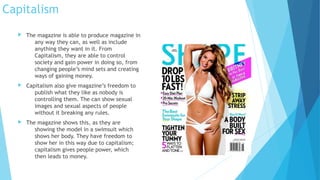
The magazine is able to produce magazine in
any way they can, as well as include
anything they want in it. From
Capitalism, they are able to control
society and gain power in doing so, from
changing people’s mind sets and creating
ways of gaining money.



Capitalism also give magazine’s freedom to
publish what they like as nobody is
controlling them. The can show sexual
images and sexual aspects of people
without it breaking any rules.



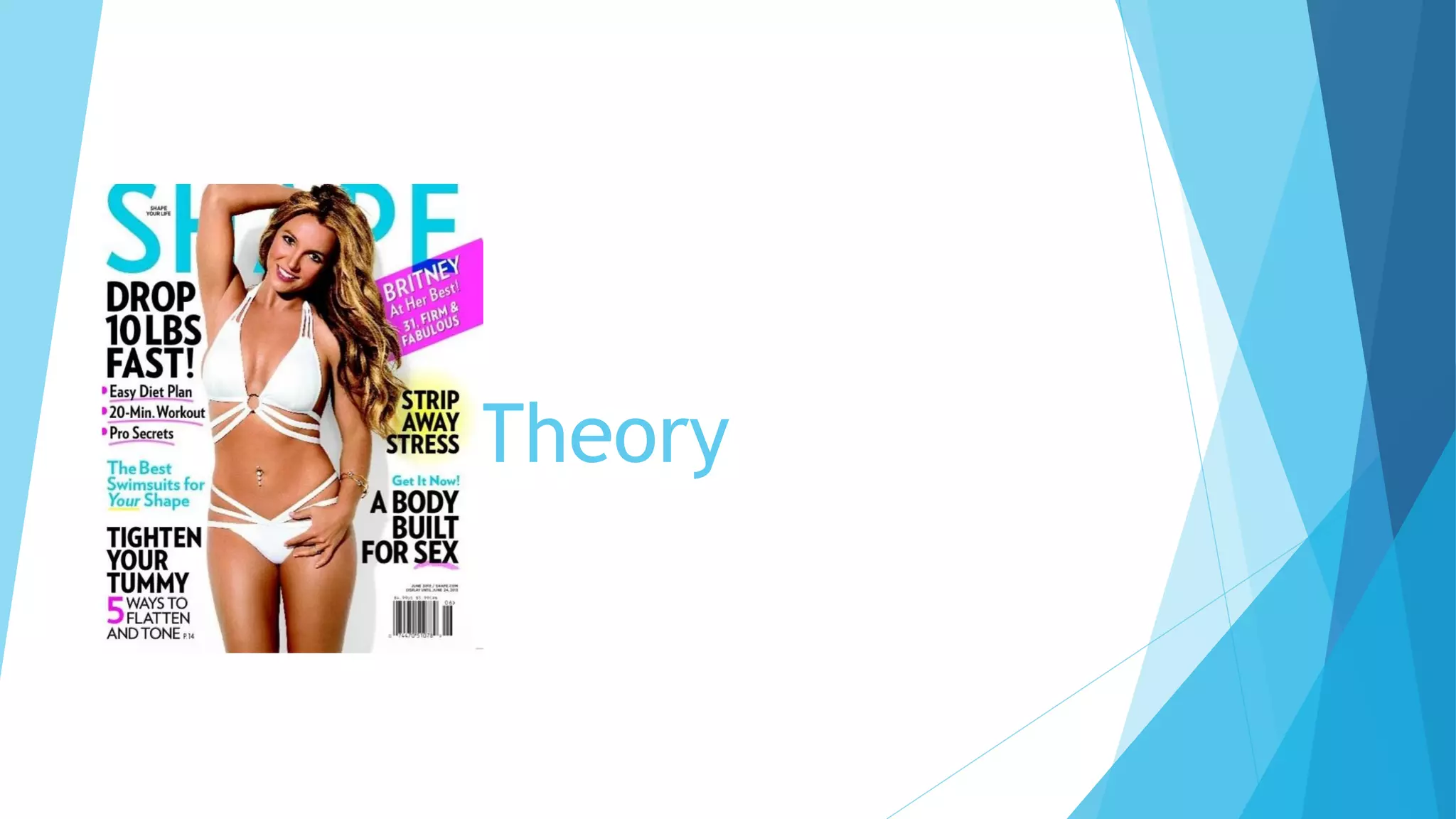
The magazine shows this, as they are
showing the model in a swimsuit which
shows her body. They have freedom to
show her in this way due to capitalism;
capitalism gives people power, which
then leads to money.
Commodification
Commodification – ideas and people made into products for
money.
Ø

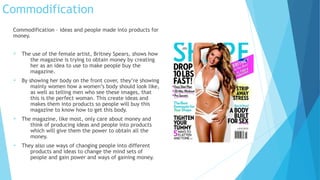
The use of the female artist, Britney Spears, shows how
the magazine is trying to obtain money by creating
her as an idea to use to make people buy the
magazine.

Ø

By showing her body on the front cover, they’re showing
mainly women how a women’s body should look like,
as well as telling men who see these images, that
this is the perfect woman. This create ideas and
makes them into products so people will buy this
magazine to know how to get this body.

Ø

The magazine, like most, only care about money and
think of producing ideas and people into products
which will give them the power to obtain all the
money.

Ø

They also use ways of changing people into different
products and ideas to change the mind sets of
people and gain power and ways of gaining money.
Class struggle


This magazine is aimed at the working
class, also known by Marxists as the
proletariat, in the capitalist Hierarchy
(class system).



This magazine is aimed at this class group
as they have the least time for leisure
activities, such as going to the gym, as
well as not having the best diet plans
in place because of the media
advertising of cheap, unhealthy foods.
This magazine aims to focus on this
class, as they’re always working; it is
quick ways to have a healthy diet and
get a nice body.



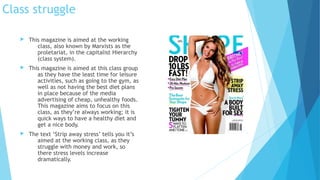
The text ‘Strip away stress’ tells you it’s
aimed at the working class, as they
struggle with money and work, so
there stress levels increase
dramatically.
Cultural Materialism


The culture of a society will be a
direct product of its economic
(‘material’) condition.




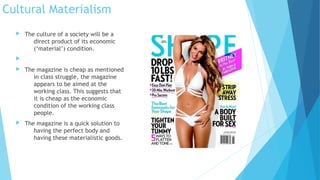
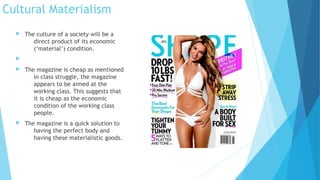
The magazine is cheap as mentioned
in class struggle, the magazine
appears to be aimed at the
working class. This suggests that
it is cheap as the economic
condition of the working class
people.



The magazine is a quick solution to
having the perfect body and
having these materialistic goods.
Cultural Materialism


The culture of a society will be a
direct product of its economic
(‘material’) condition.




The magazine is cheap as mentioned
in class struggle, the magazine
appears to be aimed at the
working class. This suggests that
it is cheap as the economic
condition of the working class
people.



The magazine is a quick solution to
having the perfect body and
having these materialistic goods.

Marxist theory

  • 1.
  • 2.
    Capitalism  The magazine isable to produce magazine in any way they can, as well as include anything they want in it. From Capitalism, they are able to control society and gain power in doing so, from changing people’s mind sets and creating ways of gaining money.  Capitalism also give magazine’s freedom to publish what they like as nobody is controlling them. The can show sexual images and sexual aspects of people without it breaking any rules.  The magazine shows this, as they are showing the model in a swimsuit which shows her body. They have freedom to show her in this way due to capitalism; capitalism gives people power, which then leads to money.
  • 3.
    Commodification Commodification – ideasand people made into products for money. Ø The use of the female artist, Britney Spears, shows how the magazine is trying to obtain money by creating her as an idea to use to make people buy the magazine. Ø By showing her body on the front cover, they’re showing mainly women how a women’s body should look like, as well as telling men who see these images, that this is the perfect woman. This create ideas and makes them into products so people will buy this magazine to know how to get this body. Ø The magazine, like most, only care about money and think of producing ideas and people into products which will give them the power to obtain all the money. Ø They also use ways of changing people into different products and ideas to change the mind sets of people and gain power and ways of gaining money.
  • 4.
    Class struggle  This magazineis aimed at the working class, also known by Marxists as the proletariat, in the capitalist Hierarchy (class system).  This magazine is aimed at this class group as they have the least time for leisure activities, such as going to the gym, as well as not having the best diet plans in place because of the media advertising of cheap, unhealthy foods. This magazine aims to focus on this class, as they’re always working; it is quick ways to have a healthy diet and get a nice body.  The text ‘Strip away stress’ tells you it’s aimed at the working class, as they struggle with money and work, so there stress levels increase dramatically.
  • 5.
    Cultural Materialism  The cultureof a society will be a direct product of its economic (‘material’) condition.   The magazine is cheap as mentioned in class struggle, the magazine appears to be aimed at the working class. This suggests that it is cheap as the economic condition of the working class people.  The magazine is a quick solution to having the perfect body and having these materialistic goods.
  • 6.
    Cultural Materialism  The cultureof a society will be a direct product of its economic (‘material’) condition.   The magazine is cheap as mentioned in class struggle, the magazine appears to be aimed at the working class. This suggests that it is cheap as the economic condition of the working class people.  The magazine is a quick solution to having the perfect body and having these materialistic goods.