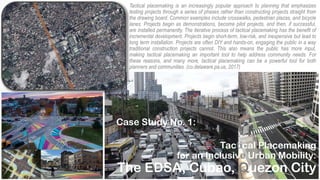
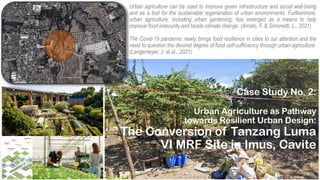
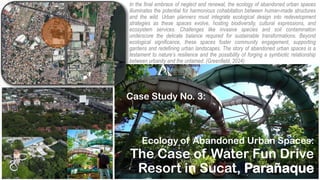
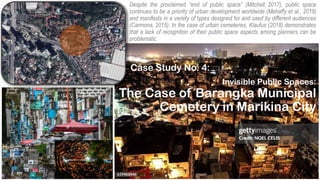
This document presents a case study on tactical placemaking in urban design, emphasizing its role in creating inclusive urban mobility through incremental, community-focused projects. It includes case studies on urban agriculture for sustainable regeneration, the ecology of abandoned urban spaces, and the importance of public spaces, such as cemeteries, in urban development. The document advocates for integrating ecological design and community engagement in urban planning to address food insecurity, biodiversity, and social well-being.