See discussions, stats, and author profiles for this publication at: https://www.researchgate.net/publication/382276739
IN PURSUIT OF RELEVANCE: A TRACER STUDY OF MASTER'S IN
DEVELOPMENT STUDIES (MADVS) GRADUATES FROM THE UNIVERSITY OF
BOTSWANA
Article · July 2024
CITATIONS
0
READS
37
2 authors, including:
France Maphosa
University of Botswana
46 PUBLICATIONS 434 CITATIONS
SEE PROFILE
All content following this page was uploaded by France Maphosa on 16 July 2024.
The user has requested enhancement of the downloaded file.
ISSN 1021-559X /6/2022 © France Maphosa and Gwen N Lesetedi
Mosenodi Journal Vol. 25(1): 14-33
IN PURSUIT OF RELEVANCE: A TRACER STUDY OF MASTER’S IN
DEVELOPMENT STUDIES (MADVS) GRADUATES FROM THE UNIVERSITY OF
BOTSWANA
France Maphosa*
University of Botswana, Department of Sociology
maphosaf@ub.ac.bw
Gwen N Lesetedi
University of Botswana, Department of Sociology
Lesetedi@ub.ac.bw
Abstract
Universities are concerned about the relevance of their programmes and graduate tracer studies
have been conducted to assess relevance. The University of Botswana (UB) is also concerned
about the relevance of its programmes. Not many graduate tracer studies have been carried out
to assess the relevance of UB programmes. This paper is based on a tracer study of the Master
of Arts in Development Studies (MADVS) graduate programme in the Department of
Sociology at UB. Data was collected through a survey questionnaire and a focus group
discussion and analysed using the Statistical Package for the Social Sciences (SPSS) and
thematic analysis respectively. The study found that the programme was relevant to employers:
graduates had occupational mobility, salary increases and could change to better (paying) jobs.
Although graduates had a good university experience, they also pointed out areas of
improvement in the curriculum, namely, that the Department should market itself and its
programmes more, students should be encouraged to do dissertations, the Department should
review its courses to align them with current and topical issues and that the programme should
have different specialisations.
Keywords: relevance, graduates, qualification, occupational mobility, programme
1.0 Introduction
The University of Botswana’s Strategy (2020-2029) recognises that national and global
changes in the tertiary education sector require, among other things, greater demand for quality
and relevance. As a result, one of the priority areas of the strategy is to provide relevant and
high-quality programmes. To this end, the University aims to ensure that the programmes and
discipline areas it offers are relevant to a changing society locally and globally, that they meet
market demand, and that its curriculum reflects the University’s distinctiveness as an African
University. The university is therefore committed to, among other things, “producing graduates
with the relevant knowledge, skills and competencies to drive the human resource needs of an
export-driven, knowledge-based economy, generating diversified, inclusive and sustainable
growth and characterised by high levels of productivity” and “producing graduates with the
France Maphosa and Gwen N Lesetedi - Mosenodi Journal 2022, 25(1): 14-33
ISSN 1021-559X /6/2022 © France Maphosa and Gwen N Lesetedi
Mosenodi Journal Vol. 25(1): 14-33
individual capacity and capabilities to achieve their true potential and personal fulfilment”
(University of Botswana, 2020, p. 6)
The quest for relevance is not peculiar to the University of Botswana. Every country
expects its universities to justify the usefulness of their programmes (Schomburg, 2003). Many
higher institutions of education (HIEs) have used tracer studies to gauge the relevance of their
programmes (Badiru & Wahome, 2016; Schomburg, 2016). Hazaymeh and Peña (n.d)
emphasise that institutions involved in human resource development have a responsibility to
keep track of the performance of their graduates in order to establish whether their programmes
have had an impact on the graduates, the institution and the country. Mugwisi and Hikwa
(2015) state that graduate tracer studies are necessary as a way of evaluating the curriculum
and ensuring that the content of educational programmes remains relevant, of high quality and
in tune with the demands of the labour market. For Schomburg (2003), graduate tracer studies
gather information that may indicate possible deficits in a given educational programme and
may serve as a basis for future planning activities. Graduate tracer studies are becoming a
recognised practice worldwide (Badiru & Wahome, 2016) for understanding the relevance and
quality of programmes offered by universities (Obando & Shisanya, 2012).
The Master of Arts in Development Studies (MADVS) programme is offered in the
Department of Sociology, Faculty of Social Sciences at UB. It is a multi-disciplinary
programme that was developed in response to the growing national demand for graduate
training in development planning and management. Its first intake was in August 2000. The
interdisciplinary nature of the programme resulted from the recognition that development is
multifaceted and requires students to have a broad understanding of the theoretical and practical
issues relating to the planning and implementation of development interventions. As a result,
students are expected to take optional courses from any other department even outside the
faculty. The programme is offered on both full-time and part-time bases. It can be completed
by either of the two options, the coursework only or the coursework and dissertation options.
Classes take place in the evening from five to eight o’clock. This is intended to enable students
who are in full-time employment to attend classes after hours.
The aim of the MADVS programme is to contribute to the “production of
knowledgeable and skilled human resources for managing the process of development and for
addressing critical challenges pertaining to this process” (Department of Sociology, 2016, p.
1). Since its inception in 2000, the programme has trained graduates from Botswana, southern
Africa and other regions of Africa and the world. Although intake has been fluctuating, the
programme has a capacity to enrol an average of 20 students per year. However, no tracer study
has been conducted to determine its impact. The purpose of this study was therefore to find out
the relevance of the programme and graduates’ perceptions on the curriculum as well as their
student experiences at the University of Botswana.
France Maphosa and Gwen N Lesetedi - Mosenodi Journal 2022, 25(1): 14-33
ISSN 1021-559X /6/2022 © France Maphosa and Gwen N Lesetedi
Mosenodi Journal Vol. 25(1): 14-33
2.0 Aim and research questions
The aim of this research undertaking was to gather evidence on the extent to which the
MADVS programme prepares graduates for the world of work. It sought to assess whether the
students had a rewarding, satisfying and positive university experience, the relevance of the
degree to professional requirements and how the current programme could be improved.
3.0 Literature review
Sociological studies on education have focused mainly on factors affecting academic
performance and on the effect of class, gender, and ethnicity on educational attainment (Brown
et al., 2013; Nazimuddin, 2015). Graduate tracer studies focus on the impact of education on
society in general and also on the graduates. Graduate tracer studies aim to find out whether
education pays (Schneider, 2013) and whether it leads to career and social mobility of graduates
(Brown, et al., 2013). Senekal and Smith (2021) opine that graduate tracer studies are
recommended for exploring employment destinations and employability and are important for
enhancing the effectiveness of study programmes (Nudzor & Ansah, 2020). Graduate tracer
studies are not new. Towards the end of the 21st
century European universities had embraced
the use of graduate tracer studies for a number of reasons including the accreditation of study
programmes, establishing the link between study programmes and the job market,
demonstrating their uniqueness and positioning themselves, enabling universities and
institutions managing higher education in their respective countries to make informed and
evidence-based decisions about improvements and quality education and services (Schomburg
and Ulrich, 2011; Badiru & Wahome, 2016). The graduates advocated for the strengthening of
the information technology aspect of the curriculum also. Shongwe and Acholla (2011)
conducted a tracer study of graduates of Library and Information Science (LIS) at the
University of Zululand. Results revealed that the graduates were happy with the skills and
knowledge they had acquired from the programme, and that most of them were employed,
mainly in the private sector. However, the graduates were not totally happy with the curriculum
and made suggestions which the Department has since implemented. Hazaymeh and Peña (n.d)
conducted a tracer study of engineering graduates from La Salle University in the Philippines
and found that the graduates were employable as they got their first jobs within the first six
months after graduation. The findings of the study also pointed to the need for the Department
to review and revise its curriculum to meet the necessary market skills and competencies
expected of their graduates.
Mugwisi and Hikwa (2015) studied graduates of the Master of Science in Library and
Information Science from the National University of Science and Technology (NUST) in
Zimbabwe. The study sought to establish where the graduates worked, what they did, their
competencies, whether their education and training met the employers’ expectations and how
all these impacted on the existing curriculum. The study found that although generally happy
with the curriculum, the graduates felt that the curriculum needed to be revised to include more
ICT related and knowledge management courses. Noko and Ngulube (2015) studied graduates
of the Records and Archives Management programme at NUST in Zimbabwe to establish
where the graduates were and whether the skills they had acquired from their education placed
France Maphosa and Gwen N Lesetedi - Mosenodi Journal 2022, 25(1): 14-33
ISSN 1021-559X /6/2022 © France Maphosa and Gwen N Lesetedi
Mosenodi Journal Vol. 25(1): 14-33
them in jobs that were relevant to their profession. The study found that 67% of the graduates
were employed and that the skills acquired during their education were relevant to their jobs.
The graduates were however unhappy with certain aspects of the curriculum especially limited
industrial attachment, lack of exposure to practical training and sketchy coverage of
information technology. Albina and Sumagaysay (2020) recommended a periodic review of
the curriculum to ensure that graduates are equipped with the necessary knowledge and skills
required in industry.
Samples for graduate tracer studies are often small (Kyaw, 1992; Shongwe & Acholla,
2011) despite graduate tracer studies being an established practice worldwide. For example
studies by Zainab et al. (2004), Shongwe and Ocholla (2011), and Mugwisi and Hikwa (2015)
used sample sizes of 26, 50 and 33 respectively. One reason for the small samples is that
graduates often change their contact details including phone numbers, home addresses and
email addresses (Toba, et al., 2017) after leaving the university. This makes it difficult to trace
them and come up with big samples. Further, tracer studies commonly use self-administered
questionnaire surveys for data collection. This data collection method has a natural weakness
of producing low response rates (Noko & Ngulube, 2015). Another reason that has been
suggested for the small samples of tracer studies is that only successful graduates or satisfied
graduates may be willing to respond to survey questionnaires (Wibinoso, et al., 2012).
Heidemann (2011) however argues that the statement that only successful or satisfied graduates
are willing to participate in graduate tracer studies cannot be confirmed. In the current study
the low response rate was compounded by the fact that the questionnaires were distributed by
email.
Several graduate tracer or employability studies have been carried out in Botswana
(Wamukoya et al., 2007; Ama, 2008; Setidisho & Sanyal, 1988; Aina & Moahi, 1999;
Homegrown, 2010; Nyepi, et al., 2013; Maunganidze et al., 2016). The findings have so far
been inconclusive. While some of the studies have for example concluded that the high rate of
unemployment in the country could be attributed to a mismatch of graduate skills and the
demands of the labour market, some have found the programmes relevant to the work of the
graduates. For example, Aina and Moahi (1999) conducted a study of Library Studies graduates
from the University of Botswana and found that they were generally employed in traditional
library settings and that the training and skills they obtained during their university study were
relevant to the work tasks. This study contributes to existing literature on the relevance of
educational programmes offered by institutions of higher education in Botswana, especially
their contribution to the knowledge-based economy towards which the country is driving.
4.0 Methodology
4.1 Research design
The study adopted a mixed methods research design. This necessitated the use of both
a survey questionnaire and a focus group discussion as research instruments. Objective,
quantifiable data from the survey questionnaire would enable the findings to be generalised
France Maphosa and Gwen N Lesetedi - Mosenodi Journal 2022, 25(1): 14-33
ISSN 1021-559X /6/2022 © France Maphosa and Gwen N Lesetedi
Mosenodi Journal Vol. 25(1): 14-33
while qualitative data would enable the appreciation of the experiences of the graduates from
their point of view.
4.2 Participants and sampling
There was no sampling frame for the study because there was no accurate record of all
the students who had gone through the programme since its inception in 2000. While the
capacity intake of the programme is 20 students per year, the intake has been fluctuating with
about 10 students enrolled every year. This means that at the time of the study about 200
students had graduated. A total of 152 questionnaires were sent out and 41 graduates
responded. This represented a significantly low response rate of 27.3%. The focus group
comprised of eight participants who were graduates of the MADVS programme and had
responded to the questionnaire. The participants had graduated at different times. Most of the
participants were not in full time employment. Five of the eight participants were registered
for PhD studies at the University of Botswana and various other universities mainly in South
Africa. Two of the participants were in full-time employment and only one participant was
neither full-time employed nor studying.
4.3 Demographic characteristics of the respondents
The ages of the respondents ranged from 23 to 55 years. The majority were between
the ages of 32 and 33 years. The respondents were therefore predominantly young adults and
those employed were in their early or middle careers. Out of the 41 respondents, 24 (58.5%)
were male and 17 (41.5%) were female. This gender disparity in favour of men may be
indicative of the constraints that women have in pursuing higher education especially at
postgraduate level. Twenty-eight (68%) of the respondents were single while only 32% were
married. This may also be indicative of the effect marriage has on the decision or chances of
undertaking graduate studies. Single people are more likely to undertake graduate studies than
married people because marriage comes with added family responsibilities. Marriage may
present more challenges to women than men because of the cultural expectations on married
women. Twenty-seven (65.9%) of the respondents were Batswana while the rest were
international students. While there are more local than international students who enrol for the
programme, a considerable number of international students have enrolled and graduated in the
programme over the years. These come mainly from the southern African region although the
programme has also attracted students from other regions such as East and West Africa and the
United States of America.
4.4 Educational backgrounds
As a multi-disciplinary programme, the MADVS admits students with various
academic backgrounds. The basic entrance requirement is a Bachelor’s degree of the University
of Botswana or any other recognised university or equivalent institution. The programme is
truly multi-disciplinary in terms of its content and its student population. The sample shows
that the graduates came from a wide diversity of academic backgrounds. Out of the 41
respondents, 21(51.2%) had Social Science background while 20(48.8%) had backgrounds in
other disciplines.
France Maphosa and Gwen N Lesetedi - Mosenodi Journal 2022, 25(1): 14-33
ISSN 1021-559X /6/2022 © France Maphosa and Gwen N Lesetedi
Mosenodi Journal Vol. 25(1): 14-33
4.5 Data collection instruments
Data was collected using survey questionnaire and a focus group discussion. The
questionnaire contained 36 questions comprised of both open-ended and closed-ended
questions. The closed-ended questions were yes/no and checkbox questions. The focus group
discussion used an interview guide with five questions and was intended to obtain participants’
views on whether the MADVS programme had added any value to their lives. This included
the acquisition of new skills and competencies as well as occupational and social mobility. It
further sought to gain participant insight regarding strengths and weaknesses of the programme,
challenges that the participants encountered during the course of their study, the most
interesting aspects of the programme, and their general university experience
4.6 Data collection methods
The survey questionnaire was distributed to graduates of the MADVS programme
through email. The email addresses of the graduates were obtained from Departmental records.
Email messages were then sent to 152 graduates requesting them to complete the questionnaire.
The questionnaires could be filled in online or downloaded, filled in and sent back as an email
attachment or posted.
Qualitative data were collected using a focus group discuss (FGD). Participants in the
FGD had also participated in the questionnaire survey. Respondents to the questionnaire were
asked to indicate their willingness to participate in a focus group discussion. As the focus group
discussion was a face-to-face interaction, only respondents from Gaborone were able to
participate.
5.0 Ethical considerations
Like all research, particularly that which involves human subjects, this research had
ethical implications which were addressed. For example, some of the questions asked personal
and confidential information such as the graduates’ salaries before and after graduation. They
were also asked to describe their university experiences and some of them felt uncomfortable
to do so fearing that their comments about their former lecturers would reach the lecturers. The
researchers ensured that the respondents read and signed the informed consent form that
emphasised that participation was voluntary and that respondents had the right to withdraw
from the study at any time. The respondents’ identities were protected by presenting the results
anonymously without mentioning their names.
7.0 Findings
7.1 Study mode
Most (68.3%) of the respondents had studied on a full-time basis and 58% of these had
completed the programme by coursework only. Various reasons were given for the general
preference of coursework only to coursework and dissertation option. One of the reasons was
the perception that the dissertation takes a long time to complete and that it tends to delay
completion. Respondents stated that they had been told stories of students who took years to
complete their dissertations. Some of the respondents stated that they did not take the
France Maphosa and Gwen N Lesetedi - Mosenodi Journal 2022, 25(1): 14-33
ISSN 1021-559X /6/2022 © France Maphosa and Gwen N Lesetedi
Mosenodi Journal Vol. 25(1): 14-33
dissertation option because they thought the dissertation was for the “academically minded”,
those who were aspiring to do PhDs and become academics. Such respondents were typically
established in their professions and had enrolled for the MADVS programme to enhance their
skills or to obtain a qualification that would enable them to get a promotion or a salary
increment.
7.2 Funding of studies
Graduate studies in Botswana are not government funded. Students enrolling for
graduate programmes should therefore secure their own funding. The only scholarship
available to graduate students in the Department is the very competitive and limited University
of Botswana Foundation scholarship which students apply for after completing their first year.
In the Faculty of Social Sciences an average of two students are awarded the scholarship each
year. The observation by Schneider (2013) that higher education is the most important
investment that people make is very applicable to graduate studies in Botswana. Out of the 41
respondents in the sample, majority (73.2%) were self-sponsored. Self-sponsorship meant
paying from personal savings, being sponsored by parents, spouses, or relatives. It also meant
paying through a personal loan. Of those who were self-sponsored, 58.5% funded their studies
through their own savings, while 14.6% had taken bank loans to pay for their studies. The
preparedness to sponsor one’s own studies either from own savings or from a loan indicates a
high level of motivation by a student to undertake studies and the value the student places on
the qualification. Generally, the students are motivated to make this sacrifice by the prospects
of better jobs, higher salaries, and occupational mobility.
More than 17% of the respondents had benefitted from fees waiver given to the
employees of the University of Botswana and their dependents. There were more respondents
who had benefitted from this facility than those who had been sponsored by their employers,
with only 9.8% of the respondents having been sponsored by their employers. This is a
significant contribution by the University of Botswana towards its employees. Of those who had
been sponsored by their employers, 75% indicated that the sponsorship was conditional on being
bonded for varying lengths of time after completion of the studies. Remaining with the same
employer after graduation is therefore not a reliable indicator of preference by the graduate. A
graduate might remain with the same employer out of a commitment to a bonding agreement.
7.3 Completion rates
The study showed high completion rate of the MADVS programme. Out of the 41
respondents, 36 (87.8%) had successfully completed their studies. While evidence indicates high
completion rate, a very low level of non-completion is still cause for concern and has to be
addressed. Two reasons were given for failure to complete the programme: family commitments
(60%) and work commitments (40%). Majority (60%) of the students who did not complete their
studies attributed it to family commitments. Family commitments included having to spend a lot
of time on family related activities such as marriages, pregnancies, child births and relocation.
Work commitments included transfers to other places, promotion which came with more
France Maphosa and Gwen N Lesetedi - Mosenodi Journal 2022, 25(1): 14-33
ISSN 1021-559X /6/2022 © France Maphosa and Gwen N Lesetedi
Mosenodi Journal Vol. 25(1): 14-33
responsibilities and frequent and unplanned travelling. Some students mentioned lack of support
from employers as part of work commitments. Lack of support from the employer comes in
different forms including denial of study leave, denial of sponsorship after being promised before
enrolment and requirements to work long hours including after hours and weekends.
7.4 Most challenging aspects of the programme
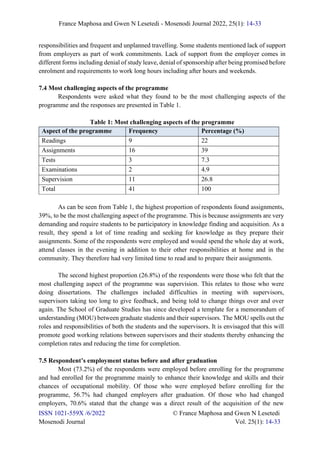
Respondents were asked what they found to be the most challenging aspects of the
programme and the responses are presented in Table 1.
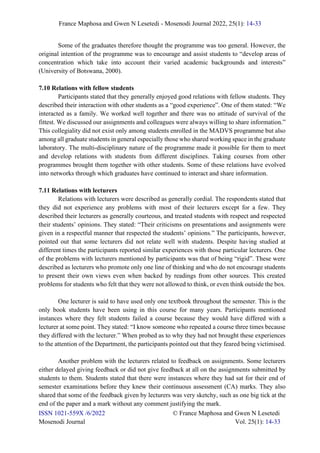
Table 1: Most challenging aspects of the programme
Aspect of the programme Frequency Percentage (%)
Readings 9 22
Assignments 16 39
Tests 3 7.3
Examinations 2 4.9
Supervision 11 26.8
Total 41 100
As can be seen from Table 1, the highest proportion of respondents found assignments,
39%, to be the most challenging aspect of the programme. This is because assignments are very
demanding and require students to be participatory in knowledge finding and acquisition. As a
result, they spend a lot of time reading and seeking for knowledge as they prepare their
assignments. Some of the respondents were employed and would spend the whole day at work,
attend classes in the evening in addition to their other responsibilities at home and in the
community. They therefore had very limited time to read and to prepare their assignments.
The second highest proportion (26.8%) of the respondents were those who felt that the
most challenging aspect of the programme was supervision. This relates to those who were
doing dissertations. The challenges included difficulties in meeting with supervisors,
supervisors taking too long to give feedback, and being told to change things over and over
again. The School of Graduate Studies has since developed a template for a memorandum of
understanding (MOU) between graduate students and their supervisors. The MOU spells out the
roles and responsibilities of both the students and the supervisors. It is envisaged that this will
promote good working relations between supervisors and their students thereby enhancing the
completion rates and reducing the time for completion.
7.5 Respondent’s employment status before and after graduation
Most (73.2%) of the respondents were employed before enrolling for the programme
and had enrolled for the programme mainly to enhance their knowledge and skills and their
chances of occupational mobility. Of those who were employed before enrolling for the
programme, 56.7% had changed employers after graduation. Of those who had changed
employers, 70.6% stated that the change was a direct result of the acquisition of the new
France Maphosa and Gwen N Lesetedi - Mosenodi Journal 2022, 25(1): 14-33
ISSN 1021-559X /6/2022 © France Maphosa and Gwen N Lesetedi
Mosenodi Journal Vol. 25(1): 14-33
qualification. Of those who stated that they changed their jobs because of the new qualification,
58.5% said that the change was to a ‘better’ job. A better job was described as one with a higher
salary, more responsibilities, more authority, more influence, and more benefits. For example,
88.2% of those who moved to better jobs said the new jobs paid better salaries. Of those who
did not change employers, 53.8% reported positive changes in their jobs. Of those who reported
positive changes in their jobs after graduation, 85.7% said their salaries had been increased.
Among those who neither changed employers nor had salary increments, 85.7% reported that
their responsibilities were increased after graduation. However, only 14.3% of these felt their
influence had increased. Influence involves the ability to make organizational decisions or
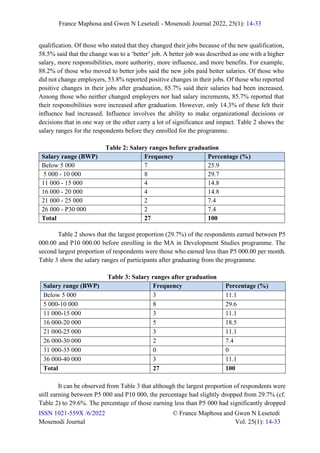
decisions that in one way or the other carry a lot of significance and impact. Table 2 shows the
salary ranges for the respondents before they enrolled for the programme.
Table 2: Salary ranges before graduation
Salary range (BWP) Frequency Percentage (%)
Below 5 000 7 25.9
5 000 - 10 000 8 29.7
11 000 - 15 000 4 14.8
16 000 - 20 000 4 14.8
21 000 - 25 000 2 7.4
26 000 - P30 000 2 7.4
Total 27 100
Table 2 shows that the largest proportion (29.7%) of the respondents earned between P5
000.00 and P10 000.00 before enrolling in the MA in Development Studies programme. The
second largest proportion of respondents were those who earned less than P5 000.00 per month.
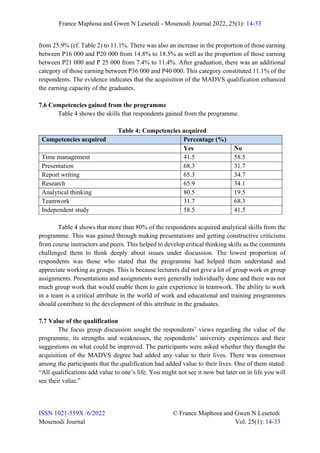
Table 3 show the salary ranges of participants after graduating from the programme.
Table 3: Salary ranges after graduation
Salary range (BWP) Frequency Percentage (%)
Below 5 000 3 11.1
5 000-10 000 8 29.6
11 000-15 000 3 11.1
16 000-20 000 5 18.5
21 000-25 000 3 11.1
26 000-30 000 2 7.4
31 000-35 000 0 0
36 000-40 000 3 11.1
Total 27 100
It can be observed from Table 3 that although the largest proportion of respondents were
still earning between P5 000 and P10 000, the percentage had slightly dropped from 29.7% (cf.
Table 2) to 29.6%. The percentage of those earning less than P5 000 had significantly dropped
France Maphosa and Gwen N Lesetedi - Mosenodi Journal 2022, 25(1): 14-33
ISSN 1021-559X /6/2022 © France Maphosa and Gwen N Lesetedi
Mosenodi Journal Vol. 25(1): 14-33
from 25.9% (cf. Table 2) to 11.1%. There was also an increase in the proportion of those earning
between P16 000 and P20 000 from 14.8% to 18.5% as well as the proportion of those earning
between P21 000 and P 25 000 from 7.4% to 11.4%. After graduation, there was an additional
category of those earning between P36 000 and P40 000. This category constituted 11.1% of the
respondents. The evidence indicates that the acquisition of the MADVS qualification enhanced
the earning capacity of the graduates.
7.6 Competencies gained from the programme
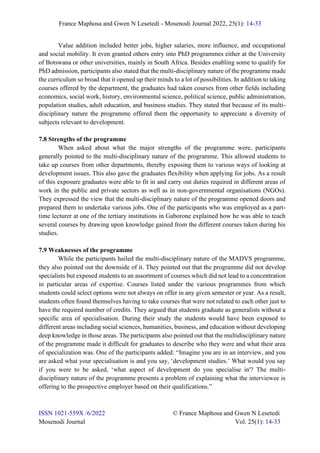
Table 4 shows the skills that respondents gained from the programme.
Table 4: Competencies acquired
Competencies acquired Percentage (%)
Yes No
Time management 41.5 58.5
Presentation 68.3 31.7
Report writing 65.3 34.7
Research 65.9 34.1
Analytical thinking 80.5 19.5
Teamwork 31.7 68.3
Independent study 58.5 41.5
Table 4 shows that more than 80% of the respondents acquired analytical skills from the
programme. This was gained through making presentations and getting constructive criticisms
from course instructors and peers. This helped to develop critical thinking skills as the comments
challenged them to think deeply about issues under discussion. The lowest proportion of
respondents was those who stated that the programme had helped them understand and
appreciate working as groups. This is because lecturers did not give a lot of group work or group
assignments. Presentations and assignments were generally individually done and there was not
much group work that would enable them to gain experience in teamwork. The ability to work
in a team is a critical attribute in the world of work and educational and training programmes
should contribute to the development of this attribute in the graduates.
7.7 Value of the qualification
The focus group discussion sought the respondents’ views regarding the value of the
programme, its strengths and weaknesses, the respondents’ university experiences and their
suggestions on what could be improved. The participants were asked whether they thought the
acquisition of the MADVS degree had added any value to their lives. There was consensus
among the participants that the qualification had added value to their lives. One of them stated:
“All qualifications add value to one’s life. You might not see it now but later on in life you will
see their value.”
France Maphosa and Gwen N Lesetedi - Mosenodi Journal 2022, 25(1): 14-33
ISSN 1021-559X /6/2022 © France Maphosa and Gwen N Lesetedi
Mosenodi Journal Vol. 25(1): 14-33
Value addition included better jobs, higher salaries, more influence, and occupational
and social mobility. It even granted others entry into PhD programmes either at the University
of Botswana or other universities, mainly in South Africa. Besides enabling some to qualify for
PhD admission, participants also stated that the multi-disciplinary nature of the programme made
the curriculum so broad that it opened up their minds to a lot of possibilities. In addition to taking
courses offered by the department, the graduates had taken courses from other fields including
economics, social work, history, environmental science, political science, public administration,
population studies, adult education, and business studies. They stated that because of its multi-
disciplinary nature the programme offered them the opportunity to appreciate a diversity of
subjects relevant to development.
7.8 Strengths of the programme
When asked about what the major strengths of the programme were, participants
generally pointed to the multi-disciplinary nature of the programme. This allowed students to
take up courses from other departments, thereby exposing them to various ways of looking at
development issues. This also gave the graduates flexibility when applying for jobs. As a result
of this exposure graduates were able to fit in and carry out duties required in different areas of
work in the public and private sectors as well as in non-governmental organisations (NGOs).
They expressed the view that the multi-disciplinary nature of the programme opened doors and
prepared them to undertake various jobs. One of the participants who was employed as a part-
time lecturer at one of the tertiary institutions in Gaborone explained how he was able to teach
several courses by drawing upon knowledge gained from the different courses taken during his
studies.
7.9 Weaknesses of the programme
While the participants hailed the multi-disciplinary nature of the MADVS programme,
they also pointed out the downside of it. They pointed out that the programme did not develop
specialists but exposed students to an assortment of courses which did not lead to a concentration
in particular areas of expertise. Courses listed under the various programmes from which
students could select options were not always on offer in any given semester or year. As a result,
students often found themselves having to take courses that were not related to each other just to
have the required number of credits. They argued that students graduate as generalists without a
specific area of specialisation. During their study the students would have been exposed to
different areas including social sciences, humanities, business, and education without developing
deep knowledge in those areas. The participants also pointed out that the multidisciplinary nature
of the programme made it difficult for graduates to describe who they were and what their area
of specialization was. One of the participants added: “Imagine you are in an interview, and you
are asked what your specialisation is and you say, ‘development studies.’ What would you say
if you were to be asked, ‘what aspect of development do you specialise in'? The multi-
disciplinary nature of the programme presents a problem of explaining what the interviewee is
offering to the prospective employer based on their qualifications.”
France Maphosa and Gwen N Lesetedi - Mosenodi Journal 2022, 25(1): 14-33
ISSN 1021-559X /6/2022 © France Maphosa and Gwen N Lesetedi
Mosenodi Journal Vol. 25(1): 14-33
Some of the graduates therefore thought the programme was too general. However, the
original intention of the programme was to encourage and assist students to “develop areas of
concentration which take into account their varied academic backgrounds and interests”
(University of Botswana, 2000).
7.10 Relations with fellow students
Participants stated that they generally enjoyed good relations with fellow students. They
described their interaction with other students as a “good experience”. One of them stated: “We
interacted as a family. We worked well together and there was no attitude of survival of the
fittest. We discussed our assignments and colleagues were always willing to share information.”
This collegiality did not exist only among students enrolled in the MADVS programme but also
among all graduate students in general especially those who shared working space in the graduate
laboratory. The multi-disciplinary nature of the programme made it possible for them to meet
and develop relations with students from different disciplines. Taking courses from other
programmes brought them together with other students. Some of these relations have evolved
into networks through which graduates have continued to interact and share information.
7.11 Relations with lecturers
Relations with lecturers were described as generally cordial. The respondents stated that
they did not experience any problems with most of their lecturers except for a few. They
described their lecturers as generally courteous, and treated students with respect and respected
their students’ opinions. They stated: “Their criticisms on presentations and assignments were
given in a respectful manner that respected the students’ opinions.” The participants, however,
pointed out that some lecturers did not relate well with students. Despite having studied at
different times the participants reported similar experiences with those particular lecturers. One
of the problems with lecturers mentioned by participants was that of being “rigid”. These were
described as lecturers who promote only one line of thinking and who do not encourage students
to present their own views even when backed by readings from other sources. This created
problems for students who felt that they were not allowed to think, or even think outside the box.
One lecturer is said to have used only one textbook throughout the semester. This is the
only book students have been using in this course for many years. Participants mentioned
instances where they felt students failed a course because they would have differed with a
lecturer at some point. They stated: “I know someone who repeated a course three times because
they differed with the lecturer.” When probed as to why they had not brought these experiences
to the attention of the Department, the participants pointed out that they feared being victimised.
Another problem with the lecturers related to feedback on assignments. Some lecturers
either delayed giving feedback or did not give feedback at all on the assignments submitted by
students to them. Students stated that there were instances where they had sat for their end of
semester examinations before they knew their continuous assessment (CA) marks. They also
shared that some of the feedback given by lecturers was very sketchy, such as one big tick at the
end of the paper and a mark without any comment justifying the mark.
France Maphosa and Gwen N Lesetedi - Mosenodi Journal 2022, 25(1): 14-33
ISSN 1021-559X /6/2022 © France Maphosa and Gwen N Lesetedi
Mosenodi Journal Vol. 25(1): 14-33
Participants expressed the view that the way students are assessed is not monitored. There
is no mechanism to monitor the performance of students, including how they are assessed.
Participants also expressed concern about the failure rates in particular courses. The feeling is
that in some courses it looks like there is a predetermined quota of those who are to fail and
supplement or fail and retake the course.
The graduates described relations with lecturers from other departments as generally
hostile, treating them as “aliens” or an inconvenience. For example, those lecturers would not
consider that some of the students did not have the background to the material covered in their
courses. They would not even listen when the students reported clashes in their timetables.
7.12 Relations with the Department
Despite there being very minimal interactions between graduate students and other
members of the Department who were not their lecturers or supervisors, the graduates described
their relationship with the Department of Sociology as “civil”. They felt that they were treated
differently from undergraduates. They were treated as adults who were capable of making their
own decisions. They however decried the absence of an arrangement through which students and
members of the Department could interact and get to know each other better. They pointed out
the only people they knew very well were their lecturers, supervisors, and the coordinator of
graduate studies. Some of them never met the Head of Department until they graduated.
Participants were, however, aware of the programme regulations that provide for the
appointment of an advisor for each student. They believed that the idea of an advisor for each
student was good and emphasised that this should not only apply to students doing dissertations
but to all students in the programme. They advised that for this to be effective, all lecturers should
be more approachable.
The participants also felt that the lecturers’ research outputs were not very accessible to
students. They suggested that besides making their publications available to students, lecturers
should organise more seminars, workshops, and discussions where graduate students are invited.
This would not only encourage graduate students to present their work but also provide a
platform for lecturer-student interaction. The Department has since established “meet and greet”
sessions between students and the Departmental staff. It is envisaged that these will enhance
student-staff interaction.
The participants decried what they described as the “grading culture” of the Department.
They pointed out that the lecturers in the Department of Sociology were generally too strict and
that this is disadvantaging graduates of the programme in the job market and when they were
looking for opportunities for further studies; their chances of employment and admission to
further studies are adversely affected. Participants pointed out that their transcripts showed a
pattern, where they consistently scored low marks in courses (especially those with DVS codes)
offered by the Department and very high marks in courses offered in other departments.
France Maphosa and Gwen N Lesetedi - Mosenodi Journal 2022, 25(1): 14-33
ISSN 1021-559X /6/2022 © France Maphosa and Gwen N Lesetedi
Mosenodi Journal Vol. 25(1): 14-33
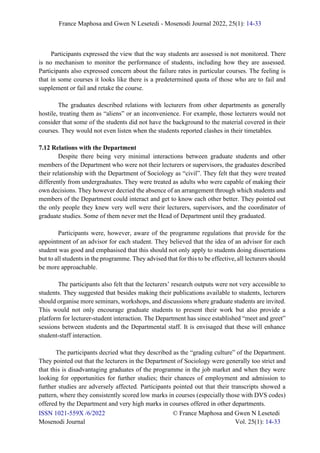
One of the participants explained that he managed to meet the requirements for a
scholarship he was applying for because of the high marks he had obtained from courses he took
from outside the Department of Sociology. While the participants acknowledged the importance
of maintaining high standards of performance, they also felt that the Department was too strict
and that awarding low marks had just become the norm.
7.13 Emerging issues
Participants made various suggestions, some of which were specific to the programme
and some more general, but which however could have a bearing on the impact of the programme
and the student experience. These include marketing the department and its programmes,
developing innovative courses, promoting research through encouraging students to do
dissertations, and developing specialisations within the programmes.
7.13.1 Marketing the Department
Most of the respondents had obtained their undergraduate degrees from the Department
of Sociology and were therefore familiar with the Department and its programmes. They
expressed concern that the Department and its programmes were “not known outside the walls
of the University of Botswana”. They felt there was a need for the Department to come up with
a strategy to market itself and its programmes.
7.13.2 Development of new courses
The participants were of the view that some of the courses offered in the Department did
not reflect the current development needs of Botswana and perhaps of those other countries in
the region from where the programme draws most of its students. They suggested that the
Department should be innovative and develop courses that reflect the current times and topical
issues.
7.13.3 Research
The University of Botswana aspires to be a research-intensive university. This requires,
among other things, intensifying research by graduate students. However, most of the students
in the MADVS programme opt for the coursework only option. Participants believed that this
was because students do not appreciate the value of research. That is why they opt to do course
work only even if they qualify to do a dissertation. The participants stated that in many cases
students later regret when they discover the importance of research at the workplace or when
they embark on PhD studies.
7.13.4 Specialization within the programme
Some participants believed that the programme is too general. As both a concept and
practice, development is very broad with several facets. The participants suggested that the
programme should allow students to specialise in particular aspects of development. By the time
they enrol for the MADVS programme some of the students are already working in particular
fields of development and enrol for the programme to enhance their knowledge and skills in
France Maphosa and Gwen N Lesetedi - Mosenodi Journal 2022, 25(1): 14-33
ISSN 1021-559X /6/2022 © France Maphosa and Gwen N Lesetedi
Mosenodi Journal Vol. 25(1): 14-33
those areas. Specialisation within the programme would enable students to choose their areas of
concentration by taking into account their academic backgrounds and, more importantly, their
areas of interest or areas in which they are already involved.
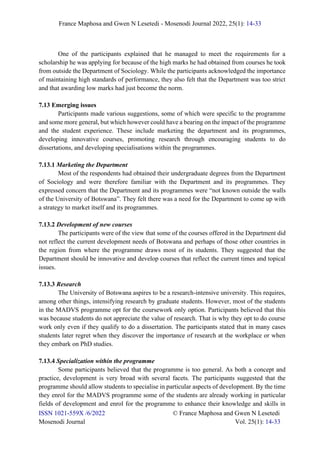
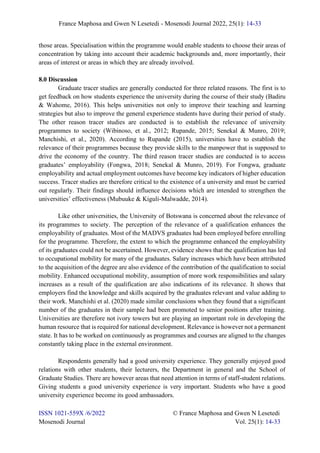
8.0 Discussion
Graduate tracer studies are generally conducted for three related reasons. The first is to
get feedback on how students experience the university during the course of their study (Badiru
& Wahome, 2016). This helps universities not only to improve their teaching and learning
strategies but also to improve the general experience students have during their period of study.
The other reason tracer studies are conducted is to establish the relevance of university
programmes to society (Wibinoso, et al., 2012; Rupande, 2015; Senekal & Munro, 2019;
Manchishi, et al., 2020). According to Rupande (2015), universities have to establish the
relevance of their programmes because they provide skills to the manpower that is supposed to
drive the economy of the country. The third reason tracer studies are conducted is to access
graduates’ employability (Fongwa, 2018; Senekal & Munro, 2019). For Fongwa, graduate
employability and actual employment outcomes have become key indicators of higher education
success. Tracer studies are therefore critical to the existence of a university and must be carried
out regularly. Their findings should influence decisions which are intended to strengthen the
universities’ effectiveness (Mubuuke & Kiguli-Malwadde, 2014).
Like other universities, the University of Botswana is concerned about the relevance of
its programmes to society. The perception of the relevance of a qualification enhances the
employability of graduates. Most of the MADVS graduates had been employed before enrolling
for the programme. Therefore, the extent to which the programme enhanced the employability
of its graduates could not be ascertained. However, evidence shows that the qualification has led
to occupational mobility for many of the graduates. Salary increases which have been attributed
to the acquisition of the degree are also evidence of the contribution of the qualification to social
mobility. Enhanced occupational mobility, assumption of more work responsibilities and salary
increases as a result of the qualification are also indications of its relevance. It shows that
employers find the knowledge and skills acquired by the graduates relevant and value adding to
their work. Manchishi et al. (2020) made similar conclusions when they found that a significant
number of the graduates in their sample had been promoted to senior positions after training.
Universities are therefore not ivory towers but are playing an important role in developing the
human resource that is required for national development. Relevance is however not a permanent
state. It has to be worked on continuously as programmes and courses are aligned to the changes
constantly taking place in the external environment.
Respondents generally had a good university experience. They generally enjoyed good
relations with other students, their lecturers, the Department in general and the School of
Graduate Studies. There are however areas that need attention in terms of staff-student relations.
Giving students a good university experience is very important. Students who have a good
university experience become its good ambassadors.
France Maphosa and Gwen N Lesetedi - Mosenodi Journal 2022, 25(1): 14-33
ISSN 1021-559X /6/2022 © France Maphosa and Gwen N Lesetedi
Mosenodi Journal Vol. 25(1): 14-33
Conclusion
Alumni are important stakeholders of any university and their views about the relevance
of university programmes and the university environment should always be solicited and taken
seriously. Despite the challenges of locating them after graduating, alumni are an essential link
between the university and the society at large. This study provides empirical evidence that
university education contributes to graduates’ occupational mobility. Although further evidence
is required to establish the relationship between education and productivity, evidence from this
study shows that there is a relationship between the acquisition of the MADVS degree with level
of earnings which seems to support the human capital theory.
References
Aina, L. O., & Moahi, K. (1999). Tracer study of Botswana library school graduates. Education
for Information, 17(3), 215-244.
Albina, A. C., & Sumagaysay, L. P., (2020). Employability tracer study of Information and
Technology Education graduates from a state university in the Philippines. Social
Sciences and Humanities Open, 2(1). https://doi.org’/10.1016/j.ssahoz.2020.100055.
Ama, N.O. (2008). Transition from higher education to employment: A case study of graduates
of the Faculty of Social Sciences, University of Botswana, Educational Research Review,
3 (8), 262-274.
Badiru, E. O., & Wahome, M. (2016). Conducting graduate tracer studies for quality assurance
and east African universities: A focus on graduate student voices on quality culture.
Journal of Education and Practice, 7(6),74-181.
Brown, P., Reay, D. & Vincent, C. (2013). Education and social mobility. British Journal of
Sociology, 34(5-6), 637-643.
Department of Sociology. (2016). MA in development studies handbook. University of
Botswana.
Fongwa, S. (2018). Towards an expanded discourse on graduate outcomes in South Africa.
Education and Change, 22 (3), 1-23
Hazaymeh E. N. & Peña, M. K. (n.d). A tracer study of La Salle University College of
Engineering Graduates. https://www.lsu.edu.ph/application/files/1114/7193/8568
/Vol._18_No._1_-_A_Tracer_Study_of_La_Salle_UniversityCollege_of
_Engineering_Graduates.pdf.
Heidemann, L. (2011). Only successful graduates respond to tracer studies: A Myth? Results
from the German Cooperation Project, Paper presented at the International Conference
on Human Capital and Employment in the European and Mediterranean Area, Bologna,
2011.
France Maphosa and Gwen N Lesetedi - Mosenodi Journal 2022, 25(1): 14-33
ISSN 1021-559X /6/2022 © France Maphosa and Gwen N Lesetedi
Mosenodi Journal Vol. 25(1): 14-33
Homegrown. (2020). Tracer study on the employment outcomes of the vocational training
graduates. A report submitted to the Botswana Training Authority (BOTA) by
Homegrown Consultancy.
Kyaw, K. U. (1992). A tracer study of recent graduates: Implications for education and
manpower planning. Myanmar Ministry of Education/UNESCO.
Manchishi, P., Simui, F., Ndhlovu, D. and Thompson, C. L. (2020). Tracing the experiences of
an inaugural postgraduate distance education alumni cohort of the University of
Zambia. Multidisciplinary Journal of Language and Social Sciences Education, 3(1),
131-157.
Maunganidze, L., Faimau, G. & Tapera, R (2016). Graduate employability in Botswana:
Challenges and prospects. Mosenodi, 19(1), 14-30.
Mubuuke, A.G., Busige, F. and Kiguli, E (2014). Using graduates as key stakeholders to inform
training and policy in health professionals: The potential for tracer studies. African
Journal of Health Professions Education, 6(1), 52-55
Mugwisi, T. & Hikwa, L. (2015). A tracer study of Master of Science in Library and Information
Science graduates from the National University of Science and Technology, Bulawayo,
Zimbabwe. African Journal of Library, Archaeology and Information Science, 25(2),
173-183.
Nazimuddin, S. K. (2015). Social mobility and the role of education in promoting social mobility,
International Journal of Scientific Engineering and Research, 3(7), 176-179.
Noko, P & Ngulube, P. (2015). A vital feedback loop in educating and training archival
professionals: A tracer study of records and archives management graduates in
Zimbabwe. Information Development, 31(3), 270-283.
Nudzor, H. P., & Ansah, F. (2020). Enhancing post-graduate programme effectiveness through
tracer studies: The reflective accounts of a Ghanaian nation-wide graduate tracer study
research. Quality in Higher Education, 26(2), 192-208.
Nyepi, M.S., Mthombeni, F. M., Mahgoub, S. E., Dumba, D. & Mothobi, D. (2013). A tracer
study of home economics graduates in Botswana: A case study of the University of
Botswana. Zimbabwe Journal of Educational Research, 25(3), 311-325.
Obando, J. & Shisanya, C. (2012). Institutionalising tracer studies in higher education
institutions in Africa: The experience of Kenyatta University. Paper presented at the
International Conference "Experiences with Link and Match in Higher Education.
Results of Tracer Studies Worldwide (EXLIMA)". Bali, Indonesia, October 22 - 23 2012.
Rupande, G. (2015). Zimbabwe Open University Mashonaland East Region tracer study of
former students from 2010 to 2014. International Journal of Humanities and Social
Sciences, 2(1), 213-223
Schneider, M. (2013). Does education pay? Issues in Science and Technology, XXX(1), 33-38
France Maphosa and Gwen N Lesetedi - Mosenodi Journal 2022, 25(1): 14-33
ISSN 1021-559X /6/2022 © France Maphosa and Gwen N Lesetedi
Mosenodi Journal Vol. 25(1): 14-33
Schomburg, H. (2003). Handbook for graduate tracer studies. Kassel: Centre for Research on
Higher Education and Work, University of Kassel.
Schomburg, H and Ulrich, T. (2011). Employability and mobility of Bachelor Graduates in
Europe: Key results of the Bologna Process. Sense Publishers.
Schomburg, H (2016): Carrying out tracer studies. In: ETF/CEDEFOP/ILO (Eds.): Guide to
anticipating and matching skills and jobs. 6. Torino: ETF. [www.cedefop.europa
.eu/files/2218_en.pdf]
Senekal, J. and Munro, N. (2019). Lessons learnt from two decades of graduate tracer research:
Recommendations for the South African context. South African Journal of Education, 33
(2), 230-248
Senekal, J.S., & Smith, M. R. (2021). Assessing the employability and employment destinations
of professional psychology alumni. South African Journal of Psychology, 52(1), 11-22.
Setidisho, N. O. H., & Sanyal, B. C., (1988). Higher education and employment in Botswana: A
study undertaken jointly by the International Institute for Educational Planning (IIEP)
and the University of Botswana, Report No. 65.
Shongwe, M. & Ocholla, D. (2011). A tracer study of LIS graduates at the University of
Zululand, 200-2009. Paper presented at the 6th
Biennial PROLISA Conference, Pretoria,
9-11 March, 2011.
Toba, H., Wijaya, E. A., Winjato, M. C., & Karnalim, O. (2017). Enhanced unsupervised person
name disambiguation to support alumni tracer study. Global Journal of Engineering, 19
(1), 42-48.
University of Botswana (2020). University strategy: Creating a future for the knowledge
generation – 2020-2028. University of Botswana
Wamukoya, J., Zulu, S & Kalusopa, T. (2007). Impact of DLIS programme on the Botswana
labour market. Unpublished report to the Office of Research and Development,
University of Botswana.
Wibinoso, A., Ulama, B. S. S., & Asmoro, W. A. (2012. Tracer study at Institut Telkonologi
Sepuluh Nopember (ITS): Promoting localisation and multiple touch points to capture
alumni. Paper presented at the International Conference on Experience with link and
match in higher education: Results of tracer studies worldwide, held in Bali, Indonesia
Zainab, A. N., Edzan, N. N., & Rahman, S. S. A. (2004). Tracing graduates to ascertain
curriculum relevance. Journal of Library and Information Science, 9(1), 27-37.
View publication stats

MaphosaandLesetedi research tracer study

  • 1.
    See discussions, stats,and author profiles for this publication at: https://www.researchgate.net/publication/382276739 IN PURSUIT OF RELEVANCE: A TRACER STUDY OF MASTER'S IN DEVELOPMENT STUDIES (MADVS) GRADUATES FROM THE UNIVERSITY OF BOTSWANA Article · July 2024 CITATIONS 0 READS 37 2 authors, including: France Maphosa University of Botswana 46 PUBLICATIONS 434 CITATIONS SEE PROFILE All content following this page was uploaded by France Maphosa on 16 July 2024. The user has requested enhancement of the downloaded file.
  • 2.
    ISSN 1021-559X /6/2022© France Maphosa and Gwen N Lesetedi Mosenodi Journal Vol. 25(1): 14-33 IN PURSUIT OF RELEVANCE: A TRACER STUDY OF MASTER’S IN DEVELOPMENT STUDIES (MADVS) GRADUATES FROM THE UNIVERSITY OF BOTSWANA France Maphosa* University of Botswana, Department of Sociology maphosaf@ub.ac.bw Gwen N Lesetedi University of Botswana, Department of Sociology Lesetedi@ub.ac.bw Abstract Universities are concerned about the relevance of their programmes and graduate tracer studies have been conducted to assess relevance. The University of Botswana (UB) is also concerned about the relevance of its programmes. Not many graduate tracer studies have been carried out to assess the relevance of UB programmes. This paper is based on a tracer study of the Master of Arts in Development Studies (MADVS) graduate programme in the Department of Sociology at UB. Data was collected through a survey questionnaire and a focus group discussion and analysed using the Statistical Package for the Social Sciences (SPSS) and thematic analysis respectively. The study found that the programme was relevant to employers: graduates had occupational mobility, salary increases and could change to better (paying) jobs. Although graduates had a good university experience, they also pointed out areas of improvement in the curriculum, namely, that the Department should market itself and its programmes more, students should be encouraged to do dissertations, the Department should review its courses to align them with current and topical issues and that the programme should have different specialisations. Keywords: relevance, graduates, qualification, occupational mobility, programme 1.0 Introduction The University of Botswana’s Strategy (2020-2029) recognises that national and global changes in the tertiary education sector require, among other things, greater demand for quality and relevance. As a result, one of the priority areas of the strategy is to provide relevant and high-quality programmes. To this end, the University aims to ensure that the programmes and discipline areas it offers are relevant to a changing society locally and globally, that they meet market demand, and that its curriculum reflects the University’s distinctiveness as an African University. The university is therefore committed to, among other things, “producing graduates with the relevant knowledge, skills and competencies to drive the human resource needs of an export-driven, knowledge-based economy, generating diversified, inclusive and sustainable growth and characterised by high levels of productivity” and “producing graduates with the
  • 3.
    France Maphosa andGwen N Lesetedi - Mosenodi Journal 2022, 25(1): 14-33 ISSN 1021-559X /6/2022 © France Maphosa and Gwen N Lesetedi Mosenodi Journal Vol. 25(1): 14-33 individual capacity and capabilities to achieve their true potential and personal fulfilment” (University of Botswana, 2020, p. 6) The quest for relevance is not peculiar to the University of Botswana. Every country expects its universities to justify the usefulness of their programmes (Schomburg, 2003). Many higher institutions of education (HIEs) have used tracer studies to gauge the relevance of their programmes (Badiru & Wahome, 2016; Schomburg, 2016). Hazaymeh and Peña (n.d) emphasise that institutions involved in human resource development have a responsibility to keep track of the performance of their graduates in order to establish whether their programmes have had an impact on the graduates, the institution and the country. Mugwisi and Hikwa (2015) state that graduate tracer studies are necessary as a way of evaluating the curriculum and ensuring that the content of educational programmes remains relevant, of high quality and in tune with the demands of the labour market. For Schomburg (2003), graduate tracer studies gather information that may indicate possible deficits in a given educational programme and may serve as a basis for future planning activities. Graduate tracer studies are becoming a recognised practice worldwide (Badiru & Wahome, 2016) for understanding the relevance and quality of programmes offered by universities (Obando & Shisanya, 2012). The Master of Arts in Development Studies (MADVS) programme is offered in the Department of Sociology, Faculty of Social Sciences at UB. It is a multi-disciplinary programme that was developed in response to the growing national demand for graduate training in development planning and management. Its first intake was in August 2000. The interdisciplinary nature of the programme resulted from the recognition that development is multifaceted and requires students to have a broad understanding of the theoretical and practical issues relating to the planning and implementation of development interventions. As a result, students are expected to take optional courses from any other department even outside the faculty. The programme is offered on both full-time and part-time bases. It can be completed by either of the two options, the coursework only or the coursework and dissertation options. Classes take place in the evening from five to eight o’clock. This is intended to enable students who are in full-time employment to attend classes after hours. The aim of the MADVS programme is to contribute to the “production of knowledgeable and skilled human resources for managing the process of development and for addressing critical challenges pertaining to this process” (Department of Sociology, 2016, p. 1). Since its inception in 2000, the programme has trained graduates from Botswana, southern Africa and other regions of Africa and the world. Although intake has been fluctuating, the programme has a capacity to enrol an average of 20 students per year. However, no tracer study has been conducted to determine its impact. The purpose of this study was therefore to find out the relevance of the programme and graduates’ perceptions on the curriculum as well as their student experiences at the University of Botswana.
  • 4.
    France Maphosa andGwen N Lesetedi - Mosenodi Journal 2022, 25(1): 14-33 ISSN 1021-559X /6/2022 © France Maphosa and Gwen N Lesetedi Mosenodi Journal Vol. 25(1): 14-33 2.0 Aim and research questions The aim of this research undertaking was to gather evidence on the extent to which the MADVS programme prepares graduates for the world of work. It sought to assess whether the students had a rewarding, satisfying and positive university experience, the relevance of the degree to professional requirements and how the current programme could be improved. 3.0 Literature review Sociological studies on education have focused mainly on factors affecting academic performance and on the effect of class, gender, and ethnicity on educational attainment (Brown et al., 2013; Nazimuddin, 2015). Graduate tracer studies focus on the impact of education on society in general and also on the graduates. Graduate tracer studies aim to find out whether education pays (Schneider, 2013) and whether it leads to career and social mobility of graduates (Brown, et al., 2013). Senekal and Smith (2021) opine that graduate tracer studies are recommended for exploring employment destinations and employability and are important for enhancing the effectiveness of study programmes (Nudzor & Ansah, 2020). Graduate tracer studies are not new. Towards the end of the 21st century European universities had embraced the use of graduate tracer studies for a number of reasons including the accreditation of study programmes, establishing the link between study programmes and the job market, demonstrating their uniqueness and positioning themselves, enabling universities and institutions managing higher education in their respective countries to make informed and evidence-based decisions about improvements and quality education and services (Schomburg and Ulrich, 2011; Badiru & Wahome, 2016). The graduates advocated for the strengthening of the information technology aspect of the curriculum also. Shongwe and Acholla (2011) conducted a tracer study of graduates of Library and Information Science (LIS) at the University of Zululand. Results revealed that the graduates were happy with the skills and knowledge they had acquired from the programme, and that most of them were employed, mainly in the private sector. However, the graduates were not totally happy with the curriculum and made suggestions which the Department has since implemented. Hazaymeh and Peña (n.d) conducted a tracer study of engineering graduates from La Salle University in the Philippines and found that the graduates were employable as they got their first jobs within the first six months after graduation. The findings of the study also pointed to the need for the Department to review and revise its curriculum to meet the necessary market skills and competencies expected of their graduates. Mugwisi and Hikwa (2015) studied graduates of the Master of Science in Library and Information Science from the National University of Science and Technology (NUST) in Zimbabwe. The study sought to establish where the graduates worked, what they did, their competencies, whether their education and training met the employers’ expectations and how all these impacted on the existing curriculum. The study found that although generally happy with the curriculum, the graduates felt that the curriculum needed to be revised to include more ICT related and knowledge management courses. Noko and Ngulube (2015) studied graduates of the Records and Archives Management programme at NUST in Zimbabwe to establish where the graduates were and whether the skills they had acquired from their education placed
  • 5.
    France Maphosa andGwen N Lesetedi - Mosenodi Journal 2022, 25(1): 14-33 ISSN 1021-559X /6/2022 © France Maphosa and Gwen N Lesetedi Mosenodi Journal Vol. 25(1): 14-33 them in jobs that were relevant to their profession. The study found that 67% of the graduates were employed and that the skills acquired during their education were relevant to their jobs. The graduates were however unhappy with certain aspects of the curriculum especially limited industrial attachment, lack of exposure to practical training and sketchy coverage of information technology. Albina and Sumagaysay (2020) recommended a periodic review of the curriculum to ensure that graduates are equipped with the necessary knowledge and skills required in industry. Samples for graduate tracer studies are often small (Kyaw, 1992; Shongwe & Acholla, 2011) despite graduate tracer studies being an established practice worldwide. For example studies by Zainab et al. (2004), Shongwe and Ocholla (2011), and Mugwisi and Hikwa (2015) used sample sizes of 26, 50 and 33 respectively. One reason for the small samples is that graduates often change their contact details including phone numbers, home addresses and email addresses (Toba, et al., 2017) after leaving the university. This makes it difficult to trace them and come up with big samples. Further, tracer studies commonly use self-administered questionnaire surveys for data collection. This data collection method has a natural weakness of producing low response rates (Noko & Ngulube, 2015). Another reason that has been suggested for the small samples of tracer studies is that only successful graduates or satisfied graduates may be willing to respond to survey questionnaires (Wibinoso, et al., 2012). Heidemann (2011) however argues that the statement that only successful or satisfied graduates are willing to participate in graduate tracer studies cannot be confirmed. In the current study the low response rate was compounded by the fact that the questionnaires were distributed by email. Several graduate tracer or employability studies have been carried out in Botswana (Wamukoya et al., 2007; Ama, 2008; Setidisho & Sanyal, 1988; Aina & Moahi, 1999; Homegrown, 2010; Nyepi, et al., 2013; Maunganidze et al., 2016). The findings have so far been inconclusive. While some of the studies have for example concluded that the high rate of unemployment in the country could be attributed to a mismatch of graduate skills and the demands of the labour market, some have found the programmes relevant to the work of the graduates. For example, Aina and Moahi (1999) conducted a study of Library Studies graduates from the University of Botswana and found that they were generally employed in traditional library settings and that the training and skills they obtained during their university study were relevant to the work tasks. This study contributes to existing literature on the relevance of educational programmes offered by institutions of higher education in Botswana, especially their contribution to the knowledge-based economy towards which the country is driving. 4.0 Methodology 4.1 Research design The study adopted a mixed methods research design. This necessitated the use of both a survey questionnaire and a focus group discussion as research instruments. Objective, quantifiable data from the survey questionnaire would enable the findings to be generalised
  • 6.
    France Maphosa andGwen N Lesetedi - Mosenodi Journal 2022, 25(1): 14-33 ISSN 1021-559X /6/2022 © France Maphosa and Gwen N Lesetedi Mosenodi Journal Vol. 25(1): 14-33 while qualitative data would enable the appreciation of the experiences of the graduates from their point of view. 4.2 Participants and sampling There was no sampling frame for the study because there was no accurate record of all the students who had gone through the programme since its inception in 2000. While the capacity intake of the programme is 20 students per year, the intake has been fluctuating with about 10 students enrolled every year. This means that at the time of the study about 200 students had graduated. A total of 152 questionnaires were sent out and 41 graduates responded. This represented a significantly low response rate of 27.3%. The focus group comprised of eight participants who were graduates of the MADVS programme and had responded to the questionnaire. The participants had graduated at different times. Most of the participants were not in full time employment. Five of the eight participants were registered for PhD studies at the University of Botswana and various other universities mainly in South Africa. Two of the participants were in full-time employment and only one participant was neither full-time employed nor studying. 4.3 Demographic characteristics of the respondents The ages of the respondents ranged from 23 to 55 years. The majority were between the ages of 32 and 33 years. The respondents were therefore predominantly young adults and those employed were in their early or middle careers. Out of the 41 respondents, 24 (58.5%) were male and 17 (41.5%) were female. This gender disparity in favour of men may be indicative of the constraints that women have in pursuing higher education especially at postgraduate level. Twenty-eight (68%) of the respondents were single while only 32% were married. This may also be indicative of the effect marriage has on the decision or chances of undertaking graduate studies. Single people are more likely to undertake graduate studies than married people because marriage comes with added family responsibilities. Marriage may present more challenges to women than men because of the cultural expectations on married women. Twenty-seven (65.9%) of the respondents were Batswana while the rest were international students. While there are more local than international students who enrol for the programme, a considerable number of international students have enrolled and graduated in the programme over the years. These come mainly from the southern African region although the programme has also attracted students from other regions such as East and West Africa and the United States of America. 4.4 Educational backgrounds As a multi-disciplinary programme, the MADVS admits students with various academic backgrounds. The basic entrance requirement is a Bachelor’s degree of the University of Botswana or any other recognised university or equivalent institution. The programme is truly multi-disciplinary in terms of its content and its student population. The sample shows that the graduates came from a wide diversity of academic backgrounds. Out of the 41 respondents, 21(51.2%) had Social Science background while 20(48.8%) had backgrounds in other disciplines.
  • 7.
    France Maphosa andGwen N Lesetedi - Mosenodi Journal 2022, 25(1): 14-33 ISSN 1021-559X /6/2022 © France Maphosa and Gwen N Lesetedi Mosenodi Journal Vol. 25(1): 14-33 4.5 Data collection instruments Data was collected using survey questionnaire and a focus group discussion. The questionnaire contained 36 questions comprised of both open-ended and closed-ended questions. The closed-ended questions were yes/no and checkbox questions. The focus group discussion used an interview guide with five questions and was intended to obtain participants’ views on whether the MADVS programme had added any value to their lives. This included the acquisition of new skills and competencies as well as occupational and social mobility. It further sought to gain participant insight regarding strengths and weaknesses of the programme, challenges that the participants encountered during the course of their study, the most interesting aspects of the programme, and their general university experience 4.6 Data collection methods The survey questionnaire was distributed to graduates of the MADVS programme through email. The email addresses of the graduates were obtained from Departmental records. Email messages were then sent to 152 graduates requesting them to complete the questionnaire. The questionnaires could be filled in online or downloaded, filled in and sent back as an email attachment or posted. Qualitative data were collected using a focus group discuss (FGD). Participants in the FGD had also participated in the questionnaire survey. Respondents to the questionnaire were asked to indicate their willingness to participate in a focus group discussion. As the focus group discussion was a face-to-face interaction, only respondents from Gaborone were able to participate. 5.0 Ethical considerations Like all research, particularly that which involves human subjects, this research had ethical implications which were addressed. For example, some of the questions asked personal and confidential information such as the graduates’ salaries before and after graduation. They were also asked to describe their university experiences and some of them felt uncomfortable to do so fearing that their comments about their former lecturers would reach the lecturers. The researchers ensured that the respondents read and signed the informed consent form that emphasised that participation was voluntary and that respondents had the right to withdraw from the study at any time. The respondents’ identities were protected by presenting the results anonymously without mentioning their names. 7.0 Findings 7.1 Study mode Most (68.3%) of the respondents had studied on a full-time basis and 58% of these had completed the programme by coursework only. Various reasons were given for the general preference of coursework only to coursework and dissertation option. One of the reasons was the perception that the dissertation takes a long time to complete and that it tends to delay completion. Respondents stated that they had been told stories of students who took years to complete their dissertations. Some of the respondents stated that they did not take the
  • 8.
    France Maphosa andGwen N Lesetedi - Mosenodi Journal 2022, 25(1): 14-33 ISSN 1021-559X /6/2022 © France Maphosa and Gwen N Lesetedi Mosenodi Journal Vol. 25(1): 14-33 dissertation option because they thought the dissertation was for the “academically minded”, those who were aspiring to do PhDs and become academics. Such respondents were typically established in their professions and had enrolled for the MADVS programme to enhance their skills or to obtain a qualification that would enable them to get a promotion or a salary increment. 7.2 Funding of studies Graduate studies in Botswana are not government funded. Students enrolling for graduate programmes should therefore secure their own funding. The only scholarship available to graduate students in the Department is the very competitive and limited University of Botswana Foundation scholarship which students apply for after completing their first year. In the Faculty of Social Sciences an average of two students are awarded the scholarship each year. The observation by Schneider (2013) that higher education is the most important investment that people make is very applicable to graduate studies in Botswana. Out of the 41 respondents in the sample, majority (73.2%) were self-sponsored. Self-sponsorship meant paying from personal savings, being sponsored by parents, spouses, or relatives. It also meant paying through a personal loan. Of those who were self-sponsored, 58.5% funded their studies through their own savings, while 14.6% had taken bank loans to pay for their studies. The preparedness to sponsor one’s own studies either from own savings or from a loan indicates a high level of motivation by a student to undertake studies and the value the student places on the qualification. Generally, the students are motivated to make this sacrifice by the prospects of better jobs, higher salaries, and occupational mobility. More than 17% of the respondents had benefitted from fees waiver given to the employees of the University of Botswana and their dependents. There were more respondents who had benefitted from this facility than those who had been sponsored by their employers, with only 9.8% of the respondents having been sponsored by their employers. This is a significant contribution by the University of Botswana towards its employees. Of those who had been sponsored by their employers, 75% indicated that the sponsorship was conditional on being bonded for varying lengths of time after completion of the studies. Remaining with the same employer after graduation is therefore not a reliable indicator of preference by the graduate. A graduate might remain with the same employer out of a commitment to a bonding agreement. 7.3 Completion rates The study showed high completion rate of the MADVS programme. Out of the 41 respondents, 36 (87.8%) had successfully completed their studies. While evidence indicates high completion rate, a very low level of non-completion is still cause for concern and has to be addressed. Two reasons were given for failure to complete the programme: family commitments (60%) and work commitments (40%). Majority (60%) of the students who did not complete their studies attributed it to family commitments. Family commitments included having to spend a lot of time on family related activities such as marriages, pregnancies, child births and relocation. Work commitments included transfers to other places, promotion which came with more
  • 9.
    France Maphosa andGwen N Lesetedi - Mosenodi Journal 2022, 25(1): 14-33 ISSN 1021-559X /6/2022 © France Maphosa and Gwen N Lesetedi Mosenodi Journal Vol. 25(1): 14-33 responsibilities and frequent and unplanned travelling. Some students mentioned lack of support from employers as part of work commitments. Lack of support from the employer comes in different forms including denial of study leave, denial of sponsorship after being promised before enrolment and requirements to work long hours including after hours and weekends. 7.4 Most challenging aspects of the programme Respondents were asked what they found to be the most challenging aspects of the programme and the responses are presented in Table 1. Table 1: Most challenging aspects of the programme Aspect of the programme Frequency Percentage (%) Readings 9 22 Assignments 16 39 Tests 3 7.3 Examinations 2 4.9 Supervision 11 26.8 Total 41 100 As can be seen from Table 1, the highest proportion of respondents found assignments, 39%, to be the most challenging aspect of the programme. This is because assignments are very demanding and require students to be participatory in knowledge finding and acquisition. As a result, they spend a lot of time reading and seeking for knowledge as they prepare their assignments. Some of the respondents were employed and would spend the whole day at work, attend classes in the evening in addition to their other responsibilities at home and in the community. They therefore had very limited time to read and to prepare their assignments. The second highest proportion (26.8%) of the respondents were those who felt that the most challenging aspect of the programme was supervision. This relates to those who were doing dissertations. The challenges included difficulties in meeting with supervisors, supervisors taking too long to give feedback, and being told to change things over and over again. The School of Graduate Studies has since developed a template for a memorandum of understanding (MOU) between graduate students and their supervisors. The MOU spells out the roles and responsibilities of both the students and the supervisors. It is envisaged that this will promote good working relations between supervisors and their students thereby enhancing the completion rates and reducing the time for completion. 7.5 Respondent’s employment status before and after graduation Most (73.2%) of the respondents were employed before enrolling for the programme and had enrolled for the programme mainly to enhance their knowledge and skills and their chances of occupational mobility. Of those who were employed before enrolling for the programme, 56.7% had changed employers after graduation. Of those who had changed employers, 70.6% stated that the change was a direct result of the acquisition of the new
  • 10.
    France Maphosa andGwen N Lesetedi - Mosenodi Journal 2022, 25(1): 14-33 ISSN 1021-559X /6/2022 © France Maphosa and Gwen N Lesetedi Mosenodi Journal Vol. 25(1): 14-33 qualification. Of those who stated that they changed their jobs because of the new qualification, 58.5% said that the change was to a ‘better’ job. A better job was described as one with a higher salary, more responsibilities, more authority, more influence, and more benefits. For example, 88.2% of those who moved to better jobs said the new jobs paid better salaries. Of those who did not change employers, 53.8% reported positive changes in their jobs. Of those who reported positive changes in their jobs after graduation, 85.7% said their salaries had been increased. Among those who neither changed employers nor had salary increments, 85.7% reported that their responsibilities were increased after graduation. However, only 14.3% of these felt their influence had increased. Influence involves the ability to make organizational decisions or decisions that in one way or the other carry a lot of significance and impact. Table 2 shows the salary ranges for the respondents before they enrolled for the programme. Table 2: Salary ranges before graduation Salary range (BWP) Frequency Percentage (%) Below 5 000 7 25.9 5 000 - 10 000 8 29.7 11 000 - 15 000 4 14.8 16 000 - 20 000 4 14.8 21 000 - 25 000 2 7.4 26 000 - P30 000 2 7.4 Total 27 100 Table 2 shows that the largest proportion (29.7%) of the respondents earned between P5 000.00 and P10 000.00 before enrolling in the MA in Development Studies programme. The second largest proportion of respondents were those who earned less than P5 000.00 per month. Table 3 show the salary ranges of participants after graduating from the programme. Table 3: Salary ranges after graduation Salary range (BWP) Frequency Percentage (%) Below 5 000 3 11.1 5 000-10 000 8 29.6 11 000-15 000 3 11.1 16 000-20 000 5 18.5 21 000-25 000 3 11.1 26 000-30 000 2 7.4 31 000-35 000 0 0 36 000-40 000 3 11.1 Total 27 100 It can be observed from Table 3 that although the largest proportion of respondents were still earning between P5 000 and P10 000, the percentage had slightly dropped from 29.7% (cf. Table 2) to 29.6%. The percentage of those earning less than P5 000 had significantly dropped
  • 11.
    France Maphosa andGwen N Lesetedi - Mosenodi Journal 2022, 25(1): 14-33 ISSN 1021-559X /6/2022 © France Maphosa and Gwen N Lesetedi Mosenodi Journal Vol. 25(1): 14-33 from 25.9% (cf. Table 2) to 11.1%. There was also an increase in the proportion of those earning between P16 000 and P20 000 from 14.8% to 18.5% as well as the proportion of those earning between P21 000 and P 25 000 from 7.4% to 11.4%. After graduation, there was an additional category of those earning between P36 000 and P40 000. This category constituted 11.1% of the respondents. The evidence indicates that the acquisition of the MADVS qualification enhanced the earning capacity of the graduates. 7.6 Competencies gained from the programme Table 4 shows the skills that respondents gained from the programme. Table 4: Competencies acquired Competencies acquired Percentage (%) Yes No Time management 41.5 58.5 Presentation 68.3 31.7 Report writing 65.3 34.7 Research 65.9 34.1 Analytical thinking 80.5 19.5 Teamwork 31.7 68.3 Independent study 58.5 41.5 Table 4 shows that more than 80% of the respondents acquired analytical skills from the programme. This was gained through making presentations and getting constructive criticisms from course instructors and peers. This helped to develop critical thinking skills as the comments challenged them to think deeply about issues under discussion. The lowest proportion of respondents was those who stated that the programme had helped them understand and appreciate working as groups. This is because lecturers did not give a lot of group work or group assignments. Presentations and assignments were generally individually done and there was not much group work that would enable them to gain experience in teamwork. The ability to work in a team is a critical attribute in the world of work and educational and training programmes should contribute to the development of this attribute in the graduates. 7.7 Value of the qualification The focus group discussion sought the respondents’ views regarding the value of the programme, its strengths and weaknesses, the respondents’ university experiences and their suggestions on what could be improved. The participants were asked whether they thought the acquisition of the MADVS degree had added any value to their lives. There was consensus among the participants that the qualification had added value to their lives. One of them stated: “All qualifications add value to one’s life. You might not see it now but later on in life you will see their value.”
  • 12.
    France Maphosa andGwen N Lesetedi - Mosenodi Journal 2022, 25(1): 14-33 ISSN 1021-559X /6/2022 © France Maphosa and Gwen N Lesetedi Mosenodi Journal Vol. 25(1): 14-33 Value addition included better jobs, higher salaries, more influence, and occupational and social mobility. It even granted others entry into PhD programmes either at the University of Botswana or other universities, mainly in South Africa. Besides enabling some to qualify for PhD admission, participants also stated that the multi-disciplinary nature of the programme made the curriculum so broad that it opened up their minds to a lot of possibilities. In addition to taking courses offered by the department, the graduates had taken courses from other fields including economics, social work, history, environmental science, political science, public administration, population studies, adult education, and business studies. They stated that because of its multi- disciplinary nature the programme offered them the opportunity to appreciate a diversity of subjects relevant to development. 7.8 Strengths of the programme When asked about what the major strengths of the programme were, participants generally pointed to the multi-disciplinary nature of the programme. This allowed students to take up courses from other departments, thereby exposing them to various ways of looking at development issues. This also gave the graduates flexibility when applying for jobs. As a result of this exposure graduates were able to fit in and carry out duties required in different areas of work in the public and private sectors as well as in non-governmental organisations (NGOs). They expressed the view that the multi-disciplinary nature of the programme opened doors and prepared them to undertake various jobs. One of the participants who was employed as a part- time lecturer at one of the tertiary institutions in Gaborone explained how he was able to teach several courses by drawing upon knowledge gained from the different courses taken during his studies. 7.9 Weaknesses of the programme While the participants hailed the multi-disciplinary nature of the MADVS programme, they also pointed out the downside of it. They pointed out that the programme did not develop specialists but exposed students to an assortment of courses which did not lead to a concentration in particular areas of expertise. Courses listed under the various programmes from which students could select options were not always on offer in any given semester or year. As a result, students often found themselves having to take courses that were not related to each other just to have the required number of credits. They argued that students graduate as generalists without a specific area of specialisation. During their study the students would have been exposed to different areas including social sciences, humanities, business, and education without developing deep knowledge in those areas. The participants also pointed out that the multidisciplinary nature of the programme made it difficult for graduates to describe who they were and what their area of specialization was. One of the participants added: “Imagine you are in an interview, and you are asked what your specialisation is and you say, ‘development studies.’ What would you say if you were to be asked, ‘what aspect of development do you specialise in'? The multi- disciplinary nature of the programme presents a problem of explaining what the interviewee is offering to the prospective employer based on their qualifications.”
  • 13.
    France Maphosa andGwen N Lesetedi - Mosenodi Journal 2022, 25(1): 14-33 ISSN 1021-559X /6/2022 © France Maphosa and Gwen N Lesetedi Mosenodi Journal Vol. 25(1): 14-33 Some of the graduates therefore thought the programme was too general. However, the original intention of the programme was to encourage and assist students to “develop areas of concentration which take into account their varied academic backgrounds and interests” (University of Botswana, 2000). 7.10 Relations with fellow students Participants stated that they generally enjoyed good relations with fellow students. They described their interaction with other students as a “good experience”. One of them stated: “We interacted as a family. We worked well together and there was no attitude of survival of the fittest. We discussed our assignments and colleagues were always willing to share information.” This collegiality did not exist only among students enrolled in the MADVS programme but also among all graduate students in general especially those who shared working space in the graduate laboratory. The multi-disciplinary nature of the programme made it possible for them to meet and develop relations with students from different disciplines. Taking courses from other programmes brought them together with other students. Some of these relations have evolved into networks through which graduates have continued to interact and share information. 7.11 Relations with lecturers Relations with lecturers were described as generally cordial. The respondents stated that they did not experience any problems with most of their lecturers except for a few. They described their lecturers as generally courteous, and treated students with respect and respected their students’ opinions. They stated: “Their criticisms on presentations and assignments were given in a respectful manner that respected the students’ opinions.” The participants, however, pointed out that some lecturers did not relate well with students. Despite having studied at different times the participants reported similar experiences with those particular lecturers. One of the problems with lecturers mentioned by participants was that of being “rigid”. These were described as lecturers who promote only one line of thinking and who do not encourage students to present their own views even when backed by readings from other sources. This created problems for students who felt that they were not allowed to think, or even think outside the box. One lecturer is said to have used only one textbook throughout the semester. This is the only book students have been using in this course for many years. Participants mentioned instances where they felt students failed a course because they would have differed with a lecturer at some point. They stated: “I know someone who repeated a course three times because they differed with the lecturer.” When probed as to why they had not brought these experiences to the attention of the Department, the participants pointed out that they feared being victimised. Another problem with the lecturers related to feedback on assignments. Some lecturers either delayed giving feedback or did not give feedback at all on the assignments submitted by students to them. Students stated that there were instances where they had sat for their end of semester examinations before they knew their continuous assessment (CA) marks. They also shared that some of the feedback given by lecturers was very sketchy, such as one big tick at the end of the paper and a mark without any comment justifying the mark.
  • 14.
    France Maphosa andGwen N Lesetedi - Mosenodi Journal 2022, 25(1): 14-33 ISSN 1021-559X /6/2022 © France Maphosa and Gwen N Lesetedi Mosenodi Journal Vol. 25(1): 14-33 Participants expressed the view that the way students are assessed is not monitored. There is no mechanism to monitor the performance of students, including how they are assessed. Participants also expressed concern about the failure rates in particular courses. The feeling is that in some courses it looks like there is a predetermined quota of those who are to fail and supplement or fail and retake the course. The graduates described relations with lecturers from other departments as generally hostile, treating them as “aliens” or an inconvenience. For example, those lecturers would not consider that some of the students did not have the background to the material covered in their courses. They would not even listen when the students reported clashes in their timetables. 7.12 Relations with the Department Despite there being very minimal interactions between graduate students and other members of the Department who were not their lecturers or supervisors, the graduates described their relationship with the Department of Sociology as “civil”. They felt that they were treated differently from undergraduates. They were treated as adults who were capable of making their own decisions. They however decried the absence of an arrangement through which students and members of the Department could interact and get to know each other better. They pointed out the only people they knew very well were their lecturers, supervisors, and the coordinator of graduate studies. Some of them never met the Head of Department until they graduated. Participants were, however, aware of the programme regulations that provide for the appointment of an advisor for each student. They believed that the idea of an advisor for each student was good and emphasised that this should not only apply to students doing dissertations but to all students in the programme. They advised that for this to be effective, all lecturers should be more approachable. The participants also felt that the lecturers’ research outputs were not very accessible to students. They suggested that besides making their publications available to students, lecturers should organise more seminars, workshops, and discussions where graduate students are invited. This would not only encourage graduate students to present their work but also provide a platform for lecturer-student interaction. The Department has since established “meet and greet” sessions between students and the Departmental staff. It is envisaged that these will enhance student-staff interaction. The participants decried what they described as the “grading culture” of the Department. They pointed out that the lecturers in the Department of Sociology were generally too strict and that this is disadvantaging graduates of the programme in the job market and when they were looking for opportunities for further studies; their chances of employment and admission to further studies are adversely affected. Participants pointed out that their transcripts showed a pattern, where they consistently scored low marks in courses (especially those with DVS codes) offered by the Department and very high marks in courses offered in other departments.
  • 15.
    France Maphosa andGwen N Lesetedi - Mosenodi Journal 2022, 25(1): 14-33 ISSN 1021-559X /6/2022 © France Maphosa and Gwen N Lesetedi Mosenodi Journal Vol. 25(1): 14-33 One of the participants explained that he managed to meet the requirements for a scholarship he was applying for because of the high marks he had obtained from courses he took from outside the Department of Sociology. While the participants acknowledged the importance of maintaining high standards of performance, they also felt that the Department was too strict and that awarding low marks had just become the norm. 7.13 Emerging issues Participants made various suggestions, some of which were specific to the programme and some more general, but which however could have a bearing on the impact of the programme and the student experience. These include marketing the department and its programmes, developing innovative courses, promoting research through encouraging students to do dissertations, and developing specialisations within the programmes. 7.13.1 Marketing the Department Most of the respondents had obtained their undergraduate degrees from the Department of Sociology and were therefore familiar with the Department and its programmes. They expressed concern that the Department and its programmes were “not known outside the walls of the University of Botswana”. They felt there was a need for the Department to come up with a strategy to market itself and its programmes. 7.13.2 Development of new courses The participants were of the view that some of the courses offered in the Department did not reflect the current development needs of Botswana and perhaps of those other countries in the region from where the programme draws most of its students. They suggested that the Department should be innovative and develop courses that reflect the current times and topical issues. 7.13.3 Research The University of Botswana aspires to be a research-intensive university. This requires, among other things, intensifying research by graduate students. However, most of the students in the MADVS programme opt for the coursework only option. Participants believed that this was because students do not appreciate the value of research. That is why they opt to do course work only even if they qualify to do a dissertation. The participants stated that in many cases students later regret when they discover the importance of research at the workplace or when they embark on PhD studies. 7.13.4 Specialization within the programme Some participants believed that the programme is too general. As both a concept and practice, development is very broad with several facets. The participants suggested that the programme should allow students to specialise in particular aspects of development. By the time they enrol for the MADVS programme some of the students are already working in particular fields of development and enrol for the programme to enhance their knowledge and skills in
  • 16.
    France Maphosa andGwen N Lesetedi - Mosenodi Journal 2022, 25(1): 14-33 ISSN 1021-559X /6/2022 © France Maphosa and Gwen N Lesetedi Mosenodi Journal Vol. 25(1): 14-33 those areas. Specialisation within the programme would enable students to choose their areas of concentration by taking into account their academic backgrounds and, more importantly, their areas of interest or areas in which they are already involved. 8.0 Discussion Graduate tracer studies are generally conducted for three related reasons. The first is to get feedback on how students experience the university during the course of their study (Badiru & Wahome, 2016). This helps universities not only to improve their teaching and learning strategies but also to improve the general experience students have during their period of study. The other reason tracer studies are conducted is to establish the relevance of university programmes to society (Wibinoso, et al., 2012; Rupande, 2015; Senekal & Munro, 2019; Manchishi, et al., 2020). According to Rupande (2015), universities have to establish the relevance of their programmes because they provide skills to the manpower that is supposed to drive the economy of the country. The third reason tracer studies are conducted is to access graduates’ employability (Fongwa, 2018; Senekal & Munro, 2019). For Fongwa, graduate employability and actual employment outcomes have become key indicators of higher education success. Tracer studies are therefore critical to the existence of a university and must be carried out regularly. Their findings should influence decisions which are intended to strengthen the universities’ effectiveness (Mubuuke & Kiguli-Malwadde, 2014). Like other universities, the University of Botswana is concerned about the relevance of its programmes to society. The perception of the relevance of a qualification enhances the employability of graduates. Most of the MADVS graduates had been employed before enrolling for the programme. Therefore, the extent to which the programme enhanced the employability of its graduates could not be ascertained. However, evidence shows that the qualification has led to occupational mobility for many of the graduates. Salary increases which have been attributed to the acquisition of the degree are also evidence of the contribution of the qualification to social mobility. Enhanced occupational mobility, assumption of more work responsibilities and salary increases as a result of the qualification are also indications of its relevance. It shows that employers find the knowledge and skills acquired by the graduates relevant and value adding to their work. Manchishi et al. (2020) made similar conclusions when they found that a significant number of the graduates in their sample had been promoted to senior positions after training. Universities are therefore not ivory towers but are playing an important role in developing the human resource that is required for national development. Relevance is however not a permanent state. It has to be worked on continuously as programmes and courses are aligned to the changes constantly taking place in the external environment. Respondents generally had a good university experience. They generally enjoyed good relations with other students, their lecturers, the Department in general and the School of Graduate Studies. There are however areas that need attention in terms of staff-student relations. Giving students a good university experience is very important. Students who have a good university experience become its good ambassadors.
  • 17.
    France Maphosa andGwen N Lesetedi - Mosenodi Journal 2022, 25(1): 14-33 ISSN 1021-559X /6/2022 © France Maphosa and Gwen N Lesetedi Mosenodi Journal Vol. 25(1): 14-33 Conclusion Alumni are important stakeholders of any university and their views about the relevance of university programmes and the university environment should always be solicited and taken seriously. Despite the challenges of locating them after graduating, alumni are an essential link between the university and the society at large. This study provides empirical evidence that university education contributes to graduates’ occupational mobility. Although further evidence is required to establish the relationship between education and productivity, evidence from this study shows that there is a relationship between the acquisition of the MADVS degree with level of earnings which seems to support the human capital theory. References Aina, L. O., & Moahi, K. (1999). Tracer study of Botswana library school graduates. Education for Information, 17(3), 215-244. Albina, A. C., & Sumagaysay, L. P., (2020). Employability tracer study of Information and Technology Education graduates from a state university in the Philippines. Social Sciences and Humanities Open, 2(1). https://doi.org’/10.1016/j.ssahoz.2020.100055. Ama, N.O. (2008). Transition from higher education to employment: A case study of graduates of the Faculty of Social Sciences, University of Botswana, Educational Research Review, 3 (8), 262-274. Badiru, E. O., & Wahome, M. (2016). Conducting graduate tracer studies for quality assurance and east African universities: A focus on graduate student voices on quality culture. Journal of Education and Practice, 7(6),74-181. Brown, P., Reay, D. & Vincent, C. (2013). Education and social mobility. British Journal of Sociology, 34(5-6), 637-643. Department of Sociology. (2016). MA in development studies handbook. University of Botswana. Fongwa, S. (2018). Towards an expanded discourse on graduate outcomes in South Africa. Education and Change, 22 (3), 1-23 Hazaymeh E. N. & Peña, M. K. (n.d). A tracer study of La Salle University College of Engineering Graduates. https://www.lsu.edu.ph/application/files/1114/7193/8568 /Vol._18_No._1_-_A_Tracer_Study_of_La_Salle_UniversityCollege_of _Engineering_Graduates.pdf. Heidemann, L. (2011). Only successful graduates respond to tracer studies: A Myth? Results from the German Cooperation Project, Paper presented at the International Conference on Human Capital and Employment in the European and Mediterranean Area, Bologna, 2011.
  • 18.
    France Maphosa andGwen N Lesetedi - Mosenodi Journal 2022, 25(1): 14-33 ISSN 1021-559X /6/2022 © France Maphosa and Gwen N Lesetedi Mosenodi Journal Vol. 25(1): 14-33 Homegrown. (2020). Tracer study on the employment outcomes of the vocational training graduates. A report submitted to the Botswana Training Authority (BOTA) by Homegrown Consultancy. Kyaw, K. U. (1992). A tracer study of recent graduates: Implications for education and manpower planning. Myanmar Ministry of Education/UNESCO. Manchishi, P., Simui, F., Ndhlovu, D. and Thompson, C. L. (2020). Tracing the experiences of an inaugural postgraduate distance education alumni cohort of the University of Zambia. Multidisciplinary Journal of Language and Social Sciences Education, 3(1), 131-157. Maunganidze, L., Faimau, G. & Tapera, R (2016). Graduate employability in Botswana: Challenges and prospects. Mosenodi, 19(1), 14-30. Mubuuke, A.G., Busige, F. and Kiguli, E (2014). Using graduates as key stakeholders to inform training and policy in health professionals: The potential for tracer studies. African Journal of Health Professions Education, 6(1), 52-55 Mugwisi, T. & Hikwa, L. (2015). A tracer study of Master of Science in Library and Information Science graduates from the National University of Science and Technology, Bulawayo, Zimbabwe. African Journal of Library, Archaeology and Information Science, 25(2), 173-183. Nazimuddin, S. K. (2015). Social mobility and the role of education in promoting social mobility, International Journal of Scientific Engineering and Research, 3(7), 176-179. Noko, P & Ngulube, P. (2015). A vital feedback loop in educating and training archival professionals: A tracer study of records and archives management graduates in Zimbabwe. Information Development, 31(3), 270-283. Nudzor, H. P., & Ansah, F. (2020). Enhancing post-graduate programme effectiveness through tracer studies: The reflective accounts of a Ghanaian nation-wide graduate tracer study research. Quality in Higher Education, 26(2), 192-208. Nyepi, M.S., Mthombeni, F. M., Mahgoub, S. E., Dumba, D. & Mothobi, D. (2013). A tracer study of home economics graduates in Botswana: A case study of the University of Botswana. Zimbabwe Journal of Educational Research, 25(3), 311-325. Obando, J. & Shisanya, C. (2012). Institutionalising tracer studies in higher education institutions in Africa: The experience of Kenyatta University. Paper presented at the International Conference "Experiences with Link and Match in Higher Education. Results of Tracer Studies Worldwide (EXLIMA)". Bali, Indonesia, October 22 - 23 2012. Rupande, G. (2015). Zimbabwe Open University Mashonaland East Region tracer study of former students from 2010 to 2014. International Journal of Humanities and Social Sciences, 2(1), 213-223 Schneider, M. (2013). Does education pay? Issues in Science and Technology, XXX(1), 33-38
  • 19.
    France Maphosa andGwen N Lesetedi - Mosenodi Journal 2022, 25(1): 14-33 ISSN 1021-559X /6/2022 © France Maphosa and Gwen N Lesetedi Mosenodi Journal Vol. 25(1): 14-33 Schomburg, H. (2003). Handbook for graduate tracer studies. Kassel: Centre for Research on Higher Education and Work, University of Kassel. Schomburg, H and Ulrich, T. (2011). Employability and mobility of Bachelor Graduates in Europe: Key results of the Bologna Process. Sense Publishers. Schomburg, H (2016): Carrying out tracer studies. In: ETF/CEDEFOP/ILO (Eds.): Guide to anticipating and matching skills and jobs. 6. Torino: ETF. [www.cedefop.europa .eu/files/2218_en.pdf] Senekal, J. and Munro, N. (2019). Lessons learnt from two decades of graduate tracer research: Recommendations for the South African context. South African Journal of Education, 33 (2), 230-248 Senekal, J.S., & Smith, M. R. (2021). Assessing the employability and employment destinations of professional psychology alumni. South African Journal of Psychology, 52(1), 11-22. Setidisho, N. O. H., & Sanyal, B. C., (1988). Higher education and employment in Botswana: A study undertaken jointly by the International Institute for Educational Planning (IIEP) and the University of Botswana, Report No. 65. Shongwe, M. & Ocholla, D. (2011). A tracer study of LIS graduates at the University of Zululand, 200-2009. Paper presented at the 6th Biennial PROLISA Conference, Pretoria, 9-11 March, 2011. Toba, H., Wijaya, E. A., Winjato, M. C., & Karnalim, O. (2017). Enhanced unsupervised person name disambiguation to support alumni tracer study. Global Journal of Engineering, 19 (1), 42-48. University of Botswana (2020). University strategy: Creating a future for the knowledge generation – 2020-2028. University of Botswana Wamukoya, J., Zulu, S & Kalusopa, T. (2007). Impact of DLIS programme on the Botswana labour market. Unpublished report to the Office of Research and Development, University of Botswana. Wibinoso, A., Ulama, B. S. S., & Asmoro, W. A. (2012. Tracer study at Institut Telkonologi Sepuluh Nopember (ITS): Promoting localisation and multiple touch points to capture alumni. Paper presented at the International Conference on Experience with link and match in higher education: Results of tracer studies worldwide, held in Bali, Indonesia Zainab, A. N., Edzan, N. N., & Rahman, S. S. A. (2004). Tracing graduates to ascertain curriculum relevance. Journal of Library and Information Science, 9(1), 27-37. View publication stats