Manufacturing Process
Audit Checklist with
eAuditor
Manufacturing process audits are essential for ensuring quality,
compliance, and continuous improvement in production
environments. A comprehensive audit checklist helps organizations
systematically evaluate their processes against industry standards and
regulatory requirements.
eAuditor Audits & Inspections offers a streamlined approach to
conducting these critical assessments, enabling real-time data
collection, analysis, and reporting. This presentation explores key
components of an effective manufacturing audit checklist and how
eAuditor can enhance your audit processes.
by eAuditor Audits & Inspections
https://eAuditor.app
Process Documentation and Control
Updated Documentation
Ensure process flowcharts,
SOPs, work instructions, and
other relevant documentation
are available and up-to-date
Change Control
Verify documented change
control process exists for
updating procedures
Employee Training
Confirm employees are trained
on the latest procedures and
documentation
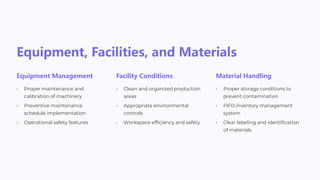
Equipment, Facilities, and Materials
Equipment Management
• Proper maintenance and
calibration of machinery
• Preventive maintenance
schedule implementation
• Operational safety features
Facility Conditions
• Clean and organized production
areas
• Appropriate environmental
controls
• Workspace efficiency and safety
Material Handling
• Proper storage conditions to
prevent contamination
• FIFO inventory management
system
• Clear labeling and identification
of materials
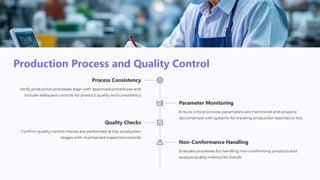
Production Process and Quality Control
Process Consistency
Verify production processes align with approved procedures and
include adequate controls for product quality and consistency
Parameter Monitoring
Ensure critical process parameters are monitored and properly
documented with systems for tracking production batches or lots
Quality Checks
Confirm quality control checks are performed at key production
stages with maintained inspection records
Non-Conformance Handling
Evaluate processes for handling non-conforming products and
analyze quality metrics for trends
Employee Training and Safety
Safety Culture
Organizational commitment to safety excellence
Safety Protocols
Established procedures and PPE requirements
Competency Training
Comprehensive training on procedures and standards
Documentation
Maintained training records and assessments
Employee training and safety form the foundation of manufacturing excellence. Proper training ensures workers understand
procedures, quality standards, and safety protocols. Regular competency assessments verify knowledge retention, while
comprehensive documentation provides evidence of compliance and identifies training needs.
Environmental Compliance and Supplier Management
Environmental Regulations
Verify compliance with waste disposal and emissions control
regulations. Assess measures implemented to minimize
environmental impact throughout manufacturing processes.
Sustainability Initiatives
Evaluate programs for resource conservation, energy efficiency,
and sustainable practices that reduce the environmental footprint
of manufacturing operations.
Supplier Evaluation
Review processes for evaluating and monitoring suppliers for
quality and reliability. Check documentation of supplier
qualifications and performance metrics.
Non-Conformity Management
Assess procedures for handling supplier non-conformities,
including corrective action requests, follow-up verification, and
continuous improvement initiatives.
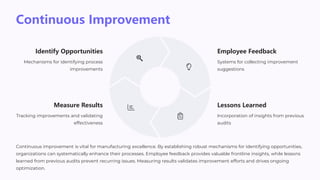
Continuous Improvement
Identify Opportunities
Mechanisms for identifying process
improvements
Employee Feedback
Systems for collecting improvement
suggestions
Lessons Learned
Incorporation of insights from previous
audits
Measure Results
Tracking improvements and validating
effectiveness
Continuous improvement is vital for manufacturing excellence. By establishing robust mechanisms for identifying opportunities,
organizations can systematically enhance their processes. Employee feedback provides valuable frontline insights, while lessons
learned from previous audits prevent recurring issues. Measuring results validates improvement efforts and drives ongoing
optimization.
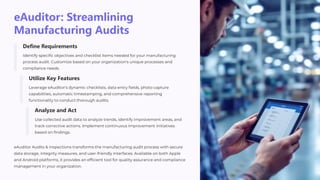
eAuditor: Streamlining
Manufacturing Audits
Define Requirements
Identify specific objectives and checklist items needed for your manufacturing
process audit. Customize based on your organization's unique processes and
compliance needs.
Utilize Key Features
Leverage eAuditor's dynamic checklists, data entry fields, photo capture
capabilities, automatic timestamping, and comprehensive reporting
functionality to conduct thorough audits.
Analyze and Act
Use collected audit data to analyze trends, identify improvement areas, and
track corrective actions. Implement continuous improvement initiatives
based on findings.
eAuditor Audits & Inspections transforms the manufacturing audit process with secure
data storage, integrity measures, and user-friendly interfaces. Available on both Apple
and Android platforms, it provides an efficient tool for quality assurance and compliance
management in your organization.

Manufacturing process audit checklist with eAuditor

  • 1.
    Manufacturing Process Audit Checklistwith eAuditor Manufacturing process audits are essential for ensuring quality, compliance, and continuous improvement in production environments. A comprehensive audit checklist helps organizations systematically evaluate their processes against industry standards and regulatory requirements. eAuditor Audits & Inspections offers a streamlined approach to conducting these critical assessments, enabling real-time data collection, analysis, and reporting. This presentation explores key components of an effective manufacturing audit checklist and how eAuditor can enhance your audit processes. by eAuditor Audits & Inspections https://eAuditor.app
  • 2.
    Process Documentation andControl Updated Documentation Ensure process flowcharts, SOPs, work instructions, and other relevant documentation are available and up-to-date Change Control Verify documented change control process exists for updating procedures Employee Training Confirm employees are trained on the latest procedures and documentation
  • 3.
    Equipment, Facilities, andMaterials Equipment Management • Proper maintenance and calibration of machinery • Preventive maintenance schedule implementation • Operational safety features Facility Conditions • Clean and organized production areas • Appropriate environmental controls • Workspace efficiency and safety Material Handling • Proper storage conditions to prevent contamination • FIFO inventory management system • Clear labeling and identification of materials
  • 4.
    Production Process andQuality Control Process Consistency Verify production processes align with approved procedures and include adequate controls for product quality and consistency Parameter Monitoring Ensure critical process parameters are monitored and properly documented with systems for tracking production batches or lots Quality Checks Confirm quality control checks are performed at key production stages with maintained inspection records Non-Conformance Handling Evaluate processes for handling non-conforming products and analyze quality metrics for trends
  • 5.
    Employee Training andSafety Safety Culture Organizational commitment to safety excellence Safety Protocols Established procedures and PPE requirements Competency Training Comprehensive training on procedures and standards Documentation Maintained training records and assessments Employee training and safety form the foundation of manufacturing excellence. Proper training ensures workers understand procedures, quality standards, and safety protocols. Regular competency assessments verify knowledge retention, while comprehensive documentation provides evidence of compliance and identifies training needs.
  • 6.
    Environmental Compliance andSupplier Management Environmental Regulations Verify compliance with waste disposal and emissions control regulations. Assess measures implemented to minimize environmental impact throughout manufacturing processes. Sustainability Initiatives Evaluate programs for resource conservation, energy efficiency, and sustainable practices that reduce the environmental footprint of manufacturing operations. Supplier Evaluation Review processes for evaluating and monitoring suppliers for quality and reliability. Check documentation of supplier qualifications and performance metrics. Non-Conformity Management Assess procedures for handling supplier non-conformities, including corrective action requests, follow-up verification, and continuous improvement initiatives.
  • 7.
    Continuous Improvement Identify Opportunities Mechanismsfor identifying process improvements Employee Feedback Systems for collecting improvement suggestions Lessons Learned Incorporation of insights from previous audits Measure Results Tracking improvements and validating effectiveness Continuous improvement is vital for manufacturing excellence. By establishing robust mechanisms for identifying opportunities, organizations can systematically enhance their processes. Employee feedback provides valuable frontline insights, while lessons learned from previous audits prevent recurring issues. Measuring results validates improvement efforts and drives ongoing optimization.
  • 8.
    eAuditor: Streamlining Manufacturing Audits DefineRequirements Identify specific objectives and checklist items needed for your manufacturing process audit. Customize based on your organization's unique processes and compliance needs. Utilize Key Features Leverage eAuditor's dynamic checklists, data entry fields, photo capture capabilities, automatic timestamping, and comprehensive reporting functionality to conduct thorough audits. Analyze and Act Use collected audit data to analyze trends, identify improvement areas, and track corrective actions. Implement continuous improvement initiatives based on findings. eAuditor Audits & Inspections transforms the manufacturing audit process with secure data storage, integrity measures, and user-friendly interfaces. Available on both Apple and Android platforms, it provides an efficient tool for quality assurance and compliance management in your organization.