Manufacturing of
Coins
Name:- Ayush Deb
Enrollment no:- 22UME014
Section:- A
Manufacturing of coins
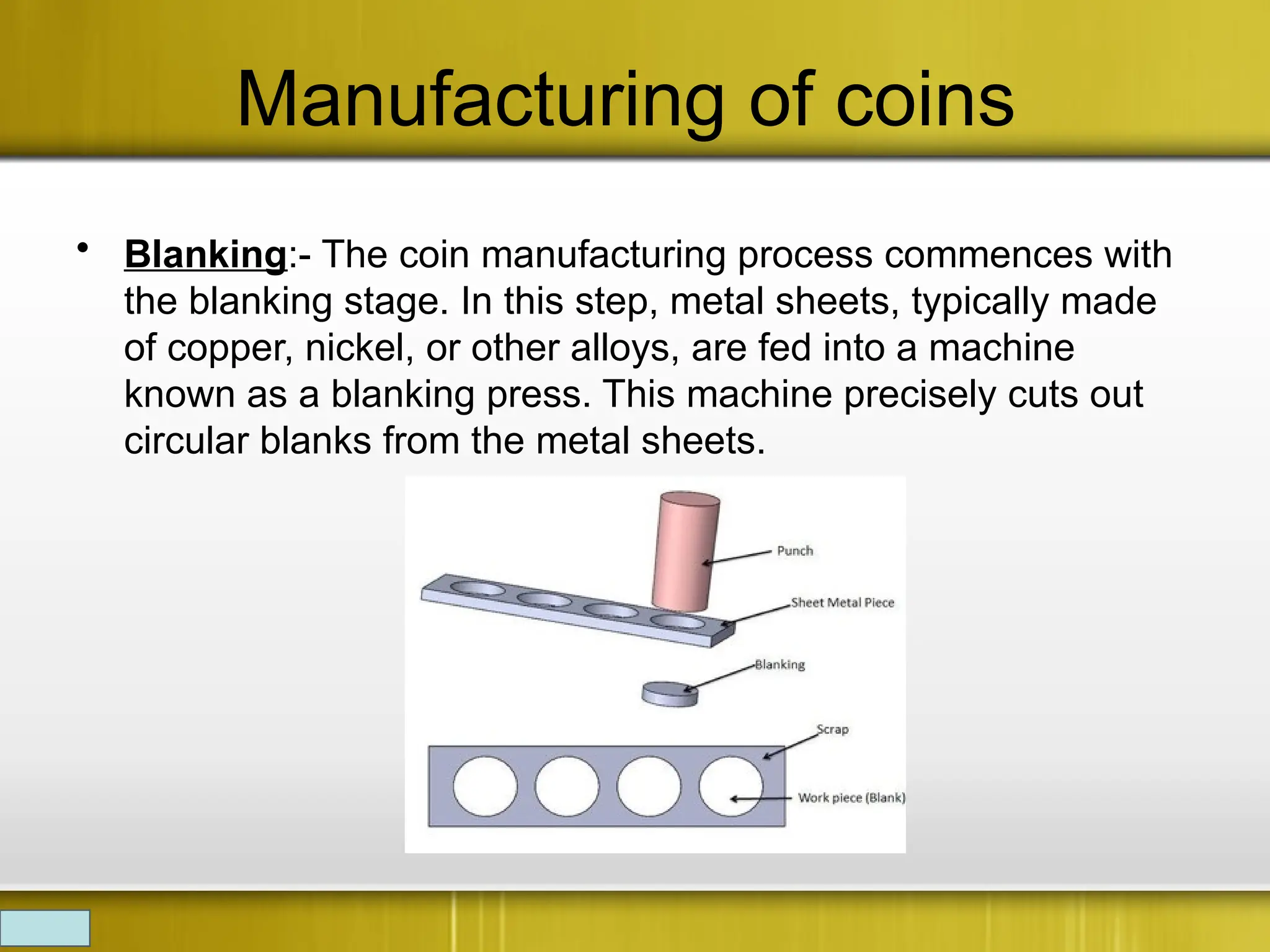
• Blanking:- The coin manufacturing process commences with
the blanking stage. In this step, metal sheets, typically made
of copper, nickel, or other alloys, are fed into a machine
known as a blanking press. This machine precisely cuts out
circular blanks from the metal sheets.
Manufacturing of coins
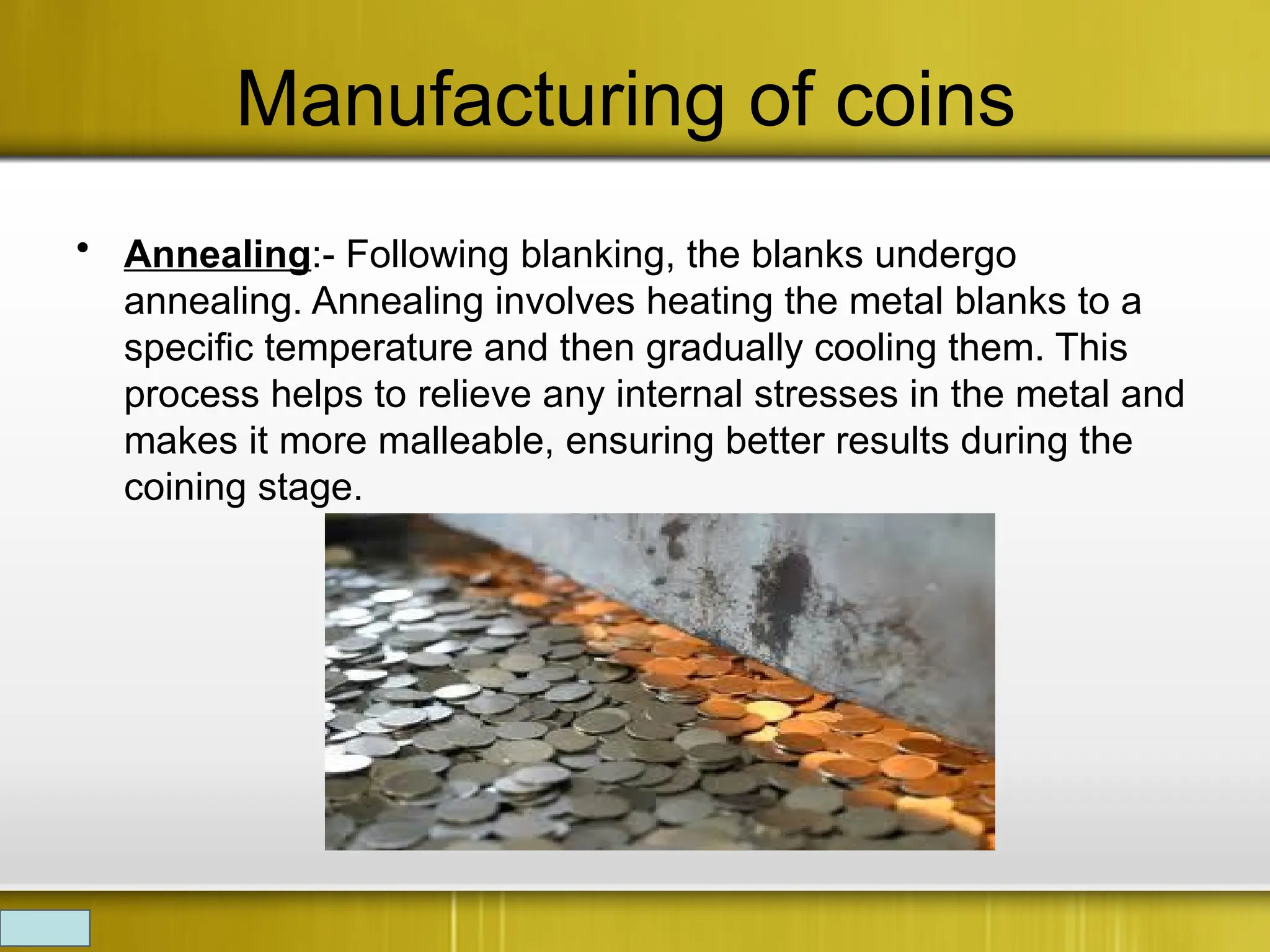
• Annealing:- Following blanking, the blanks undergo
annealing. Annealing involves heating the metal blanks to a
specific temperature and then gradually cooling them. This
process helps to relieve any internal stresses in the metal and
makes it more malleable, ensuring better results during the
coining stage.
Manufacturing of coins
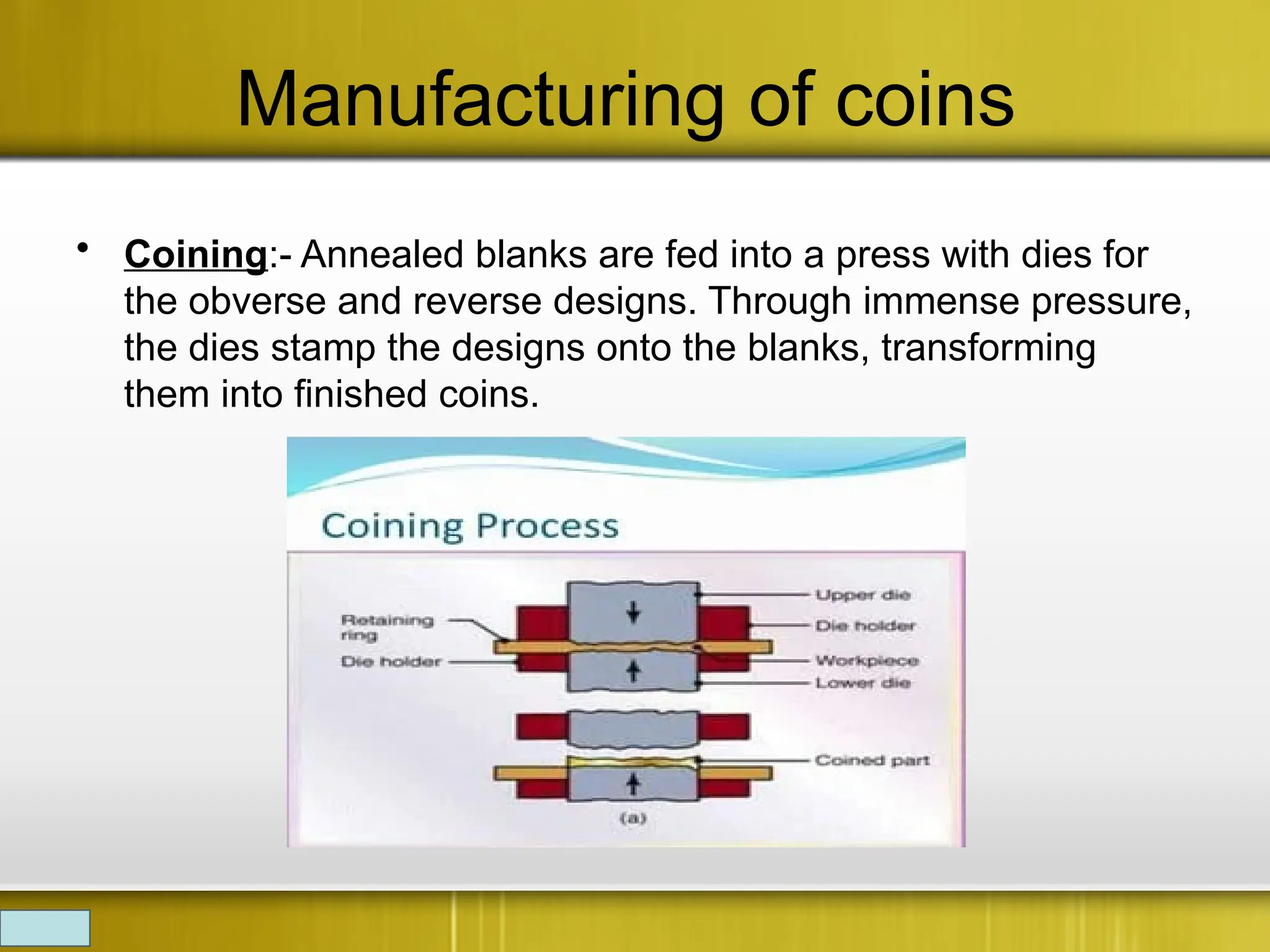
• Coining:- Annealed blanks are fed into a press with dies for
the obverse and reverse designs. Through immense pressure,
the dies stamp the designs onto the blanks, transforming
them into finished coins.
Manufacturing of coins
• Inspection:- Quality control is a crucial aspect of the coin
manufacturing process. After coining, the coins undergo
thorough inspection to ensure that they meet the required
standards of quality and accuracy. Any imperfect coins are
identified and removed from circulation.
Manufacturing of coins
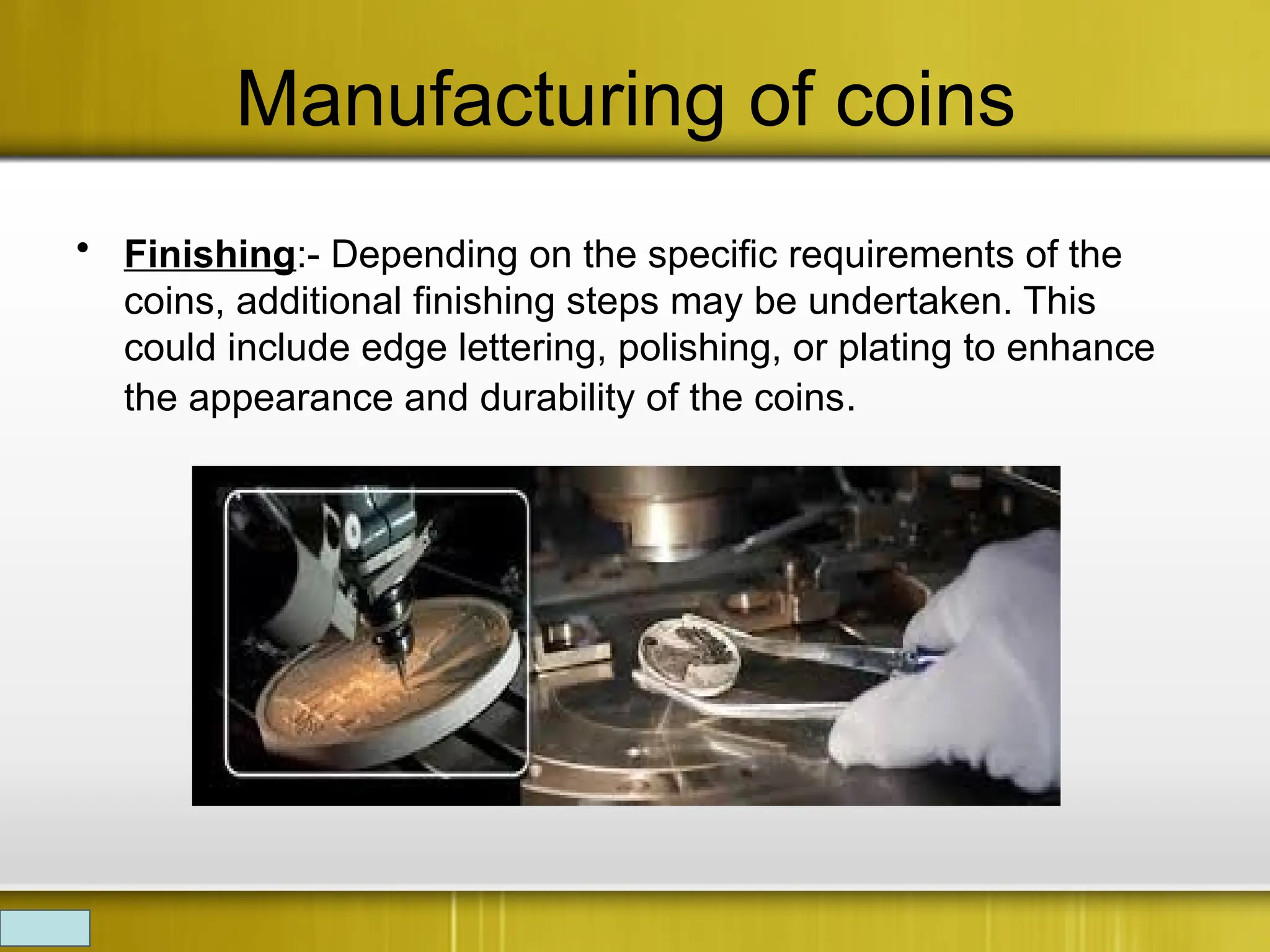
• Finishing:- Depending on the specific requirements of the
coins, additional finishing steps may be undertaken. This
could include edge lettering, polishing, or plating to enhance
the appearance and durability of the coins.
Usage/Working of coins
• Medium of Exchange:- Coins serve as widely accepted currency,
simplifying transactions for goods and services. Their uniform
denominations and widespread recognition ensure ease and
convenience in everyday exchanges.
• Store of Value:- Despite inflation, coins preserve wealth. They offer
stability and serve as savings, aiding individuals in maintaining
purchasing power over time.
• Portability:- Coins are convenient for transactions of all sizes due
to their small size and durability, facilitating easy exchange and
commerce.
THANK YOU

manufacturing of coin engineering design

  • 1.
    Manufacturing of Coins Name:- AyushDeb Enrollment no:- 22UME014 Section:- A
  • 2.
    Manufacturing of coins •Blanking:- The coin manufacturing process commences with the blanking stage. In this step, metal sheets, typically made of copper, nickel, or other alloys, are fed into a machine known as a blanking press. This machine precisely cuts out circular blanks from the metal sheets.
  • 3.
    Manufacturing of coins •Annealing:- Following blanking, the blanks undergo annealing. Annealing involves heating the metal blanks to a specific temperature and then gradually cooling them. This process helps to relieve any internal stresses in the metal and makes it more malleable, ensuring better results during the coining stage.
  • 4.
    Manufacturing of coins •Coining:- Annealed blanks are fed into a press with dies for the obverse and reverse designs. Through immense pressure, the dies stamp the designs onto the blanks, transforming them into finished coins.
  • 5.
    Manufacturing of coins •Inspection:- Quality control is a crucial aspect of the coin manufacturing process. After coining, the coins undergo thorough inspection to ensure that they meet the required standards of quality and accuracy. Any imperfect coins are identified and removed from circulation.
  • 6.
    Manufacturing of coins •Finishing:- Depending on the specific requirements of the coins, additional finishing steps may be undertaken. This could include edge lettering, polishing, or plating to enhance the appearance and durability of the coins.
  • 7.
    Usage/Working of coins •Medium of Exchange:- Coins serve as widely accepted currency, simplifying transactions for goods and services. Their uniform denominations and widespread recognition ensure ease and convenience in everyday exchanges. • Store of Value:- Despite inflation, coins preserve wealth. They offer stability and serve as savings, aiding individuals in maintaining purchasing power over time. • Portability:- Coins are convenient for transactions of all sizes due to their small size and durability, facilitating easy exchange and commerce.
  • 8.