Today we’ll learn more about
a. Squares
b. Rectangles
c. Parallelograms
d. Trapezium
e. Rhombus
f. Kite
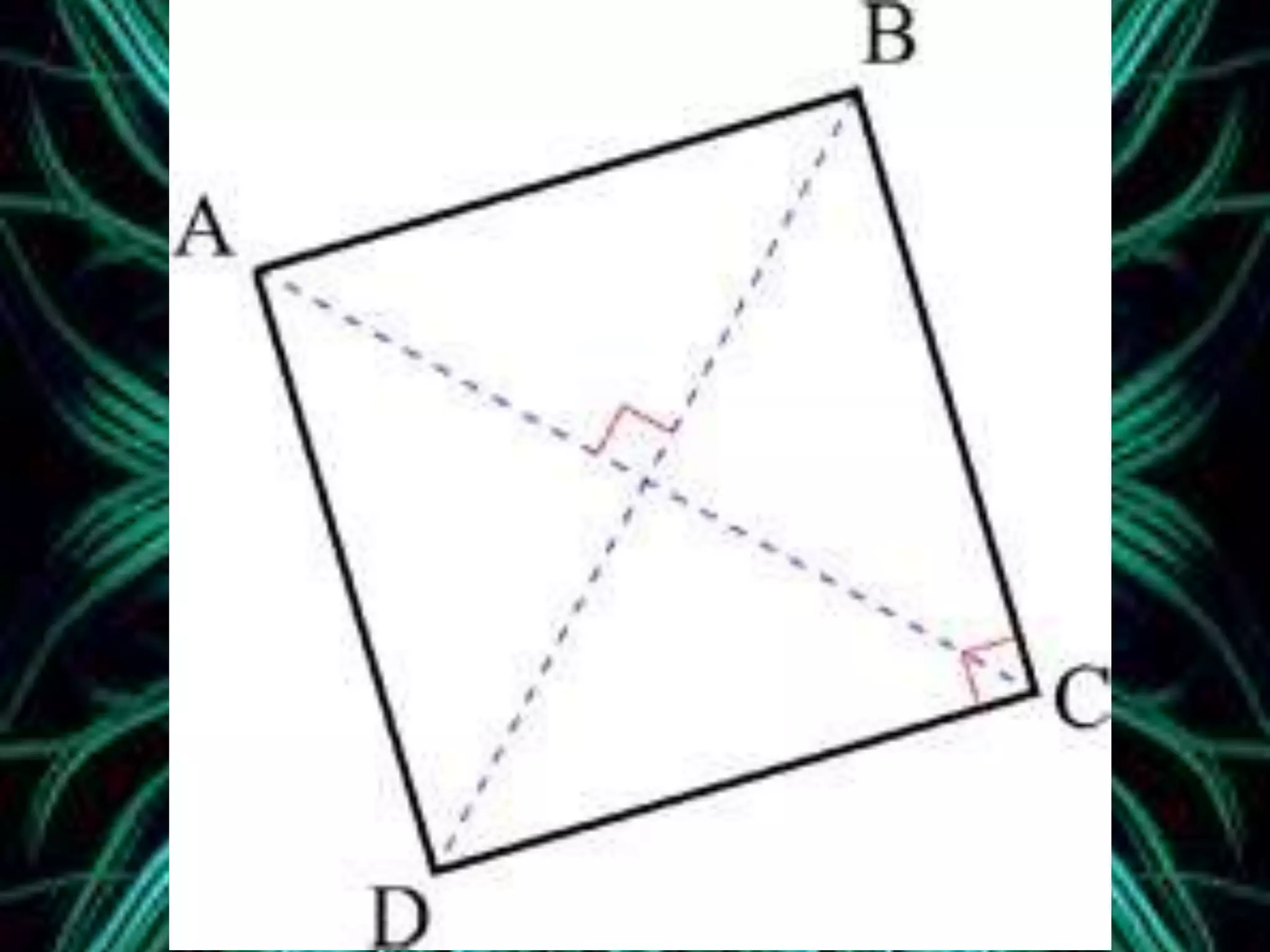
SquareProperties of Squares
i) Opposite sides are equal.
ii) Opposite angles are equal.
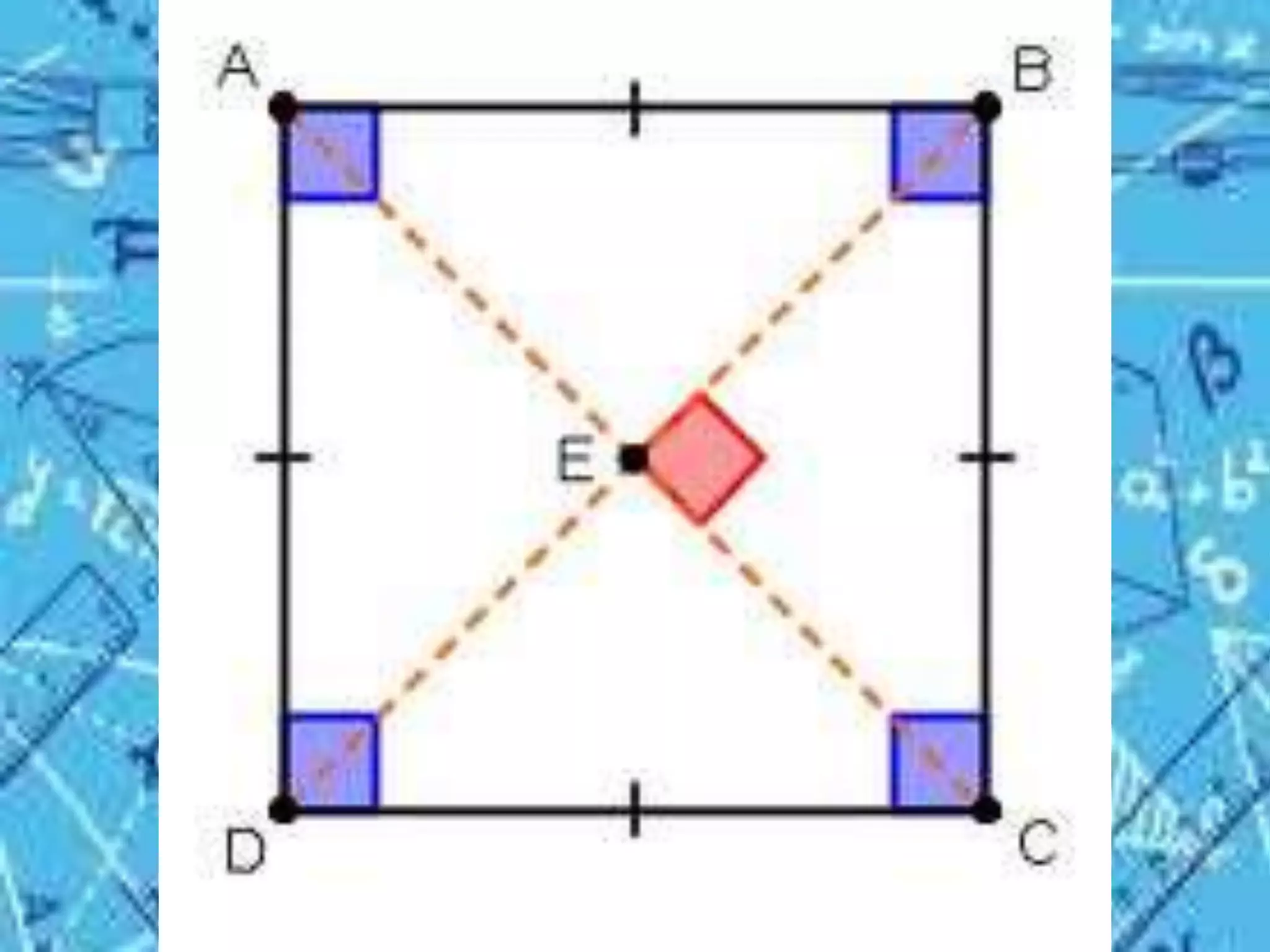
iii) Diagonals bisect each other at right
angles.
iv) Diagonals are perpendicular to each
other.
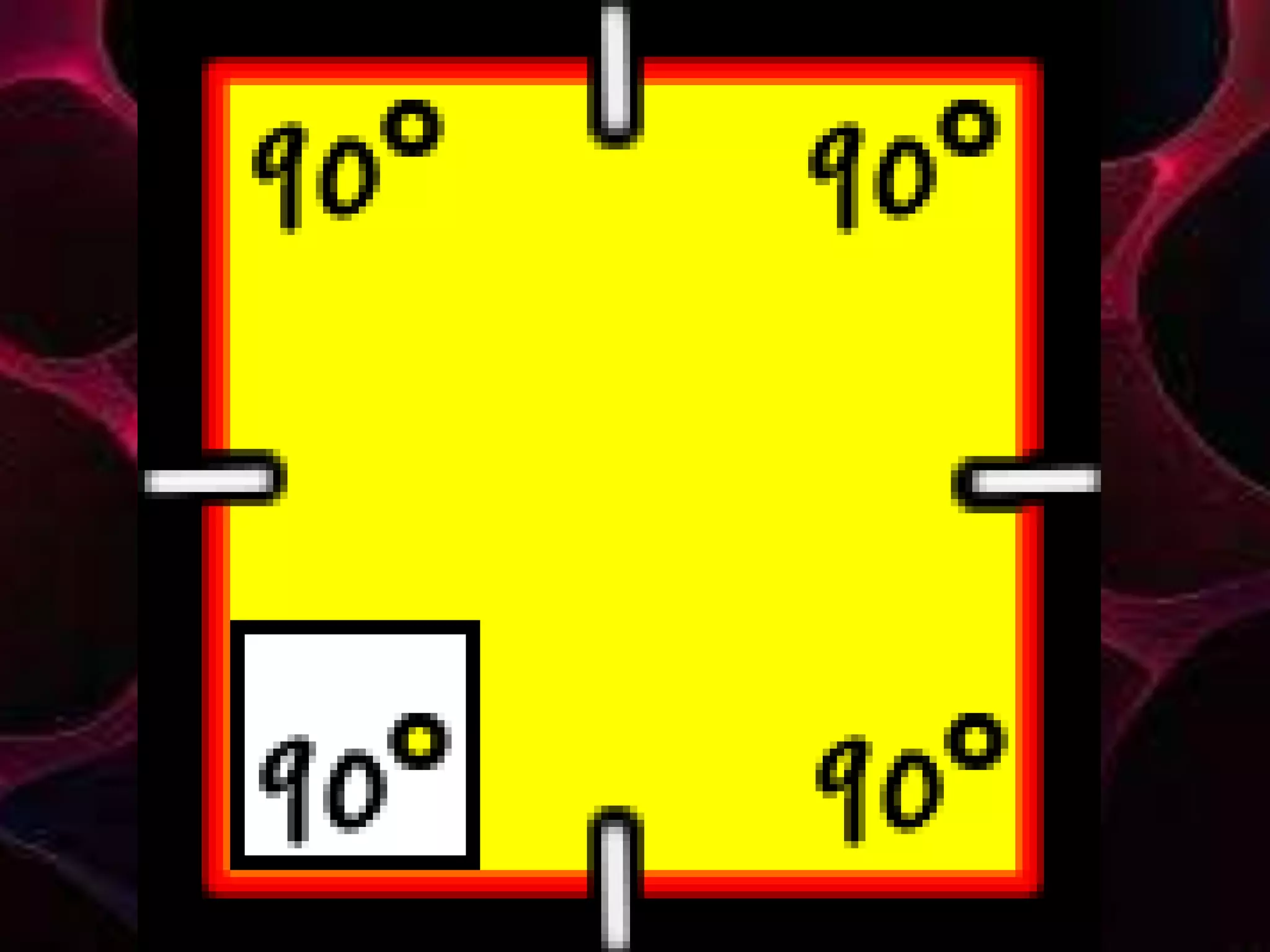
v) Each of the angles is a right angle.
vi) Diagonals are equal.
COOL FACTS ABOUT
SQUARES
• A square is a parallelogram.
• A square is a rhombus.
• A square is a trapezium.
• A square is a rectangle.
• A square has 4 lines of reflectional symmetry.
• The perimeter of a square is 4 times the length of
one side.
• The diagonals of a square bisect each other at 90
degrees and are perpendicular.
• A square has a larger area than all other
quadrilaterals with the same perimeter.
Parallelogram
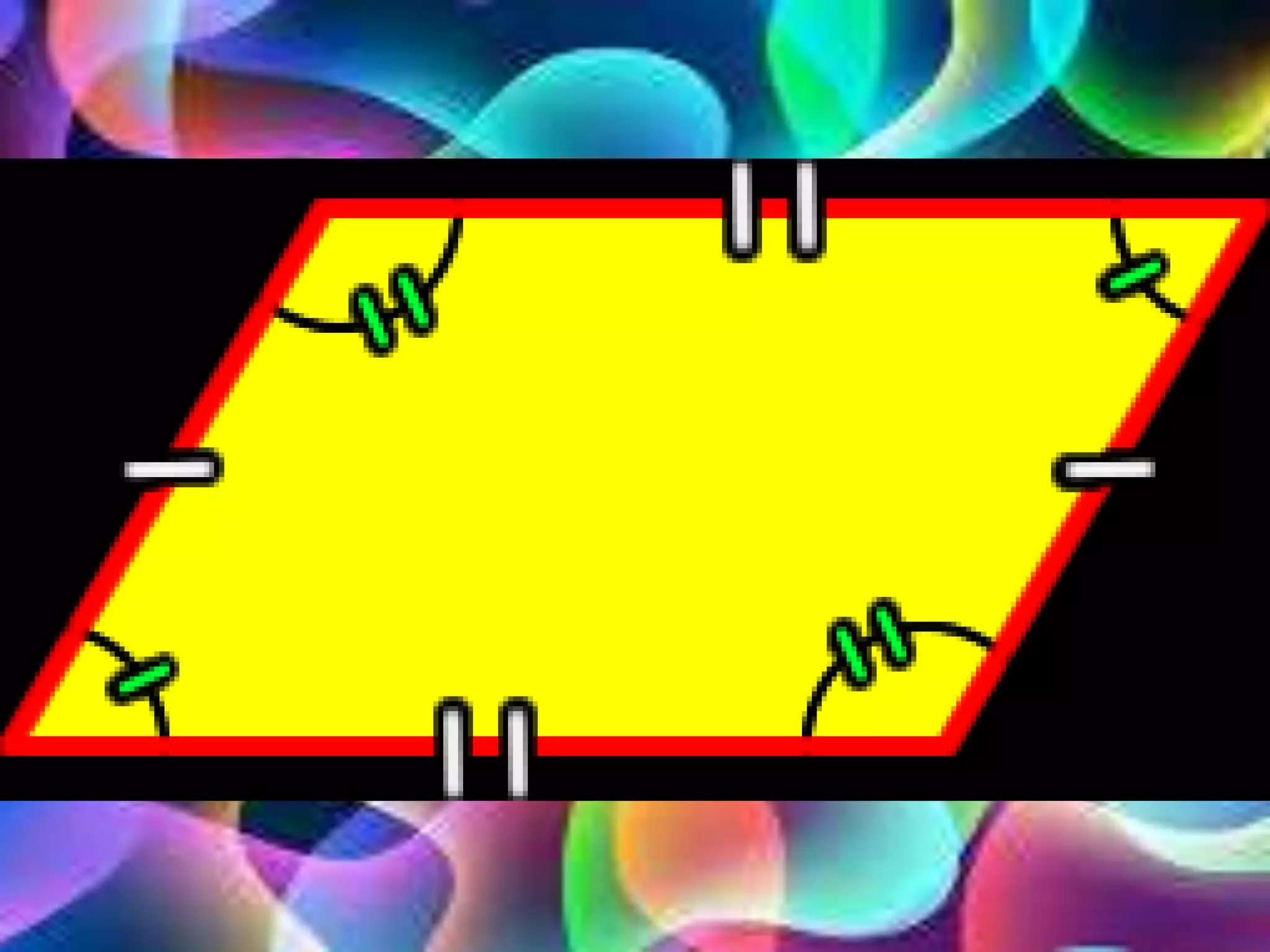
The properties of a parallelogram are:
Opposite sides are equal
Opposite angles are equal
Diagonals bisect each other
Opposite sides of a parallelogram
are parallel.
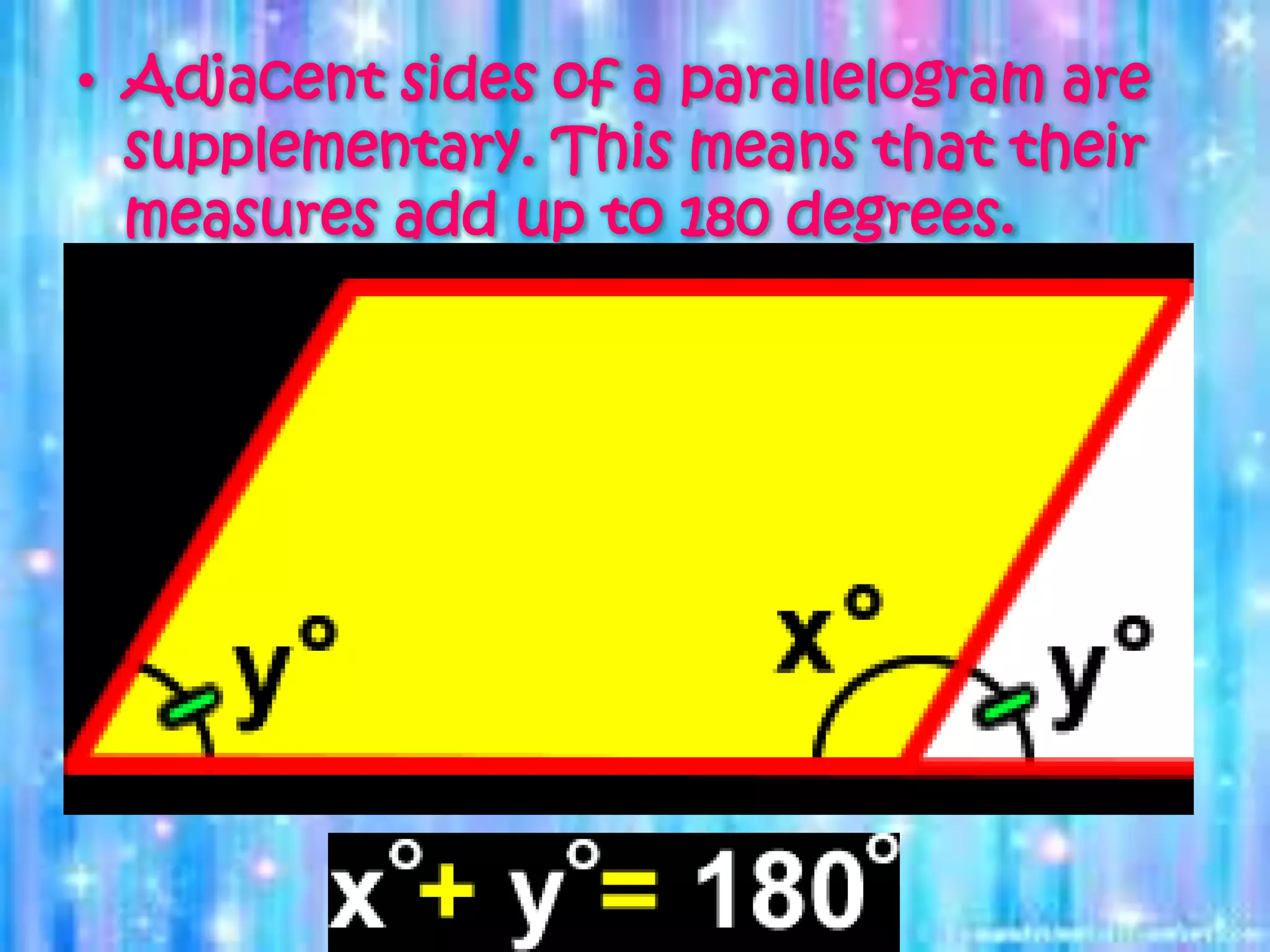
• Adjacent sides of a parallelogram are
supplementary. This means that their
measures add up to 180 degrees.
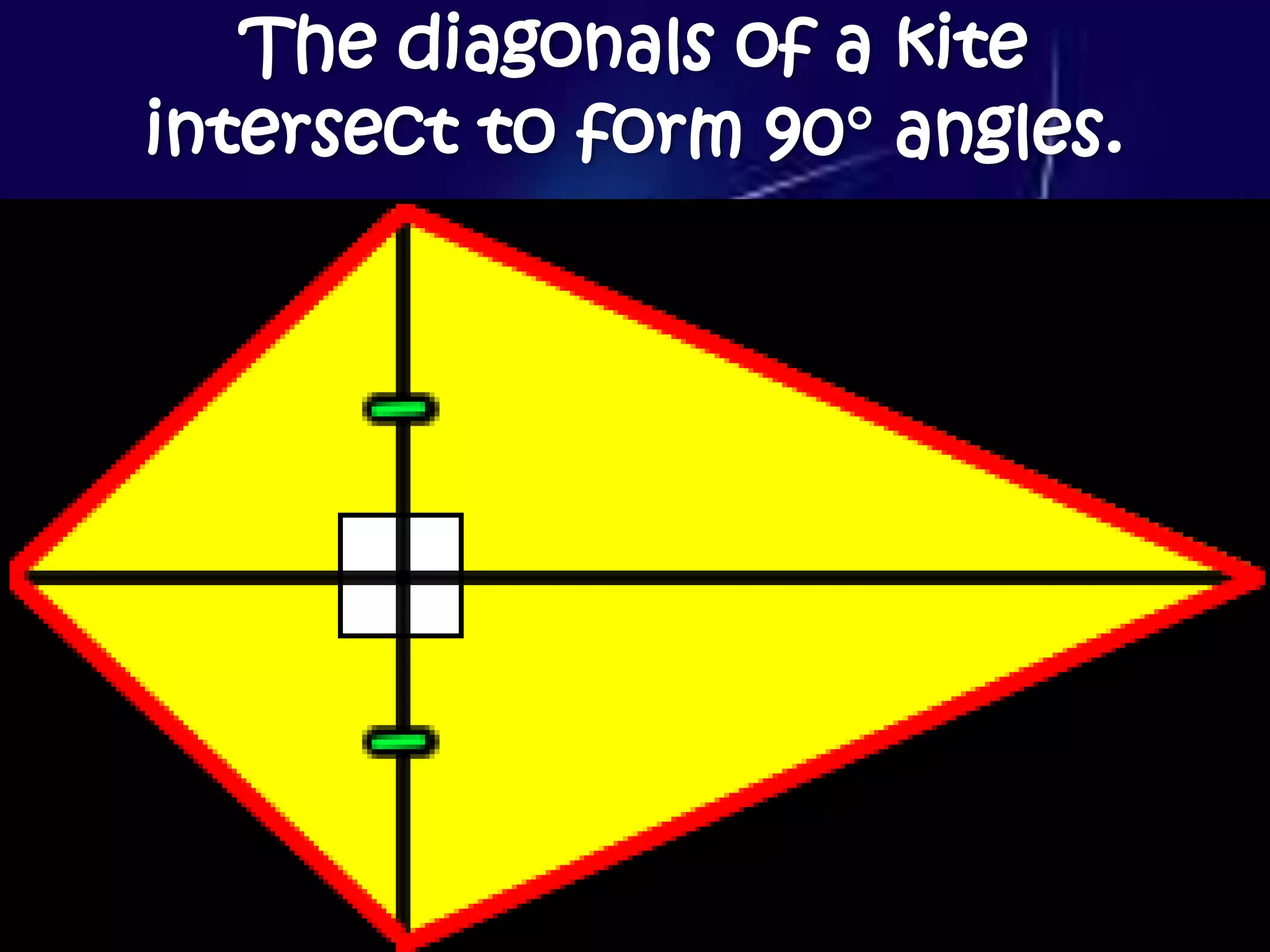
KITEProperties of a kite
1. The diagonals are perpendicular
to one another.
2. The longer diagonal bisects the
shorter one.
The diagonals of a kite
intersect to form 90 angles.
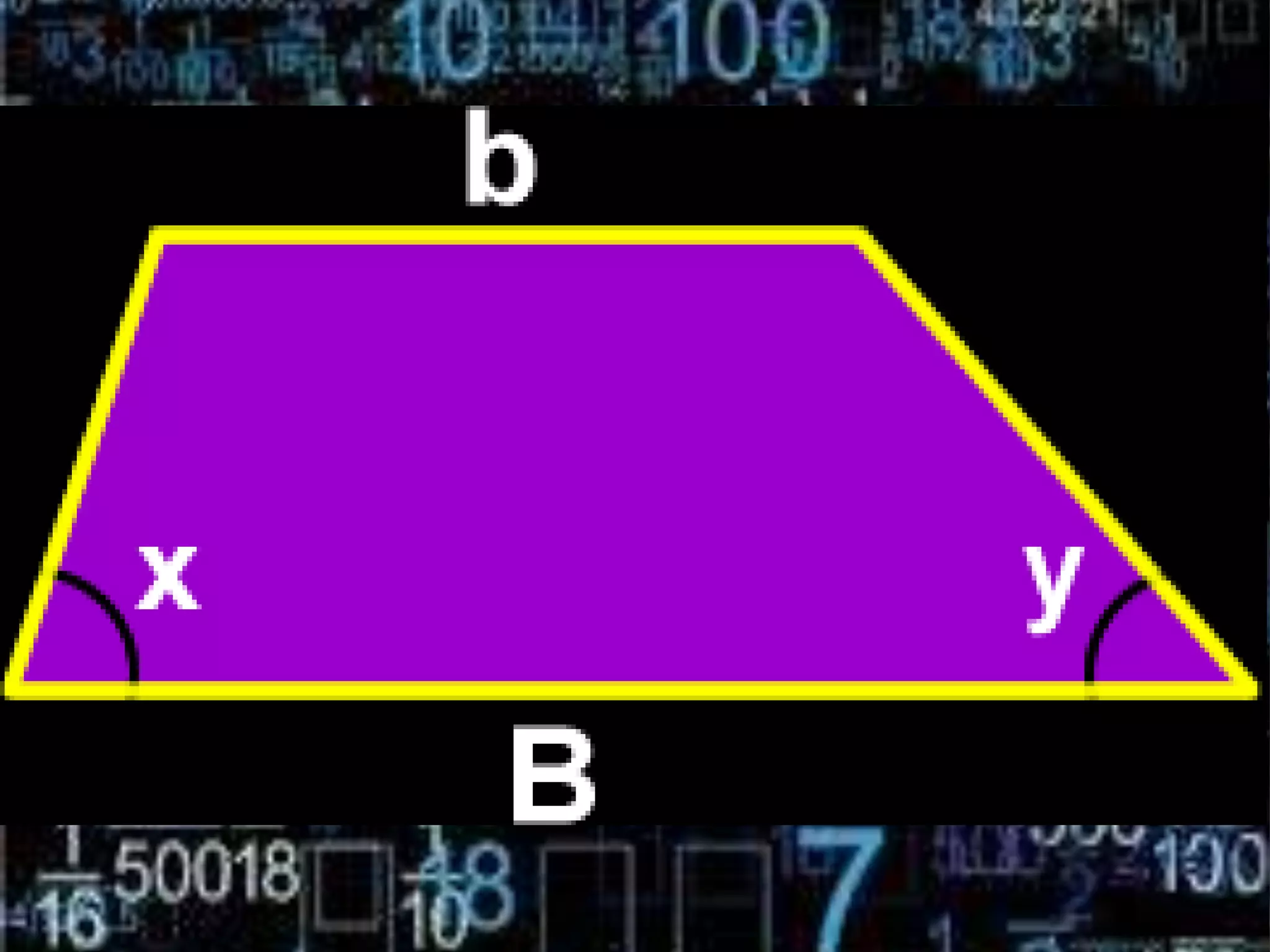
TRAPEZIUM
Properties of a trapezium
A trapezium has one pair of
parallel sides.
That's it. No sides need to be
congruent and no angles need to be
congruent. Nothing special happens
with the diagonals either.  
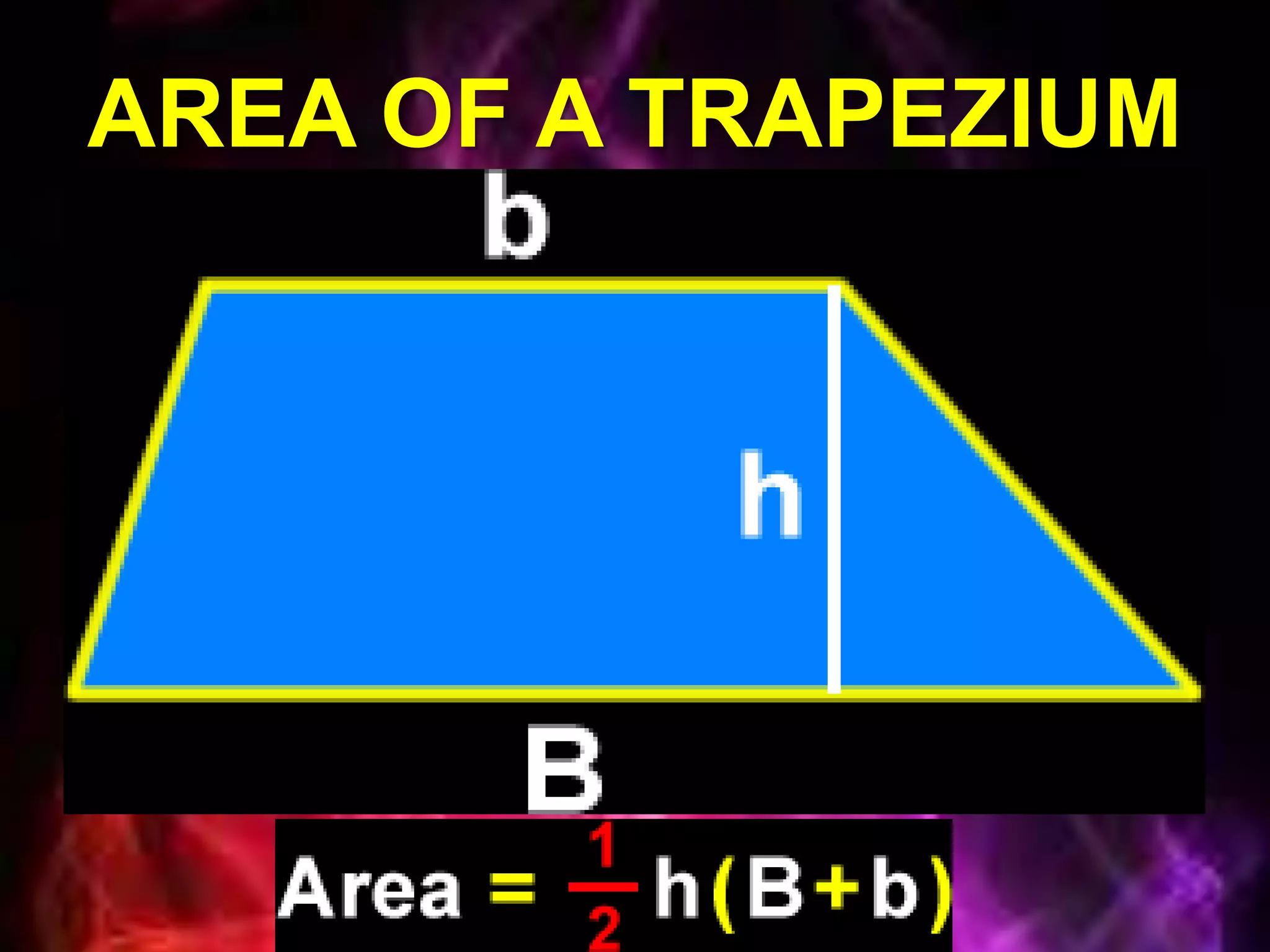
AREA OF A TRAPEZIUM
RECTANGLE
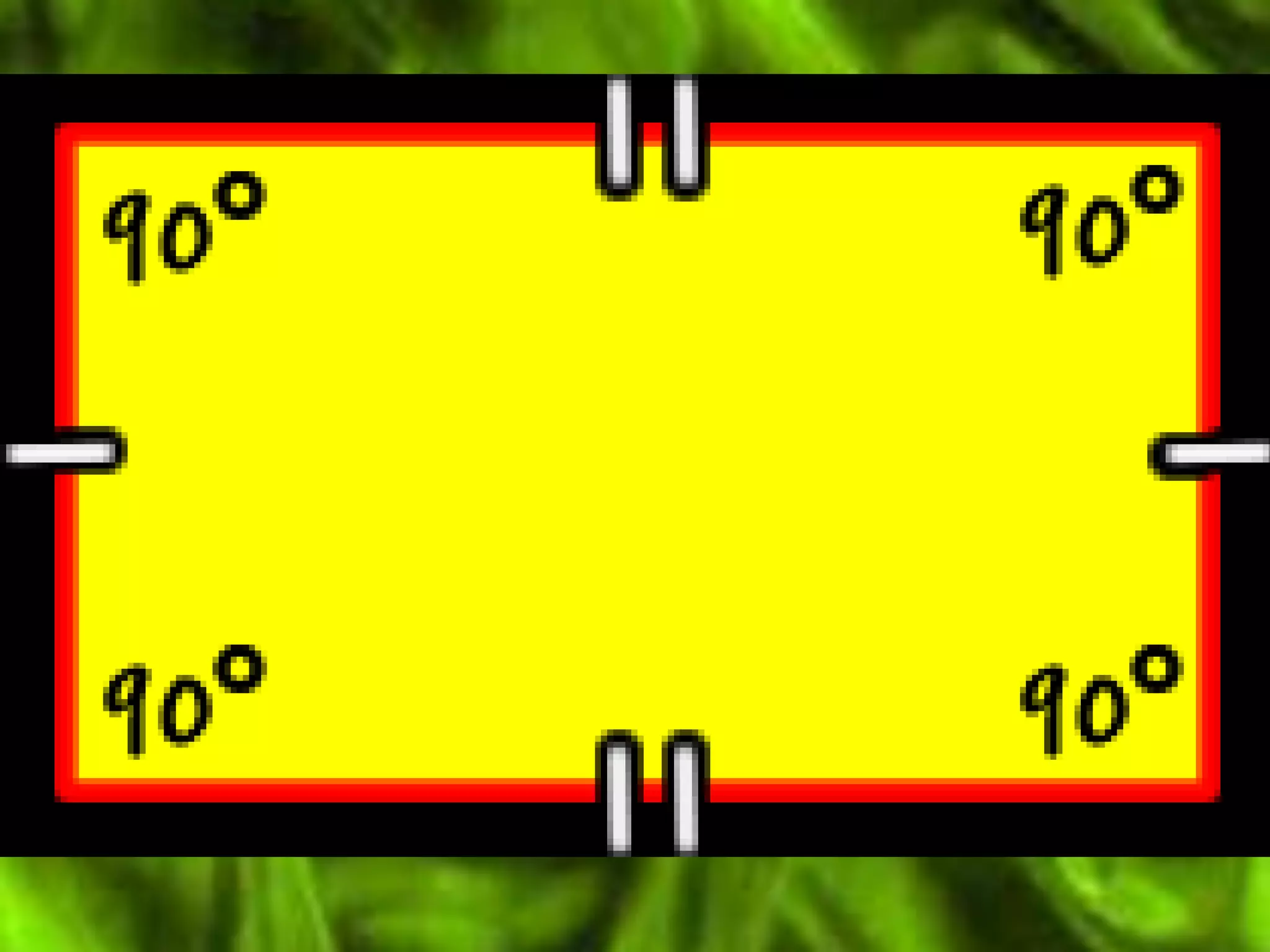
Opposite sides of a rectangle are the same
length (congruent).
The angles of a rectangle are all congruent
(the same size and measure.)
A rectangle has four right angles.
Opposite angles of a rectangle are congruent.
Opposite sides of a rectangle are parallel.
The diagonals bisect each
other.
RHOMBUS
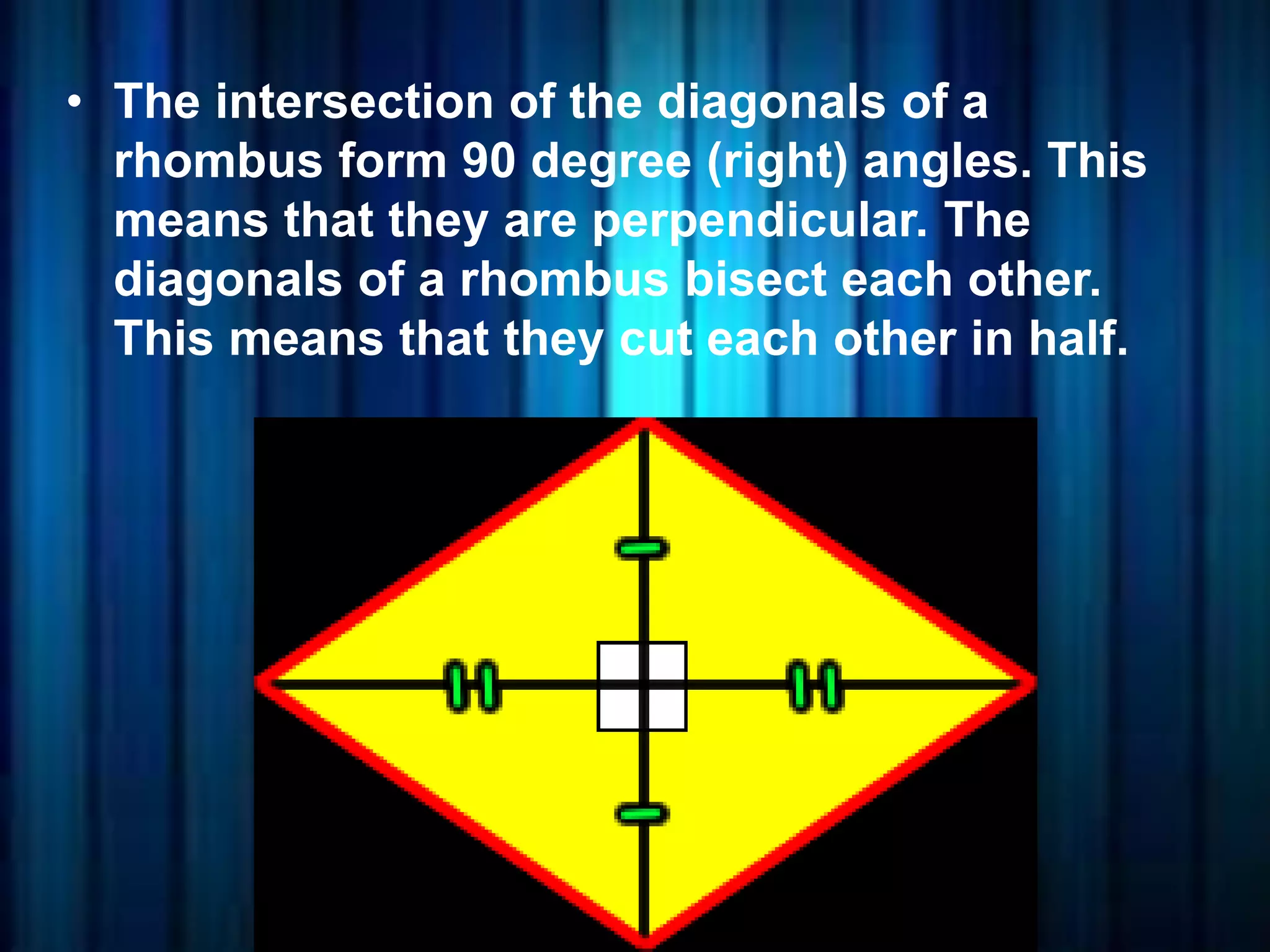
• The intersection of the diagonals of a
rhombus form 90 degree (right) angles. This
means that they are perpendicular. The
diagonals of a rhombus bisect each other.
This means that they cut each other in half.
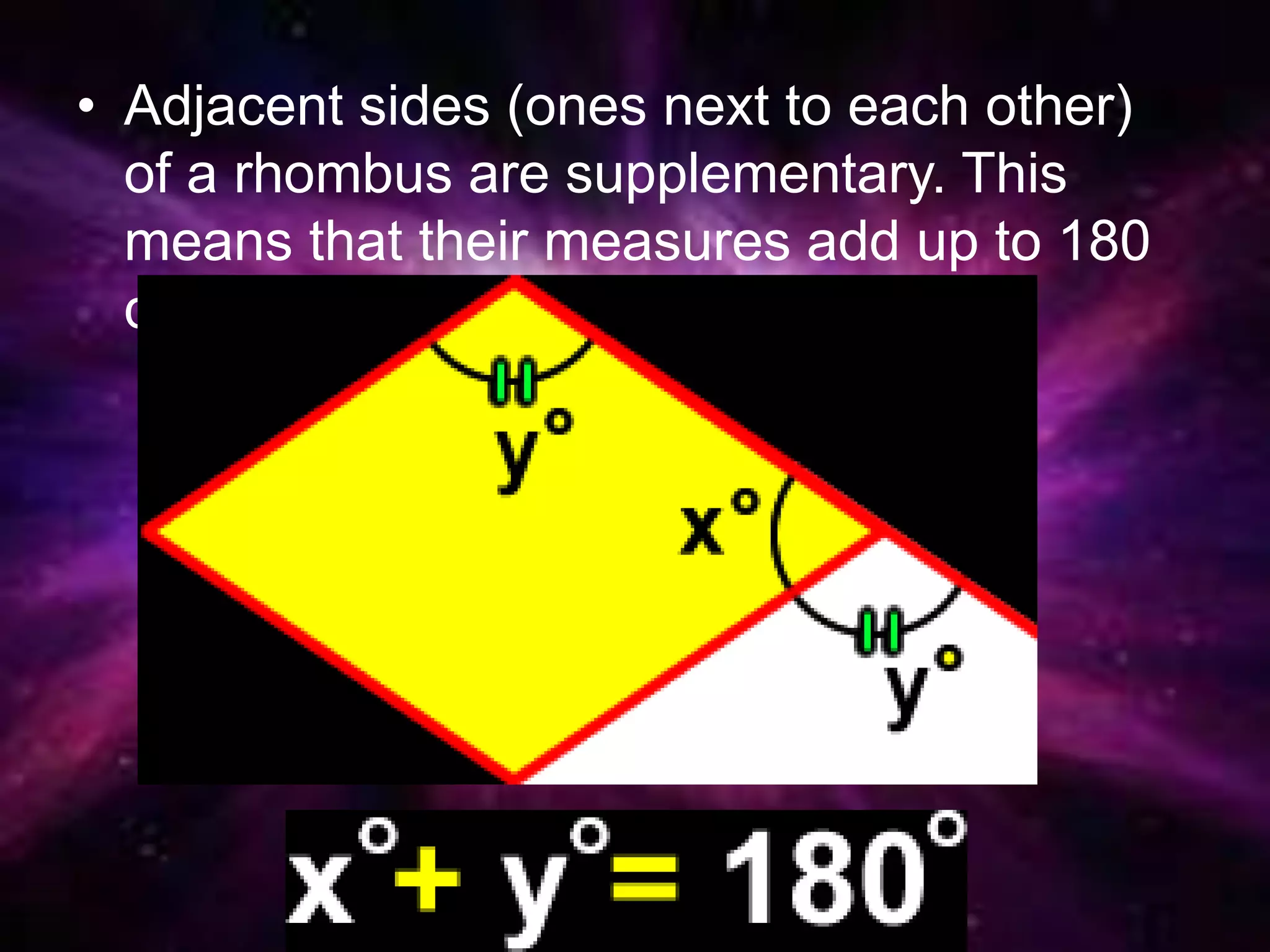
• Adjacent sides (ones next to each other)
of a rhombus are supplementary. This
means that their measures add up to 180
degrees.
Properties of Quadrilaterals

Properties of Quadrilaterals

  • 2.
    Today we’ll learnmore about a. Squares b. Rectangles c. Parallelograms d. Trapezium e. Rhombus f. Kite
  • 3.
    SquareProperties of Squares i)Opposite sides are equal. ii) Opposite angles are equal. iii) Diagonals bisect each other at right angles. iv) Diagonals are perpendicular to each other. v) Each of the angles is a right angle. vi) Diagonals are equal.
  • 6.
    COOL FACTS ABOUT SQUARES •A square is a parallelogram. • A square is a rhombus. • A square is a trapezium. • A square is a rectangle. • A square has 4 lines of reflectional symmetry. • The perimeter of a square is 4 times the length of one side. • The diagonals of a square bisect each other at 90 degrees and are perpendicular. • A square has a larger area than all other quadrilaterals with the same perimeter.
  • 8.
    Parallelogram The properties ofa parallelogram are: Opposite sides are equal Opposite angles are equal Diagonals bisect each other Opposite sides of a parallelogram are parallel.
  • 10.
    • Adjacent sidesof a parallelogram are supplementary. This means that their measures add up to 180 degrees.
  • 11.
    KITEProperties of akite 1. The diagonals are perpendicular to one another. 2. The longer diagonal bisects the shorter one.
  • 13.
    The diagonals ofa kite intersect to form 90 angles.
  • 14.
    TRAPEZIUM Properties of atrapezium A trapezium has one pair of parallel sides. That's it. No sides need to be congruent and no angles need to be congruent. Nothing special happens with the diagonals either.  
  • 16.
    AREA OF ATRAPEZIUM
  • 17.
    RECTANGLE Opposite sides ofa rectangle are the same length (congruent). The angles of a rectangle are all congruent (the same size and measure.) A rectangle has four right angles. Opposite angles of a rectangle are congruent. Opposite sides of a rectangle are parallel.
  • 19.
  • 20.
  • 22.
    • The intersectionof the diagonals of a rhombus form 90 degree (right) angles. This means that they are perpendicular. The diagonals of a rhombus bisect each other. This means that they cut each other in half.
  • 23.
    • Adjacent sides(ones next to each other) of a rhombus are supplementary. This means that their measures add up to 180 degrees.