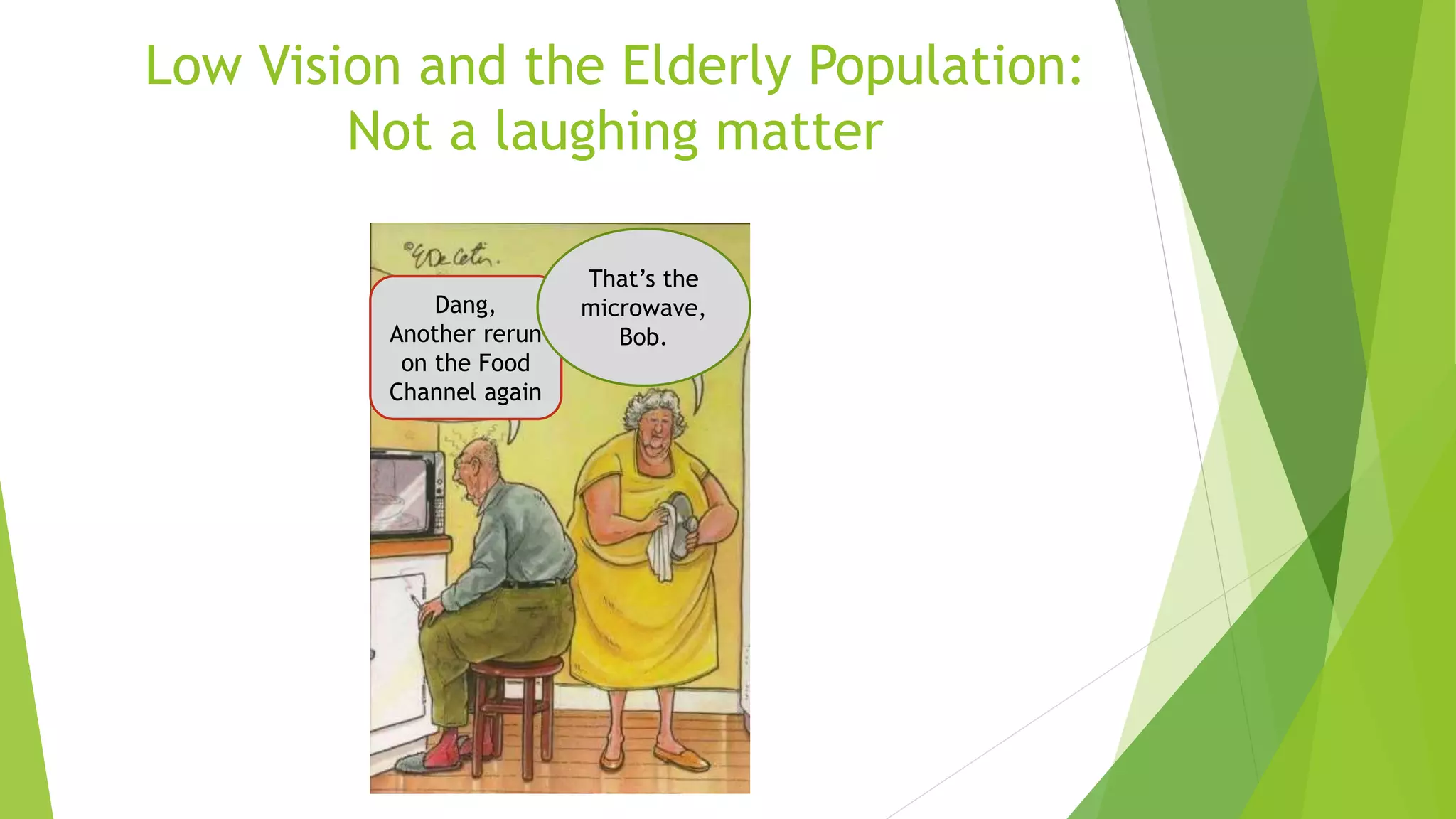
Low Vision and the Elderly Population:
Not a laughing matter
Dang,
Another rerun
on the Food
Channel again
That’s the
microwave,
Bob.
Low Vision and the Elderly: The Need
 The number of older Americans with visual impairment or blindness is expected
to double by 2050.
 Vision rehabilitation services can help individuals regain self-sufficiency and
improve quality of life.
 As the average lifespan of the population increases, the population living with
age-related macular degeneration (AMD) is expected to increase dramatically.
 Nursing homes often do not have adequate resources to help patients who have
low vision (From a Johns Hopkins study).
 Training of nursing home staff to improve the living environment is recommended
(From the same Johns Hopkins study).
Johns Hopkins’ SEEING Study findings
 Efforts to provide low vision rehabilitation services for nursing home residents
should center on training and improvement within the facility
“An approach that focuses on educating facilities and staff in the needs of nursing
home residents with low vision will result in the greater awareness of personnel of
the needs of this population as a whole, rather than just the needs of those
residents who are receiving low vision rehabilitation”
 Patients with low vision devices had better self-reported vision-related quality of life
scores than did those who had no devices
 Mobility is a significant concern for nursing home residents, especially in relation to
falls that are due to diminished vision
 Most participants who were classified as having low vision did not travel unassisted
without support equipment and did not have goals listed in the area of mobility
 Nursing home staff members raised concerns about safety and the time
needed for long-term training in mobility
Johns Hopkins’ SEEING Study findings
(continued)
 Rather than walking independently, approximately 77% of low vision patients in
nursing homes used wheelchairs or walkers.
“In most cases, the nursing home staff assisted them in the operation
and navigation of this equipment for safety and expediency.”
 Tasks involving ADLs, such as eating and dressing, often required the assistance of
staff members. Staff members sometimes encouraged the dependence of residents
to accomplish tasks more quickly.
“Participants with low vision had difficulty eating independently in the dining room,
since little, if any, adaptive equipment, such as a sectioned plate, was used to help
them do so. In most cases, the staff would assist by feeding the participants,
rather than instructing them in proper adaptations.”
 Recreational activities often require a simple adaptation, such as wearing
glasses that can reduce glare. Yet, patients are typically dependent upon
staff in order to access such resources.
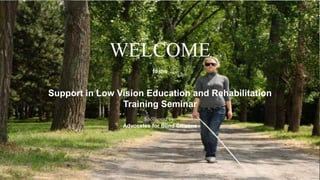
WELCOME
to the
Support in Low Vision Education and Rehabilitation
Training Seminar
Sponsored by:
Advocates for Blind Citizens
WELCOME
to the
Support in Low Vision Education and Rehabilitation
Training Seminar
Sponsored by:
Advocates for Blind Citizens
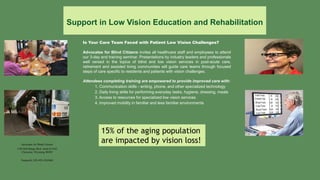
Is Your Care Team Faced with Patient Low Vision Challenges?
Advocates for Blind Citizens invites all healthcare staff and employees to attend
our 3-day and training seminar. Presentations by industry leaders and professionals
well versed in the topics of blind and low vision services in post-acute care,
retirement and assisted living communities will guide care teams through focused
steps of care specific to residents and patients with vision challenges.
Attendees completing training are empowered to provide improved care with:
1. Communication skills - writing, phone, and other specialized technology
2. Daily living skills for performing everyday tasks, hygiene, dressing, meals
3. Access to resources for specialized low vision services
4. Improved mobility in familiar and less familiar environments
Advocates for Blind Citizens
1740 Dell Range Blvd. Suite H #162
Cheyenne, Wyoming 80209
Nonprofit, EIN #82-4565668
15% of the aging population
are impacted by vision loss!
Support in Low Vision Education and Rehabilitation
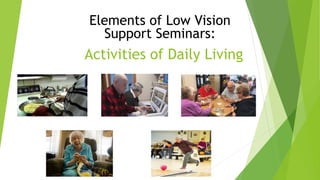
Activities of Daily Living
Elements of Low Vision
Support Seminars:
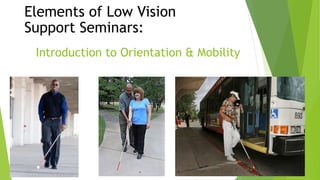
Introduction to Orientation & Mobility
Elements of Low Vision
Support Seminars:
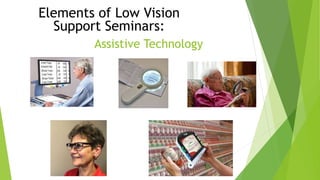
Assistive Technology
Elements of Low Vision
Support Seminars:

Low Vision Conference Presentation

  • 1.
    Low Vision andthe Elderly Population: Not a laughing matter Dang, Another rerun on the Food Channel again That’s the microwave, Bob.
  • 2.
    Low Vision andthe Elderly: The Need  The number of older Americans with visual impairment or blindness is expected to double by 2050.  Vision rehabilitation services can help individuals regain self-sufficiency and improve quality of life.  As the average lifespan of the population increases, the population living with age-related macular degeneration (AMD) is expected to increase dramatically.  Nursing homes often do not have adequate resources to help patients who have low vision (From a Johns Hopkins study).  Training of nursing home staff to improve the living environment is recommended (From the same Johns Hopkins study).
  • 3.
    Johns Hopkins’ SEEINGStudy findings  Efforts to provide low vision rehabilitation services for nursing home residents should center on training and improvement within the facility “An approach that focuses on educating facilities and staff in the needs of nursing home residents with low vision will result in the greater awareness of personnel of the needs of this population as a whole, rather than just the needs of those residents who are receiving low vision rehabilitation”  Patients with low vision devices had better self-reported vision-related quality of life scores than did those who had no devices  Mobility is a significant concern for nursing home residents, especially in relation to falls that are due to diminished vision  Most participants who were classified as having low vision did not travel unassisted without support equipment and did not have goals listed in the area of mobility  Nursing home staff members raised concerns about safety and the time needed for long-term training in mobility
  • 4.
    Johns Hopkins’ SEEINGStudy findings (continued)  Rather than walking independently, approximately 77% of low vision patients in nursing homes used wheelchairs or walkers. “In most cases, the nursing home staff assisted them in the operation and navigation of this equipment for safety and expediency.”  Tasks involving ADLs, such as eating and dressing, often required the assistance of staff members. Staff members sometimes encouraged the dependence of residents to accomplish tasks more quickly. “Participants with low vision had difficulty eating independently in the dining room, since little, if any, adaptive equipment, such as a sectioned plate, was used to help them do so. In most cases, the staff would assist by feeding the participants, rather than instructing them in proper adaptations.”  Recreational activities often require a simple adaptation, such as wearing glasses that can reduce glare. Yet, patients are typically dependent upon staff in order to access such resources.
  • 5.
    WELCOME to the Support inLow Vision Education and Rehabilitation Training Seminar Sponsored by: Advocates for Blind Citizens WELCOME to the Support in Low Vision Education and Rehabilitation Training Seminar Sponsored by: Advocates for Blind Citizens
  • 6.
    Is Your CareTeam Faced with Patient Low Vision Challenges? Advocates for Blind Citizens invites all healthcare staff and employees to attend our 3-day and training seminar. Presentations by industry leaders and professionals well versed in the topics of blind and low vision services in post-acute care, retirement and assisted living communities will guide care teams through focused steps of care specific to residents and patients with vision challenges. Attendees completing training are empowered to provide improved care with: 1. Communication skills - writing, phone, and other specialized technology 2. Daily living skills for performing everyday tasks, hygiene, dressing, meals 3. Access to resources for specialized low vision services 4. Improved mobility in familiar and less familiar environments Advocates for Blind Citizens 1740 Dell Range Blvd. Suite H #162 Cheyenne, Wyoming 80209 Nonprofit, EIN #82-4565668 15% of the aging population are impacted by vision loss! Support in Low Vision Education and Rehabilitation
  • 7.
    Activities of DailyLiving Elements of Low Vision Support Seminars:
  • 8.
    Introduction to Orientation& Mobility Elements of Low Vision Support Seminars:
  • 9.
    Assistive Technology Elements ofLow Vision Support Seminars: