Best Practices for
                                  Longitudinal Online
                                 Qualitative Research


                                          Liz Van Patten
Call in for audio               Consumer Advisory Panels
North America: 1-888-289-4573
International: 1-416-645-1179             March 5, 2010
Attendee Code: 3180622                     All contents © 2009 Liz Van Patten
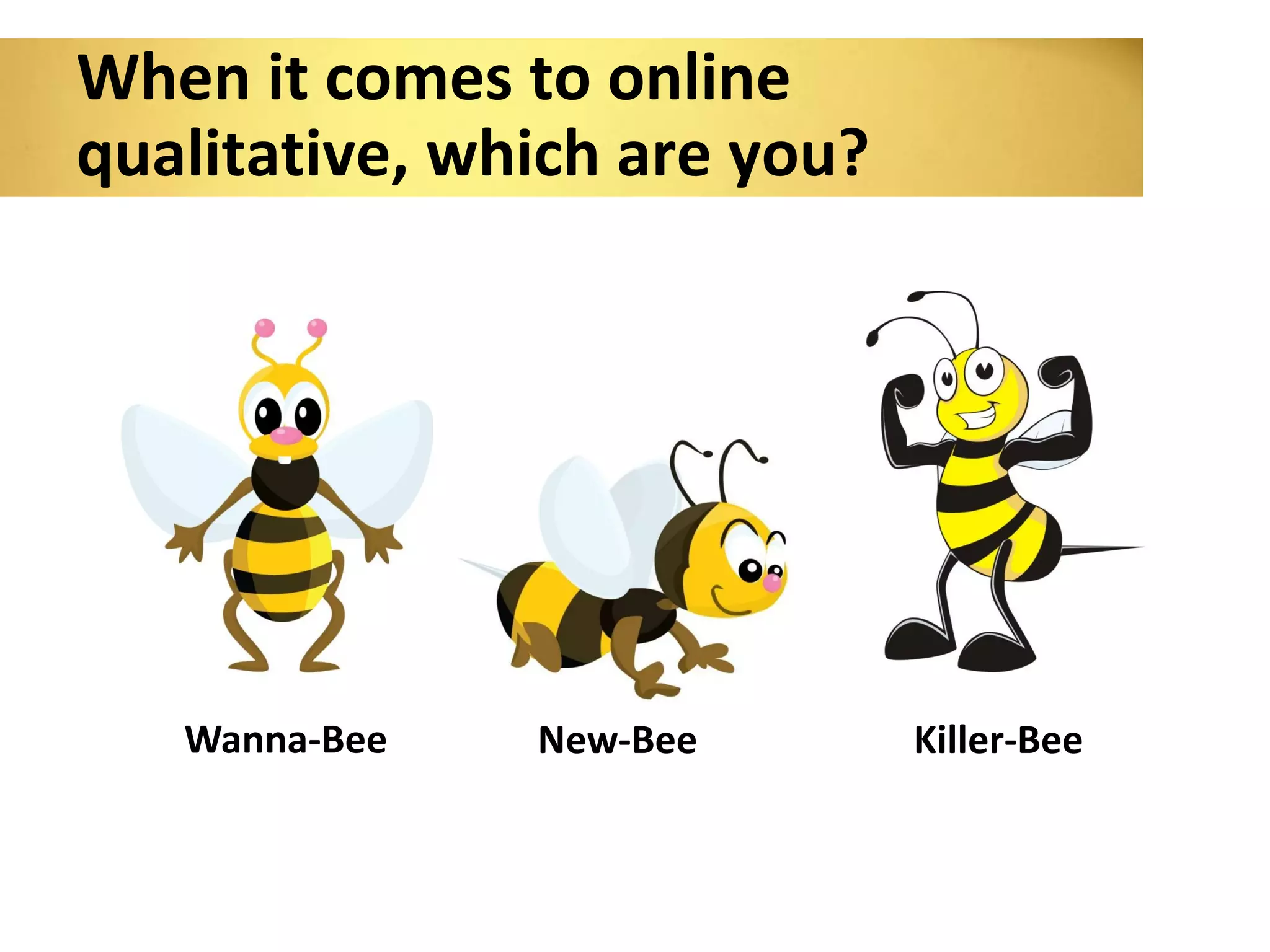
When it comes to online
qualitative, which are you?


   Wanna-Bee   New-Bee        Killer-Bee
Agenda


         • Definitions
         • Best Practices
         • Moderating Tips
What is longitudinal research?
• Extended period of time
• Same subjects
• Repeated observations
Online longitudinal is also …
• Private, secure site
• Targeted, invited members
• Professional moderator(s) or facilitator(s)
Can provide deep insights
• Stay in continuous touch with consumers
• Learn about needs, lives, preferences
• Engage members with brands/company
Extremely flexible
• Focus on single topic or explore multiple issues
• Combine methods/techniques
• Change/adapt mid-course
Two common formats
• Online communities
• Extended qualitative panels
Online communities
• Social networking meets market research
  – Capture insights
  – Connect with consumers
  – Build brand champions
• 200 to 400 members
• Months, even years
• Branded (usually)
• Variety of ways to interact
Extended qualitative panels
•   Specific research goals
•   Online research for a longer time
•   20 or fewer members
•   Several weeks to several months
•   Branding optional
•   Several ways to interact
Challenges of longitudinal methods
• Preventing attrition
• Sustaining momentum
• Keeping clients engaged
“An Even Dozen”


                  Best Practices
1. Focus on the objectives
•   Research only? Engagement? Innovation?
•   Single issue or many?
•   Yardstick for success
•   Deliverables
2. Plan where you are going
•   Flow/schedule
•   Size
•   Duration
•   Activities
•   Logistics
3. Educate and involve clients
• Set expectations for observing
• Schedule regular de-briefs
• Assign reporting tasks
4. Screen for the right people
• Involved in topic/brand/category
• Share common interests/passions
• Willing to contribute over time
5. Prepare for attrition
•   Over-recruit generously
•   Set expectations early
•   Follow up with stragglers
•   Manage incentives
6. View members as the experts
• Think of members as valuable advisors
• Find out what is on their mind
• Pursue topics they raise
7. Be open and transparent
• Identify the sponsor and purpose
• Share how they impact the project/brand/company
• Be honest and encourage candor
8. Work at engagement always
•   Start early; keep at it
•   Use activities that build community
•   Make it worth their time to keep coming back
•   Reward, reinforce, celebrate
9. Pace content and flow
• Keep your own energy level high
• Avoid information overload
• Plan breaks in the schedule
10. Listen and respond
• Communicate early and often
• Show you’re listening
• Pay attention to what they want to talk about
11. Project your personality
• Demonstrate personal interest
• Ask questions the way you would talk
• Convey your online “persona”
12. Mix it up, try it out
•   Vary methods and tasks constantly
•   Incorporate new topics
•   Use visuals and sound
•   Experiment!
“And Five More”


                  Moderating Tips
Communispace panelists say the single
most important factor in keeping a
panel alive and engaged is the skill of
the moderator.
1. Craft questions carefully
• Aim for clear and compelling, yet conversational
• Write “dialog”
• Avoid repetitive questions
2. Probe to show you are listening
• Tie comments together and probe
• Incorporate probes into new questions
• Probe contradictions
3. Work to get group interaction
•   Post respondents’ photos
•   Play devil’s advocate
•   Debate conflicting views
•   Comment on other’s posts
•   Divide and share
4. Use online tools
• Software platform management tools
• Email, phone, text messages
• Private email to address problems
5. Adapt projectives
•   Personification
•   Brand “party”
•   Picture sorts
•   Collages
•   Website “scavenger hunt”
•   Letters
•   Announcements
•   Obituaries
•   And many, many others
Liz Van Patten
Consumer Advisory Panels
    Lvanpatten@aol.com
           631-283-7842
     All contents © 2009 Liz Van Patten

Best Practices for Online Longitudinal Qualitative Research

  • 1.
    Best Practices for Longitudinal Online Qualitative Research Liz Van Patten Call in for audio Consumer Advisory Panels North America: 1-888-289-4573 International: 1-416-645-1179 March 5, 2010 Attendee Code: 3180622 All contents © 2009 Liz Van Patten
  • 2.
    When it comesto online qualitative, which are you? Wanna-Bee New-Bee Killer-Bee
  • 3.
    Agenda • Definitions • Best Practices • Moderating Tips
  • 4.
    What is longitudinalresearch? • Extended period of time • Same subjects • Repeated observations
  • 5.
    Online longitudinal isalso … • Private, secure site • Targeted, invited members • Professional moderator(s) or facilitator(s)
  • 6.
    Can provide deepinsights • Stay in continuous touch with consumers • Learn about needs, lives, preferences • Engage members with brands/company
  • 7.
    Extremely flexible • Focuson single topic or explore multiple issues • Combine methods/techniques • Change/adapt mid-course
  • 8.
    Two common formats •Online communities • Extended qualitative panels
  • 9.
    Online communities • Socialnetworking meets market research – Capture insights – Connect with consumers – Build brand champions • 200 to 400 members • Months, even years • Branded (usually) • Variety of ways to interact
  • 10.
    Extended qualitative panels • Specific research goals • Online research for a longer time • 20 or fewer members • Several weeks to several months • Branding optional • Several ways to interact
  • 11.
    Challenges of longitudinalmethods • Preventing attrition • Sustaining momentum • Keeping clients engaged
  • 12.
    “An Even Dozen” Best Practices
  • 13.
    1. Focus onthe objectives • Research only? Engagement? Innovation? • Single issue or many? • Yardstick for success • Deliverables
  • 14.
    2. Plan whereyou are going • Flow/schedule • Size • Duration • Activities • Logistics
  • 15.
    3. Educate andinvolve clients • Set expectations for observing • Schedule regular de-briefs • Assign reporting tasks
  • 16.
    4. Screen forthe right people • Involved in topic/brand/category • Share common interests/passions • Willing to contribute over time
  • 17.
    5. Prepare forattrition • Over-recruit generously • Set expectations early • Follow up with stragglers • Manage incentives
  • 18.
    6. View membersas the experts • Think of members as valuable advisors • Find out what is on their mind • Pursue topics they raise
  • 19.
    7. Be openand transparent • Identify the sponsor and purpose • Share how they impact the project/brand/company • Be honest and encourage candor
  • 20.
    8. Work atengagement always • Start early; keep at it • Use activities that build community • Make it worth their time to keep coming back • Reward, reinforce, celebrate
  • 21.
    9. Pace contentand flow • Keep your own energy level high • Avoid information overload • Plan breaks in the schedule
  • 22.
    10. Listen andrespond • Communicate early and often • Show you’re listening • Pay attention to what they want to talk about
  • 23.
    11. Project yourpersonality • Demonstrate personal interest • Ask questions the way you would talk • Convey your online “persona”
  • 24.
    12. Mix itup, try it out • Vary methods and tasks constantly • Incorporate new topics • Use visuals and sound • Experiment!
  • 25.
    “And Five More” Moderating Tips
  • 26.
    Communispace panelists saythe single most important factor in keeping a panel alive and engaged is the skill of the moderator.
  • 27.
    1. Craft questionscarefully • Aim for clear and compelling, yet conversational • Write “dialog” • Avoid repetitive questions
  • 28.
    2. Probe toshow you are listening • Tie comments together and probe • Incorporate probes into new questions • Probe contradictions
  • 29.
    3. Work toget group interaction • Post respondents’ photos • Play devil’s advocate • Debate conflicting views • Comment on other’s posts • Divide and share
  • 30.
    4. Use onlinetools • Software platform management tools • Email, phone, text messages • Private email to address problems
  • 31.
    5. Adapt projectives • Personification • Brand “party” • Picture sorts • Collages • Website “scavenger hunt” • Letters • Announcements • Obituaries • And many, many others
  • 32.
    Liz Van Patten ConsumerAdvisory Panels Lvanpatten@aol.com 631-283-7842 All contents © 2009 Liz Van Patten