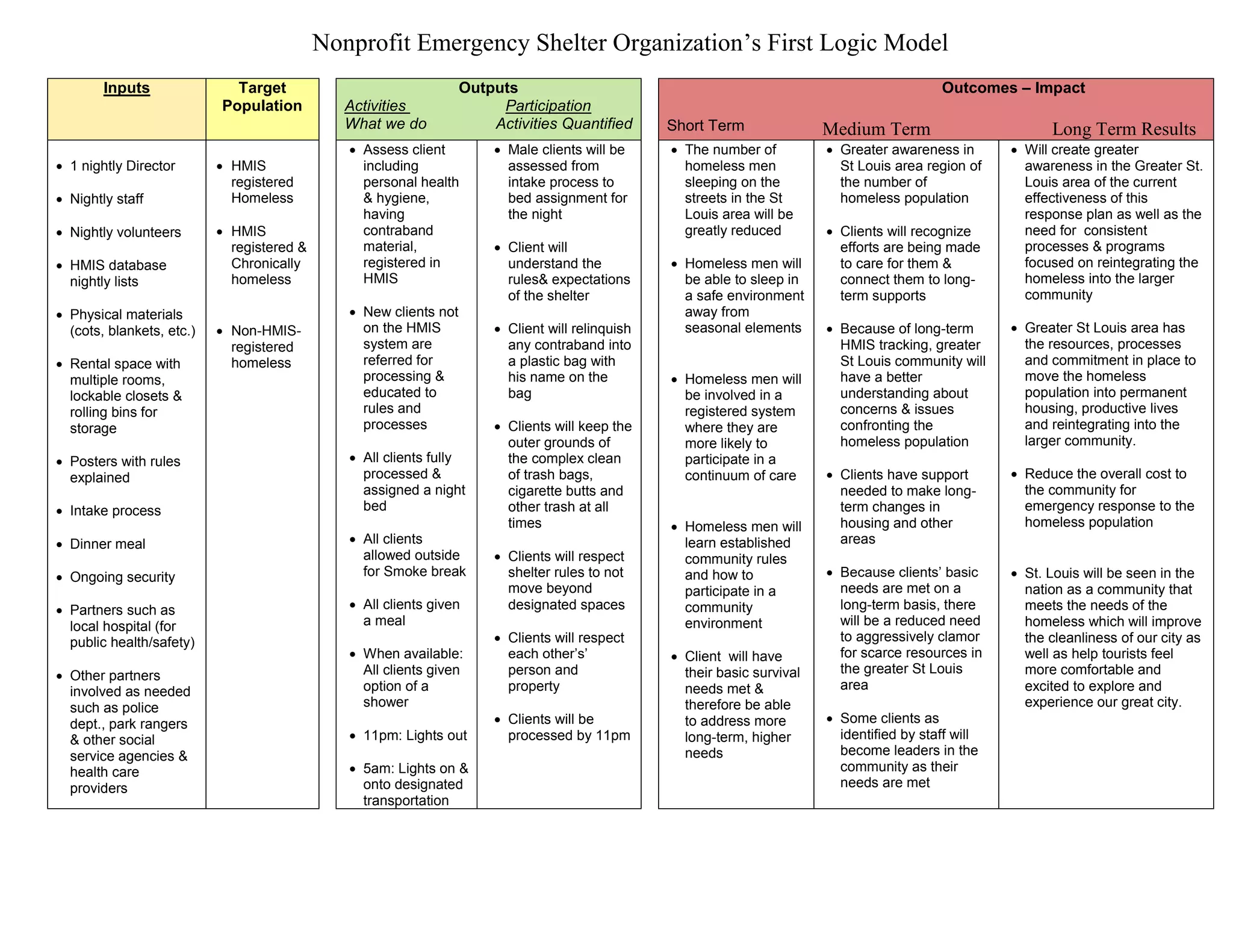
Nonprofit Emergency Shelter Organization’s First Logic Model
Inputs Target
Population
Outputs
Activities Participation
What we do Activities Quantified Short Term
Outcomes – Impact
Medium Term Long Term Results
 1 nightly Director
 Nightly staff
 Nightly volunteers
 HMIS database
nightly lists
 Physical materials
(cots, blankets, etc.)
 Rental space with
multiple rooms,
lockable closets &
rolling bins for
storage
 Posters with rules
explained
 Intake process
 Dinner meal
 Ongoing security
 Partners such as
local hospital (for
public health/safety)
 Other partners
involved as needed
such as police
dept., park rangers
& other social
service agencies &
health care
providers
 HMIS
registered
Homeless
 HMIS
registered &
Chronically
homeless
 Non-HMIS-
registered
homeless
 Assess client
including
personal health
& hygiene,
having
contraband
material,
registered in
HMIS
 New clients not
on the HMIS
system are
referred for
processing &
educated to
rules and
processes
 All clients fully
processed &
assigned a night
bed
 All clients
allowed outside
for Smoke break
 All clients given
a meal
 When available:
All clients given
option of a
shower
 11pm: Lights out
 5am: Lights on &
onto designated
transportation
 Male clients will be
assessed from
intake process to
bed assignment for
the night
 Client will
understand the
rules& expectations
of the shelter
 Client will relinquish
any contraband into
a plastic bag with
his name on the
bag
 Clients will keep the
outer grounds of
the complex clean
of trash bags,
cigarette butts and
other trash at all
times
 Clients will respect
shelter rules to not
move beyond
designated spaces
 Clients will respect
each other’s’
person and
property
 Clients will be
processed by 11pm
 The number of
homeless men
sleeping on the
streets in the St
Louis area will be
greatly reduced
 Homeless men will
be able to sleep in
a safe environment
away from
seasonal elements
 Homeless men will
be involved in a
registered system
where they are
more likely to
participate in a
continuum of care
 Homeless men will
learn established
community rules
and how to
participate in a
community
environment
 Client will have
their basic survival
needs met &
therefore be able
to address more
long-term, higher
needs
 Greater awareness in
St Louis area region of
the number of
homeless population
 Clients will recognize
efforts are being made
to care for them &
connect them to long-
term supports
 Because of long-term
HMIS tracking, greater
St Louis community will
have a better
understanding about
concerns & issues
confronting the
homeless population
 Clients have support
needed to make long-
term changes in
housing and other
areas
 Because clients’ basic
needs are met on a
long-term basis, there
will be a reduced need
to aggressively clamor
for scarce resources in
the greater St Louis
area
 Some clients as
identified by staff will
become leaders in the
community as their
needs are met
 Will create greater
awareness in the Greater St.
Louis area of the current
effectiveness of this
response plan as well as the
need for consistent
processes & programs
focused on reintegrating the
homeless into the larger
community
 Greater St Louis area has
the resources, processes
and commitment in place to
move the homeless
population into permanent
housing, productive lives
and reintegrating into the
larger community.
 Reduce the overall cost to
the community for
emergency response to the
homeless population
 St. Louis will be seen in the
nation as a community that
meets the needs of the
homeless which will improve
the cleanliness of our city as
well as help tourists feel
more comfortable and
excited to explore and
experience our great city.

Logic Model NP Emergency Shelter Organization

  • 1.
    Nonprofit Emergency ShelterOrganization’s First Logic Model Inputs Target Population Outputs Activities Participation What we do Activities Quantified Short Term Outcomes – Impact Medium Term Long Term Results  1 nightly Director  Nightly staff  Nightly volunteers  HMIS database nightly lists  Physical materials (cots, blankets, etc.)  Rental space with multiple rooms, lockable closets & rolling bins for storage  Posters with rules explained  Intake process  Dinner meal  Ongoing security  Partners such as local hospital (for public health/safety)  Other partners involved as needed such as police dept., park rangers & other social service agencies & health care providers  HMIS registered Homeless  HMIS registered & Chronically homeless  Non-HMIS- registered homeless  Assess client including personal health & hygiene, having contraband material, registered in HMIS  New clients not on the HMIS system are referred for processing & educated to rules and processes  All clients fully processed & assigned a night bed  All clients allowed outside for Smoke break  All clients given a meal  When available: All clients given option of a shower  11pm: Lights out  5am: Lights on & onto designated transportation  Male clients will be assessed from intake process to bed assignment for the night  Client will understand the rules& expectations of the shelter  Client will relinquish any contraband into a plastic bag with his name on the bag  Clients will keep the outer grounds of the complex clean of trash bags, cigarette butts and other trash at all times  Clients will respect shelter rules to not move beyond designated spaces  Clients will respect each other’s’ person and property  Clients will be processed by 11pm  The number of homeless men sleeping on the streets in the St Louis area will be greatly reduced  Homeless men will be able to sleep in a safe environment away from seasonal elements  Homeless men will be involved in a registered system where they are more likely to participate in a continuum of care  Homeless men will learn established community rules and how to participate in a community environment  Client will have their basic survival needs met & therefore be able to address more long-term, higher needs  Greater awareness in St Louis area region of the number of homeless population  Clients will recognize efforts are being made to care for them & connect them to long- term supports  Because of long-term HMIS tracking, greater St Louis community will have a better understanding about concerns & issues confronting the homeless population  Clients have support needed to make long- term changes in housing and other areas  Because clients’ basic needs are met on a long-term basis, there will be a reduced need to aggressively clamor for scarce resources in the greater St Louis area  Some clients as identified by staff will become leaders in the community as their needs are met  Will create greater awareness in the Greater St. Louis area of the current effectiveness of this response plan as well as the need for consistent processes & programs focused on reintegrating the homeless into the larger community  Greater St Louis area has the resources, processes and commitment in place to move the homeless population into permanent housing, productive lives and reintegrating into the larger community.  Reduce the overall cost to the community for emergency response to the homeless population  St. Louis will be seen in the nation as a community that meets the needs of the homeless which will improve the cleanliness of our city as well as help tourists feel more comfortable and excited to explore and experience our great city.