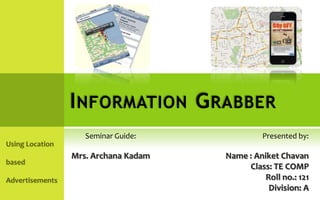
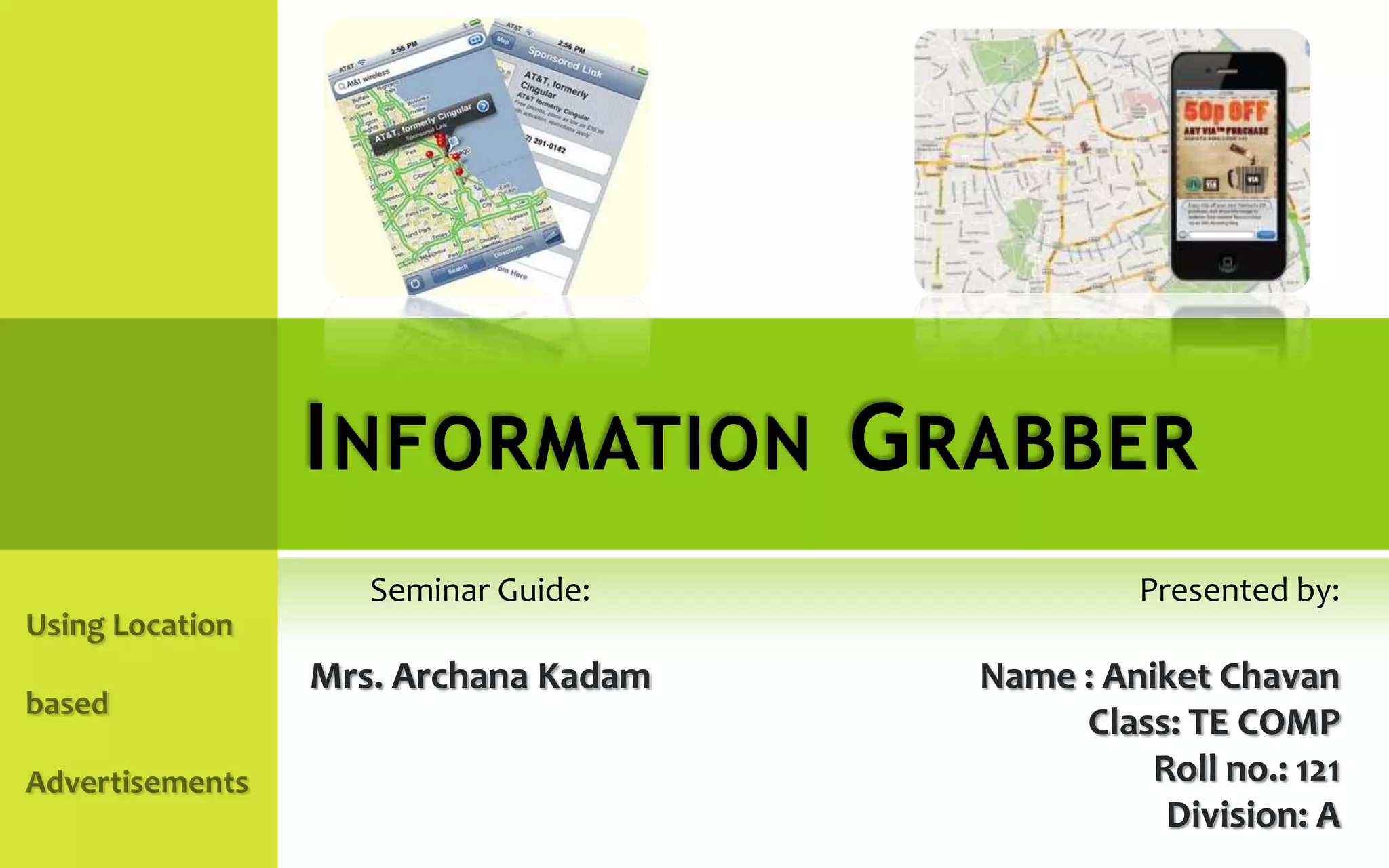
I NFORMATION G RABBER
   Seminar Guide:              Presented by:

Mrs. Archana Kadam   Name : Aniket Chavan
                          Class: TE COMP
                               Roll no.: 121
                                Division: A
G ET     THE       ! DEA      FIRST   !!!

   Lets start with a situation.
   It often happens with all of us.
   Today’s Available options:
       Phone a local friend/relative.
       JUST DIAL
       Rickshaw/ Thela waalas.
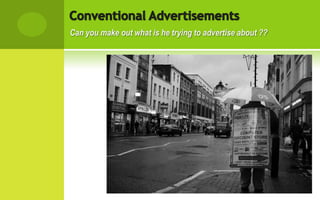
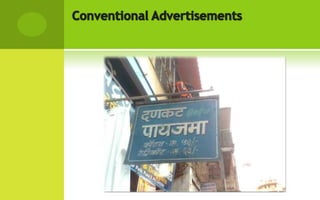
Can you make out what is he trying to advertise about ??
W HAT         IS   LBA ??
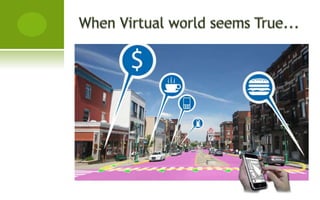
   LBA is Location Based Advertisements.

   A mobile user can ask our proposed application about
    his current location, popular places around his location,
    shortest route to navigate a particular opted location
    and to gain information of that opted location.

   Lets see it from commercial point of view.

   “It has potential for the marketers to send information
    and offers to consumers based on their proximity to
    places where the marketers' products are available.
W HAT IS EXACTLY NEW IN THIS ??


Location-based advertising (LBA) is not
  new but being able to access it
  through one's mobile
  communication device is.
W HY M OBILE P HONES ??
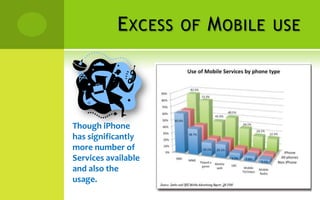
E XCESS   OF   M OBILE   USE


Though iPhone
has significantly
more number of
Services available
and also the
usage.
W HAT DO C USTOMERS T HINK ??

   If consumers have generally positive
    attitudes toward such advertising, then this
    could be the very technology that allows m-
    commerce to kick into high gear.
   If consumers are generally negative about it
    then advertisers will have to sell the medium
    first before they can successfully use it to sell
    other things.
T HERE         IS A     D IFFERENCE !!
   While this presentation has reached here, many of
    you may have this confusion…..
   What is the difference between Mobile Ads &
    Location Based Ads ??
   All mobile advertising is not LBA, it depends on
    whether or not the ad is determined by the
    recipient's (or more technically, the device's)
    location.
   Mobile advertising is the broader of the two
    concepts.
C ONCEPT OF P USH & P ULL
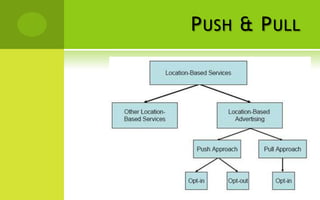
   The LBA push approach amounts to the
    advertiser working with the carriers and delivery
    networks to send (push) ads to the
    user, determined by the device's location.

   The other approach to LBA is called (pull) and it
    occurs when consumers request some
    information or use some service on a one-time
    basis and in the process are exposed to
    commercial messages.
P USH & P ULL
P USH & P ULL
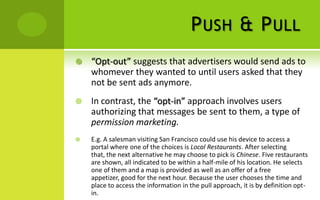
   “Opt-out” suggests that advertisers would send ads to
    whomever they wanted to until users asked that they
    not be sent ads anymore.
   In contrast, the “opt-in” approach involves users
    authorizing that messages be sent to them, a type of
    permission marketing.
   E.g. A salesman visiting San Francisco could use his device to access a
    portal where one of the choices is Local Restaurants. After selecting
    that, the next alternative he may choose to pick is Chinese. Five restaurants
    are shown, all indicated to be within a half-mile of his location. He selects
    one of them and a map is provided as well as an offer of a free
    appetizer, good for the next hour. Because the user chooses the time and
    place to access the information in the pull approach, it is by definition opt-
    in.
P ROJECT S COPE
   This application will be User-Friendly for its
    audience (static) and the On-The-Go Audience
    (Dynamic). It will provide services such as:
   There will be 2 different classes of users. They are:
           Android users.
           Non-Android users.

   Android users: Their location will be automatically
    tracked using GPS.
   Non-Android users: They need to manually put
    their location to access the application.
S OFTWARE I NTERFACE
   Our system will be using Google map to help user
    navigate to his destination place.

   GPS will detect location of the user or the popular
    place around the user location.

   MySQL will be used as backend to store the
    databases.

   Our proposed application will be using two
    protocols. HTTPS will make the web service more
    secure. FTP will be used in case of opening any
    images.
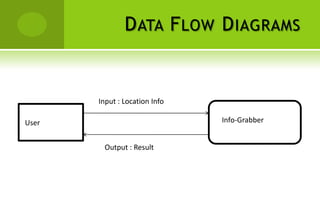
D ATA F LOW D IAGRAMS


            Input : Location Info

User User                           Info-Tracker
                                     Info-Grabber


             Output : Result
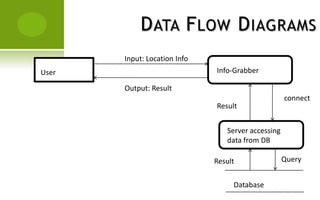
D ATA F LOW D IAGRAMS
            Input: Location Info
User User                          Info-Grabber

            Output: Result
                                                         connect
                                   Result


                                      Server accessing
                                      data from DB

                                   Result                Query


                                        Database
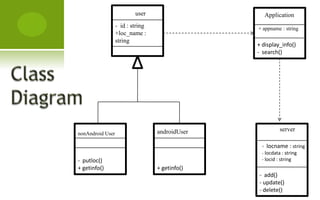
user                     Application
                  - id : string                 + appname : string
                  +loc_name :
                  string
                                                + display_info()
                                                - search()


                                  androidUser             server
nonAndroid User

                                                 - locname : string
                                                 - locdata : string
- putloc()                                       - locid : string
+ getinfo()                       + getinfo()
                                                - add()
                                                - update()
                                                - delete()
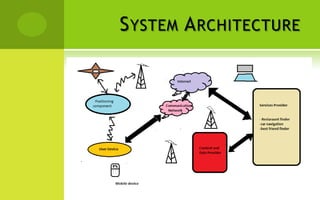
S YSTEM A RCHITECTURE
A DVANTAGES
   “Info-Grabber” offers a generally faster speed of
    interaction. There is no long entry form that users must
    fill out right off the bat, and the type of language used
    is often less formal, allowing an interaction with fewer
    characters, which speeds things up.
   The accessing of this proposed application via Web
    service will be free of cost.
   This proposed application can be used by anyone
    though he has less computer knowledge; hence it is
    easy to use.
   It makes the user known to his surroundings.
L IMITATIONS
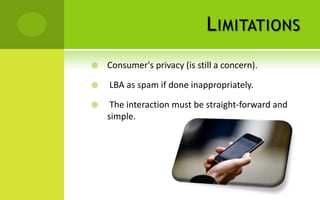
   Consumer's privacy (is still a concern).

   LBA as spam if done inappropriately.

    The interaction must be straight-forward and
    simple.
A PPLICATION

   LBA allows marketers to reach a specific target
    audience.

   Since LBA gives consumers control on
    what, when, where, and how customers receive
    ads, it provides customers more relevant
    information, personalized message, and targeted
    offer.

   LBA is a means of researching consumers.
C ONCLUSION
   Existing system based on location based
    advertisement help a user to get advertisement
    according to his geographical location.
   Our proposed application is a step ahead of the
    existing system as it will also provide information
    card of a particular place. E.g. Menu card of a
    restaurant.
   Can be extended proposed application into various
    applications such as online booking of tickets
    (railway station, movie) or appointments
    (hospital), online ordering (restaurants), etc.
R EFERENCES
   T. De Pessemier, T. Deryckere, K. Vanhecke, L.
    Martens, “Proposed architecture and algorithm for
    personalized advertising on iDTV and mobile devices”, “IEEE
    Transactions on Consumer Electronics” 54 (2) (May 2008) 709-
    713.

   A. Katz-Stone, “Wireless revenue: advertisements can work”
    Australia. internet.com,2001.

   O. Kwon, J. Kim. “Concept lattices for visualizing and generating
    user profiles for context-aware service
    recommendations”, “Expert Systems with Applications” 36
    (2009)

   A.K. Tripathi, S.K. Nair, “Narrowcasting of wireless advertising in
    malls”, “European Journal of Operational Research” 182 (3)
    (November 2007)

Location based Ads using Google Maps

  • 1.
    I NFORMATION GRABBER Seminar Guide: Presented by: Mrs. Archana Kadam Name : Aniket Chavan Class: TE COMP Roll no.: 121 Division: A
  • 2.
    G ET THE ! DEA FIRST !!!  Lets start with a situation.  It often happens with all of us.  Today’s Available options:  Phone a local friend/relative.  JUST DIAL  Rickshaw/ Thela waalas.
  • 3.
    Can you makeout what is he trying to advertise about ??
  • 5.
    W HAT IS LBA ??  LBA is Location Based Advertisements.  A mobile user can ask our proposed application about his current location, popular places around his location, shortest route to navigate a particular opted location and to gain information of that opted location.  Lets see it from commercial point of view.  “It has potential for the marketers to send information and offers to consumers based on their proximity to places where the marketers' products are available.
  • 6.
    W HAT ISEXACTLY NEW IN THIS ?? Location-based advertising (LBA) is not new but being able to access it through one's mobile communication device is.
  • 7.
    W HY MOBILE P HONES ??
  • 8.
    E XCESS OF M OBILE USE Though iPhone has significantly more number of Services available and also the usage.
  • 9.
    W HAT DOC USTOMERS T HINK ??  If consumers have generally positive attitudes toward such advertising, then this could be the very technology that allows m- commerce to kick into high gear.  If consumers are generally negative about it then advertisers will have to sell the medium first before they can successfully use it to sell other things.
  • 10.
    T HERE IS A D IFFERENCE !!  While this presentation has reached here, many of you may have this confusion…..  What is the difference between Mobile Ads & Location Based Ads ??  All mobile advertising is not LBA, it depends on whether or not the ad is determined by the recipient's (or more technically, the device's) location.  Mobile advertising is the broader of the two concepts.
  • 11.
    C ONCEPT OFP USH & P ULL  The LBA push approach amounts to the advertiser working with the carriers and delivery networks to send (push) ads to the user, determined by the device's location.  The other approach to LBA is called (pull) and it occurs when consumers request some information or use some service on a one-time basis and in the process are exposed to commercial messages.
  • 12.
    P USH &P ULL
  • 13.
    P USH &P ULL  “Opt-out” suggests that advertisers would send ads to whomever they wanted to until users asked that they not be sent ads anymore.  In contrast, the “opt-in” approach involves users authorizing that messages be sent to them, a type of permission marketing.  E.g. A salesman visiting San Francisco could use his device to access a portal where one of the choices is Local Restaurants. After selecting that, the next alternative he may choose to pick is Chinese. Five restaurants are shown, all indicated to be within a half-mile of his location. He selects one of them and a map is provided as well as an offer of a free appetizer, good for the next hour. Because the user chooses the time and place to access the information in the pull approach, it is by definition opt- in.
  • 14.
    P ROJECT SCOPE  This application will be User-Friendly for its audience (static) and the On-The-Go Audience (Dynamic). It will provide services such as:  There will be 2 different classes of users. They are:  Android users.  Non-Android users.  Android users: Their location will be automatically tracked using GPS.  Non-Android users: They need to manually put their location to access the application.
  • 15.
    S OFTWARE INTERFACE  Our system will be using Google map to help user navigate to his destination place.  GPS will detect location of the user or the popular place around the user location.  MySQL will be used as backend to store the databases.  Our proposed application will be using two protocols. HTTPS will make the web service more secure. FTP will be used in case of opening any images.
  • 16.
    D ATA FLOW D IAGRAMS Input : Location Info User User Info-Tracker Info-Grabber Output : Result
  • 17.
    D ATA FLOW D IAGRAMS Input: Location Info User User Info-Grabber Output: Result connect Result Server accessing data from DB Result Query Database
  • 18.
    user Application - id : string + appname : string +loc_name : string + display_info() - search() androidUser server nonAndroid User - locname : string - locdata : string - putloc() - locid : string + getinfo() + getinfo() - add() - update() - delete()
  • 19.
    S YSTEM ARCHITECTURE
  • 20.
    A DVANTAGES  “Info-Grabber” offers a generally faster speed of interaction. There is no long entry form that users must fill out right off the bat, and the type of language used is often less formal, allowing an interaction with fewer characters, which speeds things up.  The accessing of this proposed application via Web service will be free of cost.  This proposed application can be used by anyone though he has less computer knowledge; hence it is easy to use.  It makes the user known to his surroundings.
  • 22.
    L IMITATIONS  Consumer's privacy (is still a concern).  LBA as spam if done inappropriately.  The interaction must be straight-forward and simple.
  • 23.
    A PPLICATION  LBA allows marketers to reach a specific target audience.  Since LBA gives consumers control on what, when, where, and how customers receive ads, it provides customers more relevant information, personalized message, and targeted offer.  LBA is a means of researching consumers.
  • 24.
    C ONCLUSION  Existing system based on location based advertisement help a user to get advertisement according to his geographical location.  Our proposed application is a step ahead of the existing system as it will also provide information card of a particular place. E.g. Menu card of a restaurant.  Can be extended proposed application into various applications such as online booking of tickets (railway station, movie) or appointments (hospital), online ordering (restaurants), etc.
  • 25.
    R EFERENCES  T. De Pessemier, T. Deryckere, K. Vanhecke, L. Martens, “Proposed architecture and algorithm for personalized advertising on iDTV and mobile devices”, “IEEE Transactions on Consumer Electronics” 54 (2) (May 2008) 709- 713.  A. Katz-Stone, “Wireless revenue: advertisements can work” Australia. internet.com,2001.  O. Kwon, J. Kim. “Concept lattices for visualizing and generating user profiles for context-aware service recommendations”, “Expert Systems with Applications” 36 (2009)  A.K. Tripathi, S.K. Nair, “Narrowcasting of wireless advertising in malls”, “European Journal of Operational Research” 182 (3) (November 2007)