Load Securement and Distribution
What is Load Securement and
Distribution?
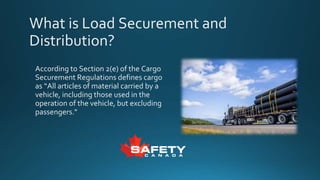
According to Section 2(e) of the Cargo
Securement Regulations defines cargo
as “All articles of material carried by a
vehicle, including those used in the
operation of the vehicle, but excluding
passengers."
Federal Cargo Regulations Apply to
These Vehicles
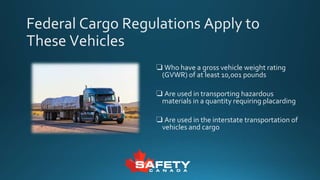
❏ Who have a gross vehicle weight rating
(GVWR) of at least 10,001 pounds
❏ Are used in transporting hazardous
materials in a quantity requiring placarding
❏ Are used in the interstate transportation of
vehicles and cargo
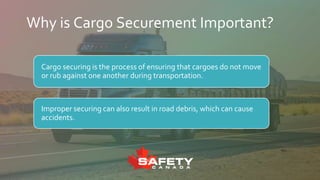
Why is Cargo Securement Important?
Cargo securing is the process of ensuring that cargoes do not move
or rub against one another during transportation.
Improper securing can also result in road debris, which can cause
accidents.
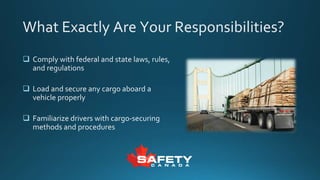
What Exactly Are Your Responsibilities?
 Comply with federal and state laws, rules,
and regulations
 Load and secure any cargo aboard a
vehicle properly
 Familiarize drivers with cargo-securing
methods and procedures
Cargo Securement Course
Safety Canada’s Load Securement & Distribution Training you will learn:
 Securement system elements and
their properties
 Forces acting on cargo
 Safe and legal securement and
distribution methods
 Tiedown regulations for varied
cargo
Topic you will cover in this Course
Load Securement
Requirements
Securement Systems
Tiedowns Inspections
Concrete Pipe
Load Limits
About Us
Safety Canada is a leading safety consulting company in Canada, offering a wide
range of online workplace safety certification courses and expert training in
safety compliance.
We are dedicated to providing high-quality safety education to individuals and
organizations across the country.
Contact Details
261 Seneca Road, Sherwood Park, AB
T8A 4G6
Phone - 1-866-416-1660
Email - info@safety-canada.ca
Website - www.safety-canada.ca

Load Securement and Distribution | Safety Canada

  • 1.
    Load Securement andDistribution
  • 2.
    What is LoadSecurement and Distribution? According to Section 2(e) of the Cargo Securement Regulations defines cargo as “All articles of material carried by a vehicle, including those used in the operation of the vehicle, but excluding passengers."
  • 3.
    Federal Cargo RegulationsApply to These Vehicles ❏ Who have a gross vehicle weight rating (GVWR) of at least 10,001 pounds ❏ Are used in transporting hazardous materials in a quantity requiring placarding ❏ Are used in the interstate transportation of vehicles and cargo
  • 5.
    Why is CargoSecurement Important? Cargo securing is the process of ensuring that cargoes do not move or rub against one another during transportation. Improper securing can also result in road debris, which can cause accidents.
  • 7.
    What Exactly AreYour Responsibilities?  Comply with federal and state laws, rules, and regulations  Load and secure any cargo aboard a vehicle properly  Familiarize drivers with cargo-securing methods and procedures
  • 9.
    Cargo Securement Course SafetyCanada’s Load Securement & Distribution Training you will learn:  Securement system elements and their properties  Forces acting on cargo  Safe and legal securement and distribution methods  Tiedown regulations for varied cargo
  • 11.
    Topic you willcover in this Course Load Securement Requirements Securement Systems Tiedowns Inspections Concrete Pipe Load Limits
  • 12.
    About Us Safety Canadais a leading safety consulting company in Canada, offering a wide range of online workplace safety certification courses and expert training in safety compliance. We are dedicated to providing high-quality safety education to individuals and organizations across the country.
  • 13.
    Contact Details 261 SenecaRoad, Sherwood Park, AB T8A 4G6 Phone - 1-866-416-1660 Email - info@safety-canada.ca Website - www.safety-canada.ca