IELTS
LISTENING
(ACTUAL TEST)
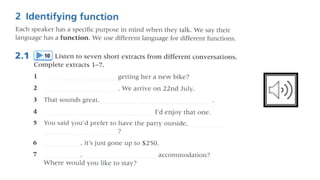
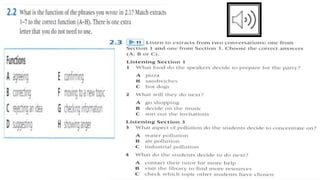
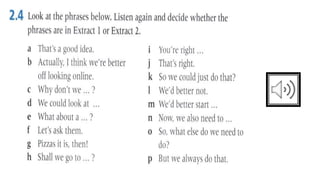
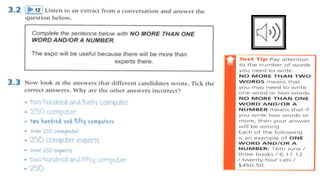
- Listen to the actual
listening task. Write
your answer in your
notebook.
 The Listening test is the same for both IELTS
Academic and IELTS General Training and
consists of four recorded monologues and
conversations.
Listening (30 minutes)
 The following IELTS Listening sample tasks
are to be used with the Answer Sheet and
MP3 audio files and/or transcripts. Each
answer sheet indicates which recording to
listen to, or if a transcript is provided.
How long is the listening paper?
The Listening is the same in both the
Academic and the General Training
modules of the IELTS test. It lasts
approximately 30 minutes and you are
given an extra 10 minutes to write your
answers into separate answer sheet.
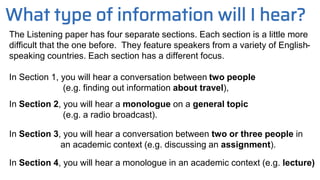
What type of information will I hear?
The Listening paper has four separate sections. Each section is a little more
difficult that the one before. They feature speakers from a variety of English-
speaking countries. Each section has a different focus.
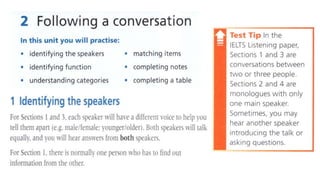
In Section 1, you will hear a conversation between two people
(e.g. finding out information about travel),
In Section 2, you will hear a monologue on a general topic
(e.g. a radio broadcast).
In Section 3, you will hear a conversation between two or three people in
an academic context (e.g. discussing an assignment).
In Section 4, you will hear a monologue in an academic context (e.g. lecture)
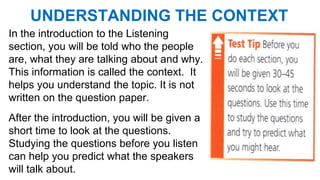
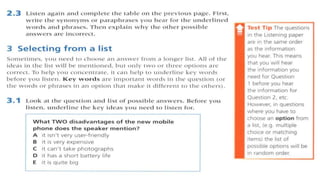
UNDERSTANDING THE CONTEXT
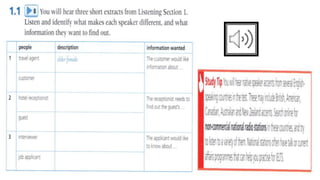
In the introduction to the Listening
section, you will be told who the people
are, what they are talking about and why.
This information is called the context. It
helps you understand the topic. It is not
written on the question paper.
After the introduction, you will be given a
short time to look at the questions.
Studying the questions before you listen
can help you predict what the speakers
will talk about.
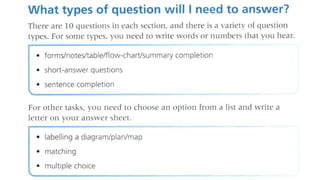
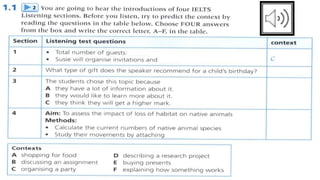
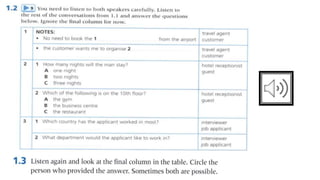
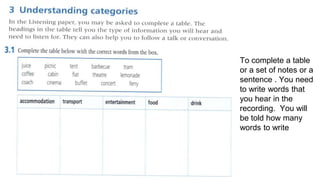
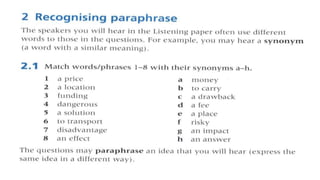
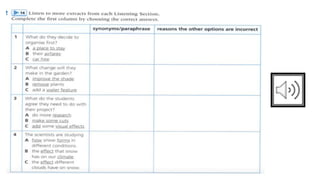
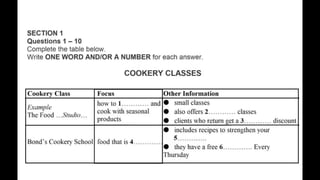
To complete a table
or a set of notes or a
sentence . You need
to write words that
you hear in the
recording. You will
be told how many
words to write
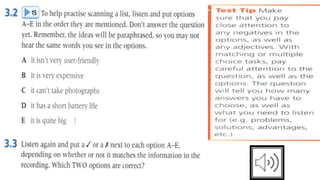
CHECK YOUR ANSWER
IELTS
LISTENING
LISTENING.pptx

LISTENING.pptx

  • 1.
    IELTS LISTENING (ACTUAL TEST) - Listento the actual listening task. Write your answer in your notebook.
  • 2.
     The Listeningtest is the same for both IELTS Academic and IELTS General Training and consists of four recorded monologues and conversations. Listening (30 minutes)  The following IELTS Listening sample tasks are to be used with the Answer Sheet and MP3 audio files and/or transcripts. Each answer sheet indicates which recording to listen to, or if a transcript is provided.
  • 3.
    How long isthe listening paper? The Listening is the same in both the Academic and the General Training modules of the IELTS test. It lasts approximately 30 minutes and you are given an extra 10 minutes to write your answers into separate answer sheet.
  • 4.
    What type ofinformation will I hear? The Listening paper has four separate sections. Each section is a little more difficult that the one before. They feature speakers from a variety of English- speaking countries. Each section has a different focus. In Section 1, you will hear a conversation between two people (e.g. finding out information about travel), In Section 2, you will hear a monologue on a general topic (e.g. a radio broadcast). In Section 3, you will hear a conversation between two or three people in an academic context (e.g. discussing an assignment). In Section 4, you will hear a monologue in an academic context (e.g. lecture)
  • 8.
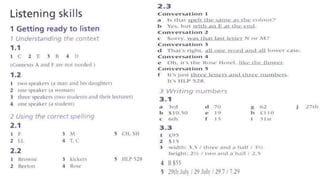
    UNDERSTANDING THE CONTEXT Inthe introduction to the Listening section, you will be told who the people are, what they are talking about and why. This information is called the context. It helps you understand the topic. It is not written on the question paper. After the introduction, you will be given a short time to look at the questions. Studying the questions before you listen can help you predict what the speakers will talk about.
  • 22.
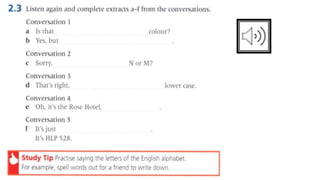
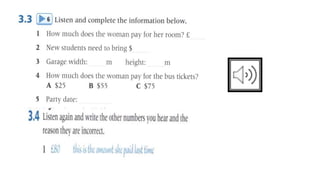
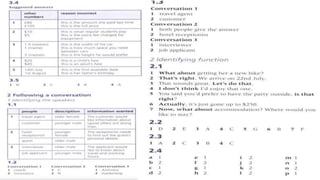
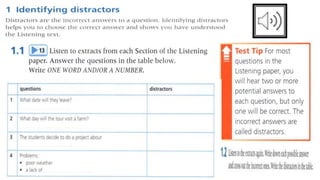
    To complete atable or a set of notes or a sentence . You need to write words that you hear in the recording. You will be told how many words to write
  • 24.
  • 36.