Operating System: Linux
By: Victoria Lin and Rebecca Reimbolt
• Like Windows, Mac OS, UNIX
• Runs primarily on PC
• Operating System
• Task scheduler
• Memory manager
• Disk manager


What Does an Operating
System Do?
• Network manager
• Input/output manager
• Security manager


What Does Operating
System Do? cont.
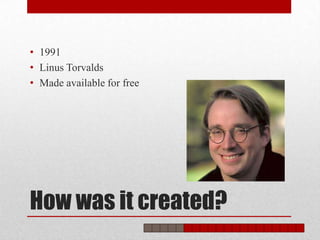
• 1991
• Linus Torvalds
• Made available for free


How was it created?
•   Programmers can add
•   Allows enhancement
•   Software developers
•   Growing audience


What is the attraction?
• Experimenting with operating systems
 • Control over operating systems
 • Dislike Microsoft


Who uses Linux?
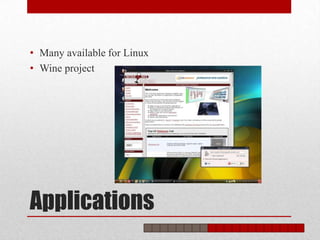
• Many available for Linux
• Wine project


Applications
•   Free
•   Develop/enhance
•   Customizable versions
•   General public license (GPL)


Windows vs. Linux
• Pros:
  • Experimentation
  • Constantly improving
  • Hands-on
• Cons:
  • Complex
  • Difficult for average user


Pros and Cons
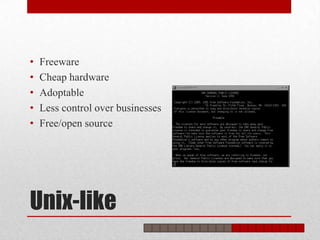
•   Freeware
•   Cheap hardware
•   Adoptable
•   Less control over businesses
•   Free/open source


Unix-like
• Fast growing
• Adopted by many users around world


Market Growth
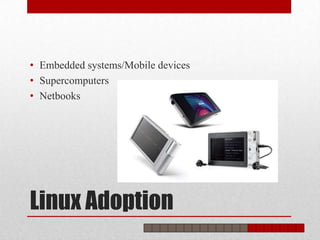
• Embedded systems/Mobile devices
• Supercomputers
• Netbooks


Linux Adoption
• Allows users to interact with images
• Common for embedded systems


Graphical User Interface
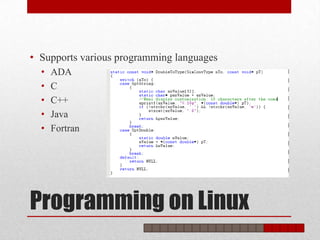
• Supports various programming languages
  •   ADA
  •   C
  •   C++
  •   Java
  •   Fortran


Programming on Linux
•   Specific user group
•   General
•   Highly specialized
•   Commercial/Non commercial
•   Business


Types and Trends
• Distributed through packages
• Examples
  • Gentoo
  • Arch Linux
  • Debian


Linux Distribution
• Gnome and KDE Plasma Desktop


Desktop Linux
• SCO-Linux
  • License agreements
• GNU-Linux


Controversies
• Linuxquestions.org
• Linux user groups


Communities

Linux

  • 1.
    Operating System: Linux By:Victoria Lin and Rebecca Reimbolt
  • 2.
    • Like Windows,Mac OS, UNIX • Runs primarily on PC • Operating System
  • 3.
    • Task scheduler •Memory manager • Disk manager What Does an Operating System Do?
  • 4.
    • Network manager •Input/output manager • Security manager What Does Operating System Do? cont.
  • 5.
    • 1991 • LinusTorvalds • Made available for free How was it created?
  • 6.
    Programmers can add • Allows enhancement • Software developers • Growing audience What is the attraction?
  • 7.
    • Experimenting withoperating systems • Control over operating systems • Dislike Microsoft Who uses Linux?
  • 8.
    • Many availablefor Linux • Wine project Applications
  • 9.
    Free • Develop/enhance • Customizable versions • General public license (GPL) Windows vs. Linux
  • 10.
    • Pros: • Experimentation • Constantly improving • Hands-on • Cons: • Complex • Difficult for average user Pros and Cons
  • 11.
    Freeware • Cheap hardware • Adoptable • Less control over businesses • Free/open source Unix-like
  • 12.
    • Fast growing •Adopted by many users around world Market Growth
  • 13.
    • Embedded systems/Mobiledevices • Supercomputers • Netbooks Linux Adoption
  • 14.
    • Allows usersto interact with images • Common for embedded systems Graphical User Interface
  • 15.
    • Supports variousprogramming languages • ADA • C • C++ • Java • Fortran Programming on Linux
  • 16.
    Specific user group • General • Highly specialized • Commercial/Non commercial • Business Types and Trends
  • 17.
    • Distributed throughpackages • Examples • Gentoo • Arch Linux • Debian Linux Distribution
  • 18.
    • Gnome andKDE Plasma Desktop Desktop Linux
  • 19.
    • SCO-Linux • License agreements • GNU-Linux Controversies
  • 20.
    • Linuxquestions.org • Linuxuser groups Communities