Peer Assessment: Unit 2 Skills Development for Live Performance
Comment on the following skills and attributes from rehearsals and workshops
Physical Skills
Libby is very good at characterisation and
can portray her character throughout all the
dances very well. She is good with the
timing of the choreography as she is always
able to get the choreography in time with
the music throughout all the dances. She
has learned new dance styles such as for
her solo she has had to learn krump. She
has choreographed her solo very well and
has been able to teach the rest of the class
her solo quickly too. One thing that she
could work on is where she can't always do
certain things as she has problems with her
back for example in the queen of hearts
solo, she couldn't lean back to much as it
hurt her back, so we had to change the
choreography a bit. Another thing was in
funk it up she had been doing the wrong
arm so she could work on remembering
some choreography better in certain parts
of the dance.
Interpretive Skills
Libby is very good at characterisation and
can act like her character throughout all the
dances. She has been able to learn new
dance styles very quickly for example in her
solo she has learnt krump very quickly and
has been able to choreograph her solo and
teach it confidently. She is also very good at
giving new things a go and trying different
styles and can pick them up quickly. She
has a very good understanding of her
character and the whole production which is
very good. One thing she could work on is
interacting with the other characters
throughout the performance and not just
concentrating being her character and to
focus on how her character is acting around
the other characters.
Personal Management
Libby has good punctuality and rarely misses any classes, and she is always on time and
gets changed quickly ensuring she doesn't miss as much time from class as possible. She
also gets straight to warming up and dancing and doesn't waste any time. One thing Libby
could work on is making sure she has all her dance kit every lesson for example when we
were learning the queen of hearts choreography, she didn't have all black and she also
had her hair up. She also wears some Jewlery so she needs to remember to take it off as
it can become a safety risk.
Here are some things that can help you to complete the boxes above…
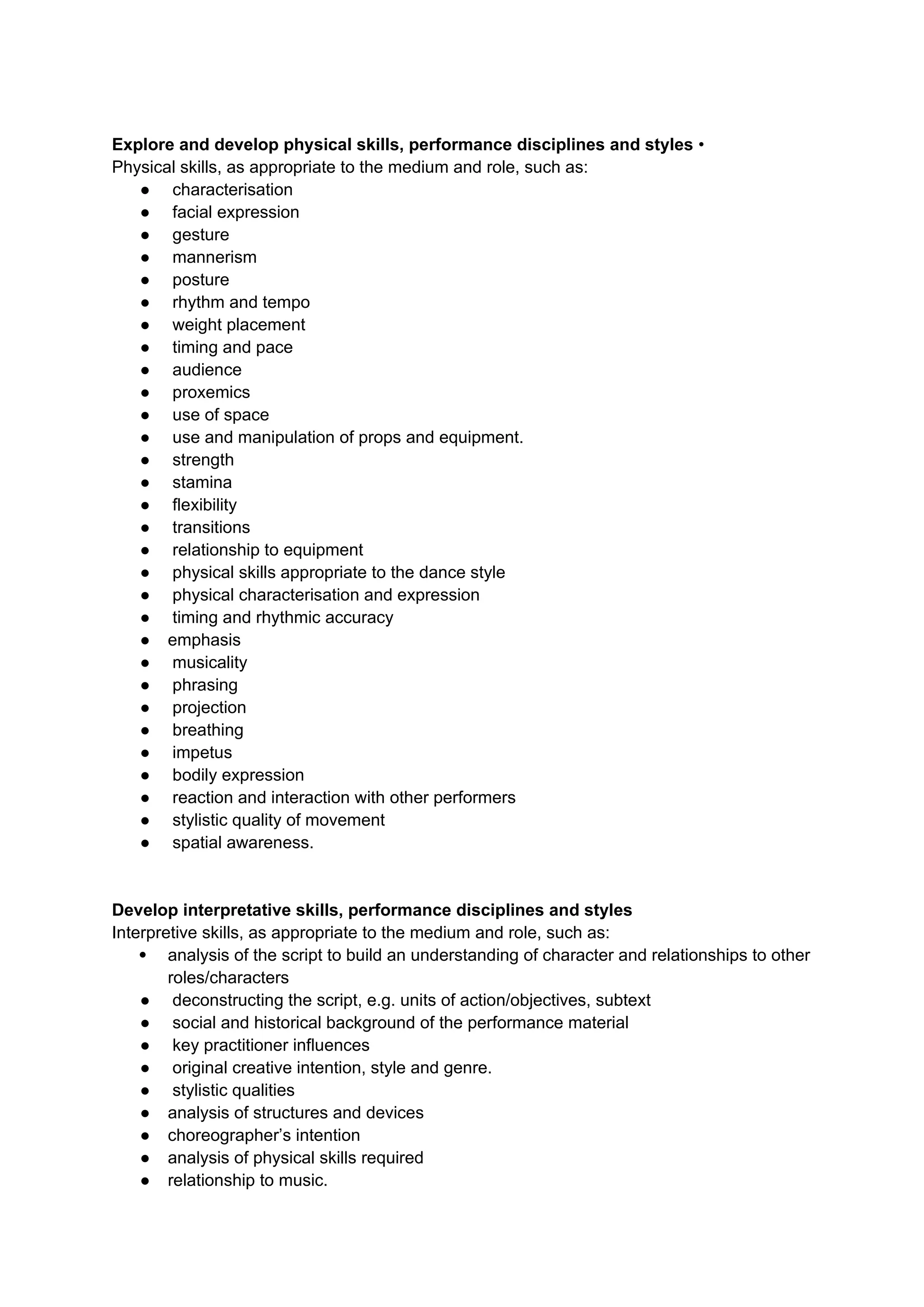
Explore and develop physical skills, performance disciplines and styles •
Physical skills, as appropriate to the medium and role, such as:
● characterisation
● facial expression
● gesture
● mannerism
● posture
● rhythm and tempo
● weight placement
● timing and pace
● audience
● proxemics
● use of space
● use and manipulation of props and equipment.
● strength
● stamina
● flexibility
● transitions
● relationship to equipment
● physical skills appropriate to the dance style
● physical characterisation and expression
● timing and rhythmic accuracy
● emphasis
● musicality
● phrasing
● projection
● breathing
● impetus
● bodily expression
● reaction and interaction with other performers
● stylistic quality of movement
● spatial awareness.
Develop interpretative skills, performance disciplines and styles
Interpretive skills, as appropriate to the medium and role, such as:
 analysis of the script to build an understanding of character and relationships to other
roles/characters
● deconstructing the script, e.g. units of action/objectives, subtext
● social and historical background of the performance material
● key practitioner influences
● original creative intention, style and genre.
● stylistic qualities
● analysis of structures and devices
● choreographer’s intention
● analysis of physical skills required
● relationship to music.
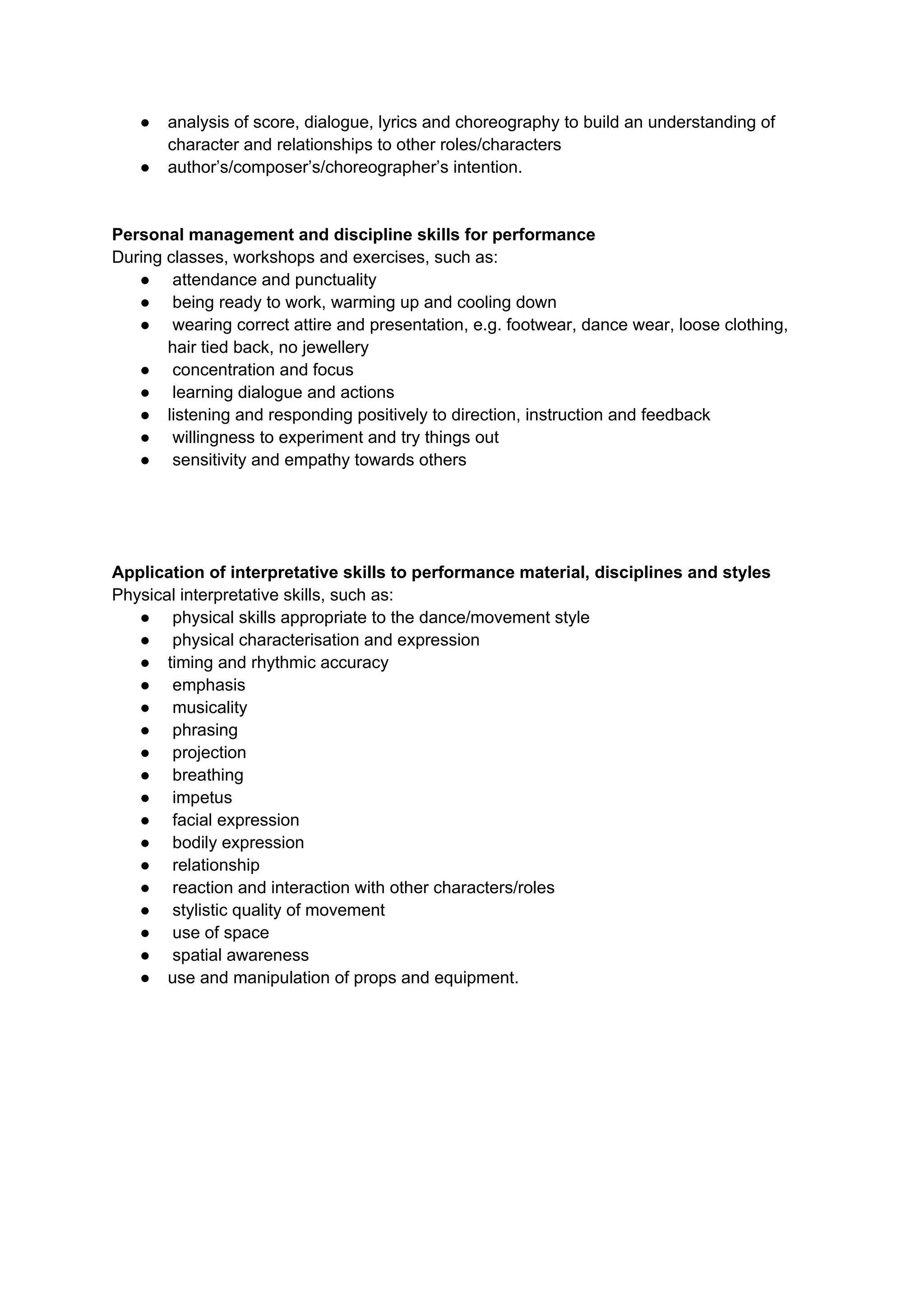
● analysis of score, dialogue, lyrics and choreography to build an understanding of
character and relationships to other roles/characters
● author’s/composer’s/choreographer’s intention.
Personal management and discipline skills for performance
During classes, workshops and exercises, such as:
● attendance and punctuality
● being ready to work, warming up and cooling down
● wearing correct attire and presentation, e.g. footwear, dance wear, loose clothing,
hair tied back, no jewellery
● concentration and focus
● learning dialogue and actions
● listening and responding positively to direction, instruction and feedback
● willingness to experiment and try things out
● sensitivity and empathy towards others
Application of interpretative skills to performance material, disciplines and styles
Physical interpretative skills, such as:
● physical skills appropriate to the dance/movement style
● physical characterisation and expression
● timing and rhythmic accuracy
● emphasis
● musicality
● phrasing
● projection
● breathing
● impetus
● facial expression
● bodily expression
● relationship
● reaction and interaction with other characters/roles
● stylistic quality of movement
● use of space
● spatial awareness
● use and manipulation of props and equipment.

libbys peer assesment.docx.......................

  • 1.
    Peer Assessment: Unit2 Skills Development for Live Performance Comment on the following skills and attributes from rehearsals and workshops Physical Skills Libby is very good at characterisation and can portray her character throughout all the dances very well. She is good with the timing of the choreography as she is always able to get the choreography in time with the music throughout all the dances. She has learned new dance styles such as for her solo she has had to learn krump. She has choreographed her solo very well and has been able to teach the rest of the class her solo quickly too. One thing that she could work on is where she can't always do certain things as she has problems with her back for example in the queen of hearts solo, she couldn't lean back to much as it hurt her back, so we had to change the choreography a bit. Another thing was in funk it up she had been doing the wrong arm so she could work on remembering some choreography better in certain parts of the dance. Interpretive Skills Libby is very good at characterisation and can act like her character throughout all the dances. She has been able to learn new dance styles very quickly for example in her solo she has learnt krump very quickly and has been able to choreograph her solo and teach it confidently. She is also very good at giving new things a go and trying different styles and can pick them up quickly. She has a very good understanding of her character and the whole production which is very good. One thing she could work on is interacting with the other characters throughout the performance and not just concentrating being her character and to focus on how her character is acting around the other characters. Personal Management Libby has good punctuality and rarely misses any classes, and she is always on time and gets changed quickly ensuring she doesn't miss as much time from class as possible. She also gets straight to warming up and dancing and doesn't waste any time. One thing Libby could work on is making sure she has all her dance kit every lesson for example when we were learning the queen of hearts choreography, she didn't have all black and she also had her hair up. She also wears some Jewlery so she needs to remember to take it off as it can become a safety risk. Here are some things that can help you to complete the boxes above…
  • 2.
    Explore and developphysical skills, performance disciplines and styles • Physical skills, as appropriate to the medium and role, such as: ● characterisation ● facial expression ● gesture ● mannerism ● posture ● rhythm and tempo ● weight placement ● timing and pace ● audience ● proxemics ● use of space ● use and manipulation of props and equipment. ● strength ● stamina ● flexibility ● transitions ● relationship to equipment ● physical skills appropriate to the dance style ● physical characterisation and expression ● timing and rhythmic accuracy ● emphasis ● musicality ● phrasing ● projection ● breathing ● impetus ● bodily expression ● reaction and interaction with other performers ● stylistic quality of movement ● spatial awareness. Develop interpretative skills, performance disciplines and styles Interpretive skills, as appropriate to the medium and role, such as:  analysis of the script to build an understanding of character and relationships to other roles/characters ● deconstructing the script, e.g. units of action/objectives, subtext ● social and historical background of the performance material ● key practitioner influences ● original creative intention, style and genre. ● stylistic qualities ● analysis of structures and devices ● choreographer’s intention ● analysis of physical skills required ● relationship to music.
  • 3.
    ● analysis ofscore, dialogue, lyrics and choreography to build an understanding of character and relationships to other roles/characters ● author’s/composer’s/choreographer’s intention. Personal management and discipline skills for performance During classes, workshops and exercises, such as: ● attendance and punctuality ● being ready to work, warming up and cooling down ● wearing correct attire and presentation, e.g. footwear, dance wear, loose clothing, hair tied back, no jewellery ● concentration and focus ● learning dialogue and actions ● listening and responding positively to direction, instruction and feedback ● willingness to experiment and try things out ● sensitivity and empathy towards others Application of interpretative skills to performance material, disciplines and styles Physical interpretative skills, such as: ● physical skills appropriate to the dance/movement style ● physical characterisation and expression ● timing and rhythmic accuracy ● emphasis ● musicality ● phrasing ● projection ● breathing ● impetus ● facial expression ● bodily expression ● relationship ● reaction and interaction with other characters/roles ● stylistic quality of movement ● use of space ● spatial awareness ● use and manipulation of props and equipment.