Lesson Plan


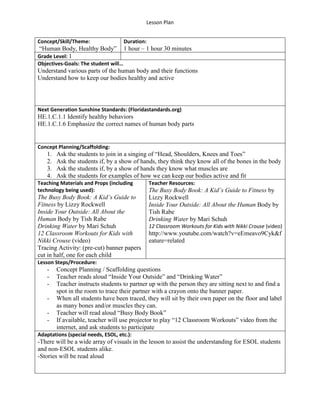
Concept/Skill/Theme:                  Duration:
“Human Body, Healthy Body”            1 hour – 1 hour 30 minutes
Grade Level: 1
Objectives-Goals: The student will…
Understand various parts of the human body and their functions
Understand how to keep our bodies healthy and active


Next Generation Sunshine Standards: (Floridastandards.org)
HE.1.C.1.1 Identify healthy behaviors
HE.1.C.1.6 Emphasize the correct names of human body parts


Concept Planning/Scaffolding:
    1.   Ask the students to join in a singing of “Head, Shoulders, Knees and Toes”
    2.   Ask the students if, by a show of hands, they think they know all of the bones in the body
    3.   Ask the students if, by a show of hands they know what muscles are
    4.   Ask the students for examples of how we can keep our bodies active and fit
Teaching Materials and Props (including           Teacher Resources:
technology being used):                           The Busy Body Book: A Kid’s Guide to Fitness by
The Busy Body Book: A Kid’s Guide to              Lizzy Rockwell
Fitness by Lizzy Rockwell                         Inside Your Outside: All About the Human Body by
Inside Your Outside: All About the                Tish Rabe
Human Body by Tish Rabe                           Drinking Water by Mari Schuh
Drinking Water by Mari Schuh                      12 Classroom Workouts for Kids with Nikki Crouse (video)
12 Classroom Workouts for Kids with               http://www.youtube.com/watch?v=eEmeavo9Cyk&f
Nikki Crouse (video)                              eature=related
Tracing Activity: (pre-cut) banner papers
cut in half, one for each child
Lesson Steps/Procedure:
    -    Concept Planning / Scaffolding questions
    -    Teacher reads aloud “Inside Your Outside” and “Drinking Water”
    -    Teacher instructs students to partner up with the person they are sitting next to and find a
         spot in the room to trace their partner with a crayon onto the banner paper.
    -    When all students have been traced, they will sit by their own paper on the floor and label
         as many bones and/or muscles they can.
    -    Teacher will read aloud “Busy Body Book”
    -    If available, teacher will use projector to play “12 Classroom Workouts” video from the
         internet, and ask students to participate
Adaptations (special needs, ESOL, etc.):
-There will be a wide array of visuals in the lesson to assist the understanding for ESOL students
and non-ESOL students alike.
-Stories will be read aloud
Lesson Plan


Higher Order Thinking Questions:
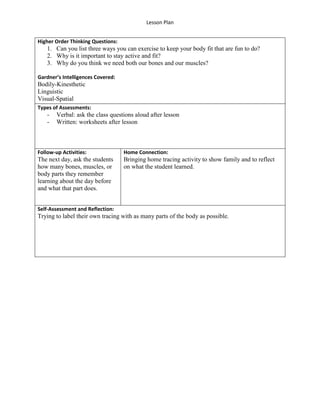
    1. Can you list three ways you can exercise to keep your body fit that are fun to do?
    2. Why is it important to stay active and fit?
    3. Why do you think we need both our bones and our muscles?

Gardner’s Intelligences Covered:
Bodily-Kinesthetic
Linguistic
Visual-Spatial
Types of Assessments:
    -   Verbal: ask the class questions aloud after lesson
    -   Written: worksheets after lesson


Follow-up Activities:              Home Connection:
The next day, ask the students     Bringing home tracing activity to show family and to reflect
how many bones, muscles, or        on what the student learned.
body parts they remember
learning about the day before
and what that part does.


Self-Assessment and Reflection:
Trying to label their own tracing with as many parts of the body as possible.

Lesson plan

  • 1.
    Lesson Plan Concept/Skill/Theme: Duration: “Human Body, Healthy Body” 1 hour – 1 hour 30 minutes Grade Level: 1 Objectives-Goals: The student will… Understand various parts of the human body and their functions Understand how to keep our bodies healthy and active Next Generation Sunshine Standards: (Floridastandards.org) HE.1.C.1.1 Identify healthy behaviors HE.1.C.1.6 Emphasize the correct names of human body parts Concept Planning/Scaffolding: 1. Ask the students to join in a singing of “Head, Shoulders, Knees and Toes” 2. Ask the students if, by a show of hands, they think they know all of the bones in the body 3. Ask the students if, by a show of hands they know what muscles are 4. Ask the students for examples of how we can keep our bodies active and fit Teaching Materials and Props (including Teacher Resources: technology being used): The Busy Body Book: A Kid’s Guide to Fitness by The Busy Body Book: A Kid’s Guide to Lizzy Rockwell Fitness by Lizzy Rockwell Inside Your Outside: All About the Human Body by Inside Your Outside: All About the Tish Rabe Human Body by Tish Rabe Drinking Water by Mari Schuh Drinking Water by Mari Schuh 12 Classroom Workouts for Kids with Nikki Crouse (video) 12 Classroom Workouts for Kids with http://www.youtube.com/watch?v=eEmeavo9Cyk&f Nikki Crouse (video) eature=related Tracing Activity: (pre-cut) banner papers cut in half, one for each child Lesson Steps/Procedure: - Concept Planning / Scaffolding questions - Teacher reads aloud “Inside Your Outside” and “Drinking Water” - Teacher instructs students to partner up with the person they are sitting next to and find a spot in the room to trace their partner with a crayon onto the banner paper. - When all students have been traced, they will sit by their own paper on the floor and label as many bones and/or muscles they can. - Teacher will read aloud “Busy Body Book” - If available, teacher will use projector to play “12 Classroom Workouts” video from the internet, and ask students to participate Adaptations (special needs, ESOL, etc.): -There will be a wide array of visuals in the lesson to assist the understanding for ESOL students and non-ESOL students alike. -Stories will be read aloud
  • 2.
    Lesson Plan Higher OrderThinking Questions: 1. Can you list three ways you can exercise to keep your body fit that are fun to do? 2. Why is it important to stay active and fit? 3. Why do you think we need both our bones and our muscles? Gardner’s Intelligences Covered: Bodily-Kinesthetic Linguistic Visual-Spatial Types of Assessments: - Verbal: ask the class questions aloud after lesson - Written: worksheets after lesson Follow-up Activities: Home Connection: The next day, ask the students Bringing home tracing activity to show family and to reflect how many bones, muscles, or on what the student learned. body parts they remember learning about the day before and what that part does. Self-Assessment and Reflection: Trying to label their own tracing with as many parts of the body as possible.