Introduction to Organization
and
Management
Songklot Phonphuak…Lecturer
Joke1977@hotmail.com
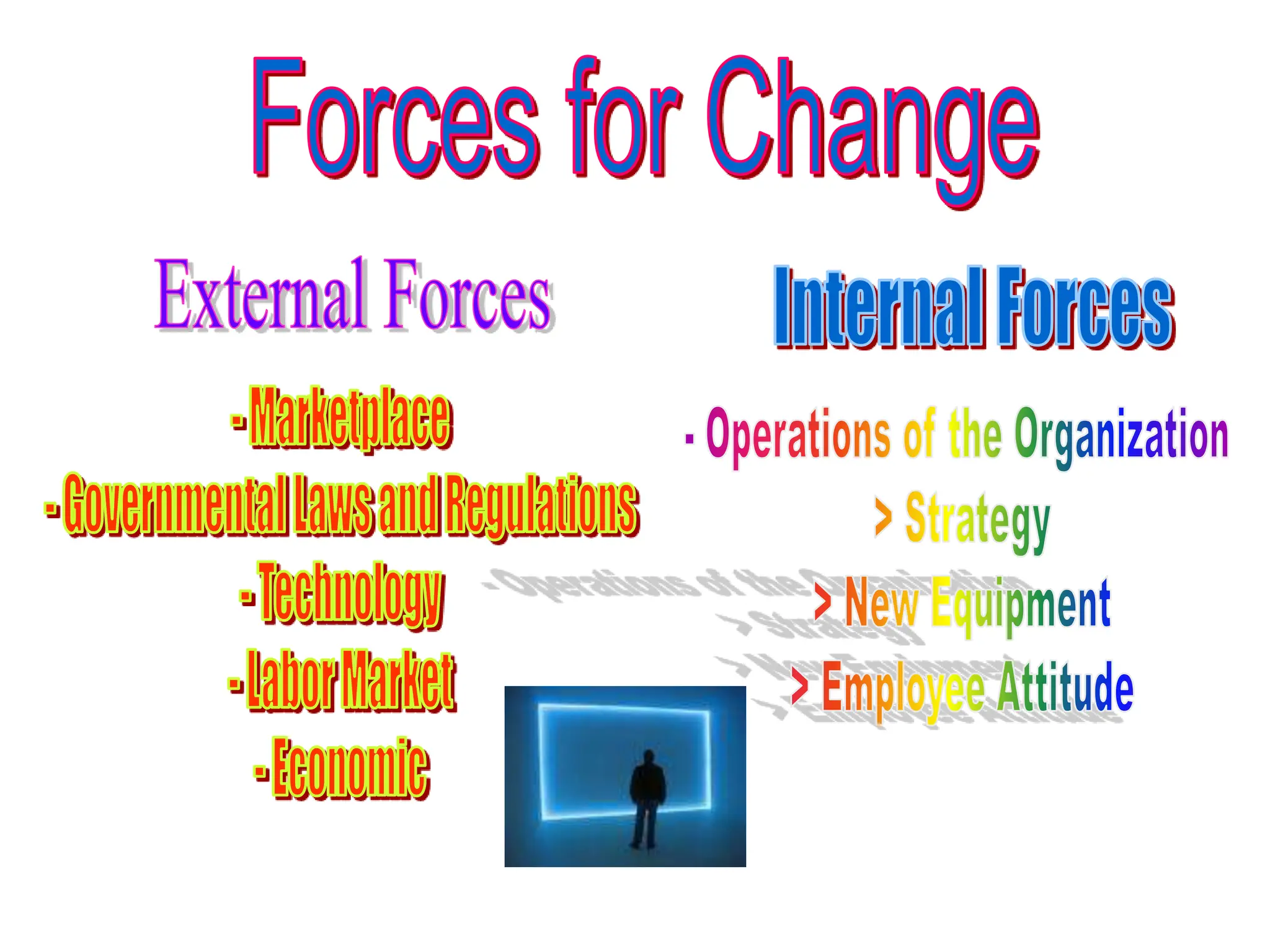
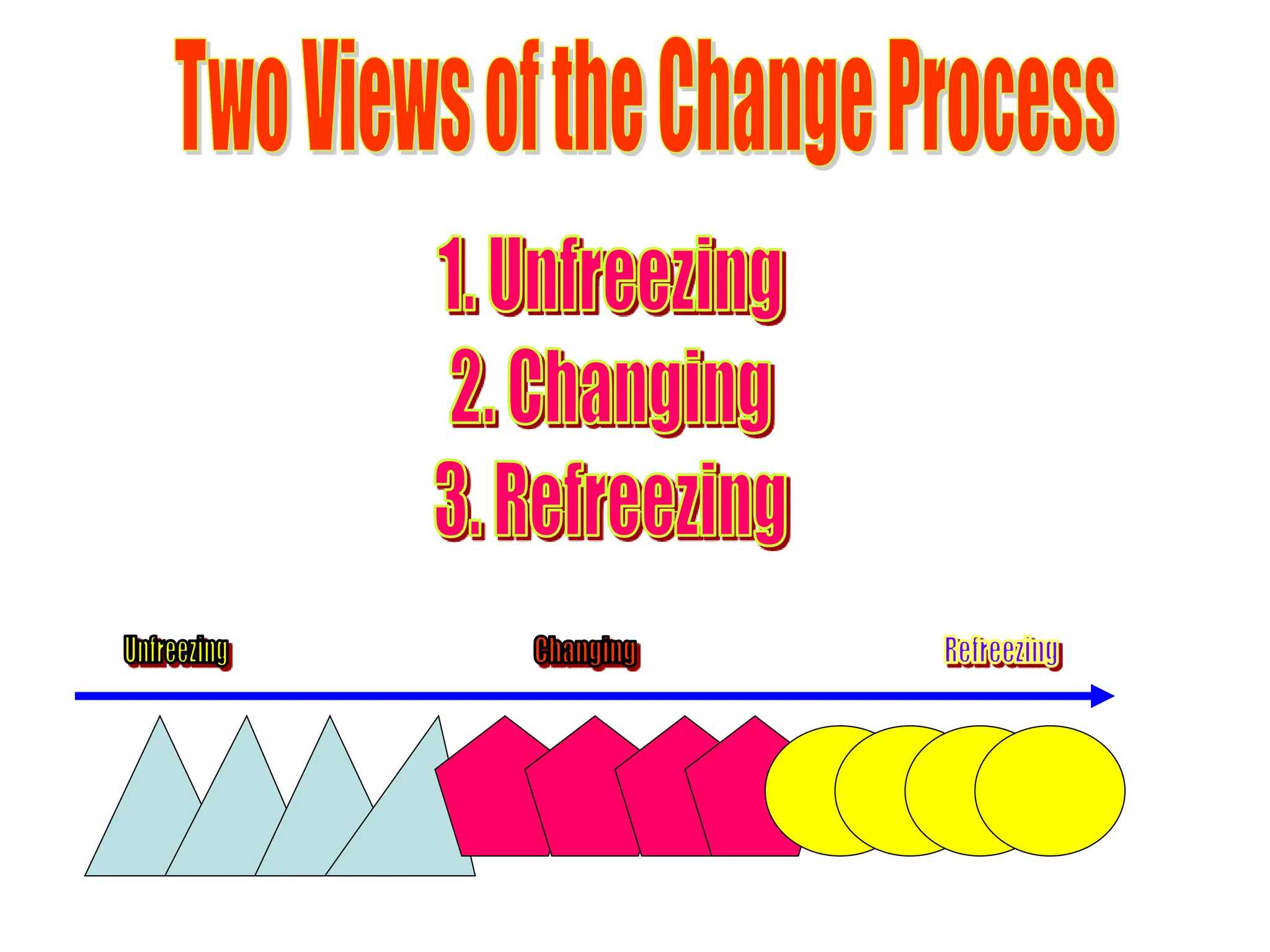
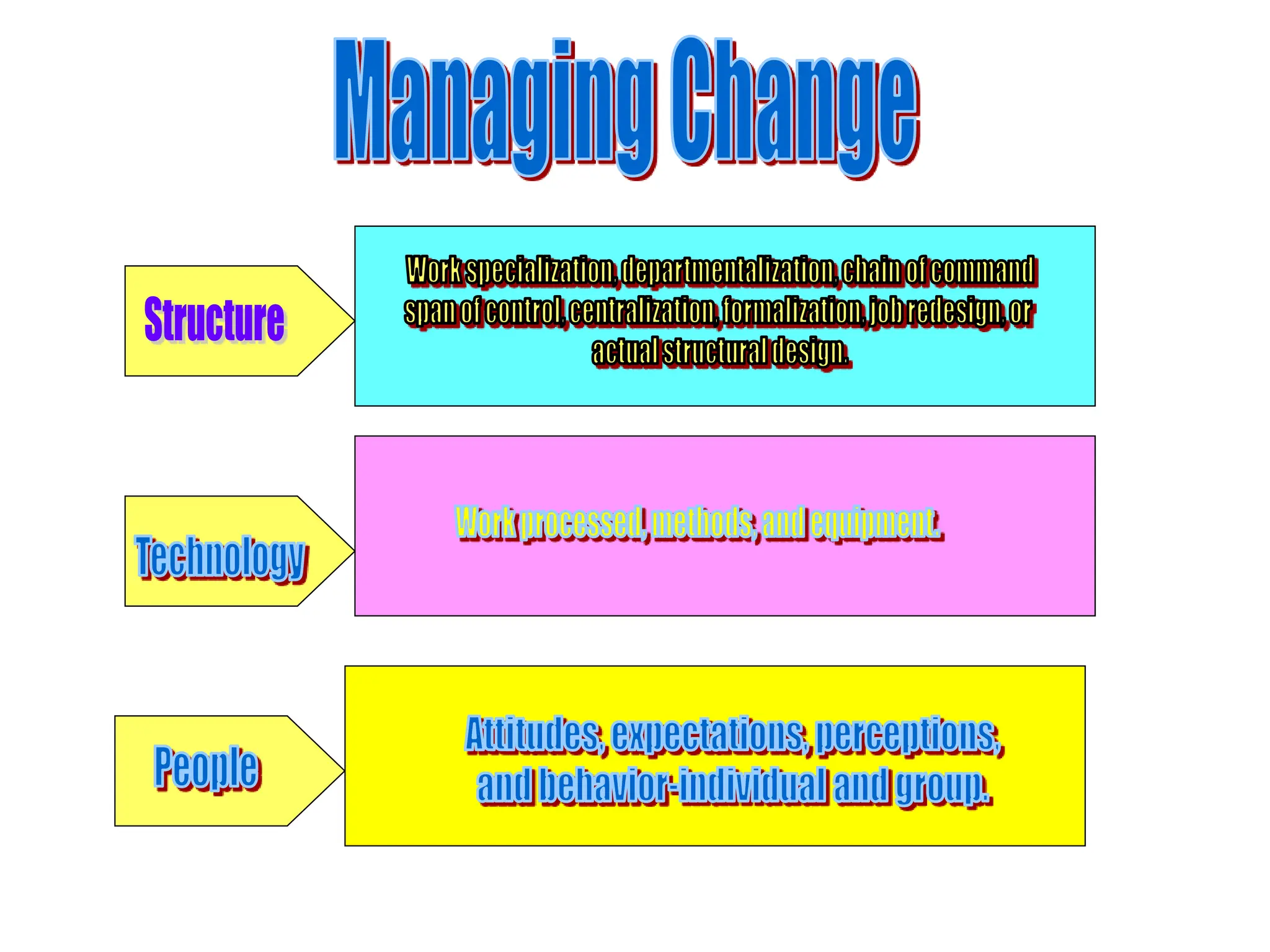
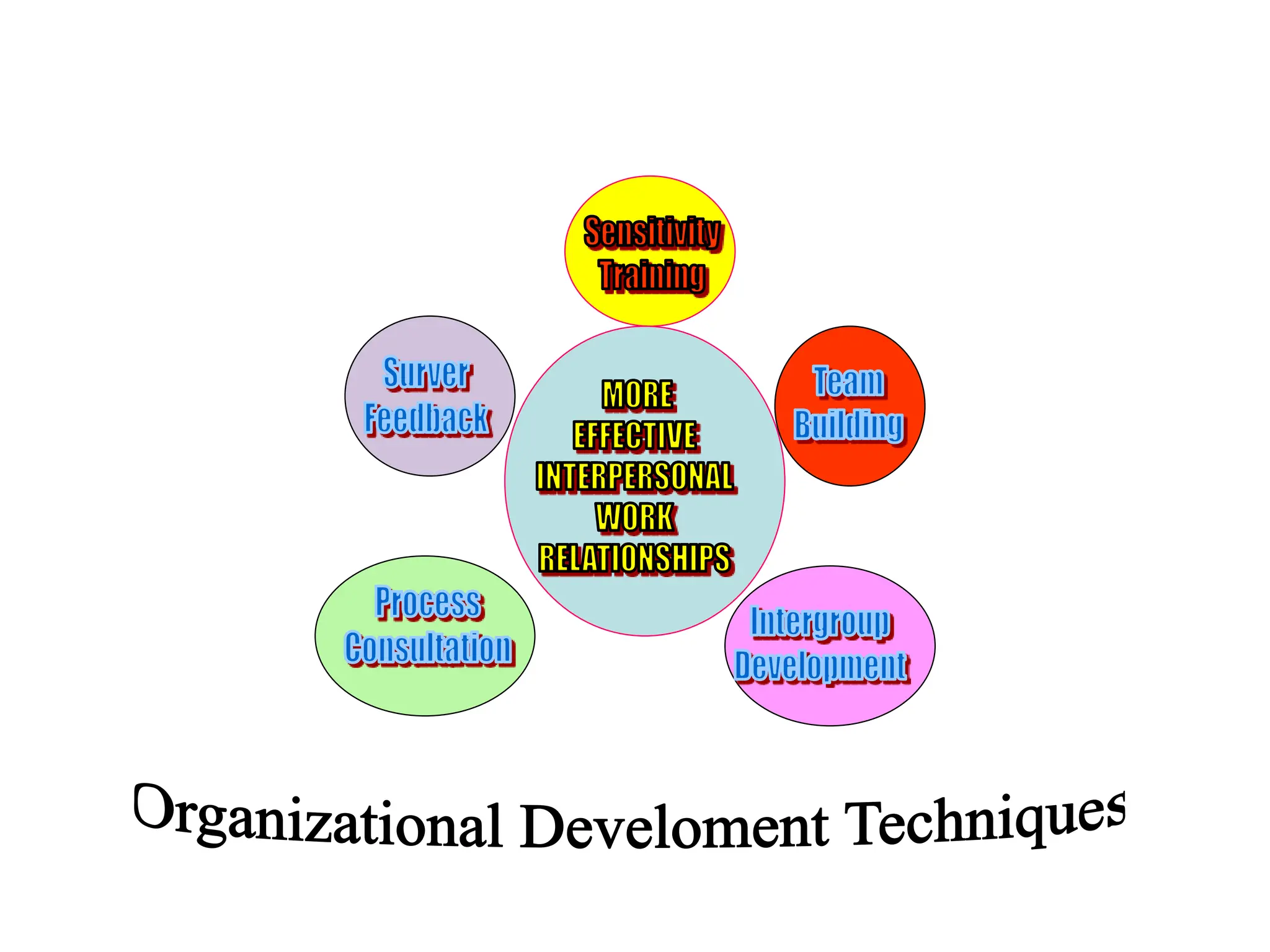
089-9912087
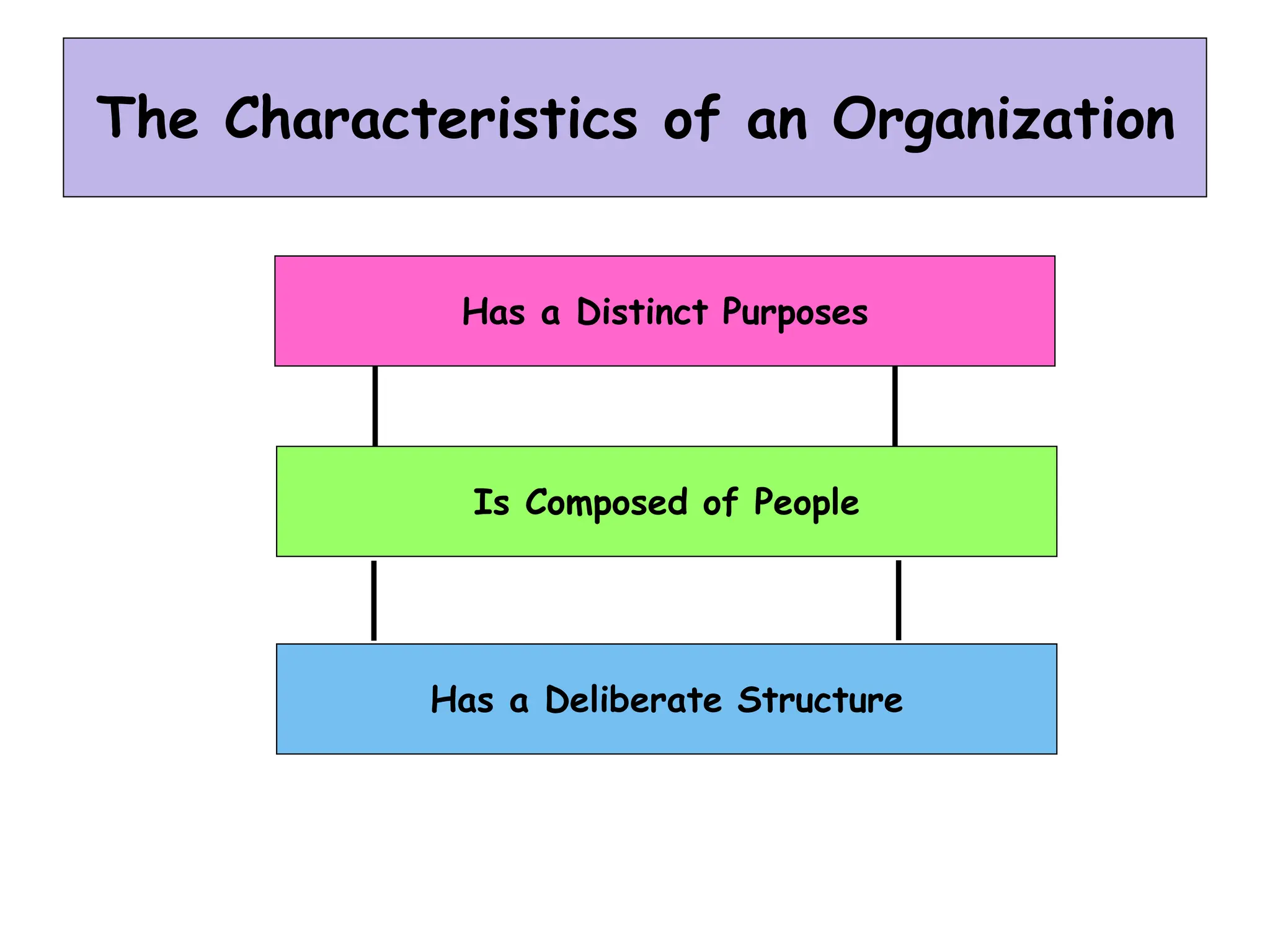
The Characteristics of an Organization
Has a Distinct Purposes
Is Composed of People
Has a Deliberate Structure
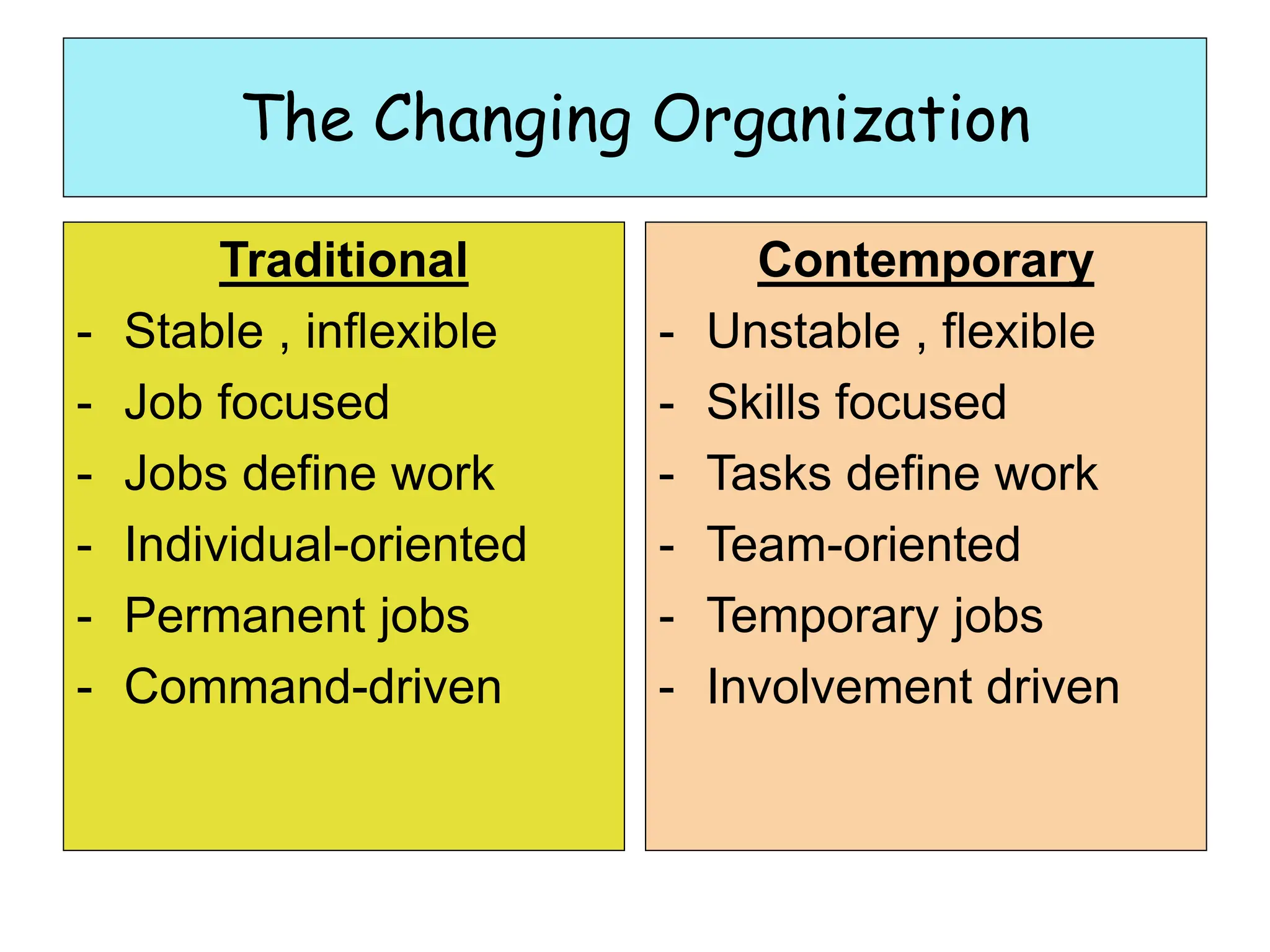
The Changing Organization
Traditional
- Stable , inflexible
- Job focused
- Jobs define work
- Individual-oriented
- Permanent jobs
- Command-driven
Contemporary
- Unstable , flexible
- Skills focused
- Tasks define work
- Team-oriented
- Temporary jobs
- Involvement driven
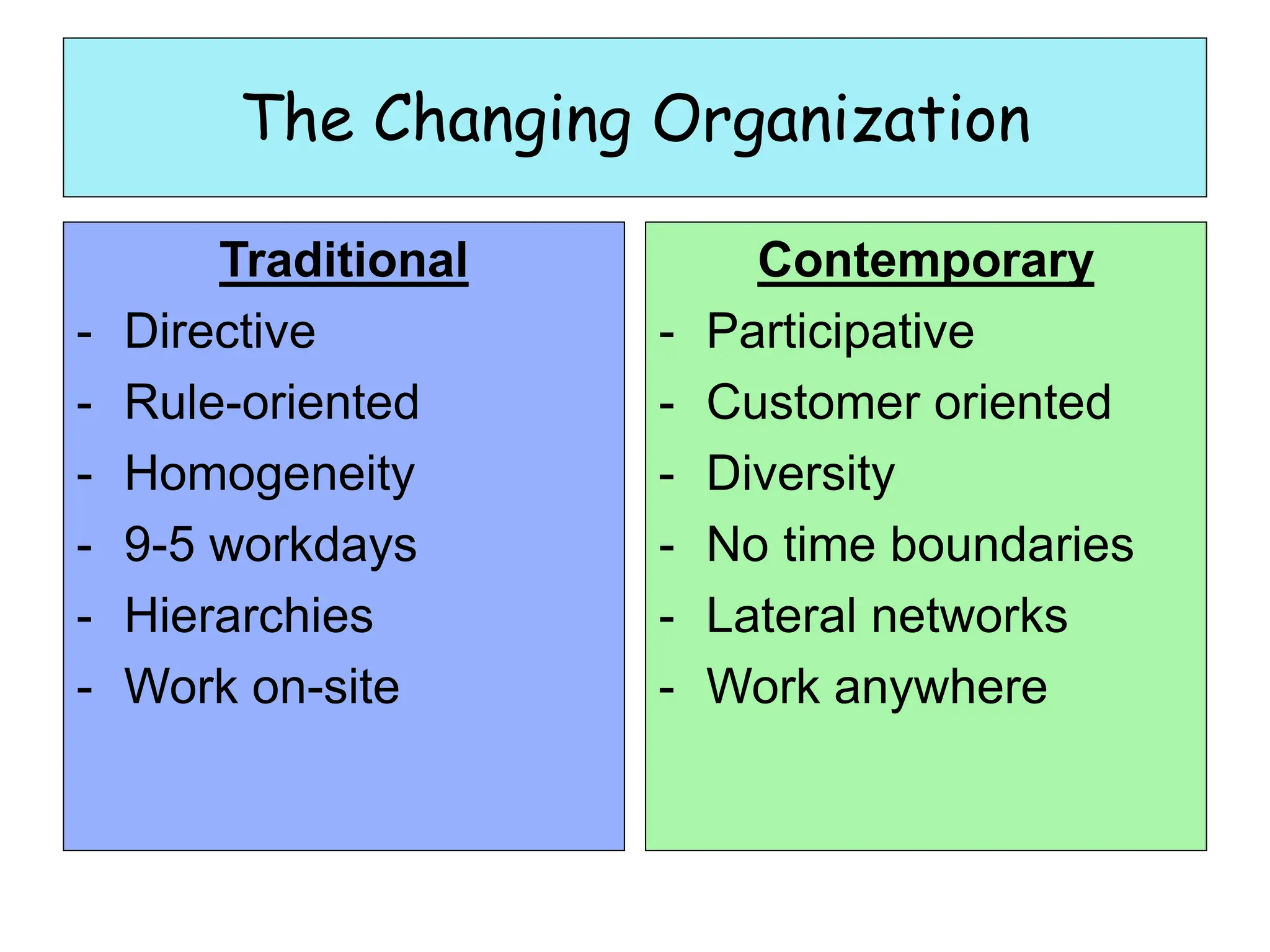
Contemporary
- Participative
- Customer oriented
- Diversity
- No time boundaries
- Lateral networks
- Work anywhere
The Changing Organization
Traditional
- Directive
- Rule-oriented
- Homogeneity
- 9-5 workdays
- Hierarchies
- Work on-site
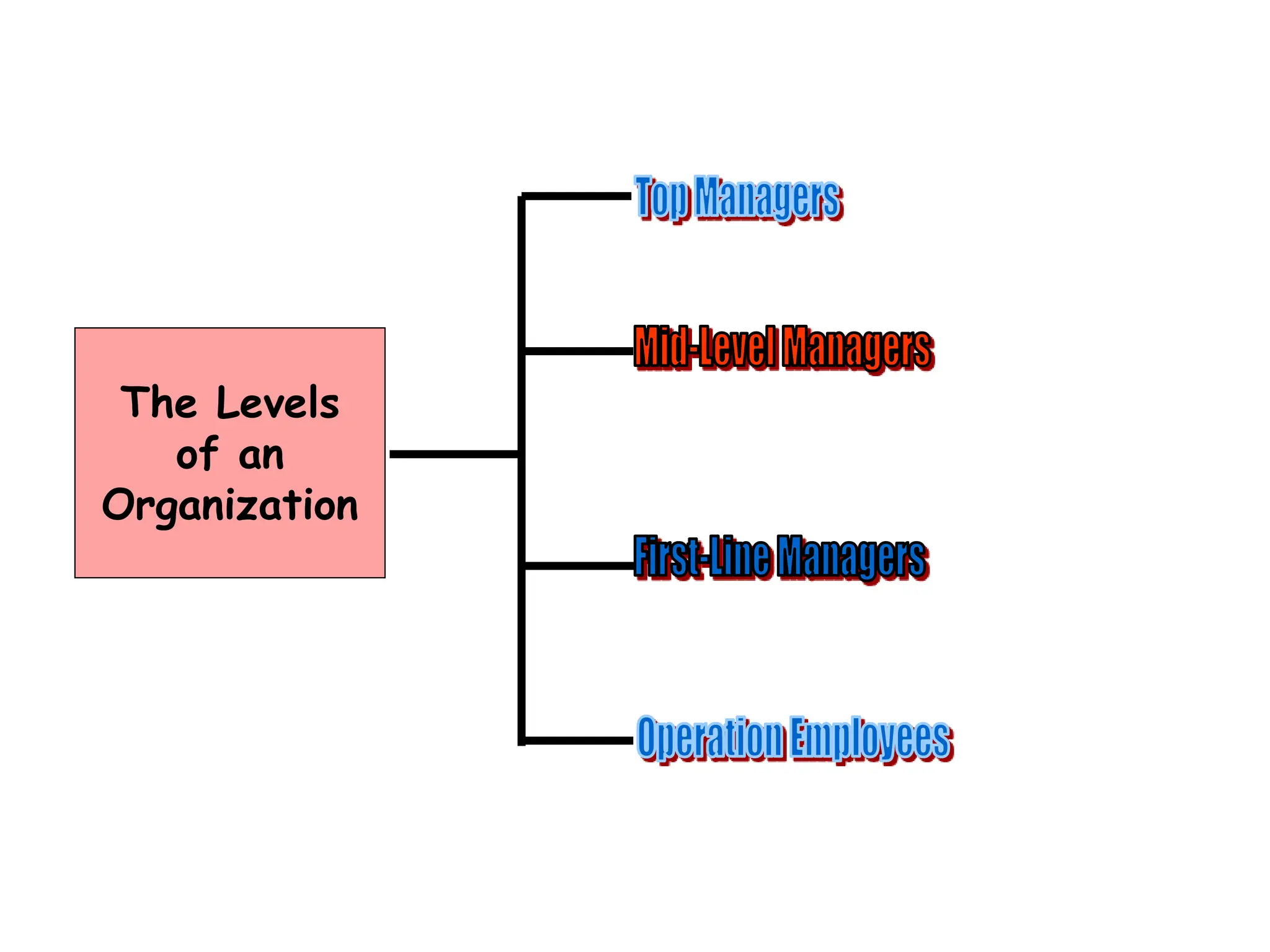
The Levels
of an
Organization
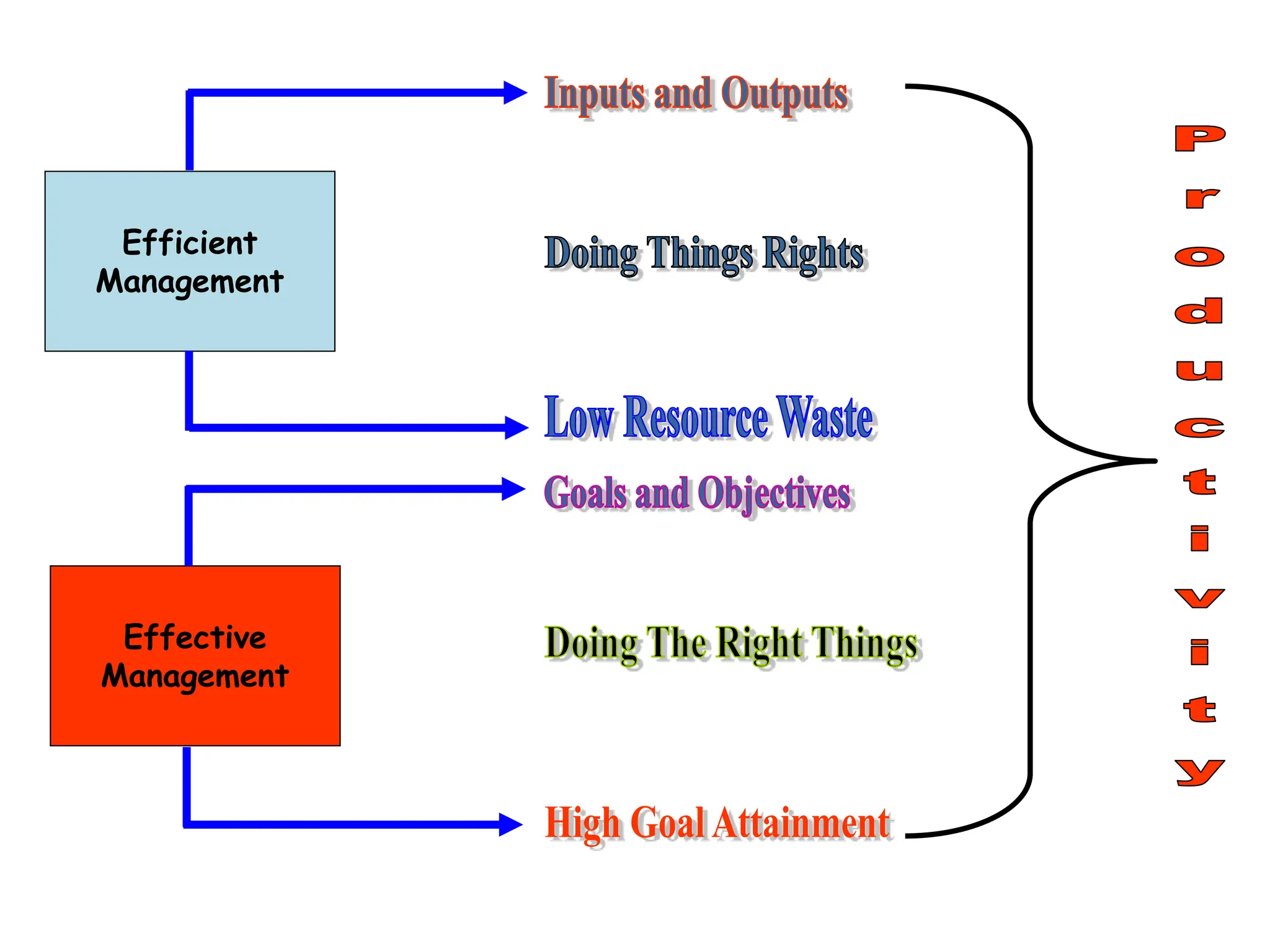
Efficient
Management
Effective
Management
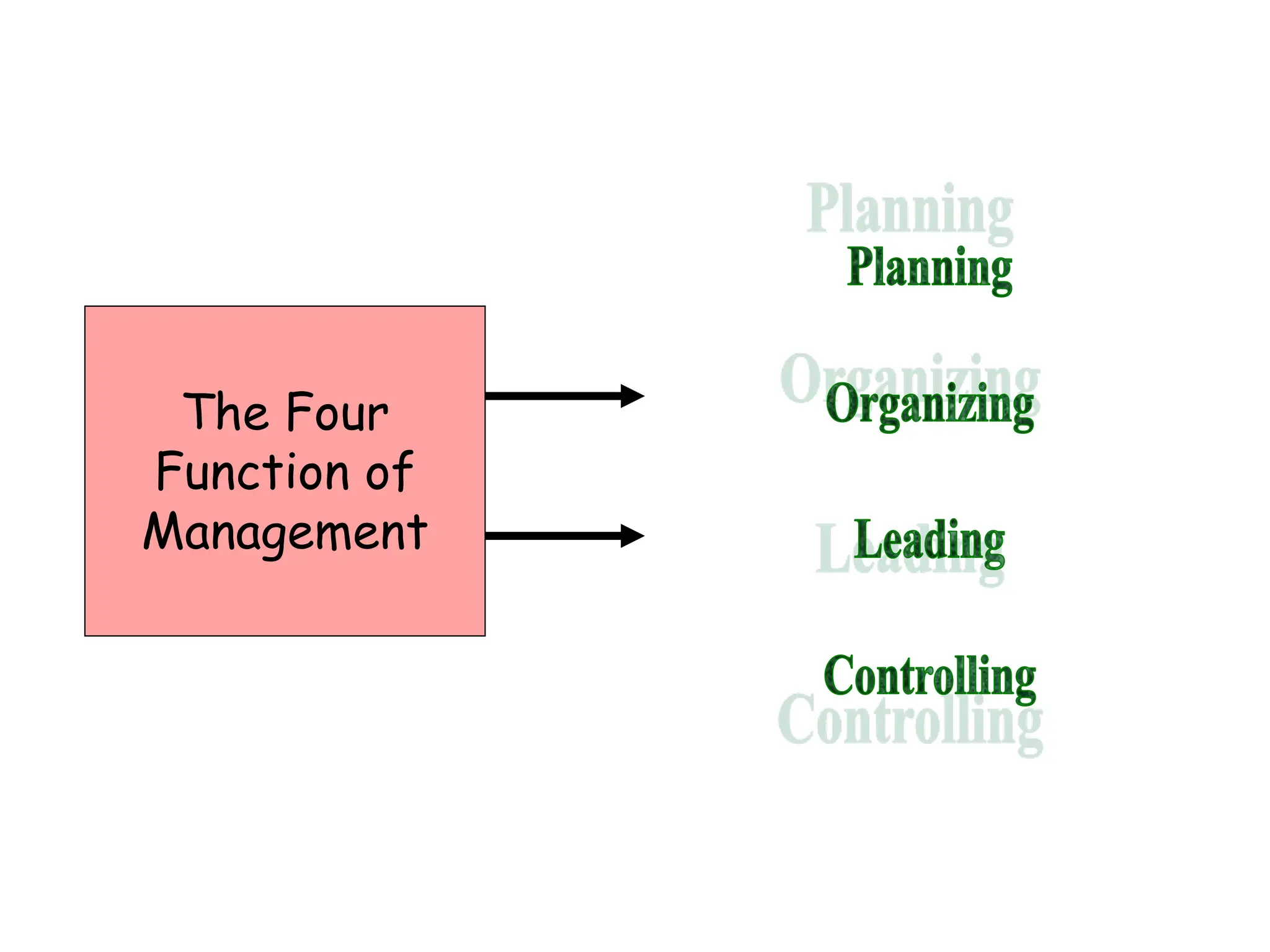
The Four
Function of
Management
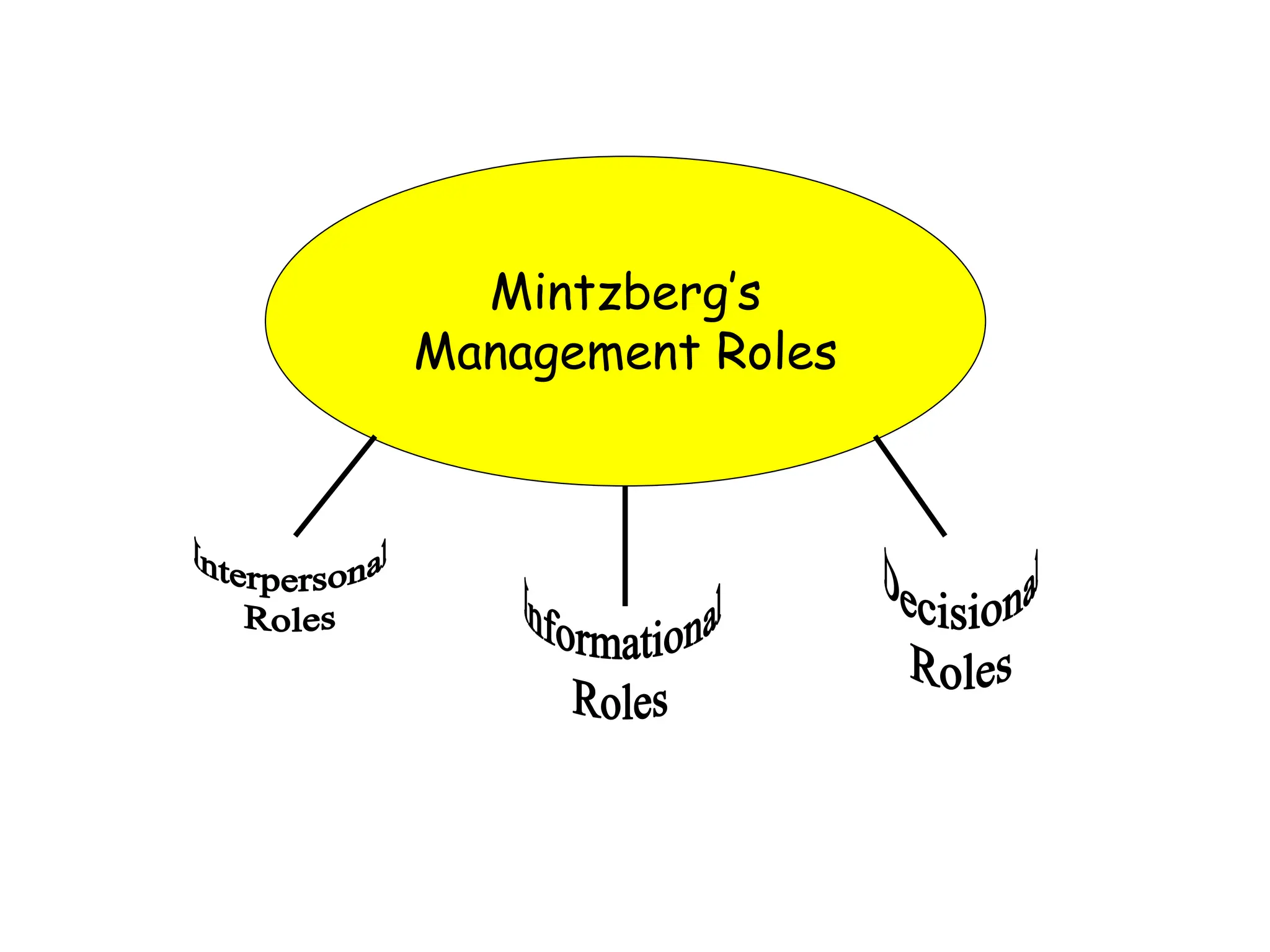
Mintzberg’s
Management Roles
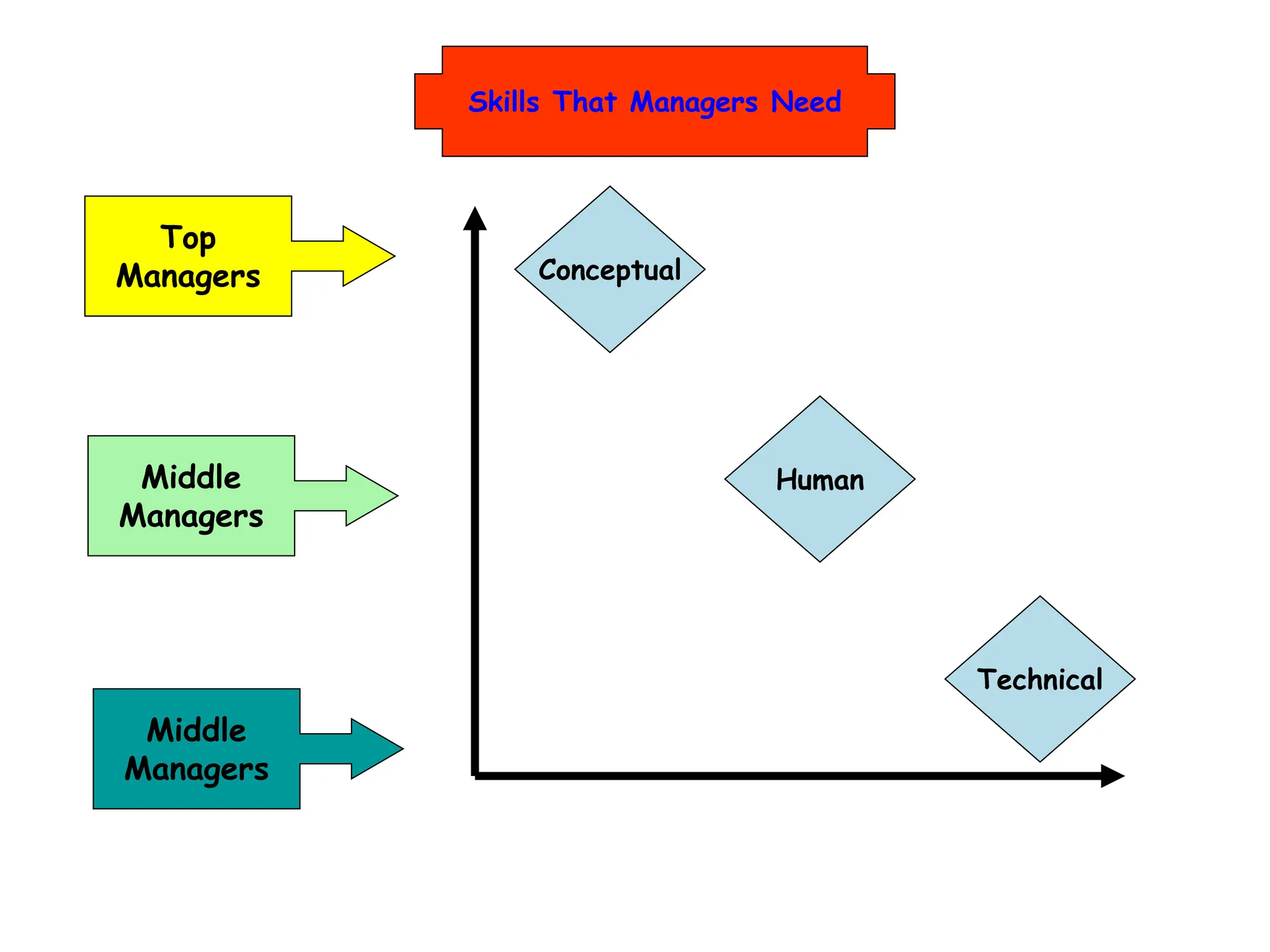
Top
Managers
Skills That Managers Need
Middle
Managers
Middle
Managers
Conceptual
Human
Technical
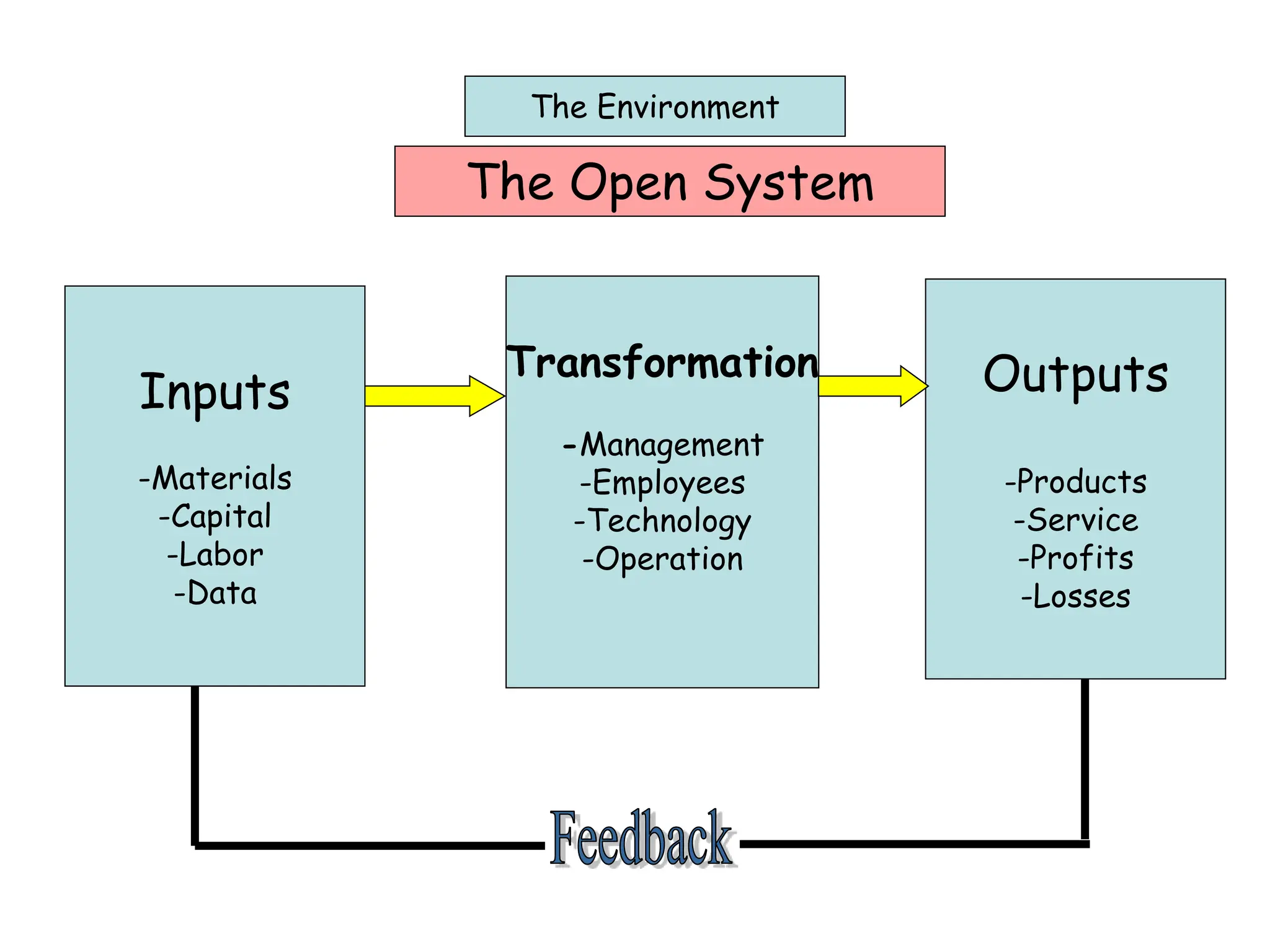
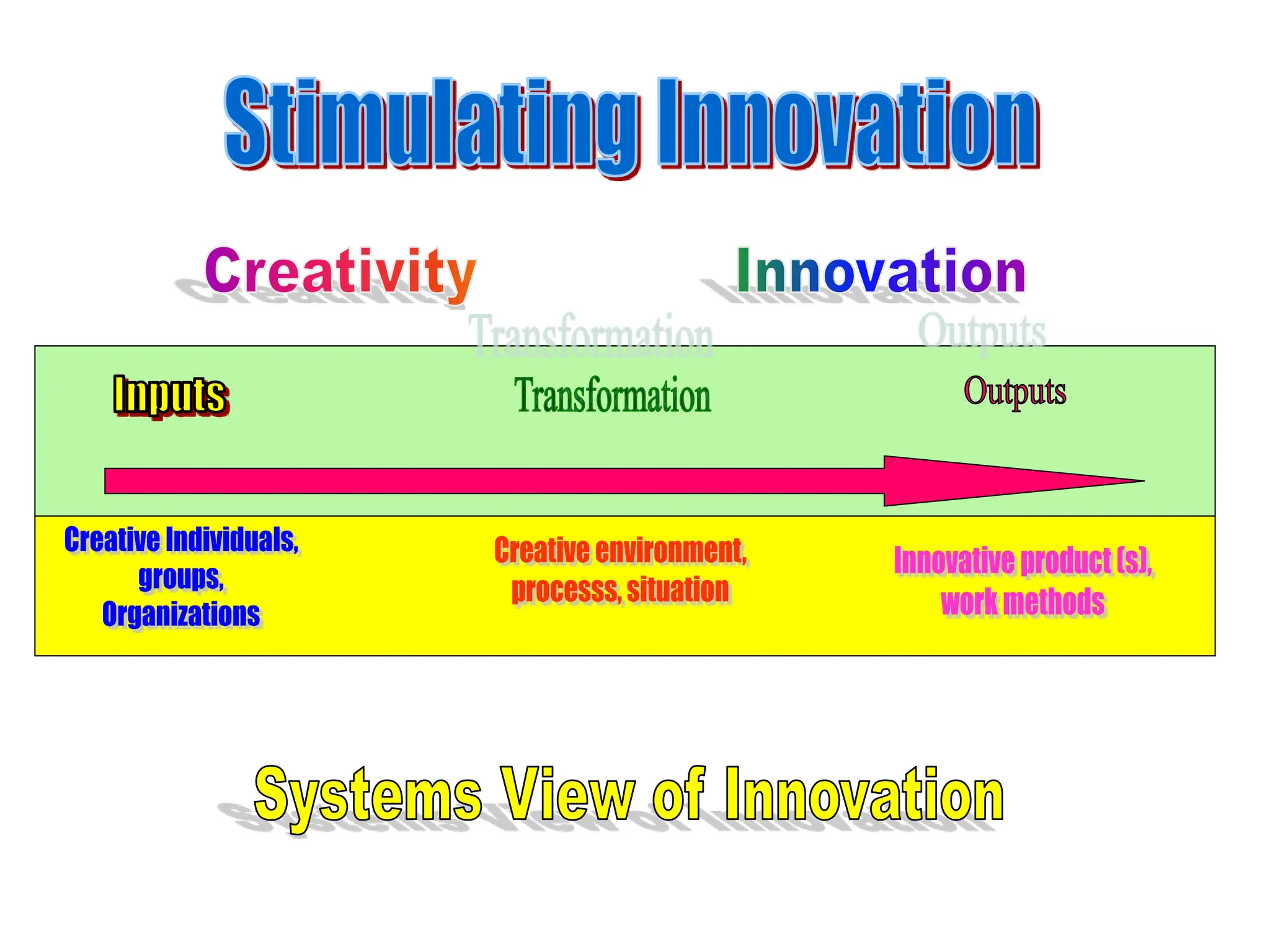
The Environment
The Open System
Inputs
-Materials
-Capital
-Labor
-Data
Transformation
-Management
-Employees
-Technology
-Operation
Outputs
-Products
-Service
-Profits
-Losses
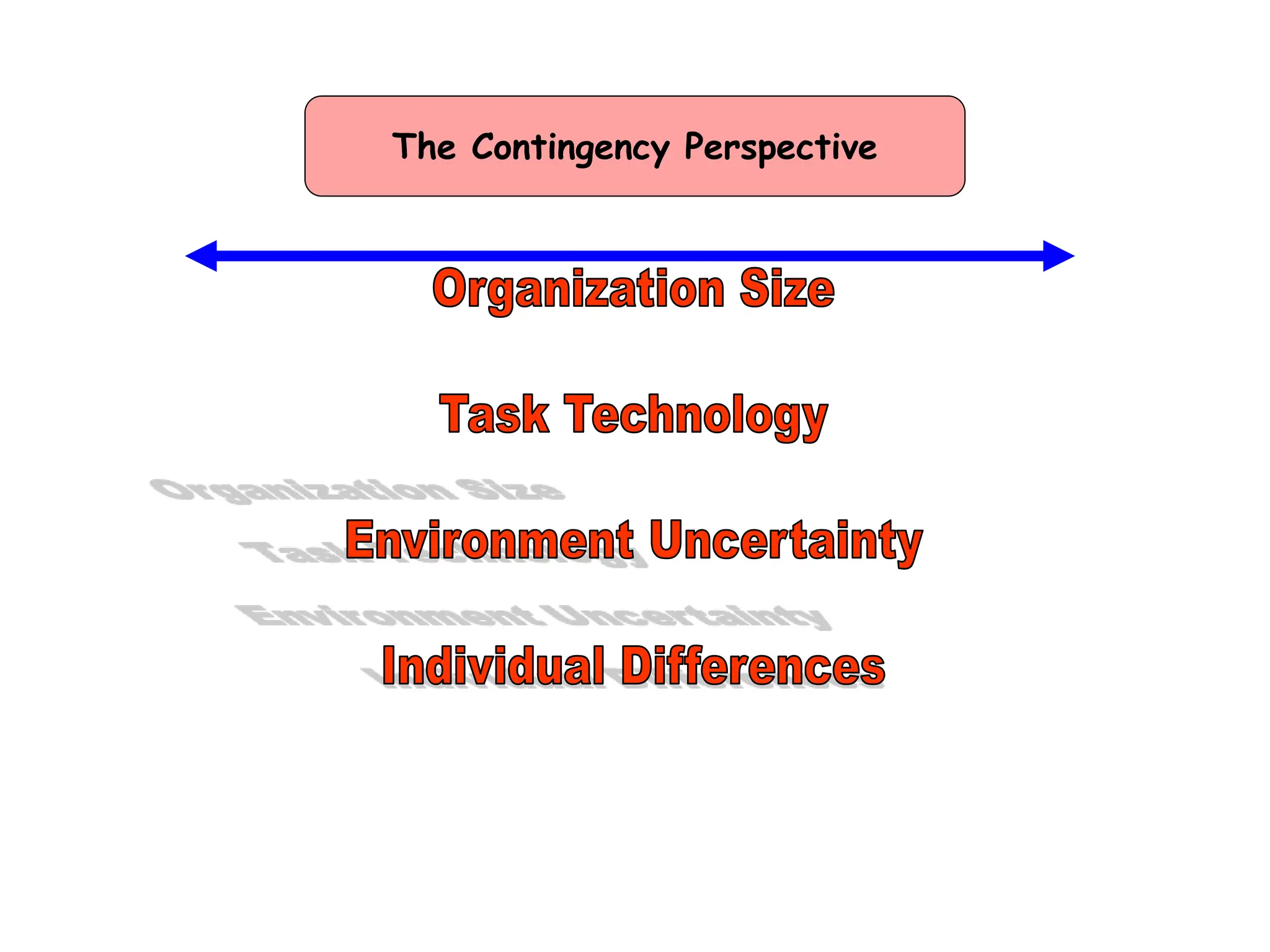
The Contingency Perspective
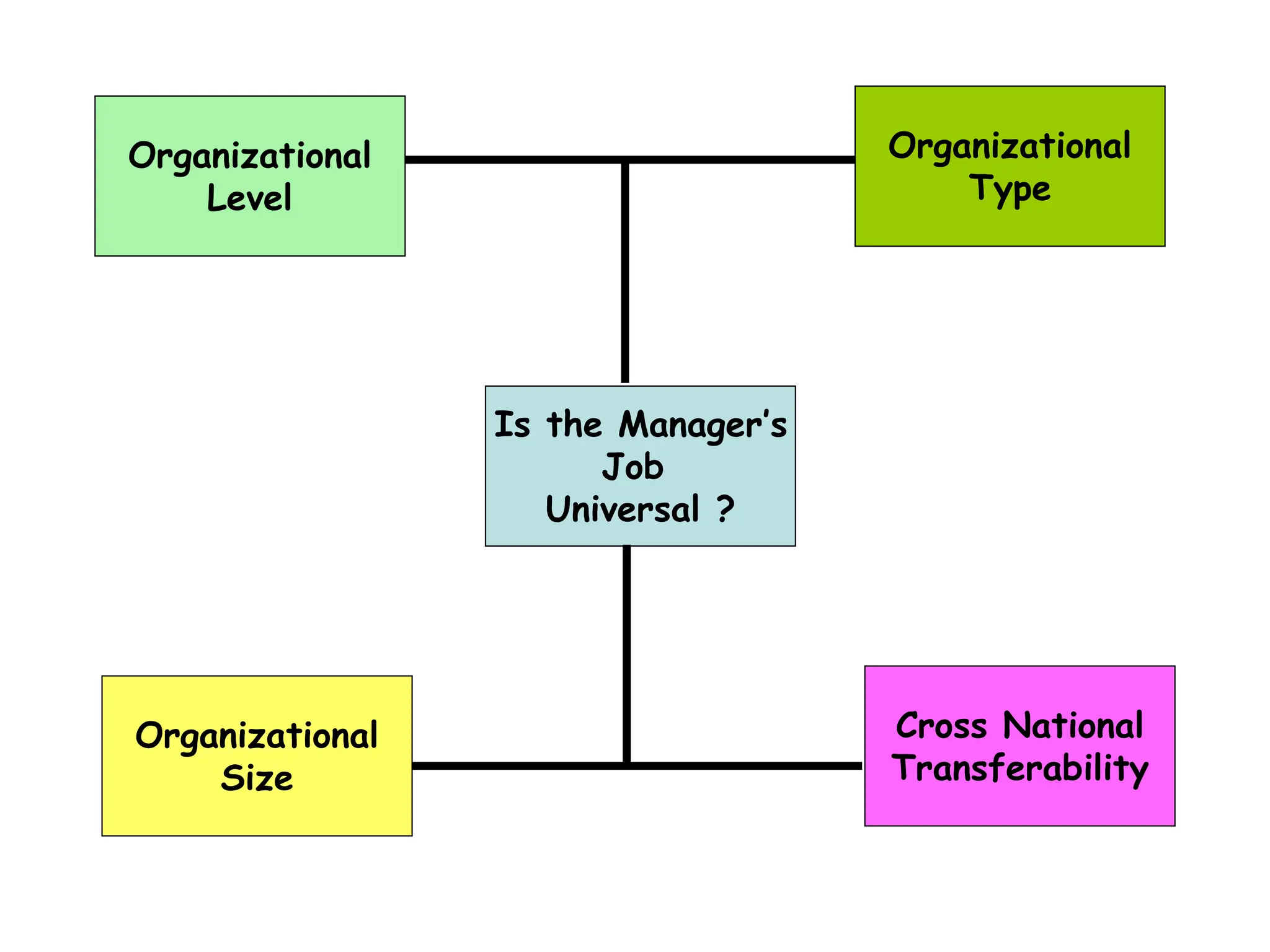
Is the Manager’s
Job
Universal ?
Organizational
Level
Organizational
Type
Organizational
Size
Cross National
Transferability
Why Study Management ?
- You should understand how organization
are managed.
- You will either manager or be managed.
Theory and Conceptual
Administration (B)
Songklot Phonphuak…Lecturer
joke1977@hotmail.com
089-9912087
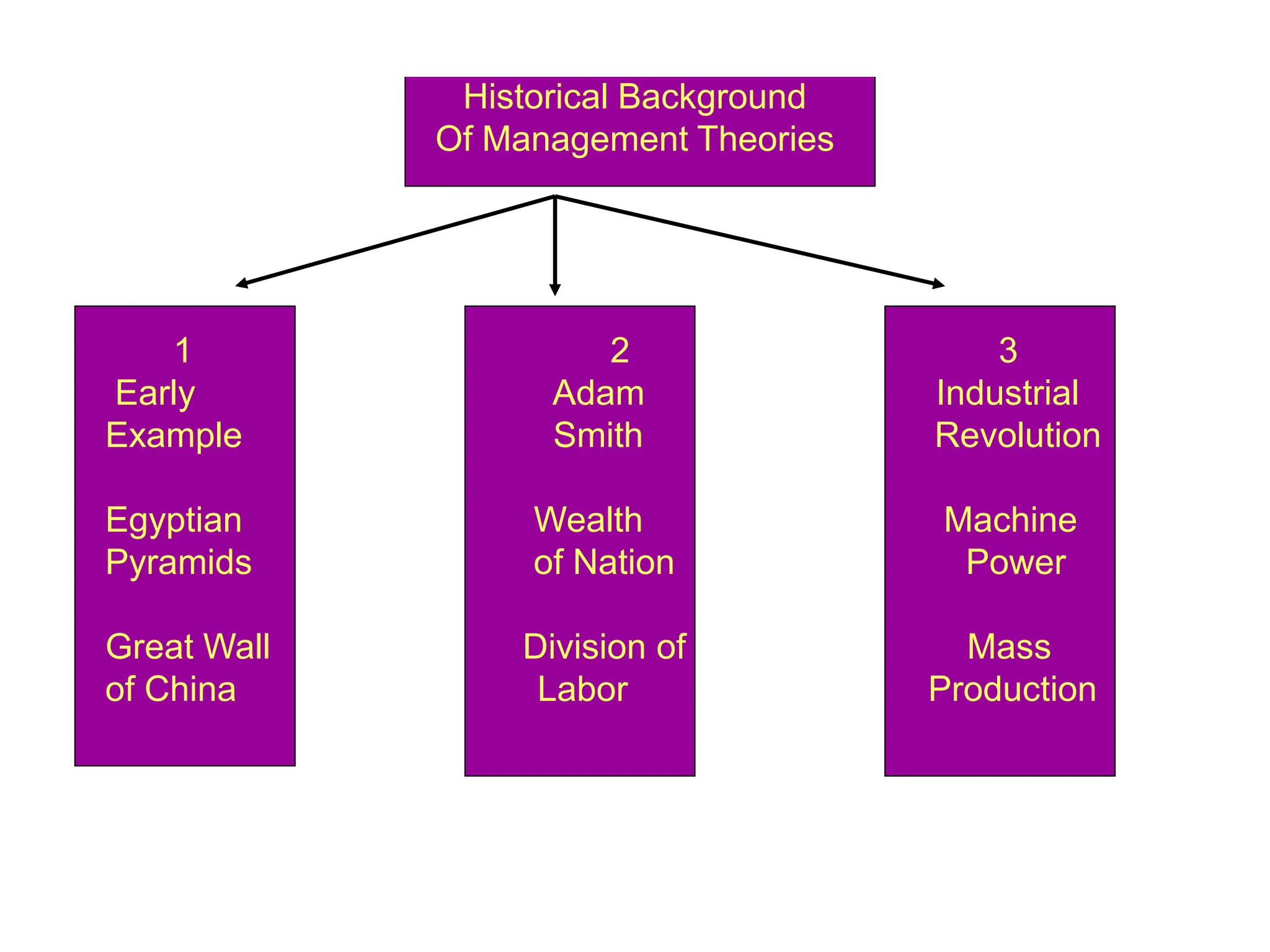
Historical Background
Of Management Theories
1 2 3
Early Adam Industrial
Example Smith Revolution
Egyptian Wealth Machine
Pyramids of Nation Power
Great Wall Division of Mass
of China Labor Production
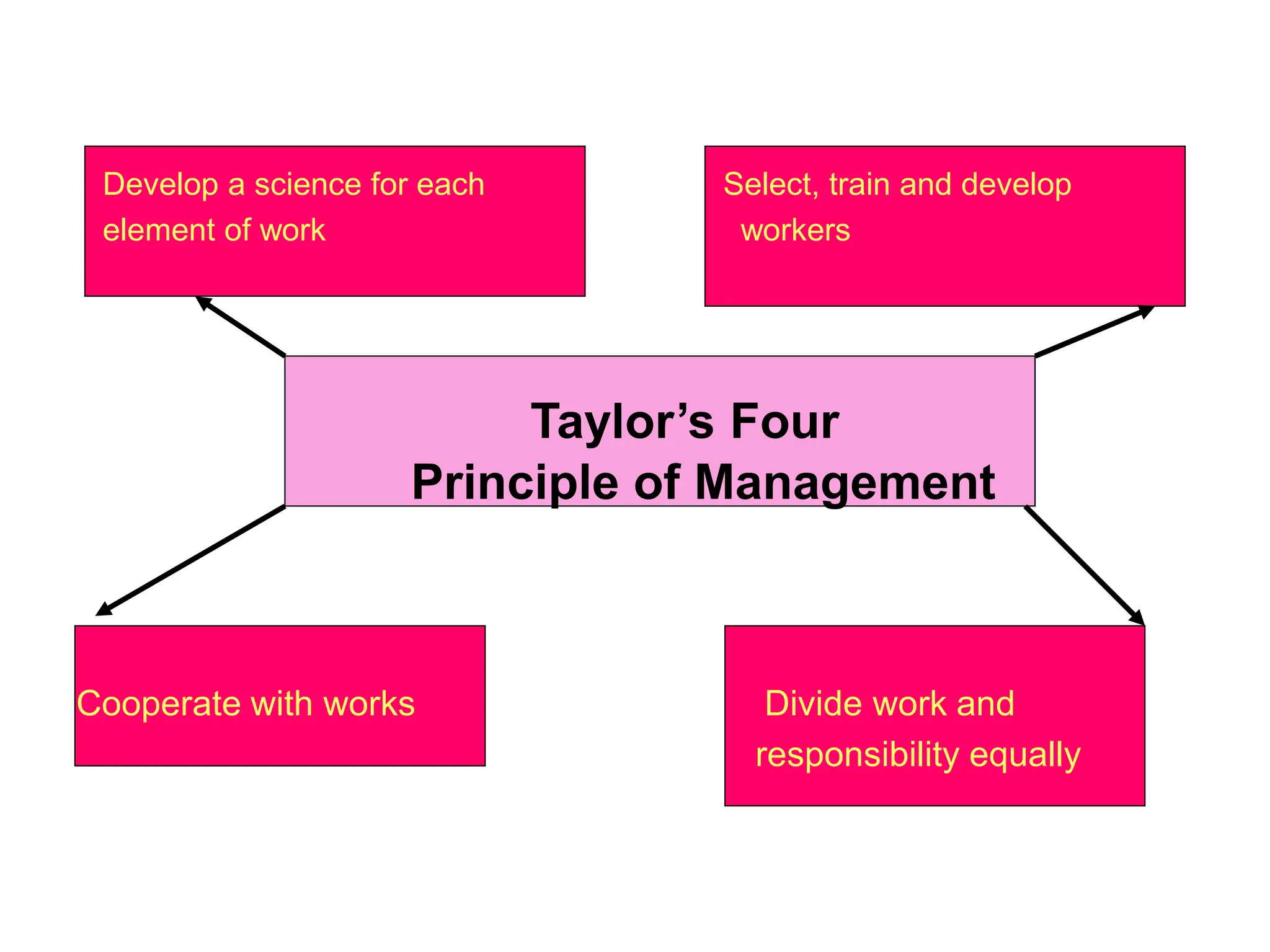
Develop a science for each Select, train and develop
element of work workers
Taylor’s Four
Principle of Management
Cooperate with works Divide work and
responsibility equally
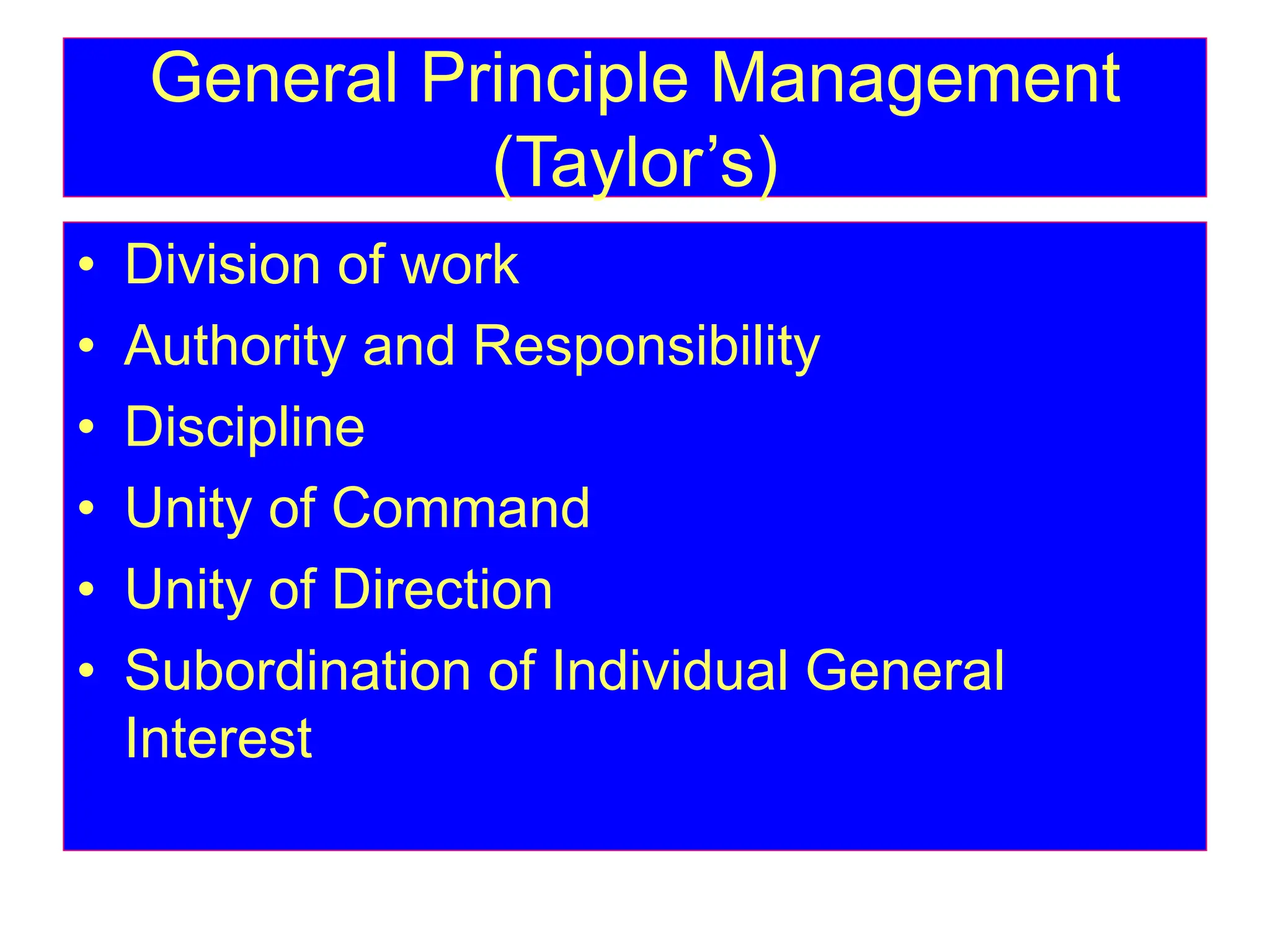
General Principle Management
(Taylor’s)
• Division of work
• Authority and Responsibility
• Discipline
• Unity of Command
• Unity of Direction
• Subordination of Individual General
Interest
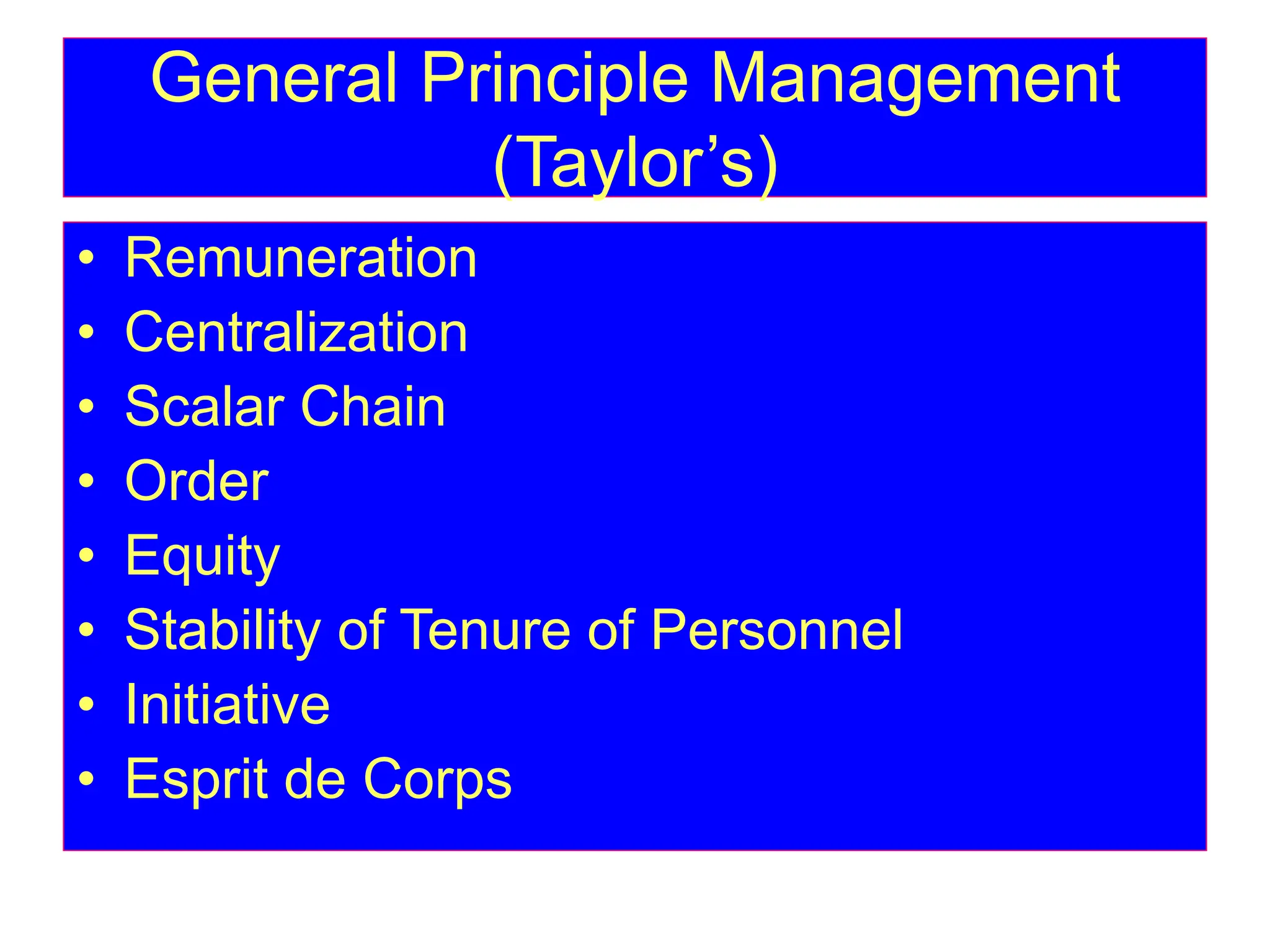
General Principle Management
(Taylor’s)
• Remuneration
• Centralization
• Scalar Chain
• Order
• Equity
• Stability of Tenure of Personnel
• Initiative
• Esprit de Corps
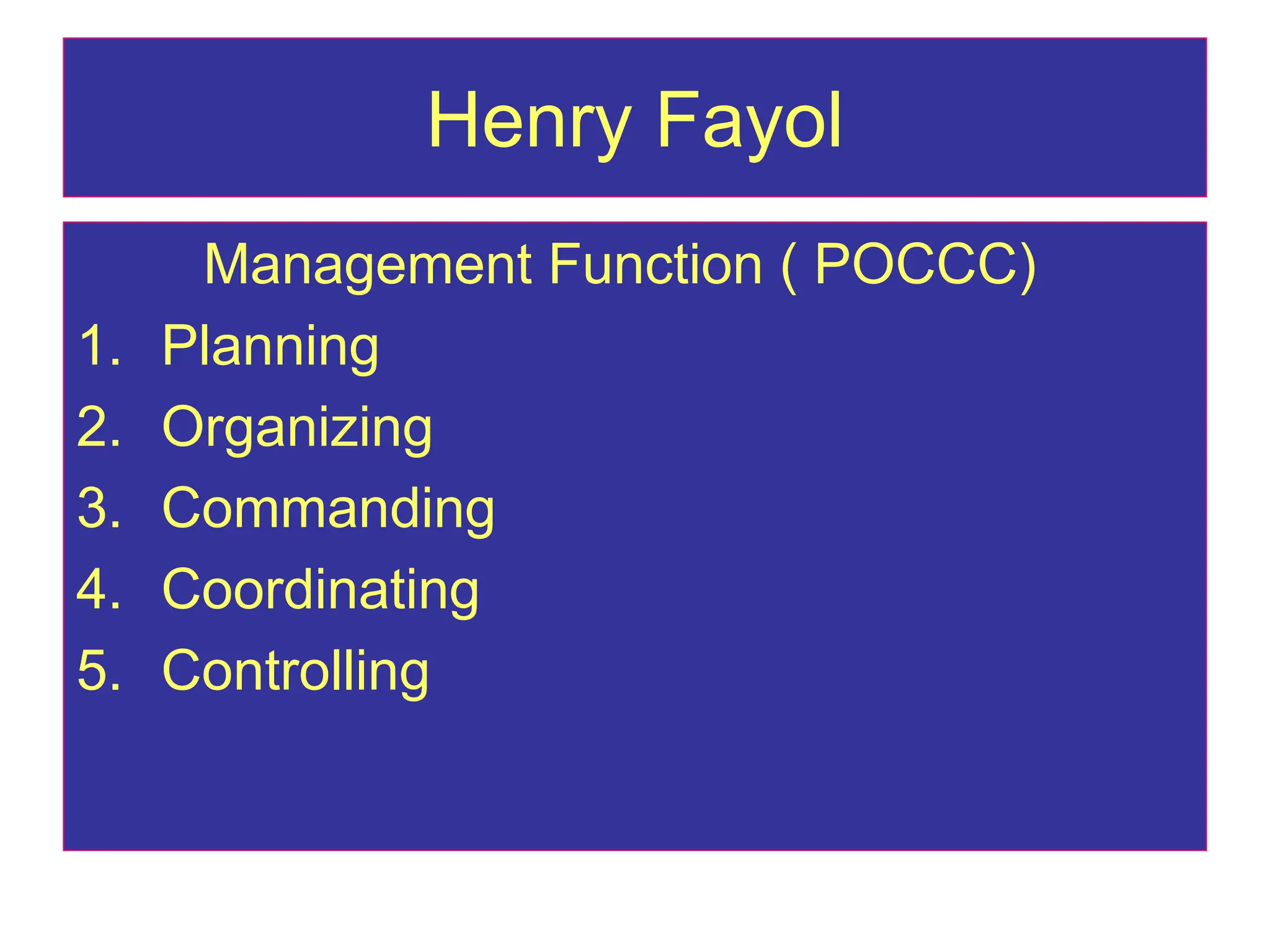
Henry Fayol
Management Function ( POCCC)
1. Planning
2. Organizing
3. Commanding
4. Coordinating
5. Controlling
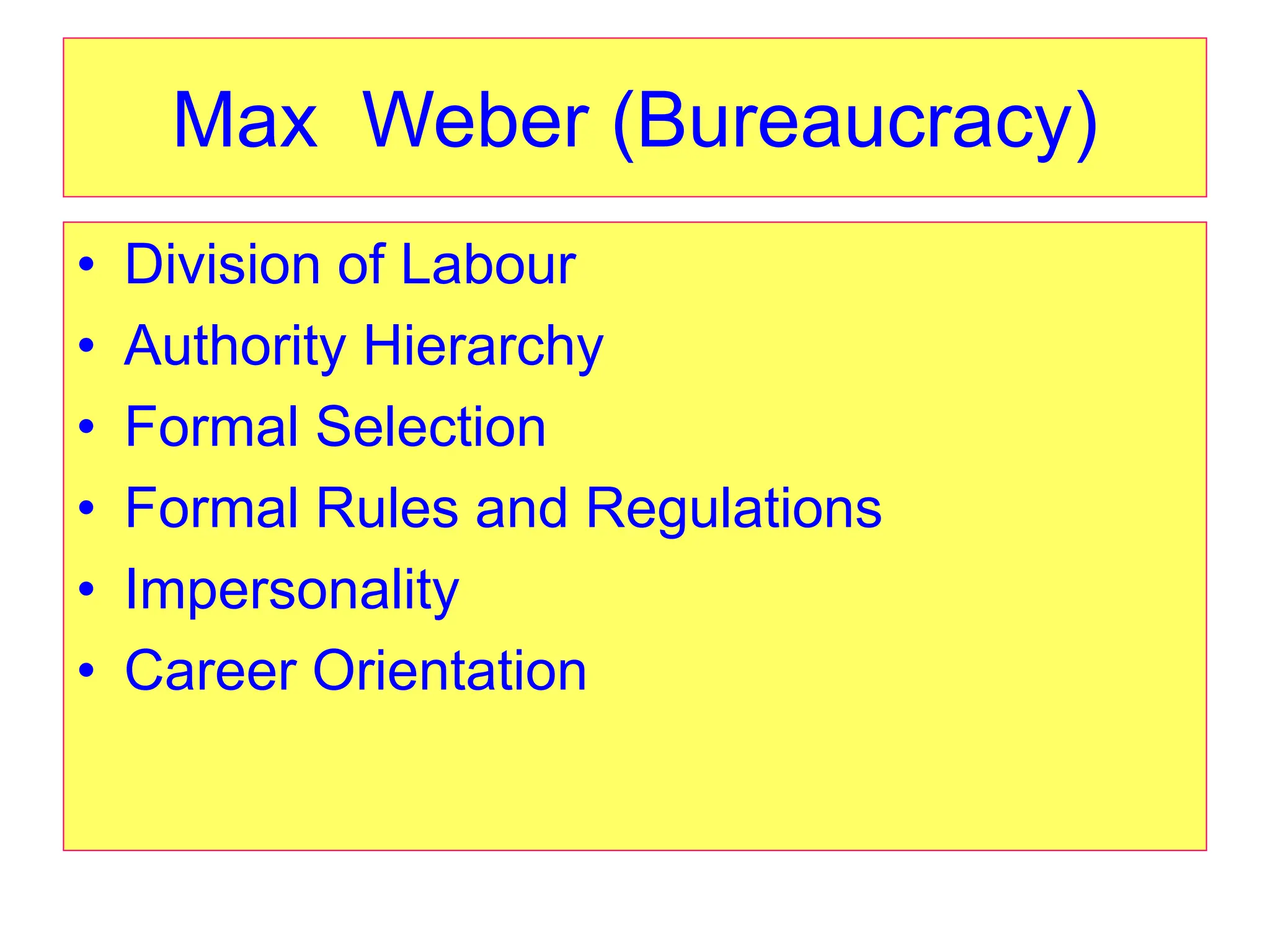
Max Weber (Bureaucracy)
• Division of Labour
• Authority Hierarchy
• Formal Selection
• Formal Rules and Regulations
• Impersonality
• Career Orientation
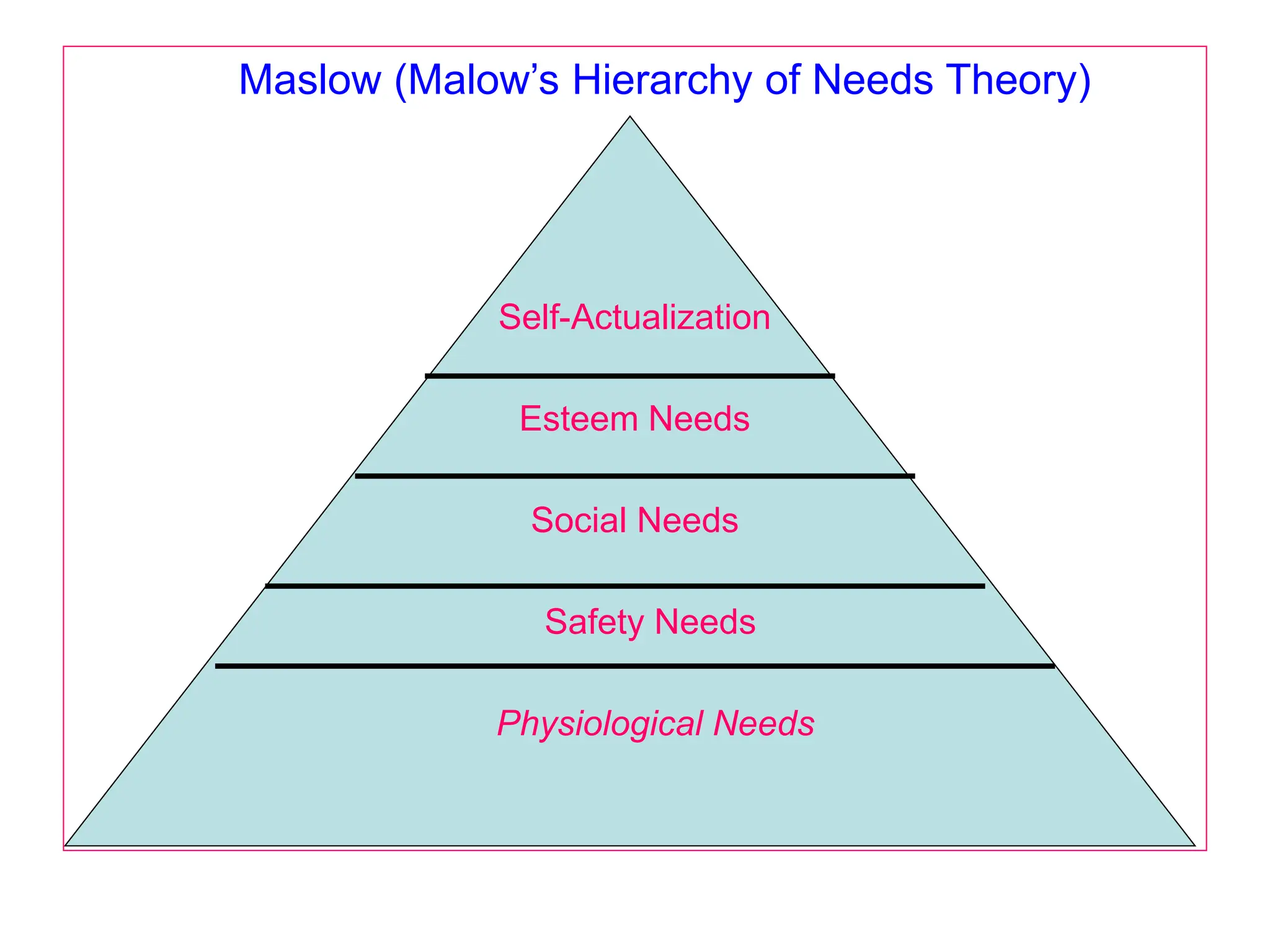
Maslow (Malow’s Hierarchy of Needs Theory)
Self-Actualization
Esteem Needs
Social Needs
Safety Needs
Physiological Needs
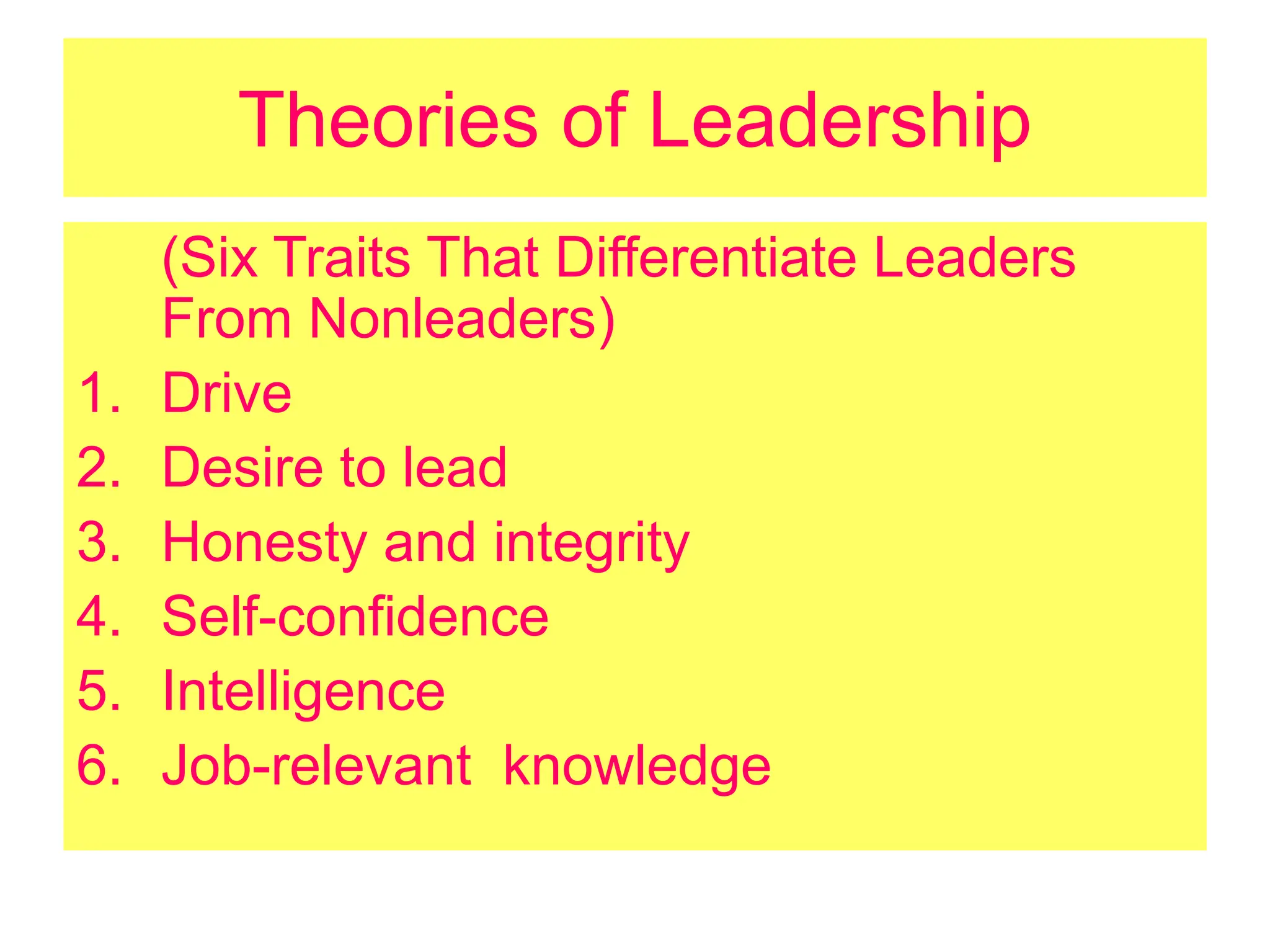
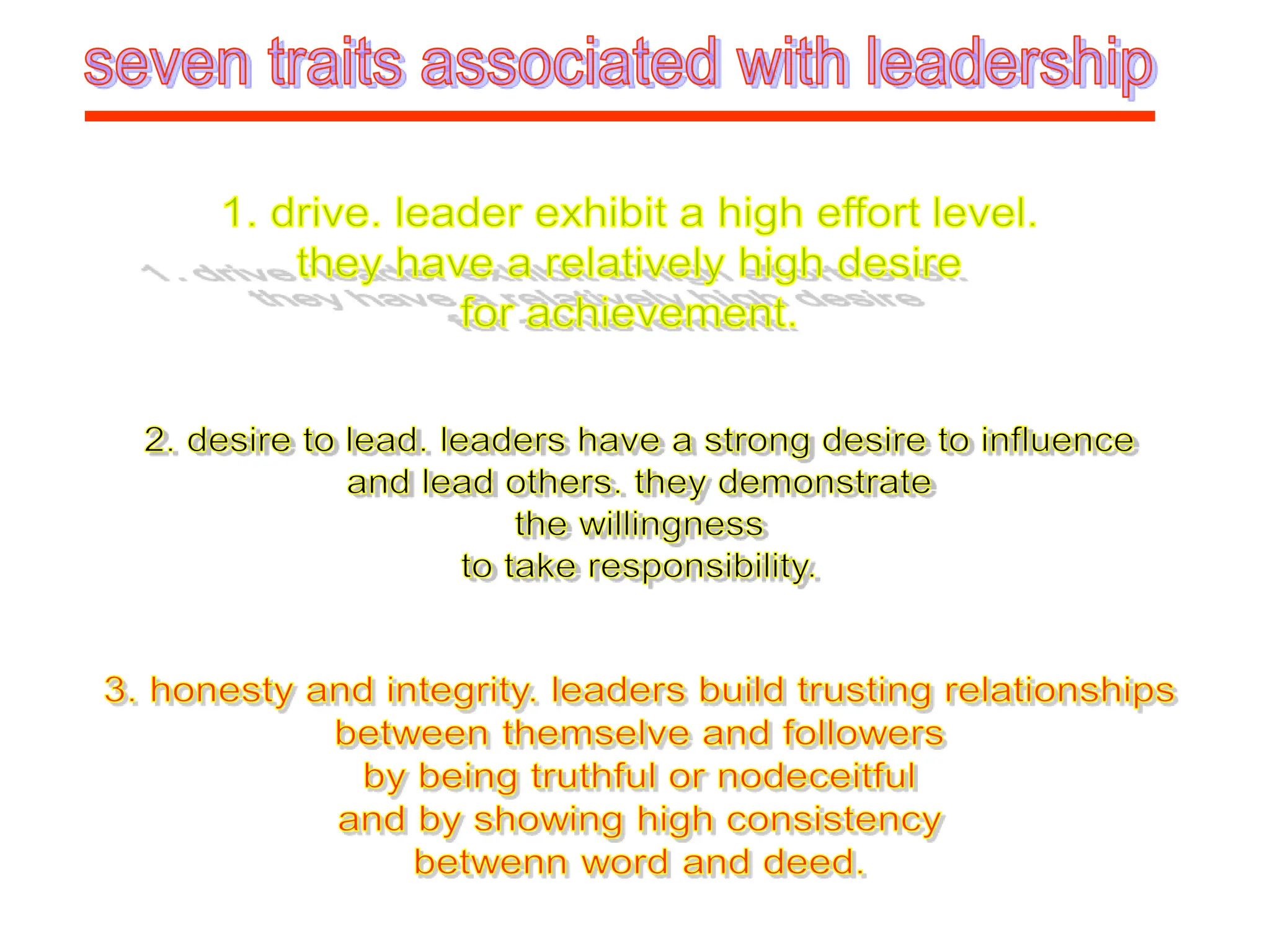
Theories of Leadership
(Six Traits That Differentiate Leaders
From Nonleaders)
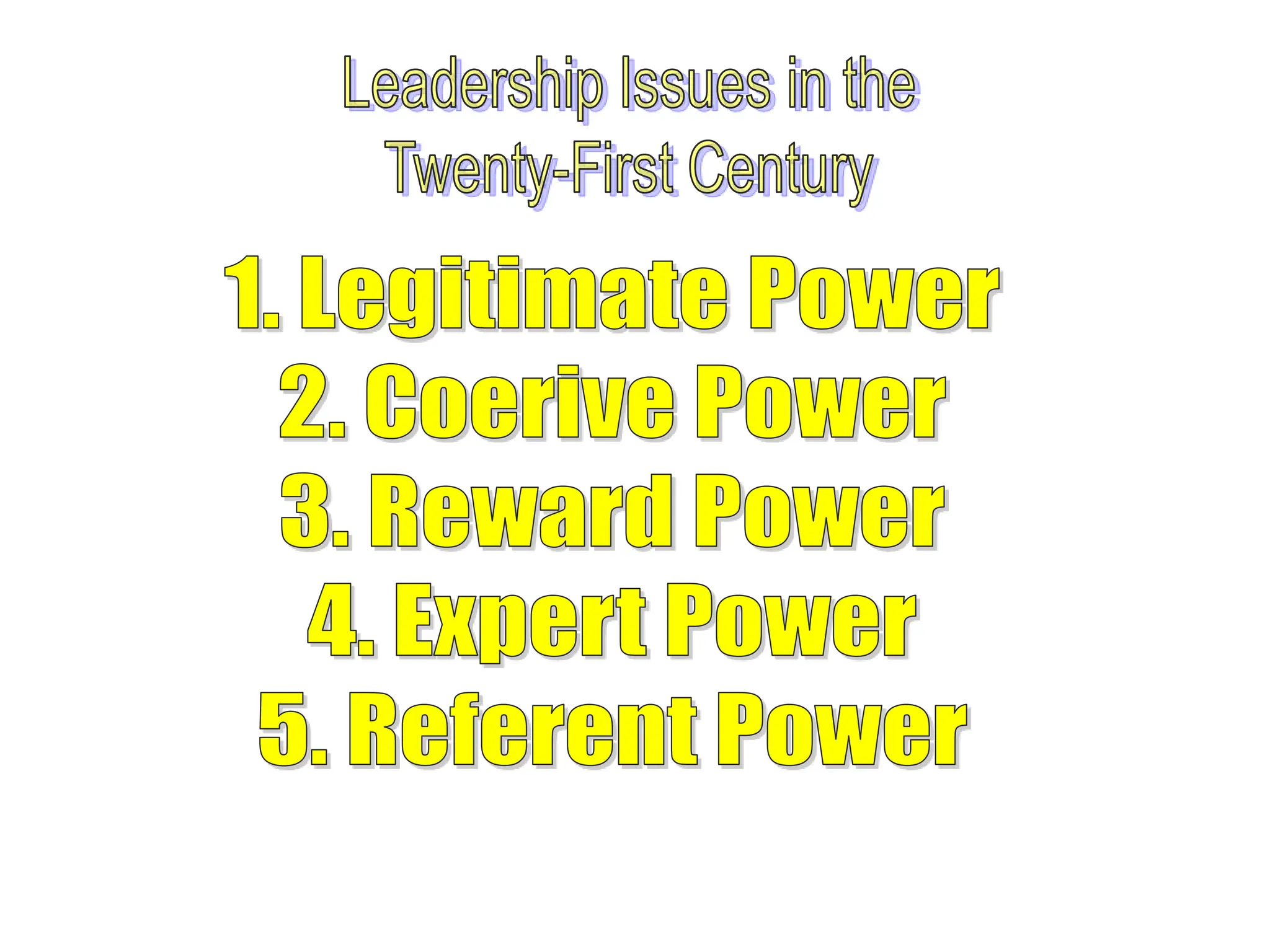
1. Drive
2. Desire to lead
3. Honesty and integrity
4. Self-confidence
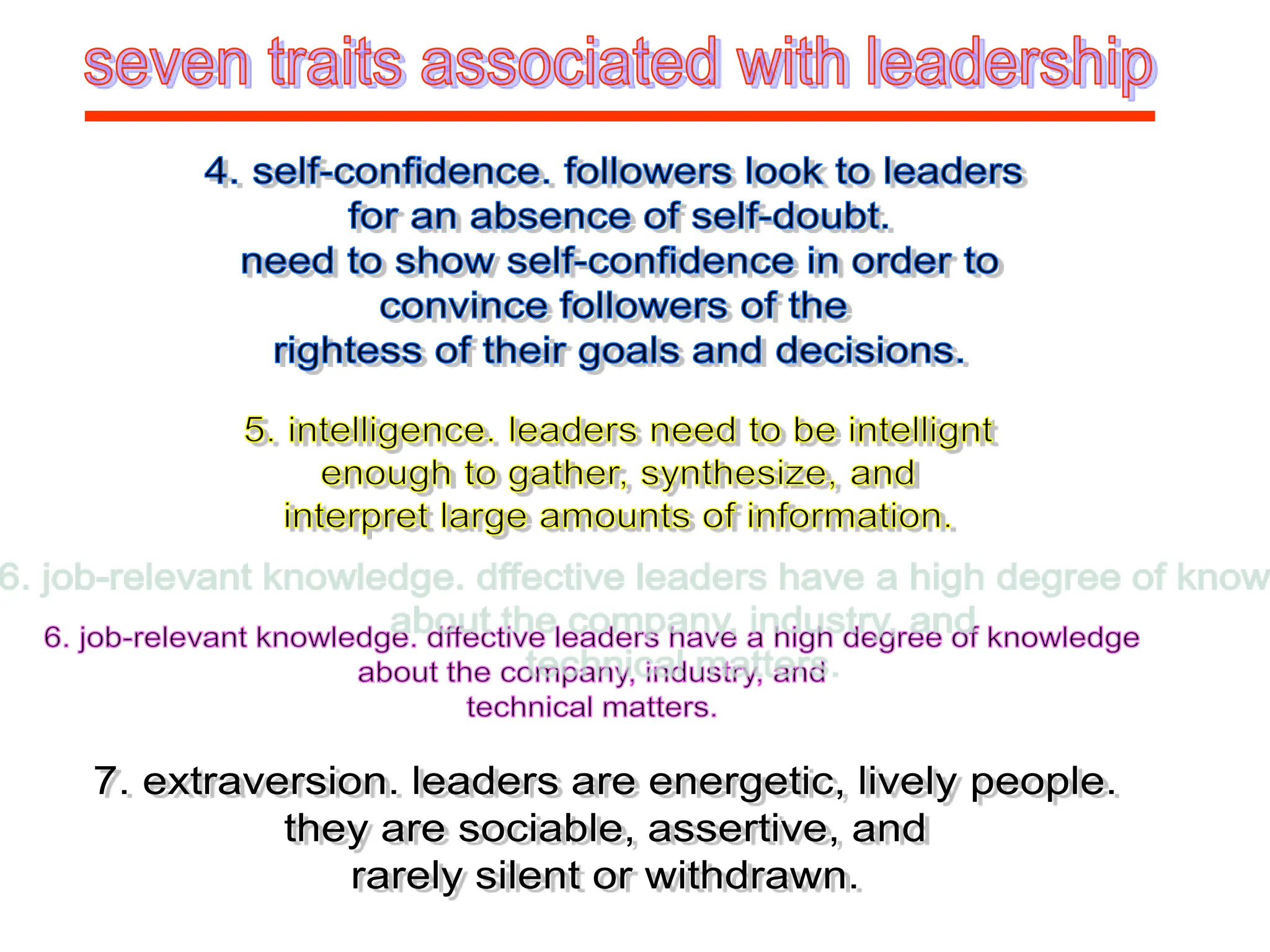
5. Intelligence
6. Job-relevant knowledge
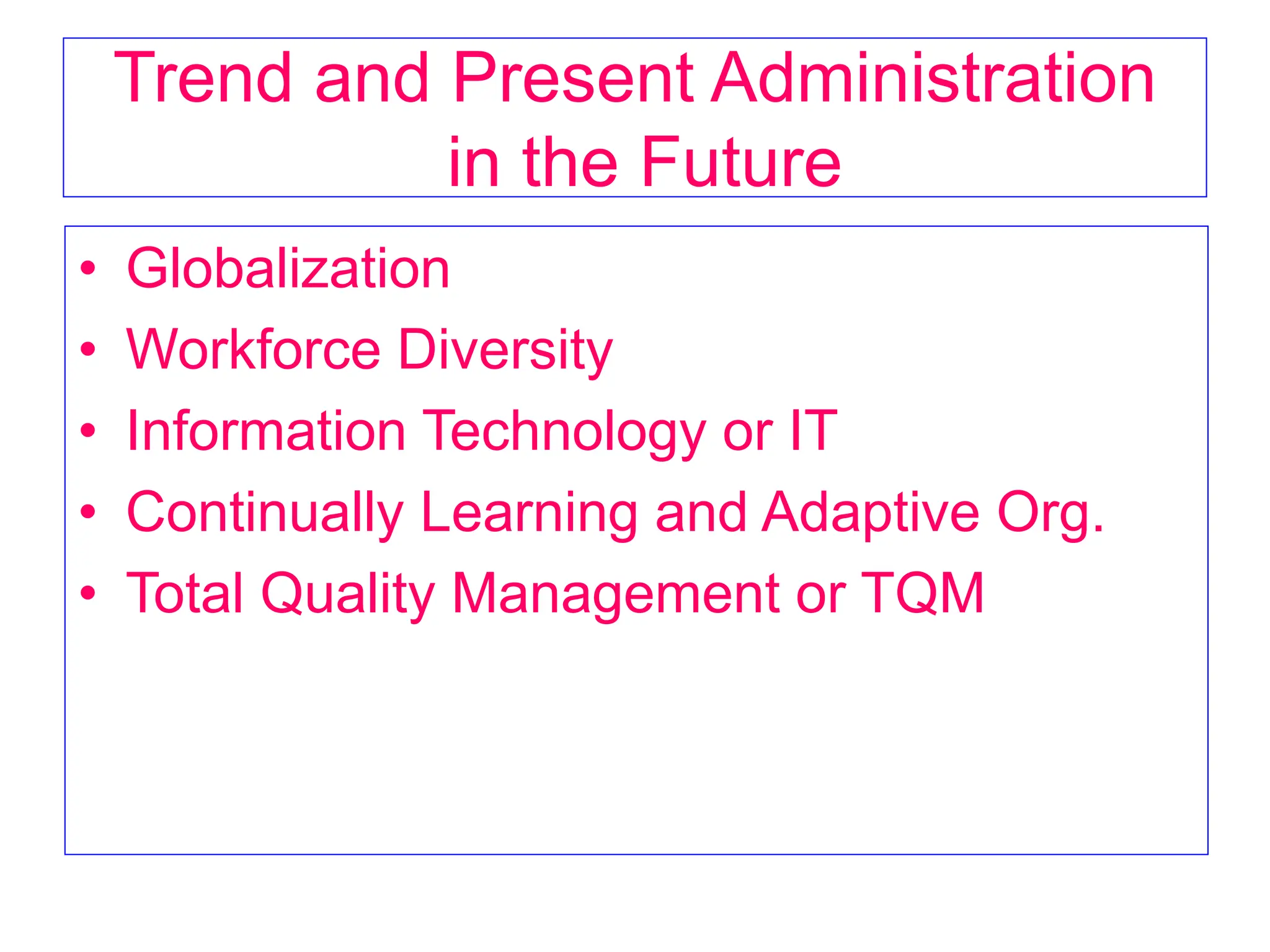
Trend and Present Administration
in the Future
• Globalization
• Workforce Diversity
• Information Technology or IT
• Continually Learning and Adaptive Org.
• Total Quality Management or TQM
Organizational Culture
and Environment
Songklot Phonphuak…Lecturer
Joke1977@hotmail.com
089-9912087
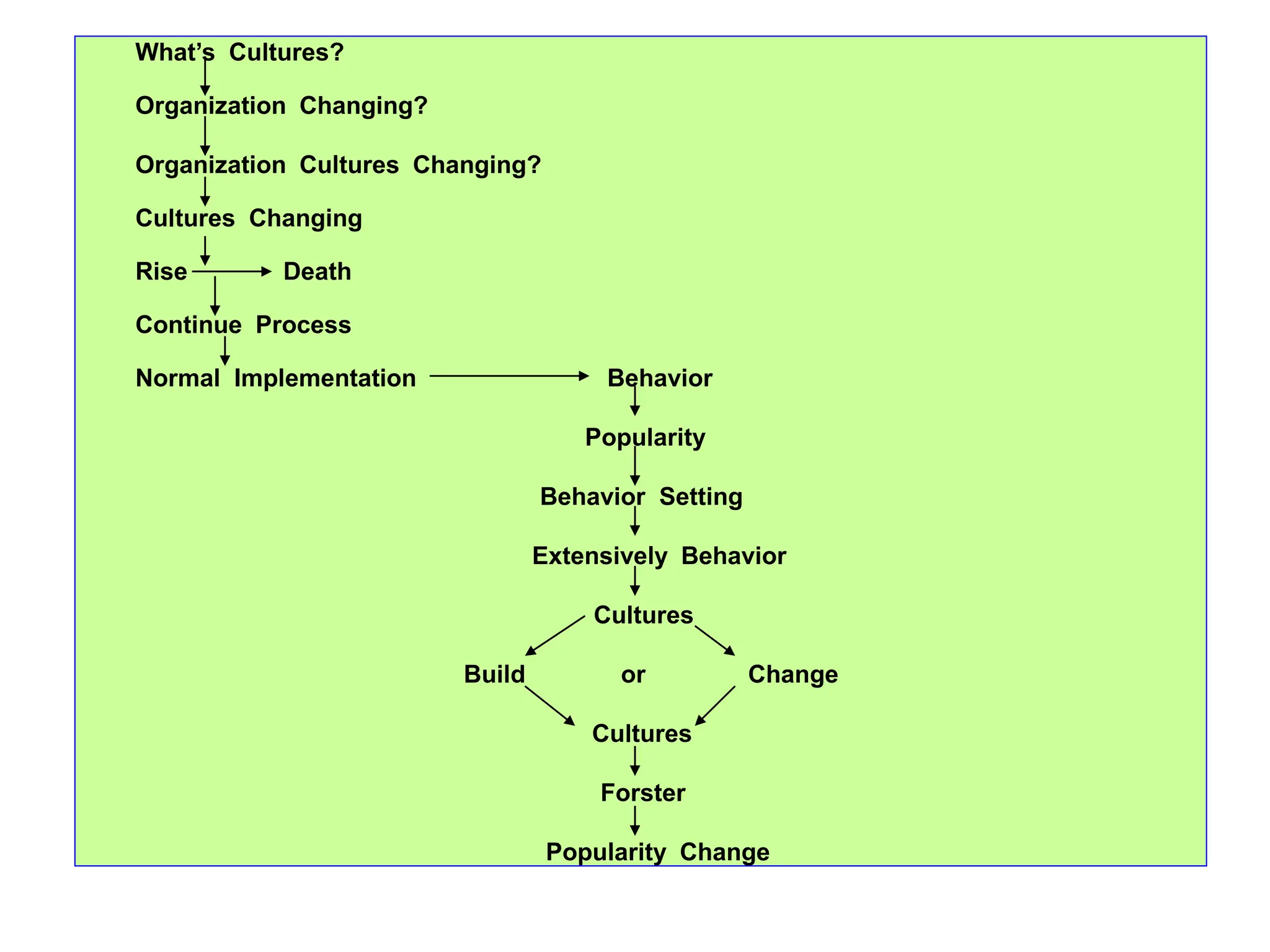
What’s Cultures?
Organization Changing?
Organization Cultures Changing?
Cultures Changing
Rise Death
Continue Process
Normal Implementation Behavior
Popularity
Behavior Setting
Extensively Behavior
Cultures
Build or Change
Cultures
Forster
Popularity Change
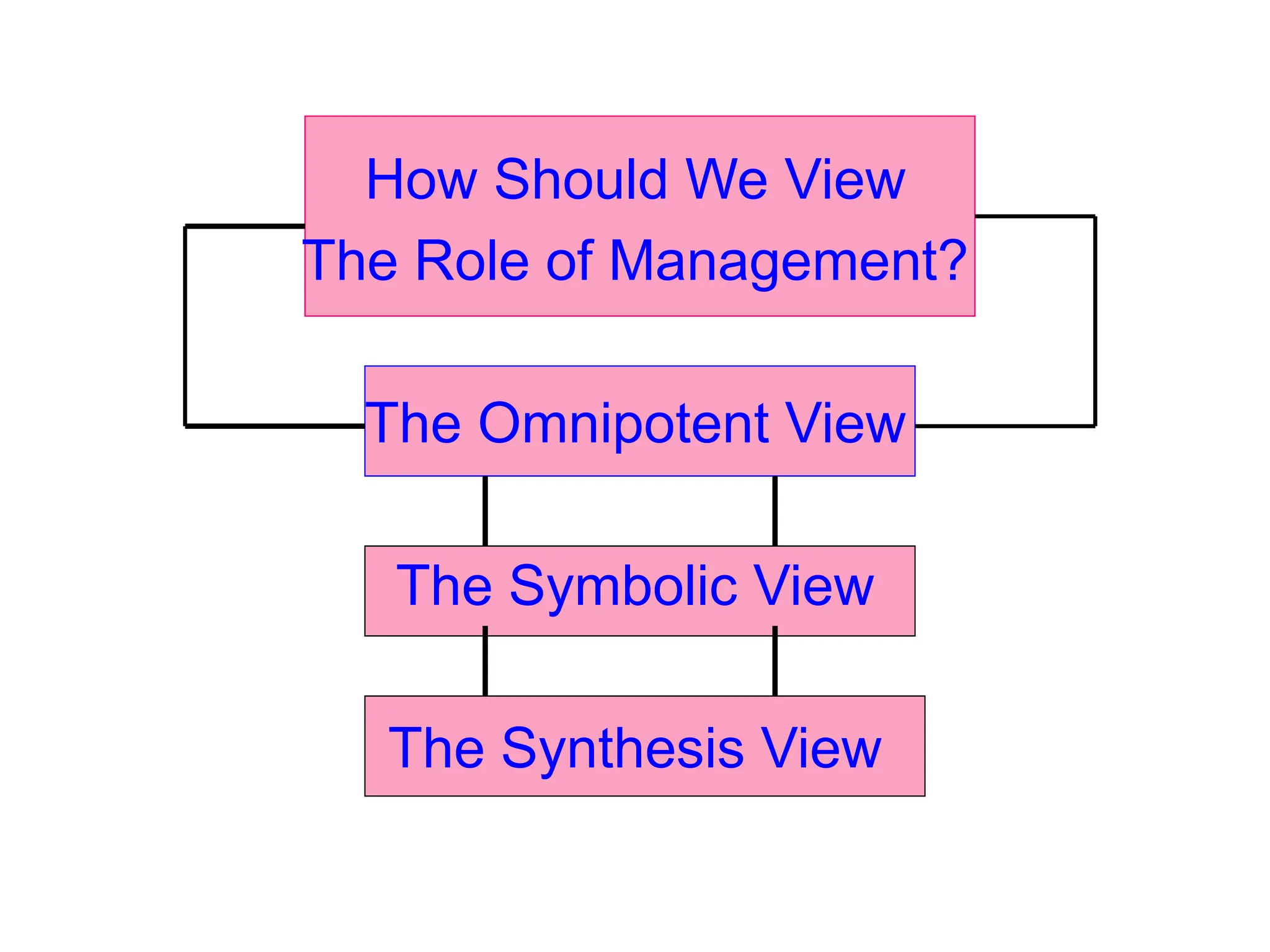
How Should We View
The Role of Management?
The Omnipotent View
The Symbolic View
The Synthesis View
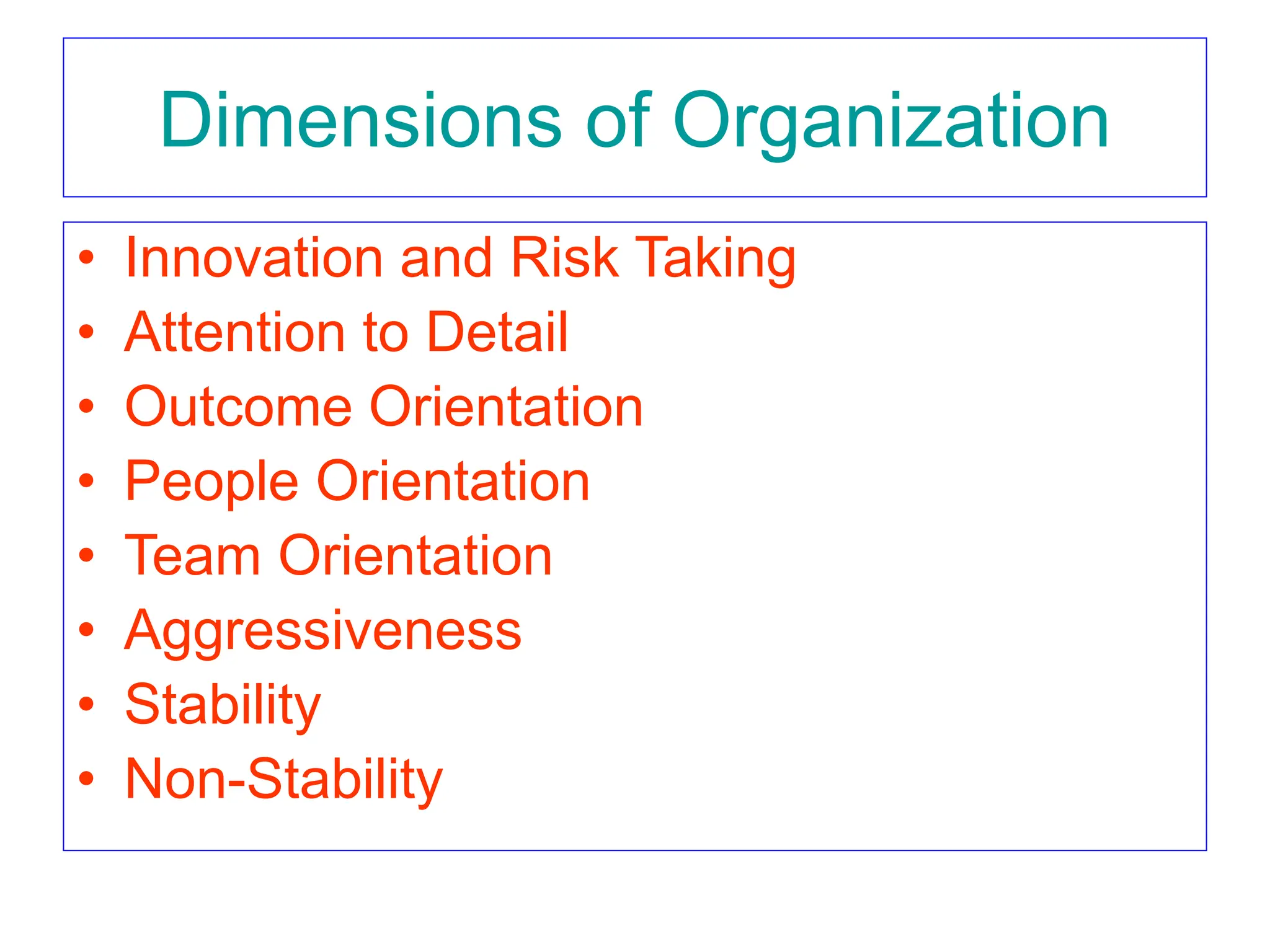
Dimensions of Organization
• Innovation and Risk Taking
• Attention to Detail
• Outcome Orientation
• People Orientation
• Team Orientation
• Aggressiveness
• Stability
• Non-Stability
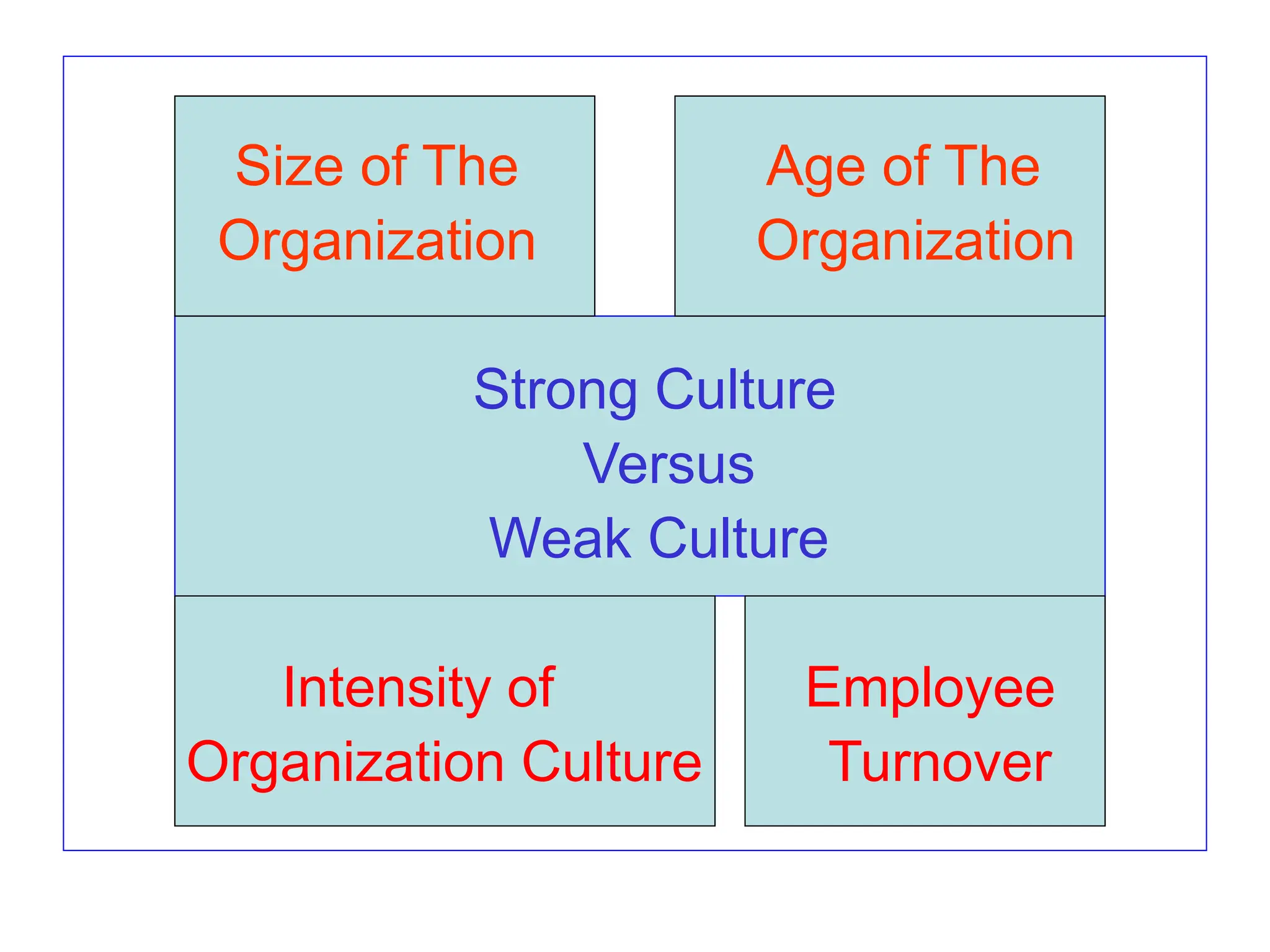
Size of The Age of The
Organization Organization
Strong Culture
Versus
Weak Culture
Intensity of Employee
Organization Culture Turnover
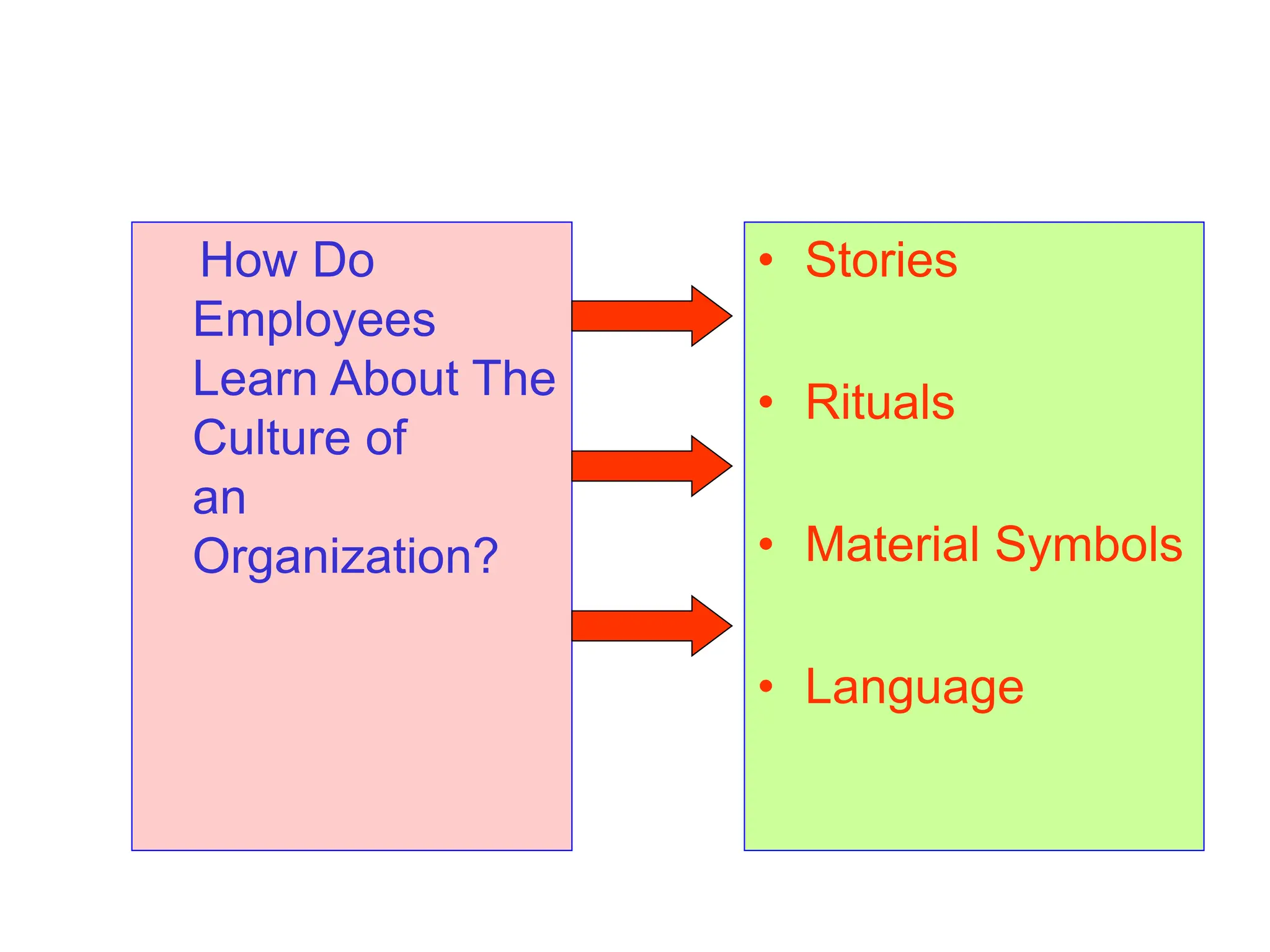
How Do
Employees
Learn About The
Culture of
an
Organization?
• Stories
• Rituals
• Material Symbols
• Language
Globalization
Managing The Global Environment
(Organization and Management)
Songklot Phonpuak…Lecturer
Joke1977@hotmail.com
089-9912087
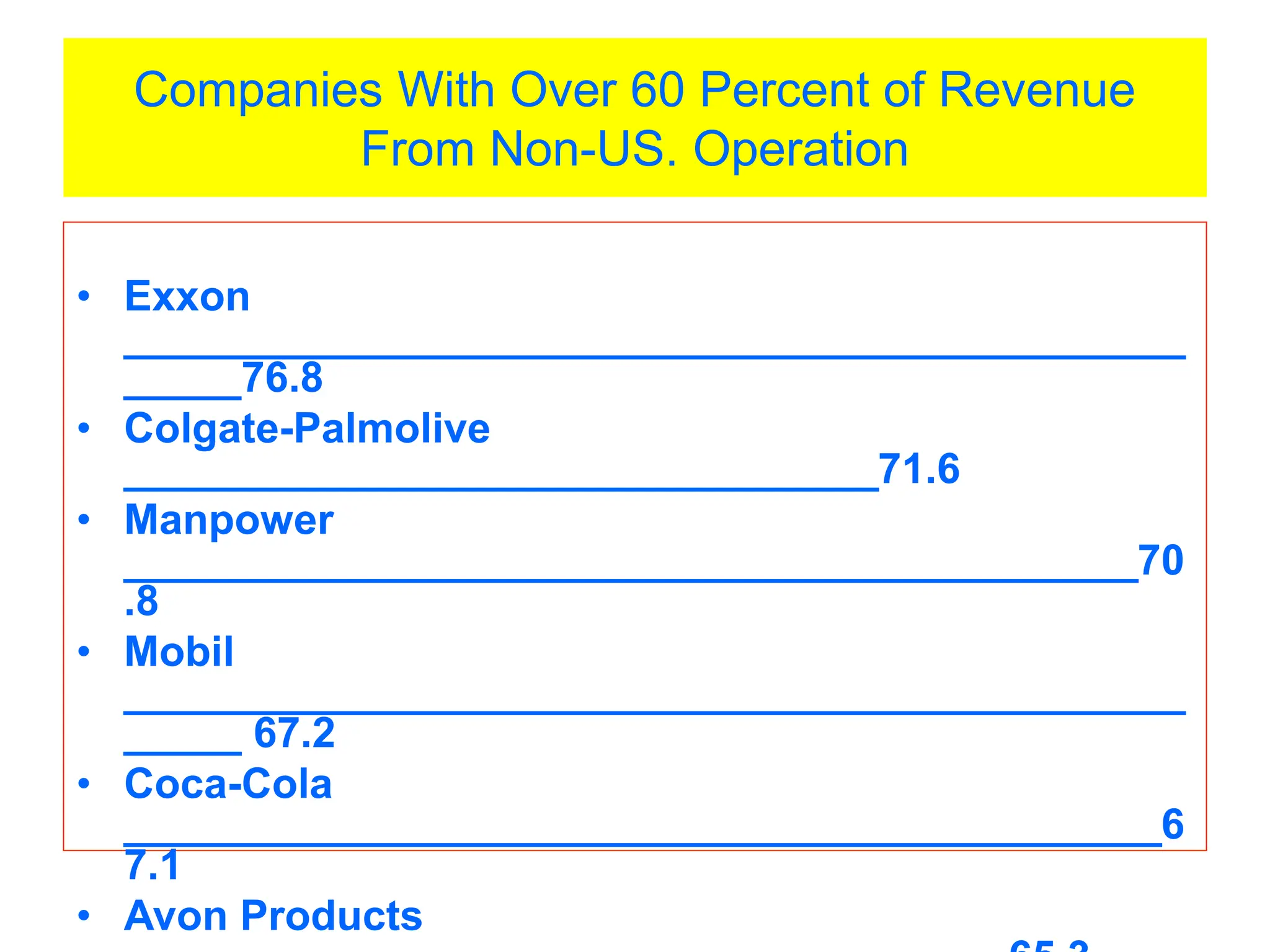
Companies With Over 60 Percent of Revenue
From Non-US. Operation
• Exxon
_____________________________________________
_____76.8
• Colgate-Palmolive
________________________________71.6
• Manpower
___________________________________________70
.8
• Mobil
_____________________________________________
_____ 67.2
• Coca-Cola
____________________________________________6
7.1
• Avon Products
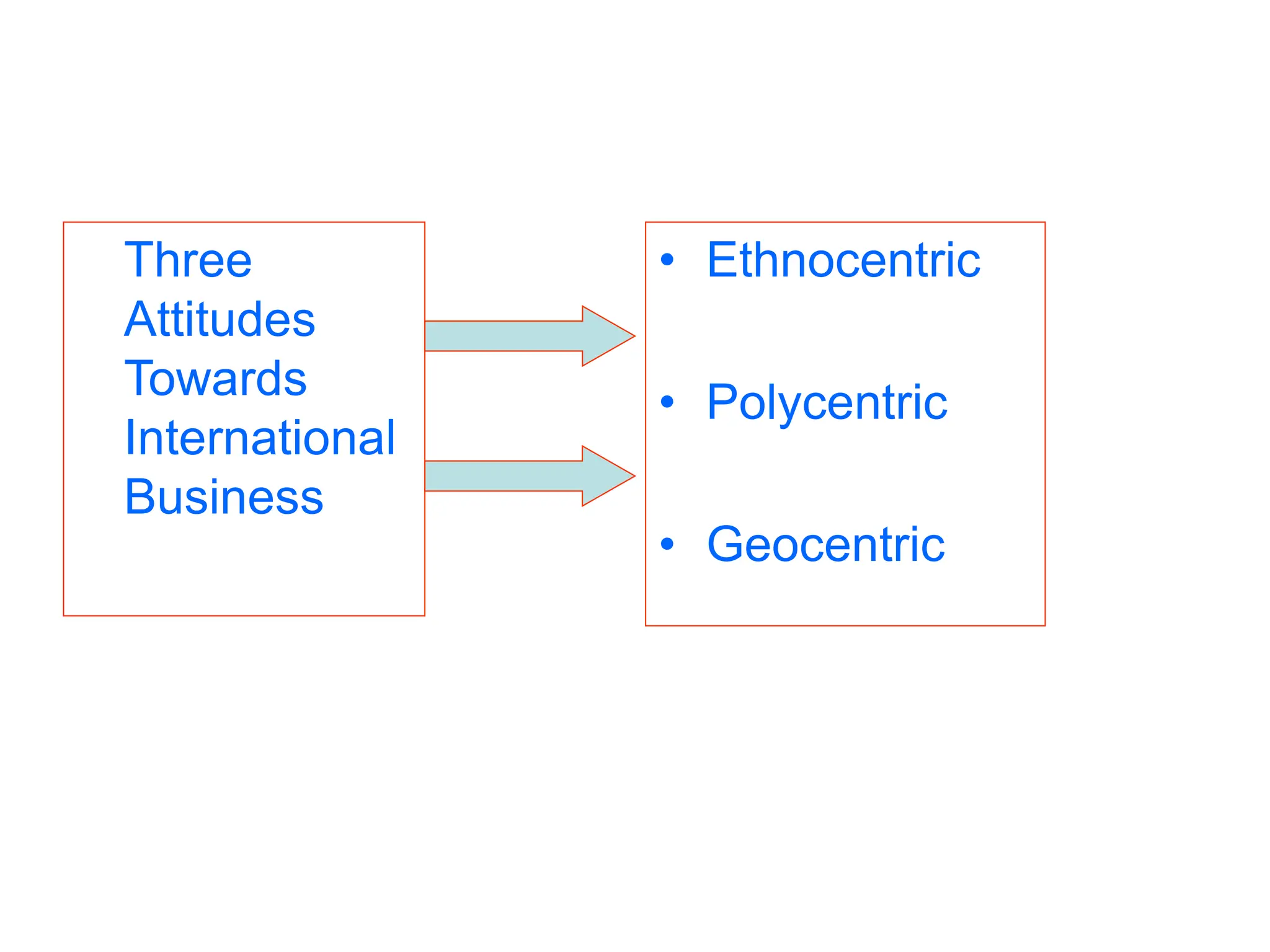
Three
Attitudes
Towards
International
Business
• Ethnocentric
• Polycentric
• Geocentric
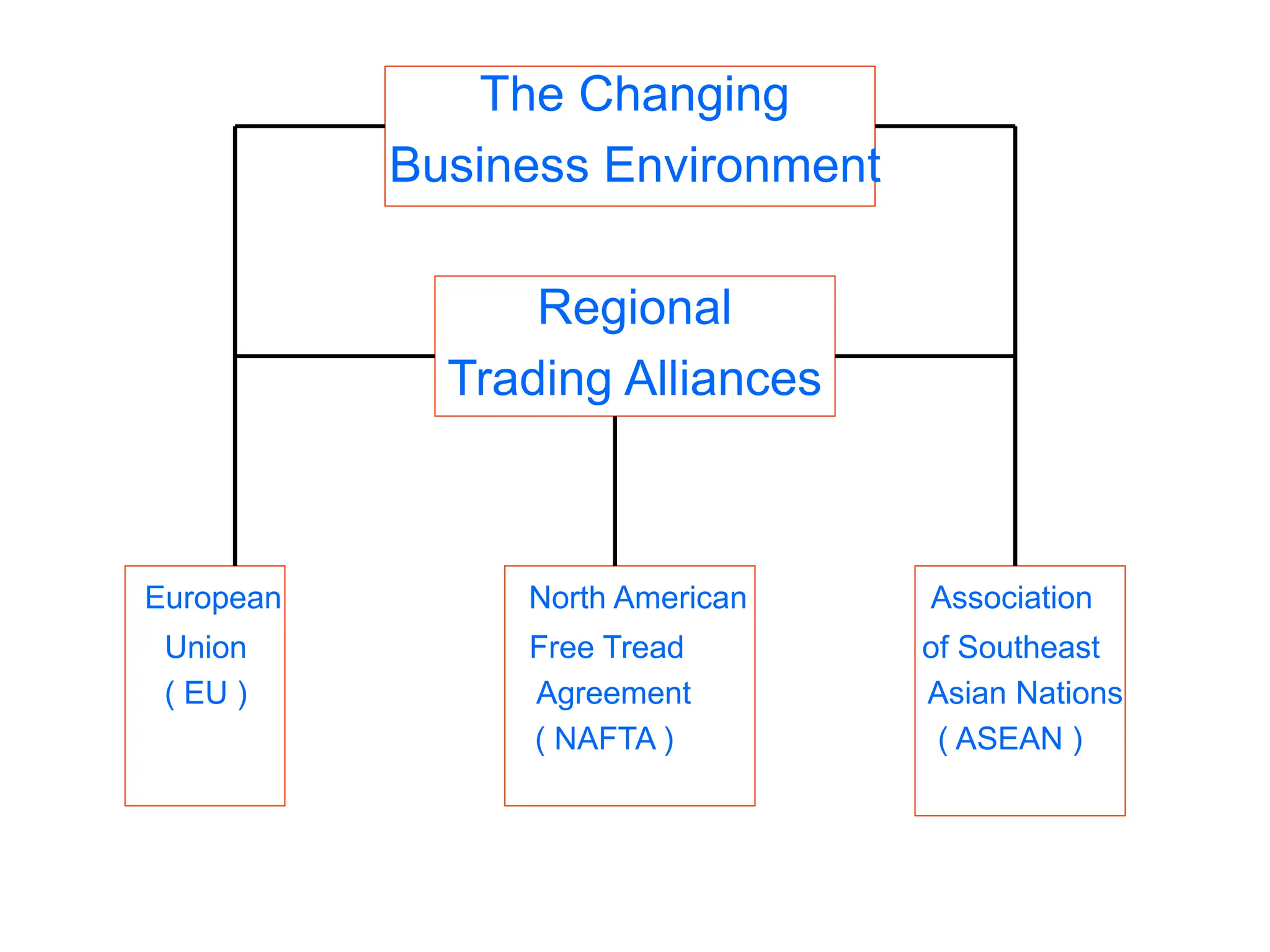
The Changing
Business Environment
Regional
Trading Alliances
European North American Association
Union Free Tread of Southeast
( EU ) Agreement Asian Nations
( NAFTA ) ( ASEAN )
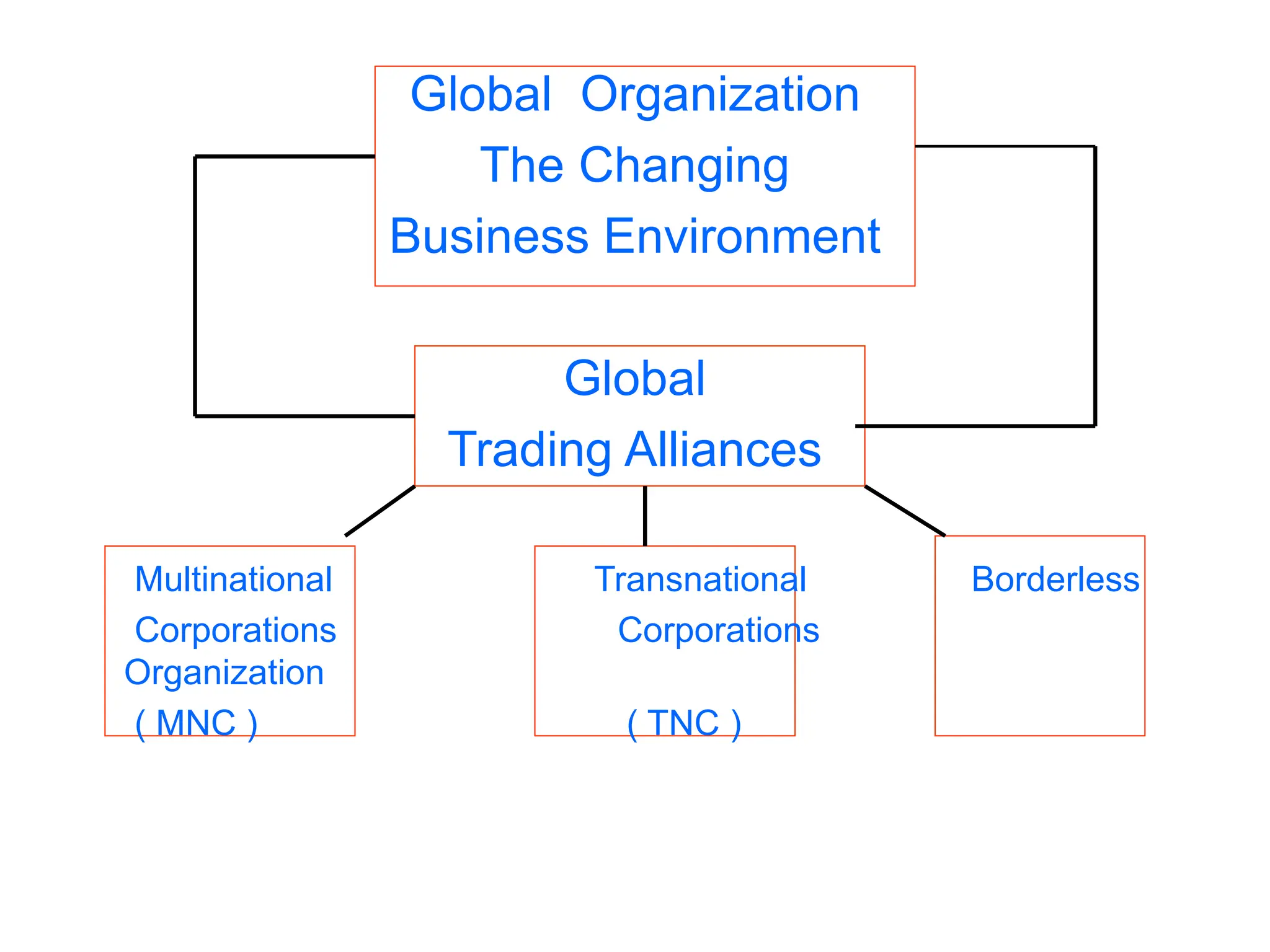
Global Organization
The Changing
Business Environment
Global
Trading Alliances
Multinational Transnational Borderless
Corporations Corporations
Organization
( MNC ) ( TNC )
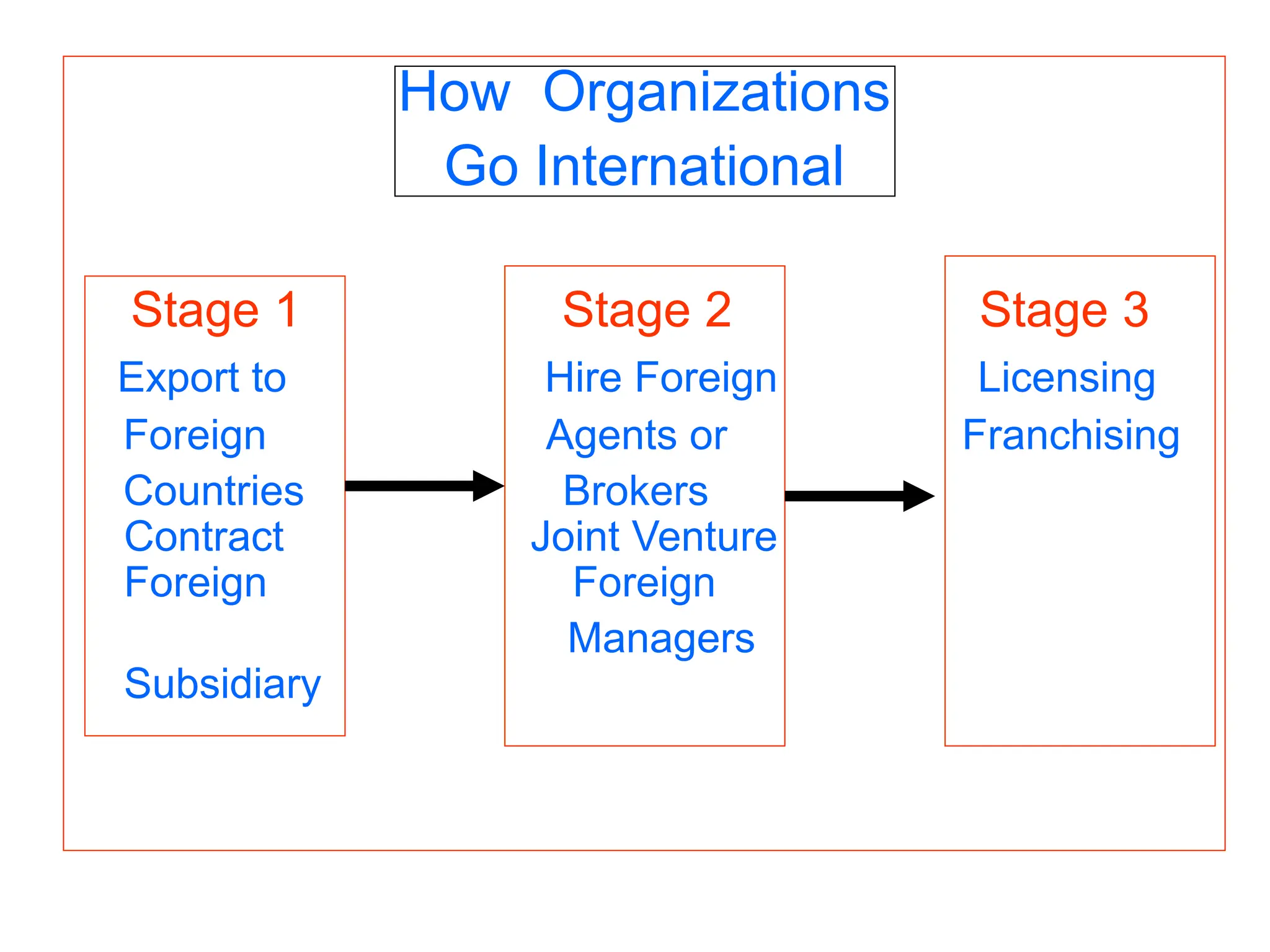
How Organizations
Go International
Stage 1 Stage 2 Stage 3
Export to Hire Foreign Licensing
Foreign Agents or Franchising
Countries Brokers
Contract Joint Venture
Foreign Foreign
Managers
Subsidiary
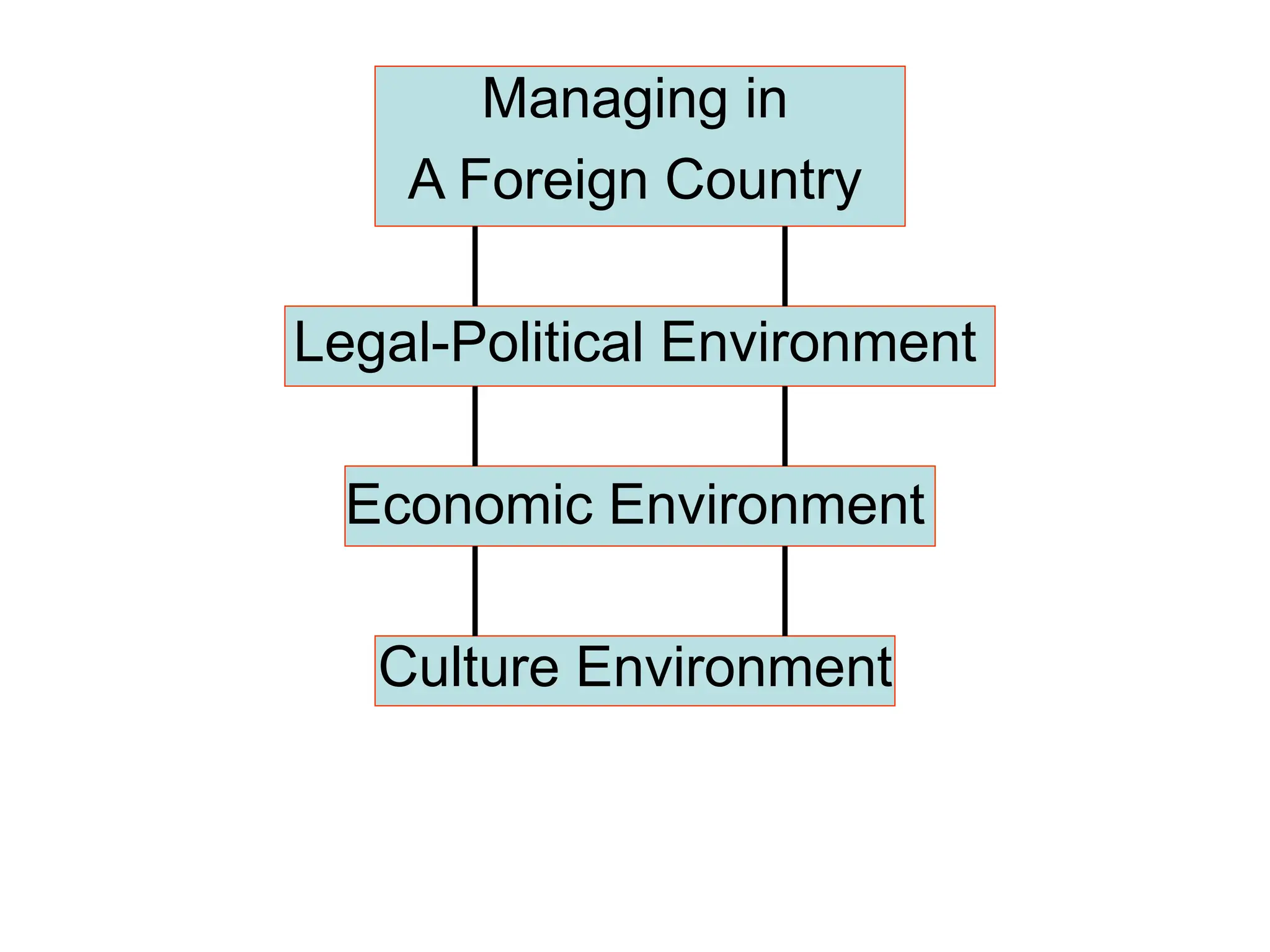
Managing in
A Foreign Country
Legal-Political Environment
Economic Environment
Culture Environment
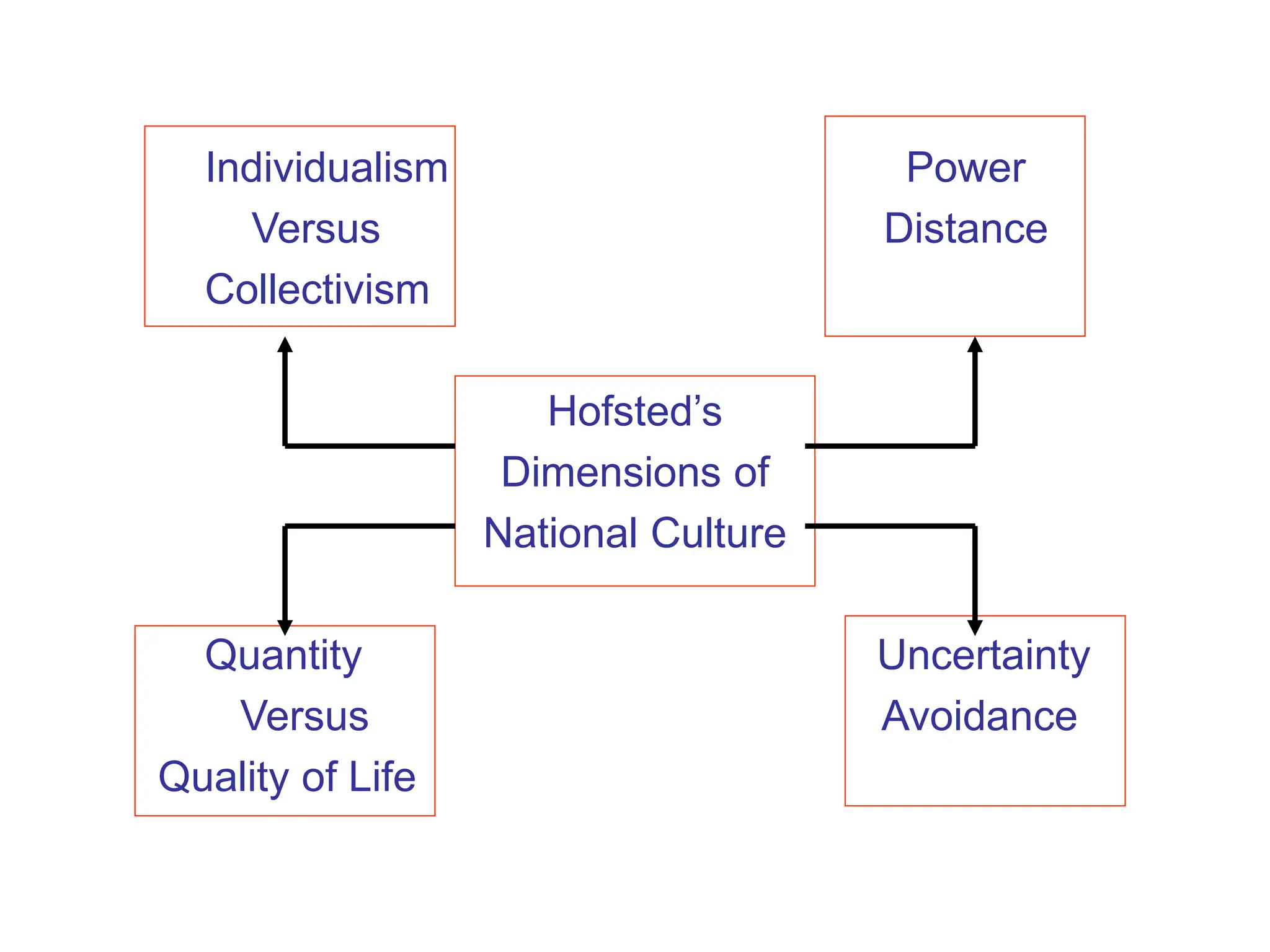
Individualism Power
Versus Distance
Collectivism
Hofsted’s
Dimensions of
National Culture
Quantity Uncertainty
Versus Avoidance
Quality of Life
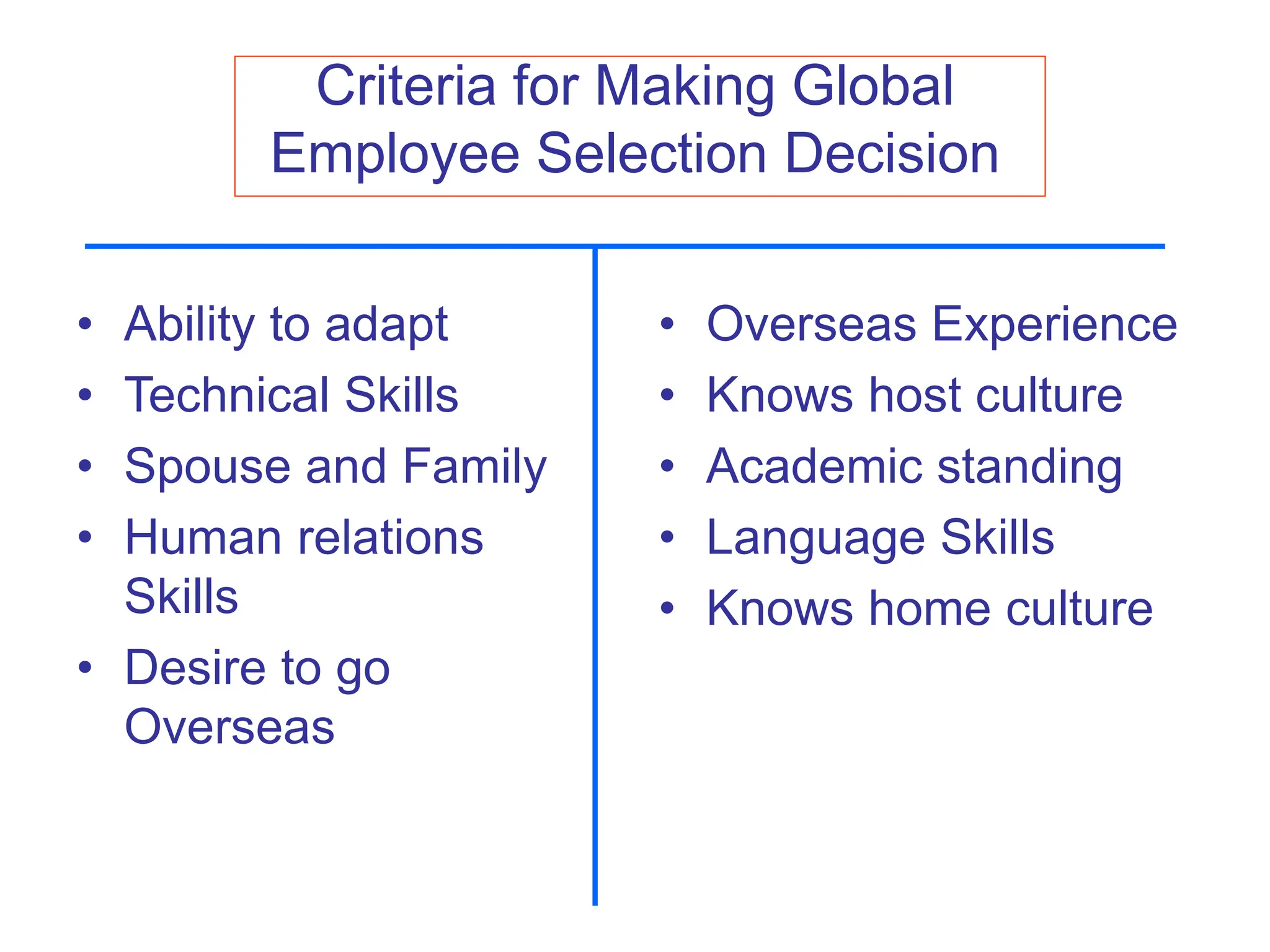
Criteria for Making Global
Employee Selection Decision
• Ability to adapt
• Technical Skills
• Spouse and Family
• Human relations
Skills
• Desire to go
Overseas
• Overseas Experience
• Knows host culture
• Academic standing
• Language Skills
• Knows home culture
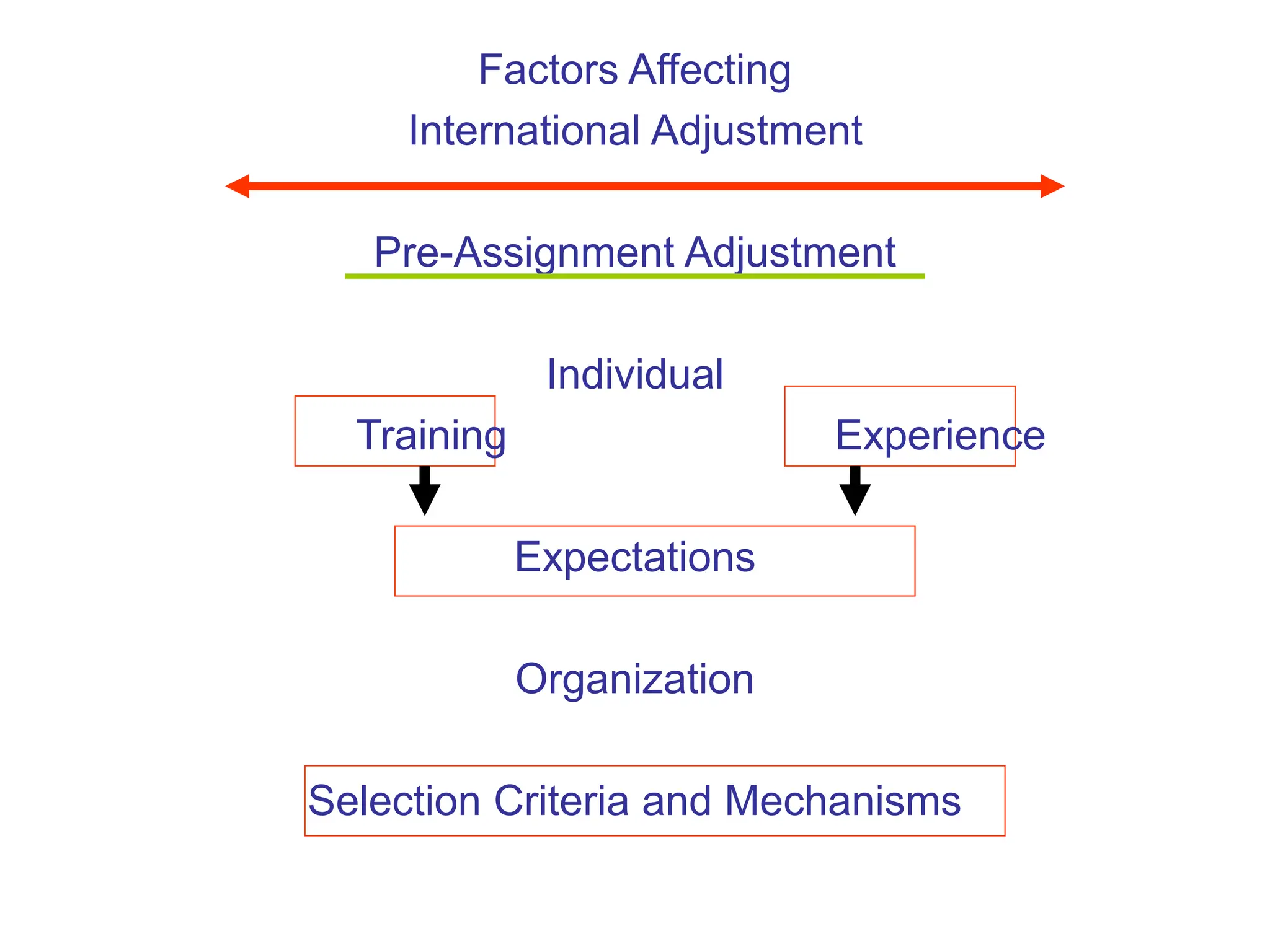
Factors Affecting
International Adjustment
Pre-Assignment Adjustment
Individual
Training Experience
Expectations
Organization
Selection Criteria and Mechanisms
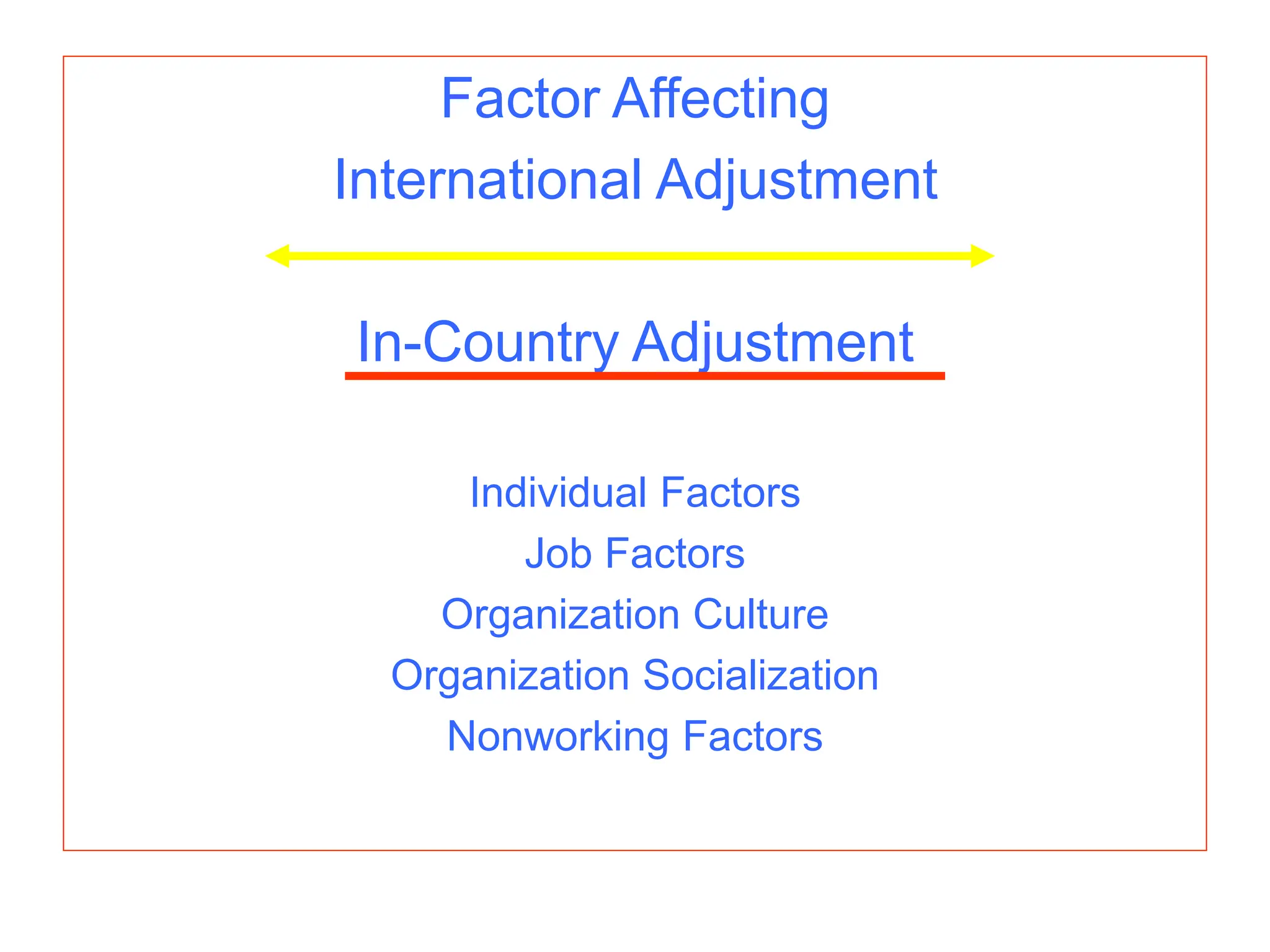
Factor Affecting
International Adjustment
In-Country Adjustment
Individual Factors
Job Factors
Organization Culture
Organization Socialization
Nonworking Factors
Decision Making : The
Essence of the Managers’ Job
Songklot Phonphuak…Lecturer
089-9912087
Joke1977@hotmail.com
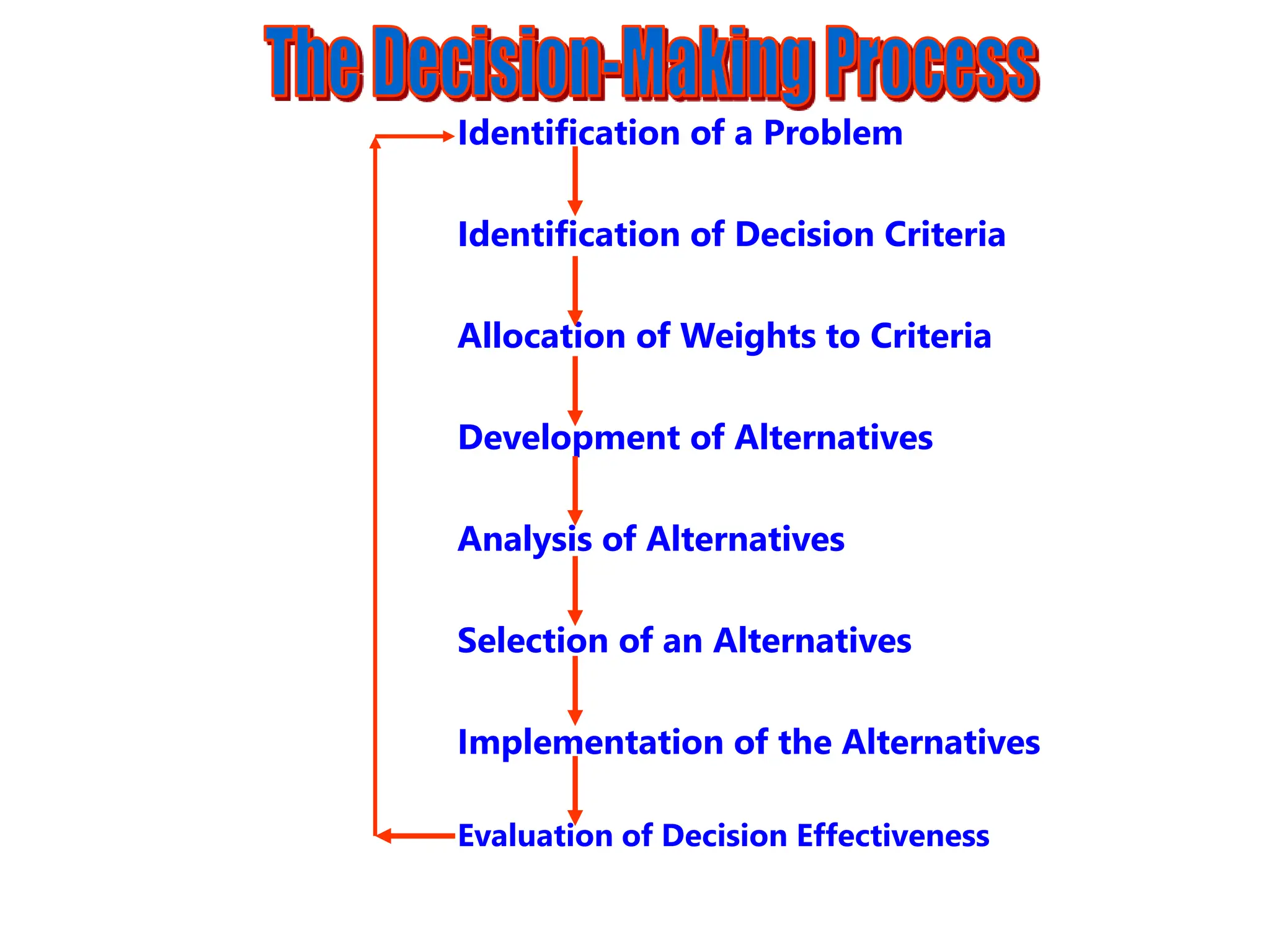
Identification of a Problem
Identification of Decision Criteria
Allocation of Weights to Criteria
Development of Alternatives
Analysis of Alternatives
Selection of an Alternatives
Implementation of the Alternatives
Evaluation of Decision Effectiveness
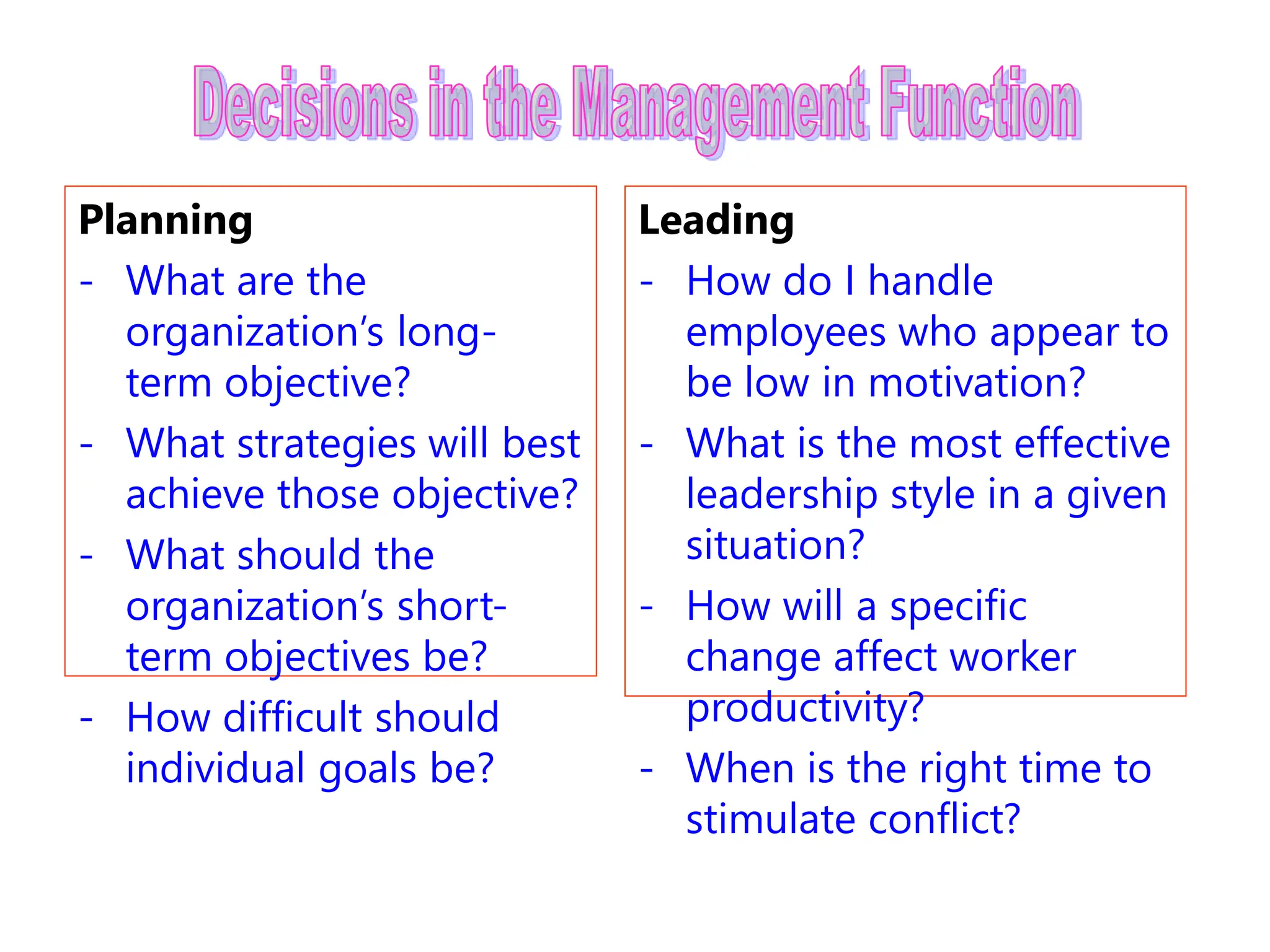
Planning
- What are the
organization’s long-
term objective?
- What strategies will best
achieve those objective?
- What should the
organization’s short-
term objectives be?
- How difficult should
individual goals be?
Leading
- How do I handle
employees who appear to
be low in motivation?
- What is the most effective
leadership style in a given
situation?
- How will a specific
change affect worker
productivity?
- When is the right time to
stimulate conflict?
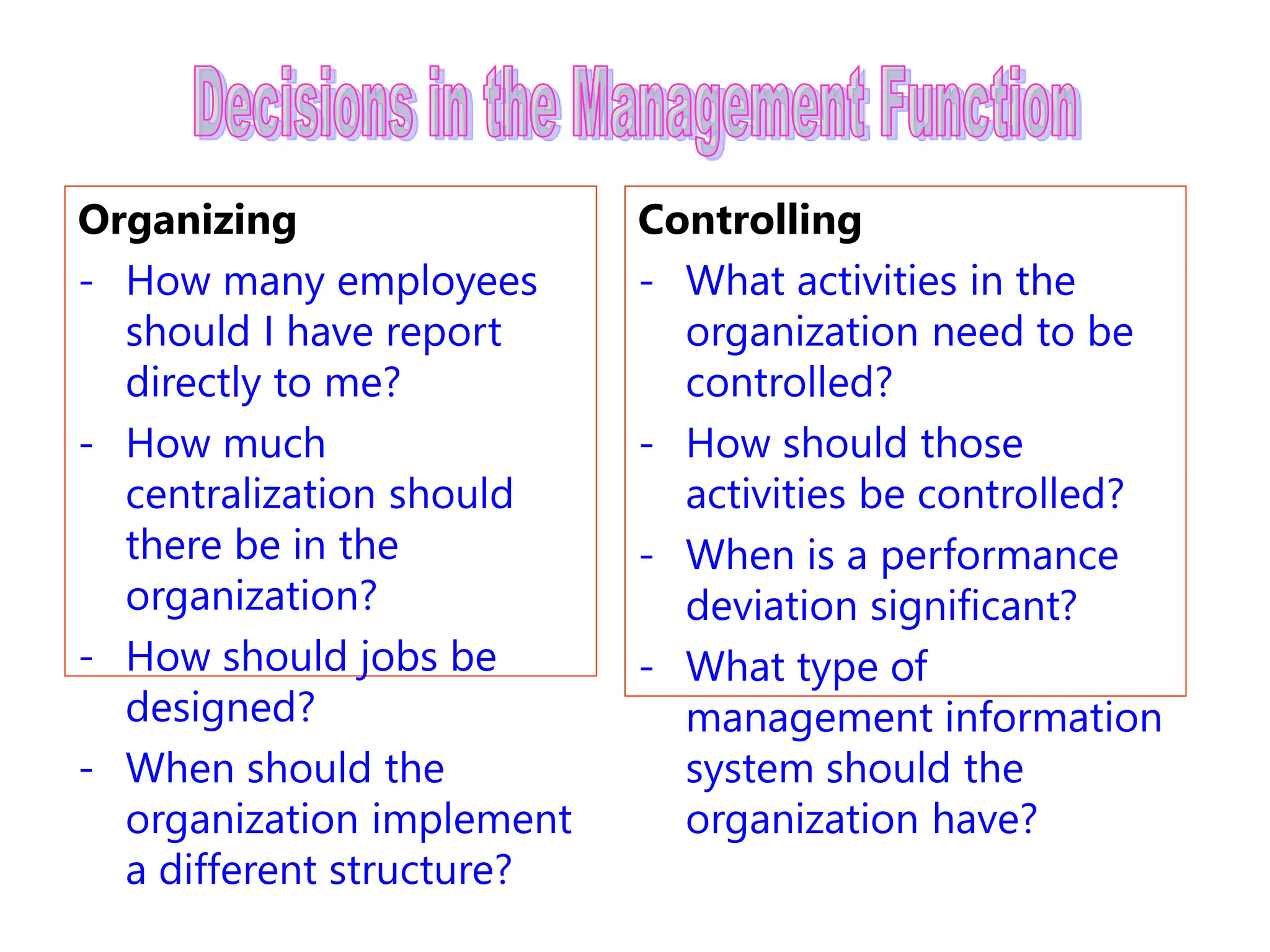
Organizing
- How many employees
should I have report
directly to me?
- How much
centralization should
there be in the
organization?
- How should jobs be
designed?
- When should the
organization implement
a different structure?
Controlling
- What activities in the
organization need to be
controlled?
- How should those
activities be controlled?
- When is a performance
deviation significant?
- What type of
management information
system should the
organization have?
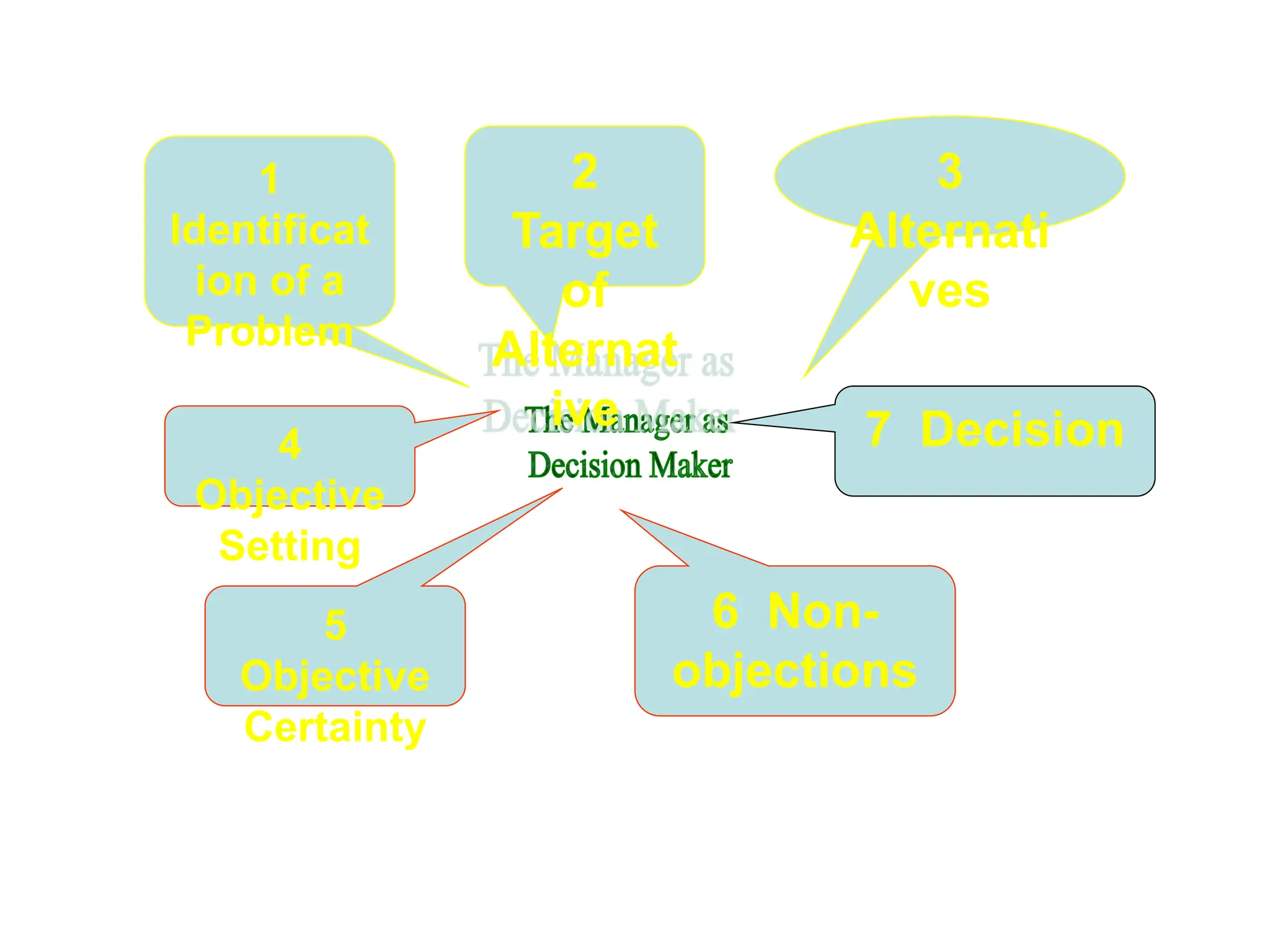
1
Identificat
ion of a
Problem
2
Target
of
Alternat
ive
3
Alternati
ves
5
Objective
Certainty
6 Non-
objections
7 Decision
4
Objective
Setting
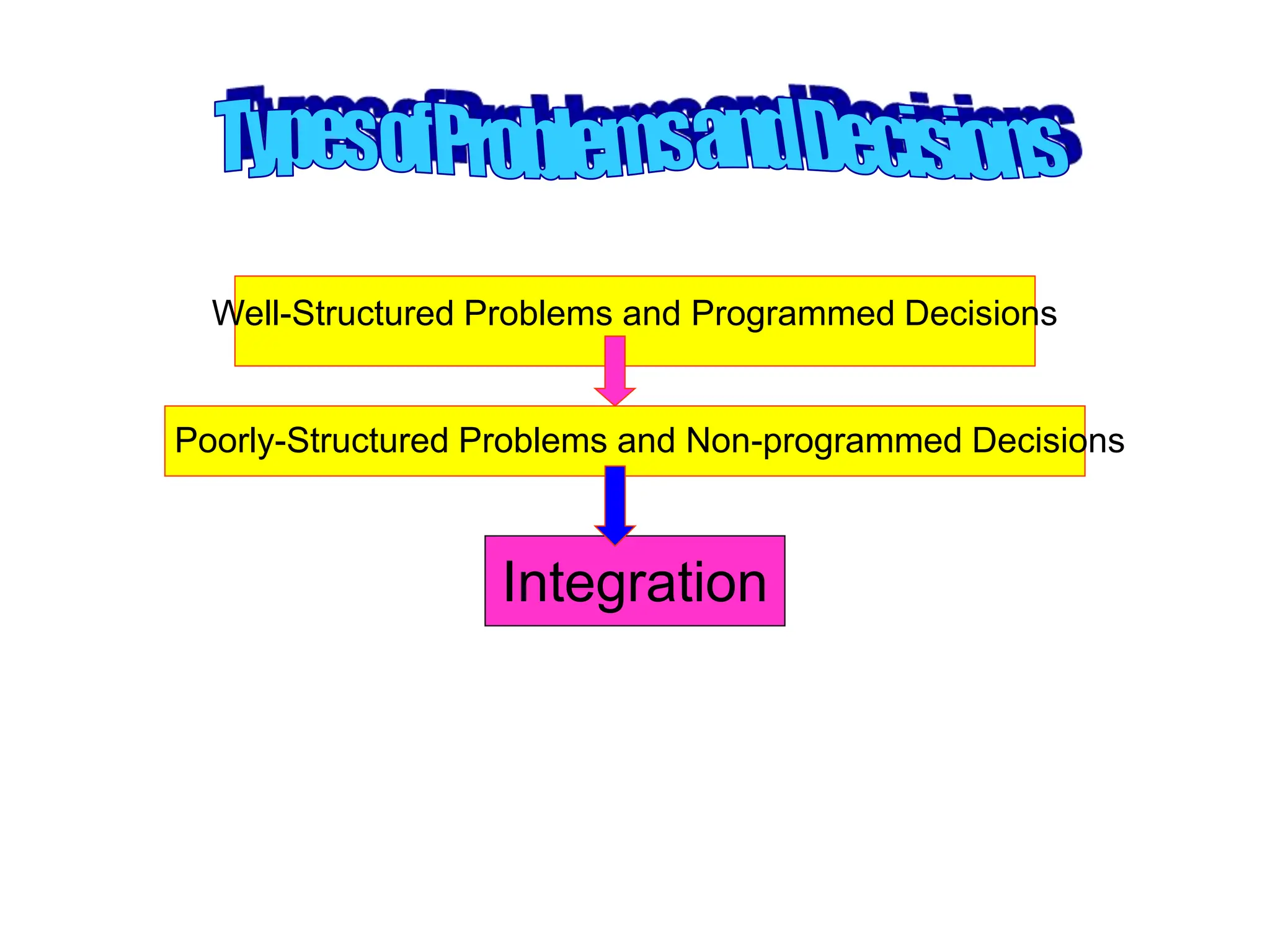
Well-Structured Problems and Programmed Decisions
Poorly-Structured Problems and Non-programmed Decisions
Integration
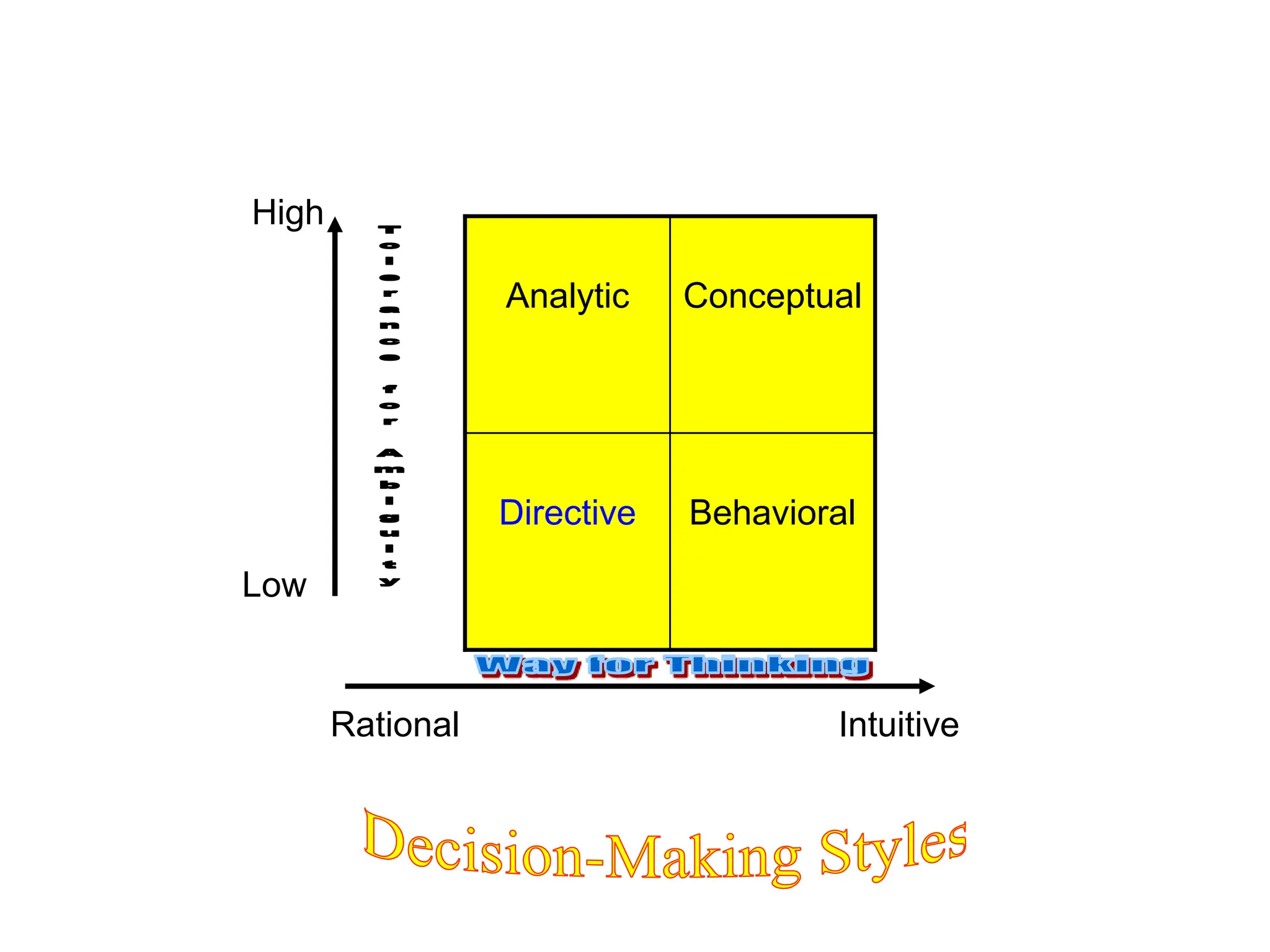
High
Low
Rational Intuitive
Analytic Conceptual
Directive Behavioral
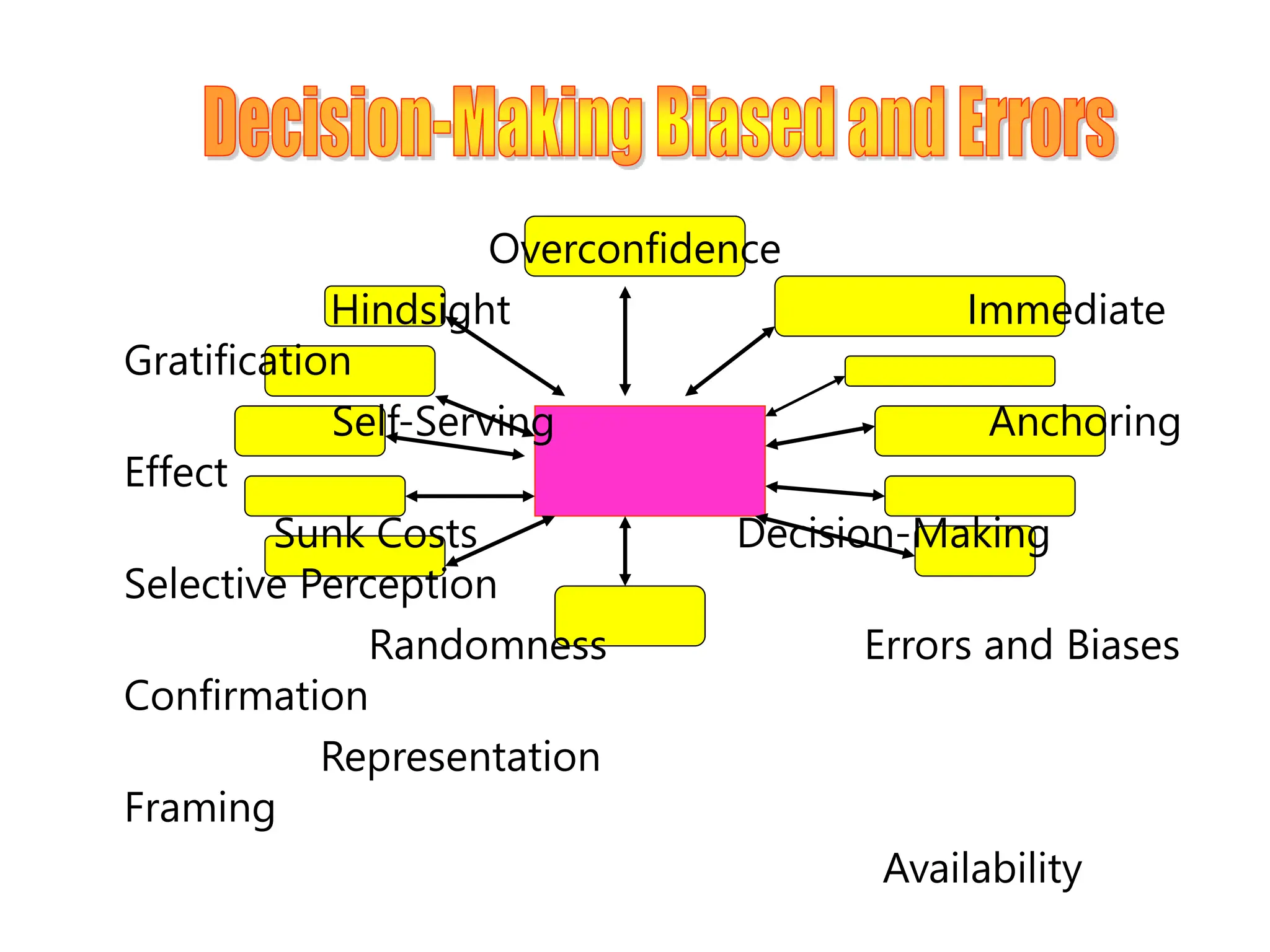
Overconfidence
Hindsight Immediate
Gratification
Self-Serving Anchoring
Effect
Sunk Costs Decision-Making
Selective Perception
Randomness Errors and Biases
Confirmation
Representation
Framing
Availability
Foundations of Planning
Songklot Phonphuak…Lecturer
Joke1977@hotmail.com
089-9912087
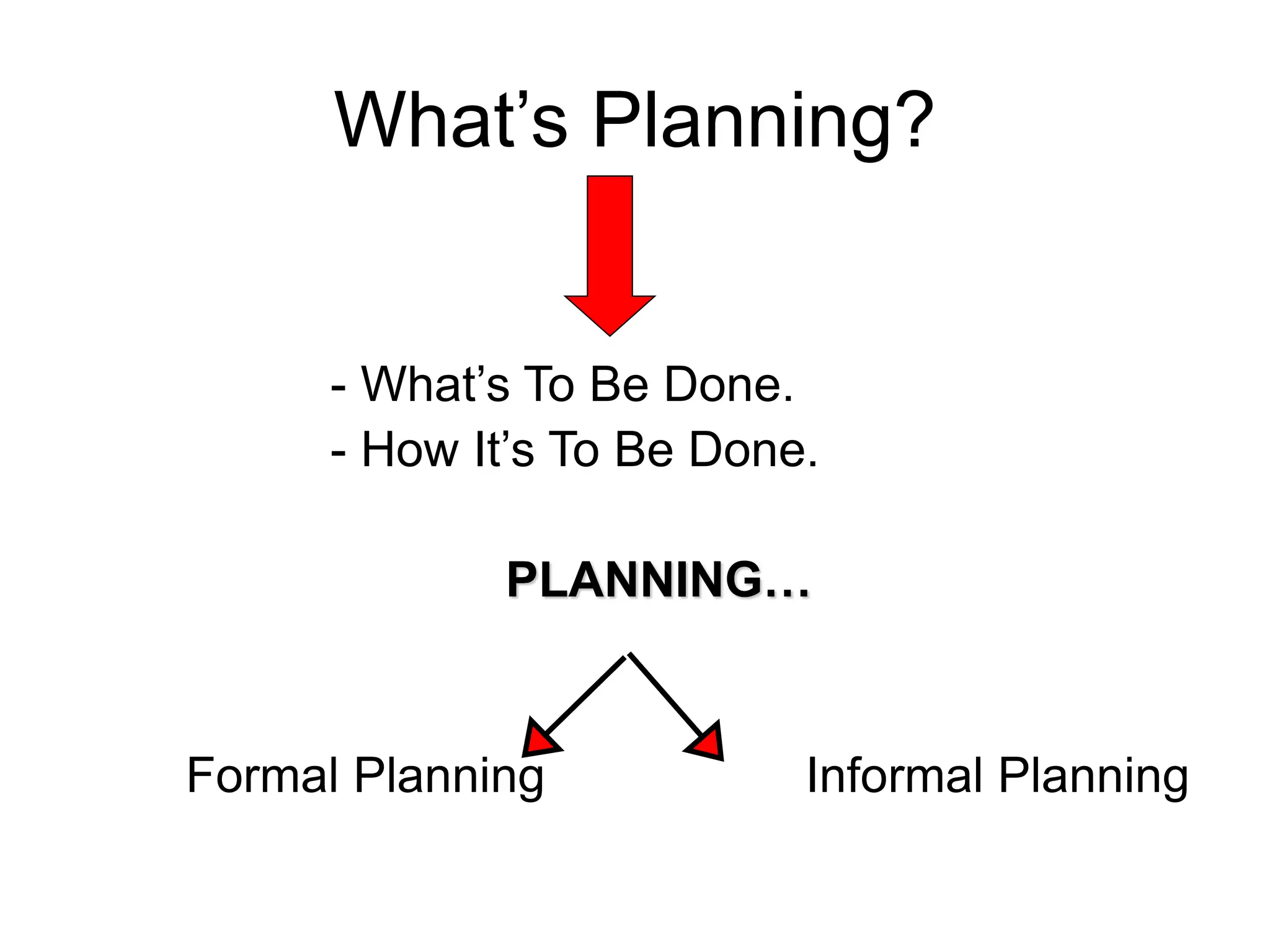
What’s Planning?
- What’s To Be Done.
- How It’s To Be Done.
PLANNING…
Formal Planning Informal Planning
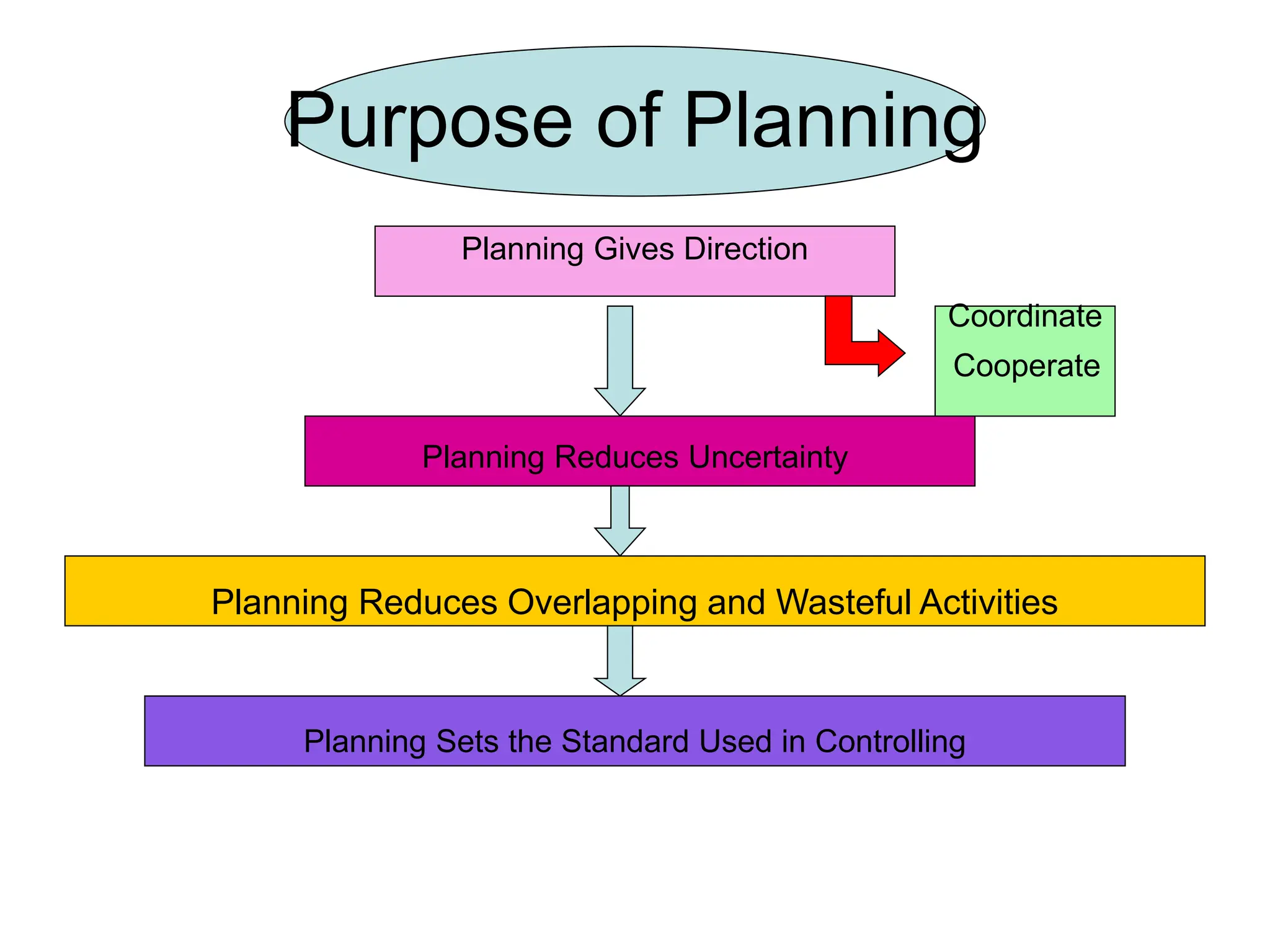
Purpose of Planning
Planning Gives Direction
Coordinate
Cooperate
Planning Reduces Uncertainty
Planning Reduces Overlapping and Wasteful Activities
Planning Sets the Standard Used in Controlling
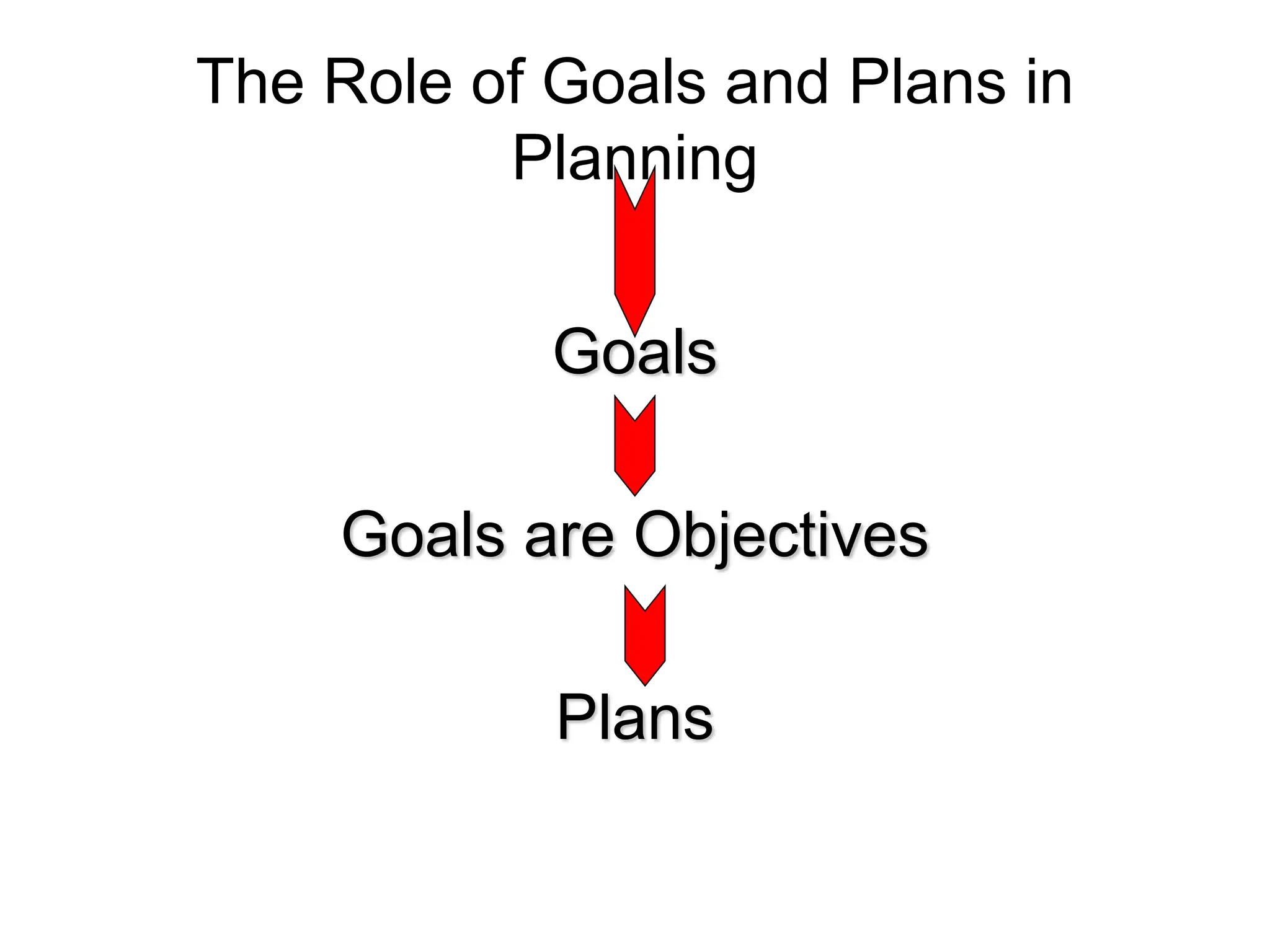
The Role of Goals and Plans in
Planning
Goals
Goals are Objectives
Plans
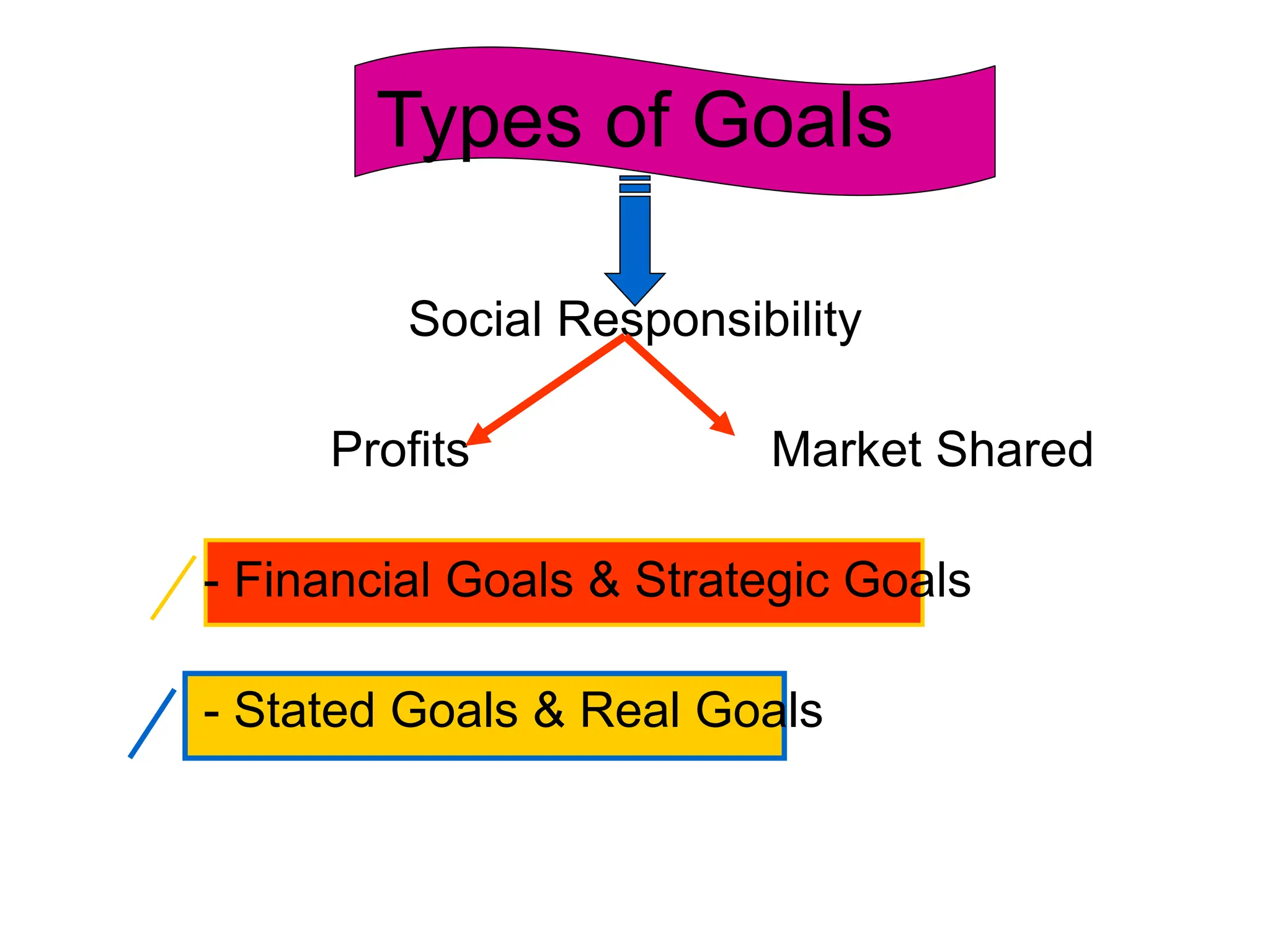
Types of Goals
Social Responsibility
Profits Market Shared
- Financial Goals & Strategic Goals
- Stated Goals & Real Goals
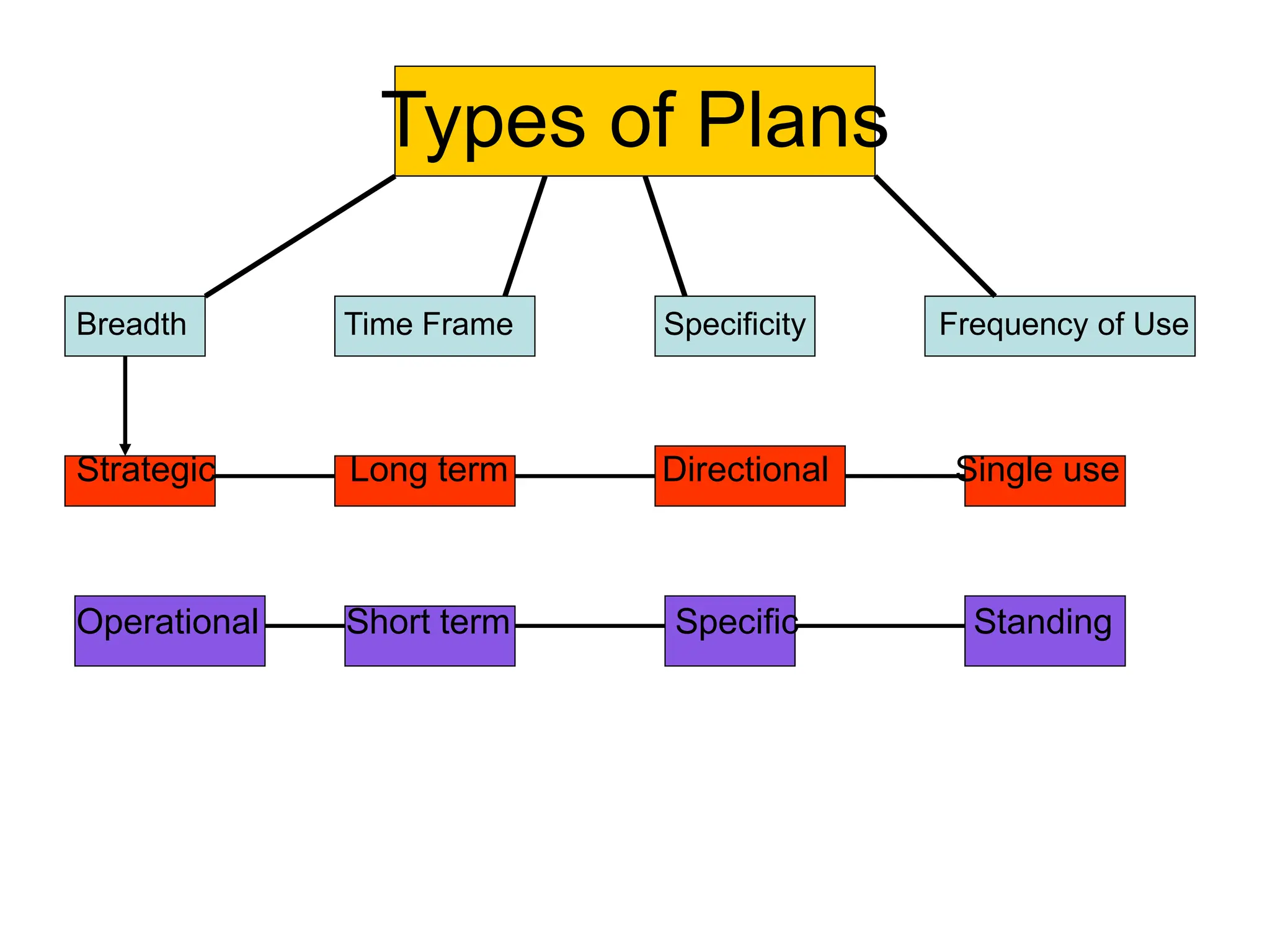
Types of Plans
Breadth Time Frame Specificity Frequency of Use
Strategic Long term Directional Single use
Operational Short term Specific Standing
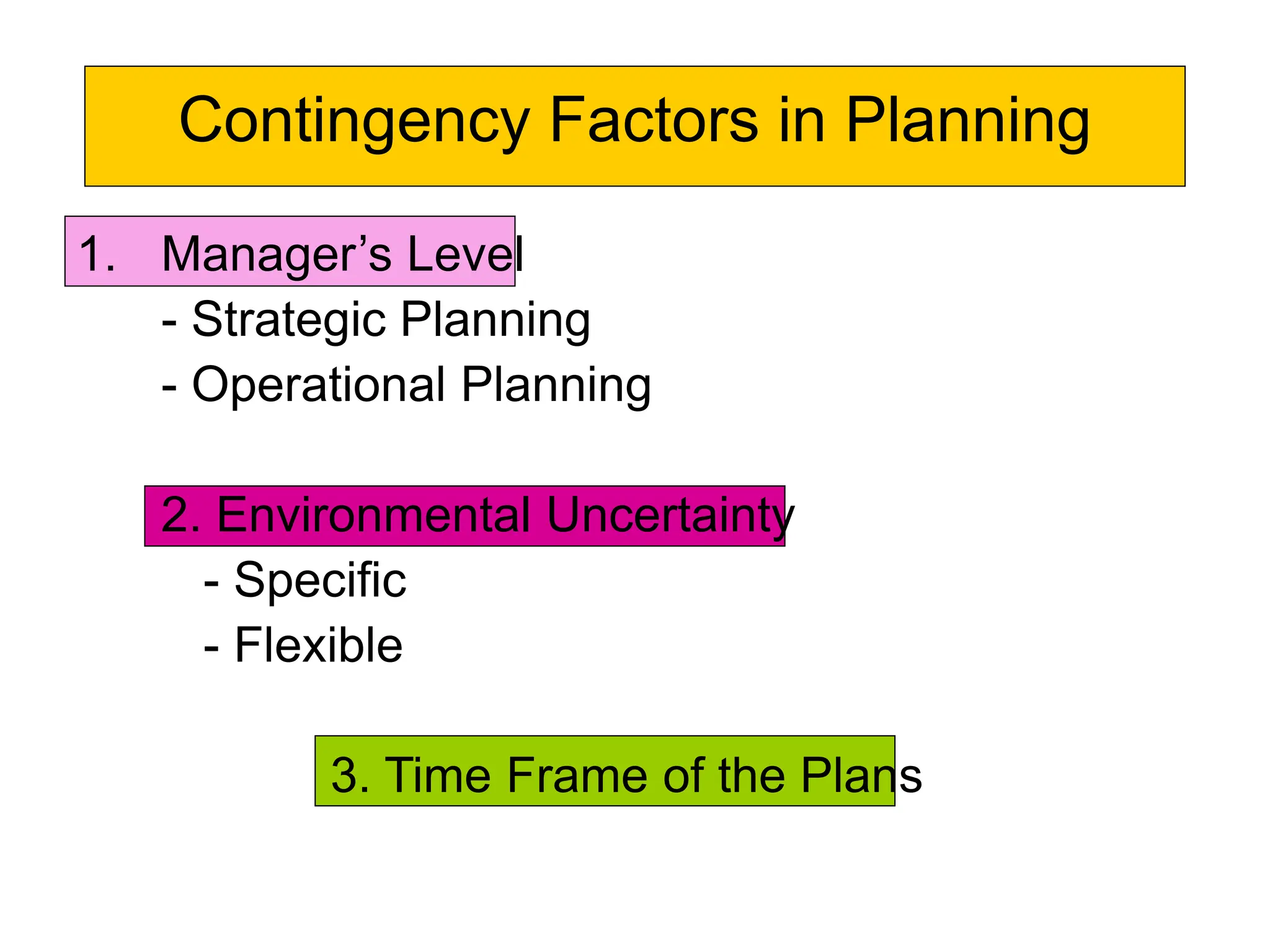
Contingency Factors in Planning
1. Manager’s Level
- Strategic Planning
- Operational Planning
2. Environmental Uncertainty
- Specific
- Flexible
3. Time Frame of the Plans
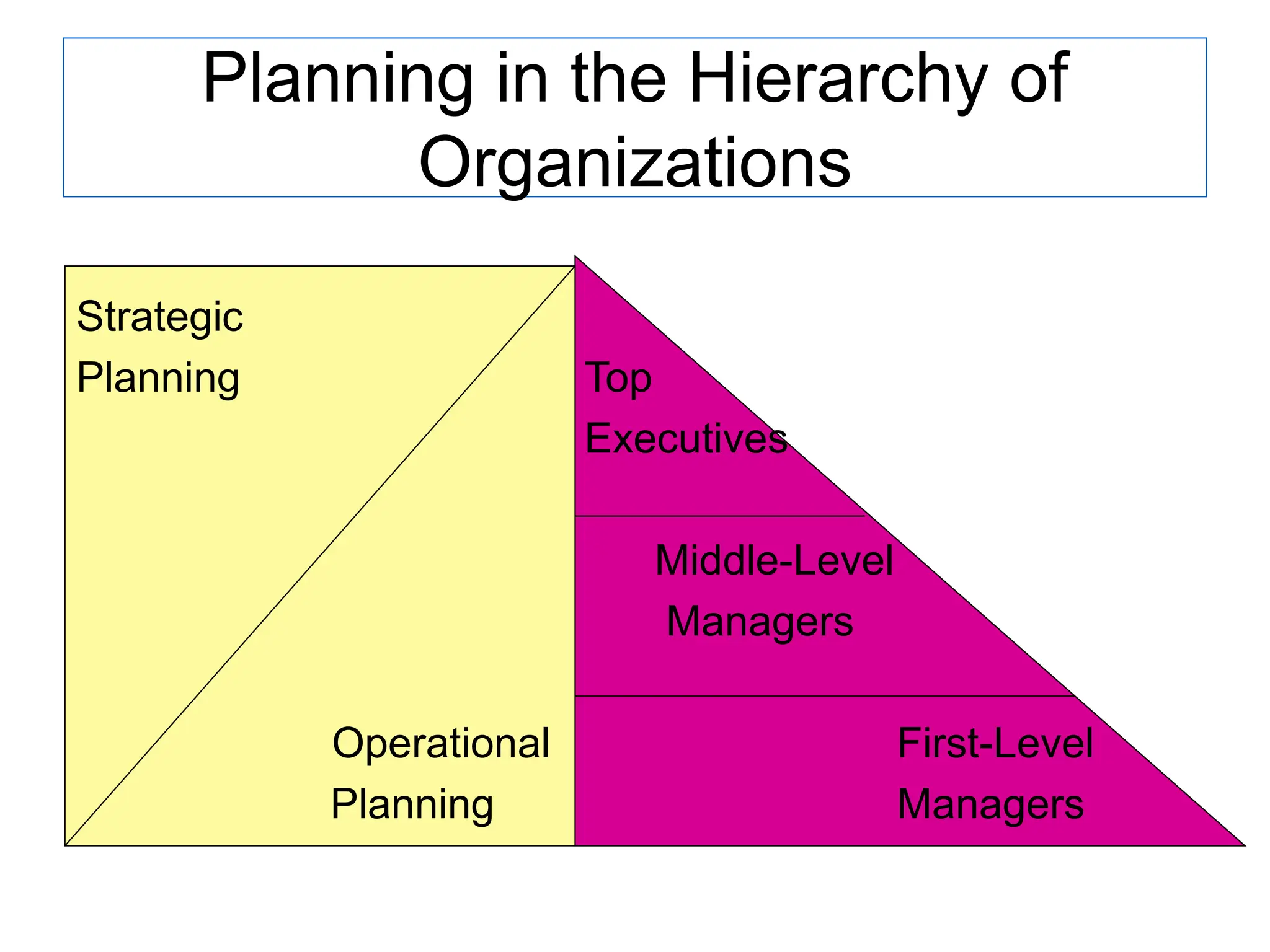
Planning in the Hierarchy of
Organizations
Strategic
Planning Top
Executives
Middle-Level
Managers
Operational First-Level
Planning Managers
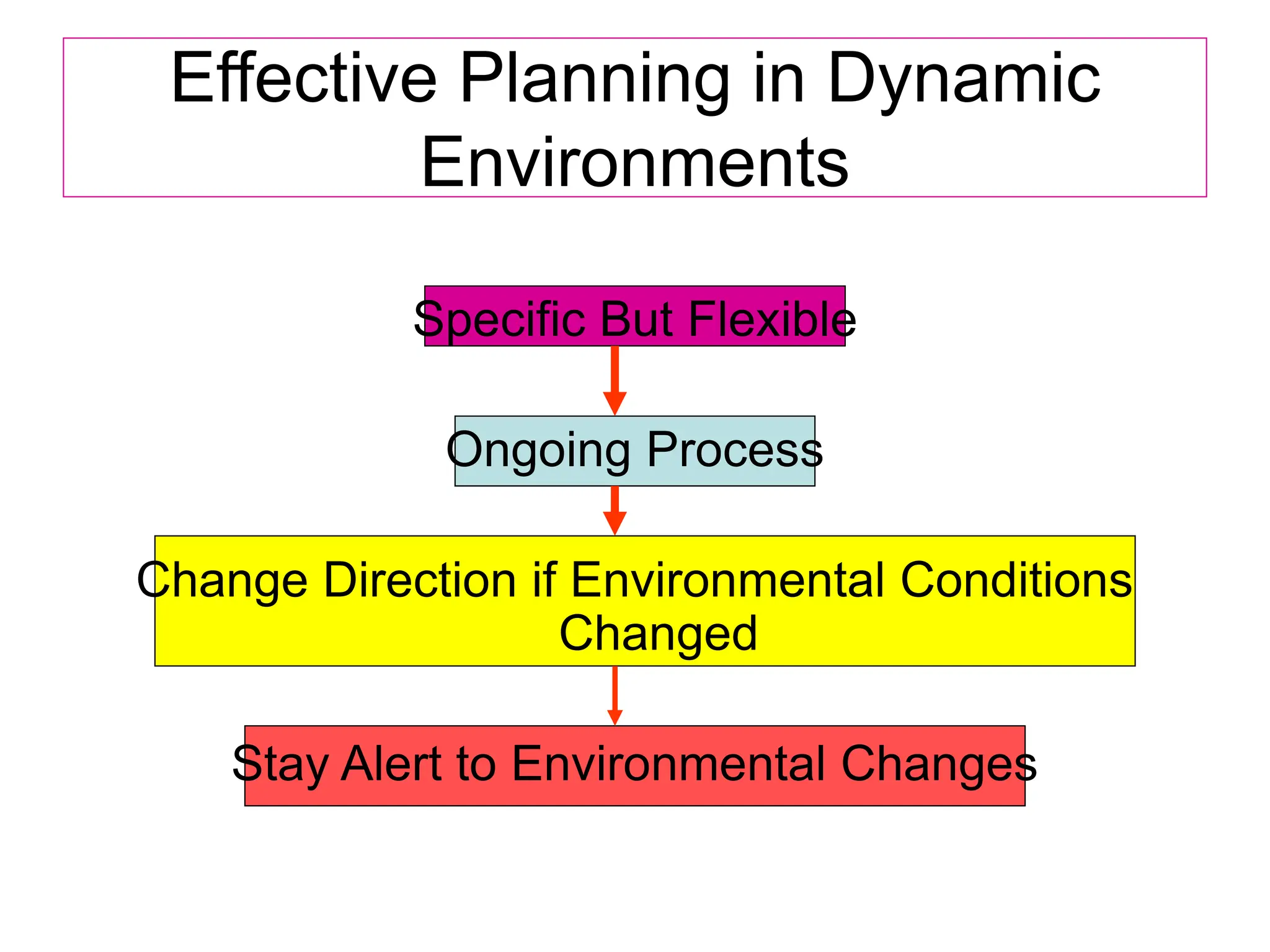
Effective Planning in Dynamic
Environments
Specific But Flexible
Ongoing Process
Change Direction if Environmental Conditions
Changed
Stay Alert to Environmental Changes
Strategic Management
Songklot Phonphuak…Lecturer
Joke1977@hotmail.com
089-9912087
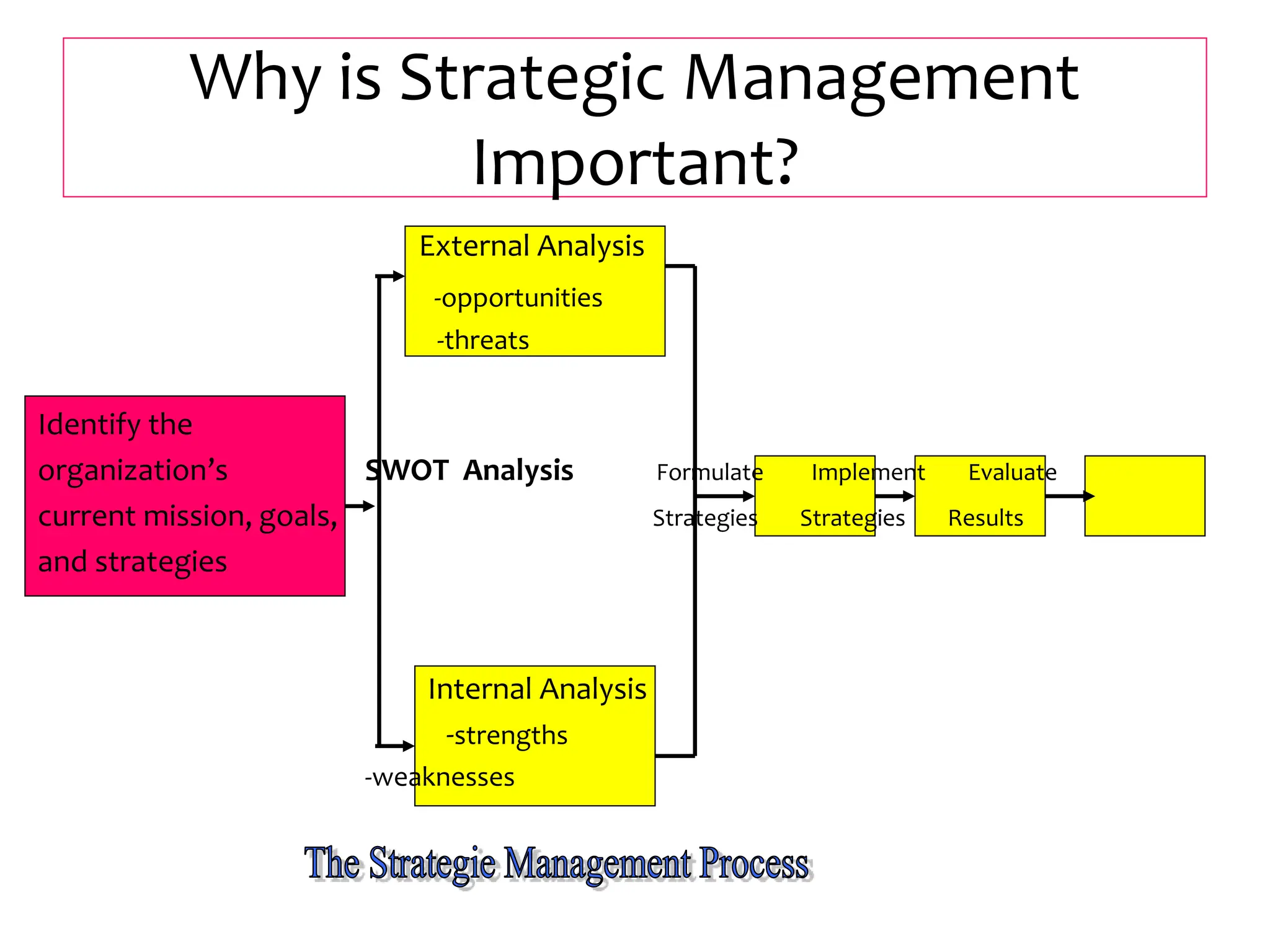
Why is Strategic Management
Important?
External Analysis
-opportunities
-threats
Identify the
organization’s SWOT Analysis Formulate Implement Evaluate
current mission, goals, Strategies Strategies Results
and strategies
Internal Analysis
-strengths
-weaknesses
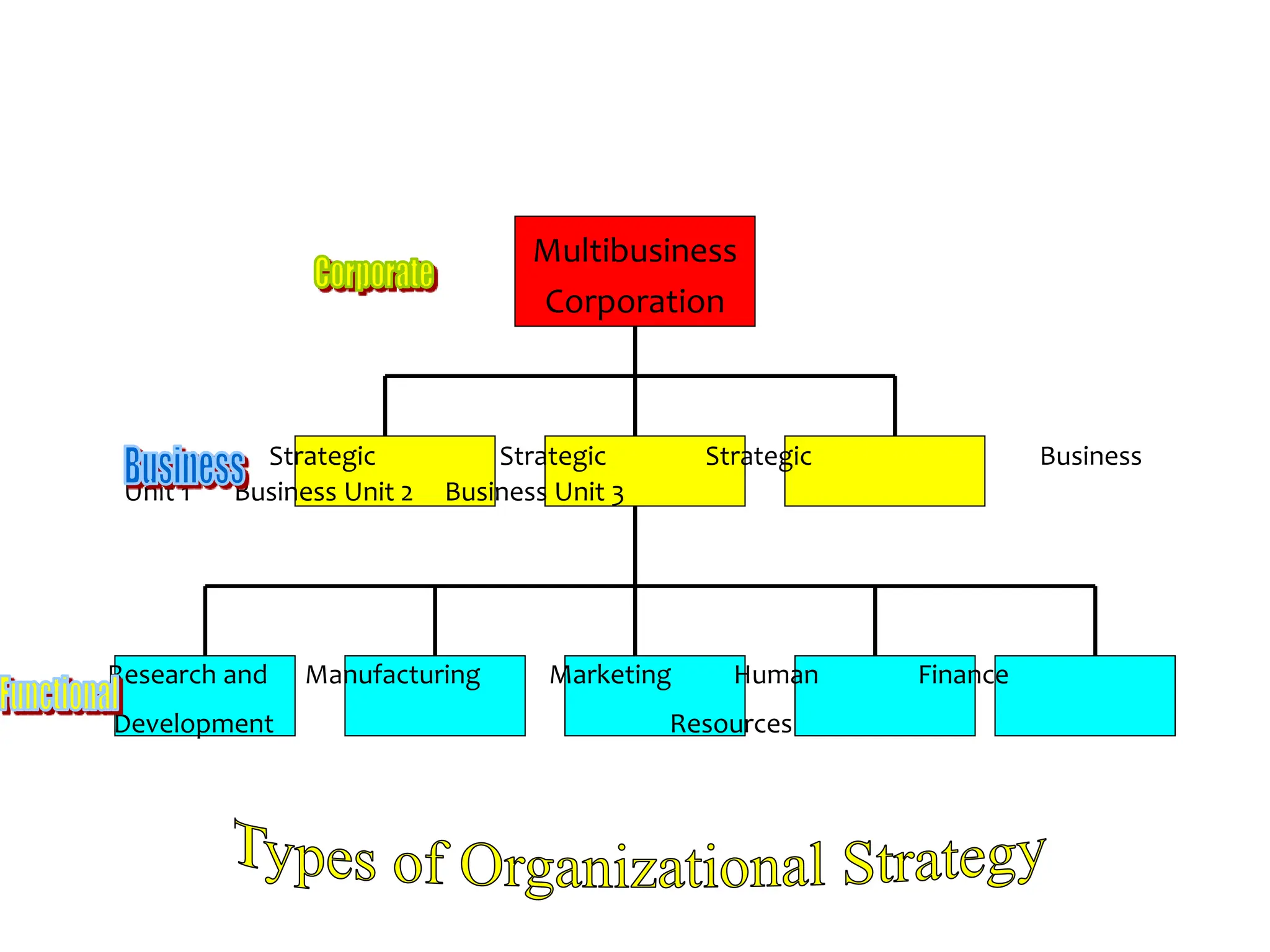
Multibusiness
Corporation
Strategic Strategic Strategic Business
Unit 1 Business Unit 2 Business Unit 3
Research and Manufacturing Marketing Human Finance
Development Resources
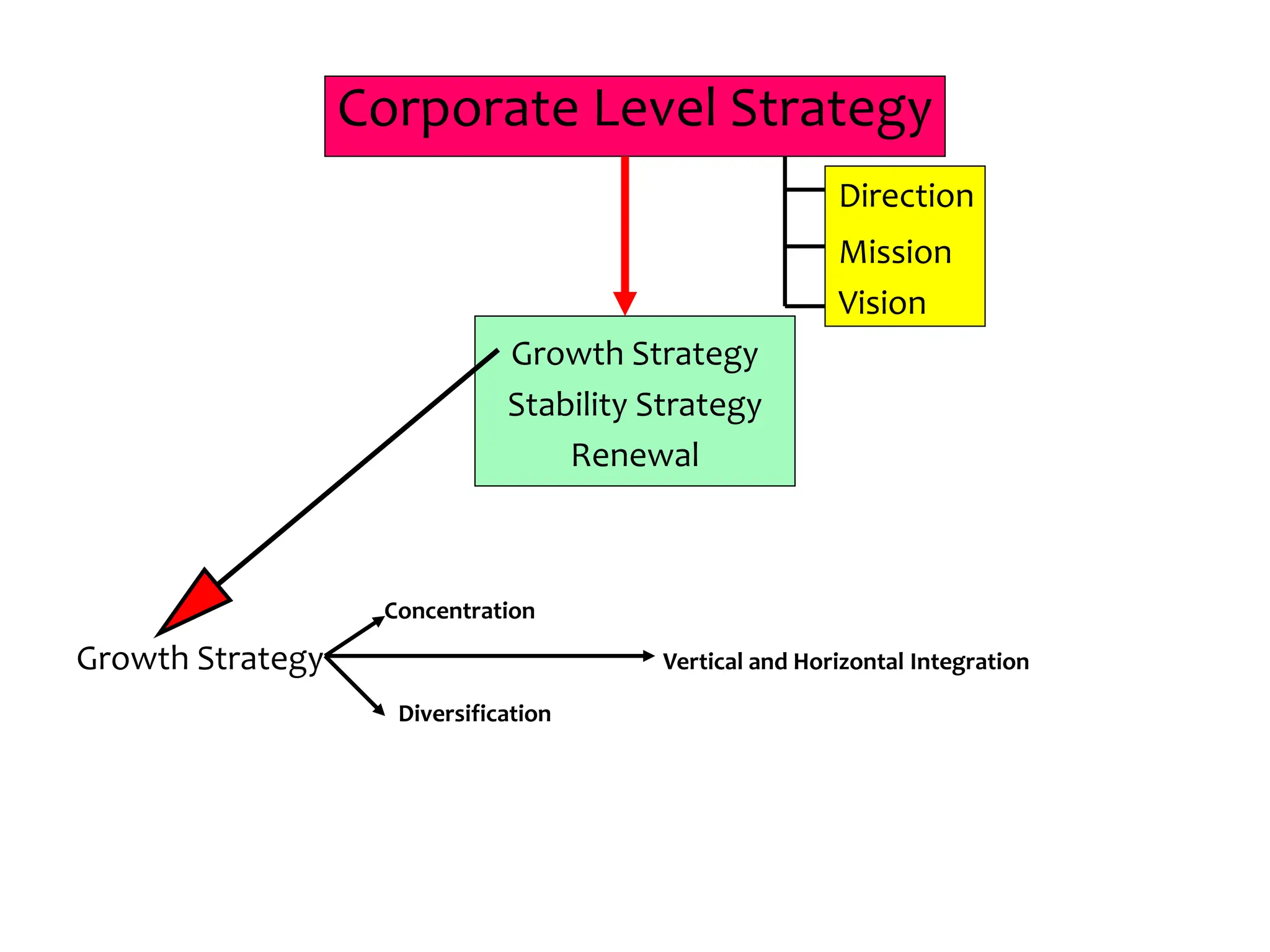
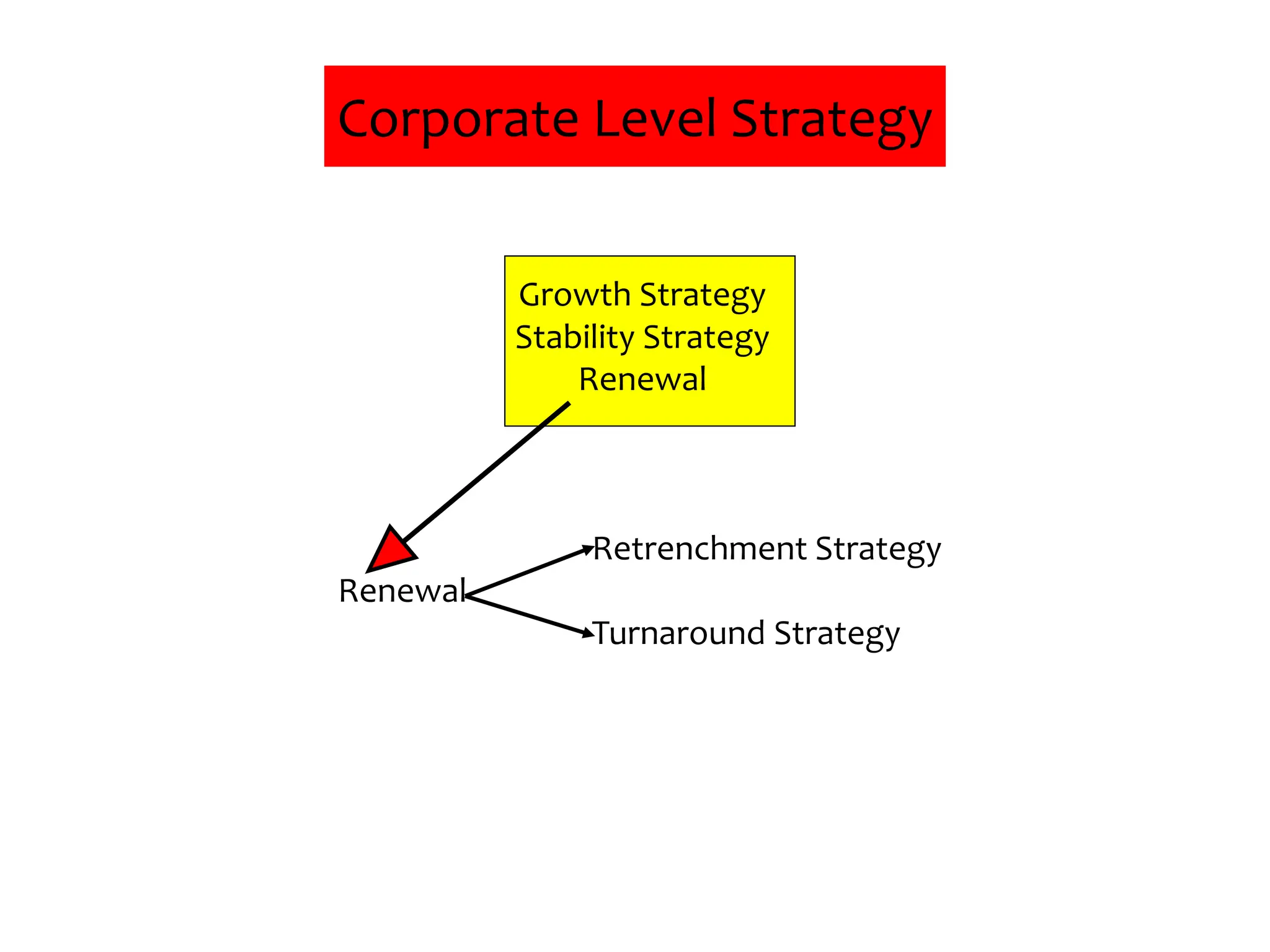
Corporate Level Strategy
Direction
Mission
Vision
Growth Strategy
Stability Strategy
Renewal
Concentration
Growth Strategy Vertical and Horizontal Integration
Diversification
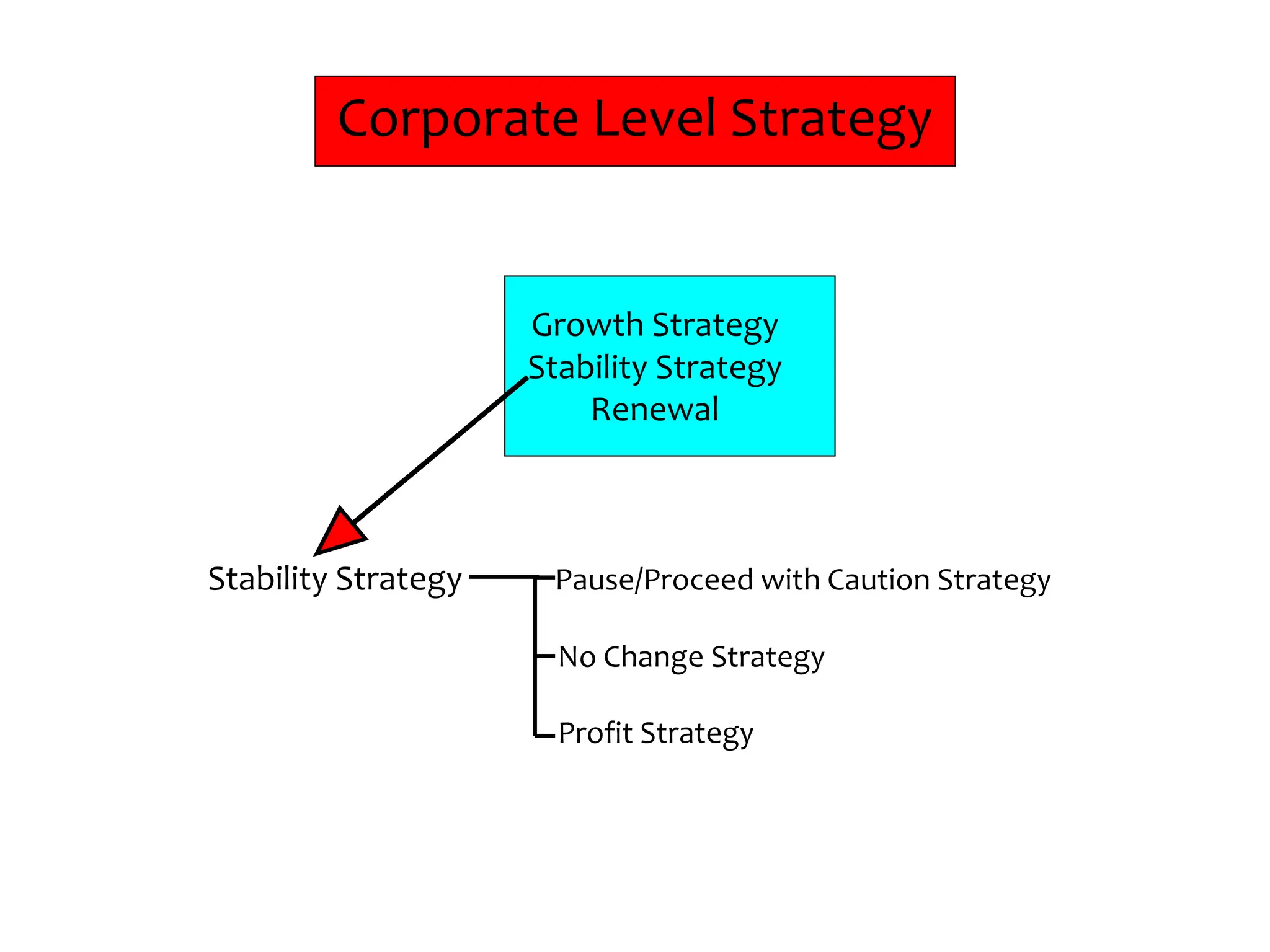
Corporate Level Strategy
Growth Strategy
Stability Strategy
Renewal
Stability Strategy Pause/Proceed with Caution Strategy
No Change Strategy
Profit Strategy
Corporate Level Strategy
Growth Strategy
Stability Strategy
Renewal
Retrenchment Strategy
Renewal
Turnaround Strategy
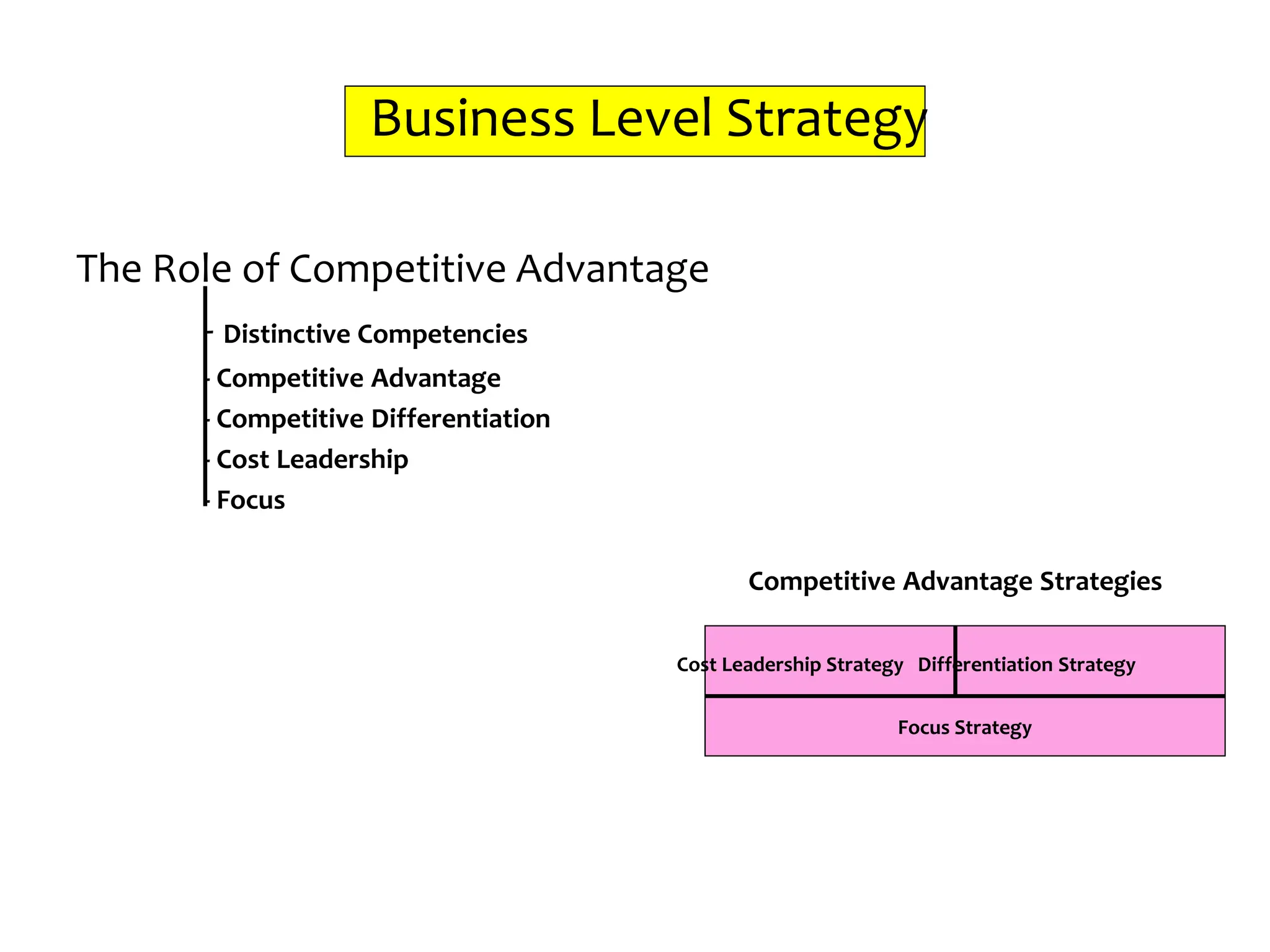
Business Level Strategy
The Role of Competitive Advantage
- Distinctive Competencies
- Competitive Advantage
- Competitive Differentiation
- Cost Leadership
- Focus
Competitive Advantage Strategies
Cost Leadership Strategy Differentiation Strategy
Focus Strategy
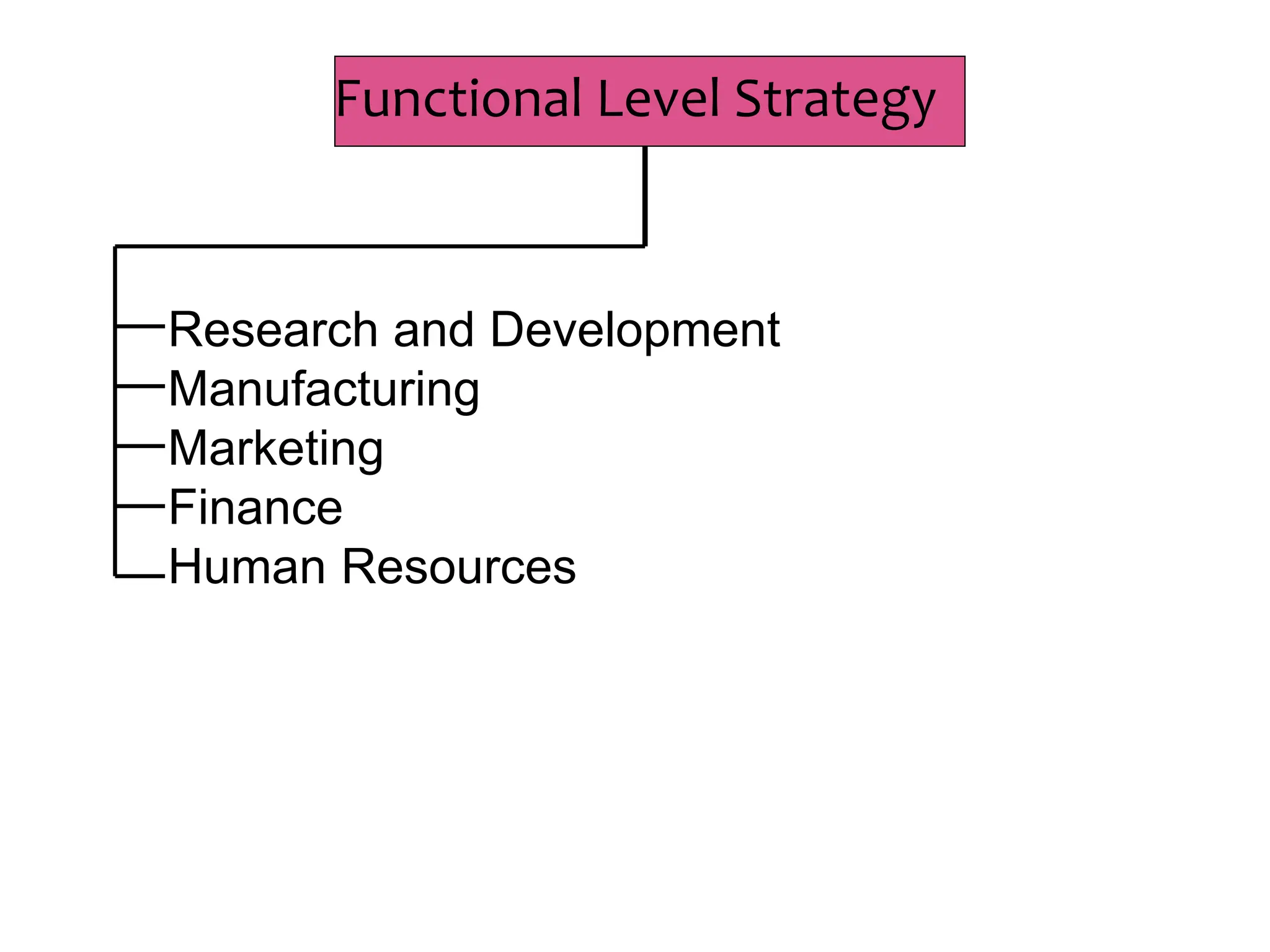
Functional Level Strategy
Research and Development
Manufacturing
Marketing
Finance
Human Resources
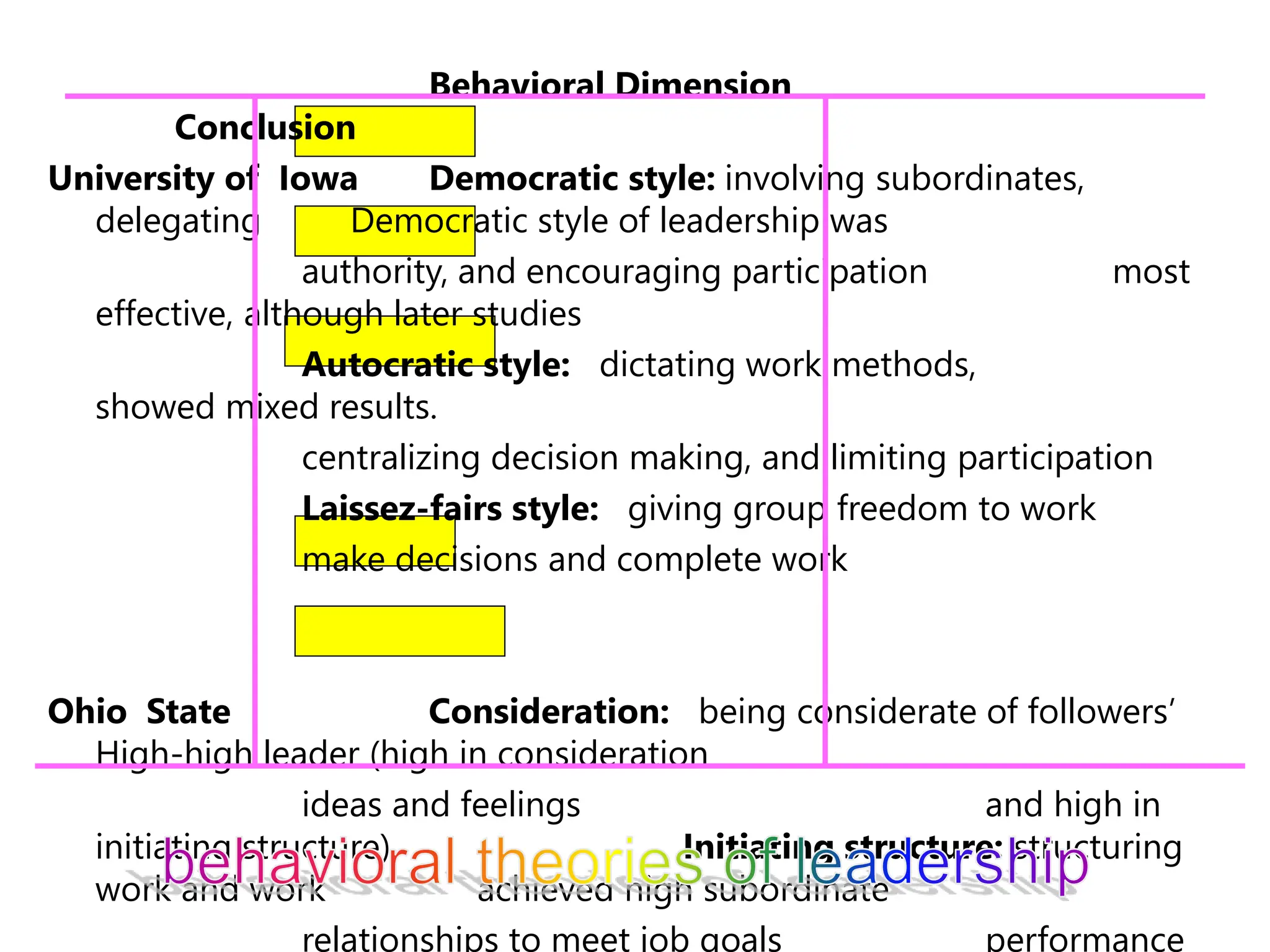
Behavioral Dimension
Conclusion
University of Iowa Democratic style: involving subordinates,
delegating Democratic style of leadership was
authority, and encouraging participation most
effective, although later studies
Autocratic style: dictating work methods,
showed mixed results.
centralizing decision making, and limiting participation
Laissez-fairs style: giving group freedom to work
make decisions and complete work
Ohio State Consideration: being considerate of followers’
High-high leader (high in consideration
ideas and feelings and high in
initiating structure) Initiating structure: structuring
work and work achieved high subordinate
relationships to meet job goals performance
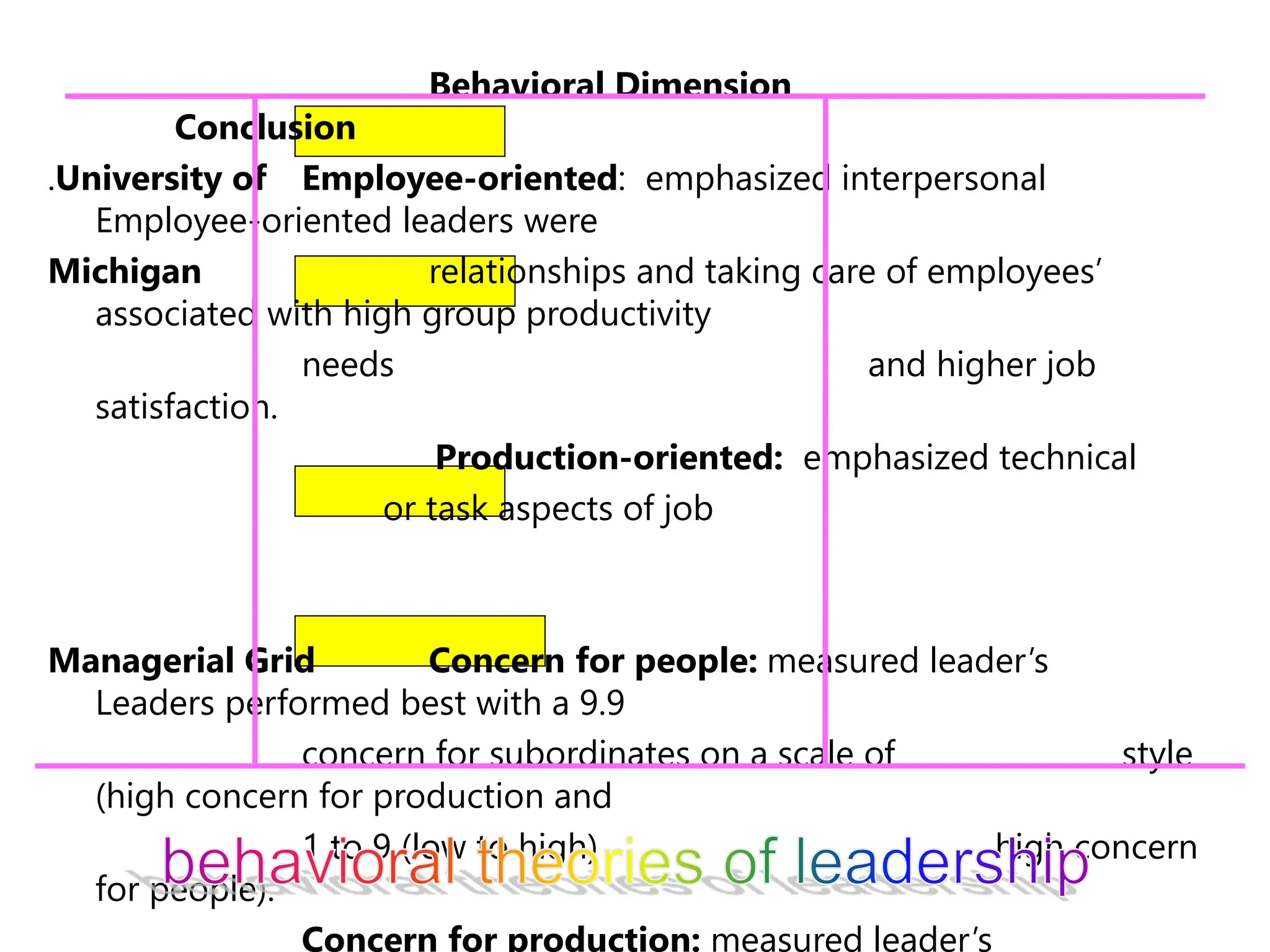
Behavioral Dimension
Conclusion
.University of Employee-oriented: emphasized interpersonal
Employee-oriented leaders were
Michigan relationships and taking care of employees’
associated with high group productivity
needs and higher job
satisfaction.
Production-oriented: emphasized technical
or task aspects of job
Managerial Grid Concern for people: measured leader’s
Leaders performed best with a 9.9
concern for subordinates on a scale of style
(high concern for production and
1 to 9 (low to high) high concern
for people).
Concern for production: measured leader’s
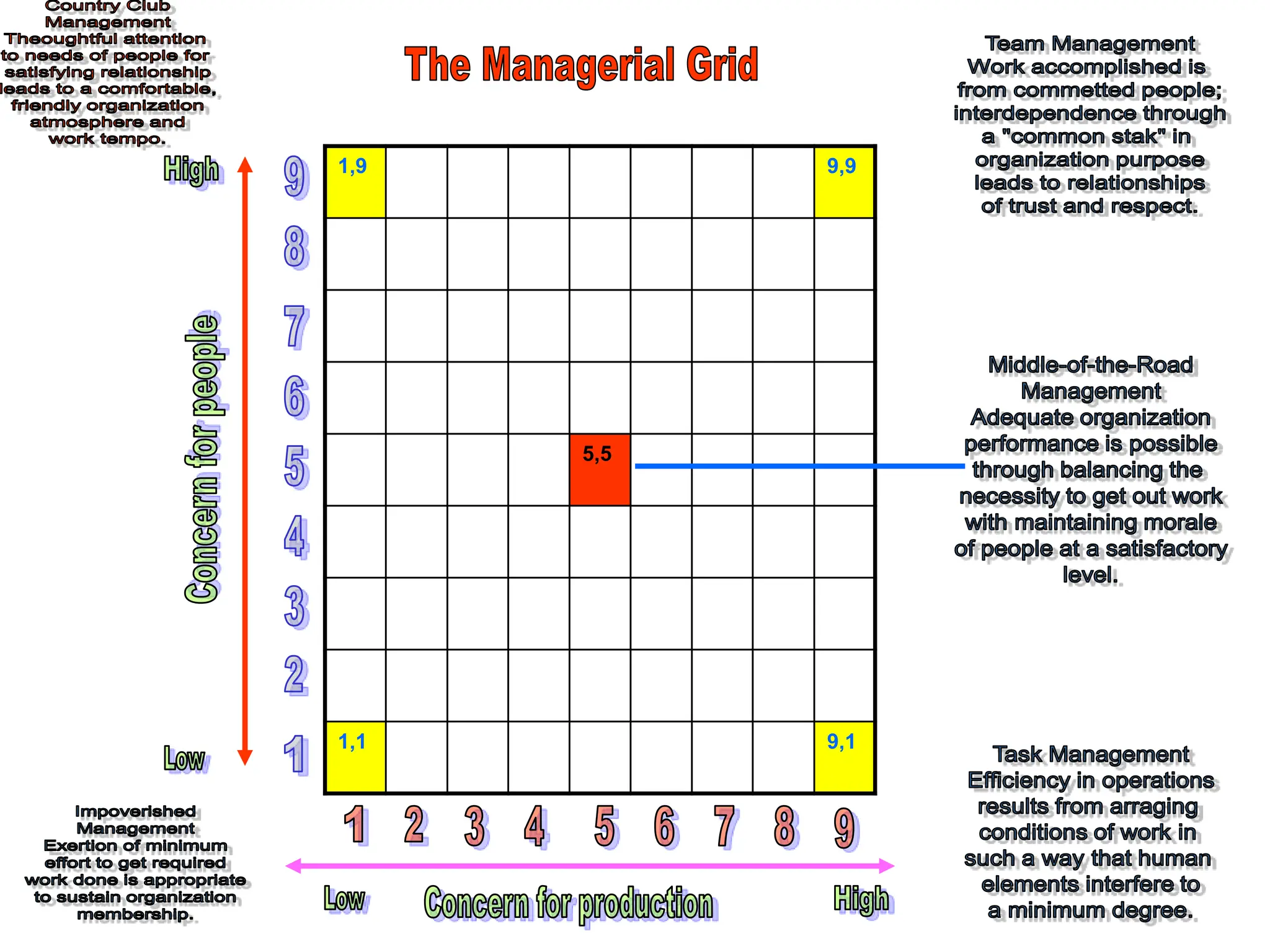
1,9 9,9
5,5
1,1 9,1
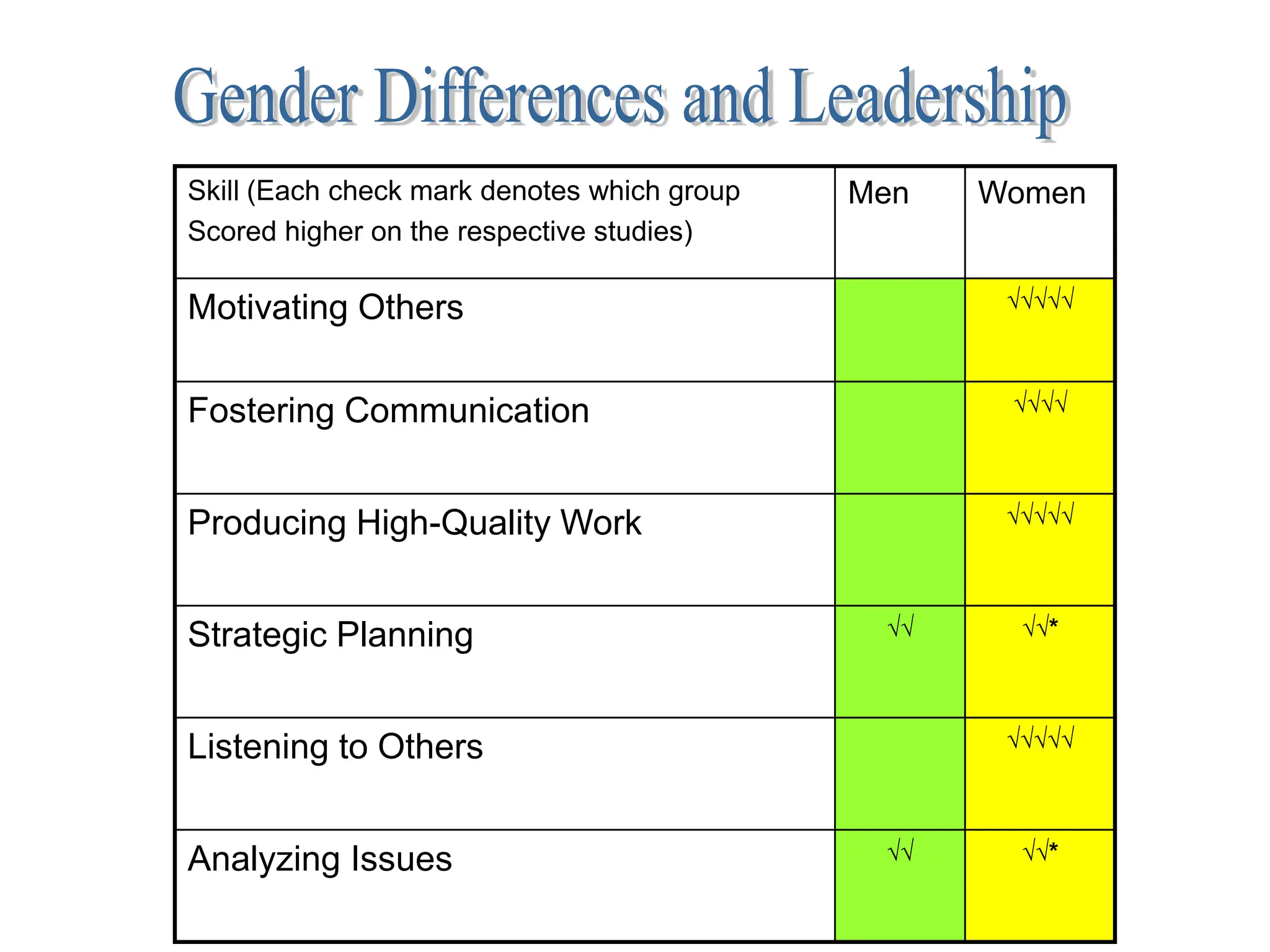
Skill (Each check mark denotes which group
Scored higher on the respective studies)
Men Women
Motivating Others √√√√√
Fostering Communication √√√√
Producing High-Quality Work √√√√√
Strategic Planning √√ √√*
Listening to Others √√√√√
Analyzing Issues √√ √√*

Lesson 8. introduction-to-organization.ppt

  • 1.
    Introduction to Organization and Management SongklotPhonphuak…Lecturer Joke1977@hotmail.com 089-9912087
  • 2.
    The Characteristics ofan Organization Has a Distinct Purposes Is Composed of People Has a Deliberate Structure
  • 3.
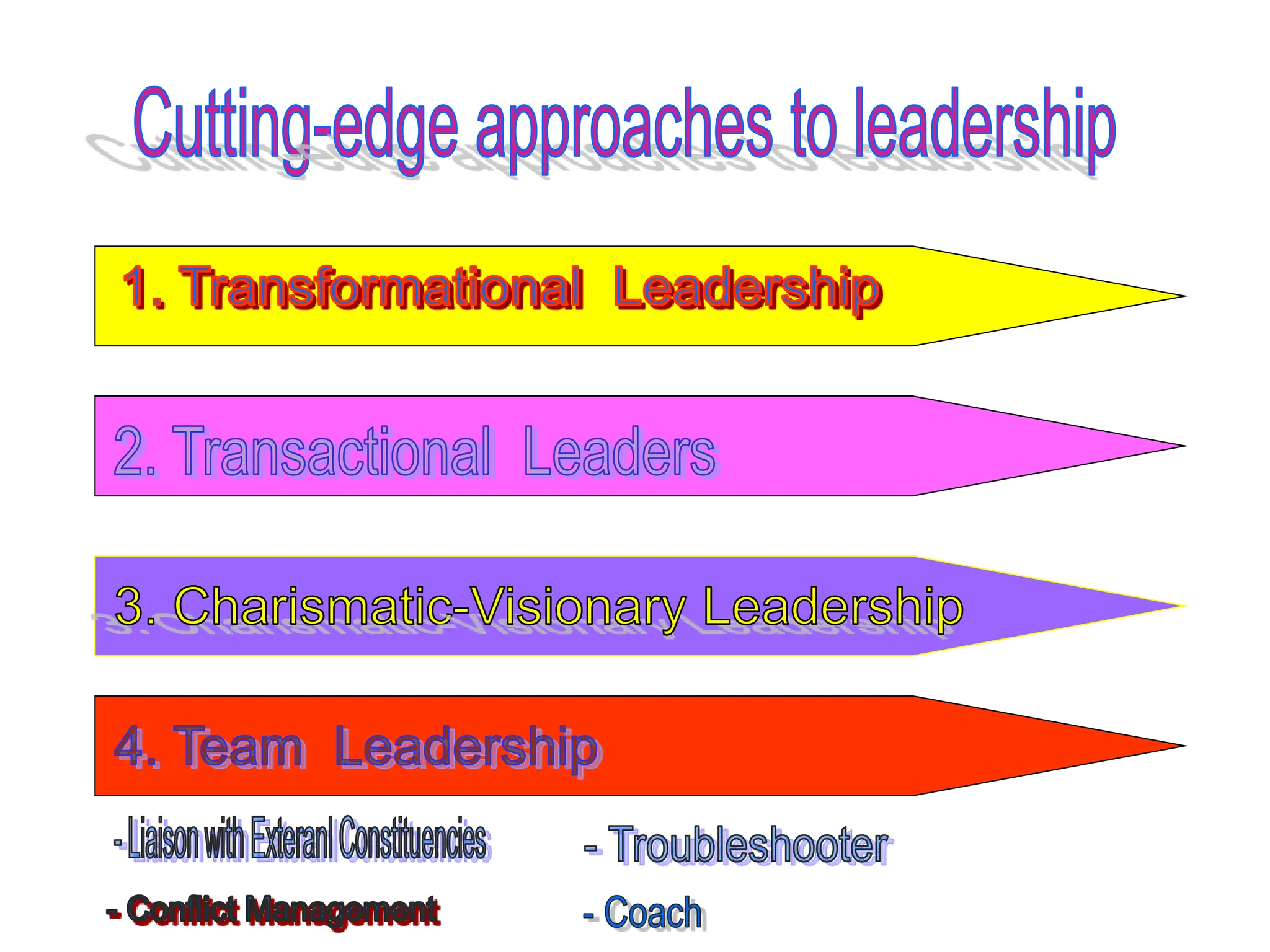
    The Changing Organization Traditional -Stable , inflexible - Job focused - Jobs define work - Individual-oriented - Permanent jobs - Command-driven Contemporary - Unstable , flexible - Skills focused - Tasks define work - Team-oriented - Temporary jobs - Involvement driven
  • 4.
    Contemporary - Participative - Customeroriented - Diversity - No time boundaries - Lateral networks - Work anywhere The Changing Organization Traditional - Directive - Rule-oriented - Homogeneity - 9-5 workdays - Hierarchies - Work on-site
  • 5.
  • 6.
  • 7.
  • 8.
  • 9.
    Top Managers Skills That ManagersNeed Middle Managers Middle Managers Conceptual Human Technical
  • 10.
    The Environment The OpenSystem Inputs -Materials -Capital -Labor -Data Transformation -Management -Employees -Technology -Operation Outputs -Products -Service -Profits -Losses
  • 11.
  • 12.
    Is the Manager’s Job Universal? Organizational Level Organizational Type Organizational Size Cross National Transferability
  • 13.
    Why Study Management? - You should understand how organization are managed. - You will either manager or be managed.
  • 14.
    Theory and Conceptual Administration(B) Songklot Phonphuak…Lecturer joke1977@hotmail.com 089-9912087
  • 15.
    Historical Background Of ManagementTheories 1 2 3 Early Adam Industrial Example Smith Revolution Egyptian Wealth Machine Pyramids of Nation Power Great Wall Division of Mass of China Labor Production
  • 16.
    Develop a sciencefor each Select, train and develop element of work workers Taylor’s Four Principle of Management Cooperate with works Divide work and responsibility equally
  • 17.
    General Principle Management (Taylor’s) •Division of work • Authority and Responsibility • Discipline • Unity of Command • Unity of Direction • Subordination of Individual General Interest
  • 18.
    General Principle Management (Taylor’s) •Remuneration • Centralization • Scalar Chain • Order • Equity • Stability of Tenure of Personnel • Initiative • Esprit de Corps
  • 19.
    Henry Fayol Management Function( POCCC) 1. Planning 2. Organizing 3. Commanding 4. Coordinating 5. Controlling
  • 20.
    Max Weber (Bureaucracy) •Division of Labour • Authority Hierarchy • Formal Selection • Formal Rules and Regulations • Impersonality • Career Orientation
  • 21.
    Maslow (Malow’s Hierarchyof Needs Theory) Self-Actualization Esteem Needs Social Needs Safety Needs Physiological Needs
  • 22.
    Theories of Leadership (SixTraits That Differentiate Leaders From Nonleaders) 1. Drive 2. Desire to lead 3. Honesty and integrity 4. Self-confidence 5. Intelligence 6. Job-relevant knowledge
  • 23.
    Trend and PresentAdministration in the Future • Globalization • Workforce Diversity • Information Technology or IT • Continually Learning and Adaptive Org. • Total Quality Management or TQM
  • 24.
    Organizational Culture and Environment SongklotPhonphuak…Lecturer Joke1977@hotmail.com 089-9912087
  • 25.
    What’s Cultures? Organization Changing? OrganizationCultures Changing? Cultures Changing Rise Death Continue Process Normal Implementation Behavior Popularity Behavior Setting Extensively Behavior Cultures Build or Change Cultures Forster Popularity Change
  • 26.
    How Should WeView The Role of Management? The Omnipotent View The Symbolic View The Synthesis View
  • 27.
    Dimensions of Organization •Innovation and Risk Taking • Attention to Detail • Outcome Orientation • People Orientation • Team Orientation • Aggressiveness • Stability • Non-Stability
  • 28.
    Size of TheAge of The Organization Organization Strong Culture Versus Weak Culture Intensity of Employee Organization Culture Turnover
  • 29.
    How Do Employees Learn AboutThe Culture of an Organization? • Stories • Rituals • Material Symbols • Language
  • 30.
    Globalization Managing The GlobalEnvironment (Organization and Management) Songklot Phonpuak…Lecturer Joke1977@hotmail.com 089-9912087
  • 31.
    Companies With Over60 Percent of Revenue From Non-US. Operation • Exxon _____________________________________________ _____76.8 • Colgate-Palmolive ________________________________71.6 • Manpower ___________________________________________70 .8 • Mobil _____________________________________________ _____ 67.2 • Coca-Cola ____________________________________________6 7.1 • Avon Products
  • 32.
  • 33.
    The Changing Business Environment Regional TradingAlliances European North American Association Union Free Tread of Southeast ( EU ) Agreement Asian Nations ( NAFTA ) ( ASEAN )
  • 34.
    Global Organization The Changing BusinessEnvironment Global Trading Alliances Multinational Transnational Borderless Corporations Corporations Organization ( MNC ) ( TNC )
  • 35.
    How Organizations Go International Stage1 Stage 2 Stage 3 Export to Hire Foreign Licensing Foreign Agents or Franchising Countries Brokers Contract Joint Venture Foreign Foreign Managers Subsidiary
  • 36.
    Managing in A ForeignCountry Legal-Political Environment Economic Environment Culture Environment
  • 37.
    Individualism Power Versus Distance Collectivism Hofsted’s Dimensionsof National Culture Quantity Uncertainty Versus Avoidance Quality of Life
  • 38.
    Criteria for MakingGlobal Employee Selection Decision • Ability to adapt • Technical Skills • Spouse and Family • Human relations Skills • Desire to go Overseas • Overseas Experience • Knows host culture • Academic standing • Language Skills • Knows home culture
  • 39.
    Factors Affecting International Adjustment Pre-AssignmentAdjustment Individual Training Experience Expectations Organization Selection Criteria and Mechanisms
  • 40.
    Factor Affecting International Adjustment In-CountryAdjustment Individual Factors Job Factors Organization Culture Organization Socialization Nonworking Factors
  • 41.
    Decision Making :The Essence of the Managers’ Job Songklot Phonphuak…Lecturer 089-9912087 Joke1977@hotmail.com
  • 42.
    Identification of aProblem Identification of Decision Criteria Allocation of Weights to Criteria Development of Alternatives Analysis of Alternatives Selection of an Alternatives Implementation of the Alternatives Evaluation of Decision Effectiveness
  • 43.
    Planning - What arethe organization’s long- term objective? - What strategies will best achieve those objective? - What should the organization’s short- term objectives be? - How difficult should individual goals be? Leading - How do I handle employees who appear to be low in motivation? - What is the most effective leadership style in a given situation? - How will a specific change affect worker productivity? - When is the right time to stimulate conflict?
  • 44.
    Organizing - How manyemployees should I have report directly to me? - How much centralization should there be in the organization? - How should jobs be designed? - When should the organization implement a different structure? Controlling - What activities in the organization need to be controlled? - How should those activities be controlled? - When is a performance deviation significant? - What type of management information system should the organization have?
  • 45.
  • 46.
    Well-Structured Problems andProgrammed Decisions Poorly-Structured Problems and Non-programmed Decisions Integration
  • 47.
  • 48.
    Overconfidence Hindsight Immediate Gratification Self-Serving Anchoring Effect SunkCosts Decision-Making Selective Perception Randomness Errors and Biases Confirmation Representation Framing Availability
  • 49.
    Foundations of Planning SongklotPhonphuak…Lecturer Joke1977@hotmail.com 089-9912087
  • 50.
    What’s Planning? - What’sTo Be Done. - How It’s To Be Done. PLANNING… Formal Planning Informal Planning
  • 51.
    Purpose of Planning PlanningGives Direction Coordinate Cooperate Planning Reduces Uncertainty Planning Reduces Overlapping and Wasteful Activities Planning Sets the Standard Used in Controlling
  • 52.
    The Role ofGoals and Plans in Planning Goals Goals are Objectives Plans
  • 53.
    Types of Goals SocialResponsibility Profits Market Shared - Financial Goals & Strategic Goals - Stated Goals & Real Goals
  • 54.
    Types of Plans BreadthTime Frame Specificity Frequency of Use Strategic Long term Directional Single use Operational Short term Specific Standing
  • 55.
    Contingency Factors inPlanning 1. Manager’s Level - Strategic Planning - Operational Planning 2. Environmental Uncertainty - Specific - Flexible 3. Time Frame of the Plans
  • 56.
    Planning in theHierarchy of Organizations Strategic Planning Top Executives Middle-Level Managers Operational First-Level Planning Managers
  • 57.
    Effective Planning inDynamic Environments Specific But Flexible Ongoing Process Change Direction if Environmental Conditions Changed Stay Alert to Environmental Changes
  • 58.
  • 59.
    Why is StrategicManagement Important? External Analysis -opportunities -threats Identify the organization’s SWOT Analysis Formulate Implement Evaluate current mission, goals, Strategies Strategies Results and strategies Internal Analysis -strengths -weaknesses
  • 60.
    Multibusiness Corporation Strategic Strategic StrategicBusiness Unit 1 Business Unit 2 Business Unit 3 Research and Manufacturing Marketing Human Finance Development Resources
  • 61.
    Corporate Level Strategy Direction Mission Vision GrowthStrategy Stability Strategy Renewal Concentration Growth Strategy Vertical and Horizontal Integration Diversification
  • 62.
    Corporate Level Strategy GrowthStrategy Stability Strategy Renewal Stability Strategy Pause/Proceed with Caution Strategy No Change Strategy Profit Strategy
  • 63.
    Corporate Level Strategy GrowthStrategy Stability Strategy Renewal Retrenchment Strategy Renewal Turnaround Strategy
  • 64.
    Business Level Strategy TheRole of Competitive Advantage - Distinctive Competencies - Competitive Advantage - Competitive Differentiation - Cost Leadership - Focus Competitive Advantage Strategies Cost Leadership Strategy Differentiation Strategy Focus Strategy
  • 65.
    Functional Level Strategy Researchand Development Manufacturing Marketing Finance Human Resources
  • 88.
    Behavioral Dimension Conclusion University ofIowa Democratic style: involving subordinates, delegating Democratic style of leadership was authority, and encouraging participation most effective, although later studies Autocratic style: dictating work methods, showed mixed results. centralizing decision making, and limiting participation Laissez-fairs style: giving group freedom to work make decisions and complete work Ohio State Consideration: being considerate of followers’ High-high leader (high in consideration ideas and feelings and high in initiating structure) Initiating structure: structuring work and work achieved high subordinate relationships to meet job goals performance
  • 89.
    Behavioral Dimension Conclusion .University ofEmployee-oriented: emphasized interpersonal Employee-oriented leaders were Michigan relationships and taking care of employees’ associated with high group productivity needs and higher job satisfaction. Production-oriented: emphasized technical or task aspects of job Managerial Grid Concern for people: measured leader’s Leaders performed best with a 9.9 concern for subordinates on a scale of style (high concern for production and 1 to 9 (low to high) high concern for people). Concern for production: measured leader’s
  • 90.
  • 93.
    Skill (Each checkmark denotes which group Scored higher on the respective studies) Men Women Motivating Others √√√√√ Fostering Communication √√√√ Producing High-Quality Work √√√√√ Strategic Planning √√ √√* Listening to Others √√√√√ Analyzing Issues √√ √√*