Course Introduction
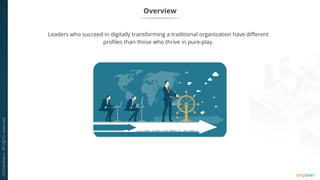
Leaders who succeed in digitally transforming a traditional organization have different
profiles than those who thrive in pure-play.
Overview
Overview
Highly
experienced digital
talent is in sky-
high demand.
Leaders with
digital or online in
their profile are
currently hot
commodities.
Digitization
initiatives
Comprehensive
talent strategy
Overview
Digitization initiatives must be paired with a comprehensive talent strategy
that looks at all the aspects of the transformation.
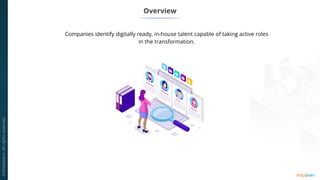
Companies identify digitally ready, in-house talent capable of taking active roles
in the transformation.
Overview
This course will enable you to acquire skills such as:
Navigating the organization
Building relationship
networks
Influencing others
Overview
Anyone who wants to explore digital transformation can take this course.
Prerequisites
Target Audience
Chief Digital Officers
Digital Business Leaders Change Leaders
Strategists Consultants
Course Outline
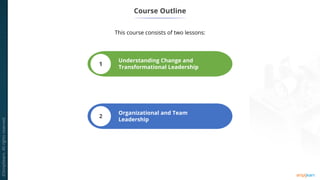
This course consists of two lessons:
1
Understanding Change and
Transformational Leadership
2
Organizational and Team
Leadership
This lesson highlights the:
● Ways of embracing changes
● Traits and focus areas of a true Transformational
Leader
Understanding Change and Transformational Leadership
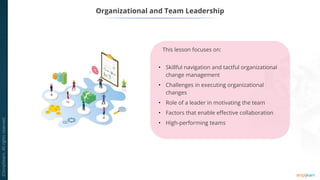
This lesson focuses on:
• Skillful navigation and tactful organizational
change management
• Challenges in executing organizational
changes
• Role of a leader in motivating the team
• Factors that enable effective collaboration
• High-performing teams
Organizational and Team Leadership
Course Outcomes
Create awareness to improve and enhance personal effectiveness and
leadership qualities to lead in the VUCA world
Realize how digital disruption is breaking the barriers and boundaries
across businesses and what is required for a bulletproof career
Develop as a leader in the digitally disrupted era
Lead the team and the organization in a dynamically changing environment
Nurture, develop, and sustain talent for the future
Acquire and enhance the skills of the future digital leader and competencies
for you and your organization to thrive in future
Course Components
E-Books Spotlight Videos Industry Examples
Assessments
Project
Let’s get
started
Understanding Leadership
Leadership is the ability to influence people toward achieving the goals.
What Is Leadership?
It’s the art and science of getting things done through others by inspiring the teams and
rallying them toward the results.
One cannot get good results through ad-hoc
approaches.
The personal value system holds significant place in
nurturing and developing a leader within.
What Is Leadership?
What Is Leadership?
A leader should have the ability to:
● Take bold decisions even if they are
unpopular
● Inspire the teams to deliver their
best even during adverse
circumstances
The fundamental trait of a leader springs from personal attitude.
Being a leader is a responsibility. A successful leader:
What Is Leadership?
Builds trustworthy teams
Delivers results
Develops trust
Provides direction
Coaches and inspires the team
Robert Edwin Hall was a mountaineering expedition leader, known for his incredible
act of courage that cost him his life.
Example of Leadership: Rob Hall
Indra Nooyi became the CEO of PepsiCo in 2006 and has been the most successful
CEO of the company.
Example of Leadership: Indra Nooyi
She reclassified PepsiCo products as:
• Fun for you
• Better for you
• Good for you
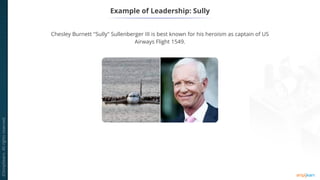
Chesley Burnett "Sully" Sullenberger III is best known for his heroism as captain of US
Airways Flight 1549.
Example of Leadership: Sully
Qualities of a Good Leader
Honesty and integrity
Transparency
Strong vision
Inspiration Confidence
Responsibility
Fairness and equity
Qualities of a Good Leader
The characteristics of a good leader include:
Demonstrates value-based behavior
Brings the teams together
Demonstrates character traits and ethics
Is authentic
Other Qualities of a Good Leader
Lead the team toward a common goal and objective
Guide, coach, and mentor the teams
Inspire the team to be at their best and deliver results
Put the benefit of the team ahead of individual interests
Help and enable the teams to succeed
Develop and build institutional capability to achieve organizational greatness
Other Qualities of a Good Leader
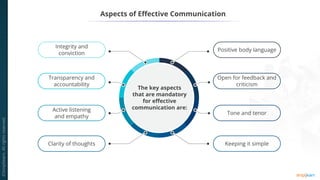
The key aspects
that are mandatory
for effective
communication are:
Tone and tenor
Open for feedback and
criticism
Positive body language
Keeping it simple
Active listening
and empathy
Integrity and
conviction
Clarity of thoughts
Transparency and
accountability
Aspects of Effective Communication
Purpose of Leadership
The essence of leadership is to enable the team.
Purpose of Leadership
Leadership often needs to be demonstrated without formal authority.
Have strong
convictions
Communicate
clearly
Develop high-
performance
teams
Be a
continuous
learner
Keep the
motivation
levels high
Along with the core attributes, a leader must:
Responsibilities of Leaders
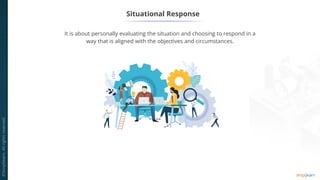
It is about personally evaluating the situation and choosing to respond in a
way that is aligned with the objectives and circumstances.
Situational Response

Lesson 1 - Course Introduction.pdf

  • 1.
  • 2.
    Leaders who succeedin digitally transforming a traditional organization have different profiles than those who thrive in pure-play. Overview
  • 3.
    Overview Highly experienced digital talent isin sky- high demand. Leaders with digital or online in their profile are currently hot commodities.
  • 4.
    Digitization initiatives Comprehensive talent strategy Overview Digitization initiativesmust be paired with a comprehensive talent strategy that looks at all the aspects of the transformation.
  • 5.
    Companies identify digitallyready, in-house talent capable of taking active roles in the transformation. Overview
  • 6.
    This course willenable you to acquire skills such as: Navigating the organization Building relationship networks Influencing others Overview
  • 7.
    Anyone who wantsto explore digital transformation can take this course. Prerequisites
  • 8.
    Target Audience Chief DigitalOfficers Digital Business Leaders Change Leaders Strategists Consultants
  • 9.
    Course Outline This courseconsists of two lessons: 1 Understanding Change and Transformational Leadership 2 Organizational and Team Leadership
  • 10.
    This lesson highlightsthe: ● Ways of embracing changes ● Traits and focus areas of a true Transformational Leader Understanding Change and Transformational Leadership
  • 11.
    This lesson focuseson: • Skillful navigation and tactful organizational change management • Challenges in executing organizational changes • Role of a leader in motivating the team • Factors that enable effective collaboration • High-performing teams Organizational and Team Leadership
  • 12.
    Course Outcomes Create awarenessto improve and enhance personal effectiveness and leadership qualities to lead in the VUCA world Realize how digital disruption is breaking the barriers and boundaries across businesses and what is required for a bulletproof career Develop as a leader in the digitally disrupted era Lead the team and the organization in a dynamically changing environment Nurture, develop, and sustain talent for the future Acquire and enhance the skills of the future digital leader and competencies for you and your organization to thrive in future
  • 13.
    Course Components E-Books SpotlightVideos Industry Examples Assessments Project
  • 14.
  • 15.
  • 16.
    Leadership is theability to influence people toward achieving the goals. What Is Leadership? It’s the art and science of getting things done through others by inspiring the teams and rallying them toward the results.
  • 17.
    One cannot getgood results through ad-hoc approaches. The personal value system holds significant place in nurturing and developing a leader within. What Is Leadership?
  • 18.
    What Is Leadership? Aleader should have the ability to: ● Take bold decisions even if they are unpopular ● Inspire the teams to deliver their best even during adverse circumstances The fundamental trait of a leader springs from personal attitude.
  • 19.
    Being a leaderis a responsibility. A successful leader: What Is Leadership? Builds trustworthy teams Delivers results Develops trust Provides direction Coaches and inspires the team
  • 20.
    Robert Edwin Hallwas a mountaineering expedition leader, known for his incredible act of courage that cost him his life. Example of Leadership: Rob Hall
  • 21.
    Indra Nooyi becamethe CEO of PepsiCo in 2006 and has been the most successful CEO of the company. Example of Leadership: Indra Nooyi She reclassified PepsiCo products as: • Fun for you • Better for you • Good for you
  • 22.
    Chesley Burnett "Sully"Sullenberger III is best known for his heroism as captain of US Airways Flight 1549. Example of Leadership: Sully
  • 23.
    Qualities of aGood Leader
  • 24.
    Honesty and integrity Transparency Strongvision Inspiration Confidence Responsibility Fairness and equity Qualities of a Good Leader The characteristics of a good leader include:
  • 25.
    Demonstrates value-based behavior Bringsthe teams together Demonstrates character traits and ethics Is authentic Other Qualities of a Good Leader
  • 26.
    Lead the teamtoward a common goal and objective Guide, coach, and mentor the teams Inspire the team to be at their best and deliver results Put the benefit of the team ahead of individual interests Help and enable the teams to succeed Develop and build institutional capability to achieve organizational greatness Other Qualities of a Good Leader
  • 27.
    The key aspects thatare mandatory for effective communication are: Tone and tenor Open for feedback and criticism Positive body language Keeping it simple Active listening and empathy Integrity and conviction Clarity of thoughts Transparency and accountability Aspects of Effective Communication
  • 28.
  • 29.
    The essence ofleadership is to enable the team. Purpose of Leadership Leadership often needs to be demonstrated without formal authority.
  • 30.
    Have strong convictions Communicate clearly Develop high- performance teams Bea continuous learner Keep the motivation levels high Along with the core attributes, a leader must: Responsibilities of Leaders
  • 31.
    It is aboutpersonally evaluating the situation and choosing to respond in a way that is aligned with the objectives and circumstances. Situational Response