LEGACY
APPLICATION
MIGRATION
WHAT IS A
LEGACY SYSTEM?
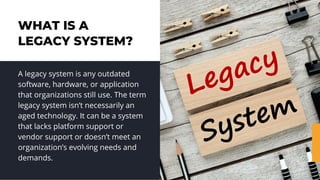
A legacy system is any outdated
software, hardware, or application
that organizations still use. The term
legacy system isn’t necessarily an
aged technology. It can be a system
that lacks platform support or
vendor support or doesn’t meet an
organization’s evolving needs and
demands.
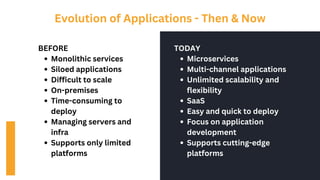
Evolution of Applications - Then & Now
Monolithic services
Siloed applications
Difficult to scale
On-premises
Time-consuming to
deploy
Managing servers and
infra
Supports only limited
platforms
BEFORE
Microservices
Multi-channel applications
Unlimited scalability and
flexibility
SaaS
Easy and quick to deploy
Focus on application
development
Supports cutting-edge
platforms
TODAY
Increased downtime
Non-compliance
Reliance on legacy skillsets
Vulnerability to cyberattacks
Tremendous maintenance cost
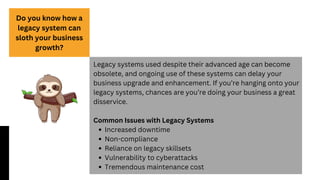
Legacy systems used despite their advanced age can become
obsolete, and ongoing use of these systems can delay your
business upgrade and enhancement. If you’re hanging onto your
legacy systems, chances are you’re doing your business a great
disservice.
Common Issues with Legacy Systems
Do you know how a
legacy system can
sloth your business
growth?
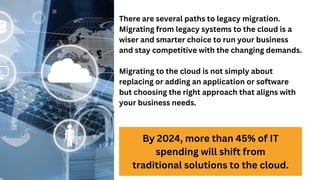
By 2024, more than 45% of IT
spending will shift from
traditional solutions to the cloud.
There are several paths to legacy migration.
Migrating from legacy systems to the cloud is a
wiser and smarter choice to run your business
and stay competitive with the changing demands.
Migrating to the cloud is not simply about
replacing or adding an application or software
but choosing the right approach that aligns with
your business needs.
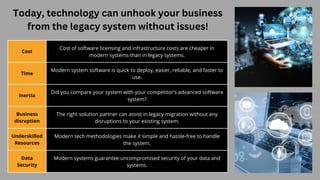
Cost
Cost of software licensing and infrastructure costs are cheaper in
modern systems than in legacy systems.
Time
Modern system software is quick to deploy, easier, reliable, and faster to
use.
Inertia
Did you compare your system with your competitor’s advanced software
system?
Business
disruption
The right solution partner can assist in legacy migration without any
disruptions to your existing system.
Underskilled
Resources
Modern tech methodologies make it simple and hassle-free to handle
the system.
Data
Security
Modern systems guarantee uncompromised security of your data and
systems.
Today, technology can unhook your business
from the legacy system without issues!
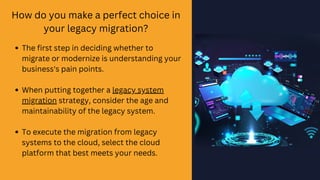
How do you make a perfect choice in
your legacy migration?
The first step in deciding whether to
migrate or modernize is understanding your
business's pain points.
When putting together a legacy system
migration strategy, consider the age and
maintainability of the legacy system.
To execute the migration from legacy
systems to the cloud, select the cloud
platform that best meets your needs.
THANK YOU

Legacy Application Migration

  • 1.
  • 2.
    WHAT IS A LEGACYSYSTEM? A legacy system is any outdated software, hardware, or application that organizations still use. The term legacy system isn’t necessarily an aged technology. It can be a system that lacks platform support or vendor support or doesn’t meet an organization’s evolving needs and demands.
  • 3.
    Evolution of Applications- Then & Now Monolithic services Siloed applications Difficult to scale On-premises Time-consuming to deploy Managing servers and infra Supports only limited platforms BEFORE Microservices Multi-channel applications Unlimited scalability and flexibility SaaS Easy and quick to deploy Focus on application development Supports cutting-edge platforms TODAY
  • 4.
    Increased downtime Non-compliance Reliance onlegacy skillsets Vulnerability to cyberattacks Tremendous maintenance cost Legacy systems used despite their advanced age can become obsolete, and ongoing use of these systems can delay your business upgrade and enhancement. If you’re hanging onto your legacy systems, chances are you’re doing your business a great disservice. Common Issues with Legacy Systems Do you know how a legacy system can sloth your business growth?
  • 5.
    By 2024, morethan 45% of IT spending will shift from traditional solutions to the cloud. There are several paths to legacy migration. Migrating from legacy systems to the cloud is a wiser and smarter choice to run your business and stay competitive with the changing demands. Migrating to the cloud is not simply about replacing or adding an application or software but choosing the right approach that aligns with your business needs.
  • 6.
    Cost Cost of softwarelicensing and infrastructure costs are cheaper in modern systems than in legacy systems. Time Modern system software is quick to deploy, easier, reliable, and faster to use. Inertia Did you compare your system with your competitor’s advanced software system? Business disruption The right solution partner can assist in legacy migration without any disruptions to your existing system. Underskilled Resources Modern tech methodologies make it simple and hassle-free to handle the system. Data Security Modern systems guarantee uncompromised security of your data and systems. Today, technology can unhook your business from the legacy system without issues!
  • 7.
    How do youmake a perfect choice in your legacy migration? The first step in deciding whether to migrate or modernize is understanding your business's pain points. When putting together a legacy system migration strategy, consider the age and maintainability of the legacy system. To execute the migration from legacy systems to the cloud, select the cloud platform that best meets your needs.
  • 8.