LIPID SYNTHESIS & OXIDATION
OUTLINE
Classification,
& Function Of
lipids
Beta Oxidation Ketone Bodies
Objectives
 A review of Basic structure and function of lipids
 Explain the role of lipids in energy generation/cellular respiration
 The break down of lipids via beta oxidation
 Role and process of ketone body formation
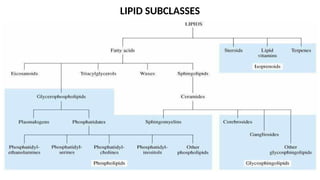
LIPID SUBCLASSES
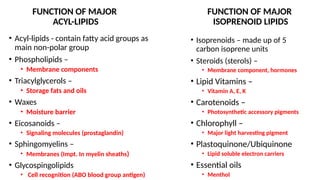
FUNCTION OF MAJOR
ACYL-LIPIDS
• Acyl-lipids - contain fatty acid groups as
main non-polar group
• Phospholipids –
• Membrane components
• Triacylglycerols –
• Storage fats and oils
• Waxes
• Moisture barrier
• Eicosanoids –
• Signaling molecules (prostaglandin)
• Sphingomyelins –
• Membranes (Impt. In myelin sheaths)
• Glycospingolipids
• Cell recognition (ABO blood group antigen)
FUNCTION OF MAJOR
ISOPRENOID LIPIDS
• Isoprenoids – made up of 5
carbon isoprene units
• Steroids (sterols) –
• Membrane component, hormones
• Lipid Vitamins –
• Vitamin A, E, K
• Carotenoids –
• Photosynthetic accessory pigments
• Chlorophyll –
• Major light harvesting pigment
• Plastoquinone/Ubiquinone
• Lipid soluble electron carriers
• Essential oils
• Menthol
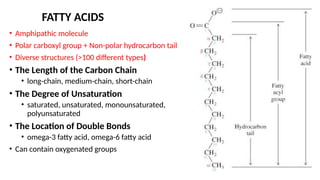
FATTY ACIDS
• Amphipathic molecule
• Polar carboxyl group + Non-polar hydrocarbon tail
• Diverse structures (>100 different types)
• The Length of the Carbon Chain
• long-chain, medium-chain, short-chain
• The Degree of Unsaturation
• saturated, unsaturated, monounsaturated,
polyunsaturated
• The Location of Double Bonds
• omega-3 fatty acid, omega-6 fatty acid
• Can contain oxygenated groups
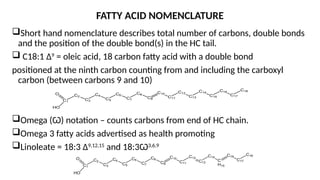
FATTY ACID NOMENCLATURE
Short hand nomenclature describes total number of carbons, double bonds
and the position of the double bond(s) in the HC tail.
 C18:1 Δ9
= oleic acid, 18 carbon fatty acid with a double bond
positioned at the ninth carbon counting from and including the carboxyl
carbon (between carbons 9 and 10)
Omega (Ѡ) notation – counts carbons from end of HC chain.
Omega 3 fatty acids advertised as health promoting
Linoleate = 18:3 Δ9,12,15
and 18:3Ѡ3,6,9
C1
C2
C3
C4
C5
C6
C7
C8
C9
C10
C11
C12
C13
C14
C15
C16
C17
C18
O
HO
C1
C2
C3
C4
C5
C6
C7
C8
C9
C10
C11
C12
C13
C14
C
H15
C16
C17
C18
O
HO
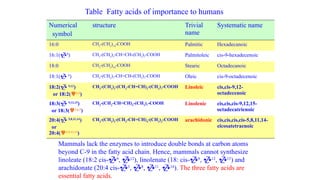
Table Fatty acids of importance to humans
Numerical
symbol
structure Trivial
name
Systematic name
16:0 CH3
-(CH2
)14
-COOH Palmitic Hexadecanoic
16:1(9
) CH3
-(CH2
)5
-CH=CH-(CH2
)7
-COOH Palmitoleic cis-9-hexadecenoic
18:0 CH3
-(CH2
)16
-COOH Stearic Octadecanoic
18:1( 9
) CH3
-(CH2
)7
-CH=CH-(CH2
)7
-COOH Oleic cis-9-octadecenoic
18:2( 9,12
)
or 18:2(6,9
)
CH3
-(CH2
)3
-(CH2
-CH=CH)2
-(CH2
)7
-COOH Linoleic cis,cis-9,12-
octadecenoic
18:3( 9,12,15
)
or 18:3(3,6,9
)
CH3
-(CH2
-CH=CH)3
-(CH2
)7
-COOH Linolenic cis,cis,cis-9,12,15-
octadecatrienoic
20:4( 5,8,11,14
)
or
20:4(6,9,12,15
)
CH3
-(CH2
)3
-(CH2
-CH=CH)4
-(CH2
)3
-COOH arachidonic cis,cis,cis,cis-5,8,11,14-
eicosatetraenoic
Mammals lack the enzymes to introduce double bonds at carbon atoms
beyond C-9 in the fatty acid chain. Hence, mammals cannot synthesize
linoleate (18:2 cis-9
, 12
), linolenate (18: cis-9
, 12
, 15
) and
arachidonate (20:4 cis-5
, 8
, 11
, 14
). The three fatty acids are
essential fatty acids.
INTRODUCTION
• Sites of FA Synthesis : the cytosol of the liver, mammary gland and
other tissues (Fatty)
• Initial products of digestion (e.g., FFAs) stimulate duodenum to
release the 33 amino acid peptide hormone Pancreozymin-
Cholecystokinin (PZ-CCK).
• CCK activity induces emptying of the gallbladder leading to
increased concentration of bile salts and other bile constituents in
the intestine
• PZ causes release of pancreatic digestive enzymes, including
pancreatic lipase.
11
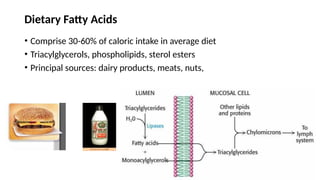
Dietary Fatty Acids
• Comprise 30-60% of caloric intake in average diet
• Triacylglycerols, phospholipids, sterol esters
• Principal sources: dairy products, meats, nuts,
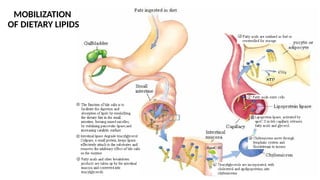
MOBILIZATION
OF DIETARY LIPIDS
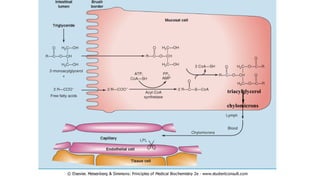
triacylglycerol
chylomicrons
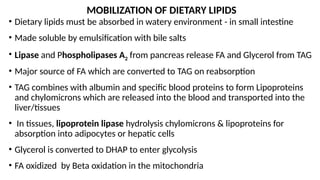
MOBILIZATION OF DIETARY LIPIDS
• Dietary lipids must be absorbed in watery environment - in small intestine
• Made soluble by emulsification with bile salts
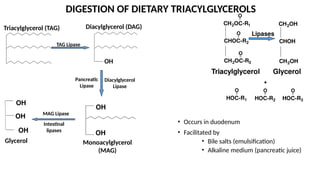
• Lipase and Phospholipases A2 from pancreas release FA and Glycerol from TAG
• Major source of FA which are converted to TAG on reabsorption
• TAG combines with albumin and specific blood proteins to form Lipoproteins
and chylomicrons which are released into the blood and transported into the
liver/tissues
• In tissues, lipoprotein lipase hydrolysis chylomicrons & lipoproteins for
absorption into adipocytes or hepatic cells
• Glycerol is converted to DHAP to enter glycolysis
• FA oxidized by Beta oxidation in the mitochondria
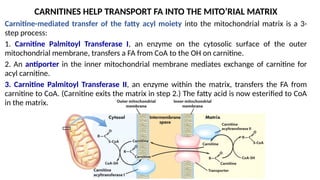
Carnitine-mediated transfer of the fatty acyl moiety into the mitochondrial matrix is a 3-
step process:
1. Carnitine Palmitoyl Transferase I, an enzyme on the cytosolic surface of the outer
mitochondrial membrane, transfers a FA from CoA to the OH on carnitine.
2. An antiporter in the inner mitochondrial membrane mediates exchange of carnitine for
acyl carnitine.
3. Carnitine Palmitoyl Transferase II, an enzyme within the matrix, transfers the FA from
carnitine to CoA. (Carnitine exits the matrix in step 2.) The fatty acid is now esterified to CoA
in the matrix. cytosol mitochondrial matrix
O O
R-C-SCoA HO-carnitine HO-carnitine R-C-SCoA
HSCoA R-C-O-carnitine R-C-O-carnitine HSCoA
O O
1
2
3
CARNITINES HELP TRANSPORT FA INTO THE MITO’RIAL MATRIX
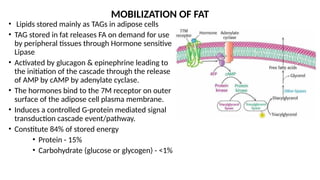
MOBILIZATION OF FAT
• Lipids stored mainly as TAGs in adipose cells
• TAG stored in fat releases FA on demand for use
by peripheral tissues through Hormone sensitive
Lipase
• Activated by glucagon & epinephrine leading to
the initiation of the cascade through the release
of AMP by cAMP by adenylate cyclase.
• The hormones bind to the 7M receptor on outer
surface of the adipose cell plasma membrane.
• Induces a controlled G-protein mediated signal
transduction cascade event/pathway.
• Constitute 84% of stored energy
• Protein - 15%
• Carbohydrate (glucose or glycogen) - <1%
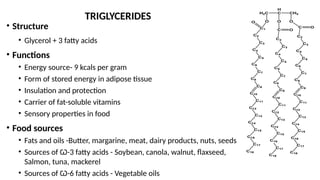
• Structure
• Glycerol + 3 fatty acids
• Functions
• Energy source- 9 kcals per gram
• Form of stored energy in adipose tissue
• Insulation and protection
• Carrier of fat-soluble vitamins
• Sensory properties in food
• Food sources
• Fats and oils -Butter, margarine, meat, dairy products, nuts, seeds
• Sources of Ѡ-3 fatty acids - Soybean, canola, walnut, flaxseed,
Salmon, tuna, mackerel
• Sources of Ѡ-6 fatty acids - Vegetable oils
C9
CH2
H
C
H2C
C16
O O
C O
C1
O
C2
C3
C4
C5
C6
C7
C8
C10
C11
C12
C13
C14
C15
C17
C18
C9
C16
C2
C3
C4
C5
C6
C7
C8
C10
C11
C12
C13
C14
C15
C17
C18
O
C O
C9
C16
C2
C3
C4
C5
C6
C7
C8
C10
C11
C12
C13
C14
C15
C17
C18
TRIGLYCERIDES
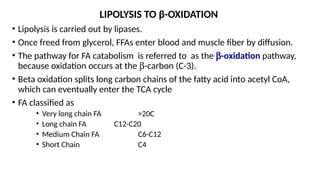
LIPOLYSIS TO β-OXIDATION
• Lipolysis is carried out by lipases.
• Once freed from glycerol, FFAs enter blood and muscle fiber by diffusion.
• The pathway for FA catabolism is referred to as the b-oxidation pathway,
because oxidation occurs at the b-carbon (C-3).
• Beta oxidation splits long carbon chains of the fatty acid into acetyl CoA,
which can eventually enter the TCA cycle
• FA classified as
• Very long chain FA >20C
• Long chain FA C12-C20
• Medium Chain FA C6-C12
• Short Chain C4
DIGESTION OF DIETARY TRIACYLGLYCEROLS
TAG Lipase
Diacylglycerol
Lipase
OH
OH
OH
MAG Lipase
OH
OH
OH
Triacylglycerol (TAG) Diacylglycerol (DAG)
Monoacylglycerol
(MAG)
Glycerol
O
O
O
O O O
+
HOC-R3
HOC-R2
HOC-R1
Triacylglycerol Glycerol
Lipases
CH2OH
CHOH
CH2OH
CH2OC-R1
CHOC-R2
CH2OC-R3
Pancreatic
Lipase
• Occurs in duodenum
• Facilitated by
• Bile salts (emulsification)
• Alkaline medium (pancreatic juice)
Intestinal
lipases
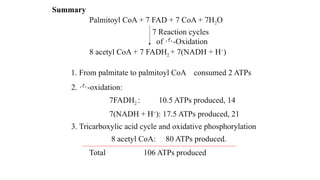
Palmitoyl CoA + 7 FAD + 7 CoA + 7H2O
7 Reaction cycles
of -Oxidation
8 acetyl CoA + 7 FADH2 + 7(NADH + H+
)
Summary
2. -oxidation:
7FADH2 : 10.5 ATPs produced, 14
7(NADH + H+
): 17.5 ATPs produced, 21
3. Tricarboxylic acid cycle and oxidative phosphorylation
8 acetyl CoA: 80 ATPs produced.
Total 106 ATPs produced
1. From palmitate to palmitoyl CoA consumed 2 ATPs
21
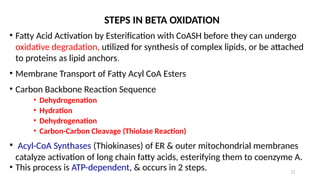
STEPS IN BETA OXIDATION
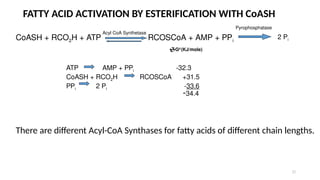
• Fatty Acid Activation by Esterification with CoASH before they can undergo
oxidative degradation, utilized for synthesis of complex lipids, or be attached
to proteins as lipid anchors.
• Membrane Transport of Fatty Acyl CoA Esters
• Carbon Backbone Reaction Sequence
• Dehydrogenation
• Hydration
• Dehydrogenation
• Carbon-Carbon Cleavage (Thiolase Reaction)
• Acyl-CoA Synthases (Thiokinases) of ER & outer mitochondrial membranes
catalyze activation of long chain fatty acids, esterifying them to coenzyme A.
• This process is ATP-dependent, & occurs in 2 steps.
22
FATTY ACID ACTIVATION BY ESTERIFICATION WITH CoASH
CoASH + RCO2H + ATP RCOSCoA + AMP + PPi
Acyl CoA Synthetase
2 Pi
Pyrophosphatase
There are different Acyl-CoA Synthases for fatty acids of different chain lengths.
ATP AMP + PPi -32.3
CoASH + RCO2H RCOSCoA +31.5
PPi 2 Pi -33.6
G0’
(KJ/mole)
-34.4
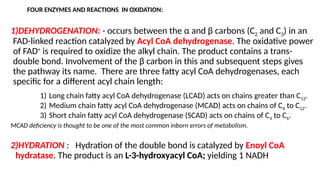
FOUR ENZYMES AND REACTIONS IN OXIDATION:
1)DEHYDROGENATION: - occurs between the α and β carbons (C2 and C3) in an
FAD-linked reaction catalyzed by Acyl CoA dehydrogenase. The oxidative power
of FAD+
is required to oxidize the alkyl chain. The product contains a trans-
double bond. Involvement of the β carbon in this and subsequent steps gives
the pathway its name. There are three fatty acyl CoA dehydrogenases, each
specific for a different acyl chain length:
1) Long chain fatty acyl CoA dehydrogenase (LCAD) acts on chains greater than C12.
2) Medium chain fatty acyl CoA dehydrogenase (MCAD) acts on chains of C6 to C12.
3) Short chain fatty acyl CoA dehydrogenase (SCAD) acts on chains of C4 to C6.
MCAD deficiency is thought to be one of the most common inborn errors of metabolism.
2)HYDRATION : Hydration of the double bond is catalyzed by Enoyl CoA
hydratase. The product is an L-3-hydroxyacyl CoA; yielding 1 NADH
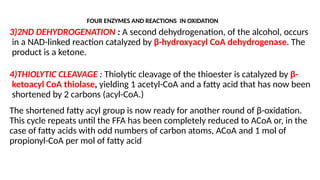
3)2ND DEHYDROGENATION : A second dehydrogenation, of the alcohol, occurs
in a NAD-linked reaction catalyzed by β-hydroxyacyl CoA dehydrogenase. The
product is a ketone.
4)THIOLYTIC CLEAVAGE : Thiolytic cleavage of the thioester is catalyzed by β-
ketoacyl CoA thiolase, yielding 1 acetyl-CoA and a fatty acid that has now been
shortened by 2 carbons (acyl-CoA.)
The shortened fatty acyl group is now ready for another round of β-oxidation.
This cycle repeats until the FFA has been completely reduced to ACoA or, in the
case of fatty acids with odd numbers of carbon atoms, ACoA and 1 mol of
propionyl-CoA per mol of fatty acid
FOUR ENZYMES AND REACTIONS IN OXIDATION
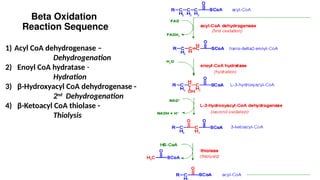
Beta Oxidation
Reaction Sequence
1) Acyl CoA dehydrogenase –
Dehydrogenation
2) Enoyl CoA hydratase -
Hydration
3) β-Hydroxyacyl CoA dehydrogenase -
2nd
Dehydrogenation
4) β-Ketoacyl CoA thiolase -
Thiolysis
26
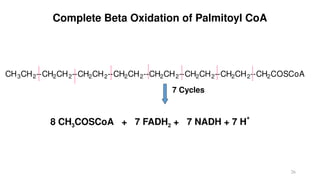
Complete Beta Oxidation of Palmitoyl CoA
CH3CH2--CH2CH2--CH2CH2--CH2CH2--CH2CH2--CH2CH2--CH2CH2--CH2COSCoA
7 Cycles
8 CH3COSCoA + 7 FADH2 + 7 NADH + 7 H
+
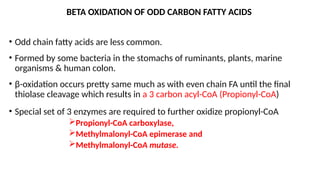
• Odd chain fatty acids are less common.
• Formed by some bacteria in the stomachs of ruminants, plants, marine
organisms & human colon.
• β-oxidation occurs pretty same much as with even chain FA until the final
thiolase cleavage which results in a 3 carbon acyl-CoA (Propionyl-CoA)
• Special set of 3 enzymes are required to further oxidize propionyl-CoA
Propionyl-CoA carboxylase,
Methylmalonyl-CoA epimerase and
Methylmalonyl-CoA mutase.
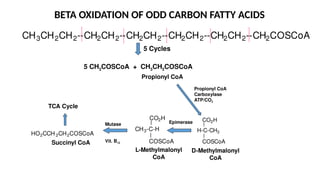
BETA OXIDATION OF ODD CARBON FATTY ACIDS
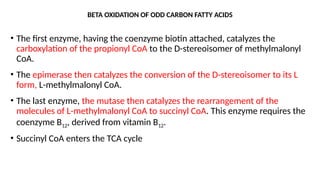
• The first enzyme, having the coenzyme biotin attached, catalyzes the
carboxylation of the propionyl CoA to the D-stereoisomer of methylmalonyl
CoA.
• The epimerase then catalyzes the conversion of the D-stereoisomer to its L
form, L-methylmalonyl CoA.
• The last enzyme, the mutase then catalyzes the rearrangement of the
molecules of L-methylmalonyl CoA to succinyl CoA. This enzyme requires the
coenzyme B12, derived from vitamin B12.
• Succinyl CoA enters the TCA cycle
BETA OXIDATION OF ODD CARBON FATTY ACIDS
CH3CH2CH2--CH2CH2--CH2CH2--CH2CH2--CH2CH2--CH2COSCoA
5 Cycles
5 CH3COSCoA + CH3CH2COSCoA
Propionyl CoA
CO2H
COSCoA
H-C-CH3
CO2H
COSCoA
CH3-C-H
HO2CCH 2CH2COSCoA
D-Methylmalonyl
CoA
L-Methylmalonyl
CoA
Succinyl CoA
TCA Cycle
Propionyl CoA
Carboxylase
ATP/CO2
Epimerase
Mutase
Vit. B12
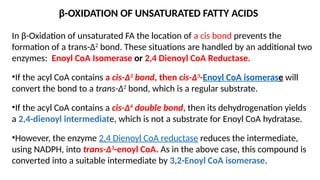
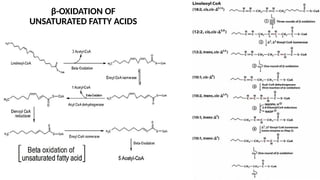
β-OXIDATION OF UNSATURATED FATTY ACIDS
In β-Oxidation of unsaturated FA the location of a cis bond prevents the
formation of a trans-Δ2
bond. These situations are handled by an additional two
enzymes: Enoyl CoA Isomerase or 2,4 Dienoyl CoA Reductase.
•If the acyl CoA contains a cis-Δ3
bond, then cis-Δ3
-Enoyl CoA isomerase will
convert the bond to a trans-Δ2
bond, which is a regular substrate.
•If the acyl CoA contains a cis-Δ4
double bond, then its dehydrogenation yields
a 2,4-dienoyl intermediate, which is not a substrate for Enoyl CoA hydratase.
•However, the enzyme 2,4 Dienoyl CoA reductase reduces the intermediate,
using NADPH, into trans-Δ3
-enoyl CoA. As in the above case, this compound is
converted into a suitable intermediate by 3,2-Enoyl CoA isomerase.
β-OXIDATION OF
UNSATURATED FATTY ACIDS
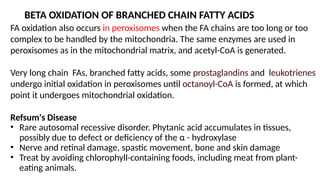
BETA OXIDATION OF BRANCHED CHAIN FATTY ACIDS
FA oxidation also occurs in peroxisomes when the FA chains are too long or too
complex to be handled by the mitochondria. The same enzymes are used in
peroxisomes as in the mitochondrial matrix, and acetyl-CoA is generated.
Very long chain FAs, branched fatty acids, some prostaglandins and leukotrienes
undergo initial oxidation in peroxisomes until octanoyl-CoA is formed, at which
point it undergoes mitochondrial oxidation.
Refsum's Disease
• Rare autosomal recessive disorder. Phytanic acid accumulates in tissues,
possibly due to defect or deficiency of the α - hydroxylase
• Nerve and retinal damage, spastic movement, bone and skin damage
• Treat by avoiding chlorophyll-containing foods, including meat from plant-
eating animals.
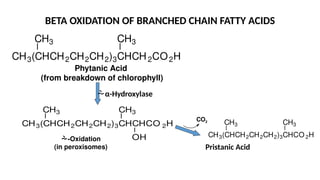
BETA OXIDATION OF BRANCHED CHAIN FATTY ACIDS
CH3 CH3
CH3(CHCH2CH2CH2)3CHCH2CO2H
Phytanic Acid
(from breakdown of chlorophyll)
CH3 CH3
OH
CH3(CHCH2CH2CH2)3CHCHCO 2H CH3 CH3
CH3(CHCH2CH2CH2)3CHCO 2H
α-Hydroxylase
-Oxidation
(in peroxisomes)
CO2
Pristanic Acid
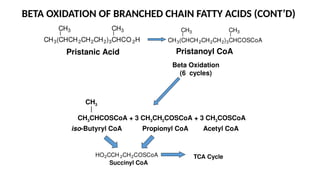
BETA OXIDATION OF BRANCHED CHAIN FATTY ACIDS (CONT’D)
CH3 CH3
CH3(CHCH2CH2CH2)3CHCO 2H
Pristanic Acid
CH3 CH3
CH3(CHCH2CH2CH2)3CHCOSCoA
Pristanoyl CoA
Beta Oxidation
(6 cycles)
CH3CHCOSCoA + 3 CH3CH2COSCoA + 3 CH3COSCoA
CH3
iso-Butyryl CoA Propionyl CoA Acetyl CoA
HO2CCH 2CH2COSCoA
Succinyl CoA
TCA Cycle
CONTROL OF FATTY ACID OXIDATION
Control of fatty acid oxidation is exerted mainly at the step of FA entry into mitochondria.
Malonyl CoA (which is also a precursor for fatty acid synthesis) inhibits Carnitine Palmitoyl
Transferase I. Malonyl-CoA is produced from acetyl-CoA by the enzyme Acetyl-CoA
Carboxylase.
AMP-Activated Kinase, a sensor of cellular energy levels, is allosterically activated by AMP,
which is high in concentration when [ATP] is low.
Acetyl-CoA Carboxylase is inhibited when phosphorylated by AMP-Activated Kinase, leading
to decreased Malonyl-CoA.
The decrease in Malonyl-CoA concentration leads to increased activity of Carnitine Palmitoyl
Transferase I.
Increased fatty acid oxidation then generates acetyl-CoA, for entry into Krebs cycle with
associated ATP production
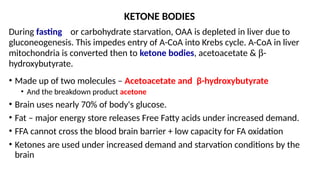
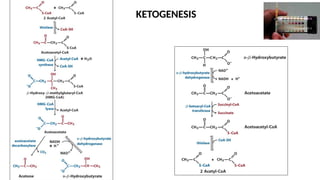
KETONE BODIES
During fasting or carbohydrate starvation, OAA is depleted in liver due to
gluconeogenesis. This impedes entry of A-CoA into Krebs cycle. A-CoA in liver
mitochondria is converted then to ketone bodies, acetoacetate & b-
hydroxybutyrate.
• Made up of two molecules – Acetoacetate and β-hydroxybutyrate
• And the breakdown product acetone
• Brain uses nearly 70% of body's glucose.
• Fat – major energy store releases Free Fatty acids under increased demand.
• FFA cannot cross the blood brain barrier + low capacity for FA oxidation
• Ketones are used under increased demand and starvation conditions by the
brain
THE SIGNIFICANCE OF KETOGENESIS
1) Ketone bodies are water soluble, they are convenient to transport in
blood, and readily taken up by non-hepatic tissues. In the early stages of
fasting, the use of ketone bodies by heart, skeletal muscle conserves
glucose for support of central nervous system. With prolonged starvation,
brain can up take more ketone bodies to spare glucose consumption.
(2) High concentration of ketone bodies can induce ketonemia and
ketonuria, and even ketoacidosis. When carbohydrate catabolism is blocked
by a disease e.g. diabetes mellitus, inadequate sugar supply, the blood
concentration of ketone bodies may increase, the patient may suffer from
ketosis and acidosis – ketoacidosis.
KETOGENESIS
REGULATION OF KETOGENESIS
The fate of the products of fatty acid metabolism is determined by an individual's physiological
status. Ketogenesis takes place primarily in the liver and may by affected by several factors:
1)Controlled release of FFA from adipose tissue directly affects the level of ketogenesis in the
liver. This is, of course, substrate-level regulation. Once fats enter the liver, they have two
distinct fates. They may be activated to acyl-CoAs and oxidized, or esterified to glycerol in the
production of TAGs especially if Gly 3-P levels are high
2)The generated ACoA by oxidation of fats can be completely oxidized in the TCA cycle.
Therefore, if the demand for ATP is high the fate of acetyl-CoA is likely to be further oxidation
to CO2.
3)The activity of ACC, a rate-limiting enzyme of fatty acid biosynthesis and malonyl-CoA
production, can be regulated by several mechanisms, including multisite covalent
phosphorylation, both in vitro and in intact cells. Evidence exists to indicate that a 5'-AMP-
activated protein kinase (AMPK) is likely the major regulatory kinase active on ACC. While
insulin is known to activate ACC in several cell types, accompanied by changes in ACC
phosphorylation, the mechanism underlying this activation has been obscure.
CLINICAL SIGNIFICANCE OF KETOGENESIS
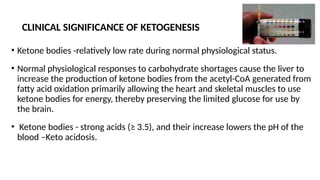
• Ketone bodies -relatively low rate during normal physiological status.
• Normal physiological responses to carbohydrate shortages cause the liver to
increase the production of ketone bodies from the acetyl-CoA generated from
fatty acid oxidation primarily allowing the heart and skeletal muscles to use
ketone bodies for energy, thereby preserving the limited glucose for use by
the brain.
• Ketone bodies - strong acids (≥ 3.5), and their increase lowers the pH of the
blood –Keto acidosis.
Acidification of the blood impairs the ability of hemoglobin to bind oxygen.
Accumulation of ketone bodies is abnormal (but not necessarily harmful) is
called ketosis/keto acidosis and can be quantified by sampling the patient's
exhaled air, and testing for acetone by gas chromatography.
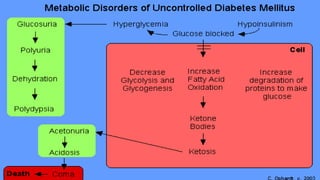
 Ketosis, leads to profound clinical manifestations in untreated insulin-
dependent diabetes mellitus- Diabetic Ketoacidosis (DKA)
This is the result of reduced supply of glucose and a concomitant increase in
fatty acid oxidation. The increased production of A-CoA leads to ketosis that
exceeds the ability of peripheral tissues to oxidize them.
CLINICAL SIGNIFICANCE OF KETOGENESIS
Summary:Ketogenesis
• Acetoacetate and 3-hydroxybutyrate have very important physiological
values.
• They are utilized in large quantities by different tissues as a source of energy.
• Indeed the heart muscle and renal cortex use Acetoacetic acid in preference
to glucose.
• In contrast glucose is the major fuel for the brain, RBCs, and retina in well
nourished individuals.
• During starvation and diabetic mellitus, the brain can adapt to the utilization
of Acetoacetate.
Ketosis and brain metabolism
• Neural tissue has more metabolic activity than other tissues of the body.
• The brain weighs app. 1.4 kg in a 70-kg person—but uses 20% of the body's oxygen at
rest.
• Neurons (and glia) are also constantly synthesizing a variety of neurotransmitters,
proteins for axonal flow, and proteins and lipids for regeneration of synaptic vesicles
and other components of membranes.
• Many of these chemicals are synthesized in the brain, in part or wholly from glucose or
ketone bodies.
• Acute hypoglycemia, i.e. alcoholic or a diabetic who has accidentally taken too much
insulin) causes the brain to be deprived rapidly and abruptly of blood glucose after the
brain has depended for a long time on glucose rather than ketones
Ketosis and brain metabolism
• Under these situations, -hydroxybutyrate
dehydrogenase and acetoacetyl CoA synthetase activity in
the brain is insufficient to enable the blood ketones to
sustain the brain's metabolism.
• Without fuel to burn, the neural tissue fail to carry out the
high level of metabolism needed to:
• pump ions
• fire messages
• transmit intercellular chemical messages
• repair itself.
• This lead in state of sudden memory loss ( ie
disorientation), confusion, followed rapidly by coma and
death.
Ketone Bodies
Baltimore
Knowledge is like spring water underground –
the deeper you dig, the clearer is the water.
You have finished the study of
This section successfully.!!!

LECTURE Note on Lipid Metabolism-Oxidation.ppt

  • 1.
  • 2.
  • 3.
    Objectives  A reviewof Basic structure and function of lipids  Explain the role of lipids in energy generation/cellular respiration  The break down of lipids via beta oxidation  Role and process of ketone body formation
  • 4.
  • 5.
    FUNCTION OF MAJOR ACYL-LIPIDS •Acyl-lipids - contain fatty acid groups as main non-polar group • Phospholipids – • Membrane components • Triacylglycerols – • Storage fats and oils • Waxes • Moisture barrier • Eicosanoids – • Signaling molecules (prostaglandin) • Sphingomyelins – • Membranes (Impt. In myelin sheaths) • Glycospingolipids • Cell recognition (ABO blood group antigen) FUNCTION OF MAJOR ISOPRENOID LIPIDS • Isoprenoids – made up of 5 carbon isoprene units • Steroids (sterols) – • Membrane component, hormones • Lipid Vitamins – • Vitamin A, E, K • Carotenoids – • Photosynthetic accessory pigments • Chlorophyll – • Major light harvesting pigment • Plastoquinone/Ubiquinone • Lipid soluble electron carriers • Essential oils • Menthol
  • 6.
    FATTY ACIDS • Amphipathicmolecule • Polar carboxyl group + Non-polar hydrocarbon tail • Diverse structures (>100 different types) • The Length of the Carbon Chain • long-chain, medium-chain, short-chain • The Degree of Unsaturation • saturated, unsaturated, monounsaturated, polyunsaturated • The Location of Double Bonds • omega-3 fatty acid, omega-6 fatty acid • Can contain oxygenated groups
  • 7.
    FATTY ACID NOMENCLATURE Shorthand nomenclature describes total number of carbons, double bonds and the position of the double bond(s) in the HC tail.  C18:1 Δ9 = oleic acid, 18 carbon fatty acid with a double bond positioned at the ninth carbon counting from and including the carboxyl carbon (between carbons 9 and 10) Omega (Ѡ) notation – counts carbons from end of HC chain. Omega 3 fatty acids advertised as health promoting Linoleate = 18:3 Δ9,12,15 and 18:3Ѡ3,6,9 C1 C2 C3 C4 C5 C6 C7 C8 C9 C10 C11 C12 C13 C14 C15 C16 C17 C18 O HO C1 C2 C3 C4 C5 C6 C7 C8 C9 C10 C11 C12 C13 C14 C H15 C16 C17 C18 O HO
  • 8.
    Table Fatty acidsof importance to humans Numerical symbol structure Trivial name Systematic name 16:0 CH3 -(CH2 )14 -COOH Palmitic Hexadecanoic 16:1(9 ) CH3 -(CH2 )5 -CH=CH-(CH2 )7 -COOH Palmitoleic cis-9-hexadecenoic 18:0 CH3 -(CH2 )16 -COOH Stearic Octadecanoic 18:1( 9 ) CH3 -(CH2 )7 -CH=CH-(CH2 )7 -COOH Oleic cis-9-octadecenoic 18:2( 9,12 ) or 18:2(6,9 ) CH3 -(CH2 )3 -(CH2 -CH=CH)2 -(CH2 )7 -COOH Linoleic cis,cis-9,12- octadecenoic 18:3( 9,12,15 ) or 18:3(3,6,9 ) CH3 -(CH2 -CH=CH)3 -(CH2 )7 -COOH Linolenic cis,cis,cis-9,12,15- octadecatrienoic 20:4( 5,8,11,14 ) or 20:4(6,9,12,15 ) CH3 -(CH2 )3 -(CH2 -CH=CH)4 -(CH2 )3 -COOH arachidonic cis,cis,cis,cis-5,8,11,14- eicosatetraenoic Mammals lack the enzymes to introduce double bonds at carbon atoms beyond C-9 in the fatty acid chain. Hence, mammals cannot synthesize linoleate (18:2 cis-9 , 12 ), linolenate (18: cis-9 , 12 , 15 ) and arachidonate (20:4 cis-5 , 8 , 11 , 14 ). The three fatty acids are essential fatty acids.
  • 9.
    INTRODUCTION • Sites ofFA Synthesis : the cytosol of the liver, mammary gland and other tissues (Fatty) • Initial products of digestion (e.g., FFAs) stimulate duodenum to release the 33 amino acid peptide hormone Pancreozymin- Cholecystokinin (PZ-CCK). • CCK activity induces emptying of the gallbladder leading to increased concentration of bile salts and other bile constituents in the intestine • PZ causes release of pancreatic digestive enzymes, including pancreatic lipase.
  • 10.
    11 Dietary Fatty Acids •Comprise 30-60% of caloric intake in average diet • Triacylglycerols, phospholipids, sterol esters • Principal sources: dairy products, meats, nuts,
  • 11.
  • 12.
  • 13.
    MOBILIZATION OF DIETARYLIPIDS • Dietary lipids must be absorbed in watery environment - in small intestine • Made soluble by emulsification with bile salts • Lipase and Phospholipases A2 from pancreas release FA and Glycerol from TAG • Major source of FA which are converted to TAG on reabsorption • TAG combines with albumin and specific blood proteins to form Lipoproteins and chylomicrons which are released into the blood and transported into the liver/tissues • In tissues, lipoprotein lipase hydrolysis chylomicrons & lipoproteins for absorption into adipocytes or hepatic cells • Glycerol is converted to DHAP to enter glycolysis • FA oxidized by Beta oxidation in the mitochondria
  • 14.
    Carnitine-mediated transfer ofthe fatty acyl moiety into the mitochondrial matrix is a 3- step process: 1. Carnitine Palmitoyl Transferase I, an enzyme on the cytosolic surface of the outer mitochondrial membrane, transfers a FA from CoA to the OH on carnitine. 2. An antiporter in the inner mitochondrial membrane mediates exchange of carnitine for acyl carnitine. 3. Carnitine Palmitoyl Transferase II, an enzyme within the matrix, transfers the FA from carnitine to CoA. (Carnitine exits the matrix in step 2.) The fatty acid is now esterified to CoA in the matrix. cytosol mitochondrial matrix O O R-C-SCoA HO-carnitine HO-carnitine R-C-SCoA HSCoA R-C-O-carnitine R-C-O-carnitine HSCoA O O 1 2 3 CARNITINES HELP TRANSPORT FA INTO THE MITO’RIAL MATRIX
  • 15.
    MOBILIZATION OF FAT •Lipids stored mainly as TAGs in adipose cells • TAG stored in fat releases FA on demand for use by peripheral tissues through Hormone sensitive Lipase • Activated by glucagon & epinephrine leading to the initiation of the cascade through the release of AMP by cAMP by adenylate cyclase. • The hormones bind to the 7M receptor on outer surface of the adipose cell plasma membrane. • Induces a controlled G-protein mediated signal transduction cascade event/pathway. • Constitute 84% of stored energy • Protein - 15% • Carbohydrate (glucose or glycogen) - <1%
  • 16.
    • Structure • Glycerol+ 3 fatty acids • Functions • Energy source- 9 kcals per gram • Form of stored energy in adipose tissue • Insulation and protection • Carrier of fat-soluble vitamins • Sensory properties in food • Food sources • Fats and oils -Butter, margarine, meat, dairy products, nuts, seeds • Sources of Ѡ-3 fatty acids - Soybean, canola, walnut, flaxseed, Salmon, tuna, mackerel • Sources of Ѡ-6 fatty acids - Vegetable oils C9 CH2 H C H2C C16 O O C O C1 O C2 C3 C4 C5 C6 C7 C8 C10 C11 C12 C13 C14 C15 C17 C18 C9 C16 C2 C3 C4 C5 C6 C7 C8 C10 C11 C12 C13 C14 C15 C17 C18 O C O C9 C16 C2 C3 C4 C5 C6 C7 C8 C10 C11 C12 C13 C14 C15 C17 C18 TRIGLYCERIDES
  • 17.
    LIPOLYSIS TO β-OXIDATION •Lipolysis is carried out by lipases. • Once freed from glycerol, FFAs enter blood and muscle fiber by diffusion. • The pathway for FA catabolism is referred to as the b-oxidation pathway, because oxidation occurs at the b-carbon (C-3). • Beta oxidation splits long carbon chains of the fatty acid into acetyl CoA, which can eventually enter the TCA cycle • FA classified as • Very long chain FA >20C • Long chain FA C12-C20 • Medium Chain FA C6-C12 • Short Chain C4
  • 18.
    DIGESTION OF DIETARYTRIACYLGLYCEROLS TAG Lipase Diacylglycerol Lipase OH OH OH MAG Lipase OH OH OH Triacylglycerol (TAG) Diacylglycerol (DAG) Monoacylglycerol (MAG) Glycerol O O O O O O + HOC-R3 HOC-R2 HOC-R1 Triacylglycerol Glycerol Lipases CH2OH CHOH CH2OH CH2OC-R1 CHOC-R2 CH2OC-R3 Pancreatic Lipase • Occurs in duodenum • Facilitated by • Bile salts (emulsification) • Alkaline medium (pancreatic juice) Intestinal lipases
  • 19.
    Palmitoyl CoA +7 FAD + 7 CoA + 7H2O 7 Reaction cycles of -Oxidation 8 acetyl CoA + 7 FADH2 + 7(NADH + H+ ) Summary 2. -oxidation: 7FADH2 : 10.5 ATPs produced, 14 7(NADH + H+ ): 17.5 ATPs produced, 21 3. Tricarboxylic acid cycle and oxidative phosphorylation 8 acetyl CoA: 80 ATPs produced. Total 106 ATPs produced 1. From palmitate to palmitoyl CoA consumed 2 ATPs
  • 20.
    21 STEPS IN BETAOXIDATION • Fatty Acid Activation by Esterification with CoASH before they can undergo oxidative degradation, utilized for synthesis of complex lipids, or be attached to proteins as lipid anchors. • Membrane Transport of Fatty Acyl CoA Esters • Carbon Backbone Reaction Sequence • Dehydrogenation • Hydration • Dehydrogenation • Carbon-Carbon Cleavage (Thiolase Reaction) • Acyl-CoA Synthases (Thiokinases) of ER & outer mitochondrial membranes catalyze activation of long chain fatty acids, esterifying them to coenzyme A. • This process is ATP-dependent, & occurs in 2 steps.
  • 21.
    22 FATTY ACID ACTIVATIONBY ESTERIFICATION WITH CoASH CoASH + RCO2H + ATP RCOSCoA + AMP + PPi Acyl CoA Synthetase 2 Pi Pyrophosphatase There are different Acyl-CoA Synthases for fatty acids of different chain lengths. ATP AMP + PPi -32.3 CoASH + RCO2H RCOSCoA +31.5 PPi 2 Pi -33.6 G0’ (KJ/mole) -34.4
  • 22.
    FOUR ENZYMES ANDREACTIONS IN OXIDATION: 1)DEHYDROGENATION: - occurs between the α and β carbons (C2 and C3) in an FAD-linked reaction catalyzed by Acyl CoA dehydrogenase. The oxidative power of FAD+ is required to oxidize the alkyl chain. The product contains a trans- double bond. Involvement of the β carbon in this and subsequent steps gives the pathway its name. There are three fatty acyl CoA dehydrogenases, each specific for a different acyl chain length: 1) Long chain fatty acyl CoA dehydrogenase (LCAD) acts on chains greater than C12. 2) Medium chain fatty acyl CoA dehydrogenase (MCAD) acts on chains of C6 to C12. 3) Short chain fatty acyl CoA dehydrogenase (SCAD) acts on chains of C4 to C6. MCAD deficiency is thought to be one of the most common inborn errors of metabolism. 2)HYDRATION : Hydration of the double bond is catalyzed by Enoyl CoA hydratase. The product is an L-3-hydroxyacyl CoA; yielding 1 NADH
  • 23.
    3)2ND DEHYDROGENATION :A second dehydrogenation, of the alcohol, occurs in a NAD-linked reaction catalyzed by β-hydroxyacyl CoA dehydrogenase. The product is a ketone. 4)THIOLYTIC CLEAVAGE : Thiolytic cleavage of the thioester is catalyzed by β- ketoacyl CoA thiolase, yielding 1 acetyl-CoA and a fatty acid that has now been shortened by 2 carbons (acyl-CoA.) The shortened fatty acyl group is now ready for another round of β-oxidation. This cycle repeats until the FFA has been completely reduced to ACoA or, in the case of fatty acids with odd numbers of carbon atoms, ACoA and 1 mol of propionyl-CoA per mol of fatty acid FOUR ENZYMES AND REACTIONS IN OXIDATION
  • 24.
    Beta Oxidation Reaction Sequence 1)Acyl CoA dehydrogenase – Dehydrogenation 2) Enoyl CoA hydratase - Hydration 3) β-Hydroxyacyl CoA dehydrogenase - 2nd Dehydrogenation 4) β-Ketoacyl CoA thiolase - Thiolysis
  • 25.
    26 Complete Beta Oxidationof Palmitoyl CoA CH3CH2--CH2CH2--CH2CH2--CH2CH2--CH2CH2--CH2CH2--CH2CH2--CH2COSCoA 7 Cycles 8 CH3COSCoA + 7 FADH2 + 7 NADH + 7 H +
  • 26.
    • Odd chainfatty acids are less common. • Formed by some bacteria in the stomachs of ruminants, plants, marine organisms & human colon. • β-oxidation occurs pretty same much as with even chain FA until the final thiolase cleavage which results in a 3 carbon acyl-CoA (Propionyl-CoA) • Special set of 3 enzymes are required to further oxidize propionyl-CoA Propionyl-CoA carboxylase, Methylmalonyl-CoA epimerase and Methylmalonyl-CoA mutase. BETA OXIDATION OF ODD CARBON FATTY ACIDS
  • 27.
    • The firstenzyme, having the coenzyme biotin attached, catalyzes the carboxylation of the propionyl CoA to the D-stereoisomer of methylmalonyl CoA. • The epimerase then catalyzes the conversion of the D-stereoisomer to its L form, L-methylmalonyl CoA. • The last enzyme, the mutase then catalyzes the rearrangement of the molecules of L-methylmalonyl CoA to succinyl CoA. This enzyme requires the coenzyme B12, derived from vitamin B12. • Succinyl CoA enters the TCA cycle BETA OXIDATION OF ODD CARBON FATTY ACIDS
  • 28.
    BETA OXIDATION OFODD CARBON FATTY ACIDS CH3CH2CH2--CH2CH2--CH2CH2--CH2CH2--CH2CH2--CH2COSCoA 5 Cycles 5 CH3COSCoA + CH3CH2COSCoA Propionyl CoA CO2H COSCoA H-C-CH3 CO2H COSCoA CH3-C-H HO2CCH 2CH2COSCoA D-Methylmalonyl CoA L-Methylmalonyl CoA Succinyl CoA TCA Cycle Propionyl CoA Carboxylase ATP/CO2 Epimerase Mutase Vit. B12
  • 29.
    β-OXIDATION OF UNSATURATEDFATTY ACIDS In β-Oxidation of unsaturated FA the location of a cis bond prevents the formation of a trans-Δ2 bond. These situations are handled by an additional two enzymes: Enoyl CoA Isomerase or 2,4 Dienoyl CoA Reductase. •If the acyl CoA contains a cis-Δ3 bond, then cis-Δ3 -Enoyl CoA isomerase will convert the bond to a trans-Δ2 bond, which is a regular substrate. •If the acyl CoA contains a cis-Δ4 double bond, then its dehydrogenation yields a 2,4-dienoyl intermediate, which is not a substrate for Enoyl CoA hydratase. •However, the enzyme 2,4 Dienoyl CoA reductase reduces the intermediate, using NADPH, into trans-Δ3 -enoyl CoA. As in the above case, this compound is converted into a suitable intermediate by 3,2-Enoyl CoA isomerase.
  • 30.
  • 31.
    BETA OXIDATION OFBRANCHED CHAIN FATTY ACIDS FA oxidation also occurs in peroxisomes when the FA chains are too long or too complex to be handled by the mitochondria. The same enzymes are used in peroxisomes as in the mitochondrial matrix, and acetyl-CoA is generated. Very long chain FAs, branched fatty acids, some prostaglandins and leukotrienes undergo initial oxidation in peroxisomes until octanoyl-CoA is formed, at which point it undergoes mitochondrial oxidation. Refsum's Disease • Rare autosomal recessive disorder. Phytanic acid accumulates in tissues, possibly due to defect or deficiency of the α - hydroxylase • Nerve and retinal damage, spastic movement, bone and skin damage • Treat by avoiding chlorophyll-containing foods, including meat from plant- eating animals.
  • 32.
    BETA OXIDATION OFBRANCHED CHAIN FATTY ACIDS CH3 CH3 CH3(CHCH2CH2CH2)3CHCH2CO2H Phytanic Acid (from breakdown of chlorophyll) CH3 CH3 OH CH3(CHCH2CH2CH2)3CHCHCO 2H CH3 CH3 CH3(CHCH2CH2CH2)3CHCO 2H α-Hydroxylase -Oxidation (in peroxisomes) CO2 Pristanic Acid
  • 33.
    BETA OXIDATION OFBRANCHED CHAIN FATTY ACIDS (CONT’D) CH3 CH3 CH3(CHCH2CH2CH2)3CHCO 2H Pristanic Acid CH3 CH3 CH3(CHCH2CH2CH2)3CHCOSCoA Pristanoyl CoA Beta Oxidation (6 cycles) CH3CHCOSCoA + 3 CH3CH2COSCoA + 3 CH3COSCoA CH3 iso-Butyryl CoA Propionyl CoA Acetyl CoA HO2CCH 2CH2COSCoA Succinyl CoA TCA Cycle
  • 34.
    CONTROL OF FATTYACID OXIDATION Control of fatty acid oxidation is exerted mainly at the step of FA entry into mitochondria. Malonyl CoA (which is also a precursor for fatty acid synthesis) inhibits Carnitine Palmitoyl Transferase I. Malonyl-CoA is produced from acetyl-CoA by the enzyme Acetyl-CoA Carboxylase. AMP-Activated Kinase, a sensor of cellular energy levels, is allosterically activated by AMP, which is high in concentration when [ATP] is low. Acetyl-CoA Carboxylase is inhibited when phosphorylated by AMP-Activated Kinase, leading to decreased Malonyl-CoA. The decrease in Malonyl-CoA concentration leads to increased activity of Carnitine Palmitoyl Transferase I. Increased fatty acid oxidation then generates acetyl-CoA, for entry into Krebs cycle with associated ATP production
  • 35.
    KETONE BODIES During fastingor carbohydrate starvation, OAA is depleted in liver due to gluconeogenesis. This impedes entry of A-CoA into Krebs cycle. A-CoA in liver mitochondria is converted then to ketone bodies, acetoacetate & b- hydroxybutyrate. • Made up of two molecules – Acetoacetate and β-hydroxybutyrate • And the breakdown product acetone • Brain uses nearly 70% of body's glucose. • Fat – major energy store releases Free Fatty acids under increased demand. • FFA cannot cross the blood brain barrier + low capacity for FA oxidation • Ketones are used under increased demand and starvation conditions by the brain
  • 36.
    THE SIGNIFICANCE OFKETOGENESIS 1) Ketone bodies are water soluble, they are convenient to transport in blood, and readily taken up by non-hepatic tissues. In the early stages of fasting, the use of ketone bodies by heart, skeletal muscle conserves glucose for support of central nervous system. With prolonged starvation, brain can up take more ketone bodies to spare glucose consumption. (2) High concentration of ketone bodies can induce ketonemia and ketonuria, and even ketoacidosis. When carbohydrate catabolism is blocked by a disease e.g. diabetes mellitus, inadequate sugar supply, the blood concentration of ketone bodies may increase, the patient may suffer from ketosis and acidosis – ketoacidosis.
  • 37.
  • 38.
    REGULATION OF KETOGENESIS Thefate of the products of fatty acid metabolism is determined by an individual's physiological status. Ketogenesis takes place primarily in the liver and may by affected by several factors: 1)Controlled release of FFA from adipose tissue directly affects the level of ketogenesis in the liver. This is, of course, substrate-level regulation. Once fats enter the liver, they have two distinct fates. They may be activated to acyl-CoAs and oxidized, or esterified to glycerol in the production of TAGs especially if Gly 3-P levels are high 2)The generated ACoA by oxidation of fats can be completely oxidized in the TCA cycle. Therefore, if the demand for ATP is high the fate of acetyl-CoA is likely to be further oxidation to CO2. 3)The activity of ACC, a rate-limiting enzyme of fatty acid biosynthesis and malonyl-CoA production, can be regulated by several mechanisms, including multisite covalent phosphorylation, both in vitro and in intact cells. Evidence exists to indicate that a 5'-AMP- activated protein kinase (AMPK) is likely the major regulatory kinase active on ACC. While insulin is known to activate ACC in several cell types, accompanied by changes in ACC phosphorylation, the mechanism underlying this activation has been obscure.
  • 39.
    CLINICAL SIGNIFICANCE OFKETOGENESIS • Ketone bodies -relatively low rate during normal physiological status. • Normal physiological responses to carbohydrate shortages cause the liver to increase the production of ketone bodies from the acetyl-CoA generated from fatty acid oxidation primarily allowing the heart and skeletal muscles to use ketone bodies for energy, thereby preserving the limited glucose for use by the brain. • Ketone bodies - strong acids (≥ 3.5), and their increase lowers the pH of the blood –Keto acidosis.
  • 40.
    Acidification of theblood impairs the ability of hemoglobin to bind oxygen. Accumulation of ketone bodies is abnormal (but not necessarily harmful) is called ketosis/keto acidosis and can be quantified by sampling the patient's exhaled air, and testing for acetone by gas chromatography.  Ketosis, leads to profound clinical manifestations in untreated insulin- dependent diabetes mellitus- Diabetic Ketoacidosis (DKA) This is the result of reduced supply of glucose and a concomitant increase in fatty acid oxidation. The increased production of A-CoA leads to ketosis that exceeds the ability of peripheral tissues to oxidize them. CLINICAL SIGNIFICANCE OF KETOGENESIS
  • 41.
    Summary:Ketogenesis • Acetoacetate and3-hydroxybutyrate have very important physiological values. • They are utilized in large quantities by different tissues as a source of energy. • Indeed the heart muscle and renal cortex use Acetoacetic acid in preference to glucose. • In contrast glucose is the major fuel for the brain, RBCs, and retina in well nourished individuals. • During starvation and diabetic mellitus, the brain can adapt to the utilization of Acetoacetate.
  • 42.
    Ketosis and brainmetabolism • Neural tissue has more metabolic activity than other tissues of the body. • The brain weighs app. 1.4 kg in a 70-kg person—but uses 20% of the body's oxygen at rest. • Neurons (and glia) are also constantly synthesizing a variety of neurotransmitters, proteins for axonal flow, and proteins and lipids for regeneration of synaptic vesicles and other components of membranes. • Many of these chemicals are synthesized in the brain, in part or wholly from glucose or ketone bodies. • Acute hypoglycemia, i.e. alcoholic or a diabetic who has accidentally taken too much insulin) causes the brain to be deprived rapidly and abruptly of blood glucose after the brain has depended for a long time on glucose rather than ketones
  • 43.
    Ketosis and brainmetabolism • Under these situations, -hydroxybutyrate dehydrogenase and acetoacetyl CoA synthetase activity in the brain is insufficient to enable the blood ketones to sustain the brain's metabolism. • Without fuel to burn, the neural tissue fail to carry out the high level of metabolism needed to: • pump ions • fire messages • transmit intercellular chemical messages • repair itself. • This lead in state of sudden memory loss ( ie disorientation), confusion, followed rapidly by coma and death.
  • 44.
  • 45.
    Baltimore Knowledge is likespring water underground – the deeper you dig, the clearer is the water. You have finished the study of This section successfully.!!!

Editor's Notes

  • #10 The ability to synthesize a variety of lipids is therefore essential to all organisms. This chapter describes biosynthetic pathways for some of the principal lipids present in most cells, illustrating the strategies employed in assembling these water-insoluble products from simple, water-soluble precursors such as acetate. Like other biosynthetic pathways, these reaction sequences are endergonic and reductive. They use ATP as a source of metabolic energy and a reduced electron carrier (usually NADPH) as a reductant. a synthase is an enzyme that catalyses a synthesis process. Following the EC number classification, they belong to the group of lyases. Note that, originally, biochemical nomenclature distinguished synthetases and synthases. Under the original definition, synthases do not use energy from nucleoside triphosphates (such as ATP, GTP, CTP, TTP, and UTP), whereas synthetases do use nucleoside triphosphates. However, the Joint Commission on Biochemical Nomenclature (JCBN) dictates that 'synthase' can be used with any enzyme that catalyzes synthesis (whether or not it uses nucleoside triphosphates), whereas 'synthetase' is to be used synonymously with 'ligase'.[1]
  • #15  Fatty acyl-CoA formed outside can pass through the outer mitochondrial membrane (which has large VDAC channels), but cannot penetrate the inner membrane Carnitine Palmitoyl Transferases catalyzes transfer of a fatty acid between the thiol of Coenzyme A and the hydroxyl on carnitine.
  • #30  β-oxidation occurs normally for 3 rounds until a cis-Δ3-enoyl-CoA is formed. Acyl-CoA dehydrogenase cannot add double bond b/n the α and β carbons. Enoyl-CoA isomerase converts this to trans- Δ2 enoyl-CoA β-oxidation then continues on with the hydration of the trans-Δ2-enoyl-CoA Even-numbered double bonds handled by the reductase (creates an odd-numbered double bond) Odd numbered double bonds handled by isomerase
  • #36 Ketone bodies are three water-soluble molecules (acetoacetate, beta-hydroxybutyrate, and their spontaneous breakdown product, acetone) containing the ketone group that are produced by the liver from fatty acids during periods of low food intake (fasting), carbohydrate restrictive diets, starvation, prolonged intense
  • #37 Ketogenesis may or may not occur, depending on levels of available carbohydrates in the cell or body. This is closely related to the paths of acetyl-CoA:[ When the body has ample carbohydrates available as energy source, glucose is completely oxidized to CO2; acetyl-CoA is formed as an intermediate in this process, first entering the citric acid cycle followed by complete conversion of its chemical energy to ATP in oxidative phosphorylation. When the body has excess carbohydrates available, some glucose is fully metabolized, and some of it is stored in the form of glycogen or, upon citrate excess, as fatty acids. (CoA is also recycled here.) When the body has no free carbohydrates available, fat must be broken down into acetyl-CoA in order to get energy. Under these conditions, acetyl-CoA cannot be metabolized through the citric acid cycle because the citric acid cycle intermediates (mainly oxaloacetate) have been depleted to feed the gluconeogenesis pathway. The resulting accumulation of acetyl-CoA activates ketogenesis.
  • #39 Ketone bodies accumulate in the plasma in conditions of fasting and uncontrolled diabetes. The initiating event is a change in the molar ratio of glucagon:insulin. Insulin deficiency triggers the lipolytic process in adipose tissue with the result that FFA pass into the plasma for uptake by liver and other tissues. Glucagon appears to be the primary hormone involved in the induction of fatty acid oxidation and ketogenesis in the liver. It acts by acutely dropping hepatic malonyl-CoA concentrations as a consequence of inhibitory effects exerted in the glycolytic pathway and on ACC. The fall in MCoA concentration activates carnitine acyltransferase I such that long-chain fatty acids can be transported through the inner mitochondrial membrane to the enzymes of fatty acid oxidation and ketogenesis. The latter are high-capacity systems assuring that fatty acids entering the mitochondria are rapidly oxidized to ketone bodies. Thus, the rate-controlling step for ketogenesis is carnitine acyltransferase I. Administration of food after a fast, or of insulin to the diabetic subject, reduces plasma free fatty acid concentrations, increases the liver concentration of malonyl-CoA, inhibits carnitine acyltransferase I and reverses the ketogenic process