
DEFINATION
Clinical Guidelines

 Inclusion criteria: Systematic Literature Review
 PEDro
 National Guidelines Clearing House can be found at
http://www.guideline.gov/. (North America)
 (in England) http://www.nice.org.uk
 (in Australia)
http://www.nhmrc.gov.au/guidelines/health_guidelin
es.htm
 (in New Zealand) http://www.nzgg.org.nz
 (in the USA) http://www.guideline.gov
Clinical Guidelines

 Guideline International Network (GIN)
 Facilitating sharing of info &
knowledge


 A large no of guidelines
 Low quality Vs High Quality
guideline
 Some studies that focused on
quality of guideline ,they found
widespread quality issues.
Can I Trust This
Guideline?

There Should be some
Criteria for Critical appraisal
of Guidelines ??
(a) AGREE (b)DISAGREE

 Appraisal of Guidelines, REsearch and
Evaluation (AGREE) Collaboration
 Previously a Check list 37 items regarding guideline
development.
 Further Validated by international group of
researchers,13 countries
 (The AGREE Collaboration 2003)
AGREE

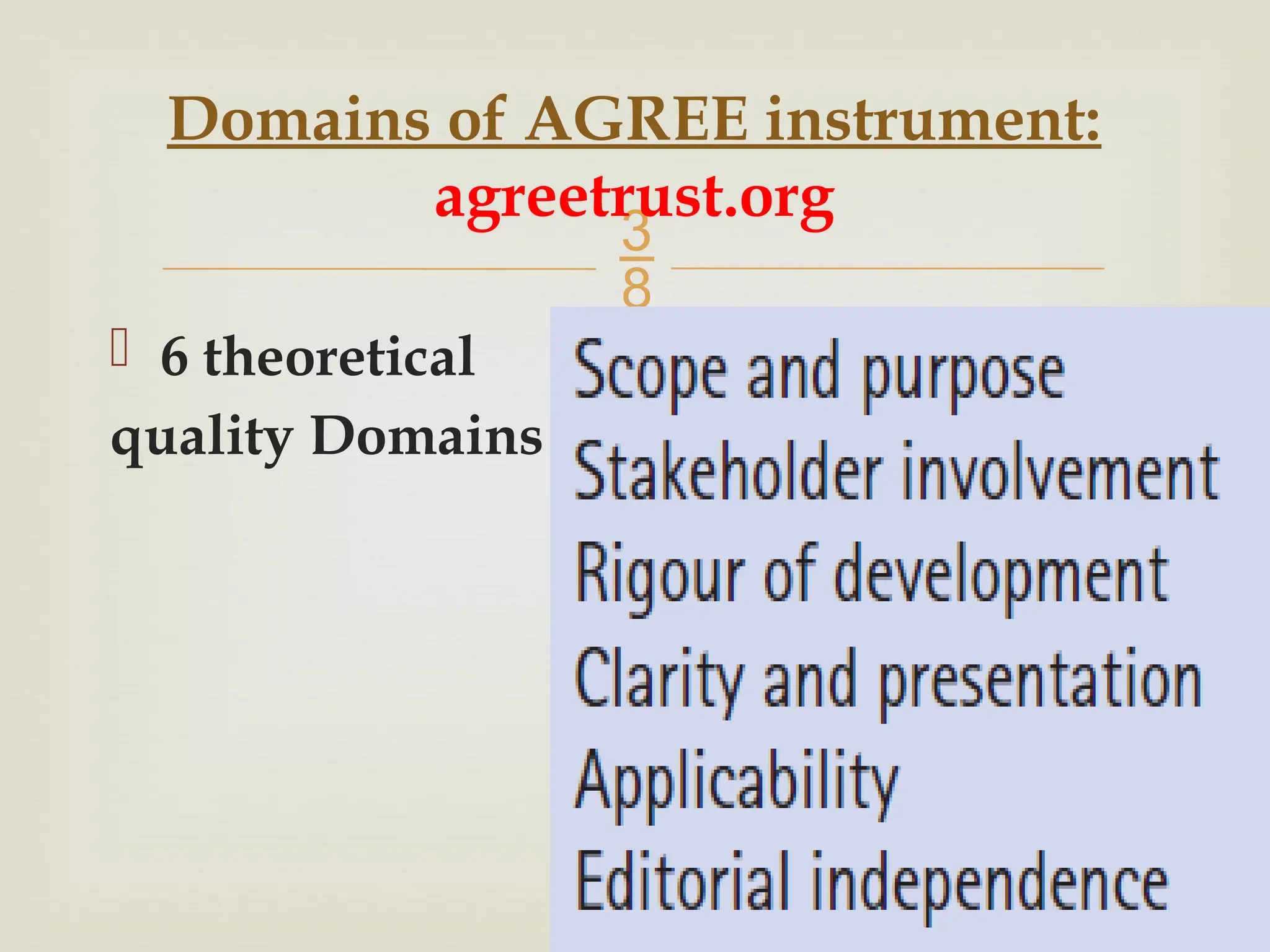
 6 theoretical
quality Domains
Domains of AGREE instrument:
agreetrust.org

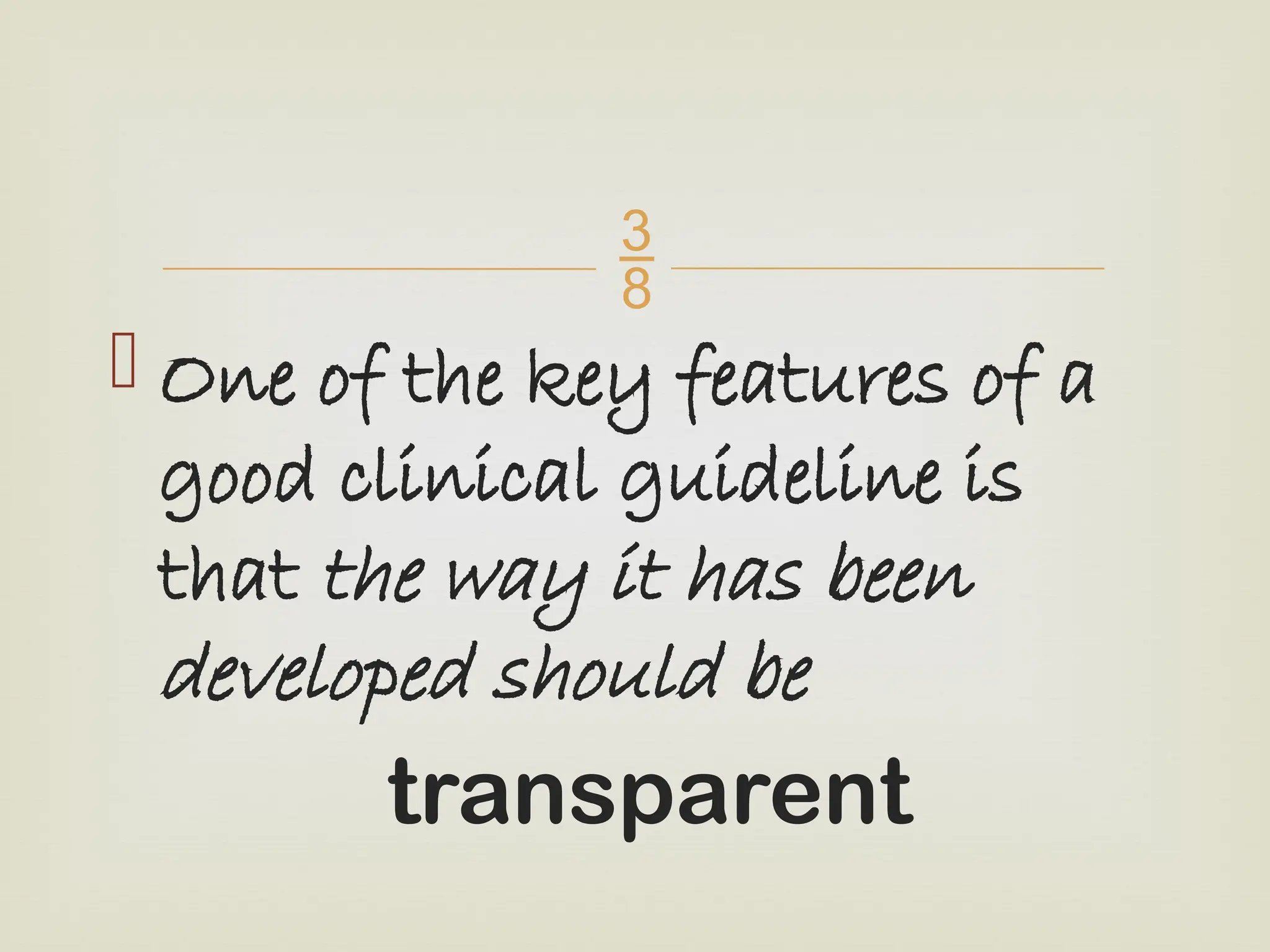
 One of the key features of a
good clinical guideline is
that the way it has been
developed should be
transparent

SCOPE & PURPOSE

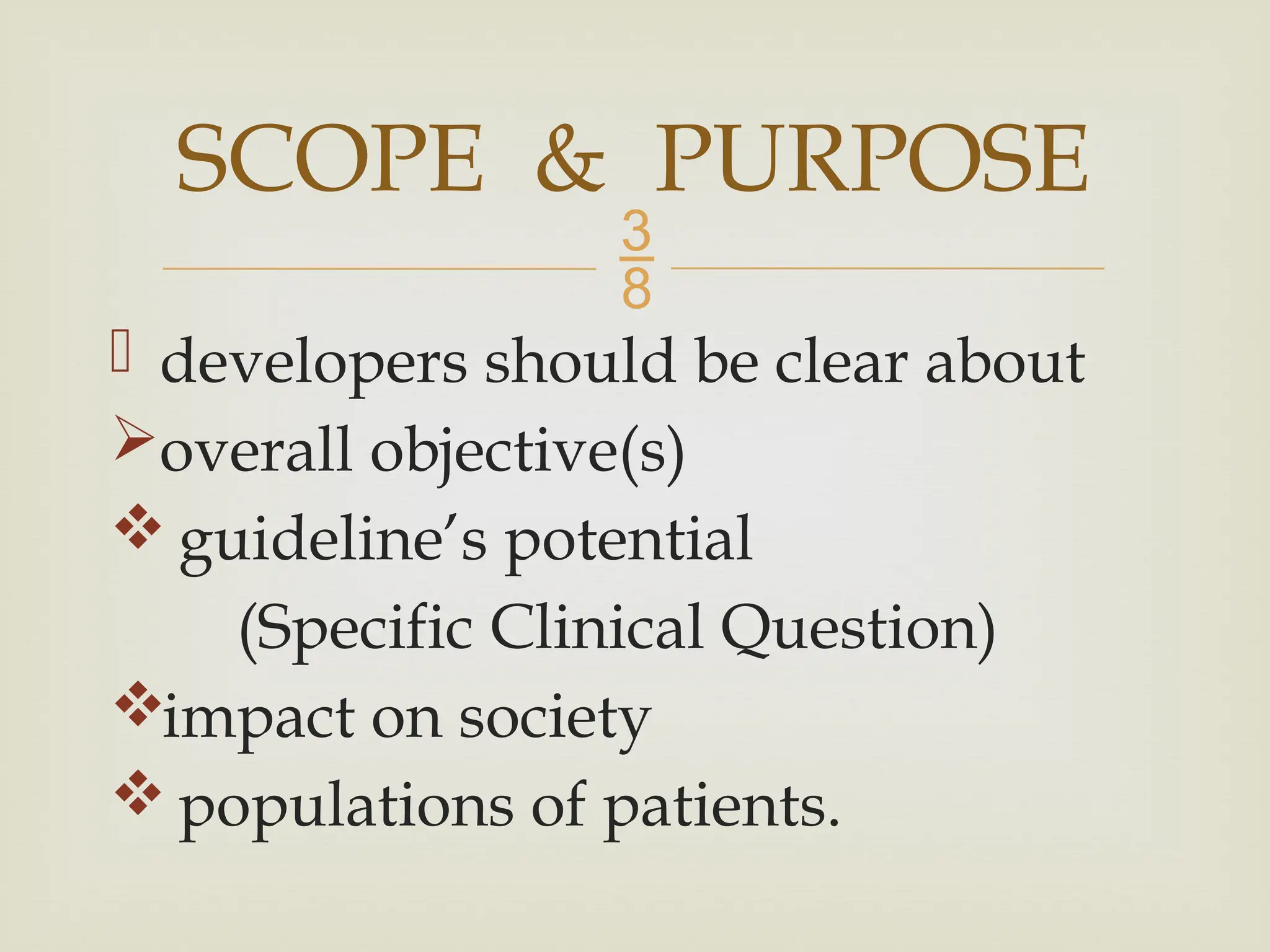
 developers should be clear about
overall objective(s)
 guideline’s potential
(Specific Clinical Question)
impact on society
 populations of patients.
SCOPE & PURPOSE

STAKEHOLDER INVOLVEMENT

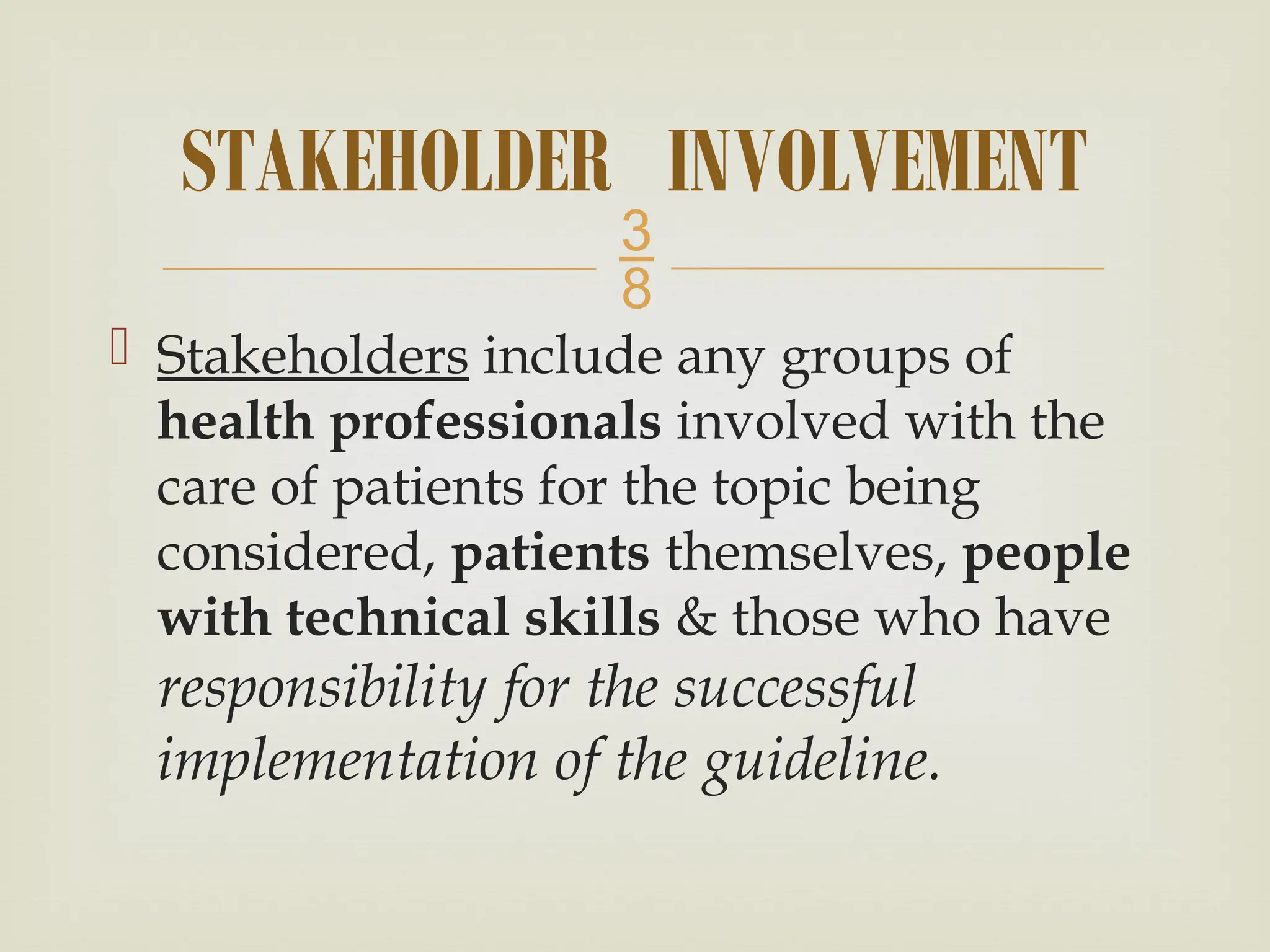
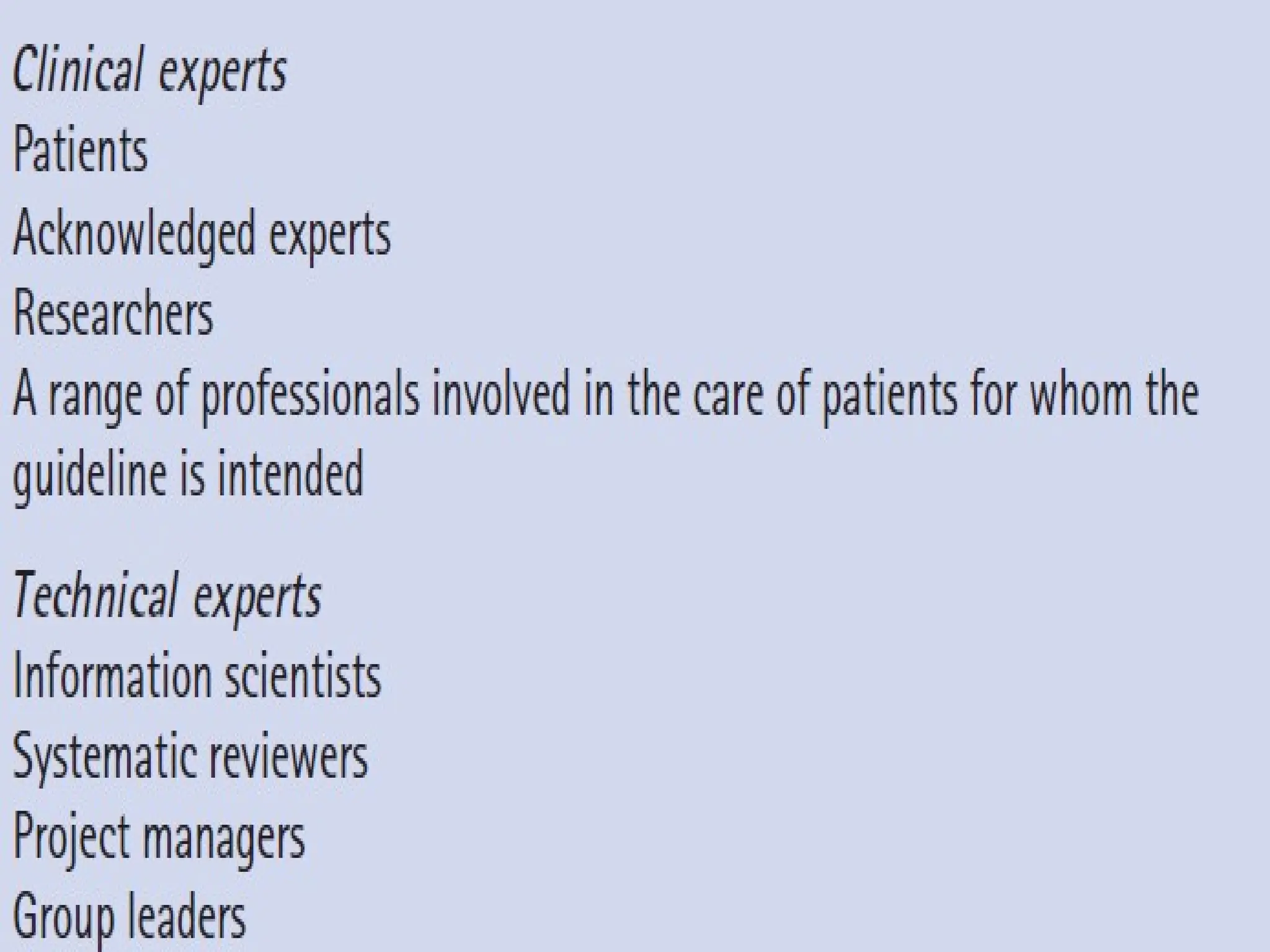
 Stakeholders include any groups of
health professionals involved with the
care of patients for the topic being
considered, patients themselves, people
with technical skills & those who have
responsibility for the successful
implementation of the guideline.
STAKEHOLDER INVOLVEMENT


RIGOUR OF
DEVELOPMENT

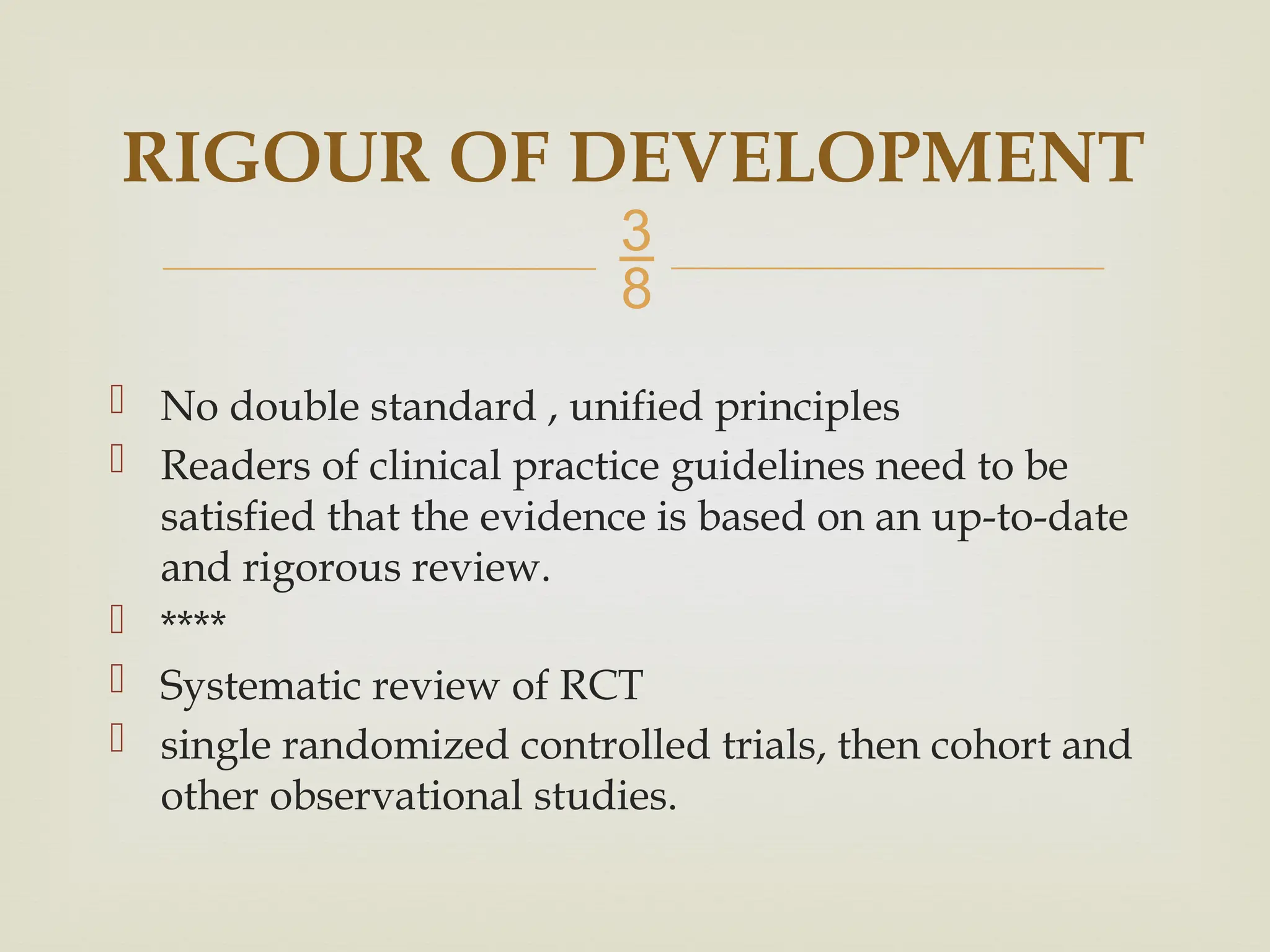
 No double standard , unified principles
 Readers of clinical practice guidelines need to be
satisfied that the evidence is based on an up-to-date
and rigorous review.
 ****
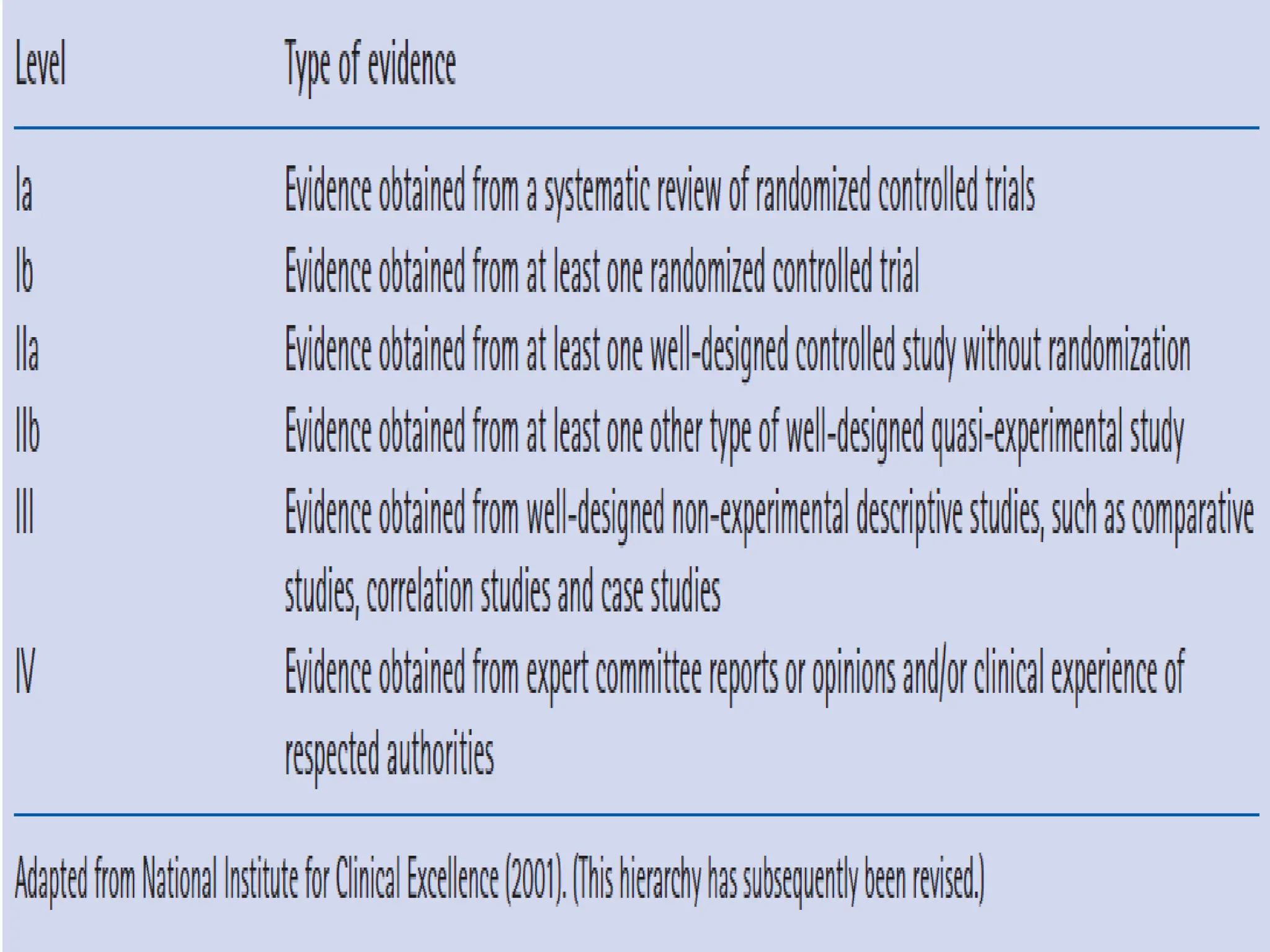
 Systematic review of RCT
 single randomized controlled trials, then cohort and
other observational studies.
RIGOUR OF DEVELOPMENT


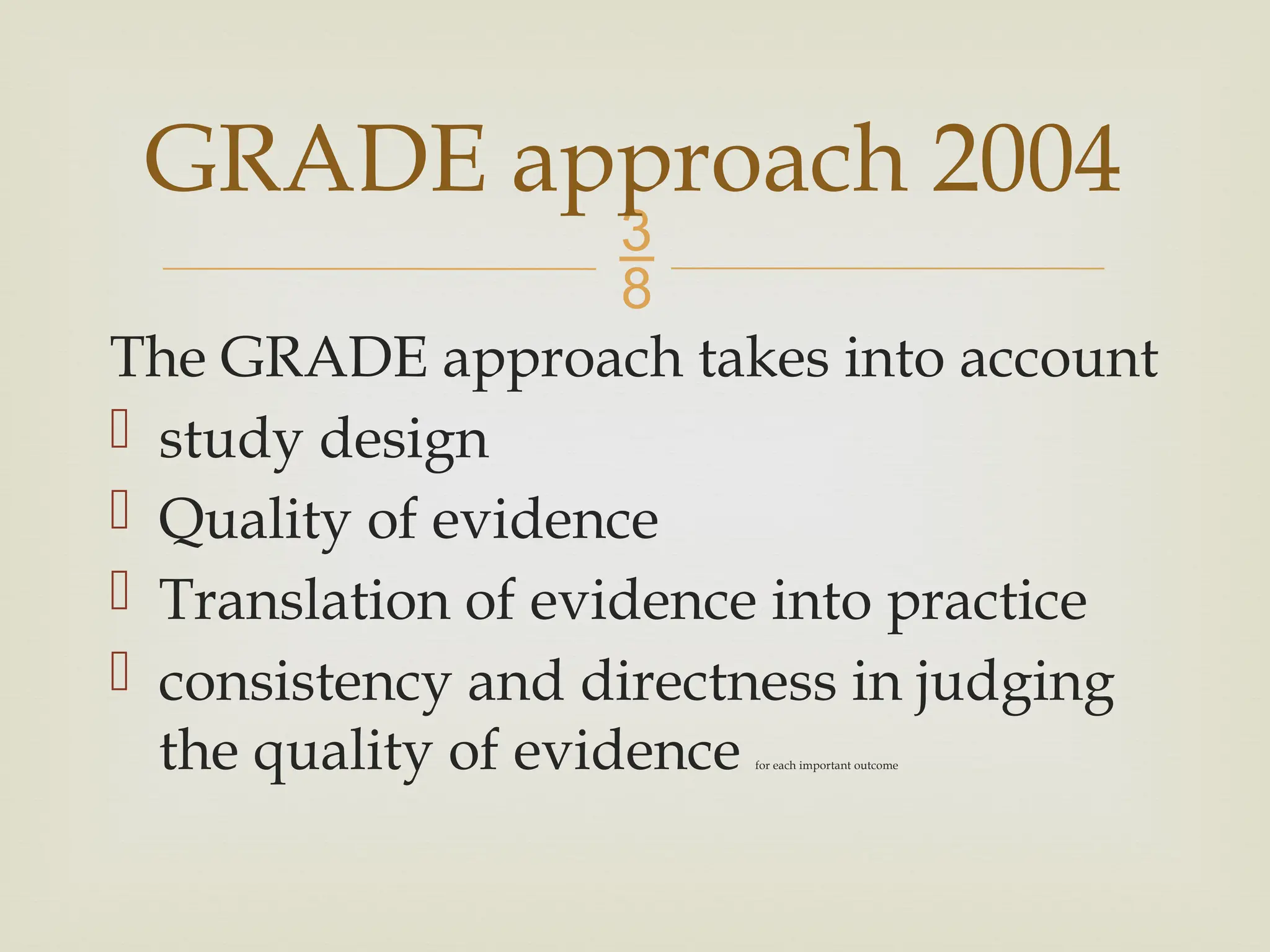
The GRADE approach takes into account
 study design
 Quality of evidence
 Translation of evidence into practice
 consistency and directness in judging
the quality of evidence for each important outcome
GRADE approach 2004

 Grades
 RCT is better than personal experiences
 Scottish Intercollegiate Guidelines Network
(SIGN)

CLARITY AND
PRESENTATION

 The recommendations are specific
and unambiguous
 The different options for
management of the condition are
clearly presented.
 Key recommendations are easily
identifiable
CLARITY AND PRESENTATION

APPLICABILITY

 The potential organizational barriers in
applying the recommendations
 Cost implications of applying the
recommendations
(requirements for more staff or new
equipment , potential impact on resources)
 key review criteria for monitoring and/or
audit purposes
APPLICABILITY

EDITORIAL
INDEPENDENCE

Interest of
 Funding body
 Members
EDITORIAL INDEPENDENCE

 Is the purpose of the guideline clear?
 Is the patient population to which the guideline
applies similar to your own patients?
 Are the settings to which the guideline applies
similar to the settings of your patients?
 Has the development process been systematic
and rigorous?
 Is the guideline generally, and the
recommendations in particular, clear?
RESULTS OF THE CRITICAL APPRAISAL
MEANING IN PRACTICE?


Systematically developed
statements that assist
practitioner and patient
decisions about appropriate
health for specific circumstances
CLINICAL
GUIDELINES

lec 18 AGREE collaboration.pptx...ebp concepts

  • 1.
  • 2.
      Inclusion criteria:Systematic Literature Review  PEDro  National Guidelines Clearing House can be found at http://www.guideline.gov/. (North America)  (in England) http://www.nice.org.uk  (in Australia) http://www.nhmrc.gov.au/guidelines/health_guidelin es.htm  (in New Zealand) http://www.nzgg.org.nz  (in the USA) http://www.guideline.gov Clinical Guidelines
  • 3.
      Guideline InternationalNetwork (GIN)  Facilitating sharing of info & knowledge
  • 4.
  • 5.
      A largeno of guidelines  Low quality Vs High Quality guideline  Some studies that focused on quality of guideline ,they found widespread quality issues. Can I Trust This Guideline?
  • 6.
     There Should besome Criteria for Critical appraisal of Guidelines ?? (a) AGREE (b)DISAGREE
  • 7.
      Appraisal ofGuidelines, REsearch and Evaluation (AGREE) Collaboration  Previously a Check list 37 items regarding guideline development.  Further Validated by international group of researchers,13 countries  (The AGREE Collaboration 2003) AGREE
  • 8.
      6 theoretical qualityDomains Domains of AGREE instrument: agreetrust.org
  • 9.
      One ofthe key features of a good clinical guideline is that the way it has been developed should be transparent
  • 10.
  • 11.
      developers shouldbe clear about overall objective(s)  guideline’s potential (Specific Clinical Question) impact on society  populations of patients. SCOPE & PURPOSE
  • 12.
  • 13.
      Stakeholders includeany groups of health professionals involved with the care of patients for the topic being considered, patients themselves, people with technical skills & those who have responsibility for the successful implementation of the guideline. STAKEHOLDER INVOLVEMENT
  • 14.
  • 15.
  • 16.
      No doublestandard , unified principles  Readers of clinical practice guidelines need to be satisfied that the evidence is based on an up-to-date and rigorous review.  ****  Systematic review of RCT  single randomized controlled trials, then cohort and other observational studies. RIGOUR OF DEVELOPMENT
  • 17.
  • 18.
     The GRADE approachtakes into account  study design  Quality of evidence  Translation of evidence into practice  consistency and directness in judging the quality of evidence for each important outcome GRADE approach 2004
  • 19.
      Grades  RCTis better than personal experiences  Scottish Intercollegiate Guidelines Network (SIGN)
  • 20.
  • 21.
      The recommendationsare specific and unambiguous  The different options for management of the condition are clearly presented.  Key recommendations are easily identifiable CLARITY AND PRESENTATION
  • 22.
  • 23.
      The potentialorganizational barriers in applying the recommendations  Cost implications of applying the recommendations (requirements for more staff or new equipment , potential impact on resources)  key review criteria for monitoring and/or audit purposes APPLICABILITY
  • 24.
  • 25.
     Interest of  Fundingbody  Members EDITORIAL INDEPENDENCE
  • 26.
      Is thepurpose of the guideline clear?  Is the patient population to which the guideline applies similar to your own patients?  Are the settings to which the guideline applies similar to the settings of your patients?  Has the development process been systematic and rigorous?  Is the guideline generally, and the recommendations in particular, clear? RESULTS OF THE CRITICAL APPRAISAL MEANING IN PRACTICE?
  • 27.
  • 28.
     Systematically developed statements thatassist practitioner and patient decisions about appropriate health for specific circumstances CLINICAL GUIDELINES

Editor's Notes

  • #1 Systematically developed statements that assist practitioner and patient decisions about appropriate health for specific circumstances
  • #7 Check list 37 items regarding guideline development.
  • #8 Stakeholder:a person, group, organization, member or system who affects or can be affected by an organization's actions Rigour
  • #16 Rigour (Riger) : No double standard,unified principles
  • #27  Systematically developed statements that assist practitioner and patient decisions about appropriate health for specific circumstances