Introduction to the Stock
Market
Understanding the stock market is essential for anyone looking to invest
and grow their wealth. It's a platform where individuals and institutions
trade stocks, helping companies raise capital and investors earn returns.
Understanding Stock Exchanges
Key Players and Processes
Stock exchanges are vital
marketplaces where securities
are bought and sold. They
provide transparency, liquidity,
and a fair trading environment
for investors and companies.
Role in the Economy
Stock exchanges play a crucial
role in economic development
by facilitating the flow of capital
and enabling companies to
expand and innovate through
access to funding.
Global Impact
Stock exchanges are
interconnected on a global
scale, influencing international
trade and investment activities,
making them important drivers
of the global economy.
Fundamental Analysis
1 Evaluating Financial Health
Fundamental analysis involves
assessing a company's financial
statements, management,
competitive advantages, and
industry conditions to determine its
intrinsic value.
2 Long-Term Investment
Decisions
It helps investors identify stocks with
the potential for sustainable growth,
making it a crucial tool for long-term
investment strategies.
3 Economic and Industry Trends
Analyzing macroeconomic factors and industry trends provides valuable insights for
making informed investment decisions.
Technical Analysis
Price Patterns and Trends
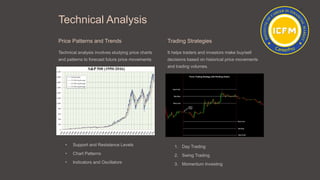
Technical analysis involves studying price charts
and patterns to forecast future price movements.
• Support and Resistance Levels
• Chart Patterns
• Indicators and Oscillators
Trading Strategies
It helps traders and investors make buy/sell
decisions based on historical price movements
and trading volumes.
1. Day Trading
2. Swing Trading
3. Momentum Investing
Risk Management Strategies
Asset Allocation
Diversifying investments
across different asset
classes reduces overall
portfolio risk.
Stop-Loss Orders
Implementing stop-loss
orders helps limit potential
losses by automatically
selling a security when its
price falls to a certain level.
Hedging Techniques
Using derivatives and other
hedging strategies to offset
potential losses and protect
investment portfolios from
adverse market movements.
Conclusion and Next Steps
Continuous Learning
The stock market is
dynamic, and staying
informed about market
changes and investing
principles is crucial for
success.
Practice and
Application
Start with simulated trading
or paper trading to gain
practical experience before
making real investment
decisions.
Seek Professional
Advice
Consider consulting
financial advisors or
mentors to refine your
investment strategies and
gain additional insights.
Contact Us
Company Website – https://www.icfmindia.com/
Company Number – +91-9971900635
Company Email – info@icfmindia.com
Thanks
Thank you for choosing our learn Stock Market Trading course.

learn-Introduction-to-the-Stock-Market-trading.pptx

  • 1.
    Introduction to theStock Market Understanding the stock market is essential for anyone looking to invest and grow their wealth. It's a platform where individuals and institutions trade stocks, helping companies raise capital and investors earn returns.
  • 2.
    Understanding Stock Exchanges KeyPlayers and Processes Stock exchanges are vital marketplaces where securities are bought and sold. They provide transparency, liquidity, and a fair trading environment for investors and companies. Role in the Economy Stock exchanges play a crucial role in economic development by facilitating the flow of capital and enabling companies to expand and innovate through access to funding. Global Impact Stock exchanges are interconnected on a global scale, influencing international trade and investment activities, making them important drivers of the global economy.
  • 3.
    Fundamental Analysis 1 EvaluatingFinancial Health Fundamental analysis involves assessing a company's financial statements, management, competitive advantages, and industry conditions to determine its intrinsic value. 2 Long-Term Investment Decisions It helps investors identify stocks with the potential for sustainable growth, making it a crucial tool for long-term investment strategies. 3 Economic and Industry Trends Analyzing macroeconomic factors and industry trends provides valuable insights for making informed investment decisions.
  • 4.
    Technical Analysis Price Patternsand Trends Technical analysis involves studying price charts and patterns to forecast future price movements. • Support and Resistance Levels • Chart Patterns • Indicators and Oscillators Trading Strategies It helps traders and investors make buy/sell decisions based on historical price movements and trading volumes. 1. Day Trading 2. Swing Trading 3. Momentum Investing
  • 5.
    Risk Management Strategies AssetAllocation Diversifying investments across different asset classes reduces overall portfolio risk. Stop-Loss Orders Implementing stop-loss orders helps limit potential losses by automatically selling a security when its price falls to a certain level. Hedging Techniques Using derivatives and other hedging strategies to offset potential losses and protect investment portfolios from adverse market movements.
  • 6.
    Conclusion and NextSteps Continuous Learning The stock market is dynamic, and staying informed about market changes and investing principles is crucial for success. Practice and Application Start with simulated trading or paper trading to gain practical experience before making real investment decisions. Seek Professional Advice Consider consulting financial advisors or mentors to refine your investment strategies and gain additional insights.
  • 7.
    Contact Us Company Website– https://www.icfmindia.com/ Company Number – +91-9971900635 Company Email – info@icfmindia.com
  • 8.
    Thanks Thank you forchoosing our learn Stock Market Trading course.