Lean Hypothesis-Driven
Prototyping
SBD Digital Summit
Natalie Hollier
Product Strategy & Design Principal,
ThoughtWorks North America
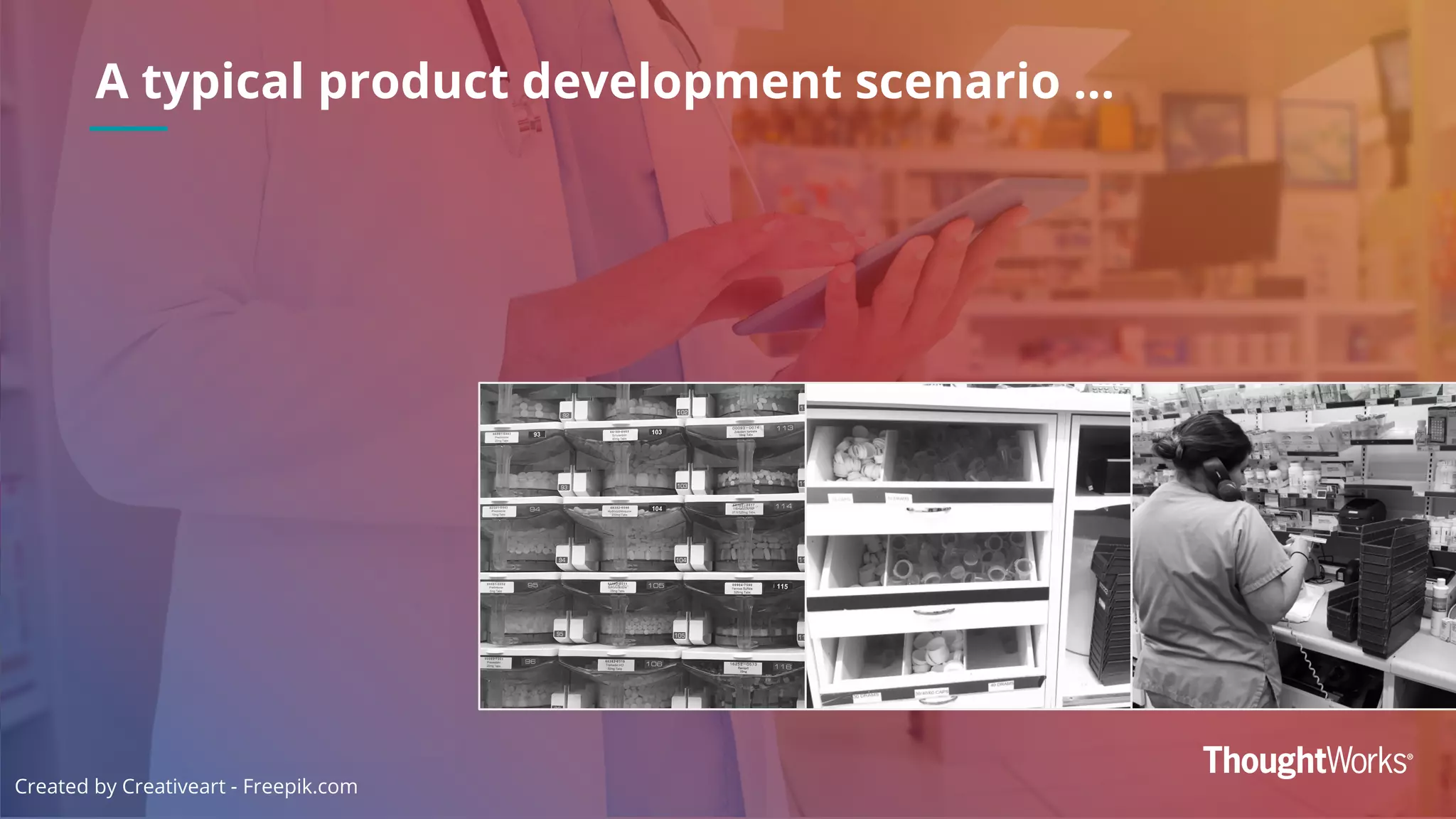
A typical product development scenario …
Created by Creativeart - Freepik.com
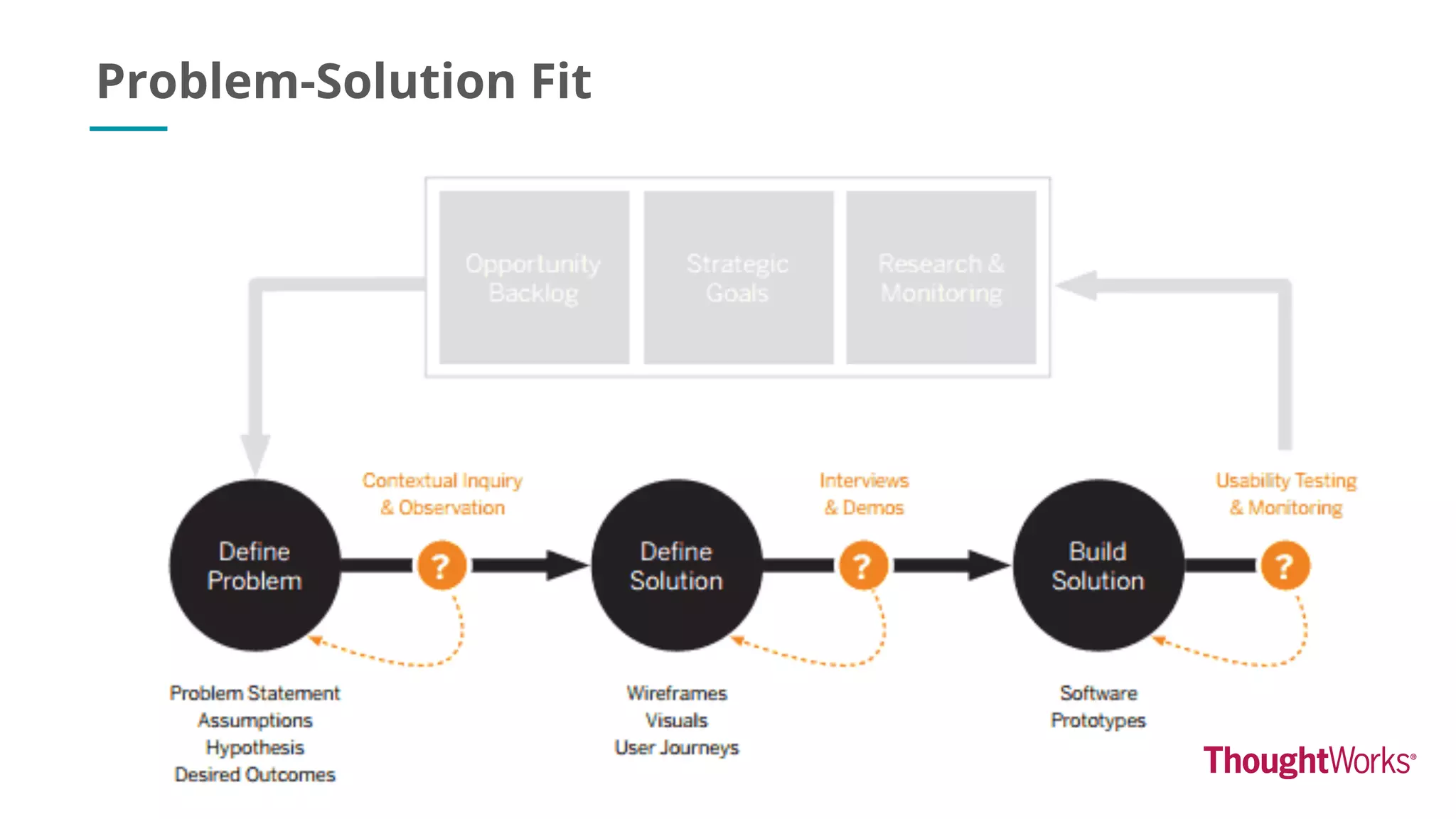
Problem-Solution Fit
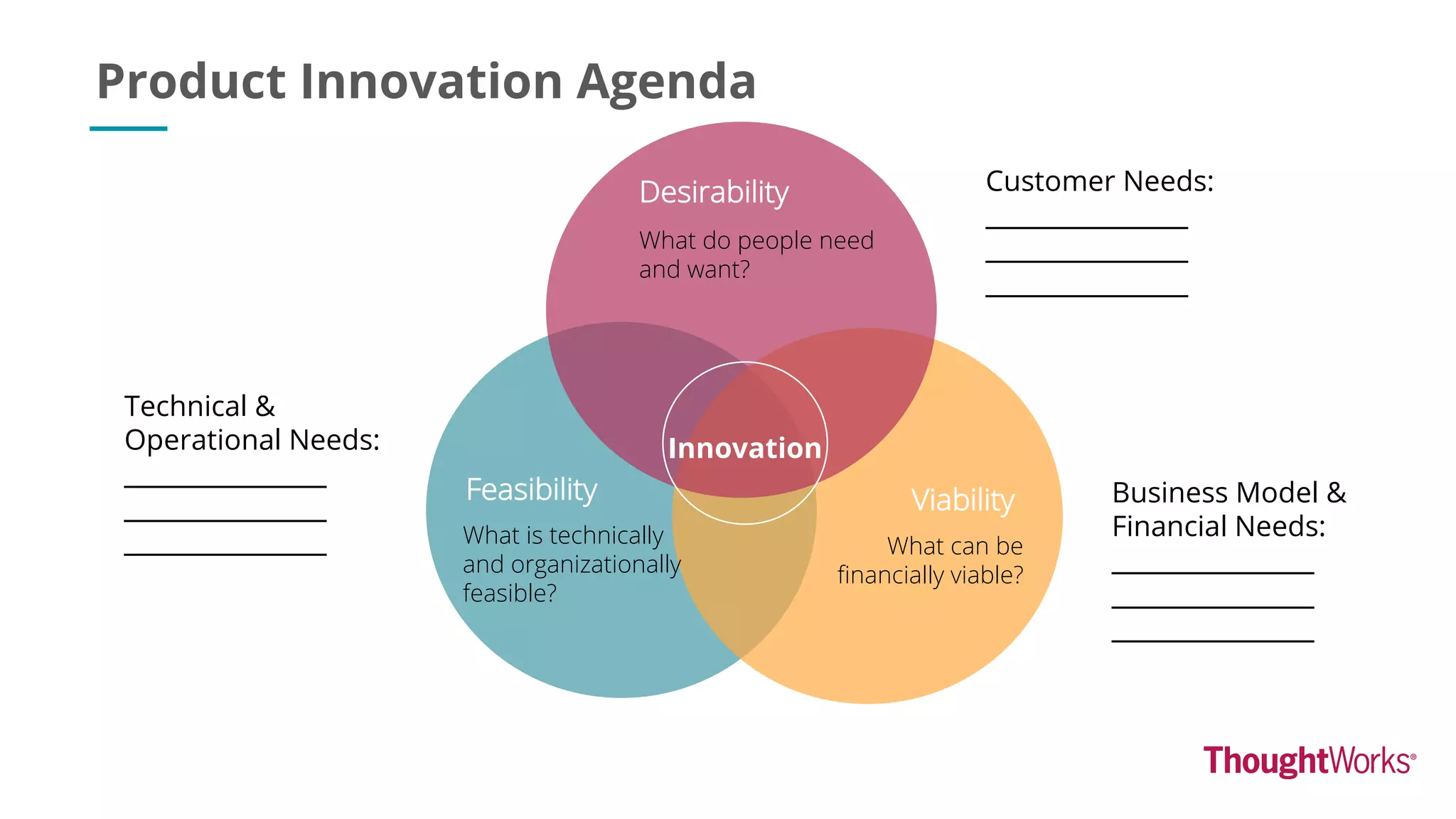
Desirability
Feasibility Viability
What do people need
and want?
What can be
financially viable?
What is technically
and organizationally
feasible?
Innovation
Business Model &
Financial Needs:
________________
________________
________________
Customer Needs:
________________
________________
________________
Technical &
Operational Needs:
________________
________________
________________
Product Innovation Agenda
Think of a new opportunity
you are currently working on
___________________
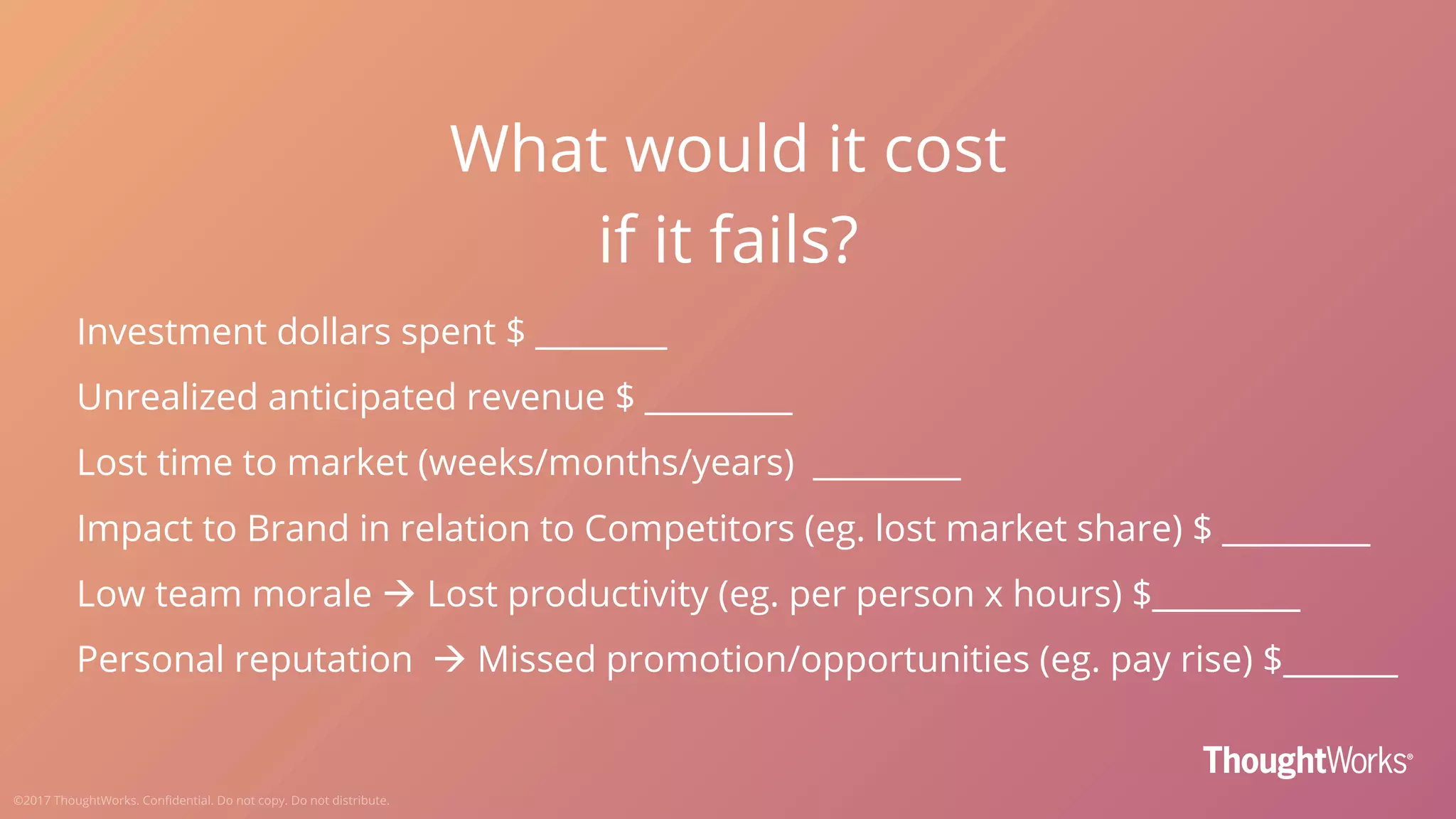
What would it cost
if it fails?
Investment dollars spent $ ________
Unrealized anticipated revenue $ _________
Lost time to market (weeks/months/years) _________
Impact to Brand in relation to Competitors (eg. lost market share) $ _________
Low team morale à Lost productivity (eg. per person x hours) $_________
Personal reputation à Missed promotion/opportunities (eg. pay rise) $_______
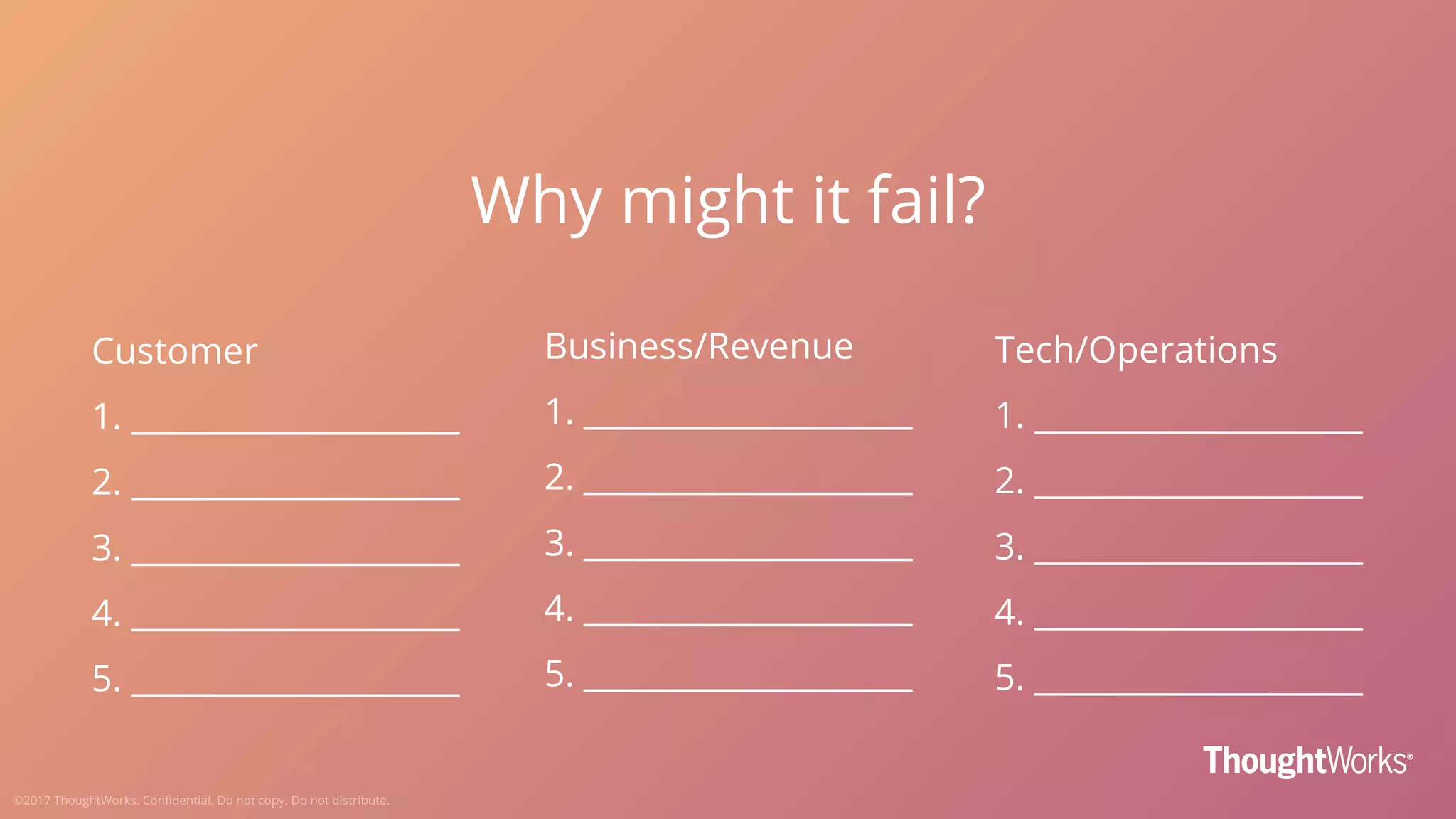
Why might it fail?
Customer
1. ____________________
2. ____________________
3. ____________________
4. ____________________
5. ____________________
Business/Revenue
1. ____________________
2. ____________________
3. ____________________
4. ____________________
5. ____________________
Tech/Operations
1. ____________________
2. ____________________
3. ____________________
4. ____________________
5. ____________________
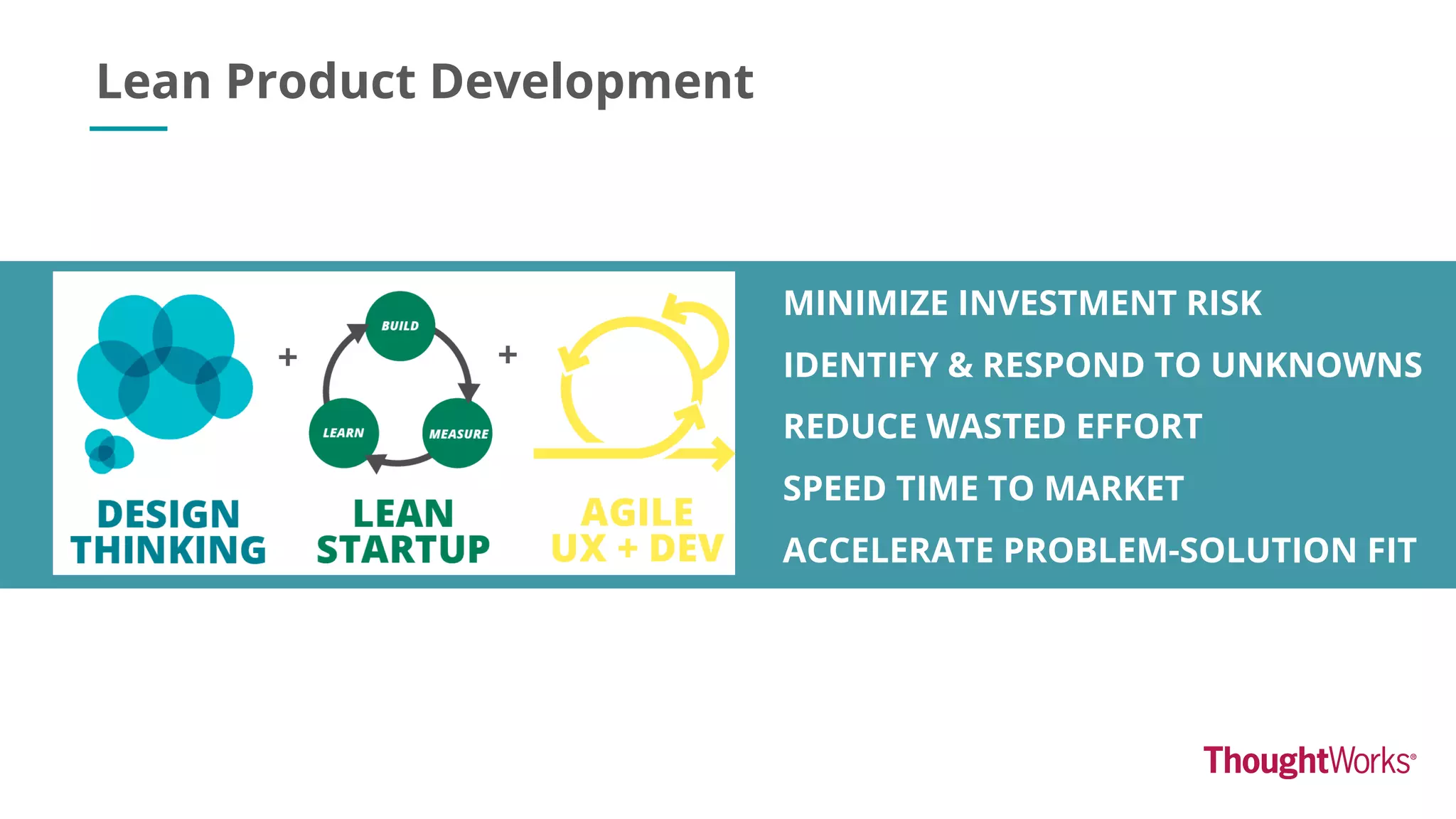
MINIMIZE INVESTMENT RISK
IDENTIFY & RESPOND TO UNKNOWNS
REDUCE WASTED EFFORT
SPEED TIME TO MARKET
ACCELERATE PROBLEM-SOLUTION FIT
Lean Product Development
+ +
[Our service/product] was designed to achieve [these goals].
We have observed that [product/service] is not meeting [these goals] which is
causing [this adverse effect/business issue] to our business.
How might we improve [product/service] so that our customers are more
successful as determined by [these measurable criteria]?
Business Problem/Opportunity Statement
Brainstorm Solution Hypotheses
Come up with at least 3 different possible solutions
We believe that [doing this / building this feature / creating this experience]
For [these people/personas]
Will achieve [this outcome]
We will know this to be true when we see [this feedback / quantitative measure /
qualitative insight]
1.
2.
3.
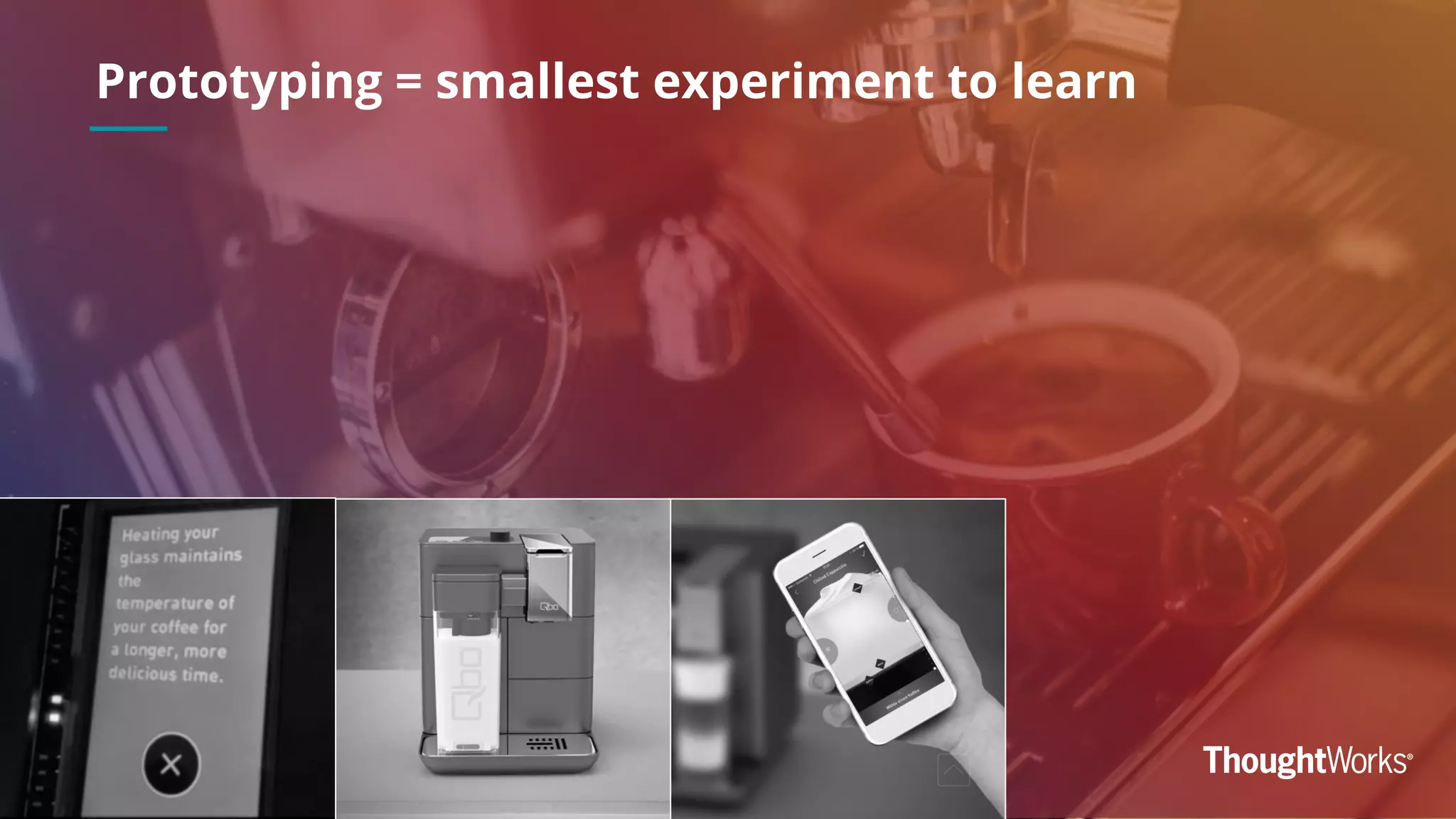
Prototyping = smallest experiment to learn
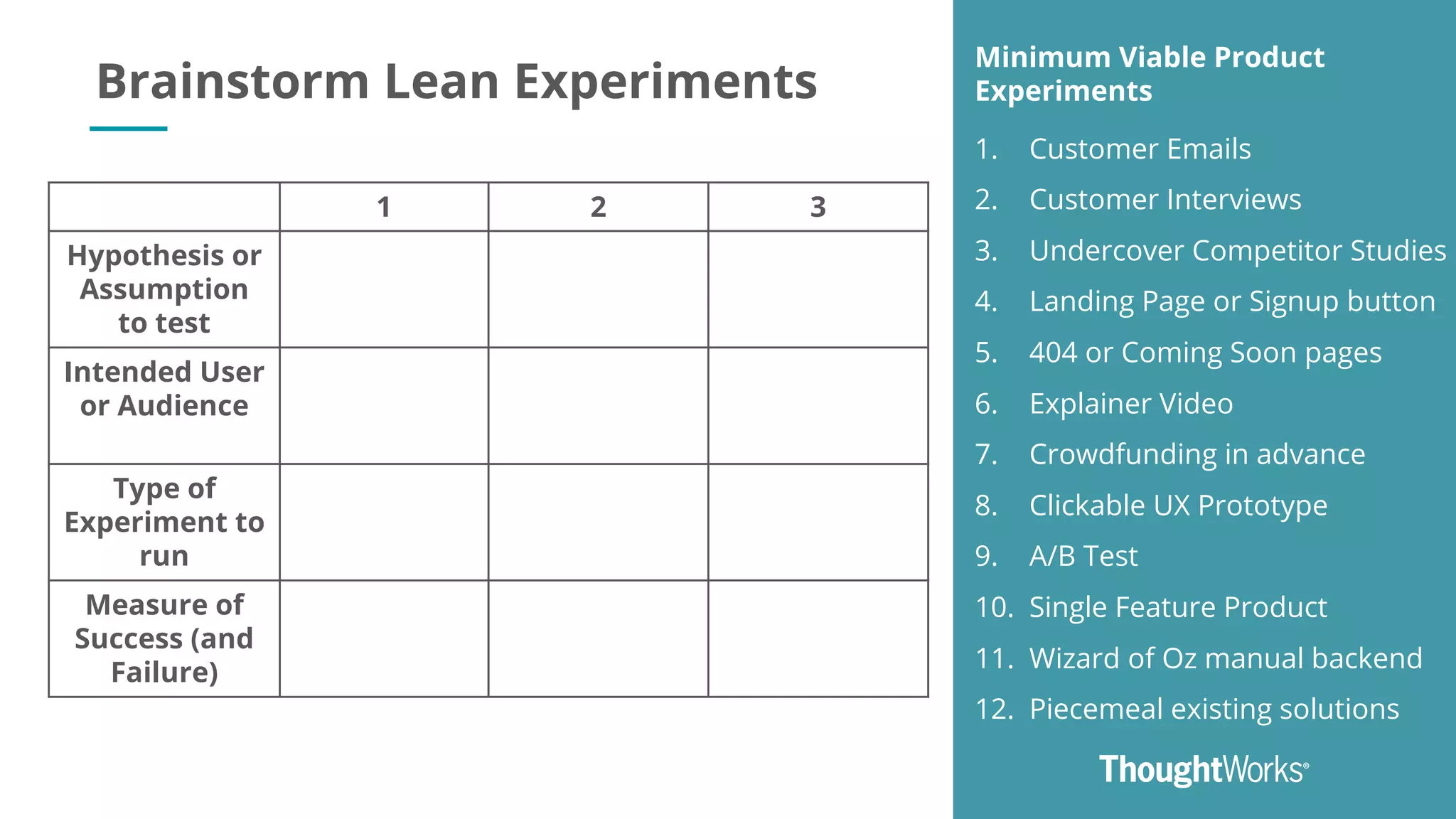
Brainstorm Lean Experiments
1 2 3
Hypothesis or
Assumption
to test
Intended User
or Audience
Type of
Experiment to
run
Measure of
Success (and
Failure)
Minimum Viable Product
Experiments
1. Customer Emails
2. Customer Interviews
3. Undercover Competitor Studies
4. Landing Page or Signup button
5. 404 or Coming Soon pages
6. Explainer Video
7. Crowdfunding in advance
8. Clickable UX Prototype
9. A/B Test
10. Single Feature Product
11. Wizard of Oz manual backend
12. Piecemeal existing solutions
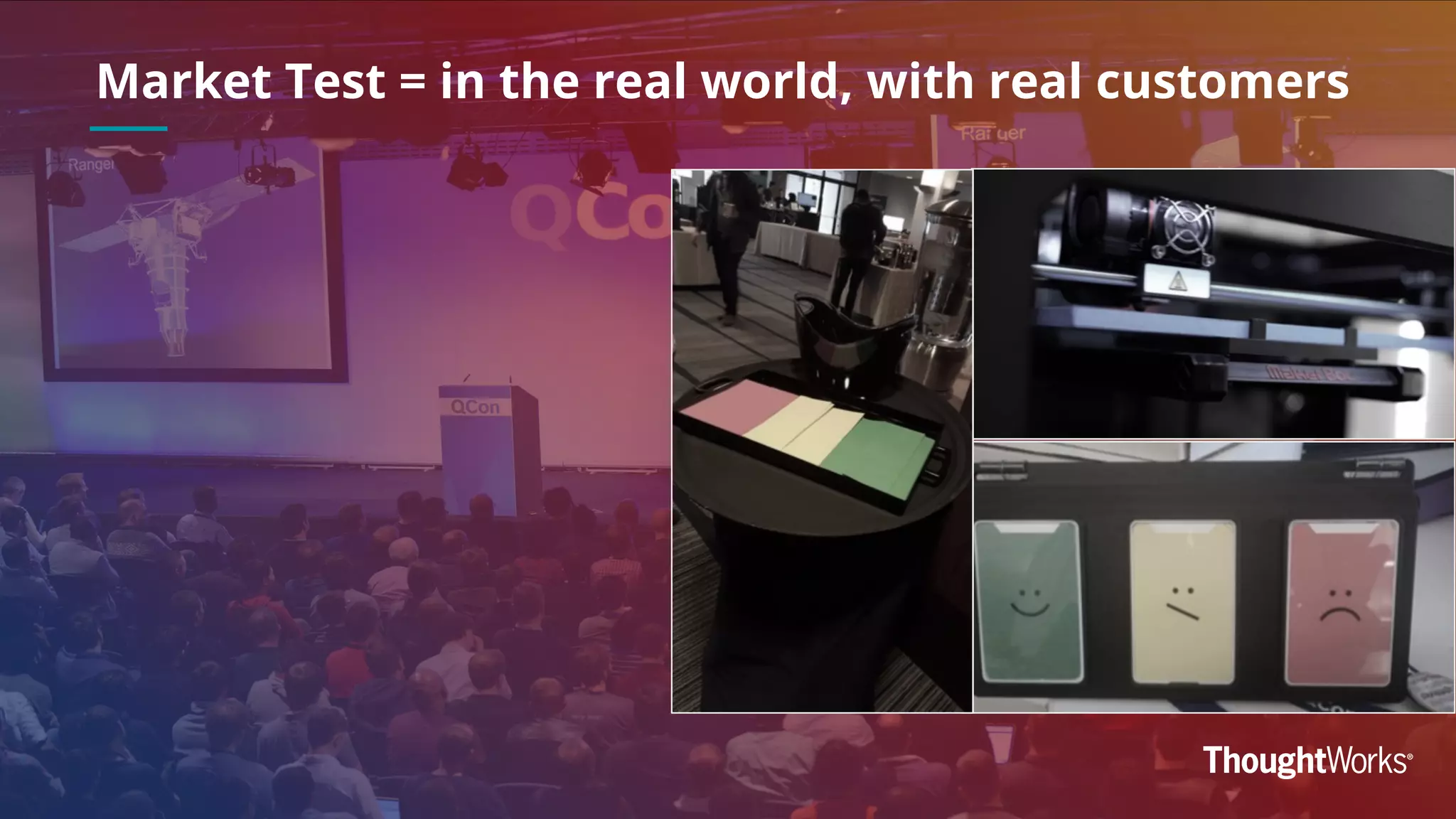
Market Test = in the real world, with real customers
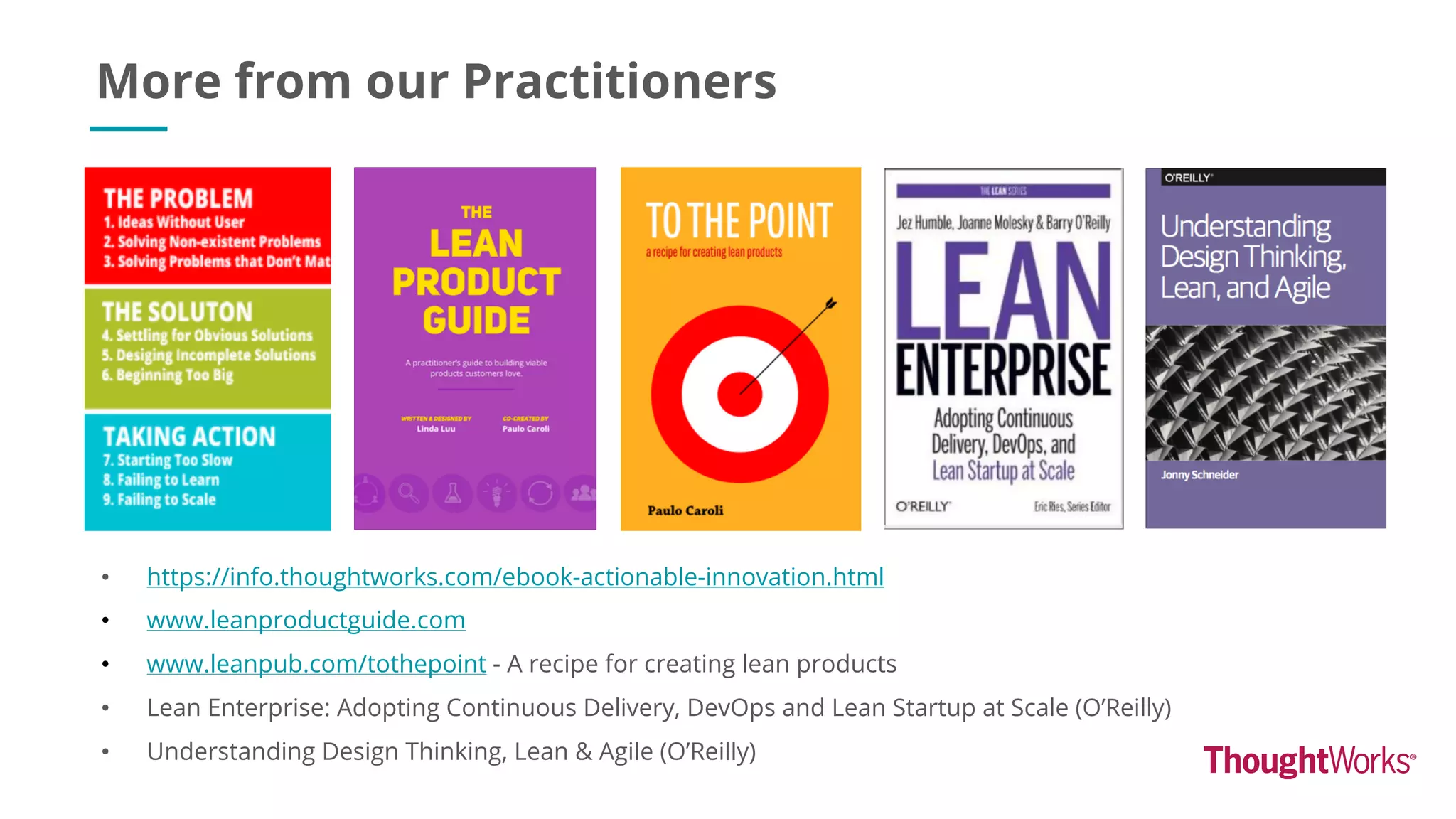
More from our Practitioners
• https://info.thoughtworks.com/ebook-actionable-innovation.html
• www.leanproductguide.com
• www.leanpub.com/tothepoint - A recipe for creating lean products
• Lean Enterprise: Adopting Continuous Delivery, DevOps and Lean Startup at Scale (O’Reilly)
• Understanding Design Thinking, Lean & Agile (O’Reilly)
THANKS
Natalie Hollier
Product Strategy & Design Principal,
ThoughtWorks North America
nhollier@thoughtworks.com
SBD Digital Summit

Lean Hypothesis-Driven Prototyping (Workshop)

  • 1.
    Lean Hypothesis-Driven Prototyping SBD DigitalSummit Natalie Hollier Product Strategy & Design Principal, ThoughtWorks North America
  • 2.
    A typical productdevelopment scenario … Created by Creativeart - Freepik.com
  • 3.
  • 4.
    Desirability Feasibility Viability What dopeople need and want? What can be financially viable? What is technically and organizationally feasible? Innovation Business Model & Financial Needs: ________________ ________________ ________________ Customer Needs: ________________ ________________ ________________ Technical & Operational Needs: ________________ ________________ ________________ Product Innovation Agenda
  • 5.
    Think of anew opportunity you are currently working on ___________________
  • 6.
    What would itcost if it fails? Investment dollars spent $ ________ Unrealized anticipated revenue $ _________ Lost time to market (weeks/months/years) _________ Impact to Brand in relation to Competitors (eg. lost market share) $ _________ Low team morale à Lost productivity (eg. per person x hours) $_________ Personal reputation à Missed promotion/opportunities (eg. pay rise) $_______
  • 7.
    Why might itfail? Customer 1. ____________________ 2. ____________________ 3. ____________________ 4. ____________________ 5. ____________________ Business/Revenue 1. ____________________ 2. ____________________ 3. ____________________ 4. ____________________ 5. ____________________ Tech/Operations 1. ____________________ 2. ____________________ 3. ____________________ 4. ____________________ 5. ____________________
  • 8.
    MINIMIZE INVESTMENT RISK IDENTIFY& RESPOND TO UNKNOWNS REDUCE WASTED EFFORT SPEED TIME TO MARKET ACCELERATE PROBLEM-SOLUTION FIT Lean Product Development + +
  • 9.
    [Our service/product] wasdesigned to achieve [these goals]. We have observed that [product/service] is not meeting [these goals] which is causing [this adverse effect/business issue] to our business. How might we improve [product/service] so that our customers are more successful as determined by [these measurable criteria]? Business Problem/Opportunity Statement
  • 10.
    Brainstorm Solution Hypotheses Comeup with at least 3 different possible solutions We believe that [doing this / building this feature / creating this experience] For [these people/personas] Will achieve [this outcome] We will know this to be true when we see [this feedback / quantitative measure / qualitative insight] 1. 2. 3.
  • 11.
    Prototyping = smallestexperiment to learn
  • 12.
    Brainstorm Lean Experiments 12 3 Hypothesis or Assumption to test Intended User or Audience Type of Experiment to run Measure of Success (and Failure) Minimum Viable Product Experiments 1. Customer Emails 2. Customer Interviews 3. Undercover Competitor Studies 4. Landing Page or Signup button 5. 404 or Coming Soon pages 6. Explainer Video 7. Crowdfunding in advance 8. Clickable UX Prototype 9. A/B Test 10. Single Feature Product 11. Wizard of Oz manual backend 12. Piecemeal existing solutions
  • 13.
    Market Test =in the real world, with real customers
  • 14.
    More from ourPractitioners • https://info.thoughtworks.com/ebook-actionable-innovation.html • www.leanproductguide.com • www.leanpub.com/tothepoint - A recipe for creating lean products • Lean Enterprise: Adopting Continuous Delivery, DevOps and Lean Startup at Scale (O’Reilly) • Understanding Design Thinking, Lean & Agile (O’Reilly)
  • 15.
    THANKS Natalie Hollier Product Strategy& Design Principal, ThoughtWorks North America nhollier@thoughtworks.com SBD Digital Summit