Building happiness
Charles Montgomery
Mitchell Reardon
2018/08/29
thehappycity.com @thehappycity
What does happiness
mean to you?
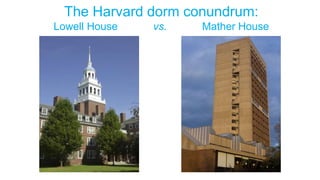
The Harvard dorm conundrum:
Lowell House vs. Mather House
Click to edit Master title style
wellbeing
Shutterstock image
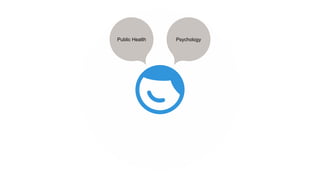
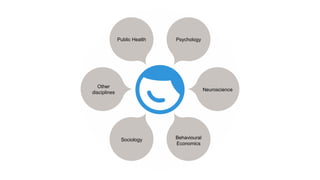
Public Health
Public Health Psychology
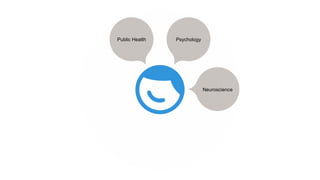
Neuroscience
Public Health Psychology
Neuroscience
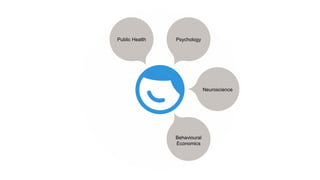
Behavioural
Economics
Public Health Psychology
Neuroscience
Behavioural
Economics
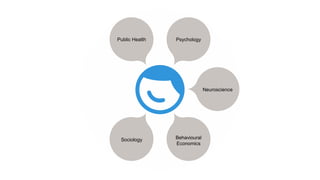
Sociology
Public Health Psychology
Neuroscience
Behavioural
Economics
Sociology
Other
disciplines
A recipe for urban wellbeing
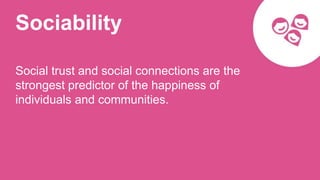
Sociability
Social trust and social connections are the
strongest predictor of the happiness of
individuals and communities.
Click to edit Master title style
encounters with strangers
make us happier
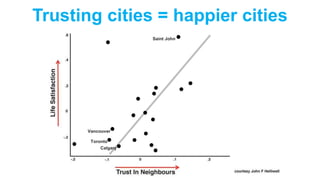
Saint John
Vancouver
Trusting cities = happier cities
Toronto
Calgary
Source:OECDSocialIndicators:ESS(EuropeanSocialSurvey);ISSP(InternationalSocialSurvey
Programme);OECD(2008),GrowingUnequal?IncomeDistributionandPovertyinOECDCountries
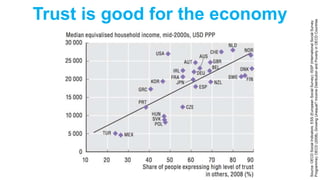
Trust is good for the economy
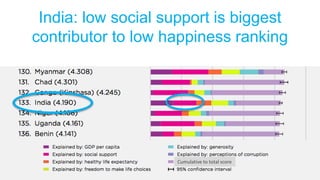
India: low social support is biggest
contributor to low happiness ranking
Cumulative to total score
Experiments
Jean-ChristopheBenoist-CreativeCommons3.0
Imagery ©2014 BlueSky, DigitalGlobe, Sanborn; Map data: ©2014 Google
ImagecourtesyVerdinDzebic
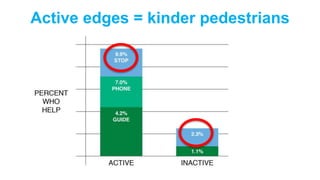
Active edges = kinder pedestrians
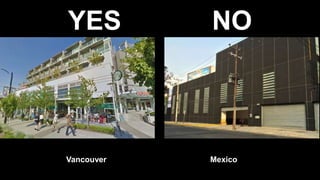
YES NO
Vancouver Mexico
Click to edit Master title style
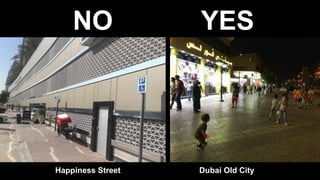
NO YES
Happiness Street Dubai Old City
Click to edit Master title style
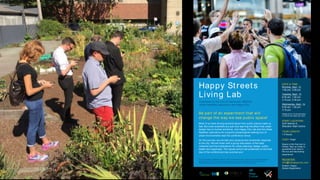
Happy Streets
Living Lab
Be part of an experiment that will
change the way we see public space!
Most of us have strong opinions about how public places make us
feel. But brain scientists are just now learning the effect that urban
design has on human emotions. Join Happy City Lab and the Urban
Realities Laboratory for a psycho-physiological walking tour of
urban environments near the conference venue.
On this journey, we will test your physical and emotional r esponse
to the city. We will finish with a group discussion of the data
collected and the implications for urban planning, design, public
health and happiness. The results (which will presented on the final
day of the conference) may surprise you!
This is a University of Waterloo research project. The academic study is led by Dr. Colin Ellard, Department
of Psychology. This study has been reviewed by and received ethics clearance through a University of
Waterloo Research Ethics Committee. However the final decision to participate is yours.
DATE & TIME:
Monday, Sept. 12
1:00 pm, 3:00 pm
Tuesday, Sept. 13
9:30 am, 1:30 pm
3:15 pm, 5:30 pm
Wednesday, Sept. 14
9:30 am, 1:30 pm
3:15 pm
Please arrive 10 minutes early
to ensure you keep your spot.
START LOCATION:
Gulf Islands A,
Sheraton Wall Centre
TOUR LENGTH:
1.5 hours
COST: Free!
Space in this free tour is
limited. Sign up today to
guarantee your spot in
this fun and fascinating
experience!
REGISTER:
info@thehappycity.com
Subject: Happy
Streets Registration
Presented by the City of Vancouver, MODUS,
Urban Realities Laboratory and Happy City
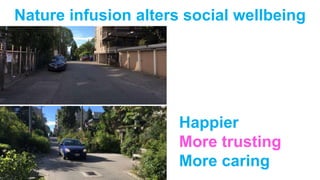
Happier
More trusting
More caring
Nature infusion alters social wellbeing
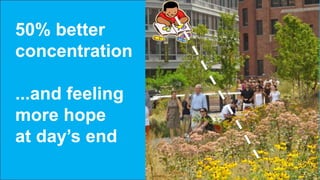
50% better
concentration
...and feeling
more hope
at day’s end
From evidence to action
Click to edit Master title style
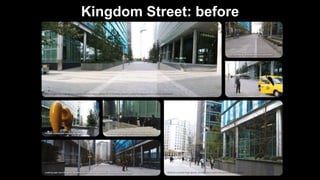
Kingdom Street: before
Click to edit Master title style
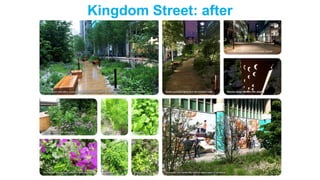
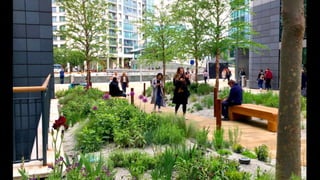
Kingdom Street: after
Click to edit Master title style
Happy at home
Crowded and lonely at
the same time
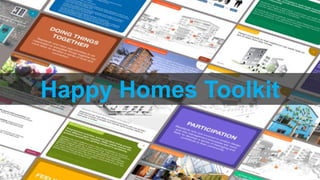
Happy Homes Toolkit
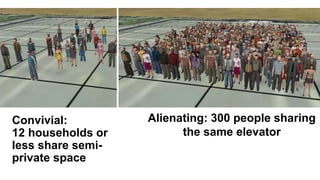
Alienating: 300 people sharing
the same elevator
Convivial:
12 households or
less share semi-
private space
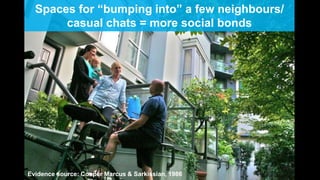
Spaces for “bumping into” a few neighbours/
casual chats = more social bonds
Evidence source: Cooper Marcus & Sarkissian, 1986
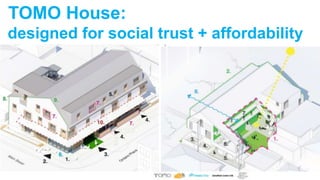
TOMO House:
designed for social trust + affordability
Healthy, happy places
are good for people
and business
Place attachment
drives
GDP growth
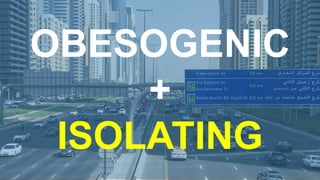
OBESOGENIC
+
ISOLATING
evidence + values
=
happier places
Thank you!
thehappycity.com
@thehappycity

Leaders Study Program, Vancouver 2018

Editor's Notes

  • #2 A couple of weeks ago David Allison was here telling you what people wanted to buy. Well I am not an expert on what people want. I can however tell you what makes people happy. They are not always the same thing. But remember this. In the places you build sell and manage you have tremendous power to improve or corrode people’s lives. Let me tell you some stories to explain.
  • #3 The big picture We help cities, developers and others build healthier, happier places. We use an evidence – based approach. You are not just designing places. You are not just building value for your companies. You are creating systems for living, systems that will change the quality of people’s lives. Strengthen or weaken social ties. Make lives easier or harder. Ultimately build stronger community. I want to assure you that the decisions you make change the way people move and feel and treat other people in ways that you may not have considered. You are building or corroding happiness.
  • #4 I want to start with a little story. Every year, second year students at Harvard are assigned their dorm for the next three years It’s a scary time! People have strong preferences. Back when my friend Liz Dunn was studying, The assignments were slipped under students doors. People sure this would determine happiness Dunn said people would ‘pay to the housing gods’ that they would get into Lowell House, Geirgian revival and bell tower dunn was curious about this belief. So she surveyed people -on their prediction of future happiness -on their actual happiness over next 3 years
  • #5 DARWIN FLOW: So guess which dorm made people happier? -Lowell, ancient GEORGIAN revival -Mather, concrete brutalist tower, that student newspaper said wsas designed by prison architect? Vote Answer: well it turns out they were about the same. You see, architecture was not nearly as important as the social life created in the dorms Lowell was fine But so was mather house. Turns out they had great culture, led by resident advisors, Crazy soap foam parties, ever been to one? What we learn from this? First, that social relations, and stuff we can’t always see, matter for happiness. A lot. Second, that most of us in planning and design have gotten it wrong for years. That’s why I wrote my book, happy city: to understand the connection between design, places, and human health and happiness. OLD FLOW: Noticed that we all use shortcuts, or rules of thumb, to help us make decisions. While these work well most of the time, they don’t work all the time. FOCUS ERROR OVER-VALUE AESTHETICS AND STATUS, UNDERVALUE RELATIONSHIPS IF you were going to Harvard, which residence would make you happier? Lowell: high status, Harry Potter-like Mather: slightly prison-like. We get it wrong! We over value aesthetics and status considerations We undervalue social relations This is one of many common cognitive errors we make around happiness Truth is, both residences had same effect on happy. ELIZABETH DUNN NOTES FROM HAPPY CITY: Lowell House, with its grand redbrick facades, is a classic example of the Georgian Revival style The concrete tower of Mather House was described in The Harvard Crimson, the student newspaper, as a ‘riot-proof monstrosity designed by a prison archi- tect’, although its bacchanalian soap-foam parties have achieved mythical status. (Noted alumnus: Conan O’Brien.) Why did the students get their happiness predictions so wrong? Dunn found a pattern that the students share with most of us: they put far too much weight on obvious differences between residences, such as location and architectural features, and far too little on things that were not so glaringly different, such as the sense of community and the quality of relationships they would develop in their dormi- tory. It wasn’t just architecture, history, or interior styling that made people happy. A good campus life was fuelled by friendship and the social culture nurtured by longtime house masters and tutors. Mather House’s soap-foam parties may have had a more powerful cheering effect than Lowell’s stately dining hall.
  • #6 Led me to spend nearly a decade searching for evidence of the connection between human wellbeing and urban design.
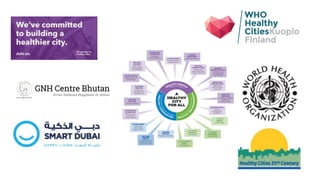
  • #7 Governments around the world have embraced the idea of building healthy cities. But the happy city movement goes a step further, to consider all aspects of wellbeing.
  • #8  UN is studying it, World Happiness Report UN Sustainable Solutions Network produced Global Happines policy report this year. Adopted by governments, bhutan, UK, France and...
  • #9 BUT what do we mean by wellbeing? You have to confront this question if you are going to pursue it in policy and design. We’ve been talking about it for thousands of years. Back in the 1700s we put our top scholars on the case. They tried to measure pleasure and pain, and failed. So economists stepped up and said, we got this. ... BRITISH DEFINITIONS Box 1. Common Terms to Describe Wellbeing   Individual wellbeing refers to how well a person’s life is going. It is either self-reported by the individual (subjectively) or measured externally based on criteria such as health or income (objectively).   Social group wellbeing refers to how well a social group is doing (defined by gender, ethnicity, class, age, geography, workplace or other criterion).   National wellbeing refers to how well a country is doing in terms of the wellbeing of the population, the economy, and the environment. National wellbeing measures are often constructed and presented as the aggregate of individual wellbeing indicators.   Subjective wellbeing refers to how people think and feel about their life, such as their emotional states, satisfaction with particular aspects of their life, or with life overall.   Objective wellbeing refers to an external evaluation of wellbeing using measurable criteria and understanding of the social context.
  • #10  This has been a real challenge. Back in the 1700s, scholars tried hard to bring a scientific approach to it. But they just couldn’t figure out a way to measure joy and pain. So the economist’s stepped up, and said: let’s find a proxy. Let’s just measure how we spend! That will tell us what makes em happy. So spending power, GDP, became a proxy for wellbeing. well that hasn’t worked out so well. divorce, earthquakes, war all lead to economic activity. but we know that supercharged econ growth actually went along with greater unhappiness in china.
  • #11 Fortunately real scientists have been studying human emotions and behaviour They are finding markers for happiness in the human brain and body. to lead us towards an evidence-based approach to wellbeing. So we have paid attention to this and various other areas of rea Go through our research areas: NOTES FOR NEXT SLIDE SERIES IF WE GO THROUGH THE WHEEL: People who SAY they are happy tend to have that reflected in their bodies – they actually have more activity in the pleasure centres of their brains. -- We are all different. Happiness has many ingredients, from: -health -wealth -sense of mastery -meaning and belonging -pleasure but… the evidence suggests that the most important ingredient of human happiness is not money, or sex, or ice cream. Those people also have lower levels of stress hormones in their blood. - They are less likely to check into hospital or die by suicide. They tend to be healthier, live longer, and perform better at work. Not just happiness for sake of happiness - happy people live better lives all around So, aristotle was right! happiness, generally= a good thing. It’s a worthy value to pursue.
  • #12 Recently researchers in various sciences have been taking an evidence-based approach to human wellbeing. Public Health:, understanding how urban environments influence physical health, disease, and life years. --- And each one of these, while contributing to our understanding of wellbeing, also offers evidence on the relationship between people and urban places
  • #13 -environmental psychology – understanding how urban environments influence how we think and behave: for example, crowding causes us to feel stress, and retreat.
  • #14 Neuroscience (They found that people who self-report being happy actually have more activity in the pleasure centres of their brains, and lower levels of stress hormones in their bodies.) So find that self-reports of happiness really matter. seeing how environmental conditions and human interactions influence the brain and nervous system.
  • #15 -science of happiness/behavioural economics – they compare self-reports on happiness to societal and life conditions. They have found that money matter for wellbeing, but social matters most.
  • #16 Sociology: shows us how people behave towards each other in different situations and environments
  • #17 And from other disciplines, from urban planning to kineseology, even to experimental theatre.
  • #18  Our research has convinced us that the way we design and use our cities can build or break human happiness. That means, we must be mindful of this power design holds. We need to use this knowledge to consciously repair the damage we’ve done to our cities and our lives, and to build happiness into new places. The city can and should be a machine for happiness.
  • #19 [READ TEXT]
  • #20 Connected people are more healthy. More likely to survive cancer. They are more resilient—they survive hard times.  They are more productive at work. They live longer—up to 15 years longer. In fact social trust is a huge driver of economic performance.   If we want a happy, healthy, resilient and wealthy society, then we should care about social connections.  
  • #21 But the social aspect goes well beyong our family and friends. Our relationship with everyone else in the city matters too. Psychologist (??) Elizabeth Dunn found that: even just getting eye contact or superficial contact with strangers makes people just as happy at end of day as contact with friends and family! And this social tie density – the average number of people each resident of a city will interact with, even superficially, also predicts other things, like a city’s productivity (as meausred by GDP and patent rgistration – sign of creativity) Liz Dunn, casual contact good Sandstrom and Dunn, 2014 Social Interactions and Well-Being: The Surprising Power of Weak Ties Gillian M. Sandstrom1 Elizabeth W. Dunn1 1University of British Columbia, Vancouver, Canada Gillian M. Sandstrom, Department of Psychology (New Museums Site), University of Cambridge, Free School Lane, Cambridge CB2 3RQ, UK. Email: gs488@cam.ac.uk   .In dense cities the public realm is our social space.This brings us back to strangers. Psychologist (??) Elizabeth Dunn found that: even just getting eye contact or superficial contact with strangers makes people just as happy at end of day as contact with friends and family! And this social tie density – the average number of people each resident of a city will interact with, even superficially, also predicts other things, like a city’s productivity (as meausred by GDP and patent rgistration – sign of creativity)
  • #22 Well: the more trusting we are, the happier we are! This graph is from a study done by happiness economist John Helliwell at UBC (who actually advises the UN on happiness). He found that in Canadian cities, NOT income or wealth, but TRUST in neighbors was the key for life satisfaction. Here are all the richest cities down at the bottom of the happiness barrel, and the smaller, quainter, more trusting cities way up here. No one’s quite sure whats happening with Quebec, but what else is new?
  • #23 FOR THE GDP WORSHIPERS – ITS GOOD FOR THAT TOO! Generally speaking, higher levels of trust correlate with higher national GDP. Even though being rich is not a guarentee of high trust – as we do see with the US - we see that richer countries tend to be more trusting. Which came first? Trust or wealth? Not sure, but we know it is easier to make deals and work together when trust is high.
  • #24 2016 India ranked 9th in gdp but 118h in happiness GNH 133 in Global Happiness Index Why does india rank low on GNH? 40% pop suffer from multidimensional poverty Inequality Gender inequality --global happiness rank, explained by these factors: GDP Social support Healthy life expectancy Freedom to choose Generosity Perception of corruption Dystopia
  • #25 name, role during the studio
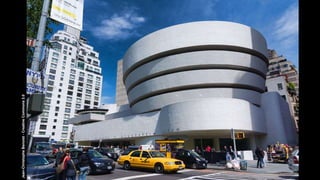
  • #26 Couple of years ago I worked with the gugg on an urban laboratory. We were interested in the future of the city. I was interested in using the museum’s money and resources to conduct experiments. Here is one.
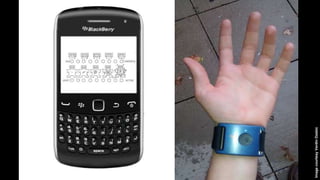
  • #27 Ellard experiment
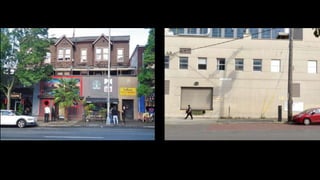
  • #29 PEOPLE WERE MUCH HAPPIER HERE, ON THIS OLD, CRAPPY, JUMBLED UP BLOCK
  • #30 THAN HERE, ON BLOCK WHOLE FOODS GEHL and WHITE taught us that such places keep people moving But we learned that -low happiness -low arousal BIG BOXING OF INNER CITIES: Whole foods on east houston in nyc, rips through vibrant fabric, One doorway in entire city block
  • #33 Five times more likely to stop and offer to help seven times as likely to offer their phone. four times as likely to actually guide the lost tourist where they wanted to go.
  • #36 Jeddah, old city Al Balad
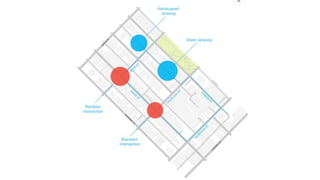
  • #37 THANK YOU MICHAEL GORDON Do not underestimate the power of streets to alter our emotions. We just finished this study in vancouver, looking at emotional effects of tactical urbanism. Still processing physiological results, but…   SLIDE: We are working with MODUS, City of Vancouver, and the neuroscientists at the University of Waterloo’s Urban Realities Laboratory on this: Happy Streets.
  • #39 INSERT VANCOUVER PPS EXPERIMENT
  • #40 BENEFIT TO BRITISH LAND -Nature boosts productivity, just having a view of nature improves concentration and reduces stress. “viewing a green roof from the workplace led to …. 50% better concentration and feelings of calm wellbeing, better problem-solving, and a sense of hope.” – ibid Source --Angela Loder, University of Denver
  • #41 name, role during the studio
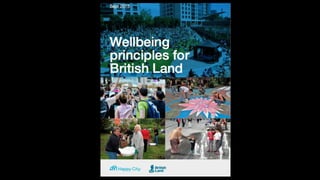
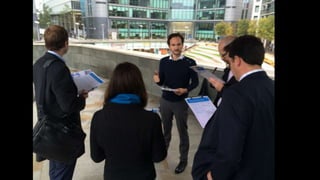
  • #42  British Land, the biggest REIT in the UK. They have been leaders in CSR and green building. We helped them create a strategy to boost wellbeing through their places. And as we went through site audits with them, we realized a couple of things: --their team knew intuitively what was not working on their properties. They just needed a vehicle to carry their message. --Lease managers were hot to trot. Because they realized that happy interventions would help them draw customers, tenants, businesses and workers. It was about building shareholder value. ALT VERSION: And guess what? Businesses and developers are now seeing the value in building happier, healthier places. Here is proof British Land, the biggest REIT in the UK, just paid us big bucks for a program in which they will adopt new framework for wellbeing—that’s happiness to you and me– into their property development and management work. we just delivered this yesterday. Leadership on sustainability now includes social sustainability and wellbeing. ---
  • #48 The big picture We help cities, developers and others build healthier, happier places. We use an evidence – based approach. You are not just designing places. You are not just building value for your companies. You are creating systems for living, systems that will change the quality of people’s lives. Strengthen or weaken social ties. Make lives easier or harder. Ultimately build stronger community. I want to assure you that the decisions you make change the way people move and feel and treat other people in ways that you may not have considered. You are building or corroding happiness.
  • #49 Many existing housing options in BC’s urban centres both corrode social relationships and affordability. For example, apartment towers register lower levels of social trust and support. Less likely to chat with neighbors or know their names [56% did vs. 81% ] than people in detached homes Less likely to trust their neighbors [60 vs 40] Less likely to do favours for neighbors [23% did vs 48% did] Felt more lonely than people in detached homes 39 vs 22 Had a harder time making friends 31 vs 22 We now know that there is a Strong connection between social trust and place. The quality of our physical environments, their colour, sound, smell and their arrangement has profound implications in our ability to have positive social interactions. They affect the way we feel and regard other people. In ways we are not even conscious. People on completely auto-dependent neighborhoods don’t fare much better. ---------------------------------- So what is the value of our work in these times of crisis? And what right do I have to talk to you about urban happiness when so many people are sleeping on the street? The answer is this:   It’s all connected. In placemaking, housing and active mobility, we have tools to help address the pressing issues of our time. Our work MUST BE fundamentally about social justice. It is about public health. It is about resilience. It is about equity.    So I want to talk to you about those connections. --------------------- So what is the value of our work in these times of crisis? And what right do I have to talk to you about urban happiness when so many people are sleeping on the street? The answer is this:   It’s all connected. In placemaking, housing and active mobility, we have tools to help address the pressing issues of our time.
  • #50 Happy Homes Toolkit Walkable- so rezone Transit equity: see phoenix, compare to Burnaby Small groups are key : Cohousing But cohousing is a long long process, makes it exclusive So go lite, go TOMO!  
  • #51 In standard multi-family buildings, aim for a maximum of 8 households sharing an entrance. In cohousing developments, aim for clusters of 25-30 households. Suggest: include cohousing element. See below...  In standard multi-family housing, aim for sub-clusters of not more than 12 households sharing semi-private space. In standard multi-family towers, limit the number of regular users of lobbies, elevators, stairs and semi-public plazas to 150. Suggest: Creating semi-private zones on podium for each tower. Suggest: separating public and semi-private zone of podium. David Sloan Wilson and other evolutionary scholars have pointed out that humans spent vast majority of our evolutionary history as hunter gatherers, living and travelling in small bands. The upshot: evolutionary anthropologist Robin Dunbar told me that to make friends, we need to be able to calculate how much we trust that other person. We make complex, unconscious calculations of trustworthiness. Well it’s such a task, it requires considerable brain power. Dunbar suggested that most of us only have the capacity to do these calculations, and keep up with our assessments, of about 150 people each.   Size of hunter gatherer tribes Size at which Hutterite communities split. German trailer parks split at 150 ppl Size at which companies need to bring in rigid rules and hierarchies   Anyway, it’s a huge task to invest in relationships. Studies of other residences have shown that people are more likely to bond and trust one another when they're exposed to fewer people on their home turf.   If the design funnels too many of us through one elevator bank where people are not sure if they will see each other again. forget about it. If the design offers smaller clusters where we can hive off into smaller groups, then we stand a greater chance of connecting and building those networks of trust.   This does not mean that we need to abandon cities and move to communes in the Adirondacks. But it does mean we need to understand the limitations of our our ability to manage relationships.   We need more choice.
  • #52 When [a limited number of] neighbors frequently pass through a space where they see each other and can stop for a chat, the seeds of community are sown” (Cooper Marcus & Sarkissian, 1986; p. 119).
  • #53 Image: Take Root/MAAStudio We poured all the science of social trust and design into one building design. This is Tomo, 12 families under one roof, in Vancouver. Combines soft edges, with casual social spaces for a small group of families Plus a common house for them to come together for gatherings. Does it work? We dunno yet. But 12 families have already come together, invested money, started to create culture of their own community. And there are hundreds on the waiting list. People are hungry to reclaim the social bonds we have lost in cities. Capitalizm and modernism have pushed us apart. We need to regain our bonds.
  • #54 The big picture We help cities, developers and others build healthier, happier places. We use an evidence – based approach. You are not just designing places. You are not just building value for your companies. You are creating systems for living, systems that will change the quality of people’s lives. Strengthen or weaken social ties. Make lives easier or harder. Ultimately build stronger community. I want to assure you that the decisions you make change the way people move and feel and treat other people in ways that you may not have considered. You are building or corroding happiness.
  • #55 By nurturing a deeper sense of meaning and belonging, placemakers can also create a greater sense of loyalty and attachment to employers and local businesses.   A study American Cities by Gallup and the Knight Foundation found that several factors consistently drove people’s attachment to their communities.   The top drivers of place attachment were: social offerings, or places for entertainment or social encounters; openness, or how welcoming the place feels to all people; and aesthetics, or the physical beauty of the community.   There’s a direct correlation between place attachment and local GDP growth.
  • #56 By nurturing a deeper sense of meaning and belonging, placemakers can also create a greater sense of loyalty and attachment to employers and local businesses.   A study American Cities by Gallup and the Knight Foundation found that several factors consistently drove people’s attachment to their communities.   The top drivers of place attachment were: social offerings, or places for entertainment or social encounters; openness, or how welcoming the place feels to all people; and aesthetics, or the physical beauty of the community.   There’s a direct correlation between place attachment and local GDP growth.
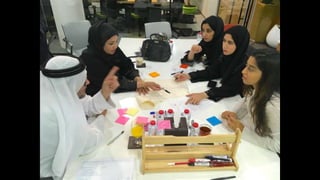
  • #59 Creating actions on a 2D and 3D model of Al Barsha
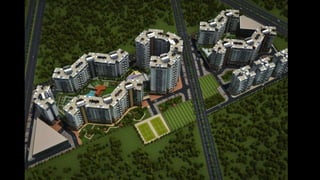
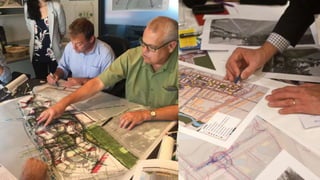
  • #61 We were contacted by a developer creatting a community for 8,000 people in Punewale India. As you can see, it’s a bit problematic: a series of towers on top of parking podiums in a greenfield by a highway. They wanted to hack their design, to make it happier. Alternative text P emailed us out of the blue. He sincerely wants to build a community that is healthy, social and happy. The family has been building housing for decades, and has used profits to fund schools in the region. At first he just wanted advice for light, quick, cheap interventions for Phase 1. Now he has agreed to be open to recommendations for the masterplan, changes that may involve architectural adjustments, etc.
  • #63 Well we put the poor guy through the ringer. But he took our advice. now they are building a marketing plan based on happiness. But the truth is, the CEO just happened to care a lot about the people who were going to buy his apartments. He personally handed over the keys to every apartment, and he wanted to be proud and confident that he was going to honor his promise.
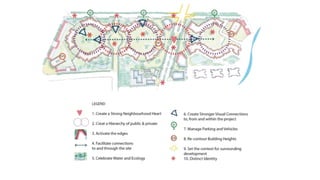
  • #64 Well we put the poor guy through the ringer. But he took our advice, including transforming dead boulevard edge to an Indian amphitheatre, a village heart. NOW they are building a marketing plan based on happiness. But the truth is, the CEO just happened to care a lot about the people who were going to buy his apartments. He personally handed over the keys to every apartment, and he wanted to be proud and confident that he was going to honor his promise.
  • #65 The big picture We help cities, developers and others build healthier, happier places. We use an evidence – based approach. You are not just designing places. You are not just building value for your companies. You are creating systems for living, systems that will change the quality of people’s lives. Strengthen or weaken social ties. Make lives easier or harder. Ultimately build stronger community. I want to assure you that the decisions you make change the way people move and feel and treat other people in ways that you may not have considered. You are building or corroding happiness.