Alcohol and Families
Lauren Booker
Workplace Programme Manager
Drinking in the UK
• Over 10m adults drink more than
recommended limits
• 2.6m drink more than 2x recommended limits
• 1.6m dependent on alcohol
• Alcohol related diseases account for 1 in 8
hospital beds
• £21bn cost to individuals and families p.a.
Case Study
Read your case study about Jack and Jill Smith
and their family.
What impact do you think that alcohol may
have on each member?
Alcohol and families
• Approximately 1 million children live in a household
with one or more dependent drinkers
• Alcohol is cited in 1/3 of divorce petitions
• Parental alcohol use is a factor in up to 60% of child
protection cases
• 1/3 of reported domestic violence involves alcohol
• Almost 1/5 of the population is affected by a family
members’ alcohol use.
"To suggest that all parents who suffer from
problem drug use present a danger to their
children is misleading.
Indeed, much research indicated that in
isolation, problem drug use of a parent
presents little risk of significant harm to
children."
Cleaver H., Unell, I., and Aldgate, J., (1999) Children’s Needs Parenting
Capacity, p.23, London; HMSO.
Case Study
Look at the new information about the Smiths.
Does this change your thoughts about the
impact on the family?
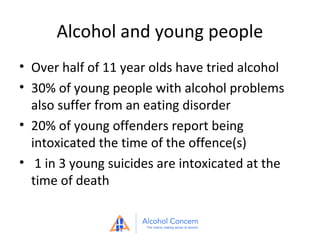
Alcohol and young people
• Over half of 11 year olds have tried alcohol
• 30% of young people with alcohol problems
also suffer from an eating disorder
• 20% of young offenders report being
intoxicated the time of the offence(s)
• 1 in 3 young suicides are intoxicated at the
time of death
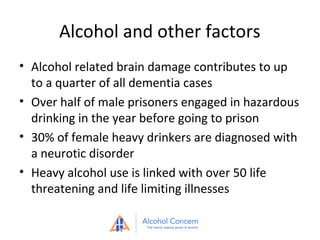
Alcohol and other factors
• Alcohol related brain damage contributes to up
to a quarter of all dementia cases
• Over half of male prisoners engaged in hazardous
drinking in the year before going to prison
• 30% of female heavy drinkers are diagnosed with
a neurotic disorder
• Heavy alcohol use is linked with over 50 life
threatening and life limiting illnesses
What can we do?
• Information and Awareness
– Change4life
– Every Contact Counts

• Early Identification and assessment: IBA
• Referral pathways
• New approaches – online, recovery communities,
workplace
"We should particularly be concerned with
substance use that is dependant or chaotic.
For the practitioner and the client, the ability to
distinguish recreational use from problematic
misuse is a crucial skill.”
Murphy, M. (1996). The Child Protection Unit. p 11. Aldershot: Avebury.Links
between problematic use and child protection
What can we do?
•
•
•
•
•

Multi-Agency Working
Support children, support the family
Promote resilience factors
Our duty of care, transferable skills
Support for families:
– Brief Strategic Family Therapy; Community
Reinforcement and Family Training, Positive
Parenting Programme

Lauren Booker - Alcohol and families

  • 1.
    Alcohol and Families LaurenBooker Workplace Programme Manager
  • 2.
    Drinking in theUK • Over 10m adults drink more than recommended limits • 2.6m drink more than 2x recommended limits • 1.6m dependent on alcohol • Alcohol related diseases account for 1 in 8 hospital beds • £21bn cost to individuals and families p.a.
  • 3.
    Case Study Read yourcase study about Jack and Jill Smith and their family. What impact do you think that alcohol may have on each member?
  • 4.
    Alcohol and families •Approximately 1 million children live in a household with one or more dependent drinkers • Alcohol is cited in 1/3 of divorce petitions • Parental alcohol use is a factor in up to 60% of child protection cases • 1/3 of reported domestic violence involves alcohol • Almost 1/5 of the population is affected by a family members’ alcohol use.
  • 5.
    "To suggest thatall parents who suffer from problem drug use present a danger to their children is misleading. Indeed, much research indicated that in isolation, problem drug use of a parent presents little risk of significant harm to children." Cleaver H., Unell, I., and Aldgate, J., (1999) Children’s Needs Parenting Capacity, p.23, London; HMSO.
  • 6.
    Case Study Look atthe new information about the Smiths. Does this change your thoughts about the impact on the family?
  • 7.
    Alcohol and youngpeople • Over half of 11 year olds have tried alcohol • 30% of young people with alcohol problems also suffer from an eating disorder • 20% of young offenders report being intoxicated the time of the offence(s) • 1 in 3 young suicides are intoxicated at the time of death
  • 8.
    Alcohol and otherfactors • Alcohol related brain damage contributes to up to a quarter of all dementia cases • Over half of male prisoners engaged in hazardous drinking in the year before going to prison • 30% of female heavy drinkers are diagnosed with a neurotic disorder • Heavy alcohol use is linked with over 50 life threatening and life limiting illnesses
  • 9.
    What can wedo? • Information and Awareness – Change4life – Every Contact Counts • Early Identification and assessment: IBA • Referral pathways • New approaches – online, recovery communities, workplace
  • 10.
    "We should particularlybe concerned with substance use that is dependant or chaotic. For the practitioner and the client, the ability to distinguish recreational use from problematic misuse is a crucial skill.” Murphy, M. (1996). The Child Protection Unit. p 11. Aldershot: Avebury.Links between problematic use and child protection
  • 11.
    What can wedo? • • • • • Multi-Agency Working Support children, support the family Promote resilience factors Our duty of care, transferable skills Support for families: – Brief Strategic Family Therapy; Community Reinforcement and Family Training, Positive Parenting Programme

Editor's Notes

  • #2 Intro to self
  • #3 Anecdote: man at the conference: Jaguar land rover, meet the buyers For men: highest in 25 – 34 age group For women: highest in 16 – 24 age group Whilst many of these will have children – they will also have parents, siblings and other close family
  • #5 Children who begin drinking before the age of 14 or who have an alcohol dependent carer are much more likely to suffer from dependence themselves
  • #6 However, poverty, domestic violence, mental health issues
  • #10 Change4life Early identification: CAF, Team around the child, Think family agenda, Every child matters Children can be supported and helped regardless of changes in the drinking patterns of the parents We have a duty of care - ensure we are familiar and comfortable with the issues, workforce training and development BUT, whilst the needs of the child is paramount, the family unit is important too.