3 REASONS WHY MOST
JOB DESCRIPTIONS
DON’T ATTRACT THE
BEST TALENT
So you have to hire someone.
what now?
Building the Job Description
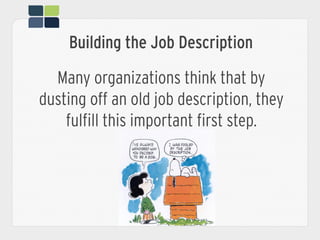
Many organizations think that by
dusting off an old job description, they
fulfill this important first step.
 
Building the Job Description
In reality, most job descriptions are
outdated and filled with position
qualifications that don’t relate to the
performance of the job.
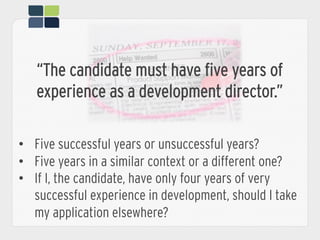
“The candidate must have five years of
experience as a development director.”
•  Five successful years or unsuccessful years?
•  Five years in a similar context or a different one?
•  If I, the candidate, have only four years of very
successful experience in development, should I take
my application elsewhere?
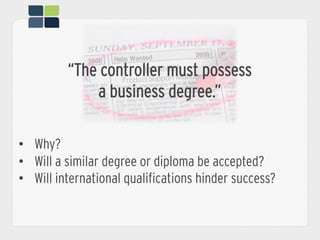
“The controller must possess
a business degree.”
•  Why?
•  Will a similar degree or diploma be accepted?
•  Will international qualifications hinder success?
This type of job description gives the applicant
information about the duties, responsibilities,
necessary skills, and outcomes of a particular job.
But it can’t indicate whether they’re going to love
coming to work every day.
Building the Job Description
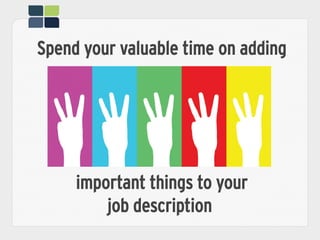
Spend your valuable time on adding
important things to your
job description
The Why
Why would someone work here?
What difference can they make?
How can they help other people?
You seek to work with someone who shares your
organization’s purpose, mission and values, so
prioritize definition of these.
The What
What is the new hire expected to accomplish?
Are they expected to grow revenue?
Are they expected to implemented new systems?
If you can define what the new hire is expected to
accomplish, it will become clear what expertise is
needed to accomplish it.
The How
How will the new hire succeed?
How is she or he expected to behave?
What behaviours lead to success in our organization?
What traits are needed to achieve success?
Psychometric assessments are useful in defining
these sometimes elusive traits and they
can be applied at low cost.
If you can clearly articulate the WHY, WHAT and
HOW of your organization and position, then agree
to hire someone with the sense of purpose,
knowledge, skills and behaviours to meet those
expectations.
How do you
determine the
job’s WHY, WHAT
and HOW?
There are many people with a stake in the
success of your new hire:
•  Your leadership team
•  Current employees
•  Customers
•  Shareholders
•  etc.
Identifying those with the greatest stake in the new hire’s
success is an important, and very often overlooked, aspect
of hiring.
•  Talking to people whose own success and
happiness will be heavily impacted by the new
hire will set you up to succeed.
•  Their perspective will help you describe the
position, and it will also help you identify
someone who fits your position.
•  By engaging them in the hiring process, you
increase their support for the new hire.
Does your current job advertisement
communicate your WHY, HOW and WHAT?
Visit www.ianmartin.com
3 Reasons Why Most Job Descriptions Don’t Attract the Best Talent

3 Reasons Why Most Job Descriptions Don’t Attract the Best Talent

  • 1.
    3 REASONS WHYMOST JOB DESCRIPTIONS DON’T ATTRACT THE BEST TALENT
  • 2.
    So you haveto hire someone. what now?
  • 3.
    Building the JobDescription Many organizations think that by dusting off an old job description, they fulfill this important first step.  
  • 4.
    Building the JobDescription In reality, most job descriptions are outdated and filled with position qualifications that don’t relate to the performance of the job.
  • 5.
    “The candidate musthave five years of experience as a development director.” •  Five successful years or unsuccessful years? •  Five years in a similar context or a different one? •  If I, the candidate, have only four years of very successful experience in development, should I take my application elsewhere?
  • 6.
    “The controller mustpossess a business degree.” •  Why? •  Will a similar degree or diploma be accepted? •  Will international qualifications hinder success?
  • 7.
    This type ofjob description gives the applicant information about the duties, responsibilities, necessary skills, and outcomes of a particular job. But it can’t indicate whether they’re going to love coming to work every day. Building the Job Description
  • 8.
    Spend your valuabletime on adding important things to your job description
  • 10.
    The Why Why wouldsomeone work here? What difference can they make? How can they help other people? You seek to work with someone who shares your organization’s purpose, mission and values, so prioritize definition of these.
  • 12.
    The What What isthe new hire expected to accomplish? Are they expected to grow revenue? Are they expected to implemented new systems? If you can define what the new hire is expected to accomplish, it will become clear what expertise is needed to accomplish it.
  • 14.
    The How How willthe new hire succeed? How is she or he expected to behave? What behaviours lead to success in our organization? What traits are needed to achieve success? Psychometric assessments are useful in defining these sometimes elusive traits and they can be applied at low cost.
  • 15.
    If you canclearly articulate the WHY, WHAT and HOW of your organization and position, then agree to hire someone with the sense of purpose, knowledge, skills and behaviours to meet those expectations.
  • 16.
    How do you determinethe job’s WHY, WHAT and HOW?
  • 17.
    There are manypeople with a stake in the success of your new hire: •  Your leadership team •  Current employees •  Customers •  Shareholders •  etc. Identifying those with the greatest stake in the new hire’s success is an important, and very often overlooked, aspect of hiring.
  • 18.
    •  Talking topeople whose own success and happiness will be heavily impacted by the new hire will set you up to succeed. •  Their perspective will help you describe the position, and it will also help you identify someone who fits your position. •  By engaging them in the hiring process, you increase their support for the new hire.
  • 19.
    Does your currentjob advertisement communicate your WHY, HOW and WHAT? Visit www.ianmartin.com