Jenny Holzer
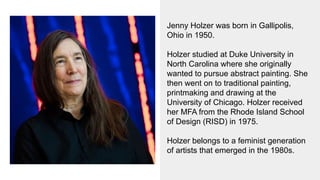
Jenny Holzer was born in Gallipolis,
Ohio in 1950.
Holzer studied at Duke University in
North Carolina where she originally
wanted to pursue abstract painting. She
then went on to traditional painting,
printmaking and drawing at the
University of Chicago. Holzer received
her MFA from the Rhode Island School
of Design (RISD) in 1975.
Holzer belongs to a feminist generation
of artists that emerged in the 1980s.
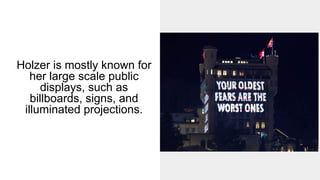
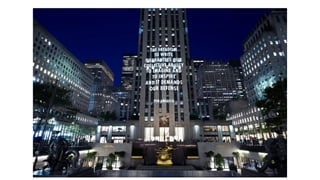
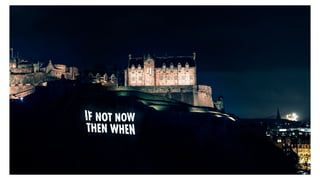
Holzer is mostly known for
her large scale public
displays, such as
billboards, signs, and
illuminated projections.
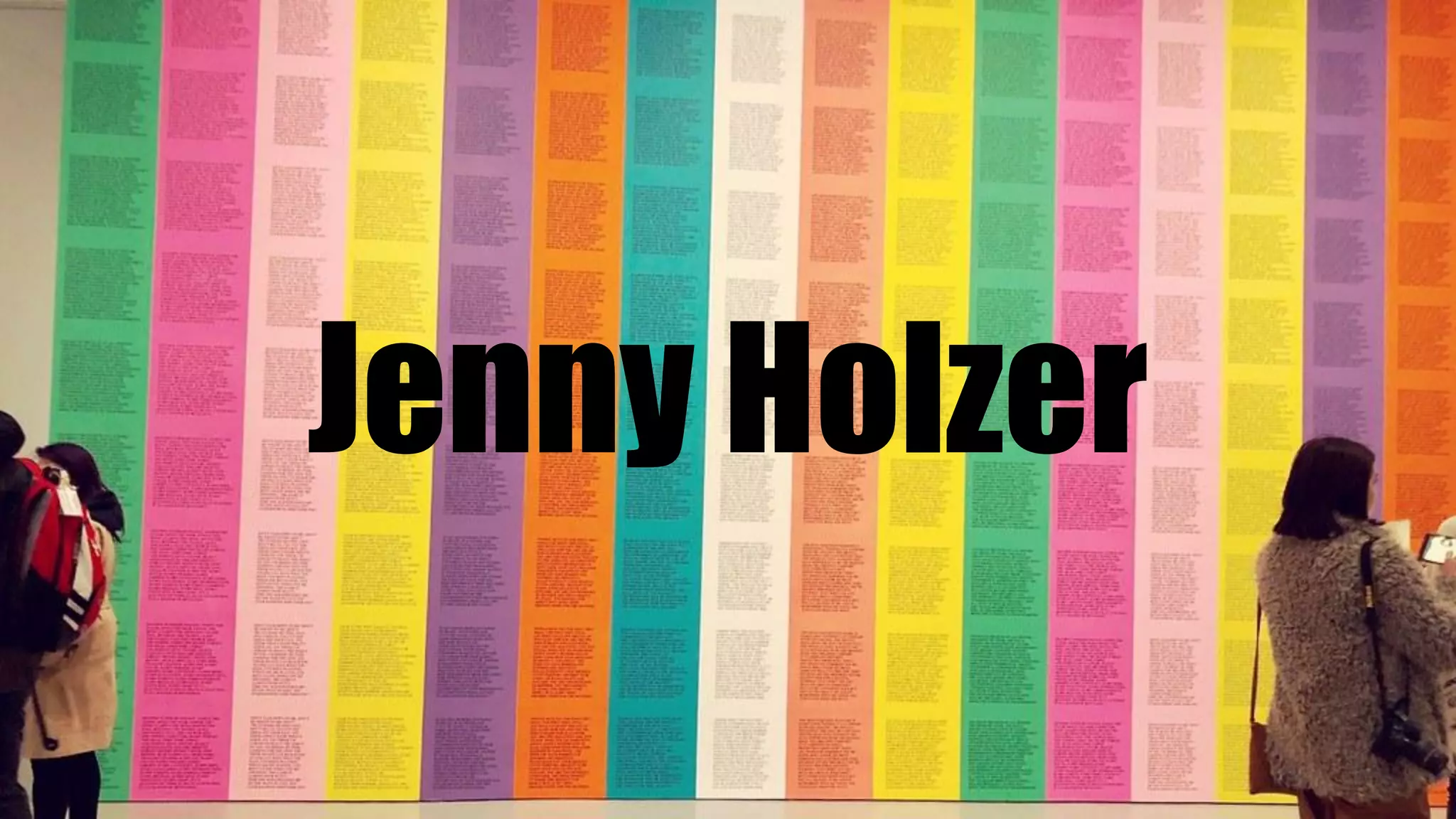
Holzer felt the writings of
Western and Eastern
literature and philosophy
could be simplified to
phrases everyone could
understand. She called
these summaries her
"Truisms." These appeared
as anonymous sheets that
she printed. She printed
black script onto them and
pasted the sheets of paper
onto buildings, walls and
fences around the city.
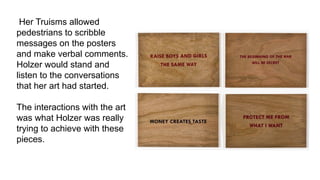
Her Truisms allowed
pedestrians to scribble
messages on the posters
and make verbal comments.
Holzer would stand and
listen to the conversations
that her art had started.
The interactions with the art
was what Holzer was really
trying to achieve with these
pieces.
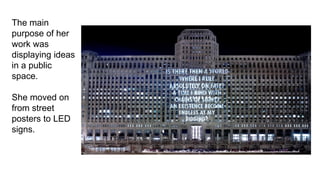
The main
purpose of her
work was
displaying ideas
in a public
space.
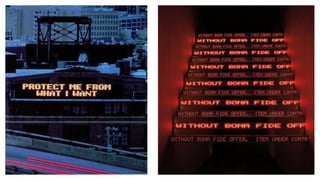
She moved on
from street
posters to LED
signs.
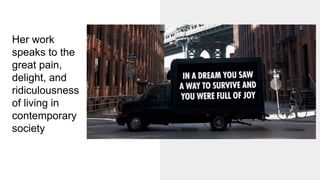
Her work
speaks to the
great pain,
delight, and
ridiculousness
of living in
contemporary
society

Jenny Holzer

  • 1.
  • 2.
    Jenny Holzer wasborn in Gallipolis, Ohio in 1950. Holzer studied at Duke University in North Carolina where she originally wanted to pursue abstract painting. She then went on to traditional painting, printmaking and drawing at the University of Chicago. Holzer received her MFA from the Rhode Island School of Design (RISD) in 1975. Holzer belongs to a feminist generation of artists that emerged in the 1980s.
  • 3.
    Holzer is mostlyknown for her large scale public displays, such as billboards, signs, and illuminated projections.
  • 4.
    Holzer felt thewritings of Western and Eastern literature and philosophy could be simplified to phrases everyone could understand. She called these summaries her "Truisms." These appeared as anonymous sheets that she printed. She printed black script onto them and pasted the sheets of paper onto buildings, walls and fences around the city.
  • 5.
    Her Truisms allowed pedestriansto scribble messages on the posters and make verbal comments. Holzer would stand and listen to the conversations that her art had started. The interactions with the art was what Holzer was really trying to achieve with these pieces.
  • 6.
    The main purpose ofher work was displaying ideas in a public space. She moved on from street posters to LED signs.
  • 10.
    Her work speaks tothe great pain, delight, and ridiculousness of living in contemporary society