Master this
By Barak Drechsler
First things first…
functions it all about
functions
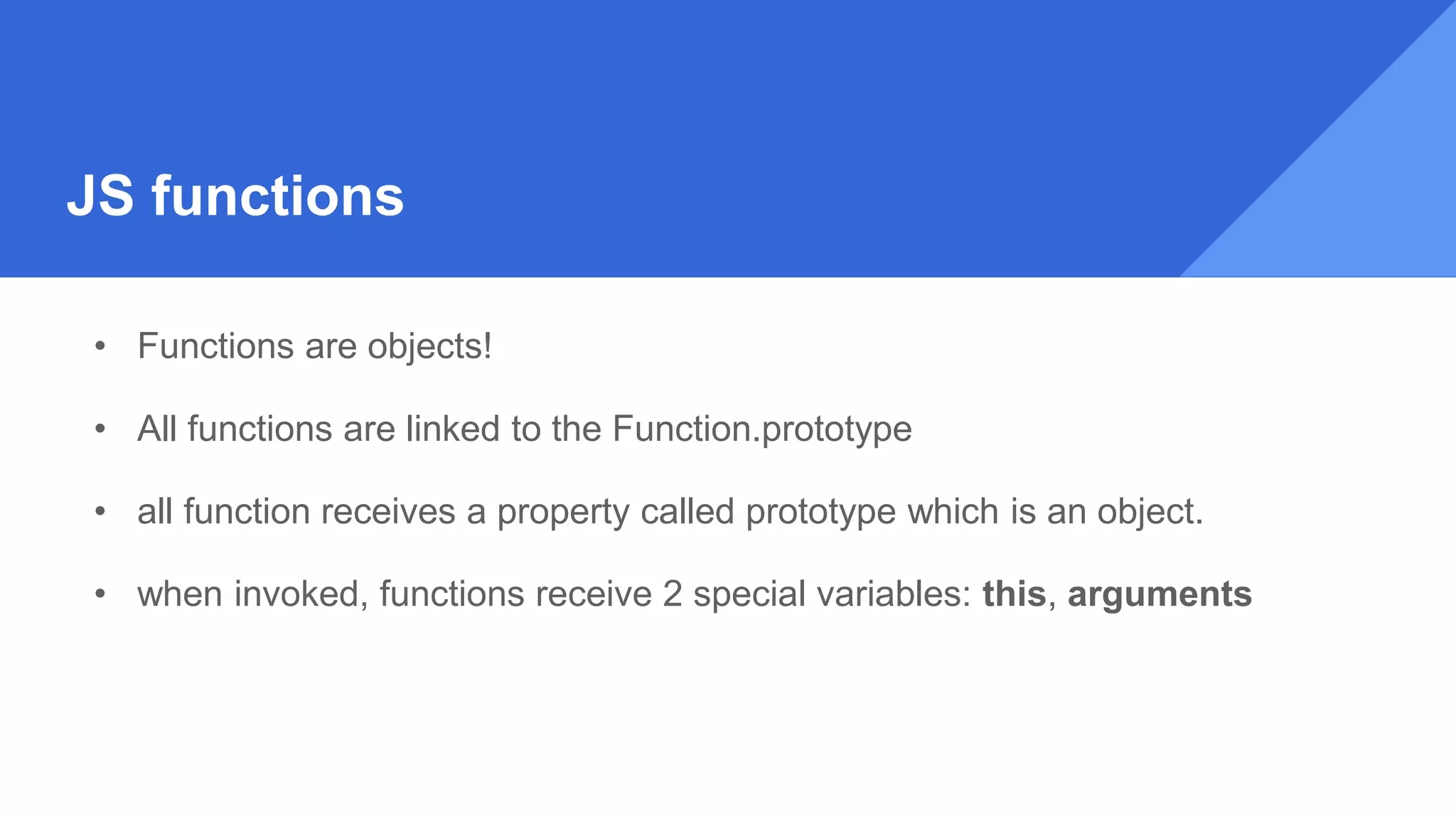
JS functions
• Functions are objects!
• All functions are linked to the Function.prototype
• all function receives a property called prototype which is an object.
• when invoked, functions receive 2 special variables: this, arguments
This
`this` keyword is a special variable,
It evaluated each time a function is executed, based on how the function have
been invoked.
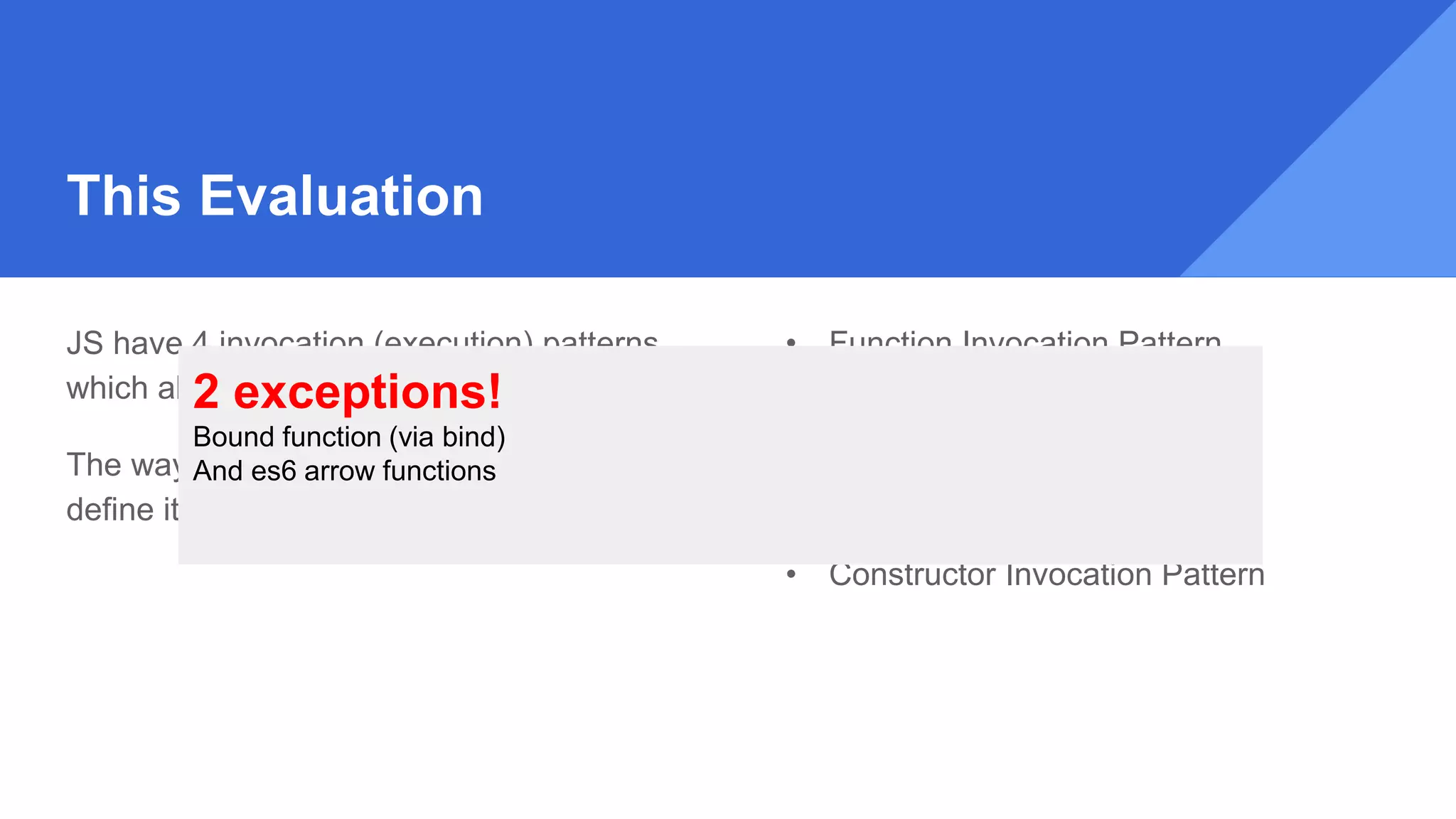
This Evaluation
JS have 4 invocation (execution) patterns,
which allow you to execute a function.
The way a function have been invoked, will
define it ‘this’ evaluation.
• Function Invocation Pattern
• Method Invocation Pattern
• Apply Invocation Pattern
• Constructor Invocation Pattern
2 exceptions!
Bound function (via bind)
And es6 arrow functions
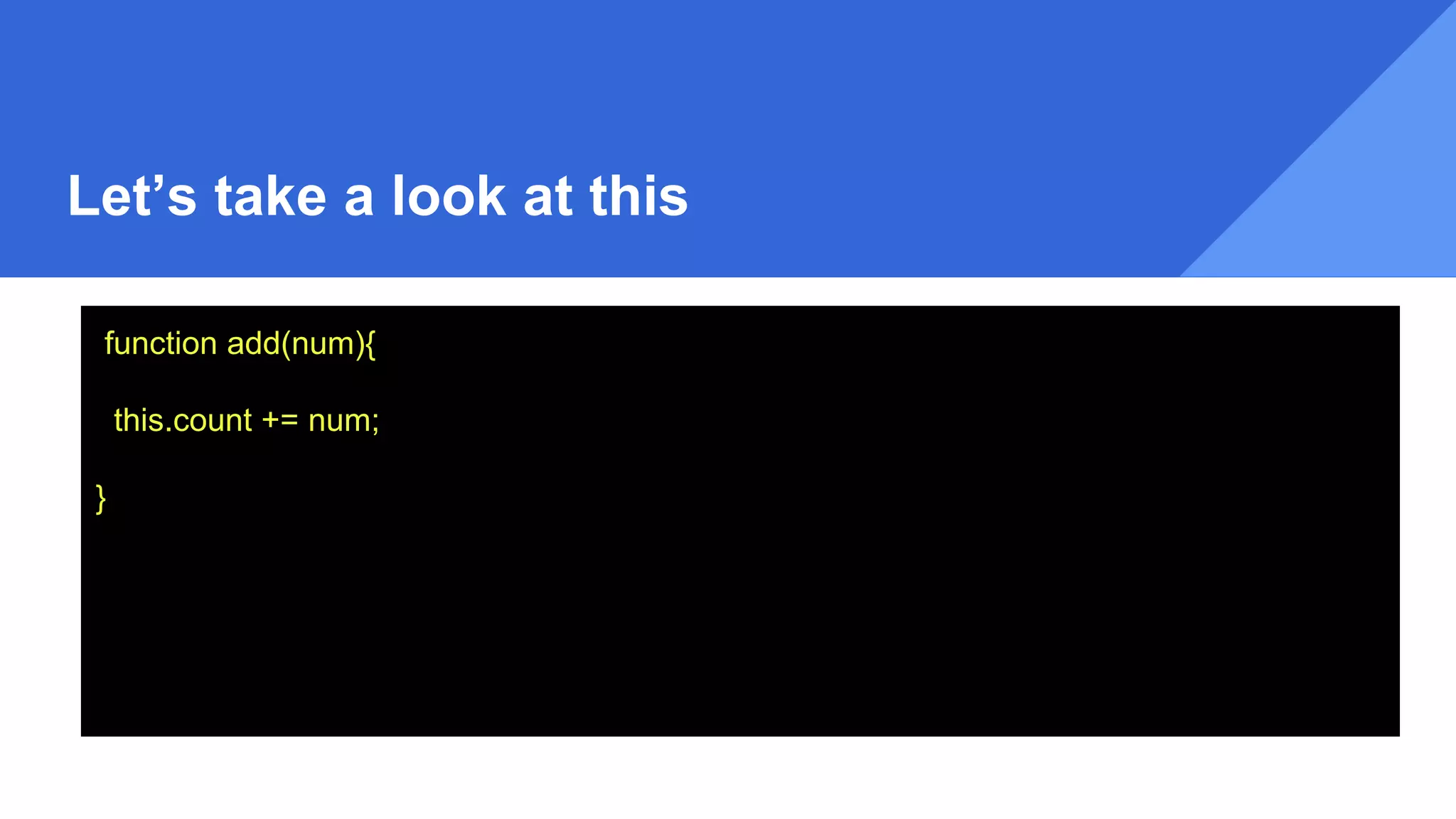
Let’s take a look at this
function add(num){
this.count += num;
}
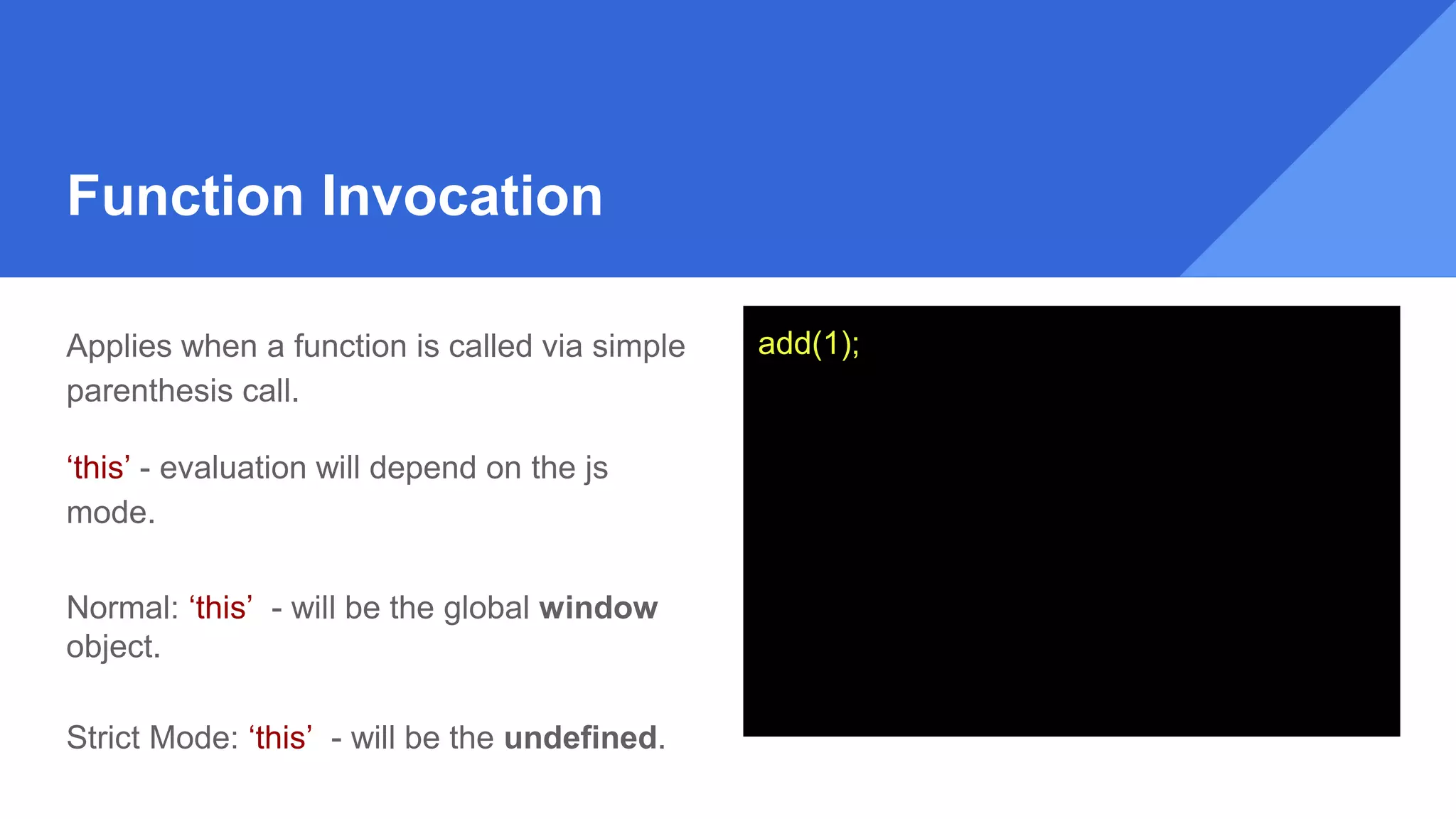
Function Invocation
Applies when a function is called via simple
parenthesis call.
‘this’ - evaluation will depend on the js
mode.
Normal: ‘this’ - will be the global window
object.
Strict Mode: ‘this’ - will be the undefined.
add(1);
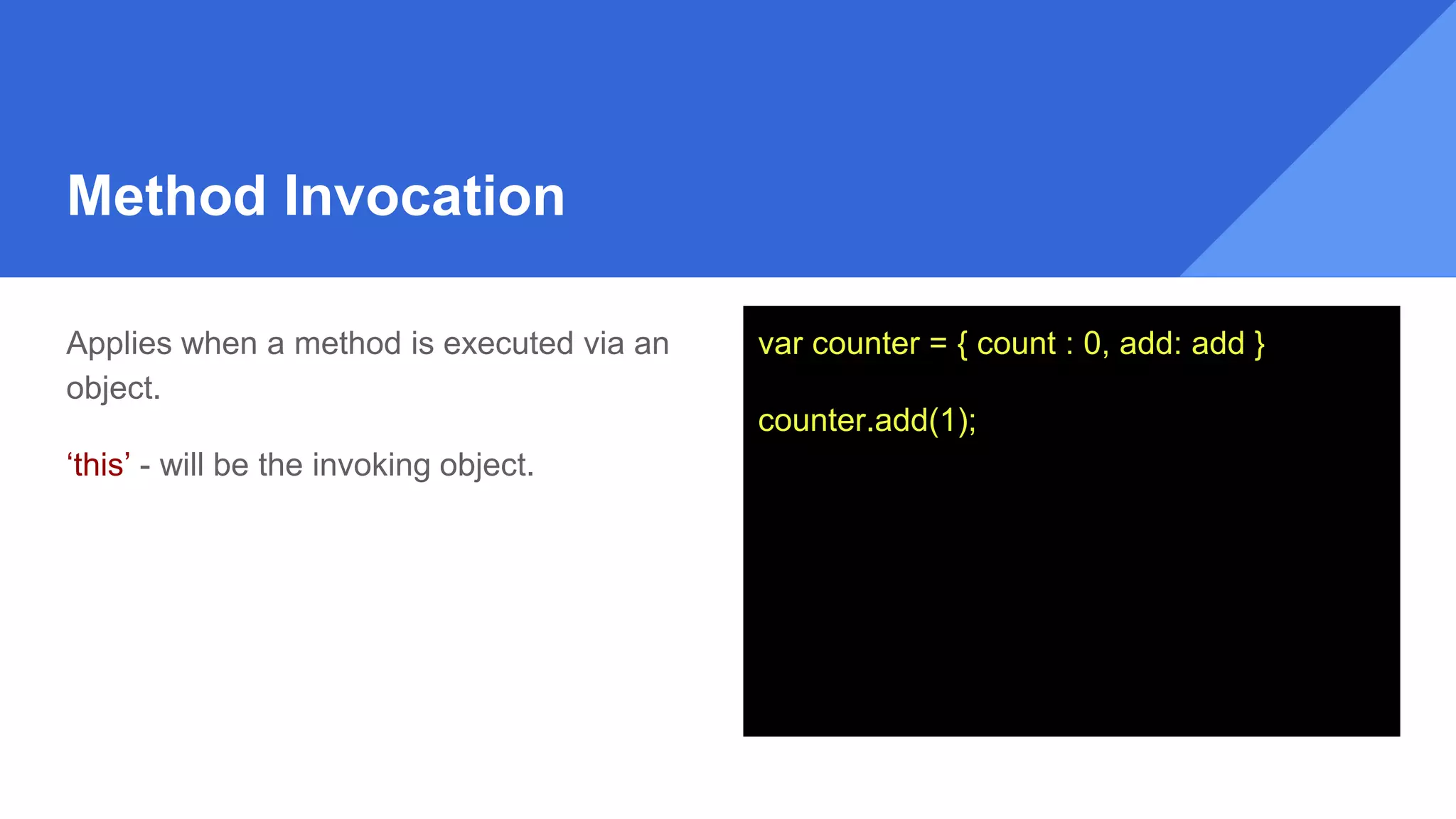
Method Invocation
Applies when a method is executed via an
object.
‘this’ - will be the invoking object.
var counter = { count : 0, add: add }
counter.add(1);
Apply Invocation
Applies when a function is executed via the
apply or call methods.
‘this’ - will evaluated, based on the given
parameter to the apply/call call.
Apply: (this, [ param1, param2, ... ] )
Call: (this, param1,param2, ….)
var counter = { count : 0 }
add.call(counter, 1); // output 1
add.apply(counter, [1]) // output 1
add.call({ count: 10}, 1) // output 11
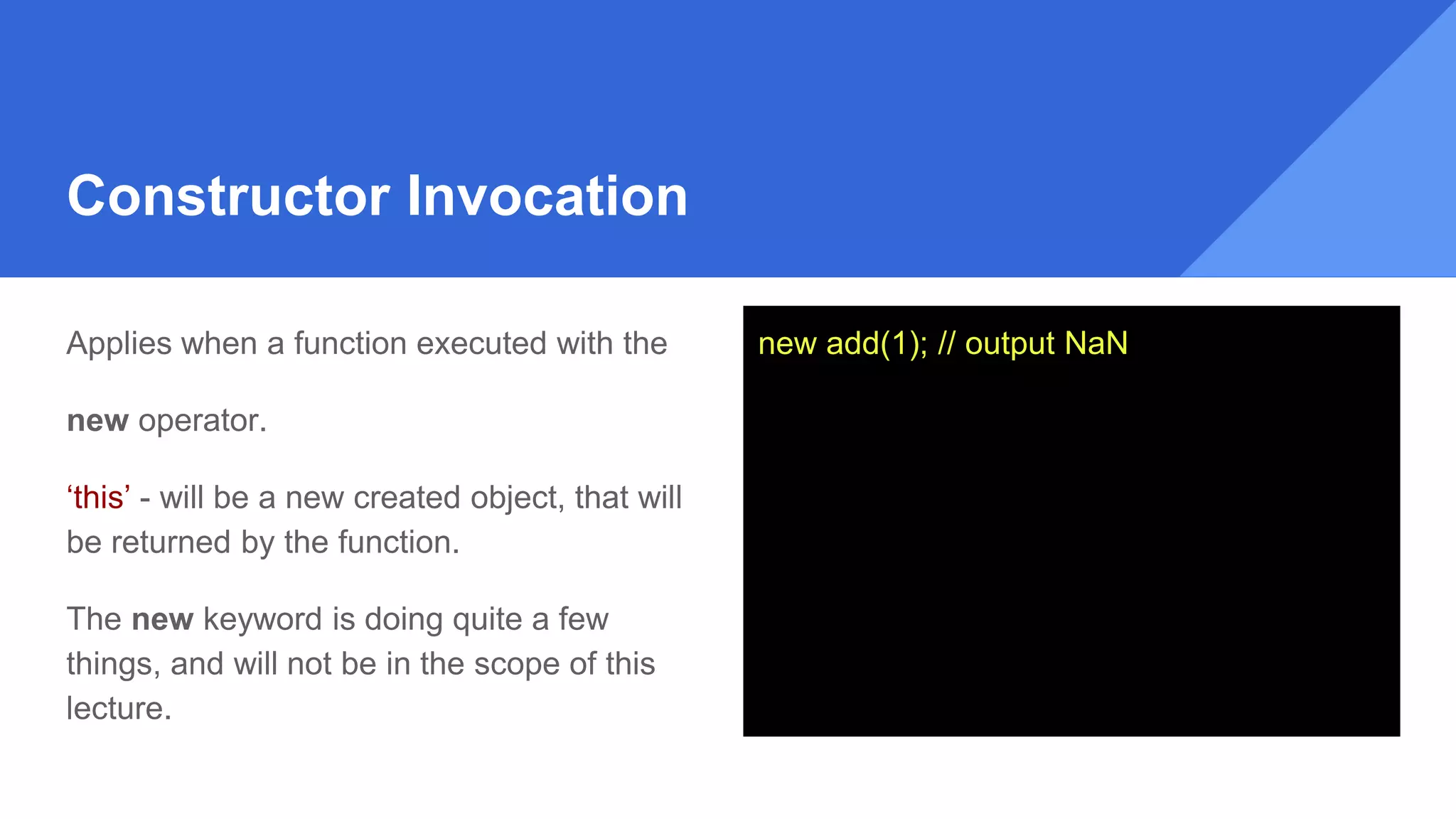
Constructor Invocation
Applies when a function executed with the
new operator.
‘this’ - will be a new created object, that will
be returned by the function.
The new keyword is doing quite a few
things, and will not be in the scope of this
lecture.
new add(1); // output NaN
Bound function
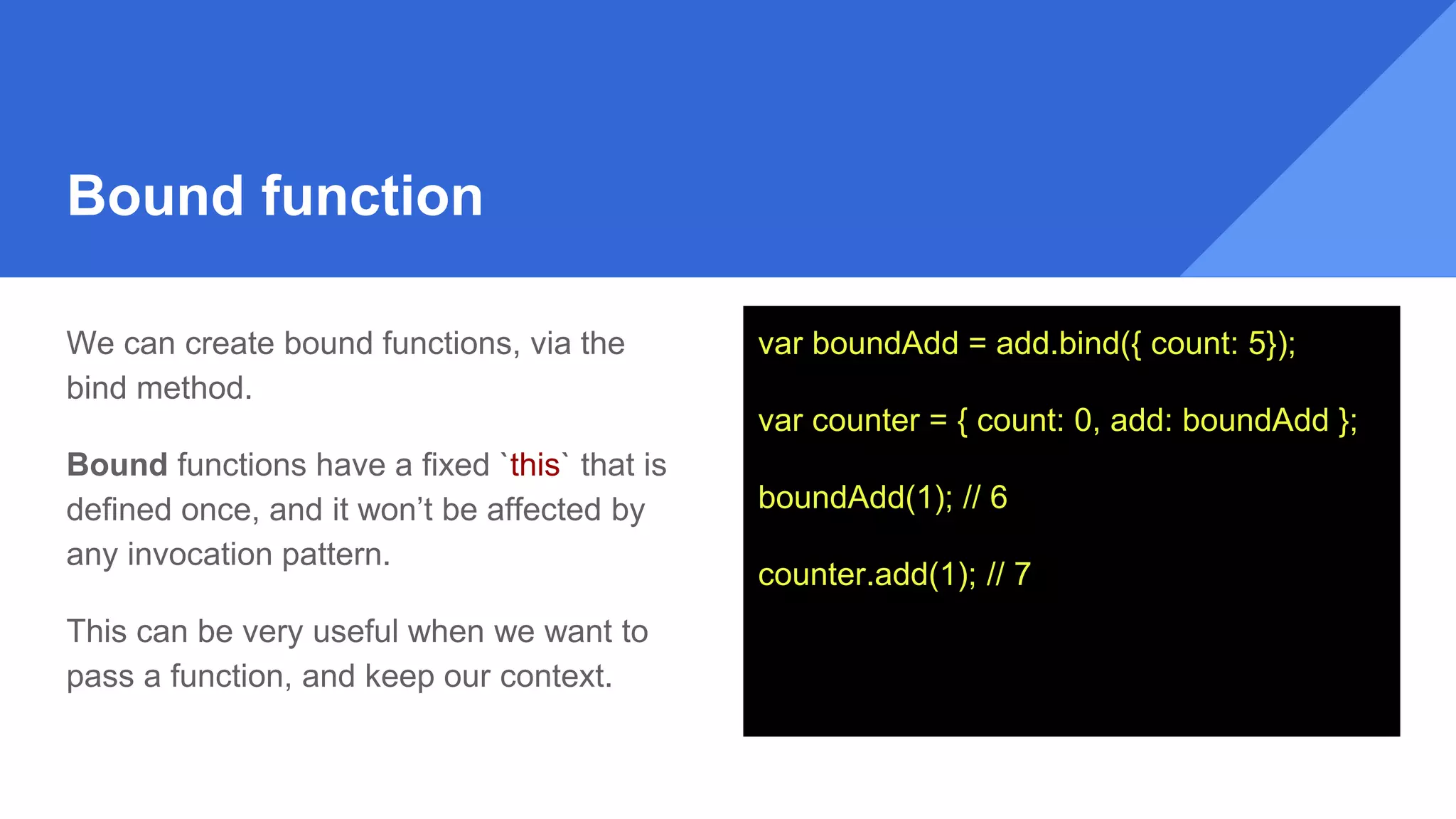
We can create bound functions, via the
bind method.
Bound functions have a fixed `this` that is
defined once, and it won’t be affected by
any invocation pattern.
This can be very useful when we want to
pass a function, and keep our context.
var boundAdd = add.bind({ count: 5});
var counter = { count: 0, add: boundAdd };
boundAdd(1); // 6
counter.add(1); // 7
ES 6 Arrow Functions
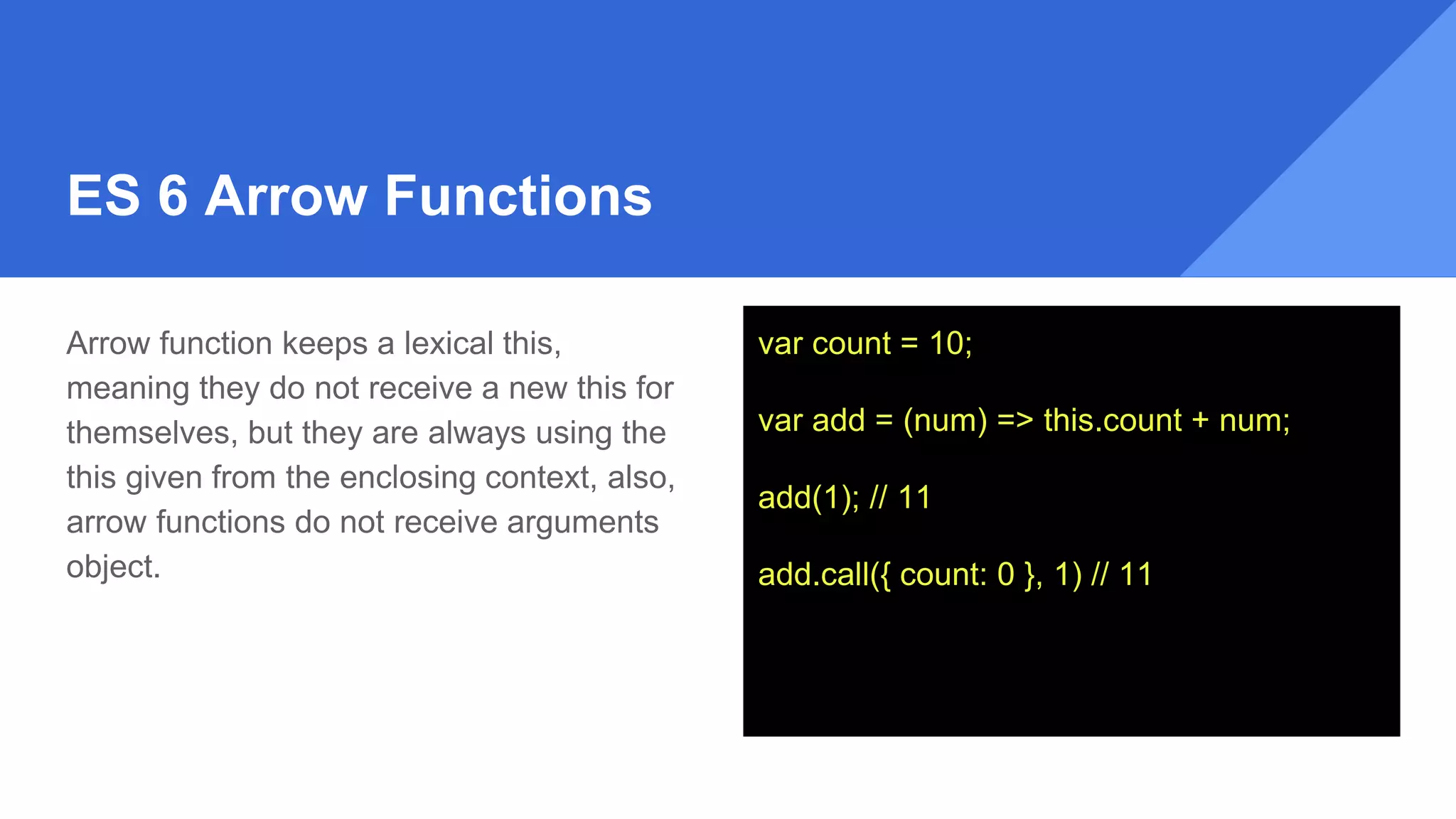
Arrow function keeps a lexical this,
meaning they do not receive a new this for
themselves, but they are always using the
this given from the enclosing context, also,
arrow functions do not receive arguments
object.
var count = 10;
var add = (num) => this.count + num;
add(1); // 11
add.call({ count: 0 }, 1) // 11
Let's play
This Playground

Javascript: master this

  • 1.
  • 2.
    First things first… functionsit all about functions
  • 3.
    JS functions • Functionsare objects! • All functions are linked to the Function.prototype • all function receives a property called prototype which is an object. • when invoked, functions receive 2 special variables: this, arguments
  • 4.
    This `this` keyword isa special variable, It evaluated each time a function is executed, based on how the function have been invoked.
  • 5.
    This Evaluation JS have4 invocation (execution) patterns, which allow you to execute a function. The way a function have been invoked, will define it ‘this’ evaluation. • Function Invocation Pattern • Method Invocation Pattern • Apply Invocation Pattern • Constructor Invocation Pattern 2 exceptions! Bound function (via bind) And es6 arrow functions
  • 6.
    Let’s take alook at this function add(num){ this.count += num; }
  • 7.
    Function Invocation Applies whena function is called via simple parenthesis call. ‘this’ - evaluation will depend on the js mode. Normal: ‘this’ - will be the global window object. Strict Mode: ‘this’ - will be the undefined. add(1);
  • 8.
    Method Invocation Applies whena method is executed via an object. ‘this’ - will be the invoking object. var counter = { count : 0, add: add } counter.add(1);
  • 9.
    Apply Invocation Applies whena function is executed via the apply or call methods. ‘this’ - will evaluated, based on the given parameter to the apply/call call. Apply: (this, [ param1, param2, ... ] ) Call: (this, param1,param2, ….) var counter = { count : 0 } add.call(counter, 1); // output 1 add.apply(counter, [1]) // output 1 add.call({ count: 10}, 1) // output 11
  • 10.
    Constructor Invocation Applies whena function executed with the new operator. ‘this’ - will be a new created object, that will be returned by the function. The new keyword is doing quite a few things, and will not be in the scope of this lecture. new add(1); // output NaN
  • 11.
    Bound function We cancreate bound functions, via the bind method. Bound functions have a fixed `this` that is defined once, and it won’t be affected by any invocation pattern. This can be very useful when we want to pass a function, and keep our context. var boundAdd = add.bind({ count: 5}); var counter = { count: 0, add: boundAdd }; boundAdd(1); // 6 counter.add(1); // 7
  • 12.
    ES 6 ArrowFunctions Arrow function keeps a lexical this, meaning they do not receive a new this for themselves, but they are always using the this given from the enclosing context, also, arrow functions do not receive arguments object. var count = 10; var add = (num) => this.count + num; add(1); // 11 add.call({ count: 0 }, 1) // 11
  • 13.