Affiliated to : MAKAUT , College Code : 340
Vill: Padmapukuria , P.O. + P.S.: Contai
Dist.- Purba Medinipur , W.B. (721401)
Name
University Roll No. : 3 4 0 0 1 2 2 2 0 1 6
Registration No. : 2 2 3 4 0 1 0 1 0 0 1 0
BCA
Semester : 3rd
Subject : Object Oriented Programming
Subject Code : B C A C 3 0 1
Session : 2 0 2 2 - 2 0 2 5
System.out.print(“Lets begin”) ;
OOP Paradigm & Basic Features ofOOPs
Presented by –
Introduction
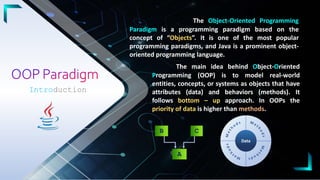
The Object-Oriented Programming
Paradigm is a programming paradigm based on the
concept of “Objects”. It is one of the most popular
programming paradigms, and Java is a prominent object-
oriented programming language.
The main idea behind Object-Oriented
Programming (OOP) is to model real-world
entities, concepts, or systems as objects that have
attributes (data) and behaviors (methods). It
follows bottom – up approach. In OOPs the
priority of data is higher than methods.
A
B C
Data
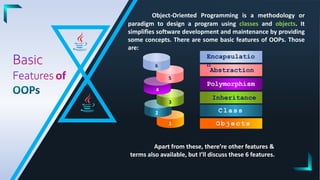
Object-Oriented Programming is a methodology or
paradigm to design a program using classes and objects. It
simplifies software development and maintenance by providing
some concepts. There are some basic features of OOPs. Those
are:
1
2
3
4
5
Objects
Class
Inheritance
Polymorphism
6
Abstraction
Encapsulatio
n
Apart from these, there’re other features &
terms also available, but I’ll discuss these 6 features.
Class
Any entity that has state and behavior is known as an
object. For example, a chair, pen, table, keyboard, bike, etc. It can
be physical or logical.
An Object can be defined as an instance of a class. An
object contains an address and takes up some space in memory.
Objects can communicate without knowing the details of each
other's data or code.
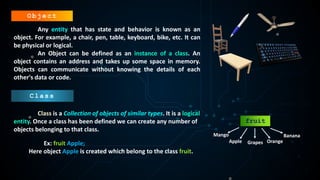
Class is a Collection of objects of similar types. It is a logical
entity. Once a class has been defined we can create any number of
objects belonging to that class.
fruit
Mango
Apple Grapes Orange
Banana
Ex: fruit Apple;
Here object Apple is created which belong to the class fruit.
Object
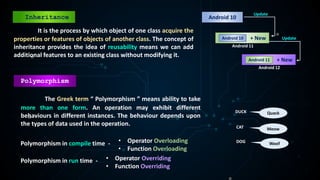
It is the process by which object of one class acquire the
properties or features of objects of another class. The concept of
inheritance provides the idea of reusability means we can add
additional features to an existing class without modifying it.
Inheritance
Polymorphism
Android 10
+ New
Android 11
Android 10
+ New
Android 12
Android 11
Update
Update
The Greek term “ Polymorphism ” means ability to take
more than one form. An operation may exhibit different
behaviours in different instances. The behaviour depends upon
the types of data used in the operation.
Polymorphism in compile time - • Operator Overloading
• Function Overloading
Polymorphism in run time - • Operator Overriding
• Function Overriding
DUCK
CAT
DOG
Quack
Meow
Woof
Abstractio
n
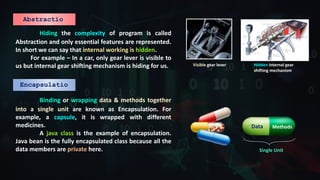
Hiding the complexity of program is called
Abstraction and only essential features are represented.
In short we can say that internal working is hidden.
For example – In a car, only gear lever is visible to
us but internal gear shifting mechanism is hiding for us. Visible gear lever Hidden internal gear
shifting mechanism
Encapsulatio
n
Binding or wrapping data & methods together
into a single unit are known as Encapsulation. For
example, a capsule, it is wrapped with different
medicines.
A java class is the example of encapsulation.
Java bean is the fully encapsulated class because all the
data members are private here.
Data Methods
Single Unit
System.out.print(“CONCLUSION”);
Java's basic features make it a
powerful and versatile programming
language. Its platform independence,
object-oriented nature, robustness, and rich
standard library contribute to its
widespread adoption and continued
relevance in the software development
industry. By making this presentation about
the basic features of java, I've learned many
new things about java which is very
informatic for me.
© Ayan Kamila | BCA – 22 |3rd Sem
THANK YOU!

JAVA - Oops Concept.pptx

  • 1.
    Affiliated to :MAKAUT , College Code : 340 Vill: Padmapukuria , P.O. + P.S.: Contai Dist.- Purba Medinipur , W.B. (721401)
  • 2.
    Name University Roll No.: 3 4 0 0 1 2 2 2 0 1 6 Registration No. : 2 2 3 4 0 1 0 1 0 0 1 0 BCA Semester : 3rd Subject : Object Oriented Programming Subject Code : B C A C 3 0 1 Session : 2 0 2 2 - 2 0 2 5
  • 3.
    System.out.print(“Lets begin”) ; OOPParadigm & Basic Features ofOOPs Presented by –
  • 4.
    Introduction The Object-Oriented Programming Paradigmis a programming paradigm based on the concept of “Objects”. It is one of the most popular programming paradigms, and Java is a prominent object- oriented programming language. The main idea behind Object-Oriented Programming (OOP) is to model real-world entities, concepts, or systems as objects that have attributes (data) and behaviors (methods). It follows bottom – up approach. In OOPs the priority of data is higher than methods. A B C Data
  • 5.
    Object-Oriented Programming isa methodology or paradigm to design a program using classes and objects. It simplifies software development and maintenance by providing some concepts. There are some basic features of OOPs. Those are: 1 2 3 4 5 Objects Class Inheritance Polymorphism 6 Abstraction Encapsulatio n Apart from these, there’re other features & terms also available, but I’ll discuss these 6 features.
  • 6.
    Class Any entity thathas state and behavior is known as an object. For example, a chair, pen, table, keyboard, bike, etc. It can be physical or logical. An Object can be defined as an instance of a class. An object contains an address and takes up some space in memory. Objects can communicate without knowing the details of each other's data or code. Class is a Collection of objects of similar types. It is a logical entity. Once a class has been defined we can create any number of objects belonging to that class. fruit Mango Apple Grapes Orange Banana Ex: fruit Apple; Here object Apple is created which belong to the class fruit. Object
  • 7.
    It is theprocess by which object of one class acquire the properties or features of objects of another class. The concept of inheritance provides the idea of reusability means we can add additional features to an existing class without modifying it. Inheritance Polymorphism Android 10 + New Android 11 Android 10 + New Android 12 Android 11 Update Update The Greek term “ Polymorphism ” means ability to take more than one form. An operation may exhibit different behaviours in different instances. The behaviour depends upon the types of data used in the operation. Polymorphism in compile time - • Operator Overloading • Function Overloading Polymorphism in run time - • Operator Overriding • Function Overriding DUCK CAT DOG Quack Meow Woof
  • 8.
    Abstractio n Hiding the complexityof program is called Abstraction and only essential features are represented. In short we can say that internal working is hidden. For example – In a car, only gear lever is visible to us but internal gear shifting mechanism is hiding for us. Visible gear lever Hidden internal gear shifting mechanism Encapsulatio n Binding or wrapping data & methods together into a single unit are known as Encapsulation. For example, a capsule, it is wrapped with different medicines. A java class is the example of encapsulation. Java bean is the fully encapsulated class because all the data members are private here. Data Methods Single Unit
  • 9.
    System.out.print(“CONCLUSION”); Java's basic featuresmake it a powerful and versatile programming language. Its platform independence, object-oriented nature, robustness, and rich standard library contribute to its widespread adoption and continued relevance in the software development industry. By making this presentation about the basic features of java, I've learned many new things about java which is very informatic for me. © Ayan Kamila | BCA – 22 |3rd Sem
  • 10.