Object-Oriented
Programming: A Clear
Introduction
Object-Oriented Programming (OOP) is a foundational programming
paradigm that organizes software design around data, or objects, rather
than functions and logic alone. It brings structure and flexibility by
modeling real-world entities as objects with attributes and behaviors.
This presentation will explore the core concepts of OOP—objects,
classes, encapsulation, inheritance, and polymorphism—equipping you
with a clear understanding of how this approach fosters modular,
reusable, and maintainable code.
By Jagrithi Nishad
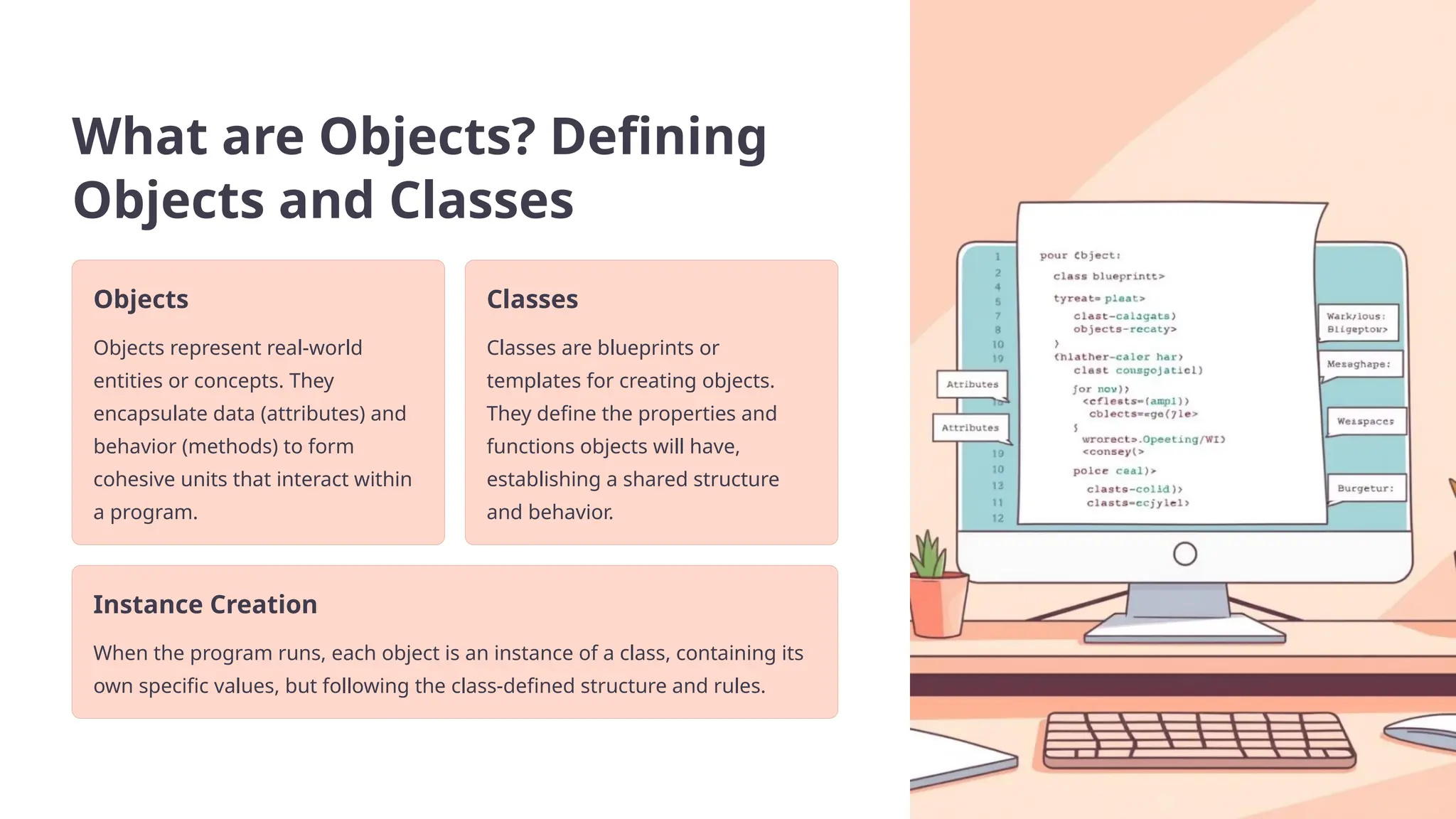
What are Objects? Defining
Objects and Classes
Objects
Objects represent real-world
entities or concepts. They
encapsulate data (attributes) and
behavior (methods) to form
cohesive units that interact within
a program.
Classes
Classes are blueprints or
templates for creating objects.
They define the properties and
functions objects will have,
establishing a shared structure
and behavior.
Instance Creation
When the program runs, each object is an instance of a class, containing its
own specific values, but following the class-defined structure and rules.
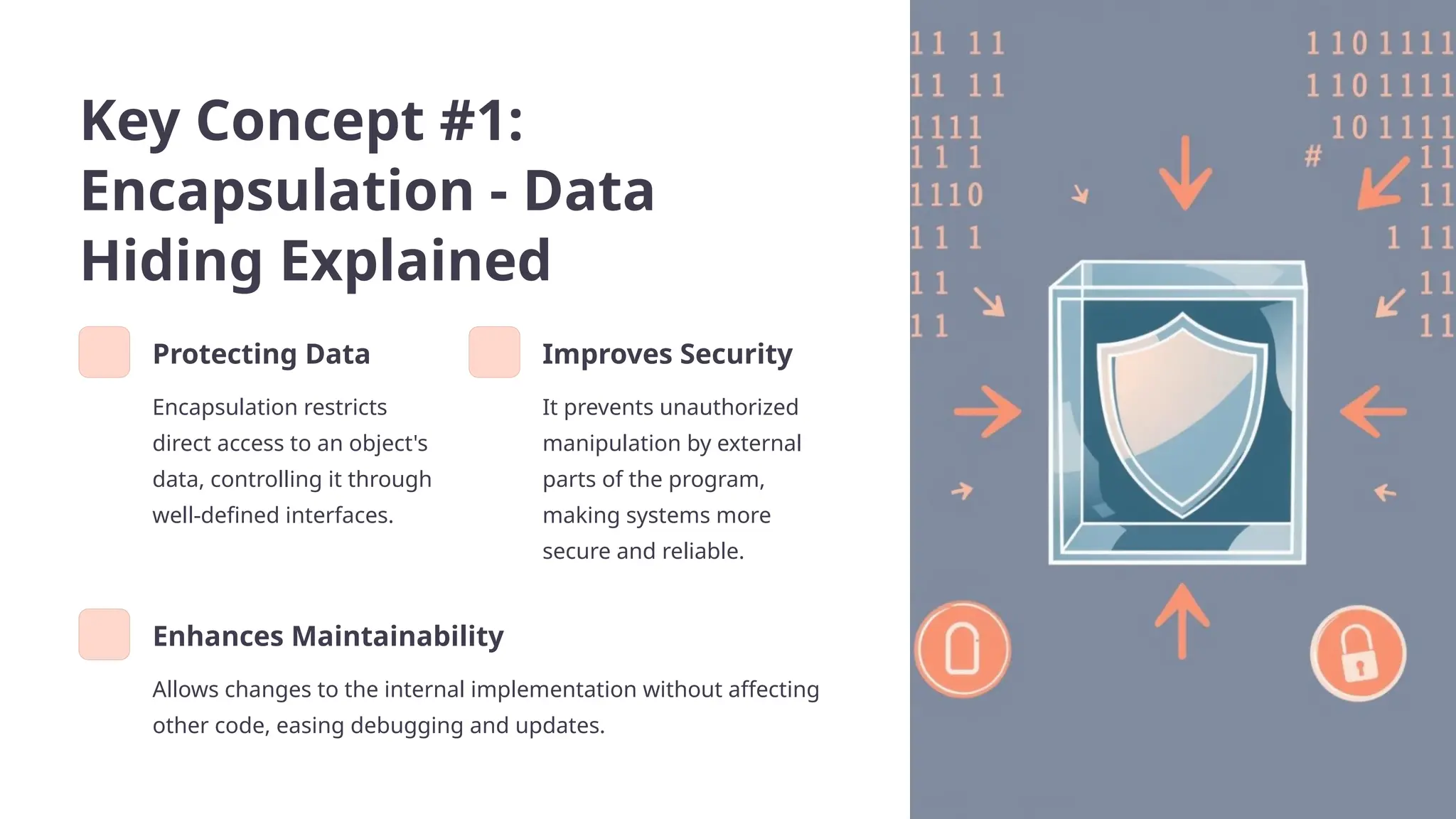
Key Concept #1:
Encapsulation - Data
Hiding Explained
Protecting Data
Encapsulation restricts
direct access to an object's
data, controlling it through
well-defined interfaces.
Improves Security
It prevents unauthorized
manipulation by external
parts of the program,
making systems more
secure and reliable.
Enhances Maintainability
Allows changes to the internal implementation without affecting
other code, easing debugging and updates.
Key Concept #2: Inheritance - Building Upon
Existing Code
Definition
Inheritance enables new classes to
acquire properties and behaviors of
existing classes, promoting code
reuse.
Parent and Child Classes
The parent class (superclass) provides
common functionality, while child
classes (subclasses) add or override
features.
Benefits
It reduces duplication, allowing
developers to build upon tested,
existing code structures efficiently.
Key Concept #3:
Polymorphism - Many
Forms, One Function
Method Overloading
Same method name, different parameters within one class, enabling
flexibility.
Method Overriding
Subclasses provide their own implementation of a method defined in
the parent class.
Interface Polymorphism
Different classes implement the same interface, allowing
interchangeable object usage.
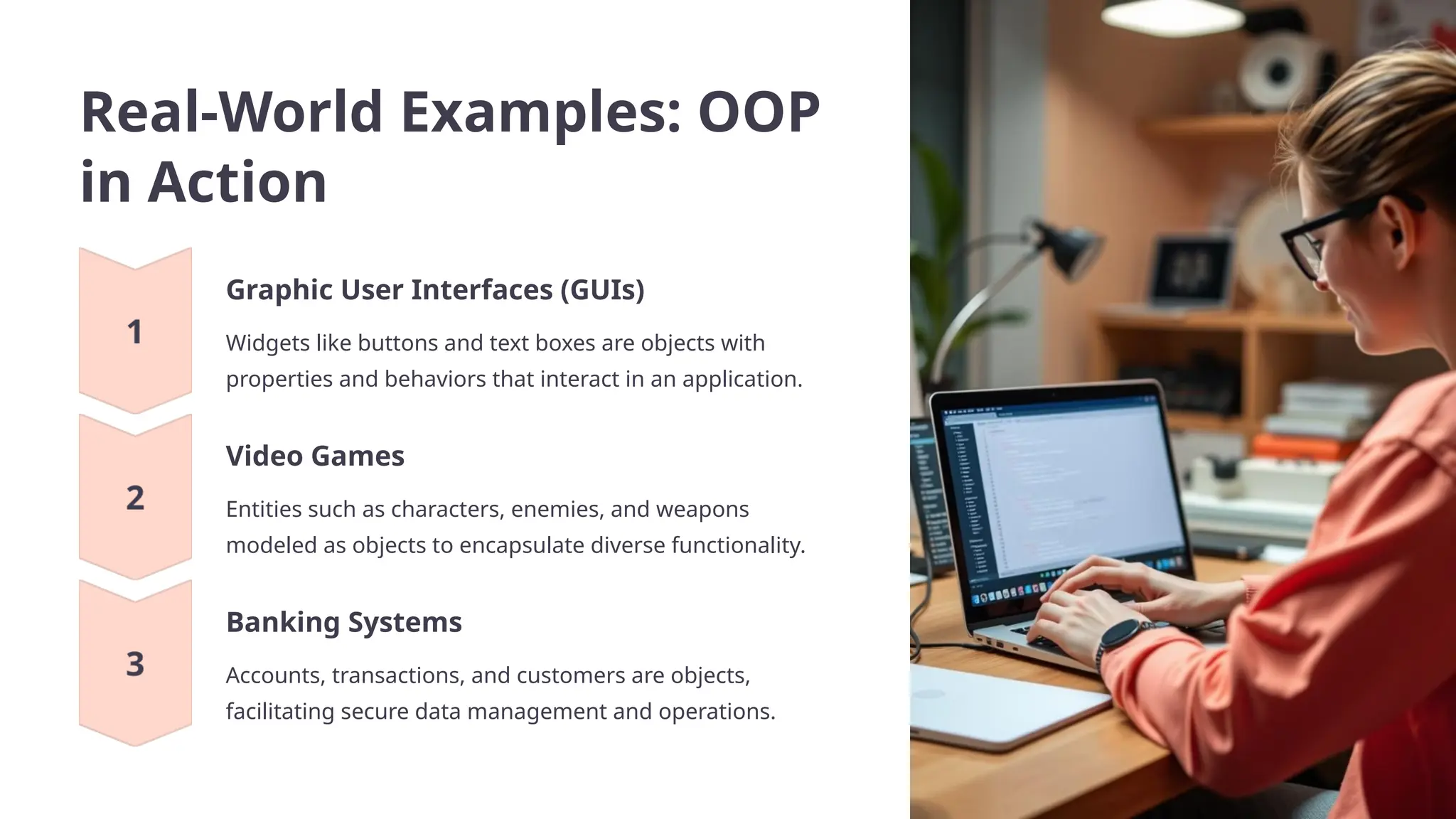
Real-World Examples: OOP
in Action
Graphic User Interfaces (GUIs)
Widgets like buttons and text boxes are objects with
properties and behaviors that interact in an application.
Video Games
Entities such as characters, enemies, and weapons
modeled as objects to encapsulate diverse functionality.
Banking Systems
Accounts, transactions, and customers are objects,
facilitating secure data management and operations.
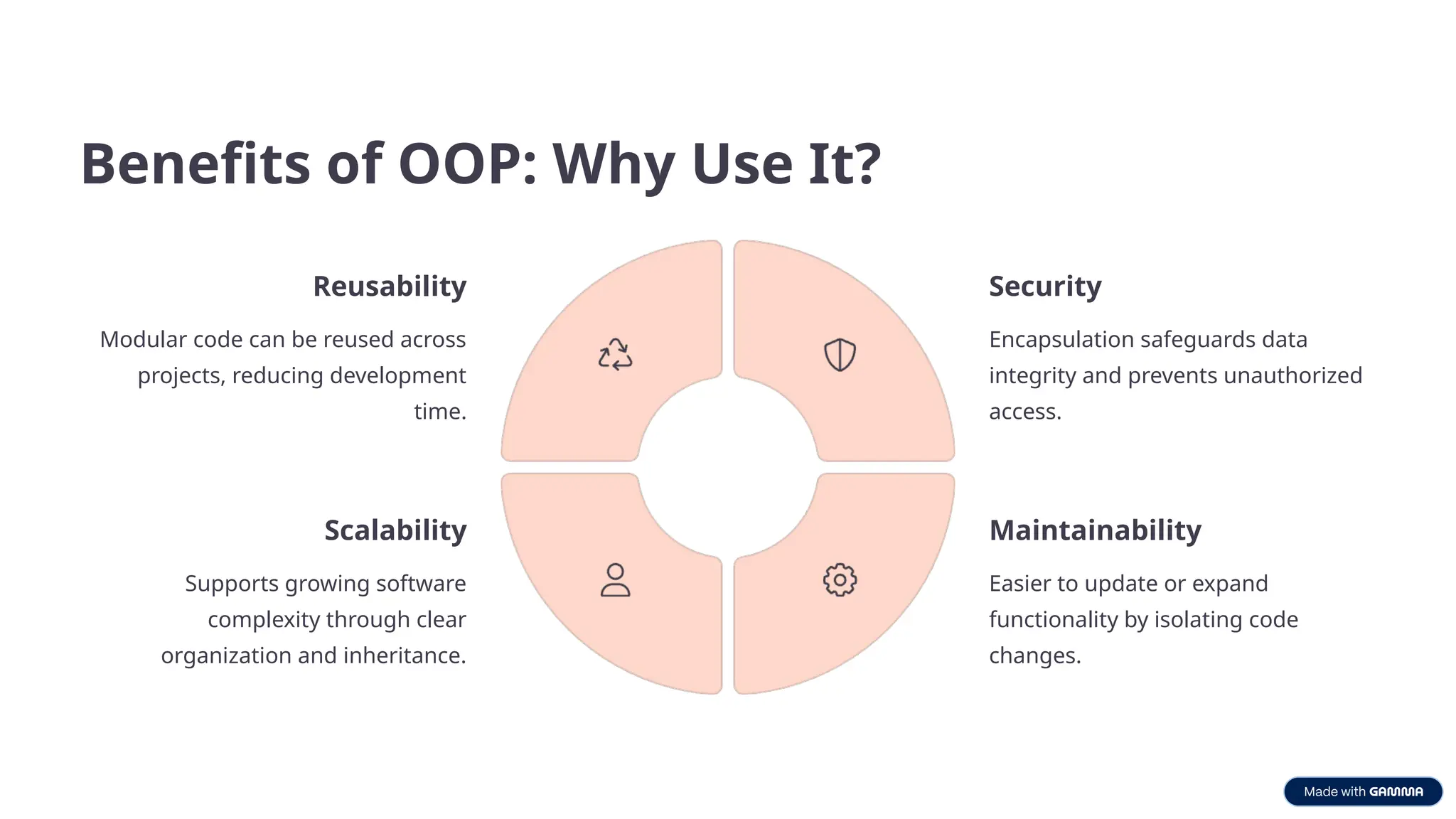
Benefits of OOP: Why Use It?
Reusability
Modular code can be reused across
projects, reducing development
time.
Security
Encapsulation safeguards data
integrity and prevents unauthorized
access.
Maintainability
Easier to update or expand
functionality by isolating code
changes.
Scalability
Supports growing software
complexity through clear
organization and inheritance.
Jagrithi nishad oops bca 2nd sem 21.pptx

Jagrithi nishad oops bca 2nd sem 21.pptx

  • 1.
    Object-Oriented Programming: A Clear Introduction Object-OrientedProgramming (OOP) is a foundational programming paradigm that organizes software design around data, or objects, rather than functions and logic alone. It brings structure and flexibility by modeling real-world entities as objects with attributes and behaviors. This presentation will explore the core concepts of OOP—objects, classes, encapsulation, inheritance, and polymorphism—equipping you with a clear understanding of how this approach fosters modular, reusable, and maintainable code. By Jagrithi Nishad
  • 2.
    What are Objects?Defining Objects and Classes Objects Objects represent real-world entities or concepts. They encapsulate data (attributes) and behavior (methods) to form cohesive units that interact within a program. Classes Classes are blueprints or templates for creating objects. They define the properties and functions objects will have, establishing a shared structure and behavior. Instance Creation When the program runs, each object is an instance of a class, containing its own specific values, but following the class-defined structure and rules.
  • 3.
    Key Concept #1: Encapsulation- Data Hiding Explained Protecting Data Encapsulation restricts direct access to an object's data, controlling it through well-defined interfaces. Improves Security It prevents unauthorized manipulation by external parts of the program, making systems more secure and reliable. Enhances Maintainability Allows changes to the internal implementation without affecting other code, easing debugging and updates.
  • 4.
    Key Concept #2:Inheritance - Building Upon Existing Code Definition Inheritance enables new classes to acquire properties and behaviors of existing classes, promoting code reuse. Parent and Child Classes The parent class (superclass) provides common functionality, while child classes (subclasses) add or override features. Benefits It reduces duplication, allowing developers to build upon tested, existing code structures efficiently.
  • 5.
    Key Concept #3: Polymorphism- Many Forms, One Function Method Overloading Same method name, different parameters within one class, enabling flexibility. Method Overriding Subclasses provide their own implementation of a method defined in the parent class. Interface Polymorphism Different classes implement the same interface, allowing interchangeable object usage.
  • 6.
    Real-World Examples: OOP inAction Graphic User Interfaces (GUIs) Widgets like buttons and text boxes are objects with properties and behaviors that interact in an application. Video Games Entities such as characters, enemies, and weapons modeled as objects to encapsulate diverse functionality. Banking Systems Accounts, transactions, and customers are objects, facilitating secure data management and operations.
  • 7.
    Benefits of OOP:Why Use It? Reusability Modular code can be reused across projects, reducing development time. Security Encapsulation safeguards data integrity and prevents unauthorized access. Maintainability Easier to update or expand functionality by isolating code changes. Scalability Supports growing software complexity through clear organization and inheritance.
Editor's Notes

  • #1 By Jagrithi Nishad