ISO 10993
• The primary aim of ISO 10993 is the protection of
humans from potential biological risks arising from the
use of medical devices.
ISO 10993 consists of the following parts, under the general title Biological evaluation of medical devices:
Evaluation and testing within a risk management process
 Animal welfare requirements.
 Tests for genotoxicity, carcinogenicity and reproductive toxicity.
 Selection of tests for interactions with blood.
 Tests for in vitro cytotoxicity.
 Tests for local effects after implantation.
 Ethylene oxide sterilization residuals.
 Framework for identification and quantification of potential degradation products.
 Tests for irritation and skin sensitization.
 Tests for systemic toxicity.
 Sample preparation and reference materials.
 Identification and quantification of degradation products from polymeric medical devices, Ceramics, Metals and
alloys.
 Toxicokinetic study design for degradation products and leachable.
 Establishment of allowable limits for leachable substances.
 Chemical characterization of materials.
 Physico-chemical, morphological and topographical characterization of materials. (Technical Specification)
 Principles and methods for immunotoxicology testing of medical devices (Technical Specification) Future parts
will deal with other relevant aspects of biological evaluation.
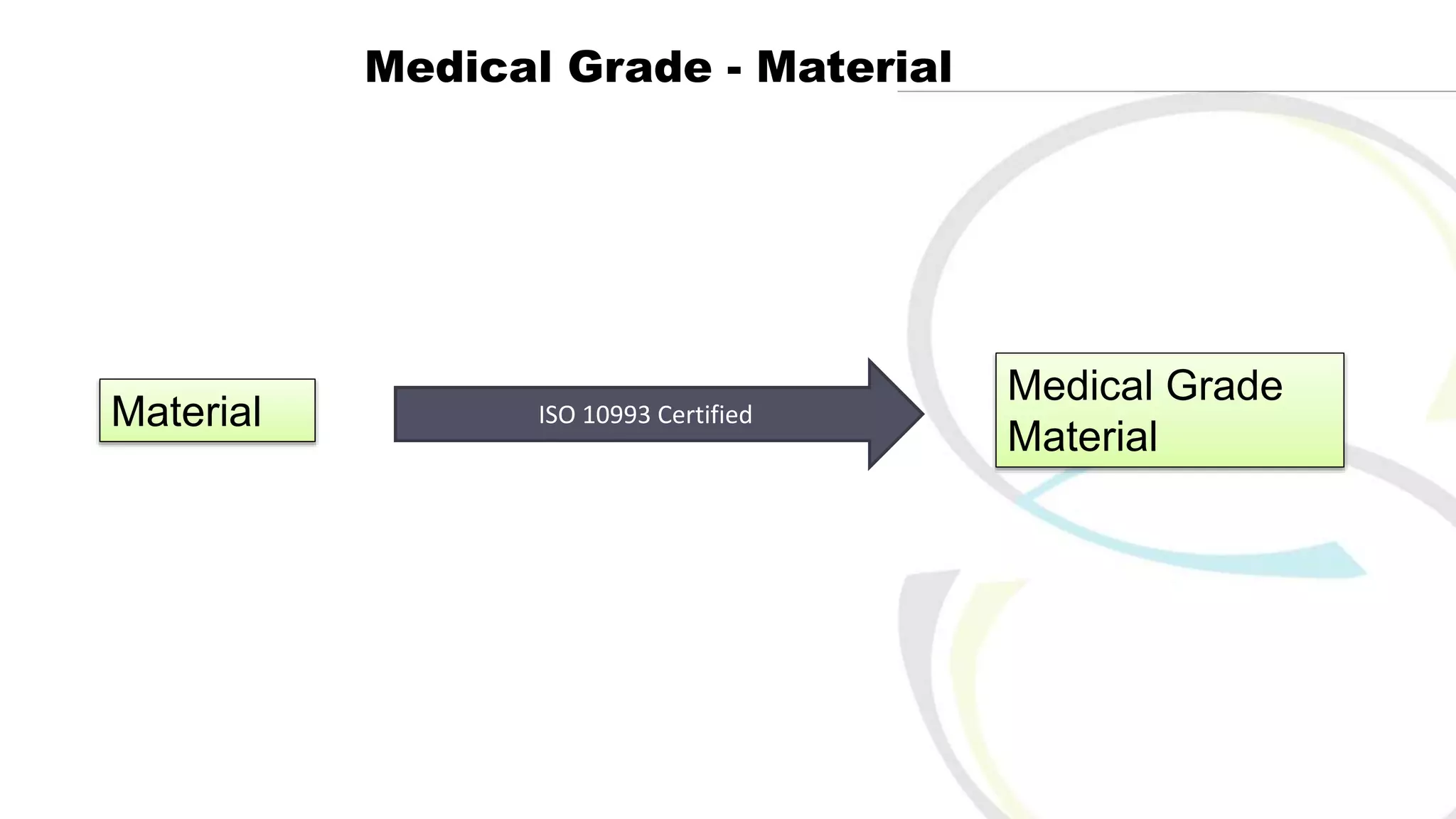
Medical Grade - Material
Material
Medical Grade
Material
ISO 10993 Certified
 During the selection of materials to be used in Medical device
manufacture, the first consideration shall be fitness for purpose
with regard to characteristics and properties of the material, which
include chemical, toxicological, physical, electrical, morphological
and mechanical properties.
 Create a Biological Evaluation Report including all materials used in
device.
How to get ISO
10993-1 certified?
Biological Evaluation Report
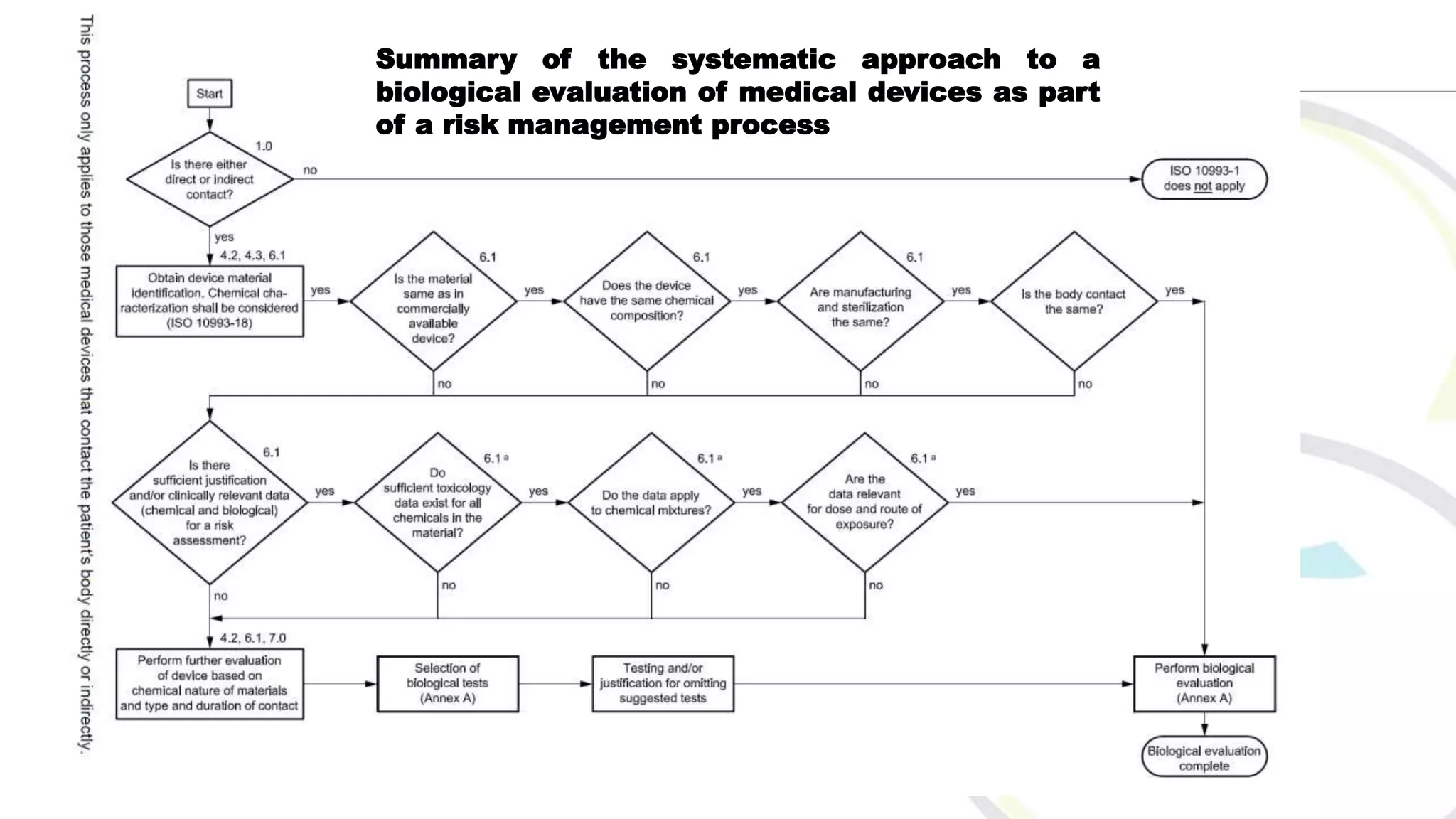
Summary of the systematic approach to a
biological evaluation of medical devices as part
of a risk management process
Iso 10993 1

Iso 10993 1

  • 1.
    ISO 10993 • Theprimary aim of ISO 10993 is the protection of humans from potential biological risks arising from the use of medical devices.
  • 2.
    ISO 10993 consistsof the following parts, under the general title Biological evaluation of medical devices: Evaluation and testing within a risk management process  Animal welfare requirements.  Tests for genotoxicity, carcinogenicity and reproductive toxicity.  Selection of tests for interactions with blood.  Tests for in vitro cytotoxicity.  Tests for local effects after implantation.  Ethylene oxide sterilization residuals.  Framework for identification and quantification of potential degradation products.  Tests for irritation and skin sensitization.  Tests for systemic toxicity.  Sample preparation and reference materials.  Identification and quantification of degradation products from polymeric medical devices, Ceramics, Metals and alloys.  Toxicokinetic study design for degradation products and leachable.  Establishment of allowable limits for leachable substances.  Chemical characterization of materials.  Physico-chemical, morphological and topographical characterization of materials. (Technical Specification)  Principles and methods for immunotoxicology testing of medical devices (Technical Specification) Future parts will deal with other relevant aspects of biological evaluation.
  • 3.
    Medical Grade -Material Material Medical Grade Material ISO 10993 Certified
  • 4.
     During theselection of materials to be used in Medical device manufacture, the first consideration shall be fitness for purpose with regard to characteristics and properties of the material, which include chemical, toxicological, physical, electrical, morphological and mechanical properties.  Create a Biological Evaluation Report including all materials used in device. How to get ISO 10993-1 certified? Biological Evaluation Report
  • 5.
    Summary of thesystematic approach to a biological evaluation of medical devices as part of a risk management process