THANS 4 WATCHNG!!!!!!!!!!!!!!!
Was born around 563 BC and died around 483 BC Was born in northern India near the Himalayas Siddhartha was a prince who lived in luxury for the beginning of his life, and was a privileged child  Before the age of 30, he left home to look for the answers he wanted. Finally Siddhartha started to meditate to release stress When he was about 35, he was called the Buddha  He then taught what he believed all around India for the rest of his life. He was in the warrior  caste, or the  Kyshatriya caste.
The Four Noble Truths were 4 guiding principals to Buddhism .  The Four Noble Truths were: 1)Suffering and unhappiness are a part of human life. No one can escape sorrow. 2)Suffering comes from our desires for pleasure and material things. 3)People can overcome desire and ignorance and reach nirvana, or a state of perfect peace.  4)People can overcome ignorance and desire by following an eightfold path that leads to wisdom, enlightenment, and salvation.
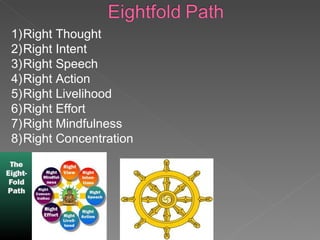
Right Thought Right Intent Right Speech Right Action Right Livelihood Right Effort Right Mindfulness Right Concentration
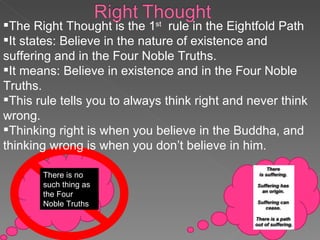
There is no such thing as the Four Noble Truths The Right Thought is the 1 st   rule in the Eightfold Path It states: Believe in the nature of existence and suffering and in the Four Noble Truths. It means: Believe in existence and in the Four Noble Truths. This rule tells you to always think right and never think wrong.  Thinking right is when you believe in the Buddha, and thinking wrong is when you don’t believe in him.
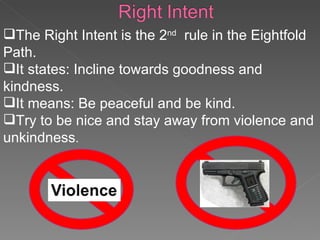
The Right Intent is the 2 nd   rule in the Eightfold Path.  It states: Incline towards goodness and kindness. It means: Be peaceful and be kind. Try to be nice and stay away from violence and unkindness .
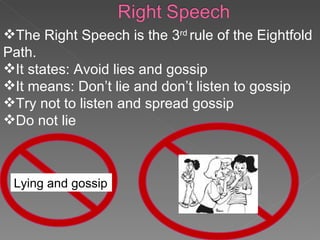
The Right Speech is the 3 rd  rule of the Eightfold Path. It states: Avoid lies and gossip It means: Don’t lie and don’t listen to gossip Try not to listen and spread gossip Do not lie Lying   and gossip
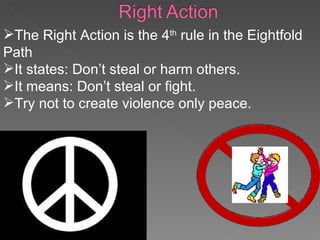
The Right Action is the 4 th  rule in the Eightfold Path It states: Don’t steal or harm others. It means: Don’t steal or fight. Try not to create violence only peace.
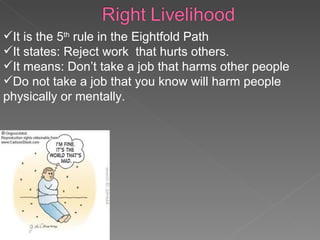
It is the 5 th  rule in the Eightfold Path It states: Reject work  that hurts others. It means: Don’t take a job that harms other people Do not take a job that you know will harm people physically or mentally.
It is the 6 th  rule in the Eightfold Path It states: Prevent evil and do good. It means: Do good instead of evil. Try not to do evil things, prevent them and you will do good instead.
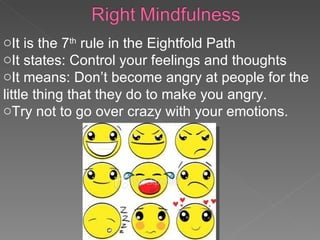
It is the 7 th  rule in the Eightfold Path It states: Control your feelings and thoughts It means: Don’t become angry at people for the little thing that they do to make you angry. Try not to go over crazy with your emotions.
It is the 8 th  and last rule of the Eightfold Path It states: Practice proper meditation. It means: The key to relaxing is having proper meditation, if you don’t have proper meditation, you will not release your stress.

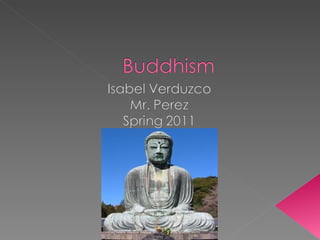
Isabel verduzco buddhism1

  • 1.
  • 2.
  • 3.
    Was born around563 BC and died around 483 BC Was born in northern India near the Himalayas Siddhartha was a prince who lived in luxury for the beginning of his life, and was a privileged child Before the age of 30, he left home to look for the answers he wanted. Finally Siddhartha started to meditate to release stress When he was about 35, he was called the Buddha He then taught what he believed all around India for the rest of his life. He was in the warrior caste, or the Kyshatriya caste.
  • 4.
    The Four NobleTruths were 4 guiding principals to Buddhism . The Four Noble Truths were: 1)Suffering and unhappiness are a part of human life. No one can escape sorrow. 2)Suffering comes from our desires for pleasure and material things. 3)People can overcome desire and ignorance and reach nirvana, or a state of perfect peace. 4)People can overcome ignorance and desire by following an eightfold path that leads to wisdom, enlightenment, and salvation.
  • 5.
    Right Thought RightIntent Right Speech Right Action Right Livelihood Right Effort Right Mindfulness Right Concentration
  • 6.
    There is nosuch thing as the Four Noble Truths The Right Thought is the 1 st rule in the Eightfold Path It states: Believe in the nature of existence and suffering and in the Four Noble Truths. It means: Believe in existence and in the Four Noble Truths. This rule tells you to always think right and never think wrong. Thinking right is when you believe in the Buddha, and thinking wrong is when you don’t believe in him.
  • 7.
    The Right Intentis the 2 nd rule in the Eightfold Path. It states: Incline towards goodness and kindness. It means: Be peaceful and be kind. Try to be nice and stay away from violence and unkindness .
  • 8.
    The Right Speechis the 3 rd rule of the Eightfold Path. It states: Avoid lies and gossip It means: Don’t lie and don’t listen to gossip Try not to listen and spread gossip Do not lie Lying and gossip
  • 9.
    The Right Actionis the 4 th rule in the Eightfold Path It states: Don’t steal or harm others. It means: Don’t steal or fight. Try not to create violence only peace.
  • 10.
    It is the5 th rule in the Eightfold Path It states: Reject work that hurts others. It means: Don’t take a job that harms other people Do not take a job that you know will harm people physically or mentally.
  • 11.
    It is the6 th rule in the Eightfold Path It states: Prevent evil and do good. It means: Do good instead of evil. Try not to do evil things, prevent them and you will do good instead.
  • 12.
    It is the7 th rule in the Eightfold Path It states: Control your feelings and thoughts It means: Don’t become angry at people for the little thing that they do to make you angry. Try not to go over crazy with your emotions.
  • 13.
    It is the8 th and last rule of the Eightfold Path It states: Practice proper meditation. It means: The key to relaxing is having proper meditation, if you don’t have proper meditation, you will not release your stress.