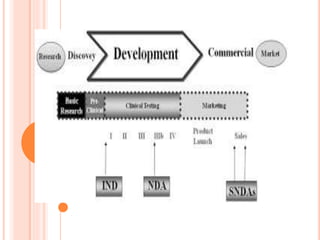
INVESTIGATIONAL NEW DRUG
(IND)
DEFINITION:
The Code of Federal Regulations (CFR)
defines an investigational new drug as:
"...a new drug or biological drug that is used in
a clinical investigation."
In the U.S. Food and Drug Administration
(FDA) regulations, an investigational new
drug is any substance (such as a drug, vaccine
or other biological product) for which FDA
approval is being sought.
IMPORTENCE OF IND:
An IND is required any time to conduct a clinical trials of an
unapproved drug.
An IND would be required to conduct to clinical trials if drug is
 A new chemical entity,
Being administrated at a new dosage level,
In combination with another drug & the combination is not approed.
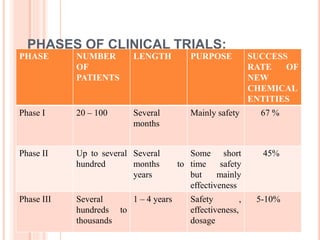
PHASES OF CLINICAL TRIALS:
PHASE NUMBER
OF
PATIENTS
LENGTH PURPOSE SUCCESS
RATE OF
NEW
CHEMICAL
ENTITIES
Phase I 20 – 100 Several
months
Mainly safety 67 %
Phase II Up to several
hundred
Several
months to
years
Some short
time safety
but mainly
effectiveness
45%
Phase III Several
hundreds to
thousands
1 – 4 years Safety ,
effectiveness,
dosage
5-10%
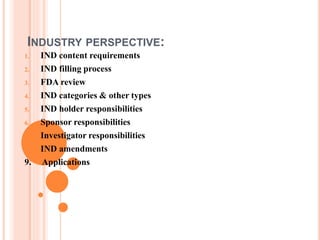
INDUSTRY PERSPECTIVE:
1. IND content requirements
2. IND filling process
3. FDA review
4. IND categories & other types
5. IND holder responsibilities
6. Sponsor responsibilities
7. Investigator responsibilities
8. IND amendments
9. Applications
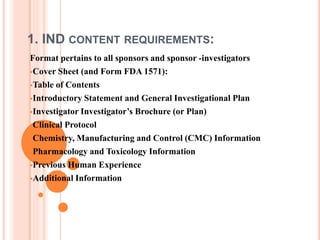
1. IND CONTENT REQUIREMENTS:
Format pertains to all sponsors and sponsor -investigators
Cover Sheet (and Form FDA 1571):
Table of Contents
Introductory Statement and General Investigational Plan
Investigator Investigator’s Brochure (or Plan)
Clinical Protocol
Chemistry, Manufacturing and Control (CMC) Information
Pharmacology and Toxicology Information
Previous Human Experience
Additional Information
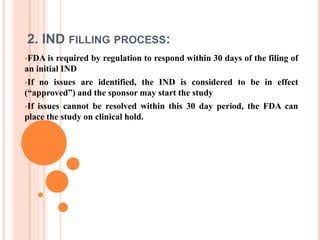
2. IND FILLING PROCESS:
FDA is required by regulation to respond within 30 days of the filing of
an initial IND
If no issues are identified, the IND is considered to be in effect
(“approved”) and the sponsor may start the study
If issues cannot be resolved within this 30 day period, the FDA can
place the study on clinical hold.
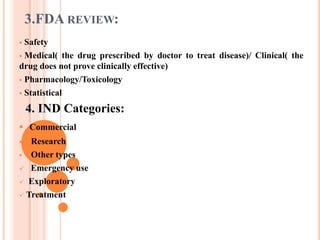
3.FDA REVIEW:
 Safety
 Medical( the drug prescribed by doctor to treat disease)/ Clinical( the
drug does not prove clinically effective)
 Pharmacology/Toxicology
 Statistical
4. IND Categories:
 Commercial
 Research
 Other types
 Emergency use
 Exploratory
 Treatment
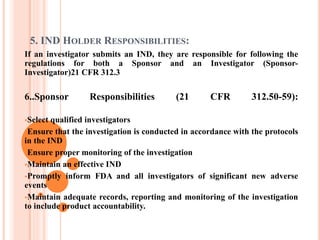
5. IND HOLDER RESPONSIBILITIES:
If an investigator submits an IND, they are responsible for following the
regulations for both a Sponsor and an Investigator (Sponsor-
Investigator)21 CFR 312.3
6..Sponsor Responsibilities (21 CFR 312.50-59):
Select qualified investigators
Ensure that the investigation is conducted in accordance with the protocols
in the IND
Ensure proper monitoring of the investigation
Maintain an effective IND
Promptly inform FDA and all investigators of significant new adverse
events
Maintain adequate records, reporting and monitoring of the investigation
to include product accountability.
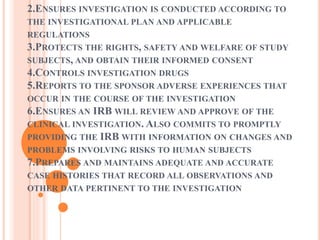
2.ENSURES INVESTIGATION IS CONDUCTED ACCORDING TO
THE INVESTIGATIONAL PLAN AND APPLICABLE
REGULATIONS
3.PROTECTS THE RIGHTS, SAFETY AND WELFARE OF STUDY
SUBJECTS, AND OBTAIN THEIR INFORMED CONSENT
4.CONTROLS INVESTIGATION DRUGS
5.REPORTS TO THE SPONSOR ADVERSE EXPERIENCES THAT
OCCUR IN THE COURSE OF THE INVESTIGATION
6.ENSURES AN IRB WILL REVIEW AND APPROVE OF THE
CLINICAL INVESTIGATION. ALSO COMMITS TO PROMPTLY
PROVIDING THE IRB WITH INFORMATION ON CHANGES AND
PROBLEMS INVOLVING RISKS TO HUMAN SUBJECTS
7.PREPARES AND MAINTAINS ADEQUATE AND ACCURATE
CASE HISTORIES THAT RECORD ALL OBSERVATIONS AND
OTHER DATA PERTINENT TO THE INVESTIGATION
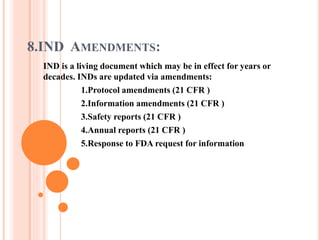
8.IND AMENDMENTS:
IND is a living document which may be in effect for years or
decades. INDs are updated via amendments:
1.Protocol amendments (21 CFR )
2.Information amendments (21 CFR )
3.Safety reports (21 CFR )
4.Annual reports (21 CFR )
5.Response to FDA request for information
APPLICATIONS OF IND:
 FDA's role in the development of a new drug begins when the drug's
sponsor has screened the new molecule for pharmacological activity
and acute toxicity potential in animals, wants to test its diagnostic
therapeutic potential in humans.
 The molecule changes in legal status under the Federal Food, Drug,
and Cosmetic Act and becomes a new drug subject to specific
requirements of the drug regulatory system.
 Drug is to be the subjected to an approved marketing application
before it is transported or distributed across state lines.
 IND- notice of claimed investigational exemption for a new drug
must be filed with regulatory body.
Investigational new drug

Investigational new drug

  • 1.
  • 2.
    DEFINITION: The Code ofFederal Regulations (CFR) defines an investigational new drug as: "...a new drug or biological drug that is used in a clinical investigation." In the U.S. Food and Drug Administration (FDA) regulations, an investigational new drug is any substance (such as a drug, vaccine or other biological product) for which FDA approval is being sought.
  • 4.
    IMPORTENCE OF IND: AnIND is required any time to conduct a clinical trials of an unapproved drug. An IND would be required to conduct to clinical trials if drug is  A new chemical entity, Being administrated at a new dosage level, In combination with another drug & the combination is not approed.
  • 5.
    PHASES OF CLINICALTRIALS: PHASE NUMBER OF PATIENTS LENGTH PURPOSE SUCCESS RATE OF NEW CHEMICAL ENTITIES Phase I 20 – 100 Several months Mainly safety 67 % Phase II Up to several hundred Several months to years Some short time safety but mainly effectiveness 45% Phase III Several hundreds to thousands 1 – 4 years Safety , effectiveness, dosage 5-10%
  • 6.
    INDUSTRY PERSPECTIVE: 1. INDcontent requirements 2. IND filling process 3. FDA review 4. IND categories & other types 5. IND holder responsibilities 6. Sponsor responsibilities 7. Investigator responsibilities 8. IND amendments 9. Applications
  • 7.
    1. IND CONTENTREQUIREMENTS: Format pertains to all sponsors and sponsor -investigators Cover Sheet (and Form FDA 1571): Table of Contents Introductory Statement and General Investigational Plan Investigator Investigator’s Brochure (or Plan) Clinical Protocol Chemistry, Manufacturing and Control (CMC) Information Pharmacology and Toxicology Information Previous Human Experience Additional Information
  • 8.
    2. IND FILLINGPROCESS: FDA is required by regulation to respond within 30 days of the filing of an initial IND If no issues are identified, the IND is considered to be in effect (“approved”) and the sponsor may start the study If issues cannot be resolved within this 30 day period, the FDA can place the study on clinical hold.
  • 9.
    3.FDA REVIEW:  Safety Medical( the drug prescribed by doctor to treat disease)/ Clinical( the drug does not prove clinically effective)  Pharmacology/Toxicology  Statistical 4. IND Categories:  Commercial  Research  Other types  Emergency use  Exploratory  Treatment
  • 10.
    5. IND HOLDERRESPONSIBILITIES: If an investigator submits an IND, they are responsible for following the regulations for both a Sponsor and an Investigator (Sponsor- Investigator)21 CFR 312.3 6..Sponsor Responsibilities (21 CFR 312.50-59): Select qualified investigators Ensure that the investigation is conducted in accordance with the protocols in the IND Ensure proper monitoring of the investigation Maintain an effective IND Promptly inform FDA and all investigators of significant new adverse events Maintain adequate records, reporting and monitoring of the investigation to include product accountability.
  • 11.
    2.ENSURES INVESTIGATION ISCONDUCTED ACCORDING TO THE INVESTIGATIONAL PLAN AND APPLICABLE REGULATIONS 3.PROTECTS THE RIGHTS, SAFETY AND WELFARE OF STUDY SUBJECTS, AND OBTAIN THEIR INFORMED CONSENT 4.CONTROLS INVESTIGATION DRUGS 5.REPORTS TO THE SPONSOR ADVERSE EXPERIENCES THAT OCCUR IN THE COURSE OF THE INVESTIGATION 6.ENSURES AN IRB WILL REVIEW AND APPROVE OF THE CLINICAL INVESTIGATION. ALSO COMMITS TO PROMPTLY PROVIDING THE IRB WITH INFORMATION ON CHANGES AND PROBLEMS INVOLVING RISKS TO HUMAN SUBJECTS 7.PREPARES AND MAINTAINS ADEQUATE AND ACCURATE CASE HISTORIES THAT RECORD ALL OBSERVATIONS AND OTHER DATA PERTINENT TO THE INVESTIGATION
  • 12.
    8.IND AMENDMENTS: IND isa living document which may be in effect for years or decades. INDs are updated via amendments: 1.Protocol amendments (21 CFR ) 2.Information amendments (21 CFR ) 3.Safety reports (21 CFR ) 4.Annual reports (21 CFR ) 5.Response to FDA request for information
  • 14.
    APPLICATIONS OF IND: FDA's role in the development of a new drug begins when the drug's sponsor has screened the new molecule for pharmacological activity and acute toxicity potential in animals, wants to test its diagnostic therapeutic potential in humans.  The molecule changes in legal status under the Federal Food, Drug, and Cosmetic Act and becomes a new drug subject to specific requirements of the drug regulatory system.  Drug is to be the subjected to an approved marketing application before it is transported or distributed across state lines.  IND- notice of claimed investigational exemption for a new drug must be filed with regulatory body.