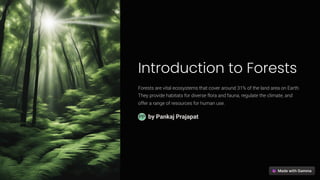
Introduction to Forests
Forests are vital ecosystems that cover around 31% of the land area on Earth.
They provide habitats for diverse flora and fauna, regulate the climate, and
offer a range of resources for human use.
by Pankaj Prajapat
PP
Types of Forests
Tropical Rainforests
Tropical rainforests are
characterized by high rainfall
and dense vegetation, hosting a
wide variety of unique plant and
animal species.
Temperate Forests
Temperate forests experience
distinct seasons and are home
to a diverse range of deciduous
and coniferous trees.
Boreal Forests
Boreal forests, also known as
taiga, are primarily composed of
coniferous trees and are found
in colder northern regions.
Importance of Forests
1 Biodiversity
Hotspots
Forests support an
incredible diversity of plant
and animal species,
contributing to global
biodiversity.
2 Carbon
Sequestration
Forests play a crucial role
in absorbing and storing
carbon dioxide, mitigating
the impacts of climate
change.
3 Resource Provision
Forests supply timber,
medicinal plants, food, and
other resources essential
for human well-being.
Forest Ecosystems
Diversity Forests harbor a wide array of habitats and
ecological niches, supporting a complex web of
life.
Interconnectedness Plants, animals, and microorganisms within
forest ecosystems depend on each other in
intricate and interdependent ways.
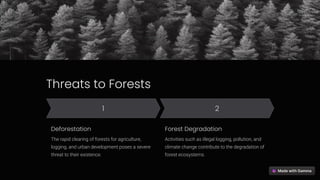
Threats to Forests
1
Deforestation
The rapid clearing of forests for agriculture,
logging, and urban development poses a severe
threat to their existence.
2
Forest Degradation
Activities such as illegal logging, pollution, and
climate change contribute to the degradation of
forest ecosystems.
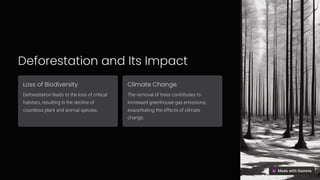
Deforestation and Its Impact
Loss of Biodiversity
Deforestation leads to the loss of critical
habitats, resulting in the decline of
countless plant and animal species.
Climate Change
The removal of trees contributes to
increased greenhouse gas emissions,
exacerbating the effects of climate
change.
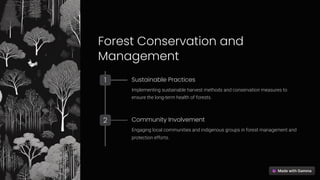
Forest Conservation and
Management
1 Sustainable Practices
Implementing sustainable harvest methods and conservation measures to
ensure the long-term health of forests.
2 Community Involvement
Engaging local communities and indigenous groups in forest management and
protection efforts.
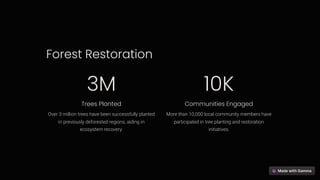
Forest Restoration
3M
Trees Planted
Over 3 million trees have been successfully planted
in previously deforested regions, aiding in
ecosystem recovery.
10K
Communities Engaged
More than 10,000 local community members have
participated in tree planting and restoration
initiatives.
Forest Products and Their Uses
Timber
Forests provide valuable
resources like timber, used in
construction, furniture-making,
and various other applications.
Medicinal Plants
Many forests harbor medicinal
herbs and plants, which are
used for traditional and modern
healthcare purposes.
Wild Fruits
Forest ecosystems offer a
plethora of wild fruits and nuts,
providing sustenance and
nutrition for both wildlife and
humans.
Conclusion and Call to
Action
It's essential to recognize the irreplaceable value of forests and take
collective action to preserve, restore, and responsibly manage these crucial
ecosystems for the well-being of current and future generations.

Introduction-to-Forests and their importance

  • 1.
    Introduction to Forests Forestsare vital ecosystems that cover around 31% of the land area on Earth. They provide habitats for diverse flora and fauna, regulate the climate, and offer a range of resources for human use. by Pankaj Prajapat PP
  • 2.
    Types of Forests TropicalRainforests Tropical rainforests are characterized by high rainfall and dense vegetation, hosting a wide variety of unique plant and animal species. Temperate Forests Temperate forests experience distinct seasons and are home to a diverse range of deciduous and coniferous trees. Boreal Forests Boreal forests, also known as taiga, are primarily composed of coniferous trees and are found in colder northern regions.
  • 3.
    Importance of Forests 1Biodiversity Hotspots Forests support an incredible diversity of plant and animal species, contributing to global biodiversity. 2 Carbon Sequestration Forests play a crucial role in absorbing and storing carbon dioxide, mitigating the impacts of climate change. 3 Resource Provision Forests supply timber, medicinal plants, food, and other resources essential for human well-being.
  • 4.
    Forest Ecosystems Diversity Forestsharbor a wide array of habitats and ecological niches, supporting a complex web of life. Interconnectedness Plants, animals, and microorganisms within forest ecosystems depend on each other in intricate and interdependent ways.
  • 5.
    Threats to Forests 1 Deforestation Therapid clearing of forests for agriculture, logging, and urban development poses a severe threat to their existence. 2 Forest Degradation Activities such as illegal logging, pollution, and climate change contribute to the degradation of forest ecosystems.
  • 6.
    Deforestation and ItsImpact Loss of Biodiversity Deforestation leads to the loss of critical habitats, resulting in the decline of countless plant and animal species. Climate Change The removal of trees contributes to increased greenhouse gas emissions, exacerbating the effects of climate change.
  • 7.
    Forest Conservation and Management 1Sustainable Practices Implementing sustainable harvest methods and conservation measures to ensure the long-term health of forests. 2 Community Involvement Engaging local communities and indigenous groups in forest management and protection efforts.
  • 8.
    Forest Restoration 3M Trees Planted Over3 million trees have been successfully planted in previously deforested regions, aiding in ecosystem recovery. 10K Communities Engaged More than 10,000 local community members have participated in tree planting and restoration initiatives.
  • 9.
    Forest Products andTheir Uses Timber Forests provide valuable resources like timber, used in construction, furniture-making, and various other applications. Medicinal Plants Many forests harbor medicinal herbs and plants, which are used for traditional and modern healthcare purposes. Wild Fruits Forest ecosystems offer a plethora of wild fruits and nuts, providing sustenance and nutrition for both wildlife and humans.
  • 10.
    Conclusion and Callto Action It's essential to recognize the irreplaceable value of forests and take collective action to preserve, restore, and responsibly manage these crucial ecosystems for the well-being of current and future generations.