Introduction to Artificial
Intelligence
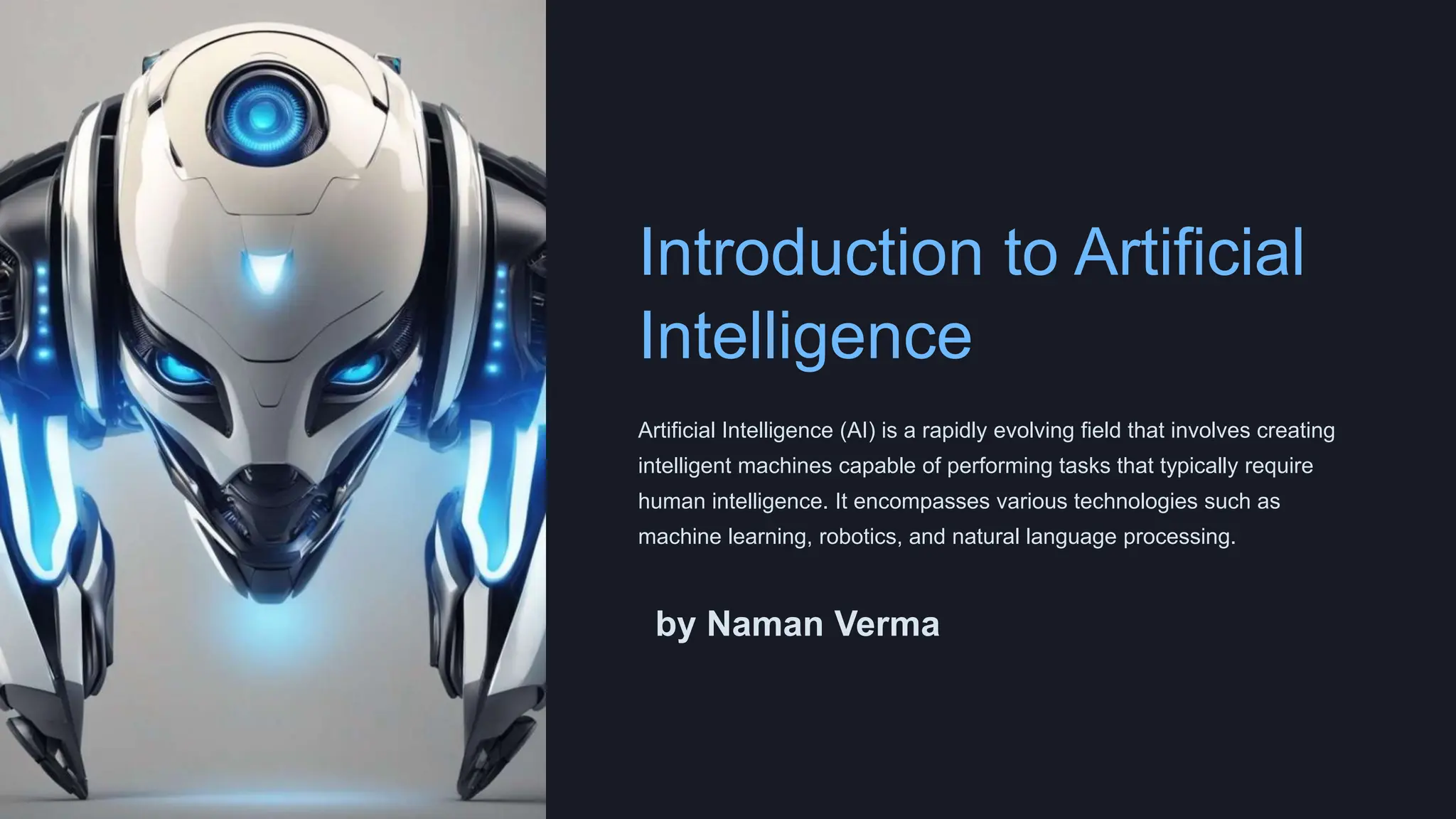
Artificial Intelligence (AI) is a rapidly evolving field that involves creating
intelligent machines capable of performing tasks that typically require
human intelligence. It encompasses various technologies such as
machine learning, robotics, and natural language processing.
by Naman Verma
Definition and Purpose of AI
1 Problem-Solving Abilities
AI aims to develop systems that can
analyze and interpret data, leading
to informed decision-making and
problem-solving capabilities.
2 Enhanced Automation
The primary purpose of AI is to
automate repetitive tasks, streamline
processes, and improve overall
operational efficiency.
3 Personalization and Adaptation
AI technologies strive to understand user behaviors and preferences, enabling
personalized interactions and adaptive experiences.
Advantages of AI
Increased Efficiency
AI systems enable
businesses to optimize
operations, minimize errors,
and enhance productivity
by automating complex
tasks.
Data-Driven Insights
AI algorithms analyze vast
datasets to uncover
valuable insights, facilitating
informed strategic decisions
based on predictive
analytics.
Enhanced Customer
Experience
By providing personalized
recommendations and
smooth interactions, AI
enhances customer
satisfaction and
engagement.
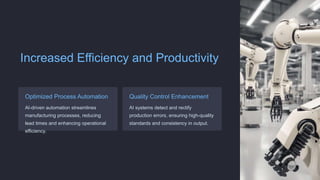
Increased Efficiency and Productivity
Optimized Process Automation
AI-driven automation streamlines
manufacturing processes, reducing
lead times and enhancing operational
efficiency.
Quality Control Enhancement
AI systems detect and rectify
production errors, ensuring high-quality
standards and consistency in output.
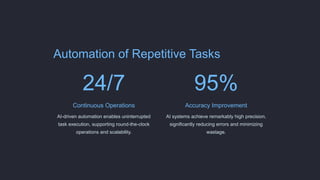
Automation of Repetitive Tasks
24/7
Continuous Operations
AI-driven automation enables uninterrupted
task execution, supporting round-the-clock
operations and scalability.
95%
Accuracy Improvement
AI systems achieve remarkably high precision,
significantly reducing errors and minimizing
wastage.
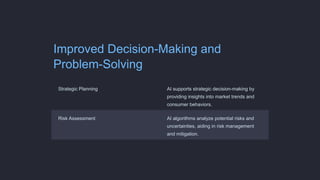
Improved Decision-Making and
Problem-Solving
Strategic Planning AI supports strategic decision-making by
providing insights into market trends and
consumer behaviors.
Risk Assessment AI algorithms analyze potential risks and
uncertainties, aiding in risk management
and mitigation.
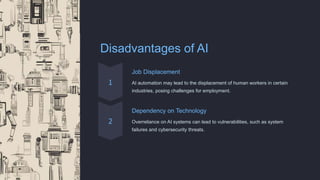
Disadvantages of AI
Job Displacement
AI automation may lead to the displacement of human workers in certain
industries, posing challenges for employment.
Dependency on Technology
Overreliance on AI systems can lead to vulnerabilities, such as system
failures and cybersecurity threats.
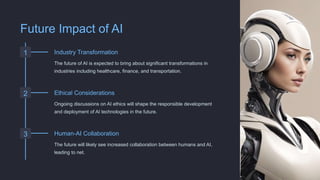
Future Impact of AI
1 Industry Transformation
The future of AI is expected to bring about significant transformations in
industries including healthcare, finance, and transportation.
2 Ethical Considerations
Ongoing discussions on AI ethics will shape the responsible development
and deployment of AI technologies in the future.
3 Human-AI Collaboration
The future will likely see increased collaboration between humans and AI,
leading to net.
THANK YOU

Introduction-to-Artificial-Intelligence.pptx

  • 1.
    Introduction to Artificial Intelligence ArtificialIntelligence (AI) is a rapidly evolving field that involves creating intelligent machines capable of performing tasks that typically require human intelligence. It encompasses various technologies such as machine learning, robotics, and natural language processing. by Naman Verma
  • 2.
    Definition and Purposeof AI 1 Problem-Solving Abilities AI aims to develop systems that can analyze and interpret data, leading to informed decision-making and problem-solving capabilities. 2 Enhanced Automation The primary purpose of AI is to automate repetitive tasks, streamline processes, and improve overall operational efficiency. 3 Personalization and Adaptation AI technologies strive to understand user behaviors and preferences, enabling personalized interactions and adaptive experiences.
  • 3.
    Advantages of AI IncreasedEfficiency AI systems enable businesses to optimize operations, minimize errors, and enhance productivity by automating complex tasks. Data-Driven Insights AI algorithms analyze vast datasets to uncover valuable insights, facilitating informed strategic decisions based on predictive analytics. Enhanced Customer Experience By providing personalized recommendations and smooth interactions, AI enhances customer satisfaction and engagement.
  • 4.
    Increased Efficiency andProductivity Optimized Process Automation AI-driven automation streamlines manufacturing processes, reducing lead times and enhancing operational efficiency. Quality Control Enhancement AI systems detect and rectify production errors, ensuring high-quality standards and consistency in output.
  • 5.
    Automation of RepetitiveTasks 24/7 Continuous Operations AI-driven automation enables uninterrupted task execution, supporting round-the-clock operations and scalability. 95% Accuracy Improvement AI systems achieve remarkably high precision, significantly reducing errors and minimizing wastage.
  • 6.
    Improved Decision-Making and Problem-Solving StrategicPlanning AI supports strategic decision-making by providing insights into market trends and consumer behaviors. Risk Assessment AI algorithms analyze potential risks and uncertainties, aiding in risk management and mitigation.
  • 7.
    Disadvantages of AI JobDisplacement AI automation may lead to the displacement of human workers in certain industries, posing challenges for employment. Dependency on Technology Overreliance on AI systems can lead to vulnerabilities, such as system failures and cybersecurity threats.
  • 8.
    Future Impact ofAI 1 Industry Transformation The future of AI is expected to bring about significant transformations in industries including healthcare, finance, and transportation. 2 Ethical Considerations Ongoing discussions on AI ethics will shape the responsible development and deployment of AI technologies in the future. 3 Human-AI Collaboration The future will likely see increased collaboration between humans and AI, leading to net.
  • 9.