Introduction to
Artificial Intelligence
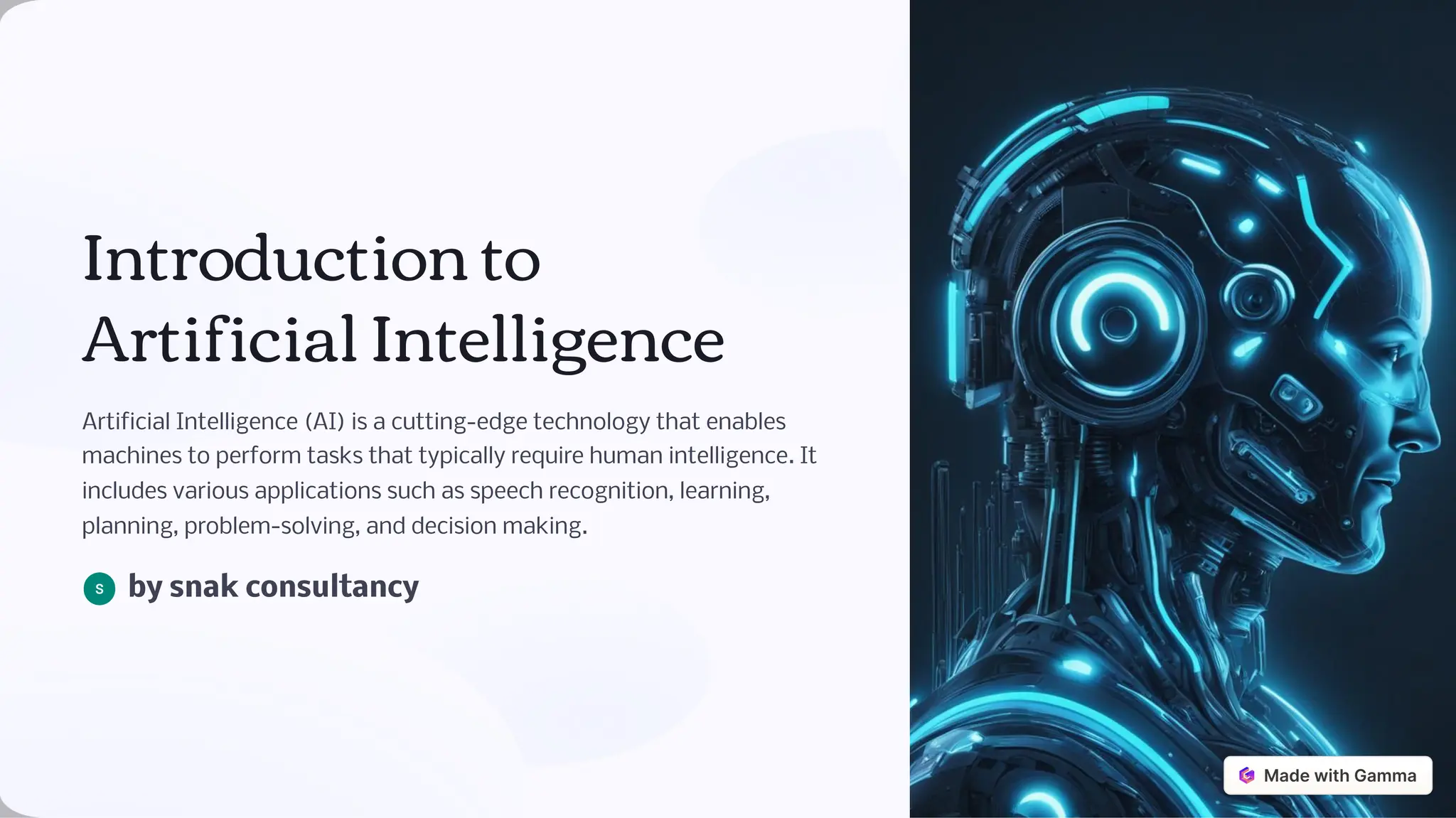
Artificial Intelligence (AI) is a cutting-edge technology that enables
machines to perform tasks that typically require human intelligence. It
includes various applications such as speech recognition, learning,
planning, problem-solving, and decision making.
by snak consultancy
What is Artificial Intelligence?
1 Machine Learning
AI uses algorithms and
statistical models to
enable systems to learn
patterns from data and
make decisions without
explicit instructions.
2 Cognitive
Computing
It involves simulating
human thought
processes in a
computerized model to
solve complex problems.
3 Natural Language
Processing
AI capabilities to
interpret and generate
human language,
allowing communication
between humans and
machines.
Applications of Artificial Intelligence
Healthcare
AI plays a vital role in
predicting disease outbreaks,
managing patient data, and
developing personalized
treatment plans.
Finance
It's used for fraud detection,
risk assessment, algorithmic
trading, and personalized
banking services.
Robotics
AI is crucial in creating
advanced robots for tasks
like assembly, delivery, and
exploration in remote or
hazardous environments.
Benefits of Artificial Intelligence
Efficiency
AI streamlines processes, automates repetitive tasks, and enhances productivity
across multiple sectors.
Innovation
It fuels innovation by enabling the development of new products, services, and
solutions that were previously unimaginable.
Improved Accuracy
AI systems offer precise data analysis, reducing human error and improving the
accuracy of decision-making processes.
Challenges and Limitations of Artificial
Intelligence
1
Data Quality
Challenges related to
gathering and maintaining
high-quality data for AI
algorithms.
2
Interpretability
Understanding and
interpreting AI-based
decisions and
recommendations are
complex tasks.
3
Job Displacement
The potential impact of AI
on the job market and
employment opportunities.
Ethical Considerations in Artificial
Intelligence
1 Privacy
Ensuring the responsible use and protection of sensitive personal data in
AI applications.
2 Bias Mitigation
Taking measures to identify and minimize biases in AI algorithms and
decision-making processes.
3 Accountability
Defining clear accountability when AI technologies make decisions
affecting individuals or society.
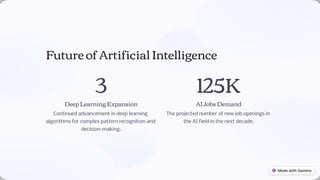
Future of Artificial Intelligence
3
Deep Learning Expansion
Continued advancement in deep learning
algorithms for complex pattern recognition and
decision-making.
125K
AI Jobs Demand
The projected number of new job openings in
the AI field in the next decade.
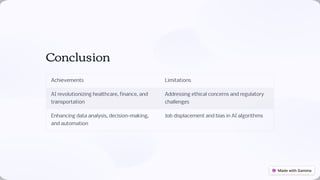
Conclusion
Achievements Limitations
AI revolutionizing healthcare, finance, and
transportation
Addressing ethical concerns and regulatory
challenges
Enhancing data analysis, decision-making,
and automation
Job displacement and bias in AI algorithms

Introduction-to-Artificial-Intelligence.pdf

  • 1.
    Introduction to Artificial Intelligence ArtificialIntelligence (AI) is a cutting-edge technology that enables machines to perform tasks that typically require human intelligence. It includes various applications such as speech recognition, learning, planning, problem-solving, and decision making. by snak consultancy
  • 2.
    What is ArtificialIntelligence? 1 Machine Learning AI uses algorithms and statistical models to enable systems to learn patterns from data and make decisions without explicit instructions. 2 Cognitive Computing It involves simulating human thought processes in a computerized model to solve complex problems. 3 Natural Language Processing AI capabilities to interpret and generate human language, allowing communication between humans and machines.
  • 3.
    Applications of ArtificialIntelligence Healthcare AI plays a vital role in predicting disease outbreaks, managing patient data, and developing personalized treatment plans. Finance It's used for fraud detection, risk assessment, algorithmic trading, and personalized banking services. Robotics AI is crucial in creating advanced robots for tasks like assembly, delivery, and exploration in remote or hazardous environments.
  • 4.
    Benefits of ArtificialIntelligence Efficiency AI streamlines processes, automates repetitive tasks, and enhances productivity across multiple sectors. Innovation It fuels innovation by enabling the development of new products, services, and solutions that were previously unimaginable. Improved Accuracy AI systems offer precise data analysis, reducing human error and improving the accuracy of decision-making processes.
  • 5.
    Challenges and Limitationsof Artificial Intelligence 1 Data Quality Challenges related to gathering and maintaining high-quality data for AI algorithms. 2 Interpretability Understanding and interpreting AI-based decisions and recommendations are complex tasks. 3 Job Displacement The potential impact of AI on the job market and employment opportunities.
  • 6.
    Ethical Considerations inArtificial Intelligence 1 Privacy Ensuring the responsible use and protection of sensitive personal data in AI applications. 2 Bias Mitigation Taking measures to identify and minimize biases in AI algorithms and decision-making processes. 3 Accountability Defining clear accountability when AI technologies make decisions affecting individuals or society.
  • 7.
    Future of ArtificialIntelligence 3 Deep Learning Expansion Continued advancement in deep learning algorithms for complex pattern recognition and decision-making. 125K AI Jobs Demand The projected number of new job openings in the AI field in the next decade.
  • 8.
    Conclusion Achievements Limitations AI revolutionizinghealthcare, finance, and transportation Addressing ethical concerns and regulatory challenges Enhancing data analysis, decision-making, and automation Job displacement and bias in AI algorithms