Introduction to SD-
WAN
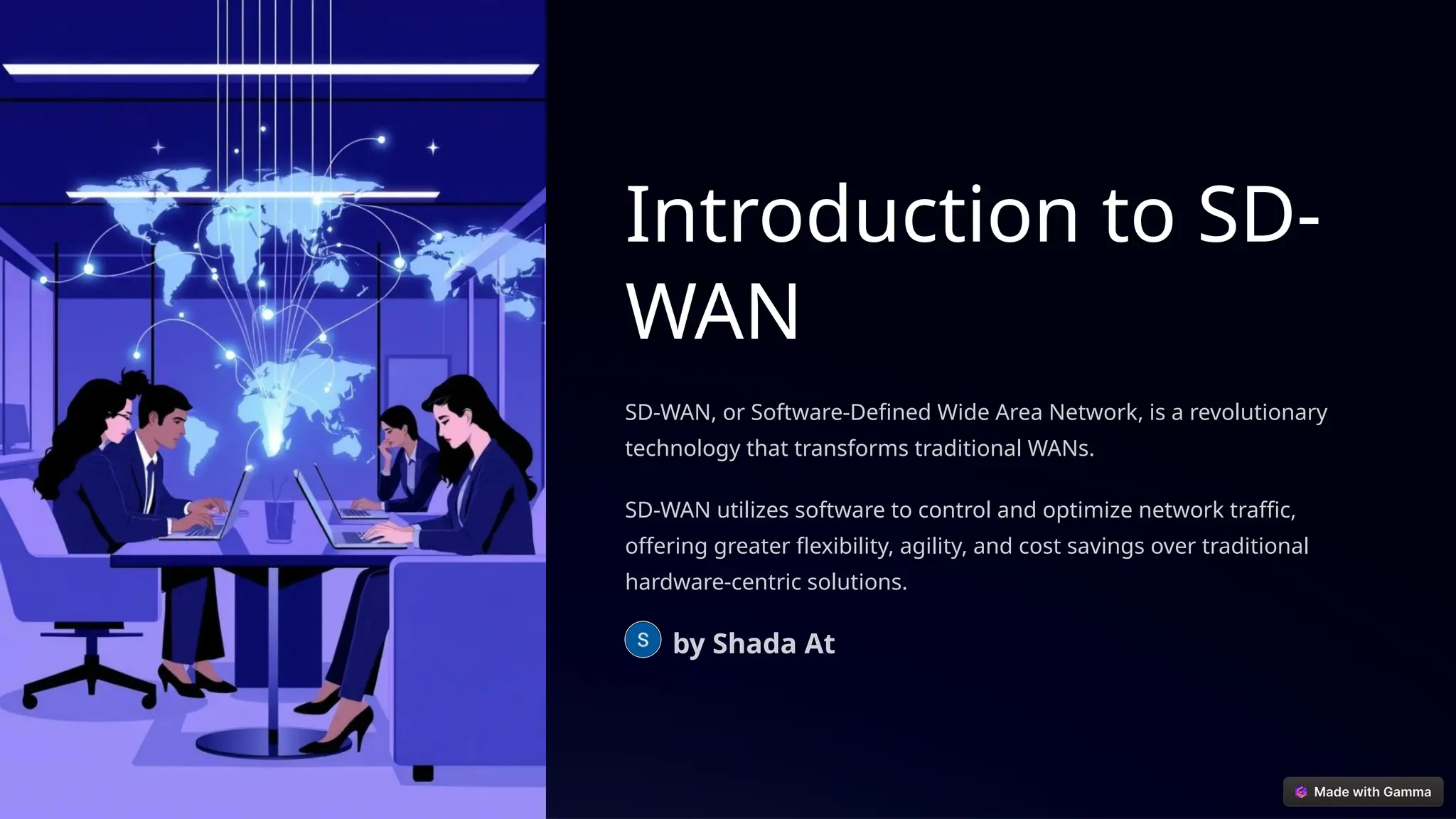
SD-WAN, or Software-Defined Wide Area Network, is a revolutionary
technology that transforms traditional WANs.
SD-WAN utilizes software to control and optimize network traffic,
offering greater flexibility, agility, and cost savings over traditional
hardware-centric solutions.
by Shada At
Limitations of traditional
WAN
1 Limited Bandwidth
Traditional WANs are often
constrained by fixed
bandwidth, leading to
performance bottlenecks
and slow data transfer.
2 High Costs
The reliance on expensive
hardware and dedicated
circuits results in high
operational and
maintenance costs.
3 Complexity
Managing and troubleshooting traditional WANs can be complex
and time-consuming, requiring specialized expertise.
What is SD-WAN?
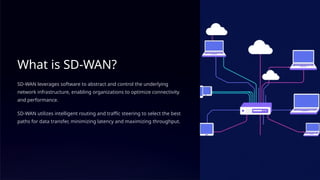
SD-WAN leverages software to abstract and control the underlying
network infrastructure, enabling organizations to optimize connectivity
and performance.
SD-WAN utilizes intelligent routing and traffic steering to select the best
paths for data transfer, minimizing latency and maximizing throughput.
Key benefits of SD-WAN
Enhanced Performance
SD-WAN optimizes network traffic
flow, reducing latency and improving
application performance.
Cost Savings
By utilizing internet connectivity and
flexible bandwidth options, SD-WAN
significantly lowers costs compared
to traditional WANs.
Simplified Management
SD-WAN provides a centralized
management platform, simplifying
network configuration, monitoring,
and troubleshooting.
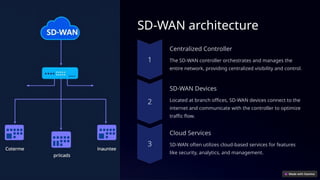
SD-WAN architecture
Centralized Controller
The SD-WAN controller orchestrates and manages the
entire network, providing centralized visibility and control.
SD-WAN Devices
Located at branch offices, SD-WAN devices connect to the
internet and communicate with the controller to optimize
traffic flow.
Cloud Services
SD-WAN often utilizes cloud-based services for features
like security, analytics, and management.
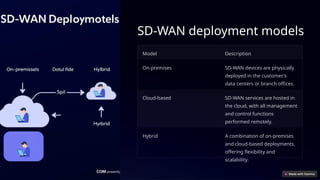
SD-WAN deployment models
Model Description
On-premises SD-WAN devices are physically
deployed in the customer's
data centers or branch offices.
Cloud-based SD-WAN services are hosted in
the cloud, with all management
and control functions
performed remotely.
Hybrid A combination of on-premises
and cloud-based deployments,
offering flexibility and
scalability.
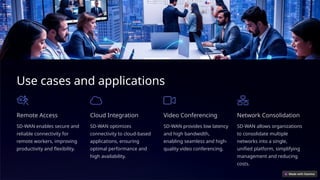
Use cases and applications
Remote Access
SD-WAN enables secure and
reliable connectivity for
remote workers, improving
productivity and flexibility.
Cloud Integration
SD-WAN optimizes
connectivity to cloud-based
applications, ensuring
optimal performance and
high availability.
Video Conferencing
SD-WAN provides low latency
and high bandwidth,
enabling seamless and high-
quality video conferencing.
Network Consolidation
SD-WAN allows organizations
to consolidate multiple
networks into a single,
unified platform, simplifying
management and reducing
costs.
Conclusion and future trends
SD-WAN is transforming the way organizations connect and manage
their networks, offering significant benefits in performance, cost, and
agility.
Future trends in SD-WAN include the integration of artificial intelligence,
edge computing, and 5G, further enhancing network capabilities and
unlocking new possibilities.

Introduction-to-SD-WAN(software-defend-WAN.pptx

  • 1.
    Introduction to SD- WAN SD-WAN,or Software-Defined Wide Area Network, is a revolutionary technology that transforms traditional WANs. SD-WAN utilizes software to control and optimize network traffic, offering greater flexibility, agility, and cost savings over traditional hardware-centric solutions. by Shada At
  • 2.
    Limitations of traditional WAN 1Limited Bandwidth Traditional WANs are often constrained by fixed bandwidth, leading to performance bottlenecks and slow data transfer. 2 High Costs The reliance on expensive hardware and dedicated circuits results in high operational and maintenance costs. 3 Complexity Managing and troubleshooting traditional WANs can be complex and time-consuming, requiring specialized expertise.
  • 3.
    What is SD-WAN? SD-WANleverages software to abstract and control the underlying network infrastructure, enabling organizations to optimize connectivity and performance. SD-WAN utilizes intelligent routing and traffic steering to select the best paths for data transfer, minimizing latency and maximizing throughput.
  • 4.
    Key benefits ofSD-WAN Enhanced Performance SD-WAN optimizes network traffic flow, reducing latency and improving application performance. Cost Savings By utilizing internet connectivity and flexible bandwidth options, SD-WAN significantly lowers costs compared to traditional WANs. Simplified Management SD-WAN provides a centralized management platform, simplifying network configuration, monitoring, and troubleshooting.
  • 5.
    SD-WAN architecture Centralized Controller TheSD-WAN controller orchestrates and manages the entire network, providing centralized visibility and control. SD-WAN Devices Located at branch offices, SD-WAN devices connect to the internet and communicate with the controller to optimize traffic flow. Cloud Services SD-WAN often utilizes cloud-based services for features like security, analytics, and management.
  • 6.
    SD-WAN deployment models ModelDescription On-premises SD-WAN devices are physically deployed in the customer's data centers or branch offices. Cloud-based SD-WAN services are hosted in the cloud, with all management and control functions performed remotely. Hybrid A combination of on-premises and cloud-based deployments, offering flexibility and scalability.
  • 7.
    Use cases andapplications Remote Access SD-WAN enables secure and reliable connectivity for remote workers, improving productivity and flexibility. Cloud Integration SD-WAN optimizes connectivity to cloud-based applications, ensuring optimal performance and high availability. Video Conferencing SD-WAN provides low latency and high bandwidth, enabling seamless and high- quality video conferencing. Network Consolidation SD-WAN allows organizations to consolidate multiple networks into a single, unified platform, simplifying management and reducing costs.
  • 8.
    Conclusion and futuretrends SD-WAN is transforming the way organizations connect and manage their networks, offering significant benefits in performance, cost, and agility. Future trends in SD-WAN include the integration of artificial intelligence, edge computing, and 5G, further enhancing network capabilities and unlocking new possibilities.