Introduction to Perl
Programming Language
-Practical Extraction and Reporting Language
Introduction:
 Perl is a versatile programming language developed by
Larry Wall in the late 1980s. It is designed for text
processing, system administration, and various scripting
tasks
 It efficiently handles text manipulation, making it a popular
choice for diverse applications
History:
 Evolution from Perl 1 to Perl 5.
 Perl's journey from a text-processing language to a
general-purpose programming language.
 Perl 1, 2, 3, 4, and the transformative Perl 5.
Basic Syntax Of Perl Program
 Perl is a general purpose, high level interpreted and
dynamic programming language.
 Perl is a lot similar to C syntactically and is easy for the
users who have knowledge of C, C++.
 Like other Programming Languages, Perl also follows a
basic syntax for writing programs for applications and
software or writing a simple Perl program.
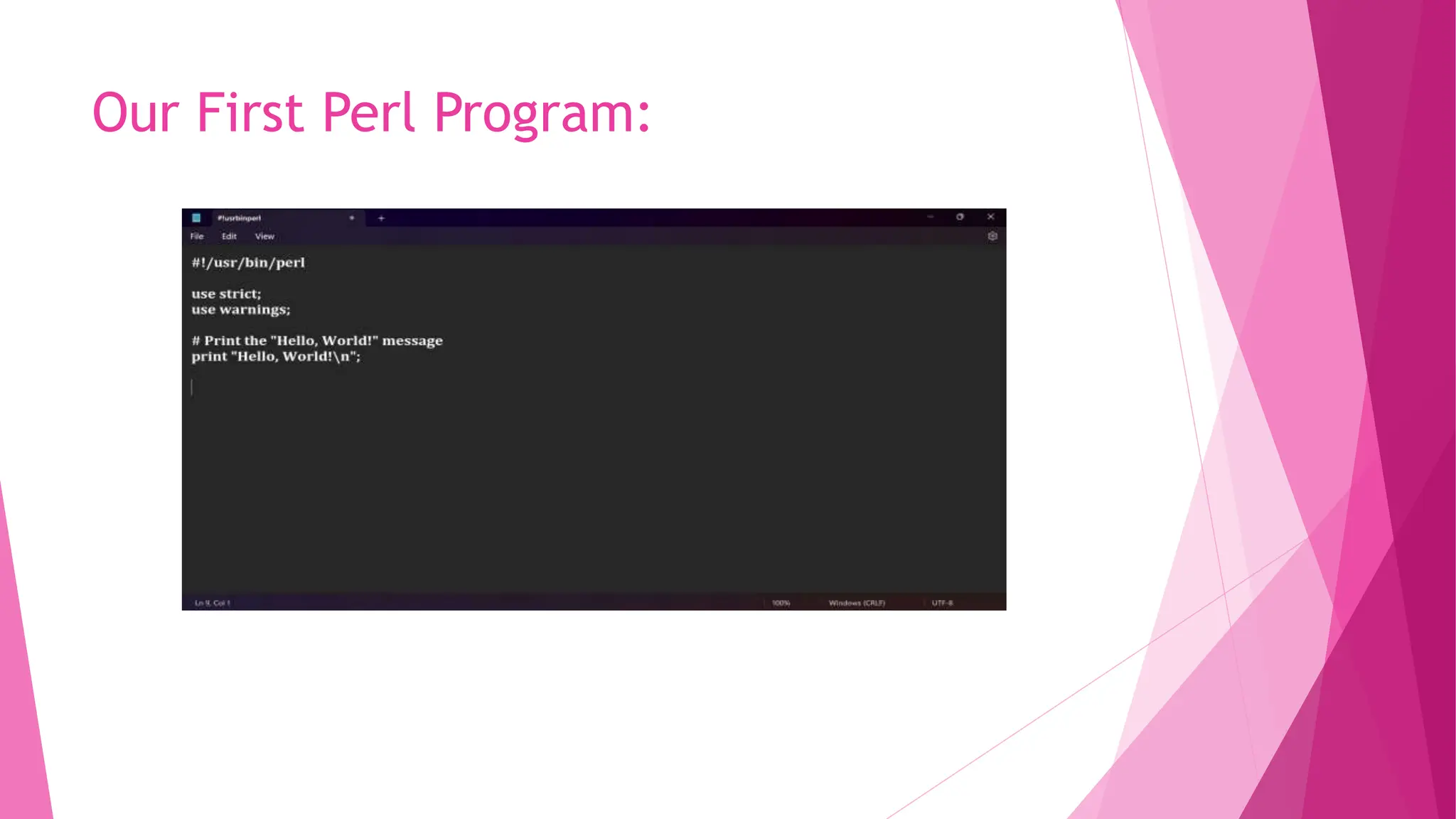
Our First Perl Program:
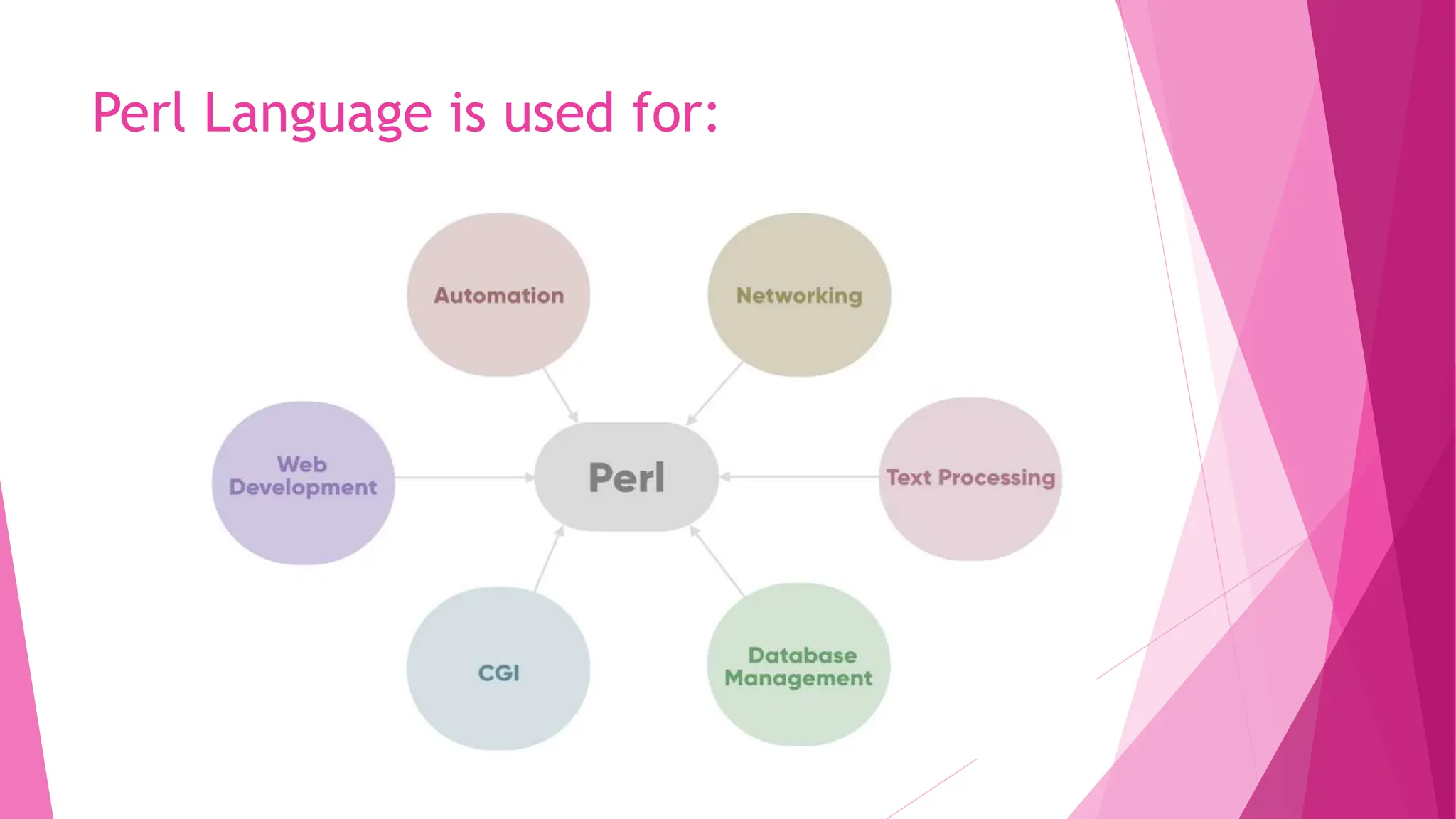
Perl Language is used for:
 System Administration: Widely used for automating
system tasks.
 Text Processing: Known for powerful regular
expression support.
 Web Development: Used for server-side scripting and
CGI programming.
 Bioinformatics: Applied in handling biological data.
 Diverse Usage: Flexible for various applications.
Advantages:
 Flexibility: Supports multiple programming paradigms.
 CPAN: Rich ecosystem of modules for easy extension.
 Text Processing: Exceptional for handling and
manipulating text.
 Community Support: Active community and resources.
Disadvantages:
 Learning Curve: "Some find the syntax unconventional."
 Performance: "May not be as fast as some compiled
languages."
 Stringent Practices: "Lack of enforced discipline can lead
to less maintainable code."
Conclusion:
 Perl has proven itself to be a dynamic and adaptable
programming language since its inception in the late
1980s. Originally designed for text processing, Perl has
evolved into a robust and versatile tool embraced across
various domains.
 In today's programming landscape, Perl remains a
valuable asset, offering a unique blend of features that
cater to both traditional and emerging application
domains.
Thank You
BY
Gayathri Addula

introduction to Perl _ the programming language.pptx

  • 1.
    Introduction to Perl ProgrammingLanguage -Practical Extraction and Reporting Language
  • 2.
    Introduction:  Perl isa versatile programming language developed by Larry Wall in the late 1980s. It is designed for text processing, system administration, and various scripting tasks  It efficiently handles text manipulation, making it a popular choice for diverse applications
  • 3.
    History:  Evolution fromPerl 1 to Perl 5.  Perl's journey from a text-processing language to a general-purpose programming language.  Perl 1, 2, 3, 4, and the transformative Perl 5.
  • 4.
    Basic Syntax OfPerl Program  Perl is a general purpose, high level interpreted and dynamic programming language.  Perl is a lot similar to C syntactically and is easy for the users who have knowledge of C, C++.  Like other Programming Languages, Perl also follows a basic syntax for writing programs for applications and software or writing a simple Perl program.
  • 5.
  • 6.
  • 7.
     System Administration:Widely used for automating system tasks.  Text Processing: Known for powerful regular expression support.  Web Development: Used for server-side scripting and CGI programming.  Bioinformatics: Applied in handling biological data.  Diverse Usage: Flexible for various applications.
  • 8.
    Advantages:  Flexibility: Supportsmultiple programming paradigms.  CPAN: Rich ecosystem of modules for easy extension.  Text Processing: Exceptional for handling and manipulating text.  Community Support: Active community and resources.
  • 9.
    Disadvantages:  Learning Curve:"Some find the syntax unconventional."  Performance: "May not be as fast as some compiled languages."  Stringent Practices: "Lack of enforced discipline can lead to less maintainable code."
  • 10.
    Conclusion:  Perl hasproven itself to be a dynamic and adaptable programming language since its inception in the late 1980s. Originally designed for text processing, Perl has evolved into a robust and versatile tool embraced across various domains.  In today's programming landscape, Perl remains a valuable asset, offering a unique blend of features that cater to both traditional and emerging application domains.
  • 11.