Introduction to
Network Security
Network security is the practice of protecting a computer network
from unauthorized access, data breaches, and other cyber threats.
It involves a range of strategies and technologies to safeguard
digital assets and ensure the confidentiality, integrity, and
availability of network resources.
by Amit Singh RAJAWAT
Importance of Network
Security
1 Data Protection
Safeguarding sensitive
information and
preventing data leaks or
theft is a critical function
of network security.
2 Business Continuity
Effective network
security helps maintain
the continuity of
operations and ensures
that critical systems and
services remain
accessible.
3 Regulatory Compliance
Many industries have regulations and standards that
require organizations to implement robust network security
measures.
Types of Network Security
Preventive Measures
Firewalls, access controls, and
encryption techniques that help
prevent unauthorized access and
data breaches.
Detective Measures
Intrusion detection and
prevention systems that monitor
network activity and alert
administrators to potential
threats.
Corrective Measures
Incident response plans and
disaster recovery strategies that
help organizations mitigate the
impact of successful attacks.
Firewalls
Network Monitoring
Firewalls inspect incoming
and outgoing network
traffic, identifying and
blocking suspicious or
unauthorized activity.
Access Control
Firewalls can be
configured to allow or
deny access to specific
network resources based
on predefined rules.
Threat Prevention
Firewalls can detect and prevent various types of attacks, such
as distributed denial-of-service (DDoS) and malware intrusions.
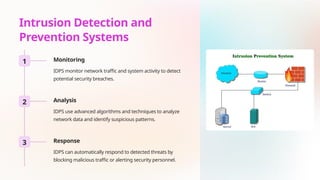
Intrusion Detection and
Prevention Systems
1 Monitoring
IDPS monitor network traffic and system activity to detect
potential security breaches.
2 Analysis
IDPS use advanced algorithms and techniques to analyze
network data and identify suspicious patterns.
3 Response
IDPS can automatically respond to detected threats by
blocking malicious traffic or alerting security personnel.
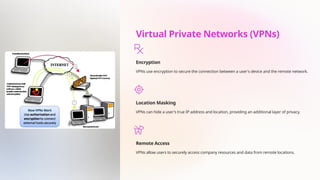
Virtual Private Networks (VPNs)
Encryption
VPNs use encryption to secure the connection between a user's device and the remote network.
Location Masking
VPNs can hide a user's true IP address and location, providing an additional layer of privacy.
Remote Access
VPNs allow users to securely access company resources and data from remote locations.
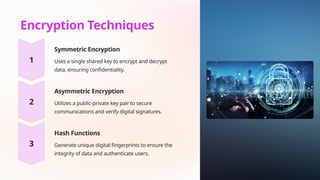
Encryption Techniques
Symmetric Encryption
Uses a single shared key to encrypt and decrypt
data, ensuring confidentiality.
Asymmetric Encryption
Utilizes a public-private key pair to secure
communications and verify digital signatures.
Hash Functions
Generate unique digital fingerprints to ensure the
integrity of data and authenticate users.
Access Control Mechanisms
Authentication
Verifying the identity of users,
devices, or applications before
granting access to network
resources.
Authorization
Determining the specific
permissions and privileges
granted to authenticated entities
within the network.
Accounting
Monitoring and recording user
activities and network resource
usage for audit and compliance
purposes.
Common Network Security
Threats
1 Malware
Viruses, worms, Trojans,
and other malicious
software that can
compromise systems and
steal data.
2 Denial-of-Service (DoS)
Attacks that aim to
overwhelm and disrupt
the availability of network
resources and services.
3 Unauthorized Access
Illegal attempts to gain
access to network
systems, applications, or
data without proper
authorization.
4 Social Engineering
Manipulative techniques
used to trick users into
revealing sensitive
information or
performing harmful
actions.
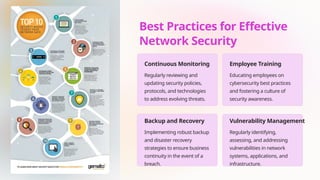
Best Practices for Effective
Network Security
Continuous Monitoring
Regularly reviewing and
updating security policies,
protocols, and technologies
to address evolving threats.
Employee Training
Educating employees on
cybersecurity best practices
and fostering a culture of
security awareness.
Backup and Recovery
Implementing robust backup
and disaster recovery
strategies to ensure business
continuity in the event of a
breach.
Vulnerability Management
Regularly identifying,
assessing, and addressing
vulnerabilities in network
systems, applications, and
infrastructure.

Introduction to Network Security by Amit Thakur.pptx

  • 1.
    Introduction to Network Security Networksecurity is the practice of protecting a computer network from unauthorized access, data breaches, and other cyber threats. It involves a range of strategies and technologies to safeguard digital assets and ensure the confidentiality, integrity, and availability of network resources. by Amit Singh RAJAWAT
  • 2.
    Importance of Network Security 1Data Protection Safeguarding sensitive information and preventing data leaks or theft is a critical function of network security. 2 Business Continuity Effective network security helps maintain the continuity of operations and ensures that critical systems and services remain accessible. 3 Regulatory Compliance Many industries have regulations and standards that require organizations to implement robust network security measures.
  • 3.
    Types of NetworkSecurity Preventive Measures Firewalls, access controls, and encryption techniques that help prevent unauthorized access and data breaches. Detective Measures Intrusion detection and prevention systems that monitor network activity and alert administrators to potential threats. Corrective Measures Incident response plans and disaster recovery strategies that help organizations mitigate the impact of successful attacks.
  • 4.
    Firewalls Network Monitoring Firewalls inspectincoming and outgoing network traffic, identifying and blocking suspicious or unauthorized activity. Access Control Firewalls can be configured to allow or deny access to specific network resources based on predefined rules. Threat Prevention Firewalls can detect and prevent various types of attacks, such as distributed denial-of-service (DDoS) and malware intrusions.
  • 5.
    Intrusion Detection and PreventionSystems 1 Monitoring IDPS monitor network traffic and system activity to detect potential security breaches. 2 Analysis IDPS use advanced algorithms and techniques to analyze network data and identify suspicious patterns. 3 Response IDPS can automatically respond to detected threats by blocking malicious traffic or alerting security personnel.
  • 6.
    Virtual Private Networks(VPNs) Encryption VPNs use encryption to secure the connection between a user's device and the remote network. Location Masking VPNs can hide a user's true IP address and location, providing an additional layer of privacy. Remote Access VPNs allow users to securely access company resources and data from remote locations.
  • 7.
    Encryption Techniques Symmetric Encryption Usesa single shared key to encrypt and decrypt data, ensuring confidentiality. Asymmetric Encryption Utilizes a public-private key pair to secure communications and verify digital signatures. Hash Functions Generate unique digital fingerprints to ensure the integrity of data and authenticate users.
  • 8.
    Access Control Mechanisms Authentication Verifyingthe identity of users, devices, or applications before granting access to network resources. Authorization Determining the specific permissions and privileges granted to authenticated entities within the network. Accounting Monitoring and recording user activities and network resource usage for audit and compliance purposes.
  • 9.
    Common Network Security Threats 1Malware Viruses, worms, Trojans, and other malicious software that can compromise systems and steal data. 2 Denial-of-Service (DoS) Attacks that aim to overwhelm and disrupt the availability of network resources and services. 3 Unauthorized Access Illegal attempts to gain access to network systems, applications, or data without proper authorization. 4 Social Engineering Manipulative techniques used to trick users into revealing sensitive information or performing harmful actions.
  • 10.
    Best Practices forEffective Network Security Continuous Monitoring Regularly reviewing and updating security policies, protocols, and technologies to address evolving threats. Employee Training Educating employees on cybersecurity best practices and fostering a culture of security awareness. Backup and Recovery Implementing robust backup and disaster recovery strategies to ensure business continuity in the event of a breach. Vulnerability Management Regularly identifying, assessing, and addressing vulnerabilities in network systems, applications, and infrastructure.